TLDR
“Central Africa” and “Central African Republic” are not the same search. The region spans six countries — Cameroon, the Central African Republic, the Democratic Republic of Congo, the Republic of Congo, Equatorial Guinea, and Gabon — and its defining feature is the Congo Basin rainforest, the second-largest tropical forest on Earth. That forest produces a completely different animal lineup than the savanna strip along its northern edge: western lowland gorillas, bonobos, forest elephants, and the okapi in the trees; lions, leopards, and hyenas out on the grass. Below is a category-by-category rundown of who lives where, and why.
Table of Contents
- Central Africa, Not Just the CAR
- Rainforest Megafauna
- Forest Antelope
- Savanna Predators
- The Okapi: Congo’s Signature Oddity
- Fun Facts
Central Africa, Not Just the CAR
Type “animals of Central Africa” into a search bar and most of what comes back is actually about the Central African Republic — one country, mostly savanna and gallery forest in its north, thinning into scrubland toward Chad. That’s a real place with real wildlife, but it’s not what most people mean when they say “Central Africa.”
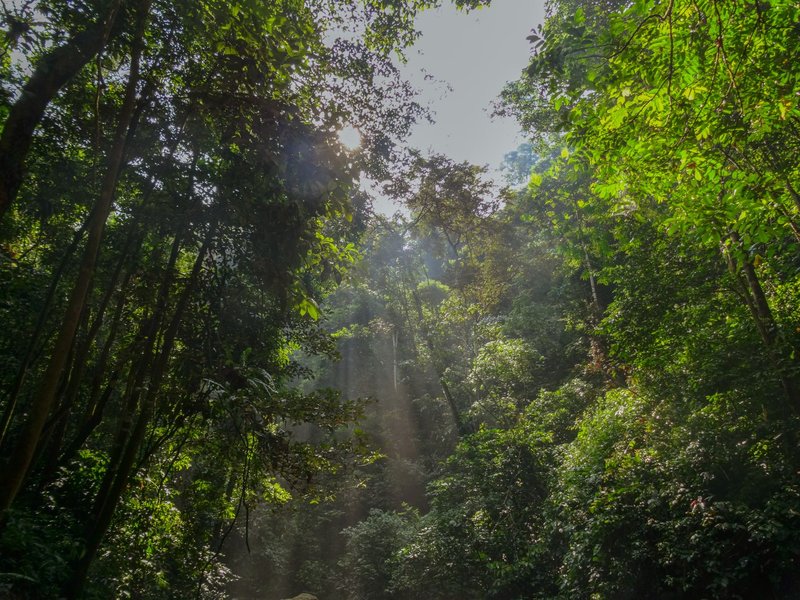
The region is the six-country footprint wrapped around the Congo Basin: Cameroon, the CAR, the Democratic Republic of Congo, the Republic of Congo, Equatorial Guinea, and Gabon. Gabon alone is roughly 85% forest cover. The DRC holds the largest share of the basin by area. That forest block is why this region produces gorillas and bonobos and forest elephants that don’t exist anywhere else on the continent — species built for a closed canopy, not open grass.
The split matters ecologically, too. North of the forest line, where rainfall drops and the canopy opens into savanna, you get Africa’s classic predator guild: lions, leopards, hyenas. South and deep in the basin, under permanent shade, you get an entirely different animal — built low, quiet, and built for cover.
Rainforest Megafauna
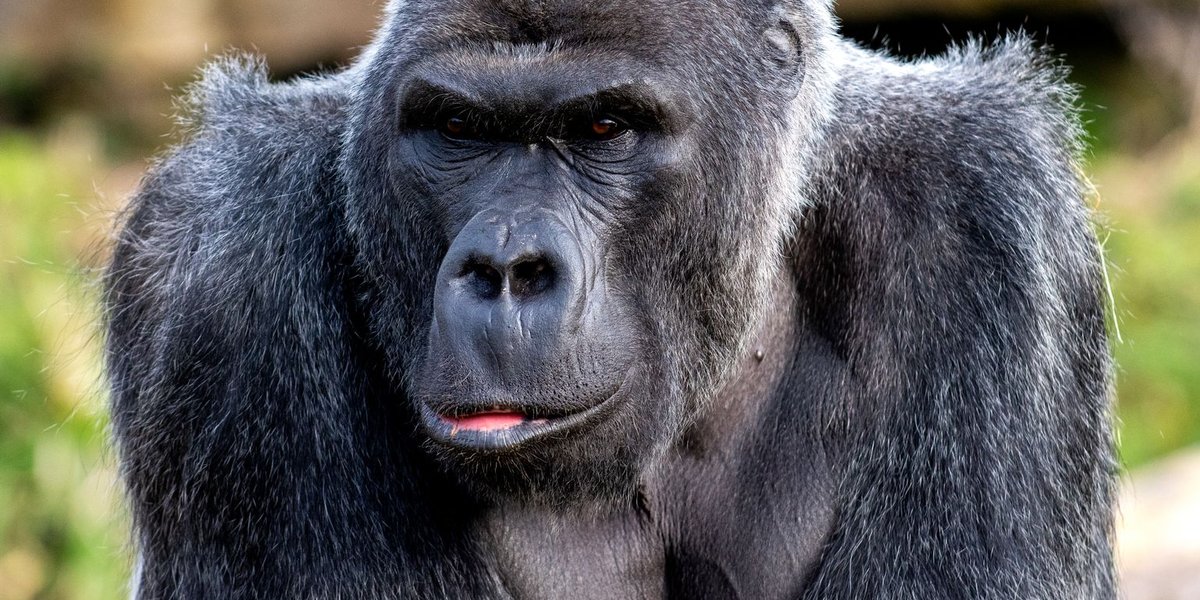
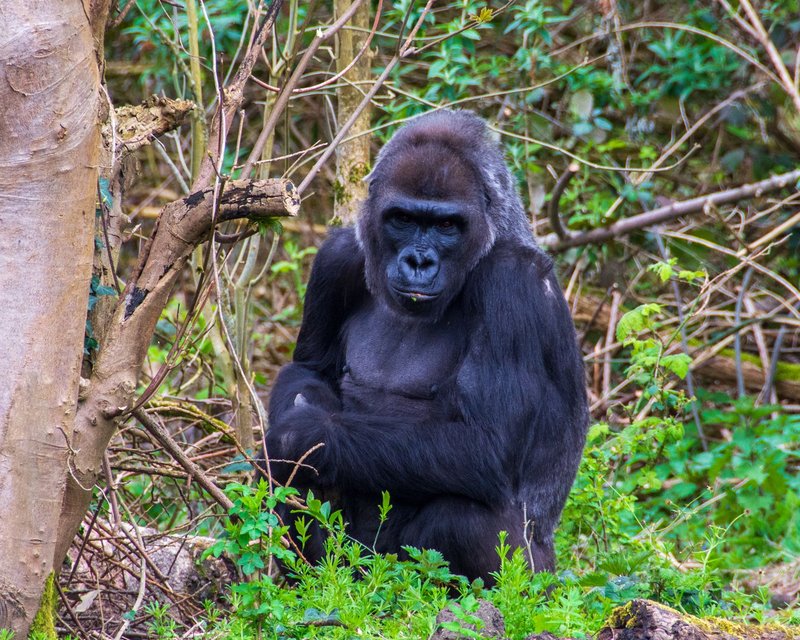
Western lowland gorilla. More than half the world’s population lives in Gabon, with the rest scattered across Cameroon, the Republic of Congo, and southeastern CAR. They’re smaller and browner than their mountain-gorilla cousins in East Africa, and far less studied because the terrain they live in — dense, swampy, biting-insect-heavy lowland forest — makes long-term observation brutal. The IUCN lists them as Critically Endangered, driven by Ebola outbreaks and bushmeat hunting as much as habitat loss.
Bonobo. Found nowhere on Earth except a single stretch of forest south of the Congo River, inside the DRC. That river is the whole reason bonobos exist as a separate species from chimpanzees — it’s wide enough that populations on either bank stopped interbreeding and diverged. Bonobo society runs on female alliances rather than male dominance hierarchies, and conflicts get defused through social bonding instead of the aggression that defines chimp politics.
Chimpanzee. North of that same river, chimps take over — Cameroon, northern Congo, CAR, northern DRC. Central African chimp populations are genetically distinct from the East African chimps most documentaries focus on, and they’re the ones most frequently observed using termite-fishing tools and hunting in coordinated groups.
Forest elephant. Reclassified as its own species, Loxodonta cyclotis, separate from the savanna elephant, in 2021 — and immediately assessed as Critically Endangered, having lost an estimated 86% of its population over three generations, a decline mirrored across many endangered African rainforest animals. Forest elephants are smaller than savanna elephants, with straighter, downward-pointing tusks suited to pushing through dense understory rather than sparring on open ground. The WWF’s African forest elephant page covers why: ivory poaching hit them harder than any other elephant population, and their slow reproductive rate — a calf every five to six years — means recovery takes decades even where poaching stops.
Forest Antelope
Savanna documentaries skip this category almost entirely, because forest antelope don’t stand around in herds on open plains where a camera crew can find them. They’re solitary, low to the ground, and built to disappear.
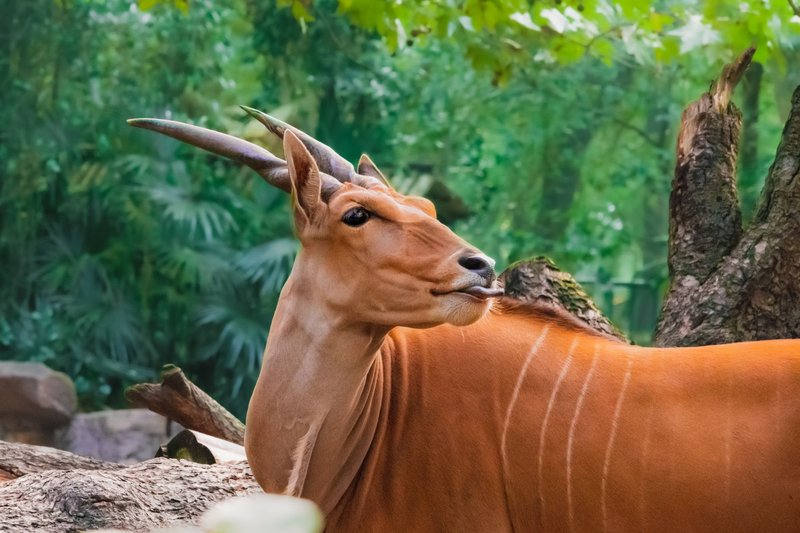
Bongo. The largest forest antelope, with a chestnut coat striped in white and spiral horns that can curl past two full turns. The lowland bongo ranges across the Congo Basin’s forests; a separate, more critically endangered mountain population survives only in Kenya, outside this region. Bongos are almost entirely nocturnal, which is part of why they’re so rarely photographed compared to how striking they look.
Sitatunga. A swamp specialist — its hooves splay out to nearly double their surface area, distributing weight across floating vegetation and mud that would swallow any other antelope. Sitatunga can submerge almost completely when threatened, leaving just their nostrils above the waterline.
Duikers. The catch-all name for a group of small, hunched forest antelope — blue duikers barely reach the height of a housecat, while yellow-backed duikers are considerably larger. Duikers make up the majority of bushmeat harvested across the Congo Basin, which has put sustained pressure on several species even where they aren’t formally threatened yet.
Savanna Predators
Where the forest thins into savanna — mainly northern CAR and pockets of northern Cameroon — the classic African predator lineup shows up, though in far smaller numbers than East Africa’s parks.
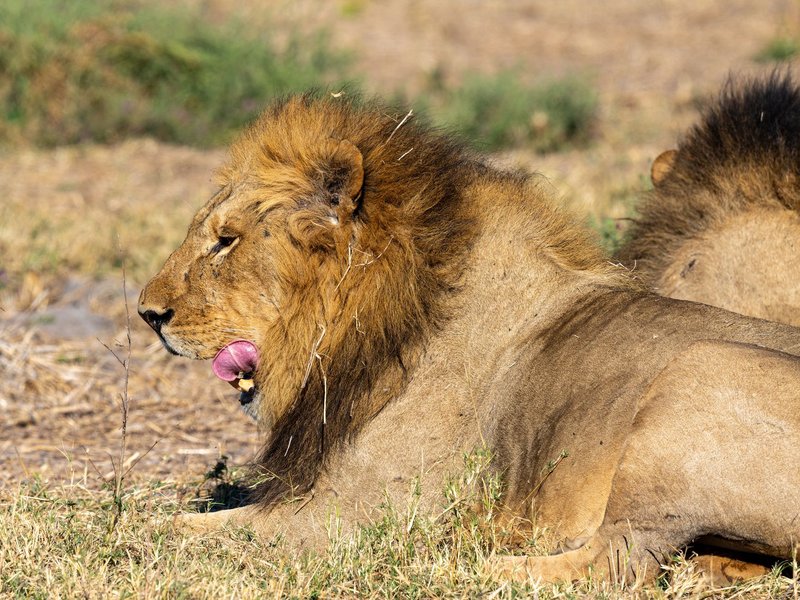
Lion. CAR’s lion population has collapsed over the past few decades, a casualty of civil conflict disrupting conservation enforcement as much as habitat pressure. Remaining populations are fragmented and small enough that regional experts now treat West and Central African lions as genetically and ecologically distinct from the more numerous populations in Southern and East Africa.
Leopard. The most adaptable of the region’s big cats, equally at home in savanna and forest edge, which is why leopards persist in areas where lions have already disappeared.
Spotted hyena. Present across the savanna belt, filling the scavenger-and-predator role it plays everywhere else on the continent, though data on Central African populations specifically is thin compared to better-studied East African clans.
The Okapi: Congo’s Signature Oddity
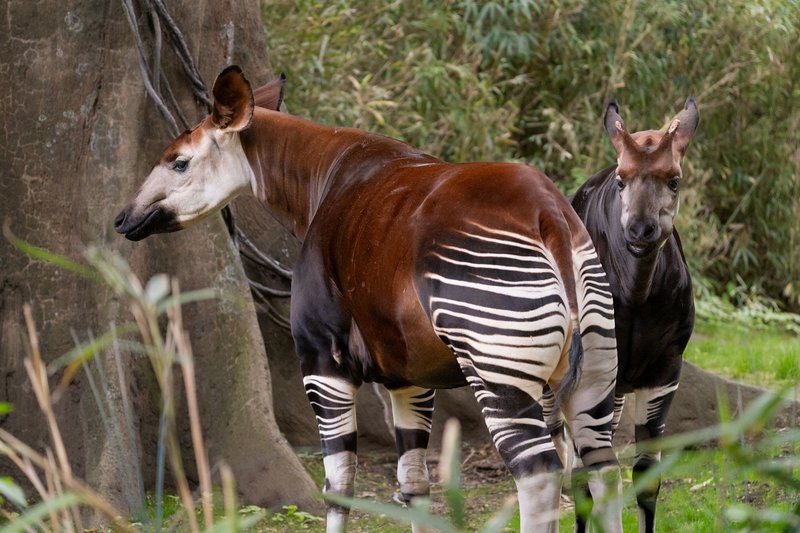
No list of Central African wildlife earns credibility without the okapi, and it’s the species most current search results skip entirely. Found only in the DRC’s Ituri Forest, the okapi has zebra-striped hindquarters and legs on a body shaped like a large, dark-brown horse — but it isn’t related to either. It’s the closest living relative of the giraffe, just with a neck that never went vertical.
Western science didn’t document the okapi until 1901, making it one of the last large mammals formally described anywhere in the world — Congolese forest communities, of course, had known about it for generations. The DRC’s Okapi Wildlife Reserve protects a large share of the remaining population, but the IUCN lists the species as Endangered, and poaching along with armed conflict in the reserve’s buffer zones remains an active threat.
Fun Facts
- Forest elephants are sometimes called the “mega-gardeners of the forest”: several Congo Basin tree species produce seeds too large for any other animal to disperse, so those trees depend entirely on elephants eating the fruit and passing seeds elsewhere in the forest.
- The okapi’s tongue is long and flexible enough to clean its own eyelids and ears — a trait it shares with giraffes.
- Bonobos are the only great ape never observed killing a member of their own species in the wild, a genuinely unusual data point in primate behavioral research.
- The Congo Basin is the second-largest contiguous rainforest on Earth after the Amazon, and it’s estimated to store roughly three years’ worth of global carbon emissions in its trees and soil, according to the WWF’s Congo Basin overview.
- Blue duikers can weigh as little as four kilograms full-grown — smaller than most house cats, despite being a fully mature antelope.
Central Africa’s wildlife doesn’t reduce to a single country’s species list, and it definitely doesn’t reduce to a safari-brochure highlight reel. It’s a forest-versus-savanna split that produces two genuinely different animal communities inside one region — and the forest half, gorillas and bonobos and the okapi included, is the part almost nobody covers well.