Tajikistan’s varied terrain—from high Pamir peaks to river valleys—supports a surprising variety of native plants that help define local ecosystems and traditional land use. Whether you’re a hiker, gardener, or curious reader, a short guided list makes it easier to spot species and understand where they fit in the landscape.
There are 15 Tajikistan’s native plants, ranging from Dog rose to Yarrow. For each species you’ll find below entries organized by Scientific name,Family,Habitat & Tajik range so you can see taxonomy and where each plant typically grows in the country; you’ll find below.
How can I tell these plants apart when I’m out in Tajikistan?
Look for key field marks—leaf shape, flower color, growth form and preferred habitat (alpine scree versus riverine meadow). Use the Scientific name column to match photos or field guides, note the Family for related species traits, and check the Habitat & Tajik range to narrow likely spots before you go.
Are any of these native plants important for local people or conservation?
Yes—many species are used in traditional medicine, forage, or erosion control, and some have restricted ranges that make them conservation priorities; the list’s Habitat & Tajik range notes help identify which plants need habitat protection or sustainable use practices.
Tajikistan’s Native Plants
| Common name | Scientific name | Family | Habitat & Tajik range |
|---|---|---|---|
| Wild apple | Malus sieversii | Rosaceae | Mountain forests, river valleys; widespread in western and eastern Tajik ranges |
| Wild apricot | Prunus armeniaca | Rosaceae | Dry mountain slopes, riverine belts; Hissar, Zarafshan, Pamir foothills |
| Turkestan juniper | Juniperus seravschanica | Cupressaceae | Montane woodlands and rocky slopes; Hissar-Alai, Pamirs |
| Roseroot | Rhodiola rosea | Crassulaceae | Alpine meadows, rock crevices; Pamir and high Hissar ranges |
| Kaufmann’s tulip | Tulipa kaufmanniana | Liliaceae | Mountain meadows, rocky slopes; western foothills and valleys |
| Karatav onion | Allium karataviense | Amaryllidaceae | Rocky slopes, alpine meadows; Pamir–Alai region |
| Feather grass | Stipa pennata | Poaceae | Dry steppes and semi-deserts; lowland and foothill regions |
| Wormwood | Artemisia absinthium | Asteraceae | Dry slopes, steppe and disturbed ground; widespread |
| Yarrow | Achillea millefolium | Asteraceae | Meadows, roadsides, alpine pastures; widespread across Tajikistan |
| Euphrates poplar | Populus euphratica | Salicaceae | Tugay forests, desert riverbanks; lower Zarafshan and Vakhsh valleys |
| White willow | Salix alba | Salicaceae | Riverbanks and floodplains; widespread lowland valleys |
| Salt cedar | Tamarix ramosissima | Tamaricaceae | Saline riverbanks and dry drains; lowlands and foothills |
| Dog rose | Rosa canina | Rosaceae | Scrub, slopes, river corridors; widespread |
| Songar iris | Iris songarica | Iridaceae | Dry grasslands and rocky slopes; foothills and lower mountains |
| Gentian | Gentiana algida | Gentianaceae | Alpine meadows and scree; Pamir and other high ranges |
Images and Descriptions
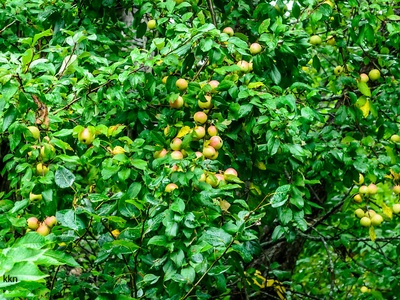
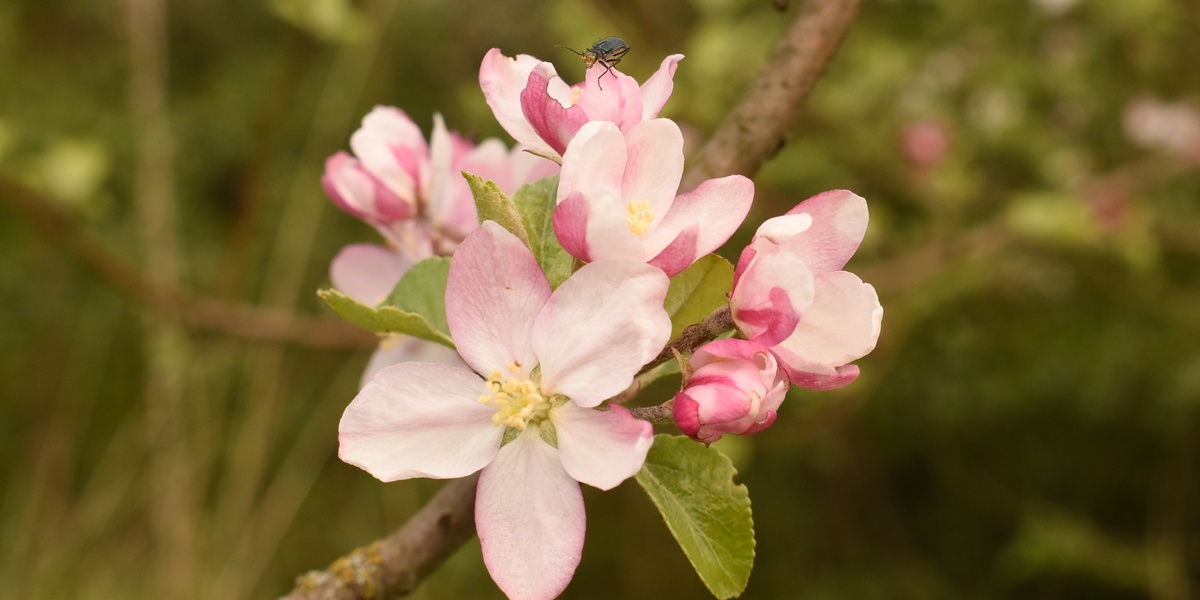
Wild apple
Wild ancestor of the domestic apple: small tree with fragrant spring blossoms and crisp tart fruit. Found in forested valleys; genetically valuable for breeding. Populations are fragmented by land use and require conservation attention.

Wild apricot
Small to medium tree producing aromatic yellow-orange fruit. Wild stands are the genetic source of cultivated apricots and treasured locally. Grows on dry slopes and river corridors; some wild populations face pressure from harvesting and habitat loss.
Turkestan juniper
Evergreen conifer forming open mountain woodlands on rocky slopes, with berry-like cones. Important for soil stability and livestock shelter. Some stands are degraded by overgrazing and collection for fuelwood.
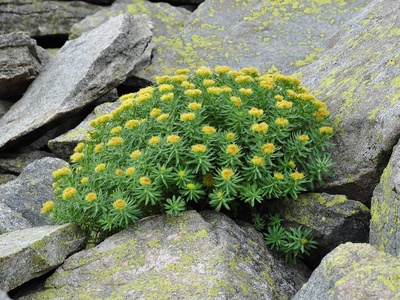
Roseroot
Succulent perennial with yellow flowers and aromatic, reddish roots used in traditional medicine. Grows on alpine ledges and meadows; harvested for adaptogenic properties, so local collecting can pressure wild populations.
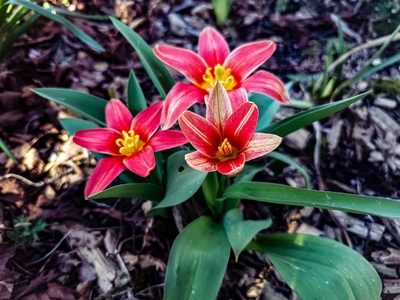
Kaufmann’s tulip
Showy, cup-shaped tulip with colorful striped petals in spring. A spring highlight in high meadows and scree. Wild bulbs are sometimes collected, though the species remains locally common in suitable habitats.
Karatav onion
Low-growing ornamental onion with broad blue-green leaves and pinkish flower umbels. Native wild onion occasionally used as food; small, localized populations on rocky slopes can be vulnerable to over-collection.
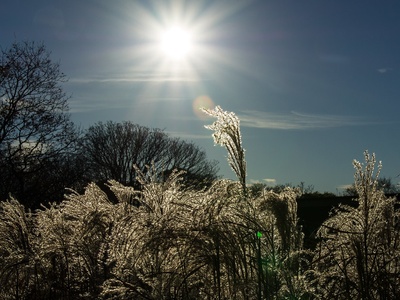
Feather grass
Graceful perennial bunchgrass with long, feather-like awns on seed heads. Characteristic of steppe landscapes, providing forage and stabilizing soils. Habitat conversion and heavy grazing reduce its extent in many areas.
Wormwood
Aromatic gray-green shrub with bitter leaves historically used medicinally and in spirits. Common on dry slopes and disturbed sites; generally widespread but local communities can decline where grazing and land-use change are intense.
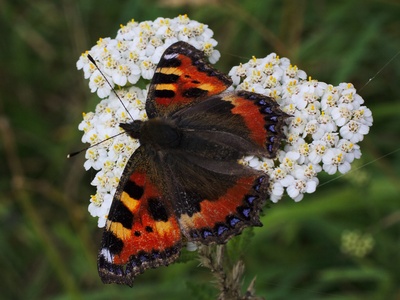
Yarrow
Clusters of small white flowers and feathery leaves; traditionally used as a herbal remedy. Tolerant of diverse habitats from lowlands to alpine pastures and commonly encountered across the country.
Euphrates poplar
Hardy, gnarled poplar adapted to saline, floodplain soils, forming rare tugay forests. Provides wildlife habitat and bank protection; fragmented and declining due to water regulation and land-use change.
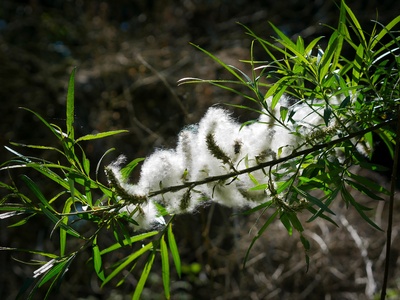
White willow
Large deciduous willow with silvery leaf undersides and flexible branches. Common in riparian zones, traditionally used for basketry and erosion control. Loss of riparian habitat threatens local populations.
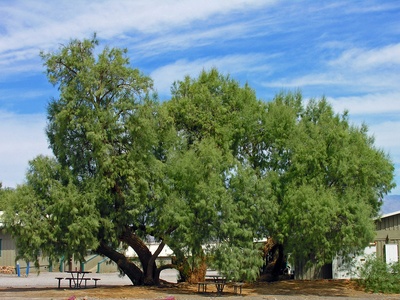
Salt cedar
Tall shrub with feathery pink flowers tolerant of saline soils, common along dry riverbeds. Historically native in Eurasia; forms dense stands that can alter soil salinity and water regimes in some areas.
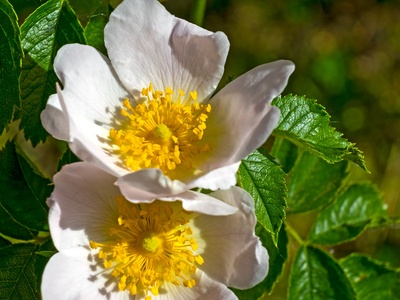
Dog rose
Prickly shrub with fragrant pink-white flowers and red hips used for food and medicine. Widespread in hedges and mountain scrub; supports wildlife and remains important for local foraging traditions.
Songar iris
Stately iris with deep blue to purple flowers blooming in spring. Grows in dry grasslands and rocky slopes; adds striking color to spring landscapes and can be sensitive to heavy grazing.
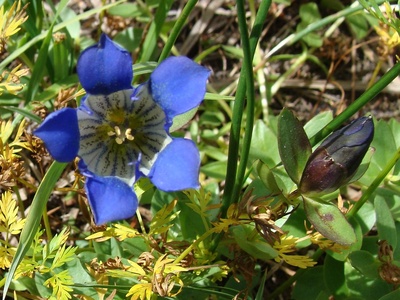
Gentian
Compact alpine herb with vivid blue tubular flowers. Grows in cold high-elevation meadows and scree; valued for its bitter compounds in traditional remedies and notable in late-summer mountain blooms.