TLDR
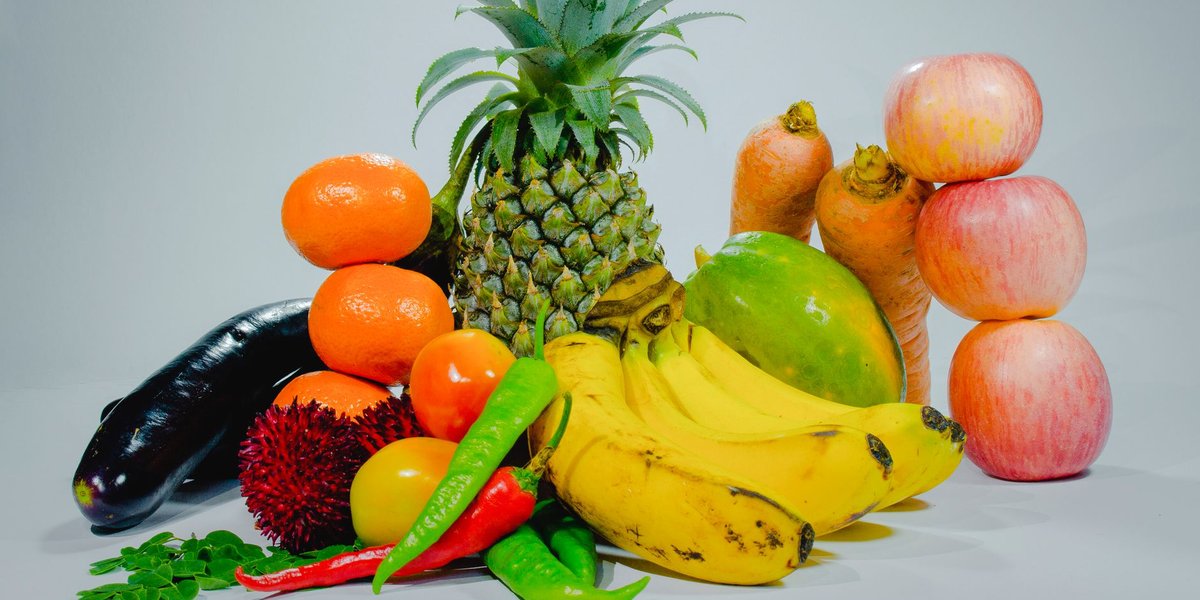
Botanically, a fruit is the seed-bearing structure that develops from a flower’s ovary. A vegetable is any other edible plant part: roots, stems, leaves, buds. Cooks ignore all that and sort by flavor, so sweet things become fruits and savory things become vegetables.
Neither group is “healthier.” Vegetables have fewer calories and less sugar per gram. Fruits are strong on vitamin C and potassium. You need both, and the quick-reference table below sorts the confusing cases.
Table of Contents
- Quick reference: who is what
- Vegetables vs fruits: the two definitions
- Why a tomato is both
- Fruits that are vegetables, and the reverse
- Fruit vs vegetable nutrition, per 100g
- Are fruits or vegetables healthier?
- Sugar, diabetes and juice
- How to split your plate
- FAQ
Quick reference: who is what
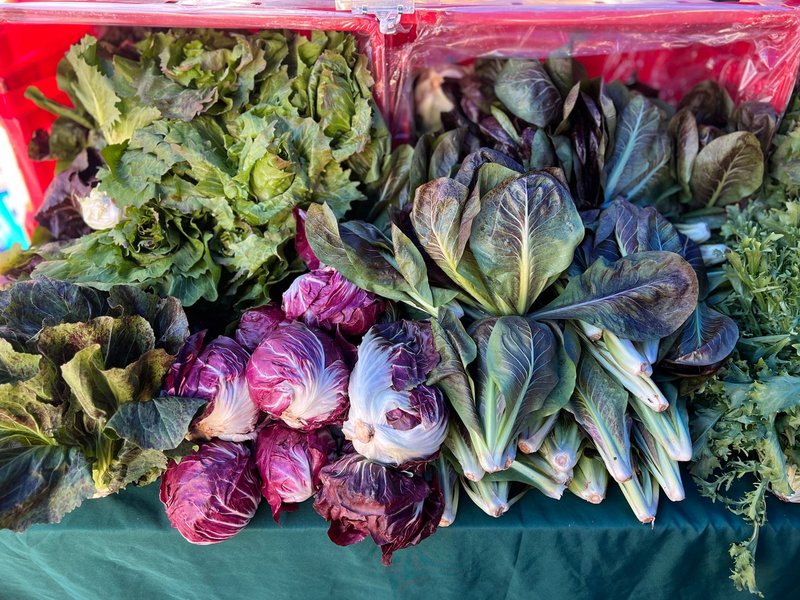
Botanical class is what the plant structure is. Culinary class is where it lands in a recipe. The two disagree more often than you’d expect.
| Food | Botanical class | Culinary class | Nutrition note |
|---|---|---|---|
| Apple | Fruit (pome) | Fruit | Moderate sugar, 2.4g fiber per 100g |
| Banana | Fruit (a true berry) | Fruit | Potassium-rich, higher in calories |
| Strawberry | Accessory fruit (not a true berry) | Fruit | High vitamin C, low sugar for a fruit |
| Tomato | Fruit (berry) | Vegetable | Very low sugar, mostly water |
| Cucumber | Fruit (berry) | Vegetable | About 95% water, few nutrients per gram |
| Zucchini and squash | Fruit (berry) | Vegetable | Low calorie |
| Bell pepper | Fruit (berry) | Vegetable | Vitamin C well above most fruits |
| Eggplant | Fruit (berry) | Vegetable | Low calorie, modest vitamins |
| Avocado | Fruit (single-seeded berry) | Vegetable | Fat-heavy, 160 kcal per 100g |
| Green beans and peas | Fruit (legume pod) and seeds | Vegetable | Protein and fiber |
| Corn kernel | Fruit (a grain) | Vegetable or grain | Starchy |
| Rhubarb | Stem | Fruit | Tart, almost always sweetened |
| Broccoli | Flower buds | Vegetable | High vitamin C and folate |
| Spinach | Leaf | Vegetable | Folate and potassium standout |
| Carrot | Root | Vegetable | Beta-carotene, moderate sugar |
| Potato | Tuber (underground stem) | Vegetable (starch) | Starchy, high potassium |
Vegetables vs fruits: the two definitions
The botanical definition. A fruit is the mature ovary of a flowering plant, and it usually contains seeds. Its job is to get those seeds moved somewhere else, which is why so many fruits are sweet, colorful and edible to animals. By this rule, anything that grew from a flower and holds seeds is a fruit.
The vegetable “definition” isn’t botanical at all. Botanists don’t recognize “vegetable” as a category. It’s a kitchen word for edible plant parts that aren’t fruit in the sweet-dessert sense: roots (carrots, beets), leaves (spinach, lettuce), stems (celery, asparagus), flower buds (broccoli, cauliflower), and bulbs (onions).
The culinary definition. Cooks sort by taste and use. Fruits are sweet or tart and show up in desserts, breakfast and snacks. Vegetables are savory and show up beside the protein. That’s the entire rulebook, and it’s why a plant can be a fruit in the garden and a vegetable on the plate.
Neither definition is wrong. They answer different questions, and the arguments start when people use one to answer the other.
Why a tomato is both
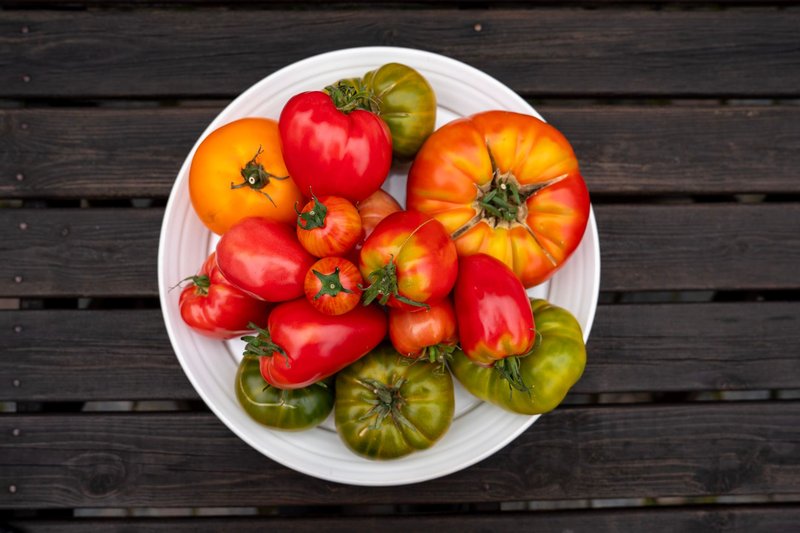
The tomato debate was settled in court, sort of. In 1893, the US Supreme Court heard Nix v. Hedden. John Nix, a New York produce importer, argued that tomatoes should be taxed as fruit, which the Tariff Act of 1883 let in duty-free, rather than as vegetables, which carried a 10 percent duty.
The Court agreed that botanically, a tomato is a fruit. It ruled for the tax collector anyway. Justice Horace Gray’s opinion held that in the ordinary language of people, tomatoes are served with dinner and not as dessert, so they’re vegetables for the purposes of the tariff.
So the ruling never claimed the tomato isn’t a fruit. It said the botanical definition wasn’t the one that applied to a customs bill. That’s a fair summary of the whole fruits-and-vegetables argument.
Fruits that are vegetables, and the reverse
If it has seeds inside and grew from a flower, botany calls it a fruit. That pulls a long list of “vegetables” across the line:
- Tomatoes, cucumbers, zucchini, pumpkins, eggplants and bell peppers are all berries or berry-like fruits.
- Avocados are single-seeded berries. The pit is the seed.
- Green beans and pea pods are legume fruits, and the peas inside are seeds.
- Corn kernels are individual fruits, each a one-seeded grain.
- Olives are drupes, like peaches, which is why they have a pit.
The reverse cases are rarer. Rhubarb is a leaf stalk, so botanically it’s a vegetable, but nobody puts it in a savory dish. A New York court ruled it a fruit in 1947 for customs purposes, which tells you how consistent classification gets once a tariff is involved.
Then there’s the opposite surprise: bananas are true berries, and strawberries are not. A strawberry’s flesh grows from the flower’s receptacle, and the “seeds” on the outside are the actual fruits.
Borderline groups worth sorting out:
- Legumes (lentils, chickpeas, beans) are seeds from pod fruits. Cooks treat them as vegetables or protein. The NHS counts them as a vegetable portion, but only once per day.
- Nuts are seeds or the hard-shelled fruits of various plants. Almonds are seeds inside a drupe, and peanuts are legumes. Nobody files them with either group in a meal plan.
- Starchy vegetables (potatoes, parsnips, cassava) are roots or tubers. Nutritionists treat them as starch, and the NHS doesn’t count potatoes toward 5 a day.
Fruit vs vegetable nutrition, per 100g
Generic claims like “vegetables have more fiber” fall apart once you put numbers next to each other. These are approximate raw values per 100g from USDA FoodData Central, the US government’s nutrient database. Exact values shift with variety and ripeness.
| Food (raw) | Calories | Sugar (g) | Fiber (g) | Water (g) | Vitamin C (mg) | Folate (µg) | Potassium (mg) |
|---|---|---|---|---|---|---|---|
| Apple, with skin | 52 | 10.4 | 2.4 | 86 | 5 | 3 | 107 |
| Banana | 89 | 12.2 | 2.6 | 75 | 9 | 20 | 358 |
| Orange | 47 | 9.4 | 2.4 | 87 | 53 | 30 | 181 |
| Strawberry | 32 | 4.9 | 2.0 | 91 | 59 | 24 | 153 |
| Avocado | 160 | 0.7 | 6.7 | 73 | 10 | 81 | 485 |
| Tomato | 18 | 2.6 | 1.2 | 95 | 14 | 15 | 237 |
| Carrot | 41 | 4.7 | 2.8 | 88 | 6 | 19 | 320 |
| Broccoli | 34 | 1.7 | 2.6 | 89 | 89 | 63 | 316 |
| Spinach | 23 | 0.4 | 2.2 | 91 | 28 | 194 | 558 |
| Potato, with skin | 77 | 0.8 | 2.1 | 79 | 20 | 16 | 421 |
A few things stand out:
- Sugar is where the groups split. Apples, bananas and oranges carry 9 to 12 grams per 100g. Most vegetables sit under 5 grams. Carrots are the sweet exception.
- Fiber is a tie. Whole fruits and vegetables both land around 2 to 3 grams per 100g. Avocado is the outlier at nearly 7, and it’s a culinary vegetable.
- Vitamin C doesn’t follow the fruit label. Broccoli has more than an orange. Strawberries beat both.
- Folate belongs to the greens. Spinach carries about six times the folate of an orange.
- Potassium is spread across both. Spinach and avocado top the list, and bananas are good but not special, despite their reputation.
Are fruits or vegetables healthier?
Neither. Per gram, vegetables are lower in calories and sugar, and leafy greens are stronger on folate. Fruits deliver vitamin C and potassium in a form people actually want to eat unprompted. Substituting one for the other leaves gaps.
The World Health Organization recommends at least 400g of fruits and vegetables a day, which works out to five portions of 80g. The UK’s NHS 5 A DAY guidance uses the same 80g portion. That’s roughly one medium apple, two kiwis, or three heaped tablespoons of cooked carrots or peas.
Two practical rules follow from the data:
- Eat for variety, not category. A purple, a green, an orange and a red item cover more nutrients than five servings of the same fruit.
- Count vegetables first. They’re lower in sugar and calories, so they stretch further. A reasonable target is more vegetable portions than fruit portions, such as three vegetable and two fruit.
Sugar, diabetes and juice
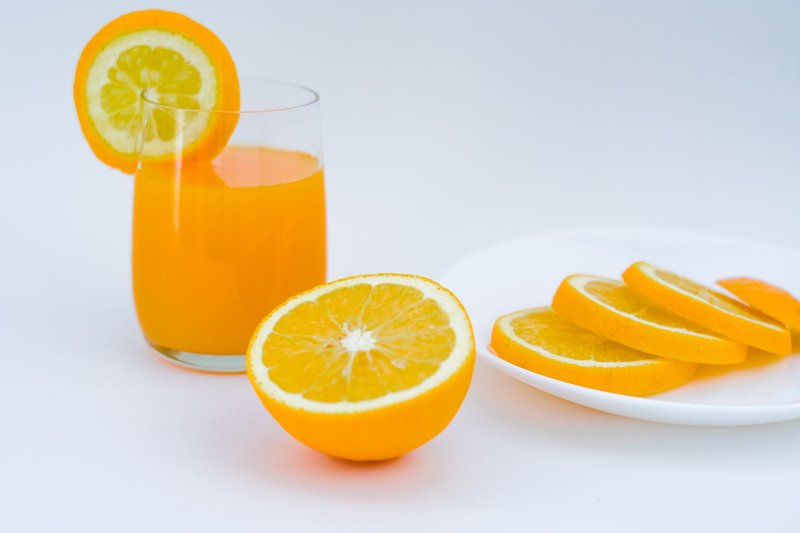
Fruit sugar worries people more than it should, and juice worries them less than it should.
Whole fruit. The sugar in an apple comes packaged with fiber and water, which slow digestion and make it hard to overeat. It’s tough to eat four oranges. It’s easy to drink four oranges’ worth of juice. Large observational studies have generally linked higher whole-fruit intake with lower, not higher, risk of type 2 diabetes. People with diabetes are usually advised to keep eating fruit and pay attention to portion size and total carbohydrate. If you manage blood sugar, your clinician or dietitian can tell you what portions fit your plan.
Juice. Squeezing the fruit removes most of the fiber and concentrates the sugar into something you drink in seconds. The NHS caps juice and smoothies at one portion a day, no matter how much you drink, and the WHO classes the sugars in juice as “free sugars,” the same bucket as table sugar and honey.
Dried fruit. Water is gone, so sugar is concentrated. Raisins run about 59g of sugar per 100g, against roughly 16g for fresh grapes. The NHS counts 30g of dried fruit as one portion, and recommends having it with meals rather than snacking on it all day, which is easier on teeth.
Vegetables. Non-starchy vegetables (leafy greens, broccoli, peppers, tomatoes, cucumber) barely move blood sugar. Starchy ones like potatoes and corn do, and they belong in the carbohydrate part of the meal.
For weight loss, vegetables give the most volume for the fewest calories. For kids, fruit is the easier win. Keep vegetables on the plate without a fight, and let fruit be the sweet option that isn’t candy.
How to split your plate
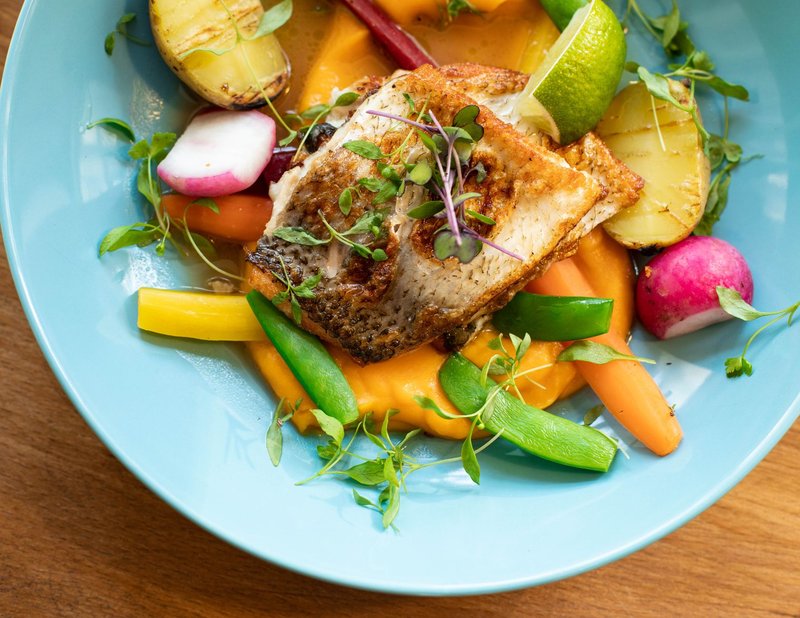
A workable layout for lunch or dinner:
- Half the plate: vegetables, preferably two colors, with at least one non-starchy.
- A quarter: protein, such as fish, eggs, beans or meat.
- A quarter: starch, such as rice, bread, or potatoes.
- Fruit: one or two portions spread across breakfast and snacks, not stacked at the end of the day.
If you hit 400g in a day, that’s roughly three vegetable portions and two fruit portions. A salad with a tomato and cucumber counts as vegetables for this purpose, even though botanists would point out that both are fruit. The plate doesn’t care.
FAQ
Is a tomato a fruit or a vegetable? Botanically, a fruit. Culinarily, a vegetable. The US Supreme Court ruled it a vegetable for tariff purposes in 1893, without disputing the botany.
What’s the main difference between a fruit and a vegetable? A fruit develops from a flower’s ovary and holds seeds. A vegetable is any other edible part of the plant: root, stem, leaf or bud. In cooking, the line is flavor: sweet is fruit, savory is vegetable.
Which fruits are actually vegetables? None are, in botany. The reverse is the usual question: which vegetables are actually fruits? Tomatoes, cucumbers, zucchini, peppers, eggplants, pumpkins, avocados, olives and green beans.
Are potatoes vegetables? Culinarily yes, botanically they’re tubers. Nutritionally they work as a starch, and the NHS doesn’t count them toward 5 a day.
Is fruit worse than vegetables because of sugar? Per gram, fruit has more sugar. Whole fruit’s fiber and water blunt the effect, and eating it is linked to better health outcomes. Juice and dried fruit are the forms to limit.
How much should I eat each day? At least 400g in total, or five 80g portions, according to the WHO. Aim for more vegetable portions than fruit.