Fiji’s trees are mostly covered by two kinds of writing: Latin-heavy botanical papers and app-generated species lists. This guide is neither. It covers 18 trees you can find across the islands, with the Fijian name where one is well established, a way to recognize each, and what people have done with it for a few thousand years.
A note on the word “native.” Most trees here are native or endemic, but two (coconut and the paper mulberry behind tapa cloth) came with the first Pacific settlers. They’re included because Fijian life would look very different without them, and each entry says which is which.
Table of Contents
- Fiji’s forest zones in one minute
- Trees of Fiji by forest zone
- Coastal and mangrove trees
- Lowland rainforest trees
- Montane and cloud forest trees
- Dry forest and village trees
- Which tree was used for what
- Why Fiji’s trees are in trouble
- Where to see Fiji’s trees
- The short version
Fiji’s forest zones in one minute
Fiji spans more than 300 islands, but the forest story is told mostly on the big ones: Viti Levu, Vanua Levu and Taveuni. The southeast trade winds hit their eastern flanks and drop rain on them, which is why the windward sides carry wet forest and the western sides sit in a rain shadow.
That gives you four zones to keep in mind:
- Coastal and mangrove: salt-tolerant trees on beaches, river mouths and tidal flats.
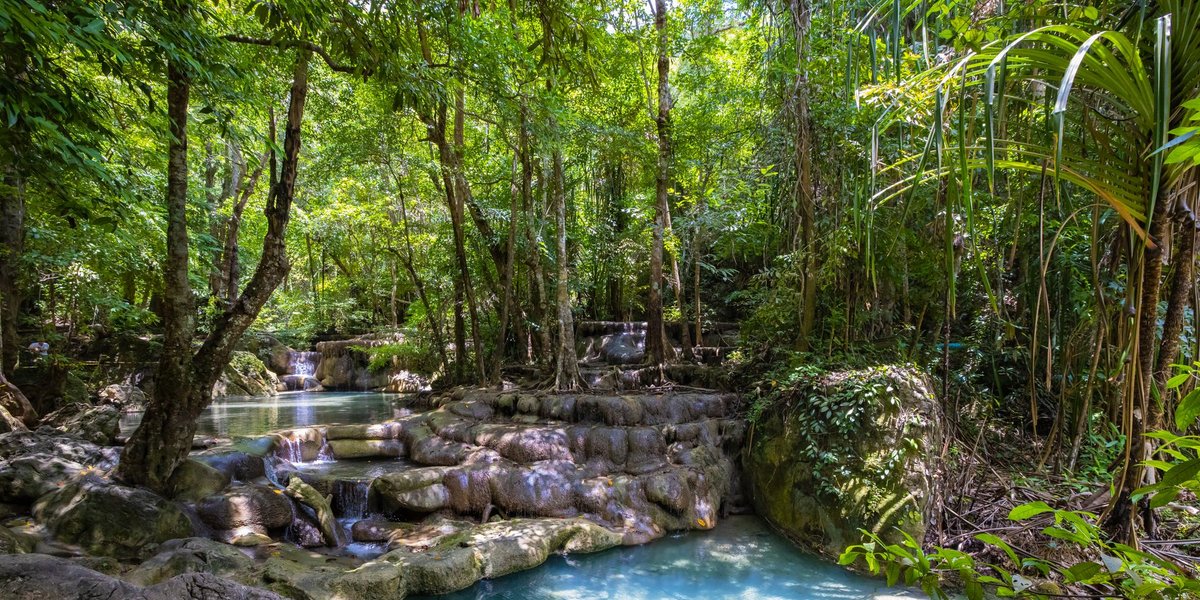
- Lowland rainforest: the tall, dense forest on the wet side of the islands, home to most of the timber giants.
- Montane and cloud forest: cooler, mossier forest on high ridges and peaks above roughly 1,000 m, such as Tomanivi on Viti Levu, where trees drip with epiphytes.
- Dry forest: the leeward, western slopes, where a long dry season shapes a different, much rarer woodland.
A large share of Fiji’s native flowering plants grow nowhere else on Earth, which is why a short list of trees can still hold real surprises.
Trees of Fiji by forest zone
Coastal and mangrove trees
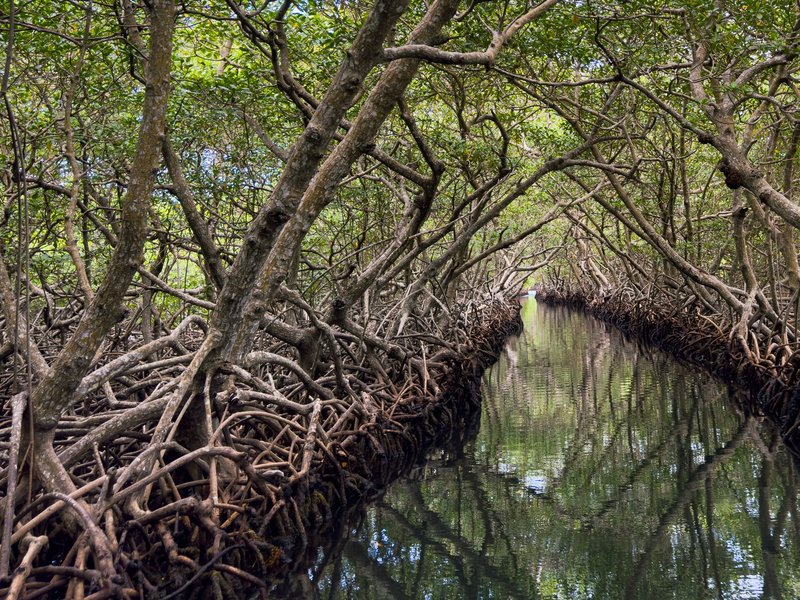
Start at the shoreline. These trees tolerate salt spray, shifting sand and tides, and several of them supplied Fijians with rope, mats, canoes and medicine without any need to go inland.
1. Coconut (niu)
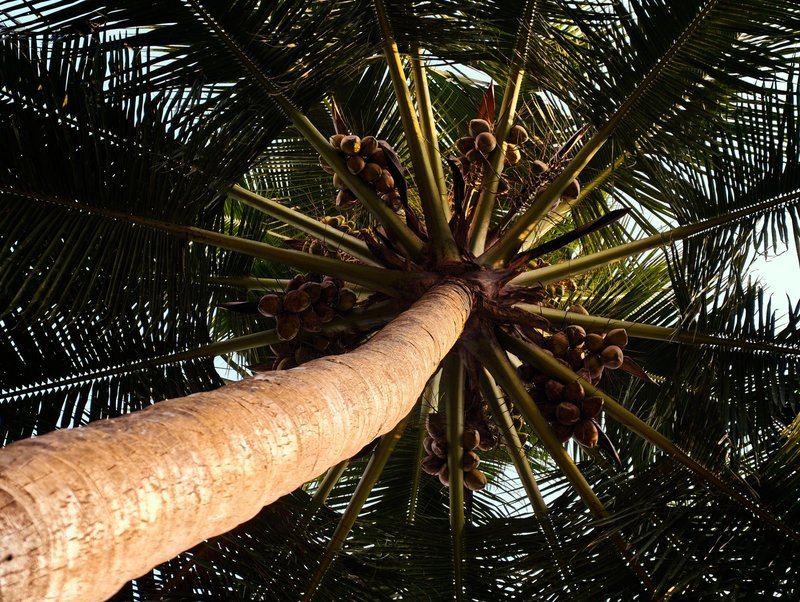
Scientific name: Cocos nucifera Spot it: Curved, unbranched trunk topped with a crown of feather-shaped fronds up to 5 m long. Where: Beaches and village edges on almost every island. Used for: Drinking nuts, copra, thatch, and magimagi, the braided cord made from husk fiber that lashes together house frames and canoe parts.
Coconut is the one entry on this list whose “native” status is debated. It spread across the Pacific by ocean currents and by people carrying it in canoes, and nobody can cleanly separate the two. In Fiji it works as both a food crop and a cultural fixture.
2. Fish poison tree (vutu kana)
Scientific name: Barringtonia asiatica Spot it: Huge, paddle-shaped leaves clustered at branch tips, and square-ish, fibrous fruits the size of a fist that wash up on beaches. Where: Sandy and rocky shorelines. Used for: Crushed seeds were used to stun fish in tidal pools. That’s the origin of the English name, and it’s also why you shouldn’t eat the fruit.
The fruit floats for months, which explains how the species spread across the Indo-Pacific. At night, the powder-puff flowers open pale pink and white and drop by morning, leaving a carpet of stamens under the tree.
3. Large-leafed orange mangrove (dogo)
Scientific name: Bruguiera gymnorhiza Spot it: Knobby “knee” roots that loop out of the mud, and cigar-shaped seedlings hanging from red-capped calyces. Where: The landward, muddier edge of mangrove stands, behind the stilt-rooted Rhizophora species at the water’s edge. Used for: Bark has long been used for dye and tanning, and the wood for house posts and fuel.
Fiji’s mangroves aren’t one thing. Stilt-rooted Rhizophora trees stand at the front line, and Bruguiera sits behind them, where the mud is firmer. One local hybrid, Rhizophora × selala, takes its species name from the Fijian word for it. Mangroves also act as nurseries for reef fish, and as a buffer when cyclone surges push in.
4. Beauty leaf (dilo)
Scientific name: Calophyllum inophyllum Spot it: Glossy, oval leaves with dozens of fine parallel veins, white flowers, and round green fruits like small golf balls. Where: Beaches and coastal forest, usually leaning out over the sand. Used for: Oil pressed from the nuts is rubbed on skin and used in traditional remedies, and the strong wood has been used for canoes and boat building.
Look for the dilo on a hot day. The dense, low canopy casts some of the best shade on any Fijian beach.
5. Sea hibiscus (vau)
Scientific name: Hibiscus tiliaceus Spot it: Heart-shaped leaves, and yellow flowers that turn orange-red by evening. Where: Coastal thickets, river banks, and disturbed ground. Used for: Bark fiber for rope and for the liku, the fiber skirt worn in traditional dress, and light wood for floats and fire-making.
Vau grows fast, resprouts when cut, and tangles itself into impenetrable thickets. That toughness is exactly why it became a fiber plant.
6. Screw pine (voivoi)
Scientific name: Pandanus tectorius Spot it: Stilt-like prop roots, spiral-arranged spiky leaves, and orange fruits that look like segmented pineapples. Where: Sandy shores and limestone coast. Used for: The leaves are dried, boiled and woven into ibe, the pandanus mats used for sleeping, ceremonies and gifts.
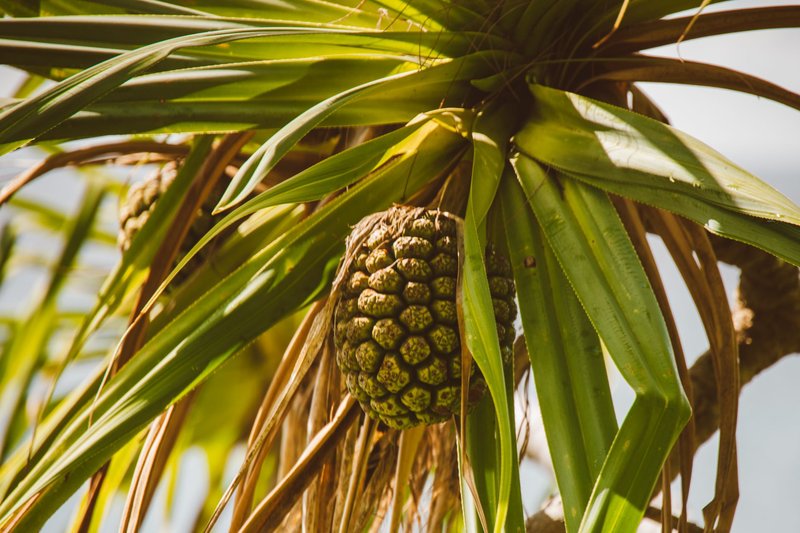
Fijian mats carry real weight at weddings and funerals, where they’re exchanged as valuables. Every one begins as a spiky leaf off a tree like this.
Lowland rainforest trees
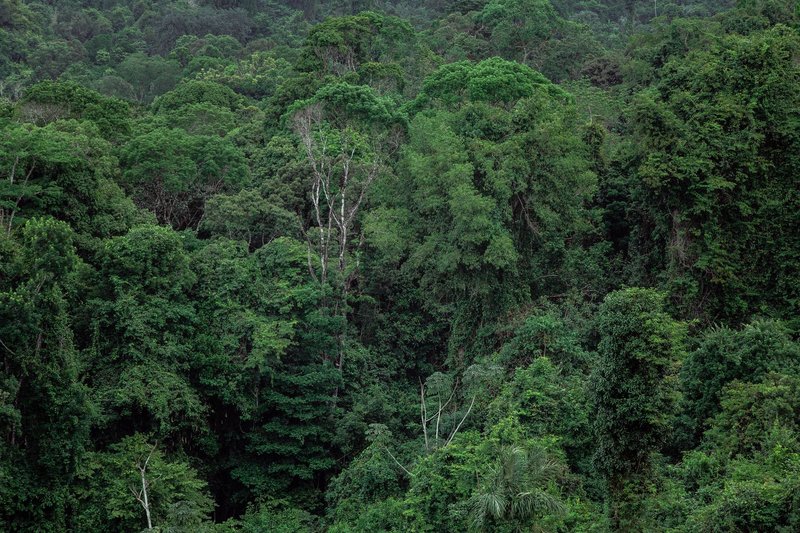
The wet-side lowland forest holds Fiji’s biggest trees and most of its timber species. Many of these are also the hardest to find now, because accessible stands got logged first.
7. Vesi
Scientific name: Intsia bijuga Spot it: Compound leaves with two pairs of leaflets, spreading crown, and flat, woody seed pods. Where: Lowland forest and coastal forest, mostly on the wetter islands. Used for: Fiji’s most prized timber. The heartwood is dense and resists rot, so it has gone into house posts, canoes, and tanoa, the carved bowls used for kava.
Vesi earned its status through sheer durability. A vesi post set in the ground can outlast the people who set it. The same durability is why large trees near villages and roads have become scarce.
8. Dakua makadre (Pacific kauri)
Scientific name: Agathis macrophylla Spot it: A straight, pale gray trunk with flaking bark, climbing to 30 m or more, and stiff paddle-shaped leaves. It’s a conifer, but it has no needles. Where: Lowland to mid-elevation forest on the larger islands, including Vanua Levu. Used for: Makadre is the hard resin that oozes from the trunk. It has been burned for light and used as a sealant, and the soot supplied black pigment for tapa cloth.
This is the tree most Fiji guides lead with, and it earns the slot. It belongs to the same genus as New Zealand’s kauri, and its vertical bole is unmistakable once you’ve seen one in a forest of curved trunks.
9. Kaunicina
Scientific name: Canarium vitiense Spot it: Large buttressed base, long compound leaves, and an aromatic smell when the bark is cut. Where: Lowland rainforest. Used for: Edible nuts, aromatic resin and timber.
The genus gives Canarium its resin, and it’s the same resin family that produces pili nuts and elemi elsewhere in the tropics. In Fiji the species name vitiense literally means “of Viti,” the Fijian name for the country.
10. Degeneria (no common name)
Scientific name: Degeneria vitiensis Spot it: Smooth, oval leaves, pale flowers with fleshy petals, and big, hard-skinned fruit. Where: Wet forest on Viti Levu and Vanua Levu. Used for: Nothing much. This one’s about biology.
Degeneria is the headline tree for botanists. Its family, Degeneriaceae, has just two species, and both are Fiji endemics. The flower has features considered primitive among flowering plants, including stamens that are flat and almost leaf-like. It was first collected in the 1940s by Otto Degener, which is where the name comes from. If you’re a plant nerd, this is the Fiji tree to find.
11. Fijian lychee (dawa)
Scientific name: Pometia pinnata Spot it: Long, ridged-leaflet compound leaves with new growth in coppery red, and a heavily buttressed trunk. Where: Lowland forest and village groves. Used for: Sweet, grape-like fruit, plus building timber.
Dawa fruit is one of the few wild forest fruits you’ll actually see for sale at Fijian markets in season. Its relatives include lychee and rambutan, which explains the texture.
12. Pterocymbium oceanicum
Scientific name: Pterocymbium oceanicum Spot it: Broad buttresses, large heart-shaped leaves, and papery, boat-shaped fruit pods. Where: Lowland forest. Used for: Light timber, and mostly of interest for its looks.
The genus name comes from the Greek for “boat” and “cup,” which describes the pods. They split open while still on the tree and the seeds ride along the edges, ready to catch the wind. It’s among the best trees to look up at, rather than for.
Montane and cloud forest trees
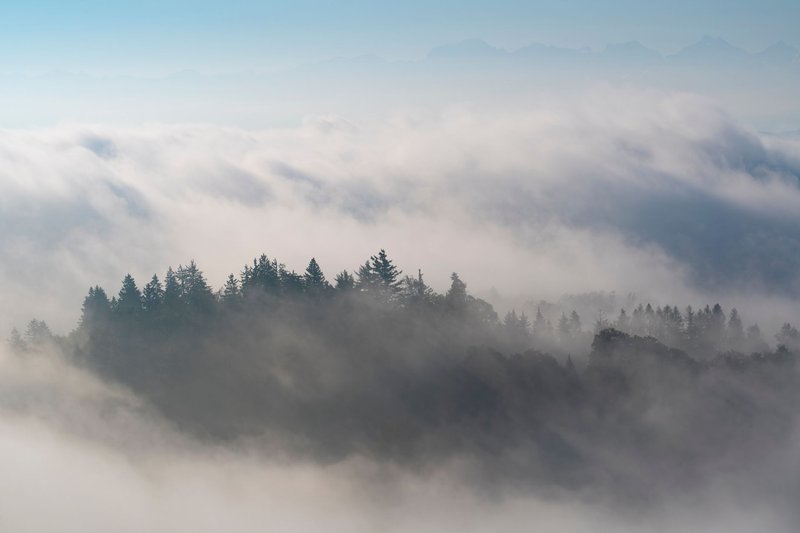
Climb above about 1,000 m and the forest shrinks, slows down and gets wet. Trunks are covered in moss, ferns and orchids, and a lot of what lives here exists nowhere else. The complete list of Fiji’s plants shows how species are spread across the islands and habitats.
13. Yaka
Scientific name: Dacrydium nidulum Spot it: Drooping branchlets with tiny scale-like leaves, resembling a weeping conifer. Where: Lowland to upland forest, often on ridges. Used for: Building timber and carving.
Yaka is another conifer in a country with several. Fiji has a surprisingly rich set of them for a tropical island nation, and conservationists pay particular attention to the rarer relatives of yaka.
14. Fiji’s ironwood myrtle (vuga)
Scientific name: Metrosideros vitiensis Spot it: Crimson pom-pom flowers made of long stamens, and leathery oval leaves. Where: Cloud forest and exposed ridges. Used for: Hard wood, and a favorite with bees and birds.
Vuga is the Fijian name used for the genus Metrosideros, and it’s the same genus as New Zealand’s pōhutukawa. Seeds often germinate in the crowns of other trees and send roots downward, so a young vuga may begin life perched on another tree.
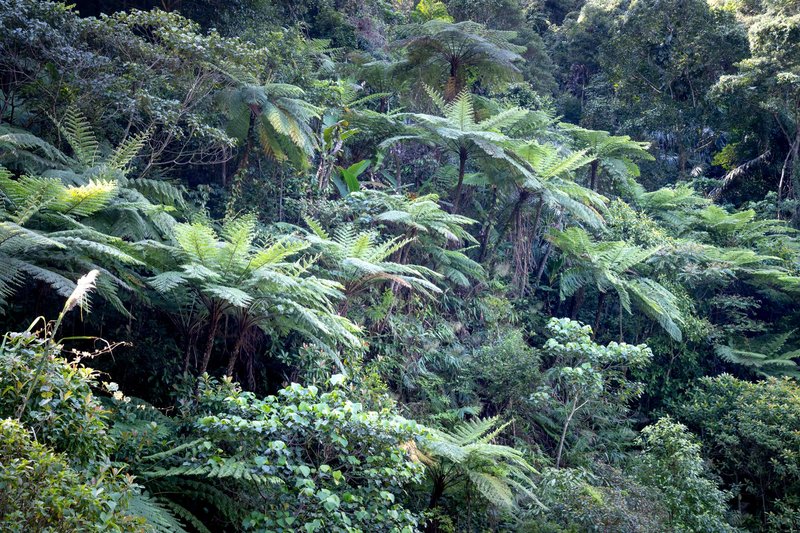
15. Tree ferns (balabala)
Scientific name: Cyathea species Spot it: A slender, fibrous trunk topped with a crown of fronds that unroll from tight coils. Where: Streamsides, forest gaps and cloud forest. Used for: Trunks have been used as posts, and the fronds as decoration.
Tree ferns aren’t true trees, since they have no wood and don’t grow wider with age. They still define the look of Fiji’s upland forest. A tree fern is an ancient lineage, and a stand of them looks like something from the Jurassic.
Dry forest and village trees
Fiji’s western dry forest is rare enough that this group also includes two trees you’ll mostly meet around villages, because that’s where their story is.
16. Fiji sandalwood (yasi)
Scientific name: Santalum yasi Spot it: Small tree with thin, opposite leaves and a faintly fragrant cut heartwood. Where: Dry forest and open woodland, on the leeward side of the islands. Used for: Fragrant oil and incense wood.
Yasi shaped Fijian history. Sandalwood traders arrived in the early 1800s, and a few years of heavy cutting almost wiped out the wild stock. It’s a root parasite, drawing some of its water from neighboring trees, which makes replanting tricky.
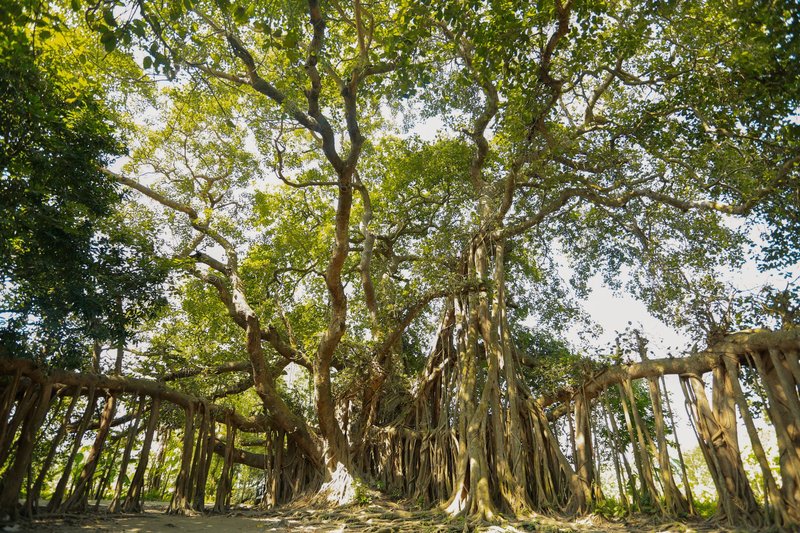
17. Banyan (baka)
Scientific name: Ficus obliqua Spot it: A broad, spreading crown with aerial roots dropping from branches that thicken into new trunks. Where: Village centers, forest edges and hillsides. Used for: Shade, mostly, and as a landmark.
A baka in a village often marks where people meet. It begins as a seed dropped by a bird into a crack, then grows downward until it can anchor itself and, sometimes, strangle its host.
18. Paper mulberry (masi)
Scientific name: Broussonetia papyrifera Spot it: A small, thin tree with lobed, rough leaves of different shapes on the same branch. Where: Cultivated in village plots, especially in the Lau Islands and on Vanua Levu. Used for: Masi, the bark cloth known elsewhere as tapa.
Masi is an introduced tree that Pacific settlers carried with them. The inner bark is soaked, beaten into sheets and stamped with patterns, using the black soot from burned dakua resin. If you see a ceremonial gift of cloth in Fiji, you’re looking at this tree.
Kava (yaqona) gets mentioned in every Fiji guide, but it’s a shrub. Its carved bowls, however, usually come from vesi.
Which tree was used for what
The same few trees show up again and again in Fijian traditional life. This table sorts the 18 by the job they’ve done.
| Job | Main trees | What they supplied |
|---|---|---|
| Canoes and heavy timber | Vesi, dilo, dakua makadre | Hulls, posts, house frames |
| Rope and fiber | Coconut (magimagi), vau, voivoi | Lashing, skirts, mats |
| Food | Coconut, dawa, kaunicina | Drinks, fruit, nuts |
| Dye, resin and scent | Dakua makadre, yasi, dogo | Black pigment, torches, oil, tannins |
| Cloth | Masi | Tapa bark cloth |
| Fish and medicine | Vutu kana, dilo | Fish stunning, skin oil |
Why Fiji’s trees are in trouble
Fiji’s trees face four main pressures.
Logging. The big timber species, vesi and dakua above all, were cut first and fastest. Plantation mahogany and pine now supply much of the commercial timber, but old-growth stands of the native species are scarce.
Dry forest loss. Western dry forest has been cleared for sugar cane, grazing and burning. Conservation groups put what remains in the low single digits as a share of the original, which makes it among the most threatened forest types in the Pacific. The Endangered Species in Fiji guide covers the species at highest risk, with IUCN status and the main threats each one faces.
Invaders. African tulip tree and the vine Mikania micrantha spread fast in disturbed forest and shade out native seedlings.
Cyclones and sea level. Severe storms like Cyclone Winston in 2016 flattened forest and mangrove, and rising seas push on the coastal zone from the other side.
The Botanic Gardens Conservation International has run a project, Saving Fiji’s Threatened Trees, to assess and protect the most at-risk species. You can check the global status of any species on the IUCN Red List, and the accepted scientific names for each are listed in Kew’s Plants of the World Online.
Where to see Fiji’s trees
Three places cover most of the zones above.
Garden of the Sleeping Giant (near Nadi, Viti Levu). The easiest start. It’s known for its orchid collection, but the grounds have mature tropical trees, and it sits on the drier western side, so you’re in different country from the rainforest. Good for a half day.
Colo-i-Suva Forest Park (near Suva, Viti Levu). About 11 km north of the capital, with marked trails through wet forest. Much of the park’s tall canopy is plantation mahogany from the mid-20th century, mixed with native regrowth, so go with the aim of spotting tree ferns, buttressed trees and birds rather than a pure native forest.
Sovi Basin (central Viti Levu). The largest intact block of lowland rainforest on the island, and the best place to find the big timber species in something like their natural setting. There are no casual trails. Access is arranged through the local landowning communities and a guide, so plan ahead.
The short version
The trees of Fiji sort cleanly into four habitats, and each one tells a different story: mangroves that hold the coast together, lowland giants like vesi and dakua makadre, cloud forest oddities like Metrosideros and tree ferns, and the fragile dry forest that gave Fiji sandalwood. If you only get to look at three, start with a mangrove at low tide, a dakua makadre trunk in lowland forest, and a village banyan.