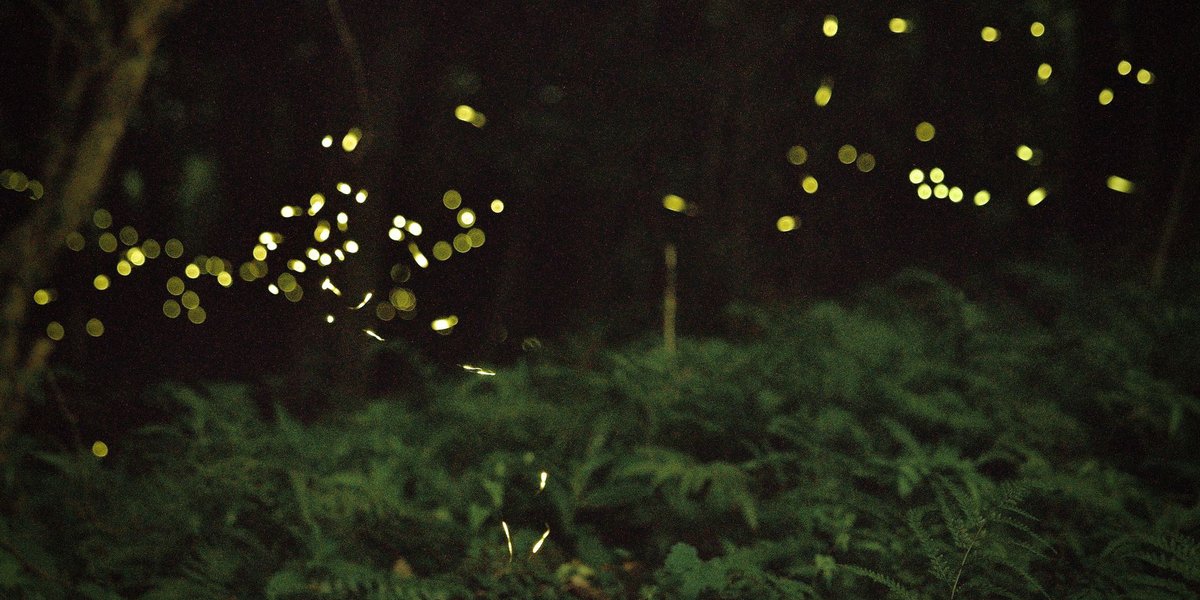
Fireflies don’t leave your yard because they’re picky. They leave because the lights stay on, the leaf litter gets bagged, and something gets sprayed on the lawn every few weeks. A global review of firefly extinction threats named those three culprits: habitat loss, artificial light at night, and pesticides.
The part most guides skip is timing. A lightning bug spends one to two years as a larva, living in damp soil and leaf litter and eating snails, slugs, and worms. The glowing adults you see in June are the last few weeks of a long life that happened underground. Fix the yard this year and you may get a modest bump next summer, with a real difference by the third.
Below are nine ways to attract lightning bugs, ordered roughly by how much each one matters.
Contents
- 9 ways to attract lightning bugs
- Do this tonight
- Do this season
- When fireflies show up and when to expect results
- The tick and mosquito trade-off
- FAQ
- Count them for science
9 ways to attract lightning bugs
1. Turn off the outdoor lights
Why it works: Fireflies talk with light. Males flash a species-specific pattern and females answer from the grass. A porch light, a floodlight, or a glowing patio string drowns out that conversation, and fewer pairs find each other.
How to do it: Switch off decorative and landscape lighting from late May through July. Put the necessary lights, like a front door or a stairwell, on motion sensors, aim them down, and shield them. Close the blinds on the side of the house facing your best firefly spot. You can’t do anything about the streetlight, but a hedge or a few shrubs between it and your yard helps.
Cost and effort: Free, and you save on electricity.
2. Stop using insecticides
Why it works: Larvae live in the top layer of soil for up to two years. Grub killers, broad-spectrum yard sprays, and the monthly mosquito misting services hit them directly, and the larvae can’t move out of the way.
How to do it: Skip lawn insecticides entirely. If you hire a lawn or mosquito company, ask what’s in the mix and ask for a plan that leaves your beds and shrubs alone. For mosquitoes, treat standing water with Bti dunks, which target mosquito larvae specifically, instead of fogging the whole yard.
Cost and effort: Free or cheaper. You save the spray bill.
3. Leave the leaf litter
Why it works: Many species spend their larval years in moist leaf litter and the soil under it. A tidy bed with fresh mulch and no leaves is a desert to them.
How to do it: Rake leaves off the lawn and into your beds, under shrubs, and along the fence line, and leave them there through the next summer. Rake them off paths and the first few feet next to your house if ticks are a concern (more on that below).
Cost and effort: Free, and less work than bagging.
4. Let a patch of grass grow tall
Why it works: During the day, adults rest in tall grass and low vegetation. At dusk, many males launch from it and flash while hovering just above the blades. Closely mowed turf gives them nowhere to hide and nowhere to display.
How to do it: Pick a corner, the back of the lot, or the edge along a fence, and stop mowing it from spring to fall. Mow that patch once a year in late fall or winter, not in the middle of firefly season. Mow a path through it so you can walk to the good viewing spots.
Cost and effort: Free. It’s the easiest “lawn care” you’ll ever do.
5. Keep part of your yard moist
Why it works: Larvae need damp ground. Moist soil keeps them from drying out and supports the snails, slugs, and worms they eat. Some of the best firefly yards border a stream, a pond, or a boggy low spot.
How to do it: Don’t fight a wet corner. Plant it instead. A rain garden, a shallow pond with a muddy edge, or a spot that catches roof runoff works well. Mulch beds with leaves rather than hard-packed bark chips to hold moisture. Keep any open water moving or treated with Bti dunks so it doesn’t become a mosquito nursery.
Cost and effort: Low for a low spot you already have, moderate if you dig a rain garden.
6. Plant native trees and shrubs
Why it works: Trees do two jobs. Their shade keeps the soil cool and damp, and their fallen leaves and needles build the litter layer larvae live in. Pines are a common recommendation, since pine straw holds moisture well, but oaks, maples, and native shrubs do the same job in the eastern half of the country.
How to do it: Choose species native to your area through your state’s native plant society or extension service. Fill the gap along the edge of your property first, where the shade and the leaf drop can build over time.
Cost and effort: Moderate to high, but trees pay off for decades.
7. Add native grasses, sedges, and wildflowers
Why it works: Native bunch grasses and sedges give adults a place to perch and give larvae a humid, structured ground layer. Flowering plants bring in the small insects that make the yard livable for everything else. A few species do feed on pollen or nectar as adults, but most mainly need cover.
How to do it: In much of the East and Midwest, native sedges (Carex), little bluestem, goldenrod, and Joe-Pye weed fit this role. In the Southeast, Mid-Atlantic, and Northeast the exact species differ, so check a regional native plant list. In the arid West, where fewer species flash, focus on the creek, ditch, and irrigated areas, since firefly habitat there clusters around water.
Cost and effort: Moderate. Plugs cost a few dollars each and fill in over two seasons.

8. Keep a woodpile or a rotting log
Why it works: Larvae of many species shelter in rotting wood and under loose bark. A decaying log stays damp and attracts the snails and slugs larvae hunt.
How to do it: Leave a fallen log or branch pile in a shady corner and let it rot. If you stack firewood, keep the older bottom layer for wildlife instead of burning it all. Keep any pile at least 20 feet from the house and off the path.
Cost and effort: Free.
9. Tolerate the snails and slugs
Why it works: Lightning bug larvae are predators. Their food is snails, slugs, and earthworms. Kill the prey and you starve the larvae.
How to do it: Skip slug pellets. Protect the prized hostas with copper tape, handpick at dusk, or sacrifice a plant or two. A few chewed leaves are the price of a firefly yard.
Cost and effort: Free, but it takes some patience.
Do this tonight
- Turn off porch, patio, and landscape lights, or move them to motion sensors.
- Close the curtains on the side of the house facing the yard.
- Stop mowing one corner of the lawn.
- Cancel any scheduled mosquito or lawn insecticide visit.
- Leave the leaves where they are.

Do this season
- Choose a spot for a rain garden or a damp planting bed and mark it.
- Order native sedges, grasses, and wildflowers for fall planting, when roots establish with less watering.
- Set aside a corner for a log pile.
- Buy Bti dunks for any water that sits longer than a few days.
- Add native trees or shrubs along the lot edge.
When fireflies show up and when to expect results
Across much of the US, adults emerge from late May through July, with peak numbers from mid-June to early July in the East. Southern states can start earlier, and a few species fly into August. Each species has its own window, so you may see different flashers at different points in the season. The synchronous fireflies in the Great Smoky Mountains, for example, peak in late May to mid-June.
Watch about 30 to 60 minutes after sunset. Fireflies stop flashing when it gets cold, so warm, humid, still nights are the best.
For results, plan on this schedule:
- Year one: Lights off and no spraying protect the larvae already in your soil, so you may see slightly more adults.
- Year two: Larvae from eggs laid in your improved habitat start to mature.
- Year three and beyond: A stable local population builds as the habitat fills in.
Fireflies live a few weeks as adults, and females lay eggs in damp ground. If your neighbors keep the lights on and spray, your yard will still help, but it will take longer.
The tick and mosquito trade-off
Tall grass, leaf litter, and standing water are what lightning bugs want. They are also what ticks and mosquitoes like. You don’t have to pick one or the other.
For ticks: The CDC advises keeping the lawn mowed, removing leaves and brush near the house and play areas, and putting a three-foot barrier of wood chips or gravel between lawn and woods. Put your wild patch toward the back of the lot, away from where kids and dogs play, and keep a short-mown buffer and a mowed path around it. Stack woodpiles away from the house.
For mosquitoes: They need standing water for about a week to complete their larval stage. Dump buckets, toys, and clogged gutters weekly. Treat ponds and rain gardens with Bti dunks, or add a small pump to keep the water moving.
Wear long pants and check yourself for ticks after an evening of firefly watching, the same way you would after any walk in the woods.
FAQ
Do fireflies and lightning bugs differ? No. They’re the same insects, which are beetles. “Lightning bug” is the common name in much of the Midwest and South.
Does a flashlight attract fireflies? Not reliably. A few species will answer a well-timed flash from a penlight, but it won’t bring a population to your yard. A bright light also does harm by interrupting their natural signaling. Skip it.
Why are there fewer fireflies than when I was a kid? Habitat loss, light pollution, and pesticide use have all increased. A lawn that was a field 30 years ago is probably a subdivision now.
Will bat houses or bird feeders help? Not for fireflies, since they don’t eat them in a meaningful way. They also don’t help with the larvae, which live in the soil.
Can I buy fireflies and release them? No. Fireflies sold commercially are typically wild-caught, and they won’t stay if the habitat isn’t right. Fix the habitat first.
Should I catch them in a jar? Look, it’s a rite of passage, but they die fast in a jar. If you do, release them within a few minutes and don’t squeeze the lid down.
Count them for science
Once the yard is set up, you can help researchers track what’s happening. Firefly Watch, run by Mass Audubon, asks volunteers to count fireflies for 10 minutes on summer evenings and report what they see. A few seasons of your own counts will also show you whether the changes are working.