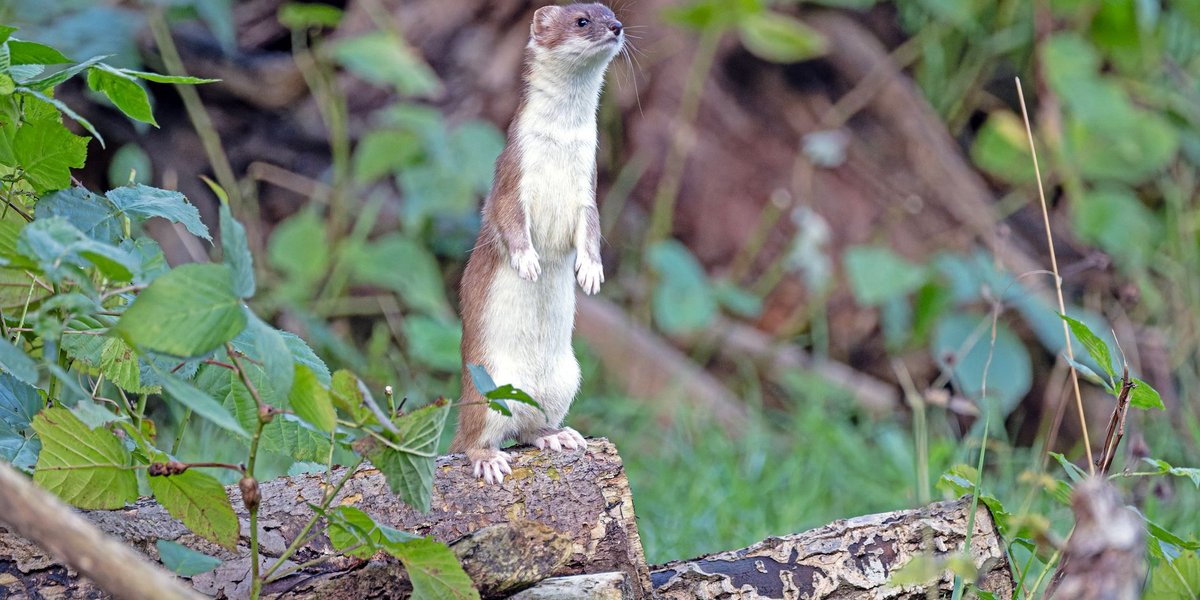
TLDR: Amazon weasels almost certainly eat small rodents, birds, insects, and amphibians, plus fish or crustaceans pulled from the shallows near riverbanks. Nobody has confirmed this by watching one hunt, though — the diet is an educated reconstruction built from the animal’s teeth, its webbed feet, and what its closest mustelid relatives eat. That’s not a gap in the science. It’s a fair reflection of how rarely this weasel crosses paths with anyone holding a notebook.
Table of Contents
- What We Know vs. What We’re Inferring
- Amazon Weasel Facts at a Glance
- A Body Built for Riverbanks, Not Burrows
- Why It’s Not a Mustela Anymore
- So, What Does an Amazon Weasel Actually Eat
- The Questions Everyone Asks Next
What We Know vs. What We’re Inferring
Start with the honest part: there is no field study that has documented an Amazon weasel making a kill. The species is known from roughly thirty confirmed records collected over two centuries, scattered across Brazil, Ecuador, and Peru. That’s not thirty sightings a year — that’s thirty, total, since the early 1800s.
Everything written about its diet, including this article, is inference. Good inference, built from real anatomy and real relatives, but inference all the same. Any source that hands you a confident bullet list of prey species without flagging that gap is smoothing over how little direct observation actually exists.
What follows is the same reconstruction, minus the false confidence.
Amazon Weasel Facts at a Glance
- Scientific name: Neogale africana (formerly classified as Mustela africana)
- Common names: Amazon weasel, tropical weasel
- Total length: roughly 43–60 cm, including a 16–21 cm tail
- Weight: about 85–350 grams, with a handful of outlier records pushing closer to 700 g
- Range: the Amazon Basin, across Brazil, Colombia, Ecuador, and Peru
- Elevation: sea level up to roughly 1,250 meters
- Conservation status: Least Concern per the IUCN, though researchers studying the species argue it functions more like a Data Deficient animal given how thin the ecological record is
It’s the largest of South America’s weasels, which still isn’t saying much next to its North American cousins. A well-fed long-tailed weasel could nearly pass for a juvenile Amazon weasel.
A Body Built for Riverbanks, Not Burrows
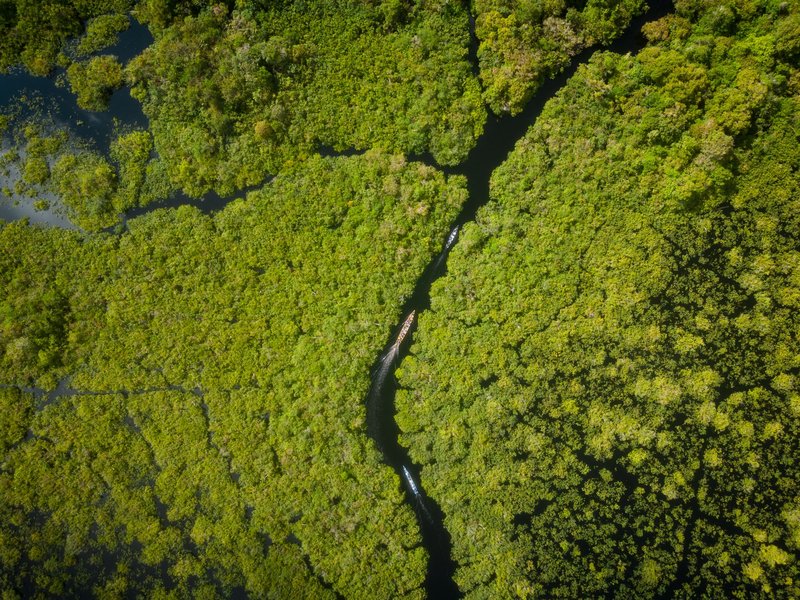
Picture the weasels you already know — grassland hunters, barn raiders, animals built to squeeze down a rodent tunnel. The Amazon weasel isn’t that. Its recorded habitat clusters almost entirely along lowland rivers and flooded forest, not open ground.
The feet explain why. Its soles are bare, not furred like a typical weasel’s, and the toes carry webbing between them. That’s a semi-aquatic adaptation, not a cosmetic one — it’s the kind of trait that shows up in animals that spend real time in water, not just near it. Combine that with a dark, otter-like pelage and a build suited to swimming, and the picture is less “weasel that lives by a river” and more “weasel that has partly redesigned itself for one.”
That single detail is why any credible answer to its diet has to include things a rodent-burrow specialist would never touch: fish, crabs, amphibians, anything a paw can reach into slow water and pull out.
Why It’s Not a Mustela Anymore
For most of the last two centuries, this animal sat in the genus Mustela alongside the weasels and stoats of Europe, Asia, and North America. That changed in 2021, when a genetic study reclassified it — along with the American mink and two other New World weasel species — into a resurrected genus called Neogale. The taxonomic record now lists Mustela africana as a basionym, the original name the species carried before the split.
The reason matters more than the paperwork suggests. The study found this whole American lineage — mink included — split off from the Old World Mustela line around 12 million years ago, making them each other’s closest relatives rather than close kin of the European polecat or Siberian weasel. Genetically, the Amazon weasel has more in common with a mink pulling crayfish out of a stream than with a European weasel raiding a henhouse. Given where it lives, that reclassification lines up with the animal a lot better than the old one did.
Most articles about this species still use the outdated name. If you see “Neogale africana” instead of “Mustela africana,” you’re looking at something written after the 2021 revision — or at least someone who checked.
So, What Does an Amazon Weasel Actually Eat
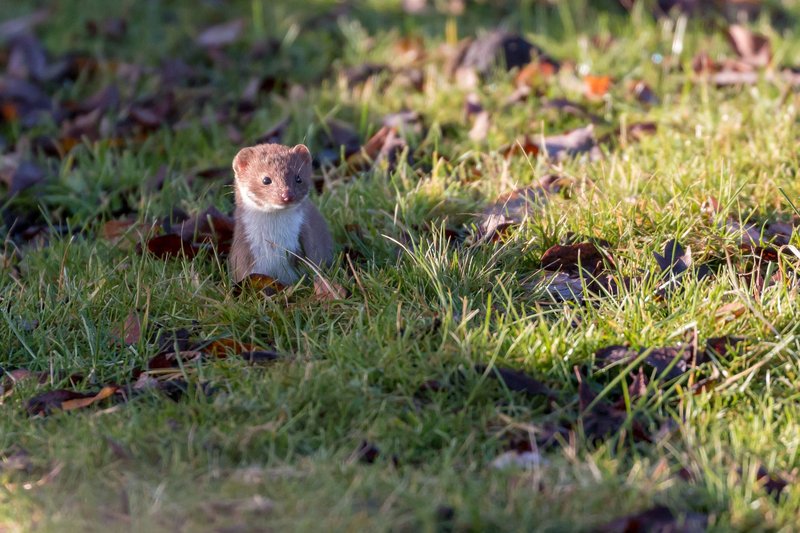
Here’s where the reconstruction happens. Three things go into it: the teeth, the feet, and the relatives.
The dentition is unambiguously carnivorous — robust, sharp, built for shearing meat rather than grinding plants. That rules out anything resembling an omnivorous diet padded with fruit or vegetation, which some larger mustelids do rely on. This is a dedicated hunter.
From there, size and habitat narrow the menu. A predator in the 85–350 gram range, hunting in flooded forest and along riverbanks, is not built to tackle anything much larger than itself. That points toward:
- Small rodents living in the leaf litter and riverbank burrows of its range
- Birds and their eggs, likely opportunistic rather than a primary target
- Insects and other invertebrates, an easy, abundant calorie source in any rainforest
- Amphibians, particularly frogs, which cluster near exactly the water sources this weasel favors
- Fish and crustaceans, the piece that separates it from a typical weasel diet and the piece its webbed feet argue for most directly
That last category is the strongest inferential leap, and also the most interesting one. The American mink — its nearest genetic relative under the Neogale revision — is a confirmed, well-documented eater of crayfish, frogs, and small fish. An animal that shares a genus, a general body plan, and a taste for riverbank habitat with the mink, while carrying the same webbed-foot adaptation, is not a stretch to picture doing the same thing. It’s the single best piece of evidence available, short of an actual field study.
What almost certainly isn’t on the menu: large mammals, and probably not much plant matter either. Mustelid teeth don’t do well with fiber.
The Questions Everyone Asks Next
Is the Amazon weasel dangerous to humans?
No. It’s a small, elusive predator that has been recorded so rarely that no meaningful account of aggressive behavior toward humans exists. There’s no venom, no group hunting behavior, and no realistic scenario where this animal is a threat to a person. If anything, the danger runs the other direction — deforestation is a far bigger risk to the weasel than the weasel is to anyone.
Is it the same animal as a ferret?
No, though the confusion is understandable. Ferrets are domesticated polecats (Mustela putorius furo), a completely different species bred from European stock for centuries. The Amazon weasel is a wild, undomesticated animal from a different genus entirely, native to a different continent, with no history of human handling. Same family, Mustelidae, in the way a fox and a wolf share a family — not the same animal.
Is the Amazon weasel endangered?
Currently, no. The IUCN lists it as Least Concern, based on the assumption that a rarely-recorded animal spread across a huge, still largely intact range likely has a stable population. That status comes with an asterisk, though: it’s a judgment made with very little direct data, in a habitat — the Amazon Basin — that is losing forest cover every year. Several researchers who’ve studied the species directly have said the Least Concern label reflects a lack of evidence of decline more than solid evidence of stability.