Table of Contents
- TLDR
- What Northern Muriquis Eat, In Short
- Northern vs. Southern Muriqui Diet
- Why the Diet Shifts With the Seasons
- The Specific Plants on the Menu
- Why Muriquis Eat Dirt
- Camping Out at a Fruiting Tree
- The Forest’s Gardeners
- A Shrinking Menu
TLDR
Northern muriquis are leaf specialists first, fruit opportunists second. Across a year of feeding records at Fazenda Montes Claros, leaves made up 51% of their diet, fruit 32%, flowers 11%, and bark, buds, and other odds and ends the rest. That’s the reverse of their southern cousins, who lean hard on fruit. Both eat soil for the minerals in it, both follow the fruiting calendar of the Atlantic Forest, and both are running out of forest to follow it in.
What Northern Muriquis Eat, In Short
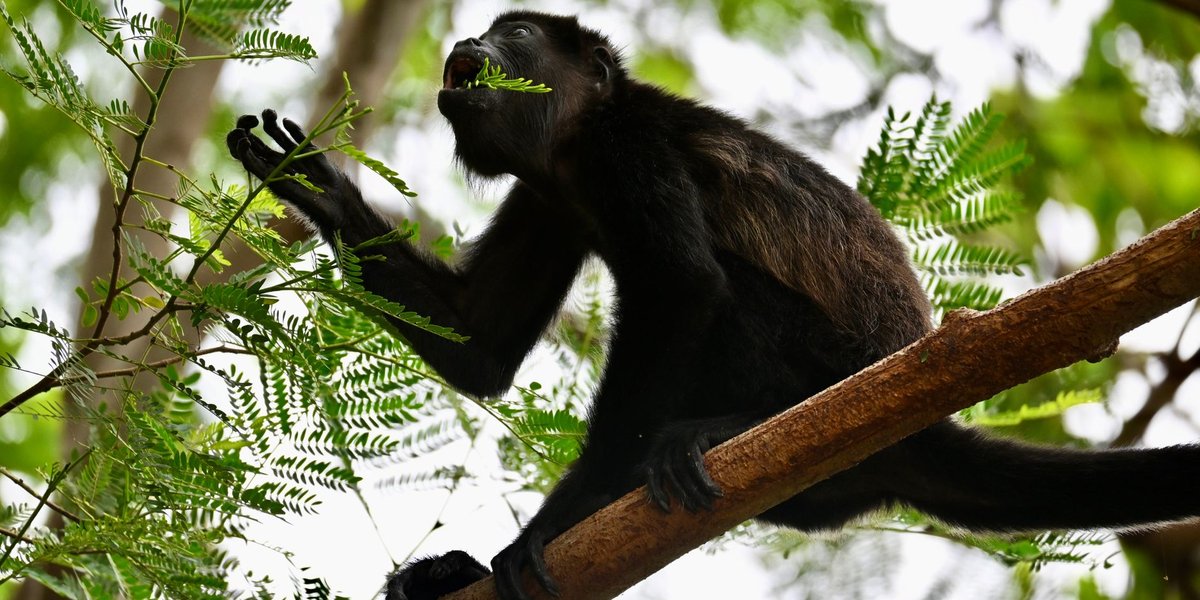
Northern muriquis (Brachyteles hypoxanthus) are folivore-frugivores, which is a clunky way of saying they eat mostly leaves and fill in with fruit when it’s around. New leaves get priority over mature ones — they’re softer, lower in the tannins and fiber that make older leaves harder to digest. When fruiting trees come into season, the ratio flips toward fruit for weeks at a time, then swings back.
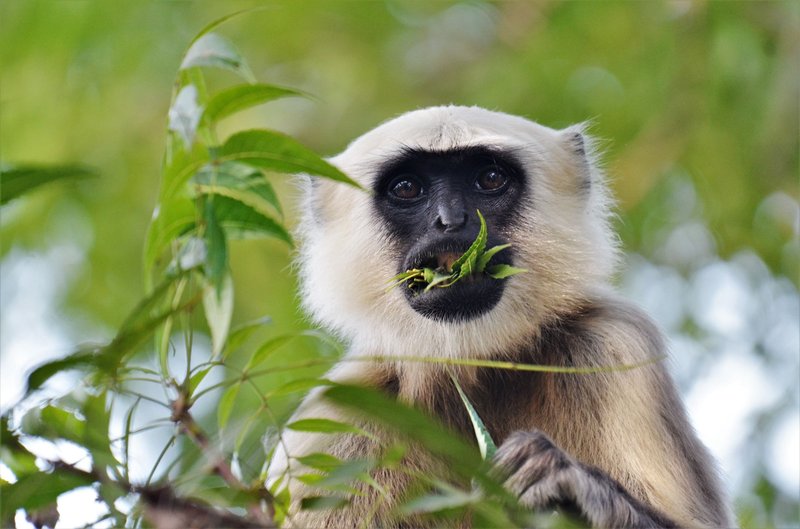
Flowers make up a surprisingly large slice, around 11% annually, and the rest is bark, bamboo shoots, ferns, buds, and the occasional insect picked off a leaf almost by accident. Vines and nectar show up too, though rarely as a main course.
Northern vs. Southern Muriqui Diet
The two muriqui species split roughly 2 million years ago, and their diets tell you why they’re still classified separately. Northern muriquis live in smaller, drier, more disturbed forest fragments in Minas Gerais, Espírito Santo, and Bahia. Southern muriquis (Brachyteles arachnoides) hold onto larger stretches of continuous Atlantic Forest further south, where fruit is more reliably abundant.
| Northern muriqui | Southern muriqui | |
|---|---|---|
| Primary food | Leaves (~51% of diet) | Fruit (~59–71% of feeding time) |
| Secondary food | Fruit (~32%) | Leaves (~33%) |
| Habitat | Smaller, fragmented forest patches | Larger continuous forest tracts |
| Feeding strategy | Falls back on leaves when fruit is scarce | Tracks fruiting trees closely, “camps” nearby |
| Flowers/other | ~17% combined | ~4–5% combined |
That table is the part most species profiles skip — they’ll tell you muriquis eat “leaves and fruit” and leave it there, as if one number covers both species. It doesn’t. A southern muriqui watching its fruit supply is watching its whole diet. A northern muriqui has leaves as a backup plan the southern population mostly doesn’t need.
Why the Diet Shifts With the Seasons
Fruit isn’t a year-round resource in the Atlantic Forest — it comes in pulses tied to rainfall. During wetter months, when fruiting trees are producing, muriquis of both species shift their feeding time toward fruit, sometimes gorging on a single abundant species for days. When the dry season thins out what’s ripe, they fall back on mature and new leaves to cover the gap.
Northern muriquis, living in the more fragmented and seasonally drier patches of forest, lean on that leaf fallback more heavily and more often than their southern relatives, which is the main reason their annual averages skew toward foliage rather than fruit.
The Specific Plants on the Menu
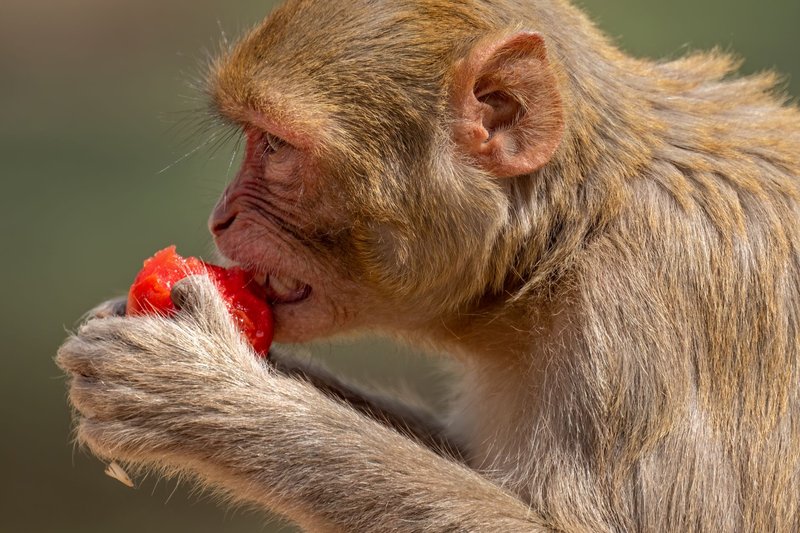
The generic “leaves and fruit” answer misses how selective muriquis actually are. Field studies have logged them repeatedly targeting the fruit of Margaritaria nobilis, several Andira species, and Anadenanthera trees, along with the fruit of Plathymenia foliolosa and Genipa americana. They go after the seeds of Mabea fistulifera specifically, cracking them open for the contents rather than swallowing the pod whole the way they do with softer fruit.
None of these are exotic choices — they’re common Atlantic Forest species, which matters for conservation. A muriqui population isn’t just losing “forest” when its habitat is cut, it’s losing a specific, narrow list of tree species it has learned to rely on. Swap the tree composition of a fragment and you can starve a troop that technically still has plenty of green canopy overhead.
Why Muriquis Eat Dirt
Muriquis of every age and sex eat soil, a behavior called geophagy, and it’s not a fluke or a stress response. Analysis of the soils they target found elevated levels of vanadium, aluminum, chromium, iron, nickel, titanium, and zinc — minerals that are hard to get enough of from leaves and fruit alone. Researchers at the Animal Diversity Web, maintained by the University of Michigan, note the soil’s acidity may also help buffer stomach pH, making it easier to break down the tannin-heavy mature leaves that make up part of the diet.
It’s a small but telling detail that most “top 10 monkey facts” pages skip entirely, and it’s one of the clearest signs that a muriqui’s diet is a nutrition problem it’s actively solving, not just a menu of whatever’s closest.
Camping Out at a Fruiting Tree
When a preferred fruit tree isn’t quite ripe yet, muriquis have been observed sticking close to it for days, feeding lightly elsewhere and returning, rather than moving on and risking another troop — or the birds and bats — cleaning it out first. Researchers studying southern muriqui diet in continuous Atlantic Forest recorded fruit dominating feeding time in every single month of a 12-month study, from a low of 40% up to 80% in peak months, which lines up with how tightly this species tracks its fruit supply rather than treating it as a bonus.
The Forest’s Gardeners
A muriqui’s gut isn’t just processing calories — it’s replanting the forest. A study comparing a troop of 35 muriquis to 22 tapirs sharing the same 850-hectare stretch of Atlantic Forest found the muriquis dispersed roughly five times more plant species and thirteen times more seeds than the tapirs did, depositing seeds in a way that left less empty, unseeded ground behind them.
That makes muriquis what ecologists call megafrugivores — large fruit-eaters whose seed-spreading habits shape which trees grow where, years after the fruit itself is gone. Lose the muriquis from a fragment, and some of the large-seeded trees they favor lose their main way of spreading.
A Shrinking Menu
Northern muriquis are critically endangered, with genetic and population studies estimating an 80% population decline over the past three generations, driven mainly by habitat loss carving the Atlantic Forest into isolated patches. Fewer than 1,000 individuals are believed to remain in the wild.
That’s the part the diet answers everyone’s searching for actually connects to. A species that depends on a specific short list of leaf and fruit sources, that needs enough intact forest to camp near fruiting trees and follow the seasonal fruit-to-leaf swing, doesn’t do well in a fragment too small to hold that variety. Every hectare of Atlantic Forest lost isn’t just less habitat in the abstract — it’s fewer Margaritaria nobilis trees, fewer Mabea fistulifera seed pods, and less room for a troop to wait out an unripe fruit season the way they’re built to.