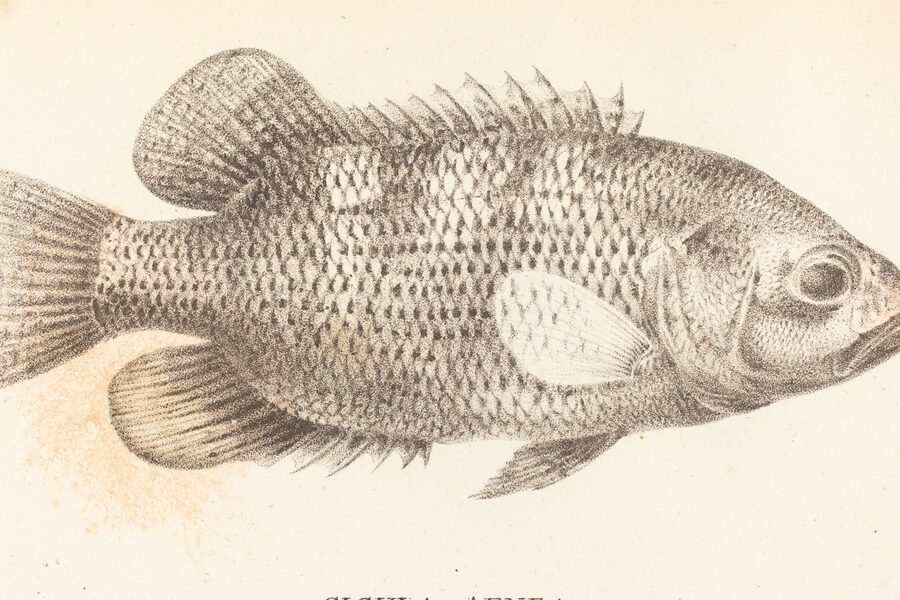
Slovenia’s lakes, rivers and Alpine streams support a rich mix of freshwater and migratory fish shaped by clean water, karst springs and varied elevations. From high‑altitude glacial pockets to lowland floodplains, the country’s waterways offer distinct habitats that influence which species thrive where.
There are 49 Fish of Slovenia, ranging from Arctic char to Zander (pikeperch). For each species you’ll find below a compact table organized with Scientific name,Habitat,Max length (cm) to make comparisons and field identification easier — you’ll find below.
Which parts of Slovenia host the most diverse fish communities?
River networks like the Sava, Drava and Soča plus their tributaries and connected lakes support the greatest diversity; alpine streams favor cold‑water specialists (e.g., trout, Arctic char), while lowland rivers and reservoirs host warm‑water species and migratory fish.
How should I use the list when trying to identify a fish in the field?
Use the Habitat and Max length (cm) columns first to narrow possibilities, then check the Scientific name for exact matches; combine that with photos or local guides, and always consider seasonality and local fishing regulations.
Fish of Slovenia
| Common name | Scientific name | Habitat | Max length (cm) |
|---|---|---|---|
| Marble trout | Salmo marmoratus | Cold, clear rivers; iconic in the Soča basin and some Adriatic tributaries | 100 |
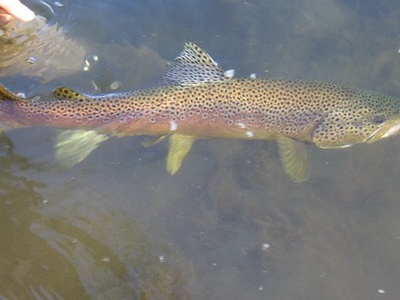
| Brown trout | Salmo trutta | Rivers and upland lakes across Slovenia (Sava, Soča, Drava basins) | 100 |
| Rainbow trout | Oncorhynchus mykiss | Stocked rivers and lakes, aquaculture ponds (widespread) | 80 |
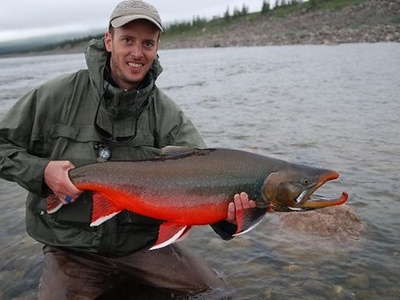
| Arctic char | Salvelinus alpinus | Cold alpine lakes (Bohinj, mountain tarns) | 60 |
| Brook trout | Salvelinus fontinalis | Introduced in upland streams and lakes (mountain areas) | 50 |
| European grayling | Thymallus thymallus | Gravelly, cold rivers (Sava, parts of Drava and Soča tributaries) | 60 |
| European eel | Anguilla anguilla | Rivers, lakes and coastal waters; migratory to/from the Atlantic via Adriatic coast | 120 |
| Northern pike | Esox lucius | Rivers, lakes and floodplain waters (Sava, Drava, reservoirs) | 150 |
| Wels catfish | Silurus glanis | Large rivers and reservoirs (Sava, Drava, some lowland lakes) | 250 |
| Zander (pikeperch) | Sander lucioperca | Larger rivers and reservoirs, lakes (Drava, lower Sava reaches) | 120 |
| European perch | Perca fluviatilis | Lakes, rivers and ponds across Slovenia | 60 |
| Common carp | Cyprinus carpio | Ponds, lowland lakes and slow rivers (widespread, ponds) | 100 |
| Prussian carp | Carassius gibelio | Ponds, canals and slow rivers; invasive in lowland waters | 40 |
| Crucian carp | Carassius carassius | Ponds, oxbows and slow vegetated waters (lowland areas) | 40 |
| Tench | Tinca tinca | Weedy ponds, lakes and slow rivers (lowland basins) | 70 |
| Roach | Rutilus rutilus | Rivers and lakes across Slovenia | 45 |
| Rudd | Scardinius erythrophthalmus | Lakes and slow rivers with vegetation | 40 |
| Common bream | Abramis brama | Lowland rivers, reservoirs and lakes (Sava, Drava) | 80 |
| White bream | Blicca bjoerkna | Larger rivers and lakes, often with bream | 30 |
| Ide | Leuciscus idus | Rivers and lakes, often in larger lowland waterways | 70 |
| Chub | Squalius cephalus | Fast and slow stretches of rivers across Slovenia | 70 |
| Dace | Leuciscus leuciscus | Gravelly, medium-flow river stretches (tributaries) | 35 |
| Gudgeon | Gobio gobio | Small to medium rivers and stream bottoms (Sava tributaries) | 20 |
| Stone loach | Barbatula barbatula | Shallow, fast-flowing streams and riffles | 12 |
| Bullhead (European) | Cottus gobio | Cold, well-oxygenated streams and upland rivers | 15 |
| Bitterling | Rhodeus amarus | Ponds and slow rivers with mussels (lowlands) | 12 |
| Spined loach (complex) | Cobitis taenia aggregate | Sandy or muddy margins of streams and lowland rivers | 12 |
| Barbel | Barbus barbus | Large rivers with gravelly bottoms (Sava, lower streams) | 100 |
| Pumpkinseed | Lepomis gibbosus | Ponds and slow waters, introduced and established in some lowland sites | 25 |
| Topmouth gudgeon | Pseudorasbora parva | Lowland ponds, canals and slow rivers; invasive pockets | 12 |
| Mosquitofish | Gambusia holbrooki | Warm ponds, thermal springs and artificial waters; introduced | 7 |
| Round goby | Neogobius melanostomus | Estuarine and coastal bays of the Gulf of Trieste; invasive in brackish areas | 25 |
| European anchovy | Engraulis encrasicolus | Adriatic coast and Gulf of Trieste, coastal pelagic waters | 20 |
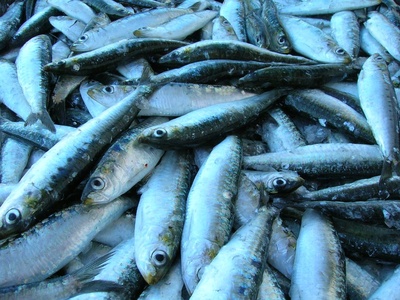
| European pilchard (sardine) | Sardina pilchardus | Coastal pelagic waters in the Adriatic and Gulf of Trieste | 25 |
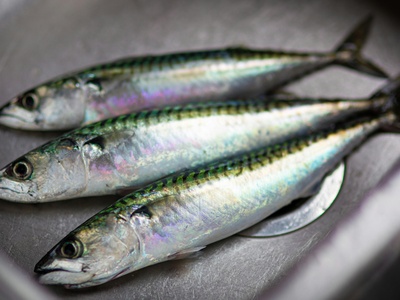
| Atlantic mackerel | Scomber scombrus | Coastal and offshore Adriatic waters; seasonal schools | 45 |
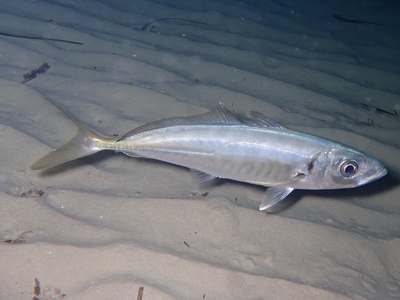
| Mediterranean horse mackerel | Trachurus mediterraneus | Coastal shoals and offshore waters in the northern Adriatic | 50 |
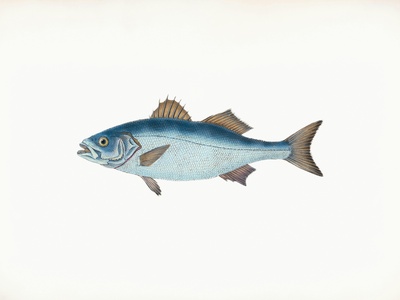
| European seabass | Dicentrarchus labrax | Coastal waters, estuaries and nearshore of Gulf of Trieste | 100 |
| Gilt-head bream | Sparus aurata | Coastal lagoons, bays and nearshore waters; sometimes near Slovenian coast | 70 |
| Flathead grey mullet | Mugil cephalus | Coastal lagoons, estuaries and nearshore southern Gulf of Trieste | 100 |
| Red mullet | Mullus barbatus | Demersal coastal waters and sandy bottoms of the Adriatic | 40 |
| Garfish | Belone belone | Surface waters of the Gulf of Trieste and Adriatic coast | 90 |
| Black goby | Gobius niger | Shallow coastal waters, seagrass beds and estuaries of the Gulf of Trieste | 18 |
| Sand smelt | Atherina boyeri | Coastal lagoons, estuaries and brackish waters (Sečovlje salt pans, bays) | 12 |
| Common sole | Solea solea | Sandy bottoms of the northern Adriatic, occasional in Slovenian coastal shelf | 70 |
| Hake | Merluccius merluccius | Offshore Adriatic deeper waters accessible from Slovenian ports | 100 |
| John Dory | Zeus faber | Coastal and offshore waters of the Adriatic, occasional near Slovenia | 65 |
| Small-spotted catshark | Scyliorhinus canicula | Shallow coastal bottoms of the Adriatic near Slovenia | 90 |
| Common pandora | Pagellus erythrinus | Coastal rocky and sandy areas of the Adriatic nearshore | 40 |
| Gilthead bream (juveniles in lagoons) | Sparus aurata | Juvenile use of brackish lagoons and salt pans (coastal) | 70 |
Images and Descriptions

Marble trout
Native to the Soča and nearby rivers, marble trout has distinctive marble-like flanks. A conservation priority after past declines from hybridization and habitat loss; sought by anglers and protected in some stretches.
Brown trout
Widespread native trout in streams and lakes; brown trout vary in color and form. Popular with anglers, locally threatened by habitat change and stocking-related hybridization in some waters.
Rainbow trout
Introduced from North America and widely stocked for angling and farms. Identified by pinkish lateral stripe; established in many waters but can hybridize with native trout and affect wild populations.
Arctic char
Native in high-elevation lakes, Arctic char are pale, speckled chars adapted to cold water. Locally vulnerable due to warming and lake eutrophication; prized for rarity in some Slovenian lakes.

Brook trout
North American species introduced for angling; present in some upland waters. Similar to native chars but with worm-like markings; can compete with native trout and char.

European grayling
Native, sleek fish with tall dorsal fin and iridescent sheen. Sensitive to pollution and river alteration; indicator of healthy, well-oxygenated streams.
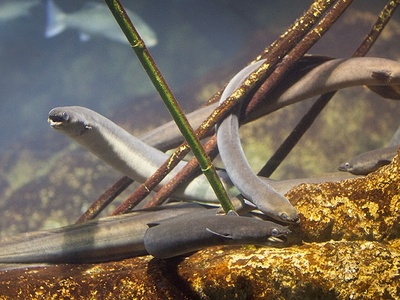
European eel
Catadromous migrant visiting Slovenian rivers and coast. Critically endangered across its range; populations have declined from barriers, pollution and overfishing.

Northern pike
Top freshwater predator in lakes and slow rivers, long torpedo-shaped body and toothy mouth. Native and popular with anglers; affected by habitat change but widespread.

Wels catfish
Huge native freshwater catfish reaching impressive sizes; nocturnal ambush predator. Valued and sometimes managed by anglers; sensitive to river modifications and fishing pressure.
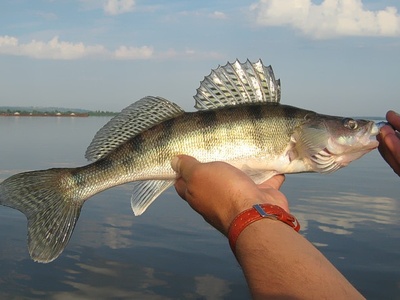
Zander (pikeperch)
Introduced/expanding in some waters and now common in reservoirs. Looks like a mix of perch and pike; prized game fish and predator of coarse fish.
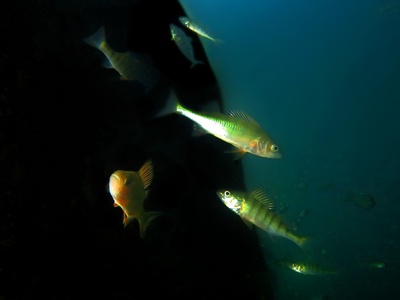
European perch
Striped, laterally compressed fish common throughout inland waters. Native and popular with anglers; tolerant of a range of conditions and often abundant.

Common carp
Introduced and long-established for aquaculture and angling; heavy-bodied with barbels. Common in managed fisheries and traditional fishponds; can impact habitats when abundant.

Prussian carp
Introduced invasive fish that thrives in disturbed waters. Similar to crucian carp but often more tolerant and competitive; can displace native species in small water bodies.

Crucian carp
Native pond species with rounded body and resilience to low oxygen. Often overlooked but locally important; populations threatened by hybrids with introduced carp relatives.
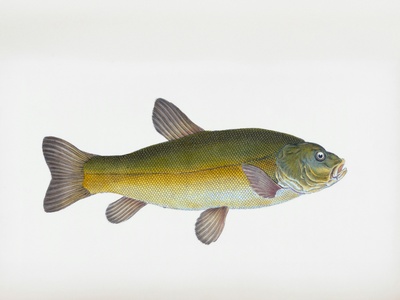
Tench
Native with olive, slippery skin and small mouth; called “doctor fish” by anglers. Prefers still, vegetated waters and is common in traditional carp ponds.
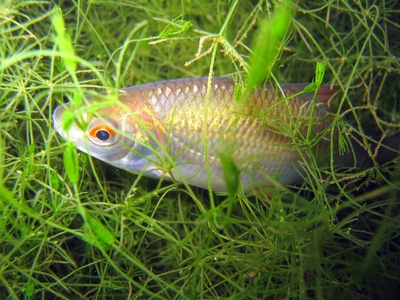
Roach
Common, schooling cyprinid with silvery body and red fins in some individuals. Native and abundant in many lowland waters; frequent prey for predators like pike and pikeperch.
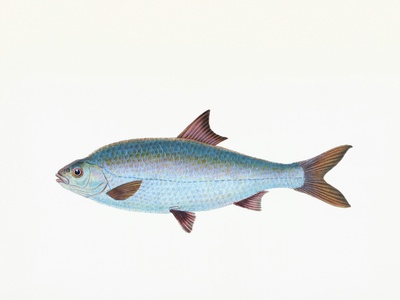
Rudd
Leaf-shaped, gold-tinged cyprinid with upturned mouth for surface feeding. Native in quiet waters; similar to roach but prefers vegetated habitats.
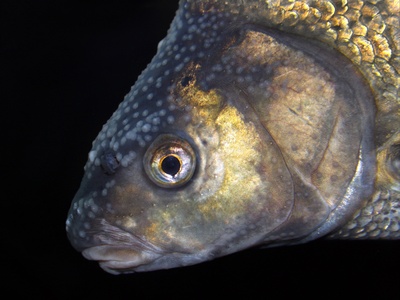
Common bream
Deep-bodied schooling fish of slow waters. Native and important in coarse fisheries; sensitive to eutrophication but often abundant where conditions suit.
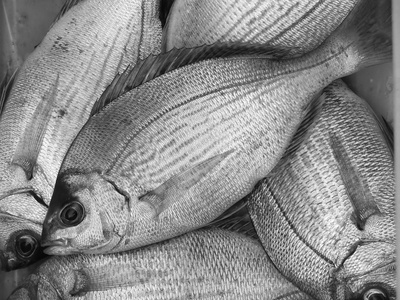
White bream
Smaller relative of common bream with silvery sheen. Native and often overlooked; occurs in mixed schools with bream and roach.

Ide
Robust cyprinid with silvery body and forked tail. Native and migratory within rivers; sought by anglers for sport in larger rivers.

Chub
Sturdy, adaptable cyprinid with a blunt head. Native and common in many river types; opportunistic feeder and popular coarse fish.

Dace
Stream-dwelling cyprinid forming shoals in clean, flowing water. Native and indicator of healthy river conditions; slender and active.
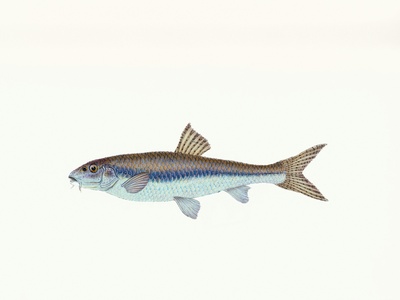
Gudgeon
Small bottom-dweller with two barbels and brown-speckled body. Native and common on gravelly or sandy substrates; food for larger predators.
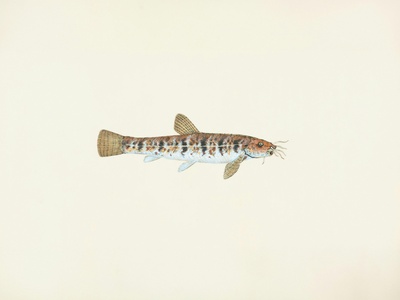
Stone loach
Small, elongated bottom fish with barbels, native to upland streams. Sensitive to sedimentation and habitat loss; often overlooked but ecologically important.
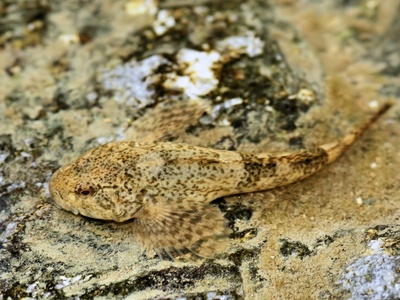
Bullhead (European)
Small, flattened bottom-dweller with big pectoral fins and mottled color. Native and sensitive to pollution; indicator of pristine headwater habitats.

Bitterling
Small, colorful cyprinid that lays eggs in freshwater mussels. Native and fascinating reproductive ecology; populations decline where mussels or water quality suffer.
Spined loach (complex)
Small, elongated bottom loach with distinctive barbels and spotted pattern. Native; several cryptic species and local endemics occur, making conservation complex.
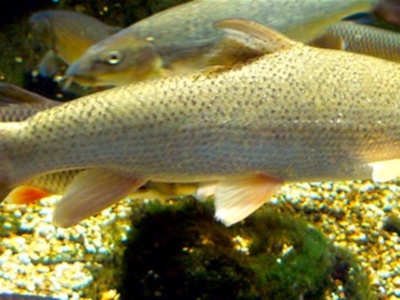
Barbel
Robust, torpedo-shaped cyprinid with downward mouth and barbels. Native in larger rivers; valued by anglers and sensitive to river fragmentation.

Pumpkinseed
Colorful North American sunfish introduced for angling; established locally in warm ponds. Aggressive and can displace native species in small waters.
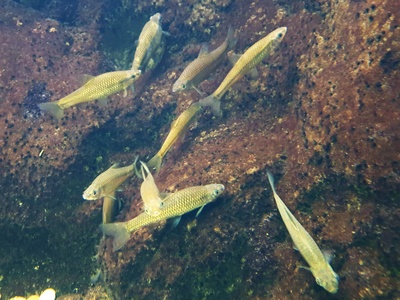
Topmouth gudgeon
Small, prolific invasive Asian cyprinid. Forms dense populations and can transmit parasites; managed as a threat to native fish communities.
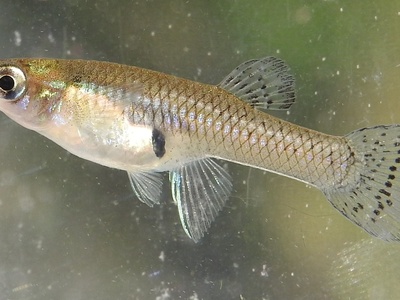
Mosquitofish
Small livebearing fish introduced for mosquito control; established in some warm or disturbed waters. Can outcompete native small fishes and amphibians.
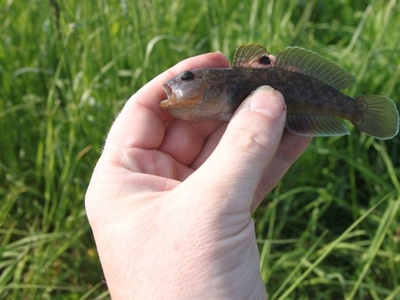
Round goby
Aggressive invasive goby from the Black Sea now in the northern Adriatic. Benthic, with fused pelvic fins; competes with native gobies and alters habitats.
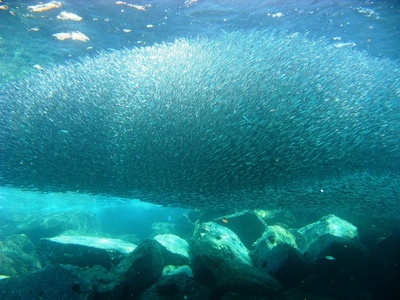
European anchovy
Small schooling pelagic fish forming dense summer shoals along the coast. Native and commercially important; key species for fisheries and plankton dynamics.
European pilchard (sardine)
Small, oily schooling fish common in coastal waters and important for local fisheries. Migratory and seasonally abundant nearshore.
Atlantic mackerel
Fast-swimming migratory pelagic fish visiting Slovenian waters seasonally. Easily identified by iridescent stripes; important for recreational and commercial fisheries.
Mediterranean horse mackerel
Schooling pelagic fish often caught nearshore; silvery with lateral line. Native and common, forming important forage for predators and fisheries.
European seabass
Popular sport fish along the coast, native and occasionally farmed. Silver, elongated body; juveniles use estuaries while adults roam coastal zones.
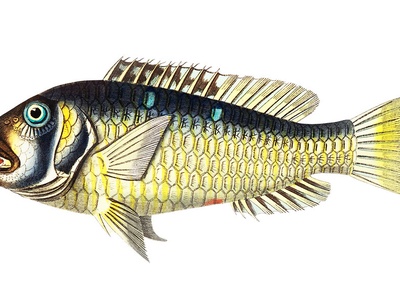
Gilt-head bream
Warm-water sea bream common in the Adriatic; golden bar between eyes and rounded body. Occurs naturally and via aquaculture; valued table fish.

Flathead grey mullet
Robust, tolerant fish frequenting brackish and coastal waters. Feeds on detritus and algae; often seen in shallow bays and salt pans.
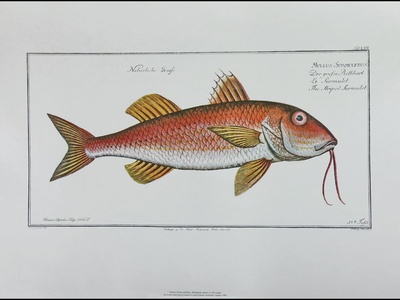
Red mullet
Distinctive pair of barbels on the snout and reddish color; common in shallow coastal fishing grounds. Important for local fisheries and cuisine.
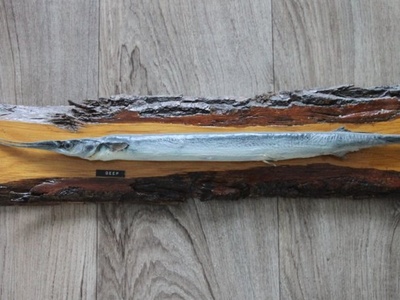
Garfish
Long, slender, beak-like jaws and surface-oriented habits. Migratory and seasonal in northern Adriatic; often seen near the surface or in schools.

Black goby
Common small goby with dark color, frequenting sheltered bays and seagrass. Native and abundant locally; important in coastal food webs.

Sand smelt
Small silvery fish inhabiting shallow, brackish lagoons and sheltered coasts. Important prey species for seabirds and larger fish; common in salt pans and estuarine areas.

Common sole
Flat, bottom-dwelling fish with both eyes on one side. Present in northern Adriatic but less common close to shore; prized for delicate flesh.

Hake
Demersal predatory fish found in deeper Adriatic waters. White-fleshed and important commercially; occasional catches by local fishing fleets.
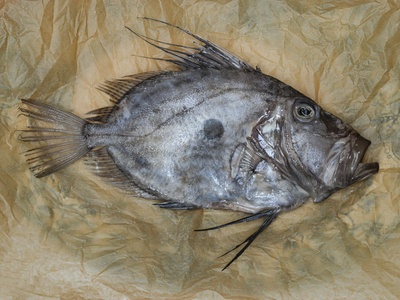
John Dory
Large, laterally compressed fish with a dark eye-spot on the side. Solitary predator found on sandy and muddy bottoms; occasional but notable catch.

Small-spotted catshark
Small, mottled shark common in the Adriatic seabed. Harmless to people and often caught as bycatch; an indicator of benthic community health.

Common pandora
Pinkish sea bream with delicate taste, common in nearshore waters. Occurs near reefs and rocky bottoms; valued by small-scale fisheries.
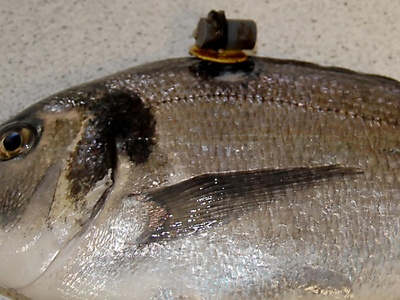
Gilthead bream (juveniles in lagoons)
Juveniles frequent sheltered lagoons and salt pans; adults roam coastal waters. Important both ecologically and commercially; often visible in Sečovlje and sheltered bays.