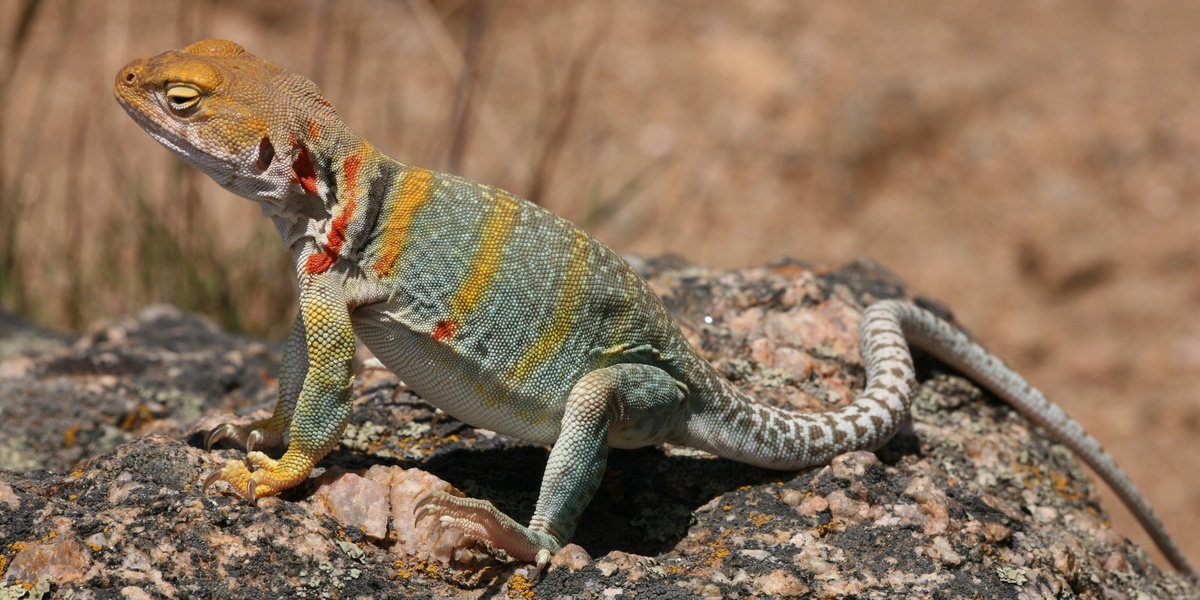
Desert landscapes often look spare at first glance, but a closer walk through washes, rocky outcrops, and riparian strips reveals a surprising palette of reds, blues, and yellows. Seasonal plants, mineral-streaked rocks, and the need to signal mates or disguise against predators all shape when and how color appears in these arid places.
There are 21 Colorful Desert Animals, ranging from Chuckwalla to Vermilion flycatcher. For each species, the entries are organized with Scientific name,Size (cm),Range / habitat so you can compare size and distribution at a glance — you’ll find below.
How do these desert animals develop such bright colors?
Coloration comes from pigments, structural features of feathers or scales, and diet; in deserts, bright hues often serve for mate attraction, species recognition, or camouflage against specific backgrounds like lichen-covered rock or flowering shrubs, and some species intensify color seasonally around breeding.
When and where am I most likely to see the most colorful species?
Early morning and late afternoon in areas with water or flowering plants—dry washes, desert springs, and canyon edges—are best; birds like the Vermilion flycatcher are visible near riparian zones, while reptiles such as the Chuckwalla bask on sunlit rocks.
Colorful Desert Animals
| Name | Scientific name | Size (cm) | Range / habitat |
|---|---|---|---|
| Gila monster | Heloderma suspectum | 40-56 cm | Sonoran & Mojave deserts, rocky scrub |
| Thorny devil | Moloch horridus | 7-20 cm | Australian central deserts, spinifex scrub |
| Collared lizard | Crotaphytus collaris | 20-30 cm | Southwestern US rocky deserts |
| Chuckwalla | Sauromalus ater | 25-40 cm | Southwestern US rocky deserts |
| Mwanza flat-headed agama | Agama mwanzae | 20-28 cm | East African dry rocky outcrops |
| Geyr’s spiny-tailed lizard | Uromastyx geyri | 25-40 cm | Sahara & Arabian deserts, rocky wadis |
| Ornate spiny-tailed lizard | Uromastyx ornata | 30-40 cm | North African deserts, stony plains |
| Side-blotched lizard | Uta stansburiana | 6-12 cm | North American deserts & scrub |
| Sonoran coral snake | Micruroides euryxanthus | 25-40 cm | Sonoran Desert, sandy scrub |
| Vermilion flycatcher | Pyrocephalus rubinus | 12-13 cm | Arid scrub & desert riparian zones (Americas) |
| Galah | Eolophus roseicapilla | 34-38 cm | Arid inland Australia, open woodlands |
| Major Mitchell’s cockatoo | Lophochroa leadbeateri | 35-40 cm | Australian arid interior, woodlands |
| Gambel’s quail | Callipepla gambelii | 22-29 cm | Southwestern US deserts, creosote scrub |
| Desert wheatear | Oenanthe deserti | 14-16 cm | Sahara to Central Asia deserts, stony ground |
| Namaqua sandgrouse | Pterocles namaqua | 28-34 cm | Namib & Karoo deserts, arid plains |
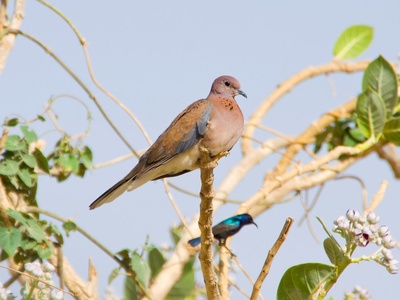
| Palestine sunbird | Cinnyris osea | 9-12 cm | Middle East arid scrub & oases |
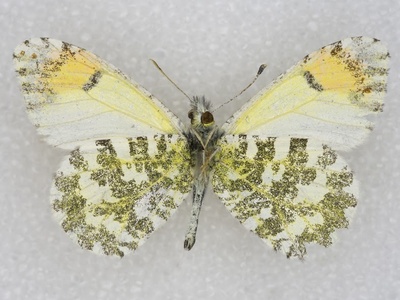
| Desert orangetip | Anthocharis cethura | 3.5-5.0 cm | Southwestern US & Mexican deserts, washes and bloom patches |
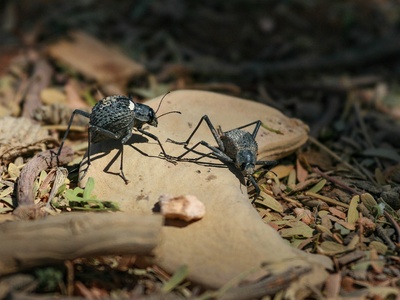
| Namib darkling beetle | Stenocara gracilipes | 2.0-3.0 cm | Namib Desert, dune and gravel surfaces |
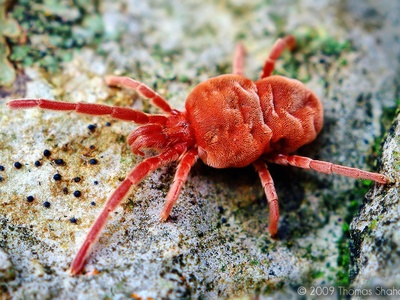
| Red velvet mite | Dinothrombium tinctorium | 0.5-1.5 cm | Arid soils worldwide, appears after rains |
| Peacock spider | Maratus pavonis | 0.4-0.6 cm | Australian arid shrub/grassland |
| Sinai rosefinch | Carpodacus synoicus | 13-16 cm | Arabian Peninsula/Red Sea deserts, rocky wadis |
Images and Descriptions
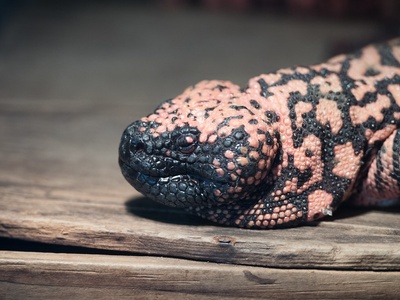
Gila monster
A chunky, slow-moving lizard patterned in bold black and orange bands; the bright colors warn predators of its venom and help it blend among rocks and sunlit desert soils while it feeds on eggs and small vertebrates.
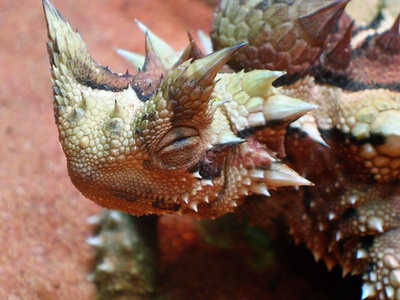
Thorny devil
Spiny, tank-like lizard that shifts orange, brown and sandy hues with age and background; coloration provides camouflage, temperature regulation and water-harvesting through skin channels in Australia’s arid interior.
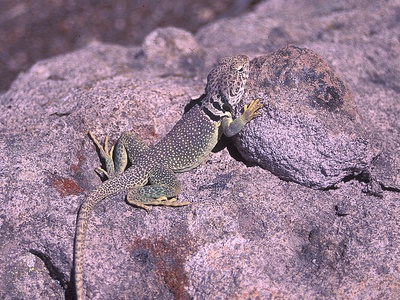
Collared lizard
Males flash electric blue heads and vivid orange or yellow bodies during displays; bright coloration signals fitness to females and intimidates rivals while the species basks and darts among sun-baked rocks.
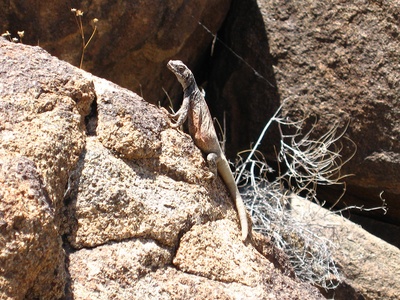
Chuckwalla
A stout rock-dwelling lizard whose males often show pink to orange flanks and throat when hot or breeding; colors help communicate dominance and blend with lichen-streaked boulders in crevice habitats.
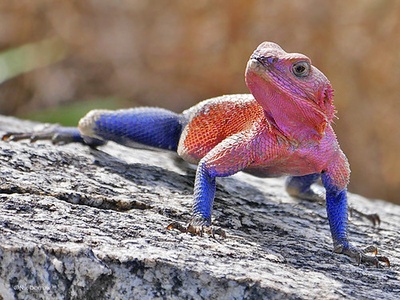
Mwanza flat-headed agama
Male agamas are famous for magenta heads and deep blue bodies; dramatic colors advertise territory and attract mates on sun-baked rock faces in semi-arid to arid East African landscapes.
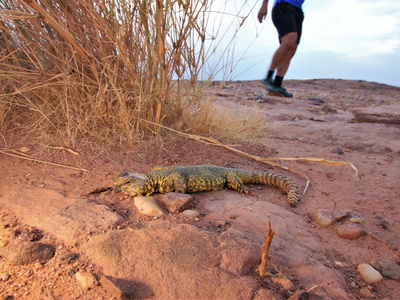
Geyr’s spiny-tailed lizard
A robust, heat-tolerant lizard with males showing bright yellow, orange or red scales; vivid coloration helps with thermoregulation, species recognition and courtship in stony desert habitats.
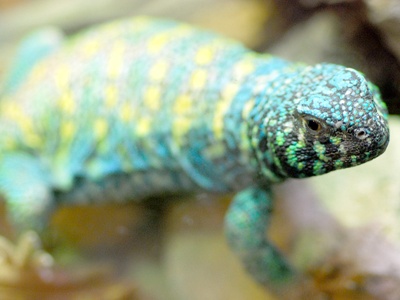
Ornate spiny-tailed lizard
Males and females show patterned yellow, orange and brown scales that can be striking in sunlight; colors aid in signaling, camouflage against rocky terrain and absorbing solar heat.
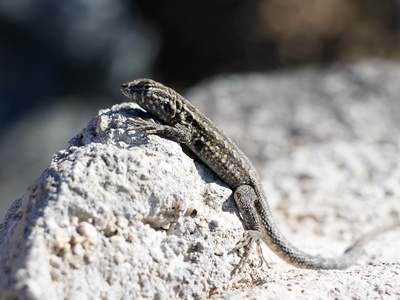
Side-blotched lizard
Tiny desert lizard with males exhibiting orange, blue or yellow throat morphs tied to alternative mating strategies; the colorful throats function in territorial signaling and mate attraction across arid scrublands.
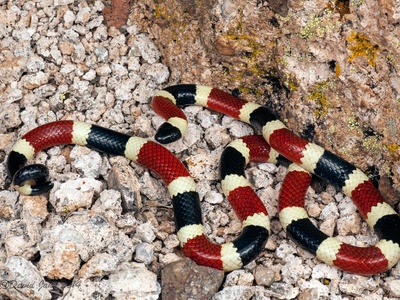
Sonoran coral snake
Small, vividly banded red, black and white snake whose bright rings are aposematic—warning predators of its potent neurotoxic venom; it lives in sandy washes and creosote flats of the American Southwest.
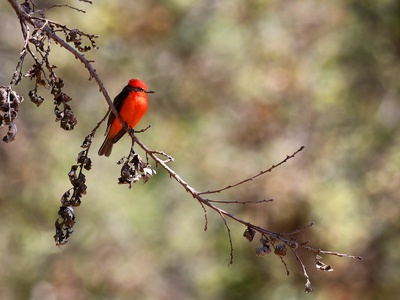
Vermilion flycatcher
A striking small bird—males are brilliant vermilion red with dark wings—often found along desert streams and bushes; its bright red plumage advertises territory and attracts mates in otherwise muted landscapes.
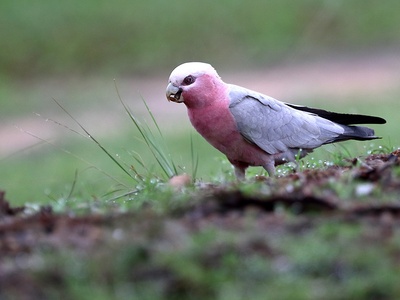
Galah
A common pink-and-grey cockatoo of Australia’s dry interior; the rosy body and crest are used in flock recognition and courtship, while pale plumage reflects heat in open arid habitats.
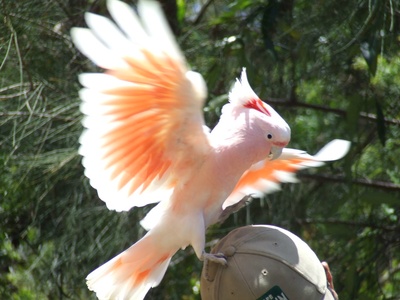
Major Mitchell’s cockatoo
A beautifully colored cockatoo with soft pink body and a spectacular red-and-yellow crest; crest displays are central to courtship and social signaling on Australia’s sun-scorched plains.
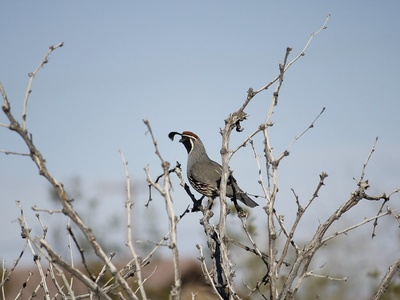
Gambel’s quail
Stocky desert gamebird with males showing blue-gray chest and chestnut flanks plus a topknot plume; subtle but attractive colors aid in species recognition and camouflage among shrubs.
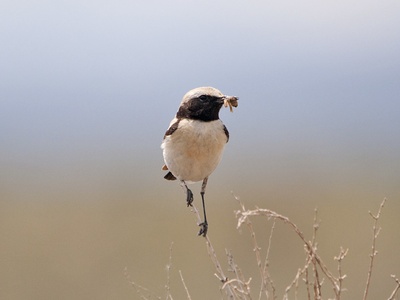
Desert wheatear
A compact passerine with pale sandy plumage and bold black throat or face markings in males; colors blend with desert stones while black patterning functions in displays and territory signaling.
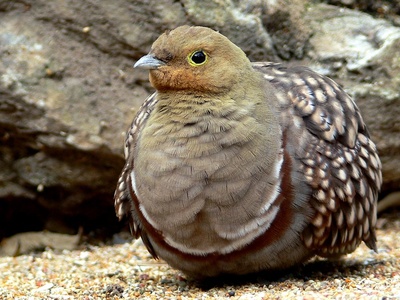
Namaqua sandgrouse
A compact bird with striking male plumage—contrasting chestnut, black and white patches—that helps with mate attraction and camouflage across windblown gravel plains and dry pans.
Palestine sunbird
Tiny nectar-feeding bird with iridescent metallic blue-green males and streaked females; the glossy colors attract mates and shine brilliantly in sunlit arid gardens and scrubby oases.
Desert orangetip
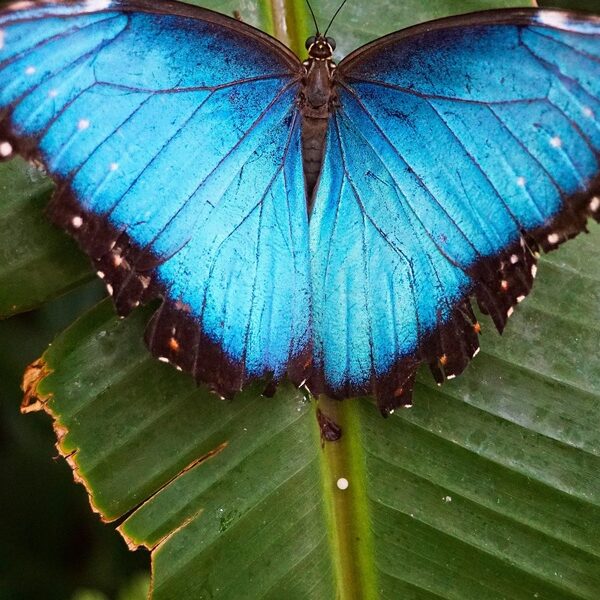
A small butterfly whose males have bright orange wing tips contrasted with mottled green-and-white undersides; orange warns rivals and the mottling camouflages resting butterflies on desert flowers and rocks.
Namib darkling beetle
Dark beetle with contrasting glossy black and tan patterns famous for fog-harvesting on dune ridges; its coloration and texture enhance dew collection and thermoregulation in hyper-arid desert.
Red velvet mite
Bright crimson arachnid seen in bursts after desert rains; the eye-catching red warns predators, aids species recognition, and the mites are active predators in desert soils for short seasonal periods.
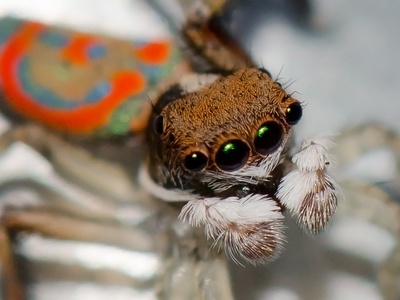
Peacock spider
Tiny jumping spider with an ornate, iridescent abdominal fan males flash during dances; brilliant colors are purely sexual signals used to attract females on sparse desert vegetation and rocky ground.
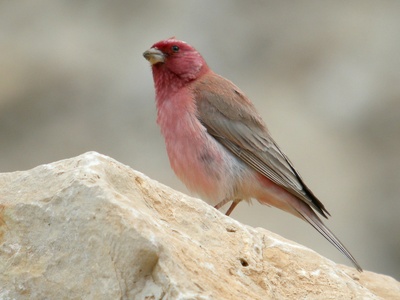
Sinai rosefinch
A rosy-pink finch of rocky desert slopes; males’ pink plumage is unusual in arid birds and serves in mate attraction while blending subtly with sunrise-lit stone and sparse shrub zones.