Kuwait looks, on a map, like a place where nothing should live. A small wedge of desert at the top of the Persian Gulf, summer temperatures that push past 50°C, almost no permanent freshwater, and sandstorms that can blot out the sun. And yet the animals here didn’t just adapt to that — they specialized in it. The fennec fox dumps heat through ears the size of its own face. The spiny-tailed lizard stores fat in its tail like a camel stores it in a hump.
This is a guide to 15 native animals of Kuwait, grouped by where you’d actually find them: out in the sand, low to the ground among the reptiles, or in the shallow Gulf waters along the coast. Each entry gives you the scientific name, conservation status, and the one trick that lets it survive a place most things can’t.
Table of Contents
- Quick reference table
- The national animal: the dromedary camel
- Desert mammals
- Reptiles of the sand
- Gulf and coastal life
- Birds of Kuwait
- Animals Kuwait has lost
- What’s threatening them now
Quick reference table
If you just want the roster, here it is. The rest of the post is the detail.
| Animal | Scientific name | Habitat | IUCN status |
|---|---|---|---|
| Dromedary camel | Camelus dromedarius | Desert | Domesticated |
| Fennec fox | Vulpes zerda | Desert | Least Concern |
| Rüppell’s fox | Vulpes rueppellii | Desert | Least Concern |
| Desert hedgehog | Paraechinus aethiopicus | Desert | Least Concern |
| Caracal | Caracal caracal | Desert scrub | Least Concern |
| Golden jackal | Canis aureus | Desert, semi-urban | Least Concern |
| Cape hare | Lepus capensis | Desert | Least Concern |
| Arabian sand boa | Eryx jayakari | Sandy desert | Least Concern |
| Black desert cobra | Walterinnesia aegyptia | Desert | Least Concern |
| Spiny-tailed lizard | Uromastyx aegyptia | Hard desert | Vulnerable |
| Desert monitor | Varanus griseus | Desert | Least Concern |
| Indo-Pacific humpback dolphin | Sousa chinensis | Gulf waters | Vulnerable |
| Dugong | Dugong dugon | Coastal seagrass | Vulnerable |
| Crab plover | Dromas ardeola | Mudflats, islands | Least Concern |
| Greater flamingo | Phoenicopterus roseus | Lagoons, bays | Least Concern |
The national animal: the dromedary camel
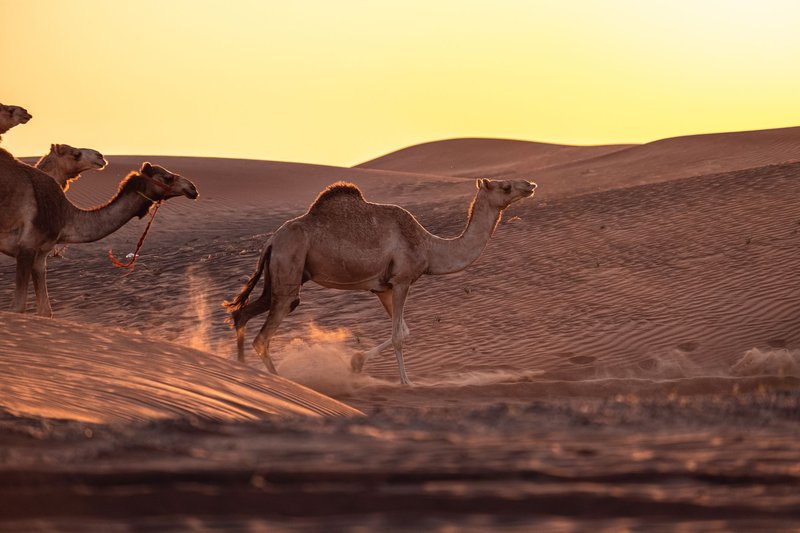
Start with the camel, because everything else in Kuwait is measured against it. The dromedary (Camelus dromedarius) is the single-humped Arabian camel, and it’s woven so deeply into Kuwaiti and Bedouin life that it functions as the national animal in all but the most formal sense.
The hump isn’t a water tank — that’s the myth. It’s fat, and the camel metabolizes it slowly for energy when food runs out. The water trick is elsewhere: a camel can lose up to a quarter of its body weight in water and keep functioning, then rehydrate by drinking over 100 liters in minutes without its blood cells bursting. Its oval-shaped red blood cells are built for exactly that swing. Camel racing remains a serious sport in Kuwait, and camel milk and meat are still part of the table.
Desert mammals
The open desert is where Kuwait’s mammals get clever about heat. Almost all of them are nocturnal or crepuscular — they move at dusk and dawn and wait out the worst of the day underground.
Fennec fox (Vulpes zerda)
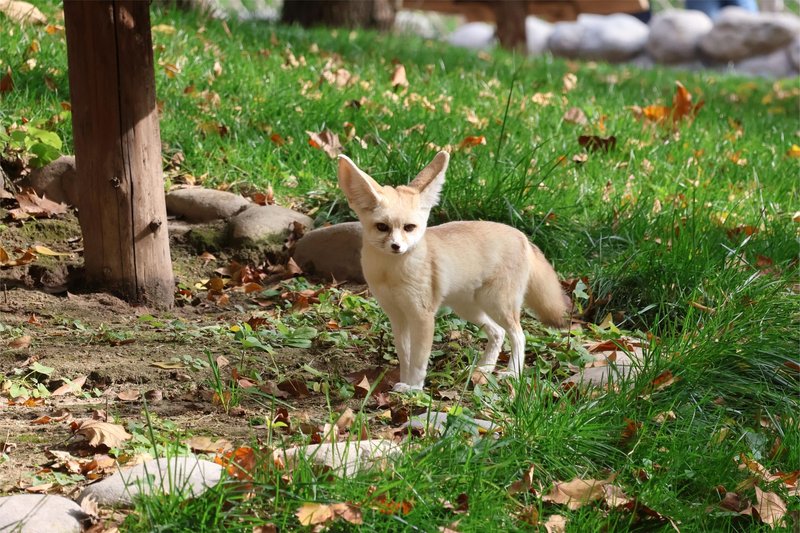
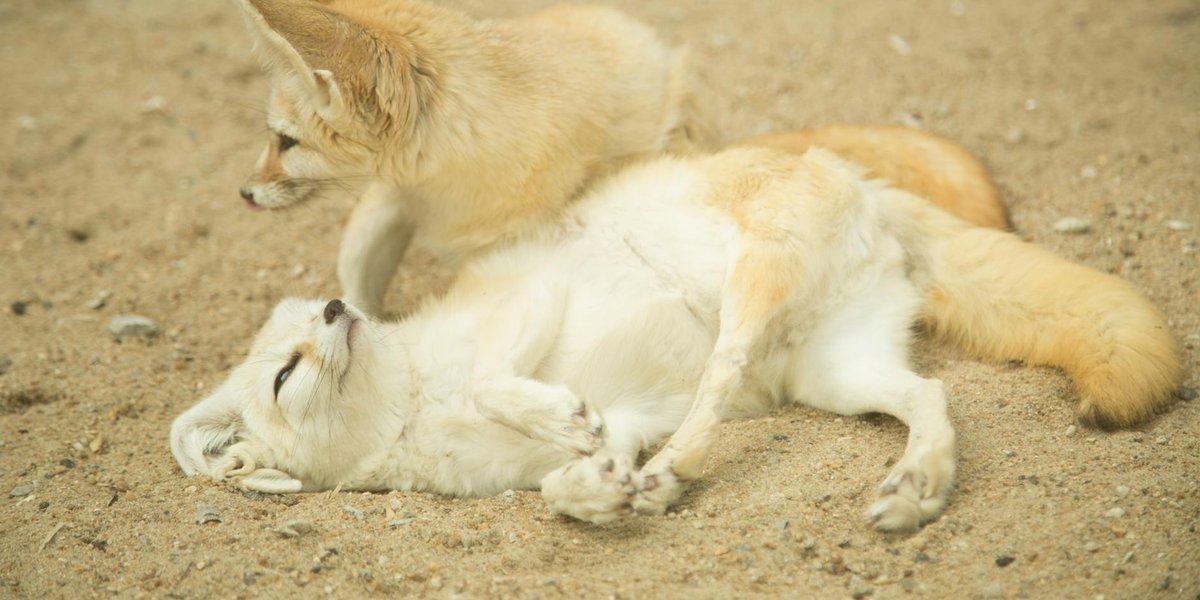
The smallest fox on Earth, and the one with the ears you can’t unsee. Those ears run 10–15 cm on an animal that weighs barely 1.5 kg, and they’re radiators — packed with blood vessels that dump body heat into the air. They also pick up the rustle of insects and rodents moving under the sand. The fennec digs extensive dens, gets nearly all its water from food, and is listed as Least Concern, though it’s heavily traded for the exotic pet market.
Rüppell’s fox (Vulpes rueppellii)
The sand fox, named after the German naturalist Eduard Rüppell. Bigger than the fennec, smaller than a red fox, with sandy fur and furred footpads that work like snowshoes on hot sand. It marks territory and dens in pairs, shifting den sites often to throw off larger predators.
Desert hedgehog (Paraechinus aethiopicus)
One of the smallest hedgehogs in the world, with the oversized ears that the desert seems to favor. It’s tough enough to take on scorpions and venomous snakes, biting off and discarding the stinger before eating the rest. It can survive weeks without water, pulling moisture straight from its prey.
Caracal (Caracal caracal)
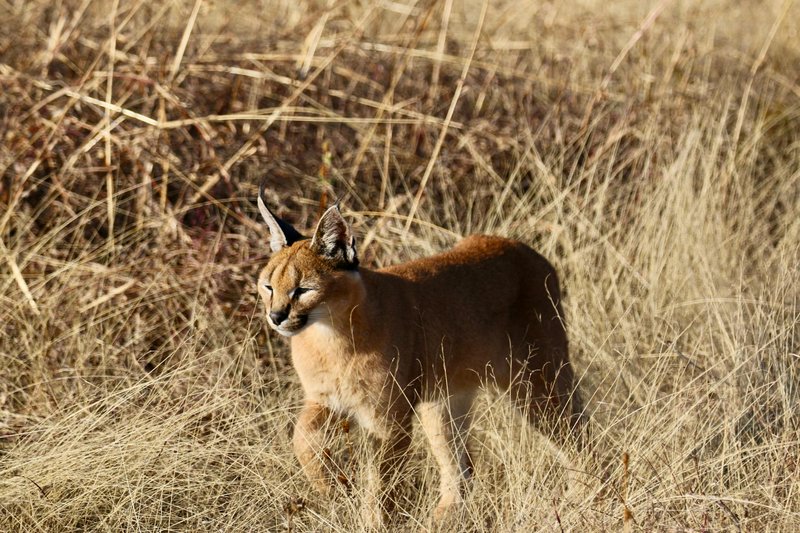
The desert lynx, though it isn’t a lynx at all. The caracal’s signature is its ear tufts — long black tassels — and a vertical leap that lets it swat birds out of the air mid-flight. It’s a stealth hunter of hares, rodents, and small gazelles, and it’s the largest small cat in its range. Rare and secretive in Kuwait, but native.
Golden jackal (Canis aureus)
The most adaptable carnivore on this list. The golden jackal scavenges, hunts in pairs, and edges into the margins of human settlements where it can find scraps. Its eerie, communal howling at dusk is a familiar sound on the desert edge. Listed as Least Concern precisely because it bends to almost any environment.
Cape hare (Lepus capensis)
The desert’s prey animal in chief — food for nearly every predator above it. The Cape hare doesn’t dig burrows; it rests in a shallow scrape called a form and relies on speed and camouflage. Its long ears double as heat radiators, the same engineering you see across the desert mammals.
Reptiles of the sand
Reptiles own the Kuwaiti desert in a way mammals never will. Cold-blooded means they run on the sun’s heat instead of burning their own food and water to make it — a massive advantage where both are scarce.
Arabian sand boa (Eryx jayakari)
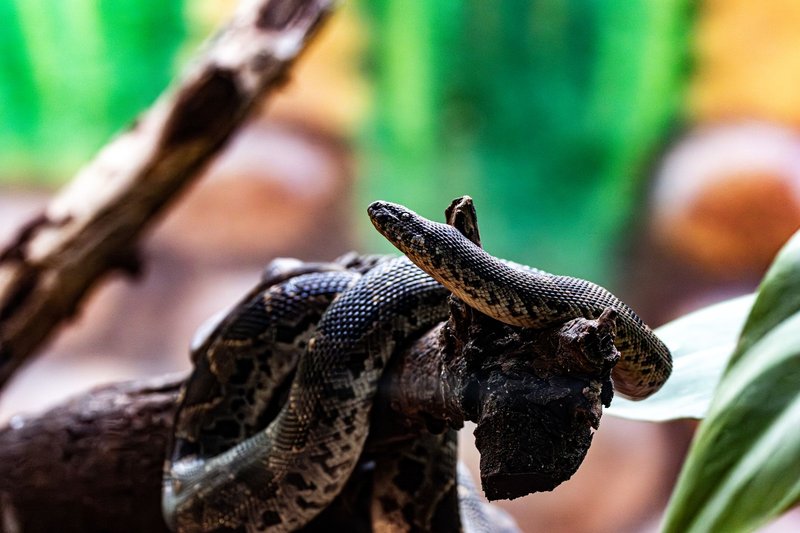
A snake that swims through sand. The Arabian sand boa has eyes on the top of its head rather than the sides, so it can bury its whole body and leave only its eyes exposed, waiting to ambush lizards and rodents. It’s non-venomous and constricts its prey. Harmless to people, and one of the strangest-looking snakes in the region.
Black desert cobra (Walterinnesia aegyptia)
The one to respect. Glossy black, active mostly at night, and carrying potent neurotoxic venom. Unlike true cobras it doesn’t spread a hood, but it delivers a serious bite. It preys on lizards, smaller snakes, and rodents across Kuwait’s harder desert ground.
Spiny-tailed lizard (Uromastyx aegyptia)
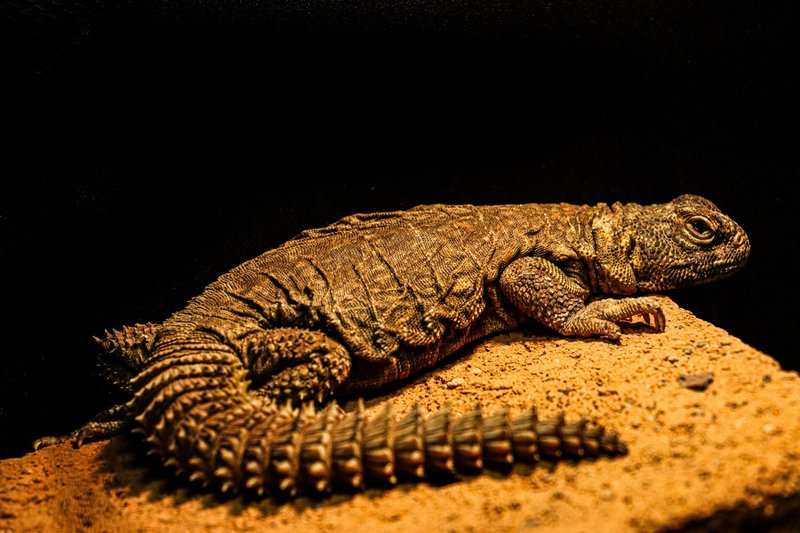
Locally called the dhub, this is a heavyweight among desert lizards — up to 70 cm long. It’s largely vegetarian, which is unusual, and it stores fat in that thick, armored tail, which is also its weapon: it’ll wedge into a burrow and lash the tail at anything that follows. Listed as Vulnerable, and under real pressure from hunting, since it’s eaten in parts of the region. The IUCN’s Red List assessment tracks the slow decline of Uromastyx species across the Arabian Peninsula.
Desert monitor (Varanus griseus)
The apex reptile here — a monitor lizard reaching well over a meter, with a long forked tongue it flicks to taste the air for prey. It runs down rodents, birds, eggs, and other reptiles, and it can move fast when it wants to. A relative of the Komodo dragon, scaled to the desert.
Gulf and coastal life
This is the part most Kuwait wildlife lists skip, and it’s a mistake. Kuwait’s coastline and the shallow, warm, seagrass-rich waters of the northern Gulf hold animals you’d never associate with a desert country.
Indo-Pacific humpback dolphin (Sousa chinensis)
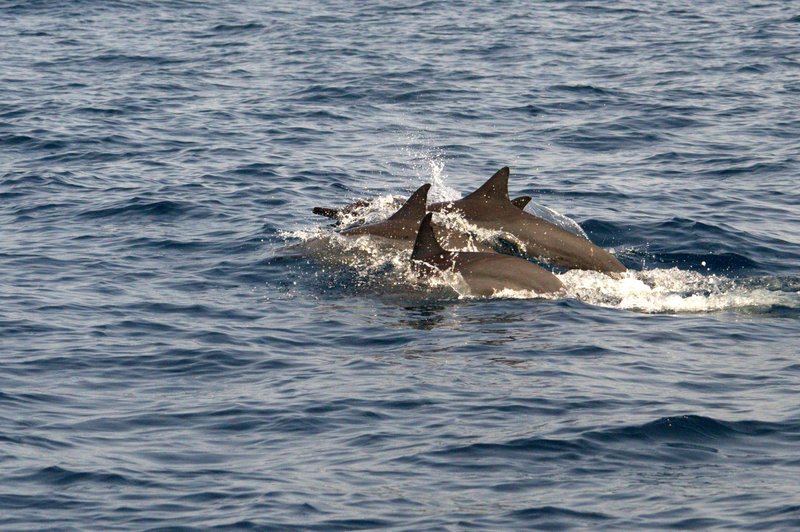
Often pinkish-grey, with a distinctive hump beneath the dorsal fin that gives the species its name. These dolphins stay close to shore in shallow water, which makes them visible to coastal communities — and dangerously exposed to boat strikes, fishing nets, and coastal development. Listed as Vulnerable, and a genuine highlight of Kuwait’s marine life.
Dugong (Dugong dugon)
The “sea cow,” a slow, gentle relative of the manatee that grazes seagrass meadows in the Gulf. The northern Persian Gulf, including Kuwaiti waters, holds one of the largest dugong populations in the world outside Australia. They’re slow breeders and slow swimmers, which makes them acutely vulnerable to net entanglement and habitat loss. The IUCN classifies the dugong as Vulnerable globally, with several regional populations in steeper decline.
Crab plover (Dromas ardeola)
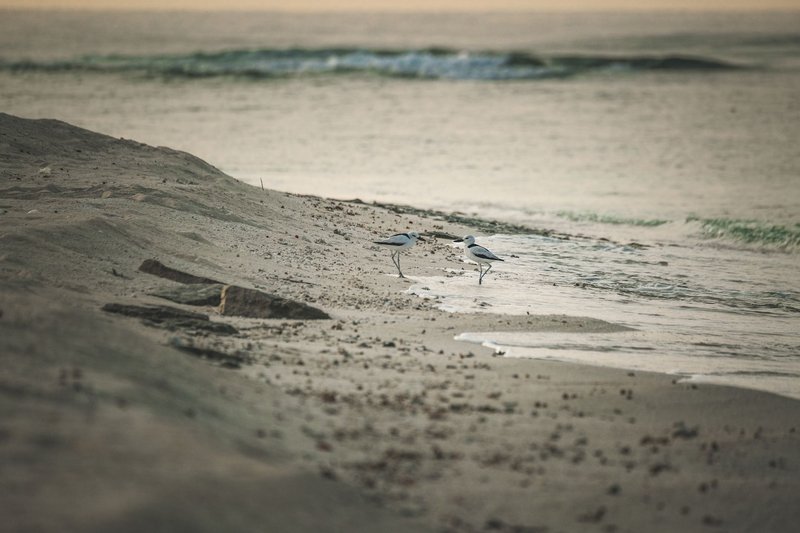
A striking black-and-white shorebird with a heavy black bill built for one job: cracking crabs. It’s the only bird in its entire family, and unusually, it nests in burrows it digs into sandy islands — using the heat of the sand to help incubate its eggs. Kuwait’s islands and mudflats are important habitat for it.
Birds of Kuwait
Kuwait sits on a major migratory flyway between Africa, Europe, and Asia, so its bird list runs to hundreds of species. Two stand out as emblematic.
Greater flamingo (Phoenicopterus roseus)
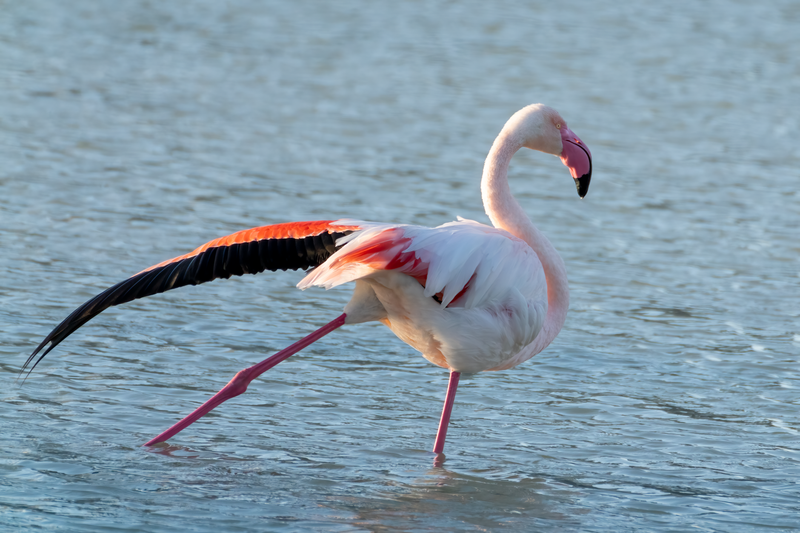
Flocks of greater flamingos gather in Kuwait Bay and the coastal lagoons, sweeping their downturned bills through the shallows to filter out brine shrimp and algae. That diet is exactly where their pink comes from — strip the carotenoid-rich food and the birds fade to white. They’re one of the most reliable wildlife spectacles in the country, especially in the cooler months.
Houbara bustard (Chlamydotis macqueenii)
A large, ground-dwelling desert bird with cryptic sandy plumage and an elaborate courtship display where the male puffs out a fan of white neck feathers. It’s been hunted hard with falcons across the region for generations, and that pressure has pushed it onto the watch lists. Conservation breeding programs across the Gulf are now trying to rebuild wild numbers.
Animals Kuwait has lost
A native-animals list that only shows what’s still here tells half the story. Several species that once roamed this part of Arabia are gone from Kuwait’s wild:
- Asiatic cheetah — once present across the Arabian deserts, now down to a tiny remnant population in Iran and functionally gone from the Arabian Peninsula.
- Arabian leopard — critically endangered range-wide and no longer found wild in Kuwait.
- Arabian oryx — hunted to extinction in the wild across the region by the early 1970s, then brought back through one of conservation’s great success stories. Captive-bred herds have been reintroduced elsewhere in Arabia, and the species was downlisted from Extinct in the Wild to Vulnerable — the first time that had ever happened for an animal once gone from the wild.
- Sand gazelle and Arabian gazelle — heavily reduced by overhunting and habitat loss; surviving regionally mainly in reserves and protected areas.
The throughline is overhunting, often with modern vehicles and rifles that gave the animals no chance.
What’s threatening them now
The pressures on Kuwait’s wildlife are the same ones reshaping the whole Gulf. Rapid urban and industrial development eats into desert and coastal habitat. Overhunting still hits desert species like the spiny-tailed lizard and the houbara. Oil pollution and warming, increasingly saline Gulf waters threaten the dugong’s seagrass meadows and the dolphins that share them. And desertification keeps shrinking the marginal vegetation that the whole food chain leans on.
Kuwait has responded with protected areas — the Jahra Pool Reserve and the offshore islands among them — and the dugong and dolphin populations of the northern Gulf are now drawing real research attention. The animals that made it this far did so by being specialists in a place that punishes generalists. Whether they keep making it depends a lot less on the desert now and a lot more on us.