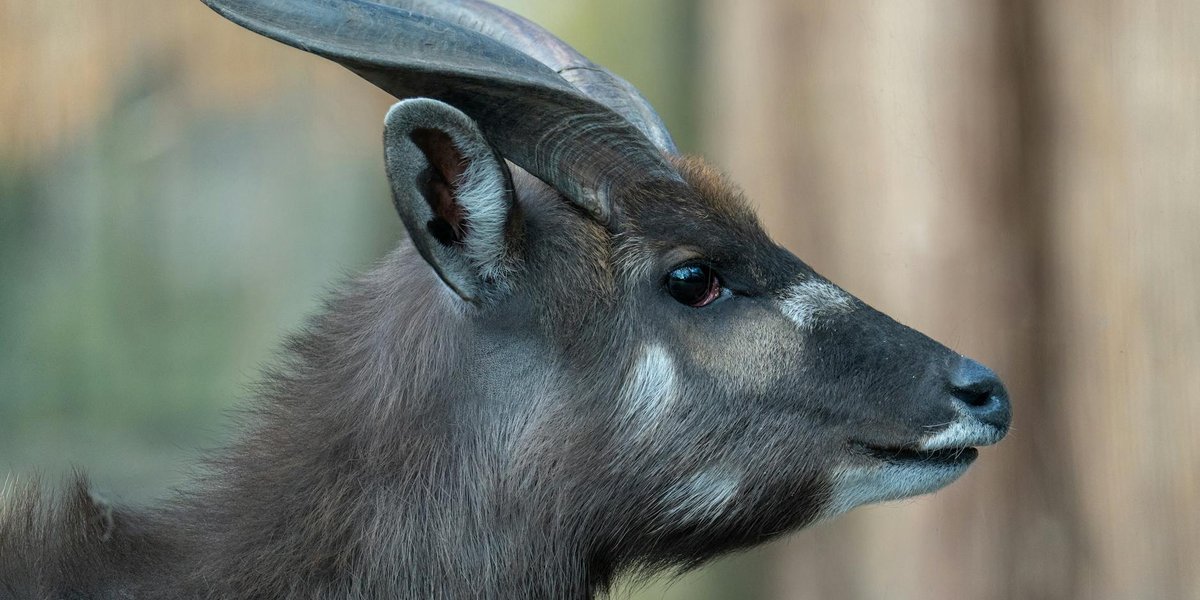
Mainland serows eat leaves. That’s the short version. These shaggy Asian goat-antelopes are herbivores that browse — meaning they pick at leaves, twigs, shoots, and shrubs reaching up off the ground — rather than graze flat fields of grass like a sheep. Tooth-wear studies on living and fossil serows confirm it: their diet is dominated by folivory, the eating of leaves. Grass shows up on the menu, but it’s a side dish, not the main course.
Most profile pages stop at one boilerplate line — “herbivorous, opportunistic feeder of grasses, leaves, shrubs, shoots, fruits, plus mosses and lichens.” True, but useless if you actually want to picture this animal feeding. So here’s the real breakdown, including the only published winter study that puts numbers on it.
Table of Contents
- The short answer: what mainland serows eat
- Browser, not grazer: how we know
- The winter diet, quantified
- Seasonal and regional variation
- How a serow actually feeds
- Serow vs goat: same family, different mouths
- Frequently asked questions
The short answer: what mainland serows eat
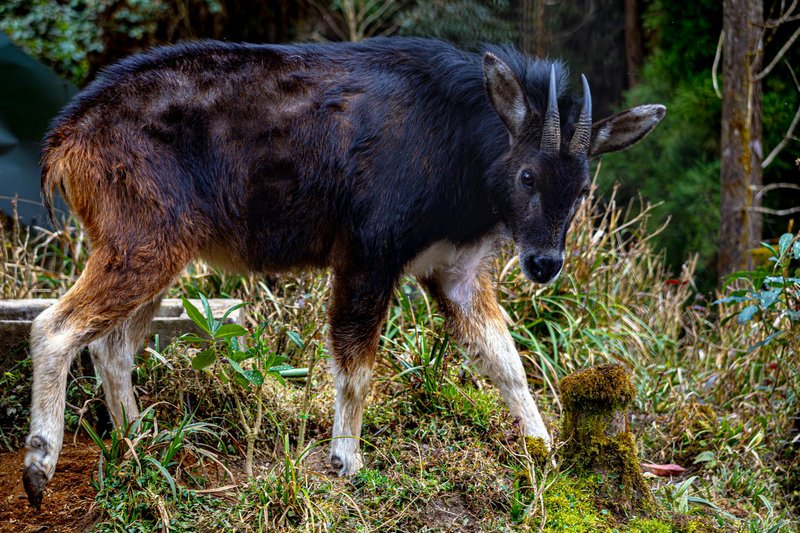
The mainland serow (Capricornis sumatraensis) is a strict herbivore. In the wild its plate looks like this:
- Leaves of broad-leaved trees and shrubs — the bulk of the diet, both deciduous and evergreen species
- Tender shoots and twigs — fresh growth stripped off branches
- Forbs — soft, non-woody flowering plants
- Grasses and graminoids — sedges and grasses, eaten but never dominant
- Conifer foliage — needles and young growth from evergreens in cold, high-elevation forests
- Mosses, lichens, and ferns — picked off rocks and damp ground, especially where richer forage is scarce
- Fruits and seeds — opportunistically, when they’re available
The pattern is consistent across its huge range, which stretches through the eastern Himalayas, southern China, and mainland Southeast Asia. Serows are creatures of steep, rugged, forested slopes, and they eat what those slopes offer: woody plant matter, reachable at standing height.
Browser, not grazer: how we know
The grass-or-leaves question isn’t guesswork. Researchers read it straight off the teeth.
Dental microwear analysis looks at the microscopic scratches and pits that food leaves on a tooth’s enamel as the animal chews. Grass is loaded with silica (phytoliths) and tends to carry grit, so grazers grind their molars and leave complex, pitted wear surfaces. Leaf-eaters slice tough foliage with a high shearing motion, producing fine, parallel scratches — what specialists call high anisotropy and low complexity.
A 2022 study in Frontiers in Ecology and Evolution ran this analysis on both modern and Quaternary-fossil serows from Southeast Asia. The verdict was unambiguous: C. sumatraensis is a leaf-dominant browser, and that browsing habit shows up just as clearly in fossil teeth as in living animals. So this isn’t a recent behavioral quirk. Serows have been folivores for a very long time.
That single fact reframes everything else. When you read that a serow “eats grass,” it does — the way you eat the garnish on a plate.
The winter diet, quantified
Here’s where almost every other page goes silent. Nobody puts numbers on it. One study does.
Researchers working in Bani Wildlife Sanctuary in the north-western Himalayas analyzed faecal samples from Himalayan serows (the thar subspecies) across two winter seasons, November through February. Using micro-histological analysis, they sorted 1,310 identifiable plant fragments into six food categories. The winter diet broke down like this:
| Food category | Share of winter diet |
|---|---|
| Deciduous broad-leaved species | 33.8% |
| Evergreen broad-leaved species | 32.1% |
| Graminoids (grasses/sedges) | 12.2% |
| Evergreen conifers | 6.1% |
| Forbs | 3.0% |
| Other / unidentified | remainder |
Read that table once and the whole story lands. Broad-leaved tree and shrub foliage — deciduous plus evergreen — makes up roughly two-thirds of what a serow eats in winter. Grasses scrape in at a little over a tenth. Even in the dead of a Himalayan winter, when grass would be the easy option, the serow stays loyal to leaves. The study flagged a heavy reliance on Quercus semecarpifolia (brown oak), which is why the authors tied serow conservation to protecting that specific oak forest.
Seasonal and regional variation
A serow’s range spans monsoon jungle to snow-line conifer forest, so the menu shifts with both season and geography.
By season. Spring and summer bring an abundance of fresh shoots, tender new leaves, soft forbs, and the occasional fruit — the high-value, low-effort forage. Come winter, broad-leaved trees that hold their leaves and evergreen oaks become the lifeline, supplemented by conifer needles where nothing softer survives the cold. The diet doesn’t change type across seasons so much as it narrows: when easy food disappears, the serow leans harder on the woody browse it always preferred anyway.
By region. In southern China, serows feed heavily on deciduous broad-leaved foliage. In the rockier, more exposed parts of the range, mosses and lichens scraped off boulders fill more of the gap. The dietary throughline never changes — leaves first, grass last — but the specific plant species swap out depending on what grows on a given mountainside.
How a serow actually feeds
The serow is a ruminant, the same digestive setup as cattle, deer, and goats: a four-chambered stomach that ferments fibrous plant matter, regurgitates it as cud, and re-chews it to extract more nutrition. That machinery is what lets it survive on tough, low-quality leaves and twigs that a single-stomached animal couldn’t process.
At the front end, it feeds like a true browser. A serow uses mobile, dexterous lips and tongue to select individual leaves and strip tender shoots off branches, rather than cropping vegetation in bulk the way a grazer mows a meadow. It’s selective, picking the best bits within reach. Standing roughly a metre at the shoulder on sturdy legs, it browses comfortably at head height through dense, sloping undergrowth — exactly the terrain where leafy browse beats ground grass.
Serow vs goat: same family, different mouths
Serows belong to the family Bovidae and sit in the goat-antelope group, so people reasonably assume they eat like goats. They don’t, quite.
| Mainland serow | Domestic goat | |
|---|---|---|
| Feeding style | Browser (leaf-first) | Mixed feeder, browses readily |
| Diet core | Tree/shrub leaves, shoots, twigs | Whatever’s available — shrubs, grass, weeds |
| Habitat | Steep forested slopes, rocky ravines | Open and brushy land, adaptable |
| Grass in diet | Minor (~12% even in winter) | Often substantial |
| Social structure | Largely solitary | Herd animal |
Both can digest woody browse thanks to ruminant stomachs, and both will nibble grass. The difference is commitment. A goat is an opportunist that eats almost anything; the serow is a specialist that keeps choosing leaves. Compared with its relatives — gorals (smaller, more grass in the diet) and other serow species across Asia — the mainland serow lands firmly on the folivore end of the spectrum.
Frequently asked questions
Are mainland serows herbivores? Yes, entirely. They eat only plant matter — leaves, shoots, twigs, forbs, grasses, mosses, lichens, and the occasional fruit. No part of their diet is animal-based.
Do serows eat grass? They do, but it’s a minor component. In the one quantified winter study, grasses and sedges made up about 12% of the diet, while broad-leaved foliage made up roughly two-thirds. Serows are browsers, not grazers.
What is a serow’s favorite food? Broad-leaved tree and shrub foliage, both deciduous and evergreen. In Himalayan winter forests, brown oak (Quercus semecarpifolia) is a documented staple.
Do serows eat mosses and lichens? Yes, especially in rocky, high-elevation habitat where leafy browse is sparse. These act as supplementary forage rather than a main food source.
What eats serows? Serows are prey for large carnivores across their range — leopards (including the common leopard and snow leopard), tigers, dholes (Asiatic wild dogs), and occasionally bears. Their habit of living on near-vertical, broken terrain is partly a defense: it’s hard country for a predator to chase prey through.
The takeaway
Ask what a mainland serow eats and the honest answer is: leaves, mostly, all year round. It’s a ruminant browser that strips foliage and shoots from broad-leaved trees and shrubs, supplements with conifer needles, mosses, and lichens when winter bites, and treats grass as an afterthought. The tooth-wear record backs it up going back thousands of years, and the one study that bothered to count fragments puts broad-leaved browse at two-thirds of the winter diet. Next time you see it filed under “opportunistic herbivore,” you’ll know what that actually means on the mountainside.