Quick Answer
Bantengs eat grasses above all else, but their diet is wider than that label suggests. Depending on the season and location, they’ll browse on shrubs and herbs, eat bamboo shoots, strip bark, and even lick mineral-rich soil or drink seawater. They’re classic ruminants — graze hard, rest, chew the cud — but with a flexibility that helps them survive across a surprisingly wide range of habitats.
Table of Contents
- What Bantengs Eat
- Grazers, Browsers, or Both?
- Food Categories at a Glance
- How the Ruminant Stomach Works
- Nocturnal Foraging
- Seasonal Diet Shifts
- Salt Licks and Seawater
- Wild vs. Captive Diet
- FAQ
What Bantengs Eat
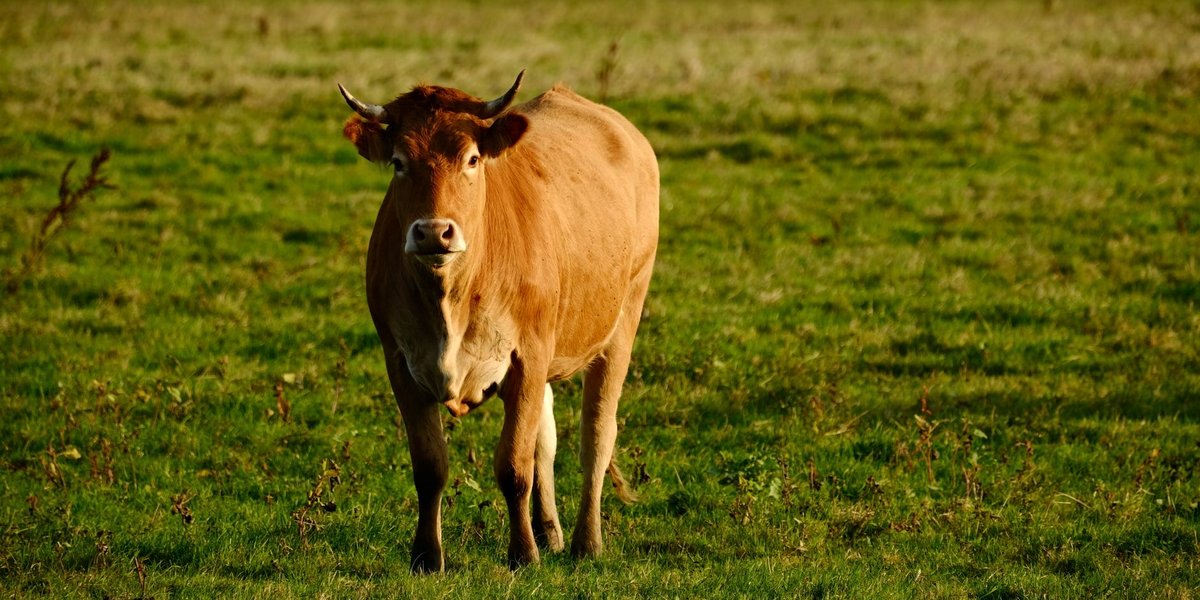
The banteng (Bos javanicus) is a wild bovine native to Southeast Asia — found across Java, Borneo, Indochina, and parts of mainland Southeast Asia. It’s closely related to domestic cattle, and like cattle, it’s built for processing large volumes of plant matter.
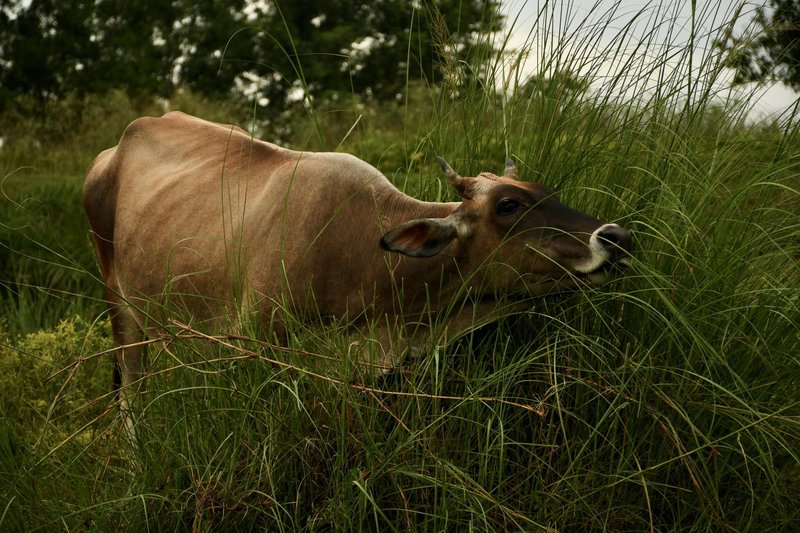
Its core diet centers on grasses and sedges, which form the backbone of what it eats year-round. But bantengs aren’t strict grazers. They supplement with:
- Young shoots and sprouts
- Leaves from shrubs and low trees
- Flowers and fruits when seasonally available
- Bamboo shoots and leaves
- Bark (particularly in Borneo, where food can get scarce in the dry season)
- Herbs and legumes, including Mimosa pudica (the touch-me-not plant)
A study of banteng feeding behavior in Java documented approximately 20 grass species and over 70 shrub species in their diet — a number that tells you just how varied their food sources are when you look carefully. Specific plants recorded include Paspalum conjugatum, a common tropical grass, and Mimosa pudica, which most people know as the plant that folds its leaves when touched.
In Sabah (Malaysian Borneo), researchers recorded bantengs eating bamboo and stripping bark from trees — behavior more typical of deer than cattle, and clear evidence that these animals adapt to what the forest provides.
Grazers, Browsers, or Both?
Bantengs sit closer to the grazer end of the spectrum, but they’re opportunistic enough to browse when grass runs thin. The distinction matters because it affects where you’ll find them feeding.
Grazing means eating ground-level plants — grasses, sedges, low herbs. Bantengs do this mostly in open areas: forest clearings, grassland patches, riverbanks, and the edges of agricultural land. These open spaces are where they concentrate most of their feeding time.
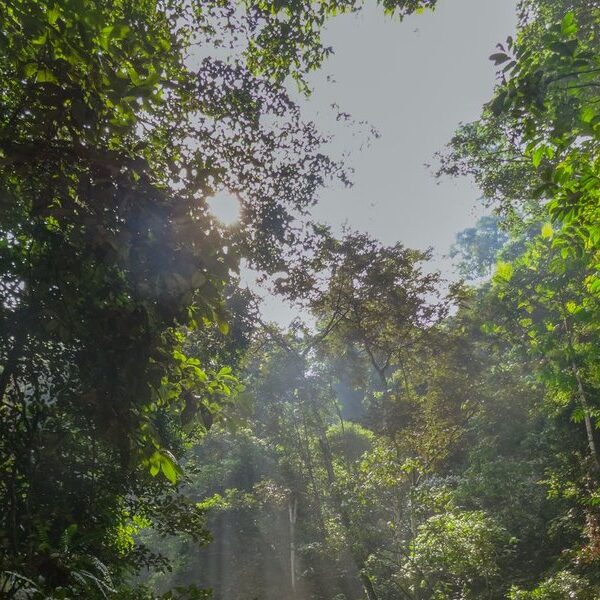
Browsing kicks in at the forest edge and inside the forest understorey, where they can reach leaves, shoots, and fruit. During the monsoon season, when forest vegetation flushes with new growth, bantengs move into denser areas and shift toward softer, more nutrient-dense plant material.
In practice, a banteng herd at the edge of a Javanese teak forest is probably grazing the clearing while simultaneously browsing the shrubs on the tree line. Both behaviors happen at once.
Food Categories at a Glance
| Category | Examples | Typical Timing |
|---|---|---|
| Grasses | Paspalum conjugatum, Imperata cylindrica, other tropical grasses | Year-round, peak in dry season |
| Sedges | Various Carex and Cyperus species | Year-round |
| Shrubs and herbs | Mimosa pudica, legumes, forbs | Year-round, more in wet season |
| Bamboo | Shoots and leaves | Wet season and highland zones |
| Bark | Stripped from tree trunks | Dry season / resource-scarce areas |
| Fruits and flowers | Seasonally available forest plants | Wet season |
| Mineral soil | Via salt licks and exposed earth | Year-round, especially before/after rain |
How the Ruminant Stomach Works
Bantengs have the same four-chambered stomach as domestic cattle, sheep, and goats — and it’s the reason they can eat enormous amounts of low-quality plant material and still thrive.
The process works like this:
- Ingestion: The banteng grazes fast, swallowing large amounts of grass without chewing much. Speed matters — standing exposed in an open field is risky.
- Fermentation in the rumen: The rumen acts as a large fermentation vat. Billions of microbes break down cellulose, the structural material in plant cell walls that most animals simply cannot digest.
- Rumination: The animal regurgitates small wads of partially fermented grass (cud) and chews them thoroughly. This is the “chewing the cud” you’ll see in bantengs resting in the shade during the hottest part of the day.
- Further digestion: Re-swallowed cud moves through the reticulum, omasum, and abomasum, where nutrients are absorbed.
The cycle of graze → rest → ruminate means bantengs spend a significant portion of their day apparently doing nothing — but they’re actually digesting. They feed intensively during cooler hours and rest through the heat, which is why midday banteng sightings are rare even in areas with healthy populations.
Nocturnal Foraging

Bantengs are largely crepuscular and nocturnal feeders — most active at dawn, dusk, and through the night. In areas with significant human activity, they become almost entirely nocturnal, retreating into forest cover during daylight hours and emerging to graze only after dark.
This is partly predator avoidance (tigers remain a significant natural predator across parts of their range) and partly a response to heat. Tropical grasslands at midday can exceed 40°C, and grazing under that sun costs more energy than it returns. Feeding at night sidesteps both problems at once.
The practical implication for researchers: most banteng feeding behavior shows up in camera trap footage from the first and last hours of daylight, or overnight. Daytime sightings in open areas generally mean the animals have been disturbed or are in very low-pressure environments.
Seasonal Diet Shifts
The banteng’s diet isn’t static — it shifts substantially with the seasons, driven by what’s growing and where water is available.
Dry season (roughly November–April across much of the range):
- Grass dominates, though dry-season grass is lower in protein and moisture than the wet-season equivalent
- Bantengs concentrate around remaining water sources and riverbank vegetation where plants stay green longer
- Salt lick visits increase as animals seek minerals
- In Borneo, bark-stripping becomes more common as preferred food gets scarce
Wet season / monsoon (May–October roughly):
- New plant growth flushes across the landscape, including herbaceous plants, forest floor vegetation, and bamboo shoots
- Bantengs move into higher-elevation forest zones, tracking the flush of new growth up the slopes
- Diet diversifies substantially — more browse, more fruiting plants, more tender herbs
- The richer nutrition of wet-season food likely supports breeding condition in both sexes
This vertical migration — lowland grazing in the dry season, highland forest browsing in the wet — means bantengs use different habitat types across the year, which has real implications for conservation planning. A protected area that only covers one habitat type won’t sustain a healthy population.
Salt Licks and Seawater
Salt licks are a consistent feature of the banteng’s diet year-round. These are mineral-rich patches of exposed soil where animals gather to ingest sodium, calcium, magnesium, and trace minerals that grass alone doesn’t supply in adequate quantities.
In coastal areas of Borneo, bantengs have been observed drinking seawater — almost certainly for the same mineral-supplementation purpose. That’s unusual behavior for a large terrestrial herbivore, and it suggests animals in those coastal environments face mineral deficits that the inland diet doesn’t cover.
Salt licks also create natural congregation points where banteng groups meet, which has ecological knock-on effects: disease transmission, breeding encounters, and predictable locations for predator hunting all concentrate at these spots.
Wild vs. Captive Diet
In zoos, bantengs typically receive a managed herbivore diet: hay (timothy or orchard grass), fresh browse when available, supplemental pellets formulated for bovines, and mineral blocks. It covers the nutritional bases but lacks the variety and behavioral challenge of wild foraging.
According to the University of Michigan’s Animal Diversity Web, wild bantengs consume grasses, sedges, bamboo, and a wide variety of herbs and shrubs — a level of dietary variety that captive animals rarely experience. The foraging itself, spread across different habitat types and changing with the season, is part of the animal’s behavioral repertoire that doesn’t transfer well to an enclosure.
The IUCN Red List classifies bantengs as Endangered, with wild populations estimated to have declined by more than 80% over three generations. Habitat loss is the primary driver — and loss of the open grasslands and forest-edge habitat that bantengs depend on for foraging is a direct threat to their ability to find food.
FAQ
Are bantengs herbivores? Yes, strictly. Bantengs eat only plant matter — no insects, no carrion, no animal protein of any kind.
Do bantengs eat bamboo? They do, particularly in Borneo, where bamboo shoots and leaves form a meaningful part of the diet during the wet season and at higher elevations.
How much do bantengs eat per day? Exact figures aren’t well-documented for wild populations, but large bovines typically consume around 2–3% of their body weight in dry matter daily. For a 500–800 kg banteng bull, that’s roughly 10–24 kg of plant material per day.
What is the banteng’s main food source? Tropical grasses. They form the dietary foundation across the full range and dominate feeding time in the dry season especially.
Do bantengs drink water? Yes, and access to water is a critical habitat requirement. In the dry season, banteng populations concentrate around reliable water sources. In Borneo’s coastal zones, some individuals supplement with seawater, likely to obtain minerals.
Can bantengs digest bark? They can. Bark is nutritionally poor, but the four-chambered ruminant stomach can ferment cellulose-heavy material. Bark consumption in Sabah likely reflects either mineral foraging or dry-season resource scarcity — the animal taking what the forest offers when better options are gone.