Germany has been quietly pulling off one of Europe’s most underreported wildlife recoveries. Wolves returned on their own in 2000 after a 150-year absence. Wisent now roam a Westphalian forest. Beavers have recolonized rivers that ran empty for a century. And if you drive the back roads near Lübeck at dusk, you might see a flock of greater rheas — South American birds — drifting across a field like something from the wrong continent entirely.
This is what happens when strict habitat protection, cross-border reintroduction programs, and a nature-minded population all line up. Germany’s Federal Agency for Nature Conservation has created conditions where even the most skittish species can find a foothold. The results are stranger and more varied than most visitors expect.
The list below covers three tiers: genuinely endangered natives still fighting for survival, charismatic species pulled back from the brink, and a handful of feral oddities that belong in their own category entirely.
At a Glance
| Species | Category | IUCN Status | Best Region |
|---|---|---|---|
| Eurasian Lynx | Comeback | LC | Harz Mountains |
| Grey Wolf | Comeback | LC | Lusatia, Brandenburg |
| European Bison | Comeback | VU | Rothaargebirge, NRW |
| Great Bustard | Endangered native | VU | Havelland, Brandenburg |
| White-tailed Eagle | Comeback | LC | Mecklenburg Lake District |
| Brown Bear | Occasional visitor | LC | Bavarian Forest |
| Eurasian Otter | Recovering | NT | Elbe tributaries, Bavaria |
| European Wildcat | Endangered native | LC* | Eifel, Harz, Spessart |
| European Mink | Critically endangered | CR | Functionally absent |
| Bavarian Pine Vole | Critically endangered | CR | Garmisch-Partenkirchen area |
| Greater Rhea | Feral oddity | NT | Schleswig-Holstein |
| Rose-ringed Parakeet | Feral oddity | LC | Cologne, Düsseldorf, Heidelberg |
| Dülmen Pony | Wild herd | — | Merfelder Bruch, NRW |
| Black Stork | Rare native | LC | Bavarian Forest, Brandenburg |
| Eurasian Beaver | Comeback | LC | Elbe, Danube, Isar corridors |
| Corn Crake | Endangered native | LC | Mecklenburg-Vorpommern |
| Hazel Dormouse | Declining native | VU | Bavarian Alps, Black Forest |
| Peregrine Falcon | Comeback | LC | Cologne, Rhine valley |
| Common Crane | Recovering | LC | Rügen, Stralsund (Oct–Nov) |
| Greater Flamingo | Feral vagrant | LC | North German coast |
*LC globally; Critically Endangered on Germany’s national Red List
Table of Contents
- Eurasian Lynx
- Grey Wolf
- European Bison
- Great Bustard
- White-tailed Eagle
- Brown Bear
- Eurasian Otter
- European Wildcat
- European Mink
- Bavarian Pine Vole
- Greater Rhea
- Rose-ringed Parakeet
- Dülmen Pony
- Black Stork
- Eurasian Beaver
- Corn Crake
- Hazel Dormouse
- Peregrine Falcon
- Common Crane
- Greater Flamingo
1. Eurasian Lynx {#eurasian-lynx}
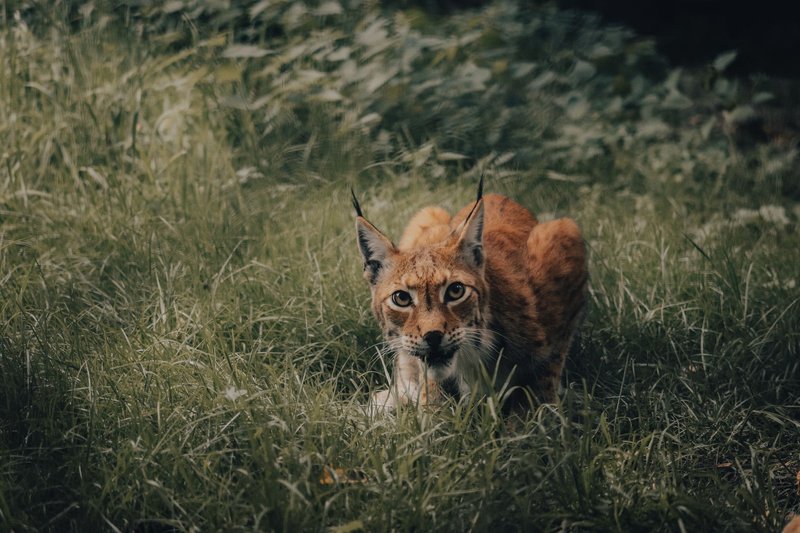
Scientific name: Lynx lynx IUCN status: Least Concern (globally); Endangered on Germany’s national Red List German population: ~170 individuals
The lynx was hunted to extinction in Germany by the 19th century. The animals living here today descend almost entirely from two reintroduction efforts: one in the Harz Mountains in the 1990s, and an earlier release program in the Bavarian Forest in the 1970s. They’re solitary, largely nocturnal, and cover territories of 100–400 km² each — which means 170 animals spread across Germany adds up to very low density.
Your best chance at a sighting is Harz National Park in Saxony-Anhalt and Lower Saxony, or Bavarian Forest National Park on the Czech border. Dawn and dusk in winter, when roe deer are most active, give you the best odds. Manage your expectations: most visitors never see one.
2. Grey Wolf {#grey-wolf}
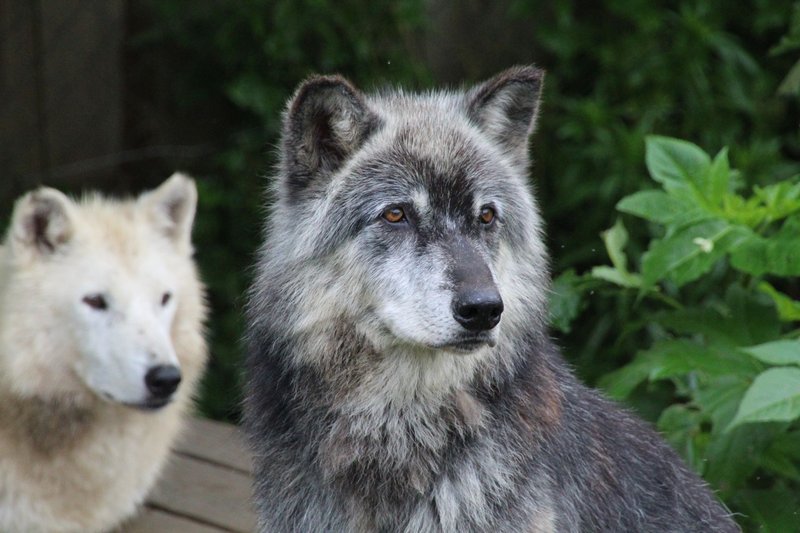
Scientific name: Canis lupus IUCN status: Least Concern German population: ~185 packs (2023 count)
The first wolf to cross into Germany since the 19th century walked in from Poland in 2000, establishing a territory in Lower Lusatia. Nobody planned it. Twenty-five years later, Germany has more than 185 confirmed packs spread across at least 12 states, concentrated in Brandenburg, Saxony, and Lower Saxony.
They’re no longer rare by the numbers — Germany now holds one of the fastest-expanding wolf populations in Western Europe — but spotting one is still largely a matter of luck and timing. Muskauer Heide (a heath in Saxony near the Polish border) and Drömling Nature Park in Saxony-Anhalt are among the more productive areas for early-morning road-watching in winter.
3. European Bison {#european-bison}
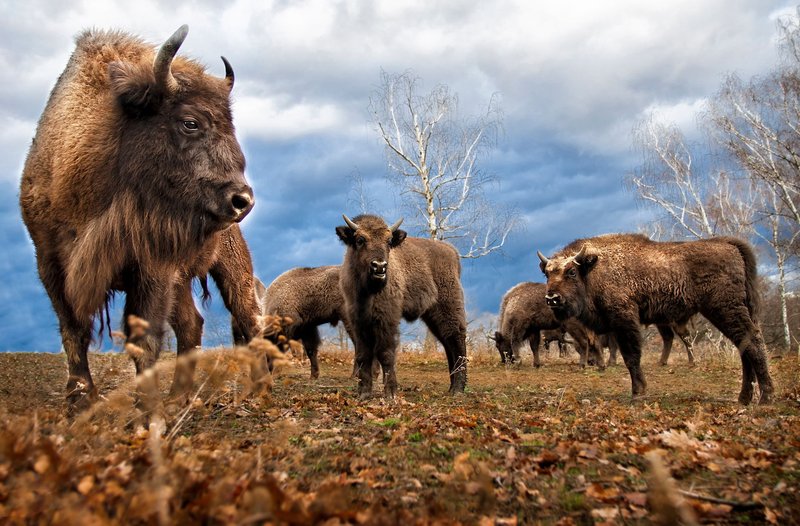
Scientific name: Bison bonasus IUCN status: Vulnerable German population: ~30 free-ranging individuals (Rothaargebirge); additional animals in wildlife parks
The wisent was globally extinct in the wild by 1927. Every single animal alive today descends from just 12 individuals saved in captivity. Germany’s free-ranging herd lives in the Rothaargebirge mountains of North Rhine-Westphalia, where a small group was released in 2013 as part of a pan-European recovery effort coordinated by the IUCN. The herd has since calved and expanded, though it remains small — a German foothold for one of Europe’s rarest species clawing its way back from the edge.
The Wisent-Welt visitor center in Schmallenberg-Wingeshausen (NRW) runs organized tracking excursions — your most realistic shot at seeing the animals. They roam a large forested area, but guides know the terrain well enough to find them.
4. Great Bustard {#great-bustard}
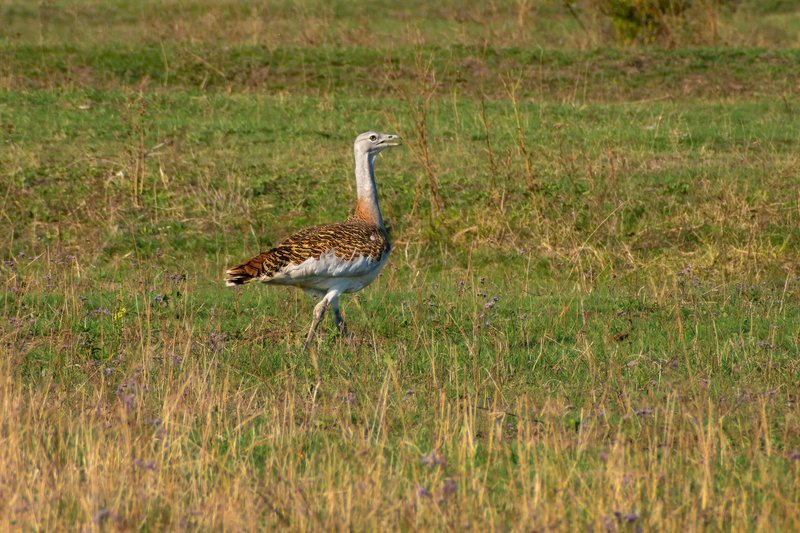
Scientific name: Otis tarda IUCN status: Vulnerable German population: ~200–250 birds
Germany’s heaviest flying bird. Males can hit 16 kg — heavier than a golden eagle — and the species needs vast open agricultural steppes to survive. That landscape has vanished from most of Central Europe, and with it, the bustard. The last viable German population clings on at the Havelland Grassland Bird Reserve west of Berlin in Brandenburg, protected under one of the most targeted conservation programs in the country.
Spring display season (March–May) is the time to visit. Males inflate their neck and undertail feathers into a white froth visible from hundreds of meters away. The reserve has a viewing hide and observation tower; access is restricted during breeding, but the local wildlife trust runs guided visits.
5. White-tailed Eagle {#white-tailed-eagle}
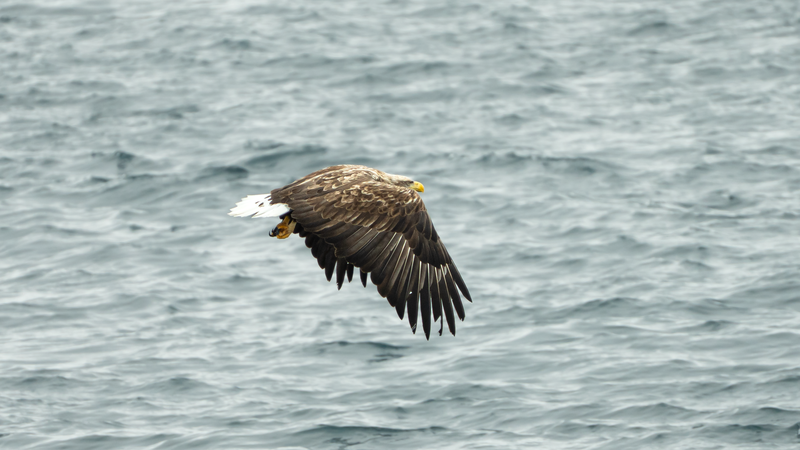
Scientific name: Haliaeetus albicilla IUCN status: Least Concern German population: ~1,000 breeding pairs
Europe’s largest eagle — wingspan up to 2.4 meters — was nearly gone from Germany by the mid-20th century, driven down by hunting and DDT. It’s now the country’s clearest conservation success. Germany holds the largest white-tailed eagle breeding population in Western Europe, centered on the lake-heavy landscape of Müritz National Park in Mecklenburg-Vorpommern.
You’ll find them perched on dead lakeside trees in the morning or circling low over open water when fish are near the surface. The broader Mecklenburgische Seenplatte (Mecklenburg Lake District) has the highest density — any lakeside viewpoint in winter is worth scanning.
6. Brown Bear {#brown-bear}
Scientific name: Ursus arctos IUCN status: Least Concern (globally) German population: 0 established residents
Germany has no resident brown bear population. The last wild one — a young male from an Austrian population, nicknamed “Bruno” by the press and JJ1 by wildlife managers — entered Bavaria in 2006, raided chicken coops and beehives for several weeks, and was controversially shot when attempts to capture him failed. Individual animals still occasionally wander across from Austria or the Czech Republic through the Bavarian Forest, but none has established a territory.
Bavarian Forest National Park maintains a large naturalistic enclosure where bears, wolves, and lynx can be observed at close range — not a wild encounter, but the surrounding old-growth forest is the closest thing to bear habitat Germany currently has.
7. Eurasian Otter {#eurasian-otter}
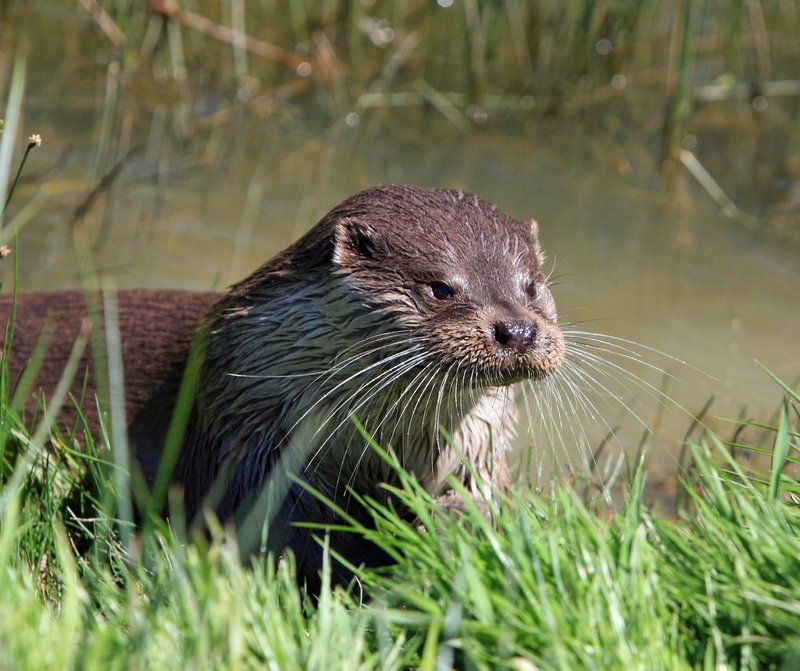
Scientific name: Lutra lutra IUCN status: Near Threatened German population: Several thousand (recovering)
By the 1980s, otters had been hunted and polluted out of existence across most of Germany. The clean-up of the Elbe and its tributaries, combined with legal protection under the Habitats Directive, brought them back in the northeast — one of the brighter chapters in the wider story of Germany’s native wildlife. They’re still absent from much of western Germany, but Mecklenburg-Vorpommern, Bavaria’s river corridors (particularly the Isar), and Lusatia’s wetland networks hold good populations.
Dawn is the moment — otters are crepuscular and most active around sunrise and sunset. Winter mornings on slow-moving rivers and clear-water streams are especially productive because tracks in snow confirm presence even when animals stay out of sight.
8. European Wildcat {#european-wildcat}
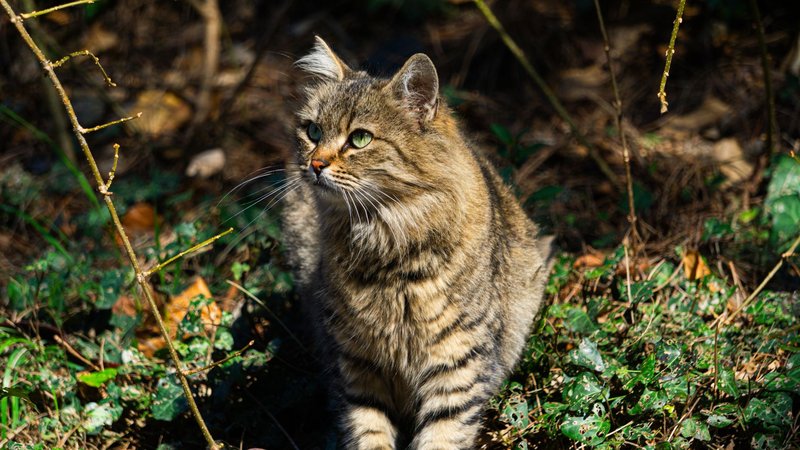
Scientific name: Felis silvestris IUCN status: Least Concern globally; Critically Endangered on Germany’s Red List German population: 5,000–7,000 (estimates are uncertain)
The numbers look manageable until you understand the problem: wildcats hybridize extensively with feral domestic cats. Determining which animals are genetically pure wildcats requires DNA analysis. The true population of non-hybrid animals is almost certainly smaller than survey estimates suggest, and the gene pool is under ongoing pressure in every area where farm cats are present.
Strongholds include Eifel National Park, the Spessart uplands, the Harz Mountains, and the Thuringian Forest. NABU Germany publishes corridor maps showing the most important wildcat movement routes. The animals are largely crepuscular and deliberately avoid humans — finding one is genuinely difficult even in prime habitat.
9. European Mink {#european-mink}
Scientific name: Mustela lutreola IUCN status: Critically Endangered German population: Functionally absent
The European mink is one of the most endangered mammals on Earth, and Germany has almost certainly lost it. Once common along German rivers, the species collapsed under hunting, habitat loss, and competition from the American mink — an introduced fur-farm escapee that outcompetes it at every scale. No confirmed wild sightings have been recorded in Germany in recent years.
It’s on this list because any honest accounting of rare animals in Germany has to include the ones already gone. If you want to see a European mink, your options are conservation breeding programs in Estonia, western France, or Spain’s Navarra region — the last functioning wild strongholds.
10. Bavarian Pine Vole {#bavarian-pine-vole}
Scientific name: Microtus bavaricus IUCN status: Critically Endangered German population: Fewer than 1,000 mature individuals (likely far fewer)
Endemic to a single Bavarian valley. The Bavarian pine vole lives only in a narrow strip of habitat around Garmisch-Partenkirchen in the Zugspitze foothills, in areas with well-drained soils and specific grass communities between the valley floor and the lower treeline. Its entire known range is less than 20 km². A single development project or an unusually harsh winter could push the species toward extinction.
You won’t see one — it’s a secretive burrowing vole that avoids exposure. It’s here because it exists almost nowhere else on Earth and most people have never heard of it.
11. Greater Rhea {#greater-rhea}
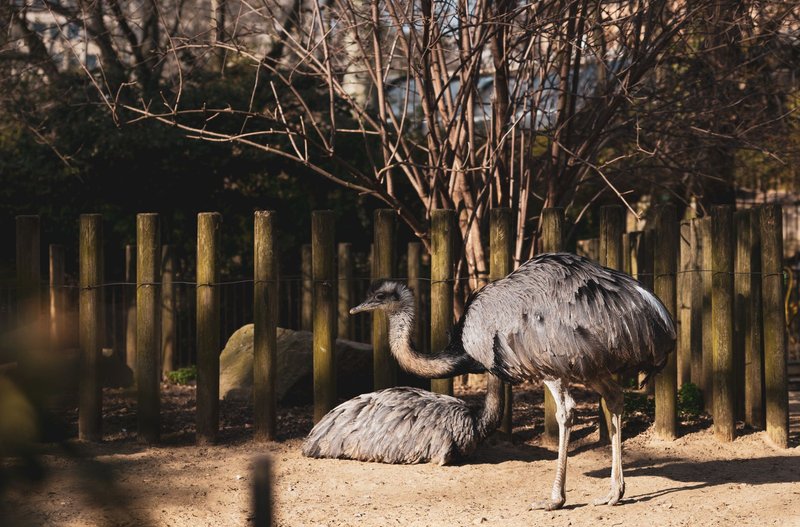
Scientific name: Rhea americana IUCN status: Near Threatened German population: ~500–600 individuals
This one requires explanation. The greater rhea is a South American flightless bird — think ostrich cousin — and it has no business being in northern Germany. A small group escaped from a farm near Lübeck in Schleswig-Holstein in 2000, found the flat agricultural landscape agreeable, and started breeding. The population has grown to roughly 500 birds and is still expanding.
Authorities have been uncertain how to manage them. They’re not clearly harmful enough to justify a cull, but they don’t fit neatly into conservation frameworks built for native species either. The best viewing is along the back roads in the triangle between Lübeck, Ratzeburg, and Bad Segeberg — early morning drives on rural roads through open farmland reliably turn them up, especially in fields adjacent to woodland edges.
12. Rose-ringed Parakeet {#rose-ringed-parakeet}
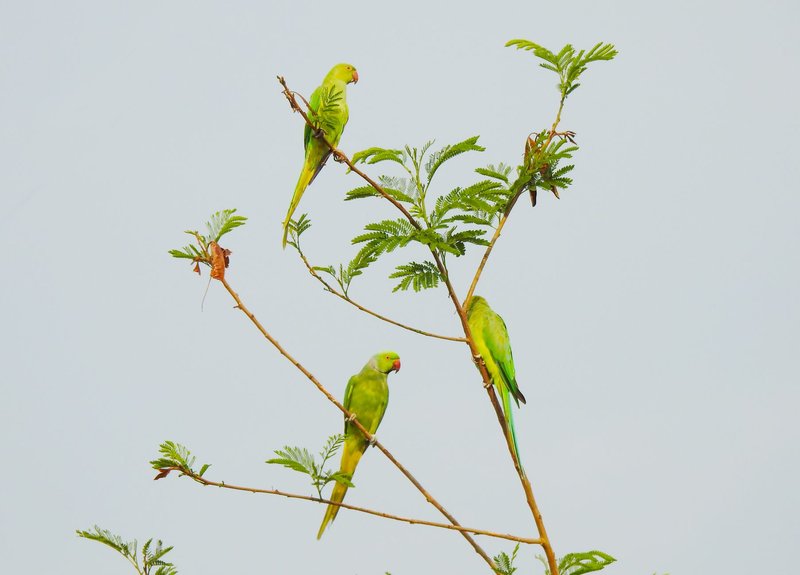
Scientific name: Psittacula krameri IUCN status: Least Concern German population: ~8,000–10,000
Germany’s urban parakeets are descended from escaped cage birds — the legends about origin vary, with one popular story placing the first Cologne birds at a zoo incident in the 1970s. Whatever the true source, they’ve established self-sustaining populations in several Rhine cities. Cologne and Düsseldorf have the largest concentrations; Wiesbaden and Heidelberg each have notable park populations.
Cologne’s Stadtgarten at dusk in autumn, when hundreds of birds come in to roost together in the plane trees, is genuinely worth a visit. They’re loud enough that you hear them before you see them. The irony: they’re easier to observe in Germany than across much of their native range in Africa and South Asia.
13. Dülmen Pony {#dülmen-pony}
Scientific name: Equus ferus caballus IUCN status: Not assessed (domestic breed) German population: ~350 animals
Germany’s only truly wild horse herd has occupied 350 hectares of heath, woodland, and wetland at Merfelder Bruch near Dülmen in NRW since at least the 13th century. They’re a feral domestic breed rather than a wild species, but they receive no supplemental feeding, no veterinary care, and no human management beyond one event per year: the annual round-up on the last Saturday of May.
That round-up draws thousands of spectators and is one of the stranger natural spectacles in Germany. Stallions are removed, mares and foals are checked, and selected young stallions are sold at auction. The rest return to the heath. Outside of round-up season, walking the reserve perimeter at dawn often produces sightings through the treeline.
14. Black Stork {#black-stork}
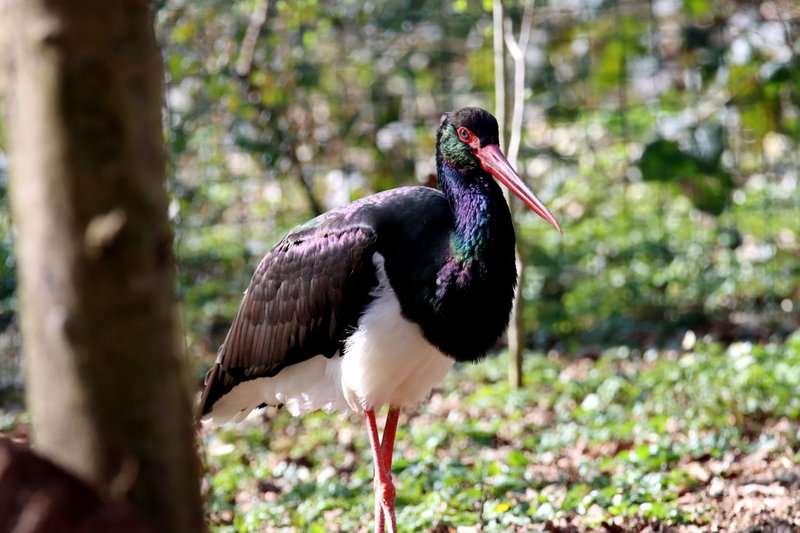
Scientific name: Ciconia nigra IUCN status: Least Concern German population: ~500–600 breeding pairs
The white stork nests on village rooftops and is one of Germany’s most recognized birds. The black stork is its shy forest cousin — iridescent black-green with a scarlet bill, nesting deep in old-growth forest near clear streams, almost never seen in the open. Most Germans have lived their whole lives without a sighting.
Bavarian Forest National Park, Hainich National Park in Thuringia, and large forest blocks in Brandenburg hold breeding pairs. The window is May–July, when adults are actively foraging to feed chicks. Sit quietly at the edge of a shaded stream clearing in those forests long enough and you might see one wade into the water to hunt.
15. Eurasian Beaver {#eurasian-beaver}
Scientific name: Castor fiber IUCN status: Least Concern German population: 25,000–30,000
Hunted to near-extinction across Europe for its fur and castoreum, the Eurasian beaver was gone from German rivers by the early 20th century. The recovery since targeted reintroductions began in the 1960s is one of the clearest conservation wins on the continent. Germany now holds more than 25,000 beavers and the species has recolonized river systems in all 16 states.
You’ll find evidence — dams, bank lodges, cleanly gnawed stumps — on almost any slow river in Germany now. For reliable sightings of the animals themselves, the Isar south of Munich, the Elbe floodplain in Saxony-Anhalt, and the Altmühltal in Bavaria are productive. Go at dusk and sit still near the water.
16. Corn Crake {#corn-crake}
Scientific name: Crex crex IUCN status: Least Concern (globally); severely declining in Germany German population: 200–400 calling males (highly variable year to year)
You’re far more likely to hear a corn crake than see one. The male’s call — a dry, repetitive crex crex that sounds like a fingernail dragged across a plastic comb — carries hundreds of meters through tall grass. The bird itself almost never steps into the open, slipping between stems with a compressed sideways gait it evolved specifically to avoid predators in dense meadows.
The species has collapsed across Europe as intensive agriculture replaced the late-cut hay meadows it depends on. Mecklenburg-Vorpommern’s wet meadows, the Elbe floodplain, and a few protected areas in Bavaria hold the main German populations. June is the best month; listen at dusk and after dark.
17. Hazel Dormouse {#hazel-dormouse}
Scientific name: Muscardinus avellanarius IUCN status: Vulnerable German population: Declining; no reliable national estimate
Germany’s hazel dormouse is invisible to most people, which is partly why its decline has gone underreported. It builds rounded nests of woven leaves and grass in dense scrub and coppice woodland, and it hibernates for up to seven months — longer than any other European rodent. It doesn’t cache food; it has to eat enough hazel nuts in autumn to sustain itself until spring, which makes it extraordinarily dependent on dense hazel scrub at woodland edges.
That habitat has been declining for decades as coppice management fell out of fashion across Germany. Bavarian Alps foothills, the Black Forest, and the Eifel region have the strongest remaining populations. Finding one in the field means either survey work with nest boxes or exceptional luck in the right scrubby woodland at dusk.
18. Peregrine Falcon {#peregrine-falcon}
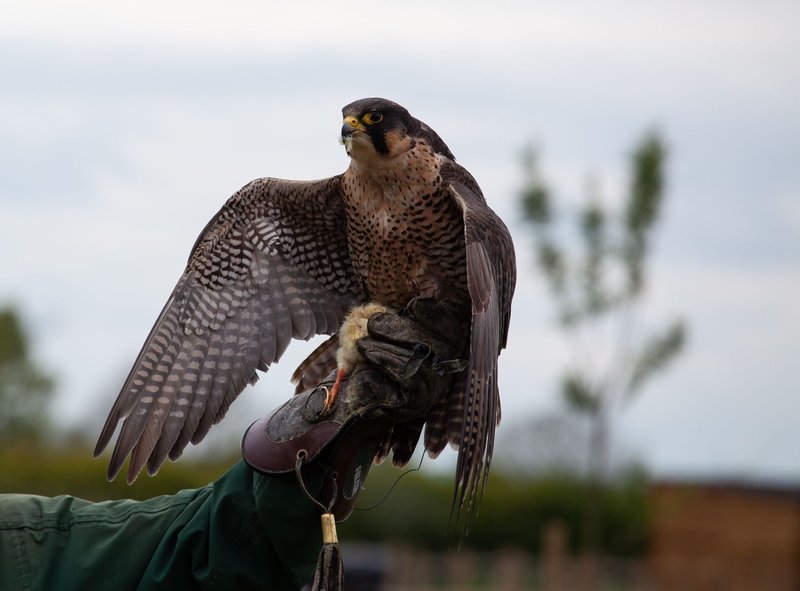
Scientific name: Falco peregrinus IUCN status: Least Concern German population: ~1,600 breeding pairs (recovered)
DDT nearly eliminated the peregrine from Germany. By the 1970s, fewer than 100 pairs remained. Following the pesticide ban, active nest protection, and captive breeding programs, the population has climbed back to ~1,600 pairs — and the birds have colonized environments they never historically used, including city centers.
Cologne Cathedral has hosted a breeding pair for decades and is the most reliably viewable nesting peregrine site in Germany. A volunteer group typically sets up spotting scopes outside the cathedral during spring, and the diocese runs a nest cam livestream during the breeding season. The Rhine gorge between Koblenz and Bingen holds multiple cliff-nesting territorial pairs accessible from footpaths along the river.
19. Common Crane {#common-crane}
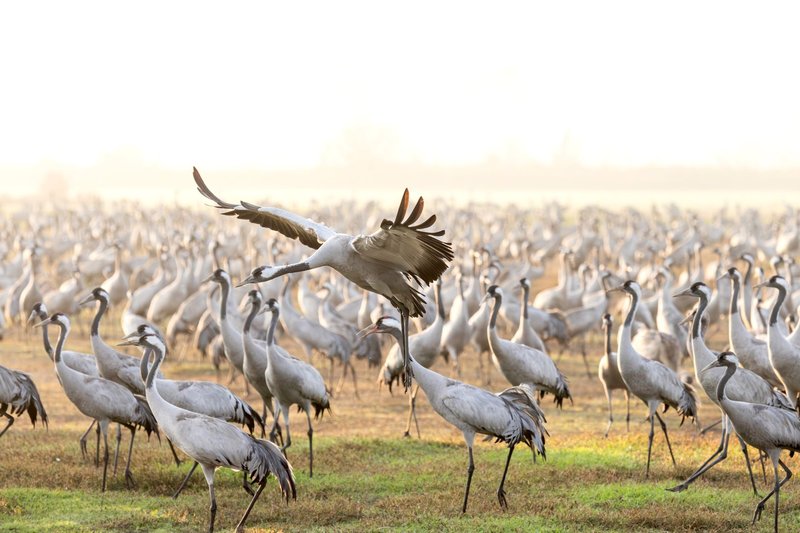
Scientific name: Grus grus IUCN status: Least Concern German population: ~8,000 breeding pairs; 100,000+ pass through in autumn
Germany’s breeding crane population has grown steadily — the birds nest in wet forest clearings and bog margins across the northeast. But the spectacle isn’t the breeders. Each October and November, up to 100,000 cranes funnel through the Rügen-Bock staging area on Germany’s Baltic coast, roosting on shallow coastal lagoons before continuing south to Spain and France.
The Nationalpark Vorpommersche Boddenlandschaft on Rügen and the meadows near Stralsund are the focal points. Arrive an hour before sunset. The birds come in in long, calling skeins of dozens and hundreds, and the noise alone is worth the trip.
20. Greater Flamingo {#greater-flamingo}
Scientific name: Phoenicopterus roseus IUCN status: Least Concern German population: Small numbers of escaped and stray individuals
Germany has no established flamingo population. What it does have is a recurring cast of escaped zoo birds and genuine wild strays — individuals blown north from the Camargue or the Spanish coast by weather systems — that appear on coastal mudflats, inland lakes, and salt marshes often enough to be worth mentioning.
Leg rings can sometimes identify escaped birds’ origins. Mecklenburg-Vorpommern’s coastal zones and Lower Saxony’s Wadden Sea mudflats see the most records. They’re not predictable, but if you’re birding the north German coast and scanning the shallows, you might log something pink that shouldn’t be there.