Tonga is one of the only places on Earth where you can legally slip into the water beside a 40-ton humpback whale and her calf. That single fact drives most of the country’s wildlife tourism — but it also flattens the picture. Ask what animals live in Tonga and you’ll get “whales” on repeat, as if the other 170-odd islands were empty between July and October.
They’re not. Tonga sits deep in the South Pacific, a scatter of coral and volcanic islands with no land bridge to anywhere. That isolation kept the terrestrial fauna small and strange: fruit bats the size of a hawk, ground-nesting birds that incubate their eggs in warm volcanic soil, and two bird species found nowhere else on the planet. The reefs, meanwhile, carry the full Indo-Pacific cast — turtles, reef sharks, octopus, and the seasonal whales on top.
This guide works through Tonga’s wildlife by animal group, tells you which island to go to for each, and — because timing is everything here — when to show up.
Table of Contents
- The seasonal wildlife calendar
- Marine mammals: the humpback whales
- Sea turtles and the reef
- Flying foxes and Tonga’s only native land mammals
- Birds of Tonga (including the two endemics)
- Reptiles: skinks, geckos, and the odd sea snake
- Marine invertebrates and the smaller reef life
- Island-by-island: where to see what
- Conservation status at a glance
The seasonal wildlife calendar
Tonga has two seasons that matter for wildlife: the wet, warm months (roughly November to April) and the cooler dry months (May to October). The single most important date on the calendar is the humpback whale window.
| Animal | Best months | Where |
|---|---|---|
| Humpback whales | July–October (peak Aug–Sept) | Vava’u, Ha’apai, ‘Eua |
| Green & hawksbill turtles | Year-round; nesting Nov–Feb | Reefs across all groups |
| Flying foxes (fruit bats) | Year-round | Kolovai, Tongatapu |
| Tongan whistler (endemic) | Year-round | ‘Eua forest |
| Tongan megapode (endemic) | Year-round | Late’/Fonualei (remote) |
| Reef fish & invertebrates | Year-round; clearest water May–Oct | All groups |
If you can only come once and wildlife is the point, aim for August or September. You get the whales at their peak and the dry-season visibility that makes the reef worth the mask.
Marine mammals: the humpback whales
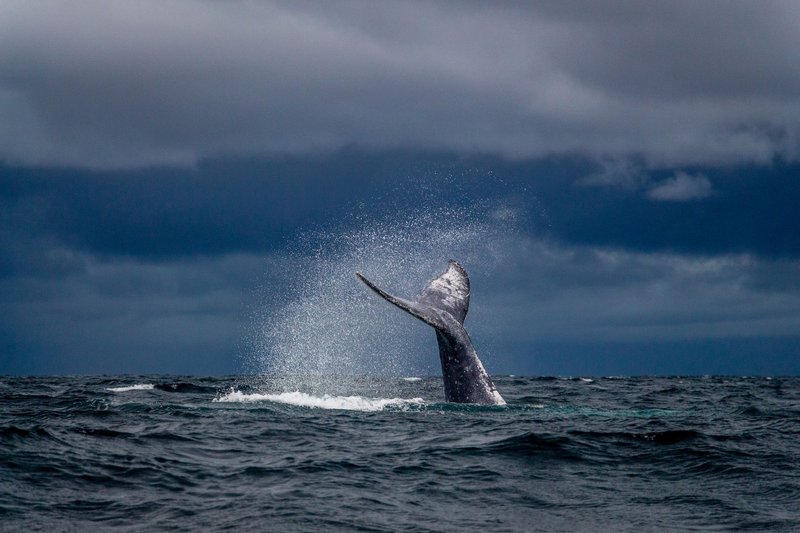
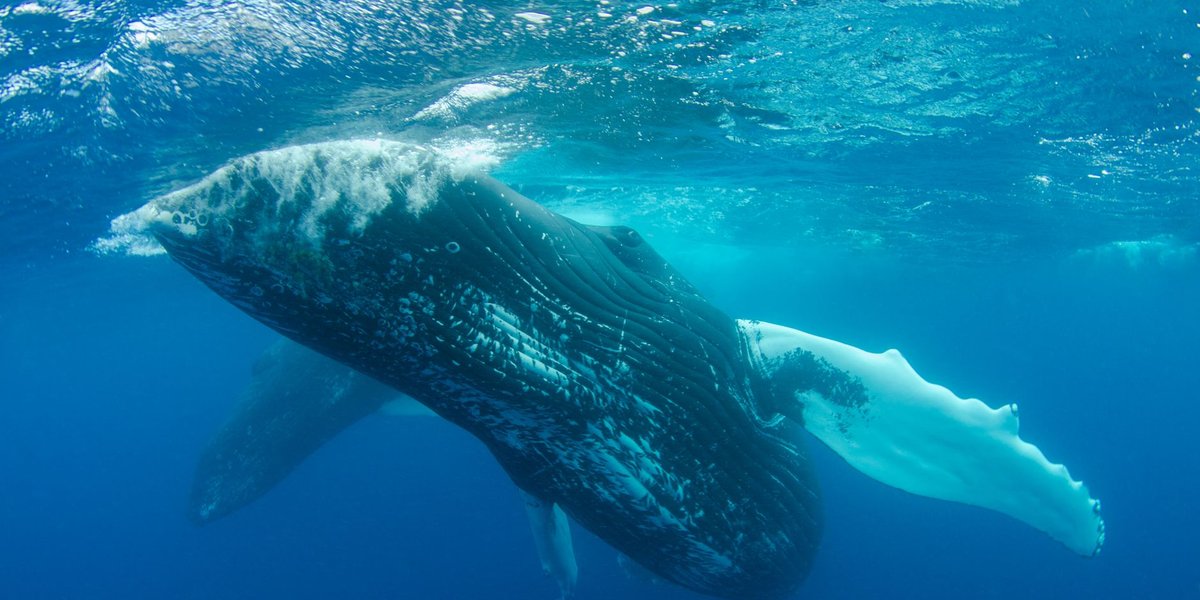
Every winter, humpback whales swim north from Antarctic feeding grounds to breed and calve in Tonga’s warm, sheltered waters. They arrive in July, peak through August and September, and thin out by late October. This is the same South Pacific population that’s still recovering after commercial and illegal Soviet whaling gutted it in the mid-20th century — numbers cratered to a few hundred before Tonga’s king banned whaling in 1978.
What makes Tonga unusual is the swim-with-whales industry. It’s one of a small handful of countries that permits licensed operators to put snorkelers in the water with the animals, under strict rules: four swimmers plus a guide at a time, minimum distances, no touching, no chasing. The encounters that stick with people are usually the mother-and-calf pairs resting in a bay, or a “heat run” of males jostling to escort a female.
Beyond humpbacks, Tongan waters host spinner and bottlenose dolphins year-round, plus occasional pilot whales and, very rarely, sperm whales in the deeper channels. But the humpbacks are the reason people fly here in winter.
Vava’u is the classic base — the sheltered maze of islands makes for calm water and reliable sightings. Ha’apai runs a quieter, less crowded season, and ‘Eua’s deep offshore drop-off means whales pass close to shore.
Sea turtles and the reef
Two sea turtle species are common in Tongan waters: the green turtle and the hawksbill. Greens graze seagrass beds and are the ones you’ll most often drift over on a reef; hawksbills, with their narrower beaks and beautiful (and tragically valuable) shells, pick through coral for sponges. Both nest on Tongan beaches, mostly between November and February.
Turtles carry cultural weight in Tonga. Historically they were reserved for nobility, and while that protection has frayed, both species are under pressure from egg harvesting and bycatch. The green turtle is listed as Endangered by the IUCN, and the hawksbill as Critically Endangered — so seeing one on the reef is a genuinely lucky moment, not a guaranteed one.
The reefs themselves are healthy across much of the archipelago, particularly around the less-populated Ha’apai group. Expect reef sharks (whitetip and blacktip — small, shy, and harmless to snorkelers), moray eels tucked into crevices, and the shifting clouds of fusiliers and surgeonfish that make Indo-Pacific reefs feel busy.
Flying foxes and Tonga’s only native land mammals
Here’s the thing most whale-focused guides skip: apart from a couple of small insect-eating bats, Tonga has almost no native land mammals. Everything else — pigs, dogs, rats — arrived with people. They make up just a sliver of the archipelago’s genuinely native species, most of which turn out to be bats, birds, reptiles, and creatures of the reef rather than land animals. The standout native is the Pacific flying fox, a fruit bat with a wingspan approaching a meter, hanging in noisy colonies from tall trees.
The famous colony is at Kolovai on Tongatapu, and it comes with a story worth telling. By royal decree, the flying foxes of this area were traditionally considered sacred and protected as property of the Tongan royal family — hunting them was forbidden to commoners. That protection is why the colony persisted for generations right beside a village. Show up at dusk and you’ll see hundreds of them stirring, stretching those leathery wings and peeling off to forage.
Flying foxes aren’t just spectacle. As fruit-eaters that travel long distances, they’re major pollinators and seed dispersers for Pacific forests — one of those keystone animals whose loss quietly unravels the plants around them.
Birds of Tonga (including the two endemics)
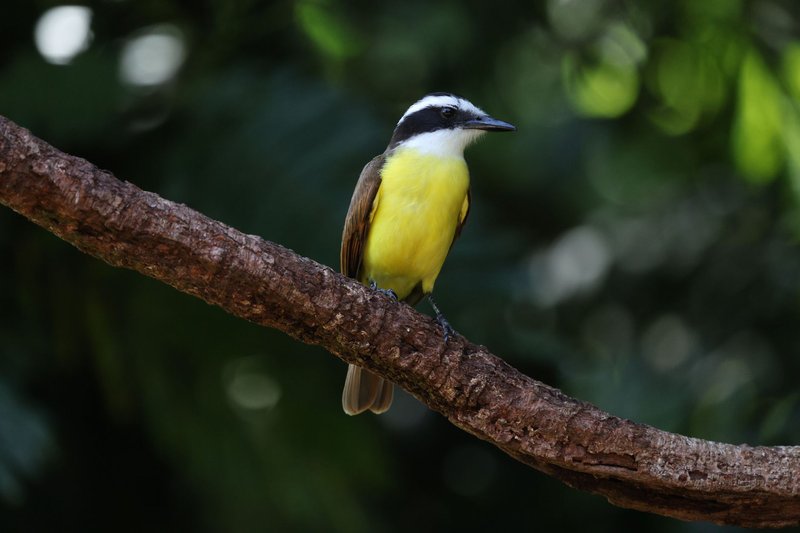
Tonga’s birdlife is the most under-covered part of its fauna, which is a shame, because it’s where the country’s real biological rarities hide. Two species are endemic — found nowhere else on Earth:
- Tongan whistler (Pachycephala jacquinoti) — a forest songbird with a bright yellow underside, restricted almost entirely to the island of ‘Eua. The rainforest of ‘Eua National Park is the reliable place to find it, and its clear whistling call carries through the canopy.
- Tongan megapode (Megapodius pritchardii) — also called the Malau, this is the odd one. Megapodes don’t incubate eggs with body heat; they bury them in warm volcanic soil or sun-heated sand and let geothermal or solar heat do the work. The chicks hatch fully feathered and dig their way out, able to fly almost immediately. The species now survives naturally only on the tiny volcanic island of Fonualei and nearby Late’, after conservationists translocated birds to reduce extinction risk.
Beyond the endemics, look for the collared kingfisher, the Pacific black duck, the crimson-crowned fruit dove, reef herons stalking the shallows, and seabirds like the white tern and brown noddy nesting on outer islets. Migratory shorebirds — pacific golden plovers, wandering tattlers — pass through and winter on the flats.
Two endemics is a modest tally by regional standards — neighboring Fiji counts around 31 birds found nowhere else — but the rarity of Tonga’s pair is exactly what makes them worth the trip. For a birder, ‘Eua is the priority island. It’s Tonga’s oldest landmass, heavily forested, and home to the whistler plus a good slice of the country’s other native forest birds.
Reptiles: skinks, geckos, and the odd sea snake
Tonga’s reptile list is short and mostly small. You’ll see various skinks darting across warm rocks and geckos on the walls of your guesthouse at night — the usual Pacific island lizard cast, some native, some hitchhikers that spread across the region with human movement.
In the water, the banded sea krait occasionally turns up on reefs. It’s one of the region’s genuinely venomous animals but famously placid and not aggressive toward divers; it’s far more interested in hunting eels than in you. There are no land snakes to worry about and no crocodiles. Tonga is, by tropical standards, an easy place to walk around.
Marine invertebrates and the smaller reef life
Slow down on a Tongan reef and the invertebrates take over. Giant clams — some the length of your forearm — sit wedged in the coral with electric-blue and green mantles. Octopuses hide in holes and give themselves away with a pile of discarded shells at the entrance. Sea stars, feather stars, nudibranchs in improbable colors, and the occasional spiny lobster round out the smaller cast.
These animals do the unglamorous work of a coral ecosystem: clams filter water, sea cucumbers process sediment, and cleaner shrimp run the reef’s grooming stations. They also happen to reward anyone patient enough to hover in one spot instead of chasing the big stuff.
Island-by-island: where to see what
Tonga isn’t one destination for wildlife — each island group has a different strength.
- Tongatapu — the main island and arrival point. Best for the Kolovai flying fox colony, reef herons and shorebirds on the lagoon flats, and easy reef snorkeling. Your base for bats and birds close to the airport.
- Vava’u — the whale-watching capital. Sheltered waters, the densest concentration of licensed swim-with-whale operators, and calm-day snorkeling. If humpbacks are the goal, start here.
- ‘Eua — the birder’s island and Tonga’s oldest. ‘Eua National Park’s rainforest holds the endemic Tongan whistler and the best native forest birding in the country. Deep offshore water also brings whales close.
- Ha’apai — the quiet reef group. Fewer people, cleaner coral, strong turtle and reef shark sightings, and a lower-key whale season for those who want the encounter without the crowd.
- The remote outer islands (Fonualei, Late’, Niuas) — home to the Tongan megapode and major seabird colonies, but these are hard to reach and mostly the domain of researchers, not casual visitors.
Conservation status at a glance
Several of Tonga’s signature animals sit on the IUCN Red List, which is worth knowing before you go — it shapes how these encounters should be treated.
- Green turtle — Endangered
- Hawksbill turtle — Critically Endangered
- Tongan megapode — Endangered, with a tiny natural range
- Humpback whale — recovering globally, but the South Pacific breeding stock is still rebuilding after 20th-century whaling
Tonga’s own protections have a long pedigree — the whaling ban of 1978, the royal guardianship of the Kolovai flying foxes, the traditional restrictions on turtles. The best thing a visitor can do is choose licensed, low-impact operators, keep distance, and treat every turtle or whistler sighting as the rarity it actually is.
Come for the whales in September. Stay long enough to notice the bats at dusk, the whistler in the ‘Eua canopy, and the giant clam glowing under two meters of clear water. That’s the fuller animal life of Tonga — and it’s there year-round, long after the whales have swum south.