Search “red mammals” and Google gets confused fast — half the results are about the IUCN Red List of threatened species, not animals that are actually red. This isn’t that. This is the color.
And once you filter out the noise, the list gets short in a hurry. Birds have red feathers everywhere — cardinals, scarlet macaws, robins. Insects and amphibians do red just as easily. Mammals barely manage it, and the ones that do are worth understanding, not just cataloging.
TLDR
- Red fur in mammals comes from pheomelanin, the same pigment that makes some humans redheads — it’s biochemically expensive and mammals mostly evolved away from bright coloration since most species can’t see red anyway.
- The classic five — red fox, red panda, red squirrel, red kangaroo, and red howler monkey — show up on almost every list, but they’re not the whole story.
- Genuinely red mammals span five continents, from the maned wolf of the Brazilian cerrado to the golden lion tamarin of the Atlantic Forest, and several of them are endangered or worse.
- Jump to the comparison table if you just want the rundown.
Table of Contents
Why Red Fur Is So Rare in Mammals
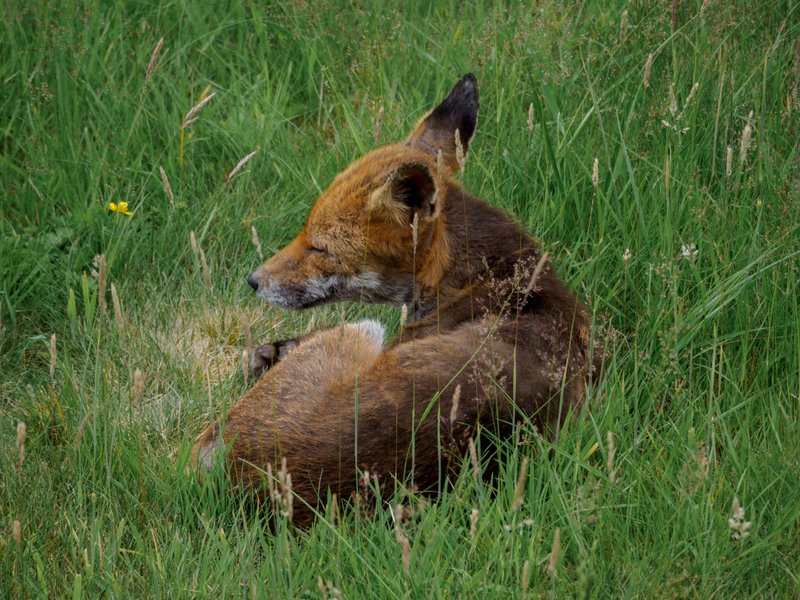
Mammal hair only has two pigments to work with: eumelanin, which produces black and brown, and pheomelanin, which produces red, orange, and yellow tones. That’s the entire palette. Birds can layer in carotenoid pigments pulled straight from their diet — that’s how a flamingo gets pink from shrimp — and structural coloration on top of that, which is how you get iridescent hummingbirds. Mammals don’t have either trick available to them. Whatever red you’re seeing on a mammal is pheomelanin, full stop, and research on melanin pigments in mammals shows the pigment is stable enough to survive in fossil hair millions of years later.
There’s also a reason evolution rarely bothers with it. Producing pheomelanin costs more in antioxidants than producing eumelanin, and most mammals are red-green colorblind — so a red coat that took extra metabolic effort to grow would be invisible as a “color” to most of the predators and rivals it might otherwise signal to. Primates (including us), and a handful of other exceptions, are among the few mammal lineages with the trichromatic vision to actually register red as red. For everyone else, red fur mostly persists because it does something other than look red: it blends into dry grass, reddish soil, or autumn leaf litter, or it flags a species to others of its own kind at close range where scent matters more than sight.
That’s why the mammals on this list cluster into a few strategies: savanna and desert species using red-brown as camouflage, forest primates using it as close-range signaling, and a few high-altitude or forest specialists where it’s closer to an evolutionary accident that stuck around.
The Red Mammals List
Red Fox (Vulpes vulpes)
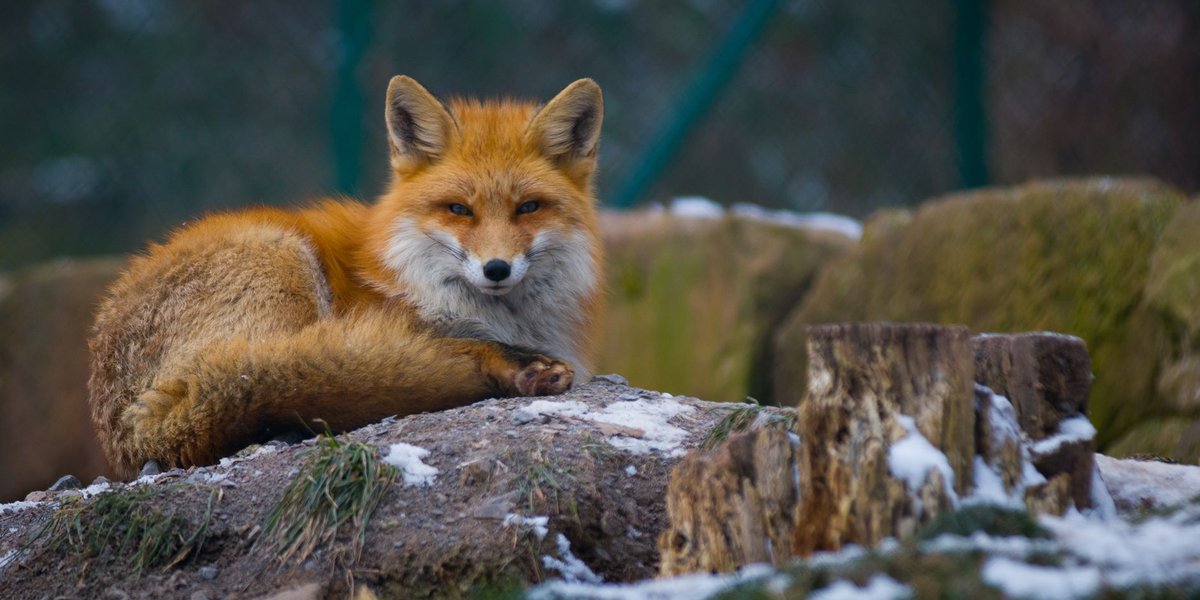
The one everyone pictures first, and for good reason — it’s the most widely distributed carnivore on Earth after humans, found across North America, Europe, Asia, and North Africa. The rust-orange coat with a white-tipped tail is textbook pheomelanin, but red foxes actually come in several color morphs, including silver and “cross fox” variants, all the same species. The red morph dominates because it works: it’s nearly invisible against autumn hedgerows and dry farmland at dusk, which is exactly when foxes hunt.
Red Panda (Ailurus fulgens)
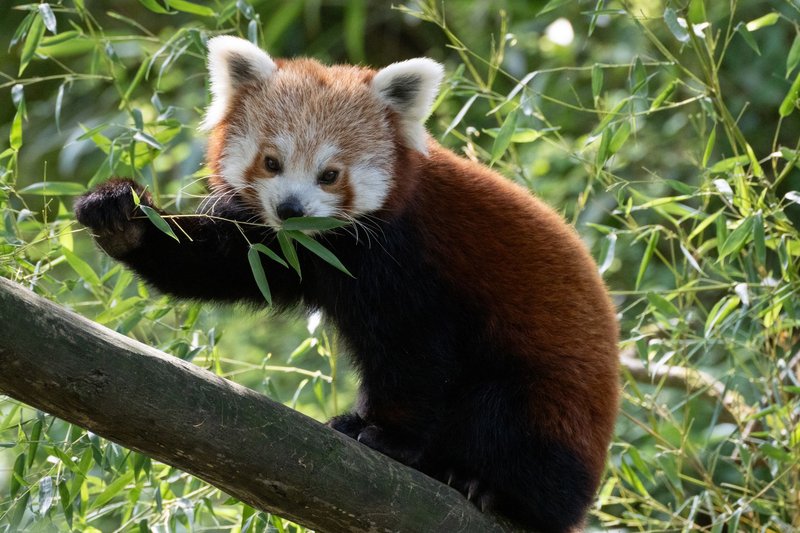
Not a panda in the giant-panda sense — red pandas split off from the bear/raccoon lineage millions of years ago and are the only living members of their own family, Ailuridae. The rusty-red coat and ringed tail evolved for a very specific reason: it matches the reddish-brown moss that coats the branches of the Himalayan fir trees they live in, from Nepal through northern Myanmar and into southern China. Camouflage against moss, not against predators on the ground. National Geographic notes the species has been reclassified from Vulnerable to Endangered, with wild populations estimated around 10,000 and falling due to habitat fragmentation.
Red Squirrel (Sciurus vulgaris)
Europe’s native squirrel, increasingly rare in the UK and Ireland since the American grey squirrel arrived and outcompeted it for food and carried a squirrelpox virus that red squirrels have no resistance to. The coat color actually varies a lot by region — some populations run nearly black — but the classic auburn is the one most people picture, and it’s most common in continental Europe’s coniferous forests, where it breaks up the squirrel’s outline against pine bark.
Red Kangaroo (Osphranter rufus)
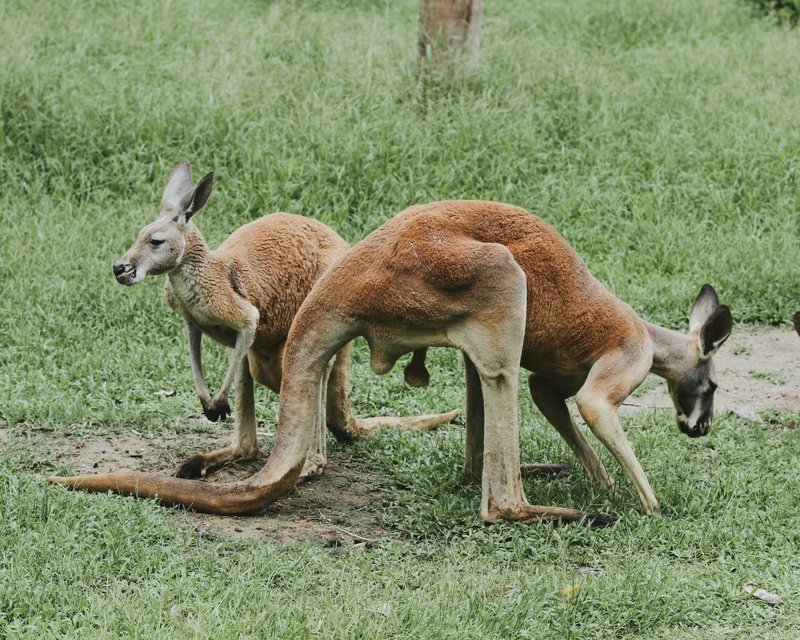
Australia’s largest marsupial and the biggest land mammal native to the continent, standing over six feet tall on its hind legs. Only males are reliably brick-red; females are often a soft blue-grey, which is common enough that early settlers thought they were looking at two different species. The red coat matches the ochre soil of the outback interior almost exactly, and it’s a genuine adaptation to an arid environment — kangaroos here can go without drinking water for extended stretches, pulling most of their moisture from vegetation.
Maned Wolf (Chrysocyon brachyurus)
Despite the name, it’s not a wolf — genetically it’s closer to a fox on stilts, the only member of its genus, built with absurdly long legs to see over tall grass in the South American cerrado. The coat is a deep golden-red, strikingly close to a red fox’s, which is a case of convergent evolution rather than relation: two unrelated canids independently landing on the same camouflage solution for similar grassland habitat. The Smithsonian’s National Zoo lists the maned wolf as Near Threatened, with habitat loss across Brazil, Paraguay, Bolivia, and Argentina as the primary pressure.
Red Uakari (Cacajao calvus)
The bald uakari of the western Amazon basin has a shock of long, wiry red-orange fur set against a completely bald, bright red face — the face gets its color from blood vessels close to the skin, not pigment, and it’s actually a signal of good health; uakaris with paler faces are often sicker. It’s one of the more visually startling entries on this list and one of the least camouflaged: uakaris live in the flooded forest canopy where predators are scarce enough that hiding matters less than fitting in with the troop. Listed as Vulnerable, with river-adjacent habitat loss as the main threat.
Saola (Pseudoryx nghetinhensis)
Nicknamed the “Asian unicorn,” the saola wasn’t documented by science until 1992 and has been photographed in the wild only a handful of times since. It’s not fire-engine red — more a deep reddish-brown — but it earns its place on any serious red-mammal list because almost nothing else about it is ordinary: it’s more closely related to cattle than to the antelope it resembles, and it’s one of the rarest large mammals alive. The IUCN lists the saola as Critically Endangered, with fewer than 750 individuals estimated and possibly far fewer, threatened mainly by snares set for other game across the Annamite Mountains of Vietnam and Laos.
Red Howler Monkey (Alouatta seniculus)
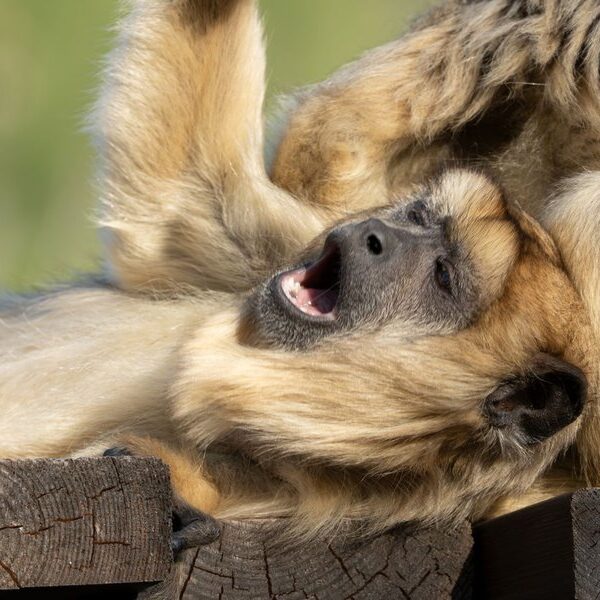
South America’s loudest resident — howler monkey calls carry over three miles through dense rainforest, powered by an enlarged hyoid bone that acts like a resonating chamber. The reddish-orange fur ranges from copper to a deep rust depending on the population, spread across the Amazon and Orinoco basins. Unlike a lot of entries here, the color isn’t primarily camouflage; howlers have few natural predators as adults, so the coat likely functions more as a visual identifier within and between troops.
Proboscis Monkey (Nasalis larvatus)
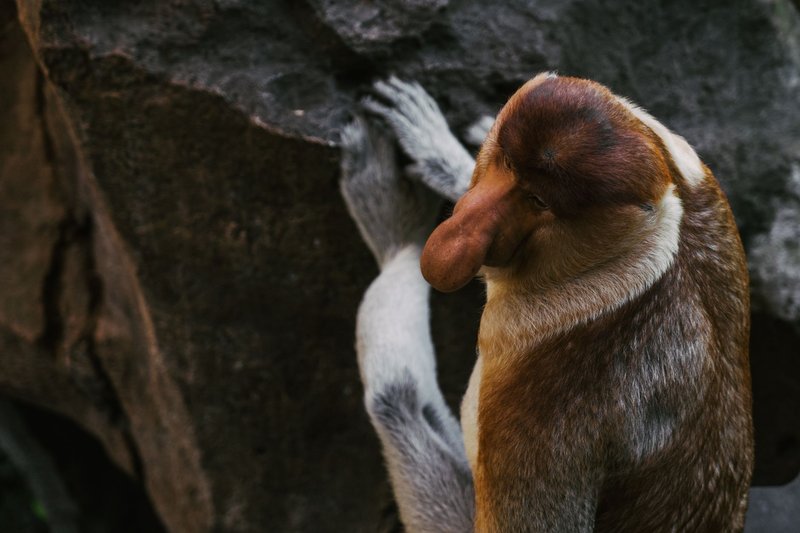
Found only on Borneo, and unmistakable for two reasons: the males’ oversized, pendulous nose, and a reddish-brown coat over a pale belly that makes them look almost costumed. They’re strong swimmers with partially webbed feet — a rarity among primates — an adaptation to the mangrove and riverine forests they inhabit, where crossing water is a daily necessity, not an occasional event. Endangered, with Borneo’s ongoing deforestation for palm oil plantations as the dominant threat.
Red Deer (Cervus elaphus)
One of the largest deer species in Europe and western Asia, with males growing into some of the most impressive antler racks in the deer family. The summer coat is a rich reddish-brown that fades to a duller grey-brown in winter — a seasonal color-switch that many temperate mammals use to track changing light and vegetation. Red deer stags are also famous for their roaring contests during the autumn rut, a sound that carries for miles across open moorland.
Capybara (Hydrochoerus hydrochaeris)
The world’s largest rodent, native to South America, with a coarse reddish-brown coat that’s more functional than flashy — it dries fast after the capybara’s frequent swims, which matter since these animals spend much of the day partially submerged to stay cool and avoid predators. Capybaras are also unusually social for a rodent, living in groups of up to 20, and their calm temperament around other species (birds perch on them routinely) has made them something of an internet mascot.
Orangutan (Pongo spp.)
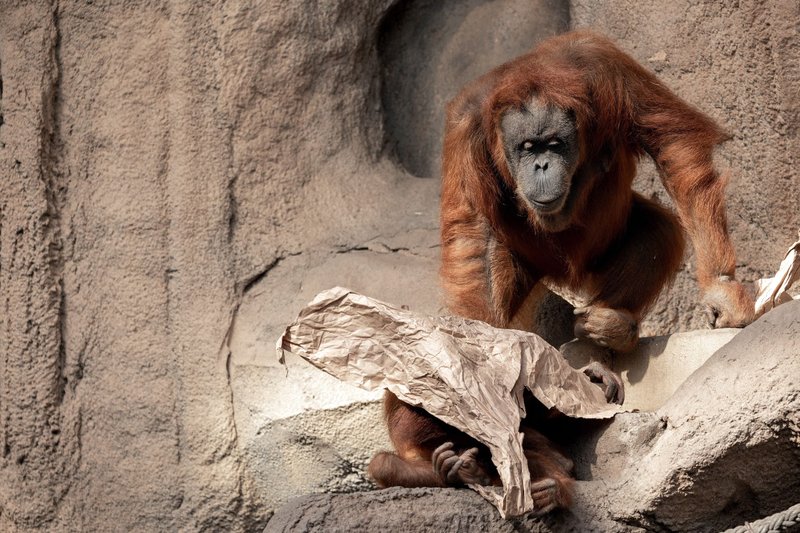
The only great ape with red hair, and the most visually distinct of the three orangutan species (Bornean, Sumatran, and the more recently identified Tapanuli). The shaggy reddish coat isn’t camouflage — it’s one of the few mammal colorations that seems to serve no clear defensive purpose, since adult orangutans have almost no natural predators. All three species are Critically Endangered, driven largely by palm oil deforestation across Borneo and Sumatra; the Tapanuli orangutan, described as a distinct species only in 2017, may number under 800 individuals total.
Golden Lion Tamarin (Leontopithecus rosalia)
A small, fist-sized primate from Brazil’s Atlantic Forest with a mane of brilliant orange-red fur that gives it its name — and its silhouette, a lion’s mane in miniature, is thought to play a role in signaling within family groups. The species was down to roughly 200 individuals in the wild by the 1970s. A sustained captive-breeding and reintroduction program brought that number up to around 3,700 today, one of the more genuine primate conservation successes on record, according to National Geographic.
South American Coati (Nasua nasua)
A raccoon relative found from Colombia down through Argentina, with a coat that runs from rusty red to brown depending on the population, paired with a long, ringed tail it holds upright like a flag while foraging. Coatis are diurnal, unlike most of their raccoon relatives, and travel in bands of females and young that can number 20 or more, while males live mostly solitary except during breeding season.
Comparison Table
| Mammal | Scientific Name | Region | Conservation Status |
|---|---|---|---|
| Red Fox | Vulpes vulpes | N. America, Europe, Asia, N. Africa | Least Concern |
| Red Panda | Ailurus fulgens | Himalayas, southern China | Endangered |
| Red Squirrel | Sciurus vulgaris | Europe | Least Concern (regionally declining) |
| Red Kangaroo | Osphranter rufus | Australia | Least Concern |
| Maned Wolf | Chrysocyon brachyurus | South American cerrado | Near Threatened |
| Red Uakari | Cacajao calvus | Western Amazon | Vulnerable |
| Saola | Pseudoryx nghetinhensis | Annamite Mountains (Vietnam/Laos) | Critically Endangered |
| Red Howler Monkey | Alouatta seniculus | Amazon and Orinoco basins | Least Concern |
| Proboscis Monkey | Nasalis larvatus | Borneo | Endangered |
| Red Deer | Cervus elaphus | Europe, western Asia | Least Concern |
| Capybara | Hydrochoerus hydrochaeris | South America | Least Concern |
| Orangutan | Pongo spp. | Borneo, Sumatra | Critically Endangered |
| Golden Lion Tamarin | Leontopithecus rosalia | Brazilian Atlantic Forest | Endangered |
| South American Coati | Nasua nasua | South America | Least Concern |
That spread is the real takeaway: red mammals aren’t a single evolutionary story. Some, like the red fox and red kangaroo, wear rust as camouflage against soil and grass. Others, like the uakari and golden lion tamarin, use it as a signal with almost nothing to hide from. And a few, like the saola, are red almost incidentally — a species so rare that its color is the least remarkable thing about it.