Table of Contents
- TLDR
- Why Regular Herbs Rot in Wet Soil
- Pond Edge & Standing Water
- Consistently Soggy Soil
- Seasonally Wet Soil
- Water Tolerance & Sun Chart
- Identification and Foraging Safety
- Buying, Foraging, or Growing From Seed
- Where to Start
TLDR {#tldr}
If your yard holds water for days after it rains, stop fighting it and plant into it. For herbs that tolerate actual standing water, start with sweet flag, watercress, or blue flag iris. For soil that’s just perpetually damp — not flooded, just never quite dry — Joe-Pye weed, boneset, marsh mallow, and angelica are the workhorses. For soil that’s wet in spring and normal by July, swamp milkweed, bee balm, and lemon balm handle the swing without sulking. One flag before you start foraging any of these: skunk cabbage is toxic raw, and boneset shouldn’t be taken internally long-term. Details on both below.
Why Regular Herbs Rot in Wet Soil {#why-regular-herbs-rot}
Most culinary herbs — rosemary, thyme, oregano, lavender — evolved on rocky Mediterranean hillsides where water drains through in minutes. Plant them in soil that stays saturated and the roots suffocate before the plant even shows stress above ground. By the time the leaves yellow, the root system is usually already gone.
Swamp herbs solved a different problem. Plants native to wetlands, floodplains, and pond margins developed air channels in their roots (aerenchyma, if you want the biology term) that pipe oxygen down to root tissue sitting in saturated, low-oxygen soil.  That’s the actual mechanism, not just “tolerance” — it’s why sweet flag can sit with its roots in standing water indefinitely while a rosemary plant would be dead in a week.
The 15 herbs below are grouped by how wet is too wet for each one, because “grows in wet soil” covers a huge range — from a few inches of standing water to ground that’s merely damp underfoot.
Pond Edge & Standing Water {#pond-edge-standing-water}
These tolerate saturated soil or shallow standing water (up to a few inches) for extended periods. Plant them at the literal edge of a pond, rain garden basin, or drainage swale.
1. Sweet Flag (Acorus calamus)
Sweet flag looks like an iris from a distance — sword-shaped leaves, clumping growth — but crush a leaf and you get a sharp, citrusy-spice smell that’s given it a long history as a flavoring and, in some traditions, a digestive remedy. It spreads by rhizome and will happily colonize the muddy edge of a pond where almost nothing else takes hold. Give it full sun to part shade and don’t bother amending the soil; it wants exactly the muck you’re trying to fix.
2. Skunk Cabbage (Symplocarpus foetidus)
Skunk cabbage is the plant that melts snow around itself in late winter — it generates its own heat through a metabolic process called thermogenesis, one of the few plants on the planet that does this. It thrives in the mucky, seasonally flooded soil of forested swamps and needs shade to do it. Every part of the raw plant contains needle-shaped calcium oxalate crystals that cause burning pain in the mouth and throat on contact — this is not a salad green, full stop. More on preparation in the safety section below.
3. Water Mint (Mentha aquatica)
Regular mint spreads aggressively in normal soil; water mint spreads aggressively in wet soil, which makes it one of the few culinary herbs you can plant directly at a pond’s edge without babying it. The leaves are milder and slightly more menthol-forward than spearmint. It’ll root directly in shallow water if you let it.
4. Blue Flag Iris (Iris versicolor)
Blue flag is grown mostly for the flower — a deep violet-blue bloom in early summer — but it has a documented history in North American herbal medicine, where the dried root was used as a purgative. That history matters more as a caution than a recommendation: fresh blue flag root is acrid and irritating, and this is not a plant to self-dose from. Plant it for the color and the wildlife value; leave the medicinal use to people trained in it.
5. Watercress (Nasturtium officinale)
Watercress is the one entry here you can actually eat straight off the plant, provided the water it’s growing in is clean — it needs running or well-oxygenated water, not stagnant ponds, or it can harbor liver fluke larvae in agricultural runoff areas. In a clean spring-fed stream or a controlled water garden, it grows fast, tastes peppery, and gets harvested the same way you’d cut lettuce.
Consistently Soggy Soil {#consistently-soggy-soil}
This tier wants soil that never fully dries out but doesn’t need to sit in visible water. Think the low spot in the yard, the shady strip under a downspout, or ground next to a stream that never quite drains.
6. Joe-Pye Weed (Eutrochium purpureum)
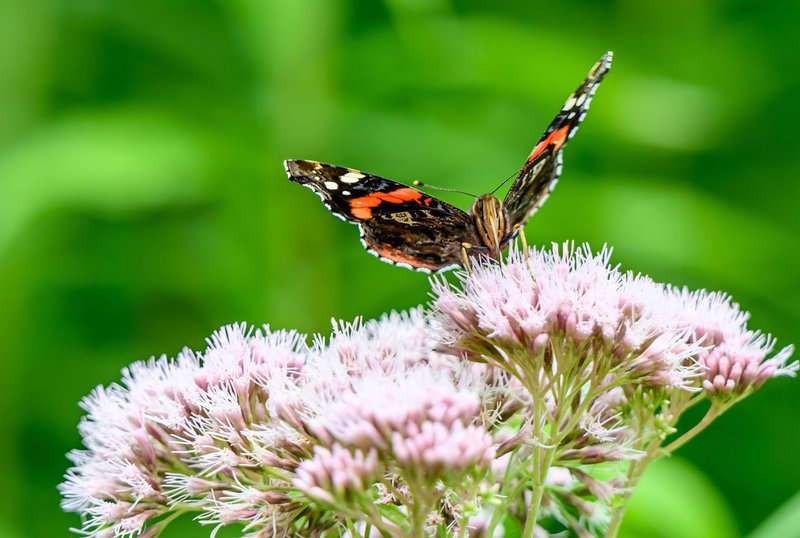
Joe-Pye weed gets big — up to 7 feet in the right spot — with dusky mauve flower clusters that pull in more butterflies per square foot than almost anything else in this list. It’s named for a 19th-century Indigenous healer who reportedly used it to treat typhus. The dried root shows up in older herbal texts for fever and joint pain, but its main value in a modern yard is structural: it’s the tall backdrop plant for a wet border.
7. Boneset (Eupatorium perfoliatum)
Boneset earned its name from its historical use against “breakbone fever” (dengue) and other fevers, and settlers and Indigenous healers both relied on it for centuries. Modern herbal use persists, but it comes with a real caveat: boneset contains pyrrolizidine alkaloids, compounds linked to liver toxicity with prolonged internal use. If you’re growing it, grow it for the pollinators and the history — treat any internal use as something to research thoroughly first, not something to wing.
8. Marsh Mallow (Althaea officinalis)
Yes, this is where the candy name came from — the root was originally used to make a soothing confection before modern marshmallows swapped in gelatin and sugar. The plant itself is a soft-leaved perennial with pale pink flowers, and the root has a mucilaginous quality that’s made it a staple in traditional throat and digestive remedies. It wants soil that’s damp but not flooded, and it’ll take full sun better than most plants on this list.
9. Angelica (Angelica archangelica)
Angelica is a biennial that spends its first year as a low rosette and its second year shooting up to 6 or 7 feet with umbrella-shaped flower heads. It likes moist, shaded ground — the edge of a woodland or the north side of a building with poor drainage is often ideal. The stems have a long culinary history candied for baking, and the plant self-seeds readily once established, so one packet of seed can turn into a permanent patch.
10. Meadowsweet (Filipendula ulmaria)
Meadowsweet’s frothy cream flower clusters smell faintly of wintergreen, and the plant has a genuine claim to pharmaceutical history — salicin, a compound related to aspirin, was first isolated from it, and the drug’s name (aspirin) is thought to derive from Spiraea, an old genus name for the plant. It wants consistently moist, humus-rich soil and tolerates partial shade well, which makes it a good match for the damp edge of a woodland.
Seasonally Wet Soil {#seasonally-wet-soil}
These handle a wet spring and a normal or even dry summer — the classic pattern for a yard with heavy clay or poor drainage that dries out once the growing season gets going.
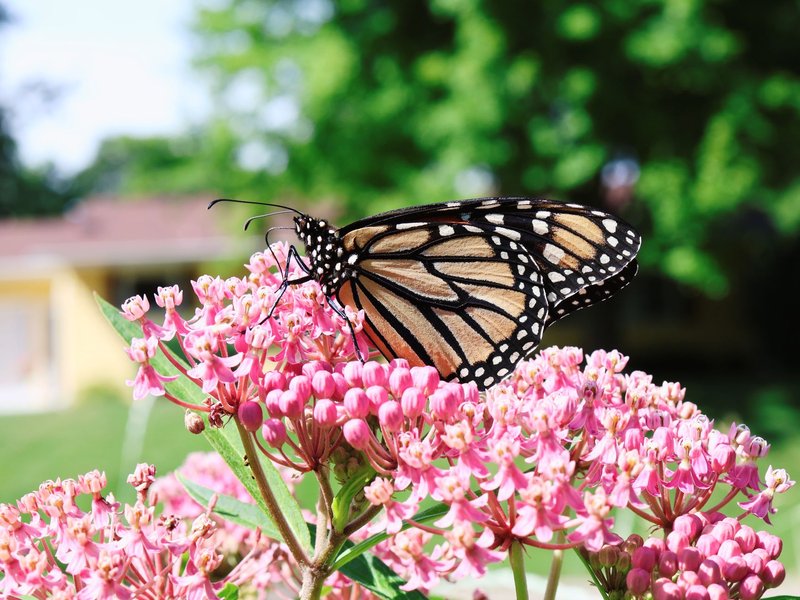
11. Swamp Milkweed (Asclepias incarnata)
Swamp milkweed is the wetland cousin of the common milkweed monarch butterflies need for their caterpillars, and unlike its dry-soil relative, it’s well-behaved — it clumps instead of running underground. The pink-mauve flower clusters bloom through mid-summer. Every part of the plant contains cardiac glycosides, compounds that affect heart function; that’s exactly the kind of chemistry monarch caterpillars sequester to make themselves toxic to predators, and exactly why this one stays in the garden as an ornamental and pollinator plant, not a kitchen herb.
12. Culver’s Root (Veronicastrum virginicum)
Culver’s root sends up narrow white flower spikes on stiff, upright stems, often reaching 4 to 6 feet, and it holds its shape well enough to skip staking even in a wind-exposed spot. Historically the dried root was used as a strong laxative — strong enough that it’s not something to experiment with casually. In the garden it’s mostly valued for structure and for the native bees that work the flower spikes all summer.
13. Lemon Balm (Melissa officinalis)
Lemon balm is the most forgiving plant on this list — it’ll grow in ordinary garden soil just fine, but it also shrugs off a soggy spring without the root rot that would take out thyme or sage in the same spot. Crushed leaves smell distinctly of lemon with a mint undertone, and it’s commonly steeped as a calming tea. It self-seeds enthusiastically, so plant it somewhere you don’t mind it spreading.
14. Bee Balm (Monarda didyma)
Bee balm’s shaggy red or purple flowers are hummingbird magnets, and the plant tolerates damp soil far better than most mint-family herbs while still handling a normal summer without complaint. The leaves have a citrusy, oregano-adjacent flavor that’s traditionally been brewed as a tea — it’s a relative of the plant Oswego tea takes its name from. Give it airflow; in humid wet-soil conditions it’s prone to powdery mildew if it’s crowded.
15. Stinging Nettle (Urtica dioica)
Nettle isn’t glamorous, but it’s one of the most nutrient-dense spring greens you can grow, and it thrives in the damp, nitrogen-rich soil found near streams and low spots. The sting comes from tiny silica-tipped hairs that inject formic acid on contact — wear gloves to harvest. Cooking, drying, or steeping it disables the sting completely, which is why nettle soup and nettle tea are both long-standing traditions rather than a workaround.
Water Tolerance & Sun Chart {#water-tolerance-chart}
| Herb | Water Tolerance | Sun Needs | Primary Use |
|---|---|---|---|
| Sweet flag | Standing water, several inches | Full sun–part shade | Fragrance, traditional digestive use |
| Skunk cabbage | Standing water, seasonal flooding | Shade | Wildlife, historical medicinal (not raw-edible) |
| Water mint | Standing water to soggy soil | Full sun–part shade | Culinary |
| Blue flag iris | Standing water to soggy soil | Full sun–part shade | Ornamental, historical medicinal |
| Watercress | Running/shallow water only | Full sun–part shade | Culinary (clean water sources only) |
| Joe-Pye weed | Consistently soggy | Full sun–part shade | Pollinator plant, historical medicinal |
| Boneset | Consistently soggy | Full sun–part shade | Historical medicinal (caution) |
| Marsh mallow | Consistently soggy | Full sun | Traditional remedy, root use |
| Angelica | Consistently soggy | Part shade | Culinary, historical medicinal |
| Meadowsweet | Consistently soggy | Part shade–full sun | Traditional remedy |
| Swamp milkweed | Seasonally wet | Full sun | Pollinator plant (toxic, ornamental only) |
| Culver’s root | Seasonally wet | Full sun–part shade | Pollinator plant |
| Lemon balm | Seasonally wet, tolerates normal soil | Full sun–part shade | Culinary, tea |
| Bee balm | Seasonally wet, tolerates normal soil | Full sun–part shade | Culinary, tea |
| Stinging nettle | Seasonally wet | Full sun–part shade | Culinary, cooked or dried only |
Identification and Foraging Safety {#identification-safety}
A few of these show up wild, not just in nurseries, which means misidentification risk is real. Skunk cabbage’s mottled maroon-and-green hood (the spathe) emerges before the leaves and is distinctive enough that confusion is unlikely once you’ve seen it — but the leaves alone, before flowering, get mistaken for false hellebore, which is genuinely poisonous. If you can’t confirm the spathe or the skunky smell when a leaf is crushed, don’t harvest.
Blue flag iris and yellow flag iris both grow at pond edges and both have acrid, irritating roots — treat any iris root as something to identify with certainty (flower color and bloom timing are the easiest tell) before touching it, and never eat it raw.
For anything you plan to eat or brew — watercress, nettle, mint, lemon balm — confirm the water source first. Watercress and nettle both pull in whatever is upstream, and agricultural runoff or stagnant water is a bigger risk than the plant itself. According to the USDA PLANTS Database, several of these species are also wetland indicator plants used by field biologists precisely because they’re reliable markers of saturated soil — useful to know if you’re trying to read your own yard’s drainage before planting anything.
If a plant on this list has a history of internal medicinal use — boneset, blue flag, Culver’s root, marsh mallow — treat that history as a starting point for research, not a dosing instruction. Boneset’s pyrrolizidine alkaloid content is well documented in the pharmacology literature, and the National Institutes of Health’s PubMed database is a better place to check current safety data than a gardening blog, including this one.
Buying, Foraging, or Growing From Seed {#sourcing}
Buying starts is the fastest path for anything on this list except the true wetland natives, which most big-box nurseries don’t stock. Native plant nurseries and wetland-specialty growers carry sweet flag, swamp milkweed, and Joe-Pye weed as potted starts more often than seed packets, since several of these germinate slowly or need cold stratification.
Growing from seed works well for angelica, boneset, and Culver’s root, but check stratification requirements first — most wetland perennials evolved to germinate after a winter of cold, damp conditions, and seed sown indoors in spring without that cold treatment often just sits there. A month or two in a damp paper towel in the fridge substitutes for winter if you’re starting seed off-season.
Foraging is the riskiest and least reliable option of the three, both because of identification risk (see above) and because wetlands are frequently protected habitat — many states and counties restrict or ban plant collection in wetlands and floodplains specifically because they’re sensitive, slow-to-recover ecosystems. Check local regulations before digging anything out of a wild wetland, and when in doubt, buy or grow instead.
Where to Start {#where-to-start}
If you’ve got a low spot that stays wet and you’ve already killed a rosemary plant trying to make it work, stop amending the soil and start matching the plant to the conditions instead. Sweet flag or water mint for standing water, Joe-Pye weed or marsh mallow for soil that’s just perpetually damp, swamp milkweed or bee balm for the spot that’s wet in April and fine by July. Swamp herbs aren’t a workaround for bad drainage — they’re plants that were built for exactly the ground most gardens are trying to avoid.