Most “unique fruits” roundups treat every entry like it’s equally out of reach — as if mangosteen and jabuticaba belong on the same shopping trip. They don’t. One of them shows up bagged at Trader Joe’s. The other one you’re not getting unless you know someone with a backyard tree in São Paulo or you’re willing to pay import prices for something that spoils in three days.
So this list splits 30 fruits into three tiers based on how hard they actually are to get your hands on: what’s realistically sitting in a produce aisle near you, what needs an Asian or Latin market, and what’s genuinely rare — the ones you track down through a specialty importer, a mail-order nursery, or a friend’s tree. Every entry covers texture, how to eat it, what it’s actually good for nutritionally, and where to look.
Table of Contents
- Tier 1: Regular Grocery Store
- Dragon Fruit, Guava, Passion Fruit, Star Fruit, Lychee, Physalis
- Tier 2: Asian or Latin Market
- Durian, Jackfruit, Rambutan, Longan, Mangosteen, Salak, Wax Apple, Langsat, Cherimoya, Soursop, Mamey Sapote, Tamarillo, Buddha’s Hand, Noni
- Tier 3: The Genuinely Rare Ones
- Ackee, Black Sapote, Breadfruit, Feijoa, Horned Melon, Ice Cream Bean, Jabuticaba, Marang, Miracle Fruit, Monstera Deliciosa
- Seasonality and Ripening, in Brief
- Where to Actually Start
Tier 1: Regular Grocery Store
These have graduated from “exotic” to “produce section” over the last decade. If your grocery store has a halfway decent produce buyer, you can find most of these without a special trip.
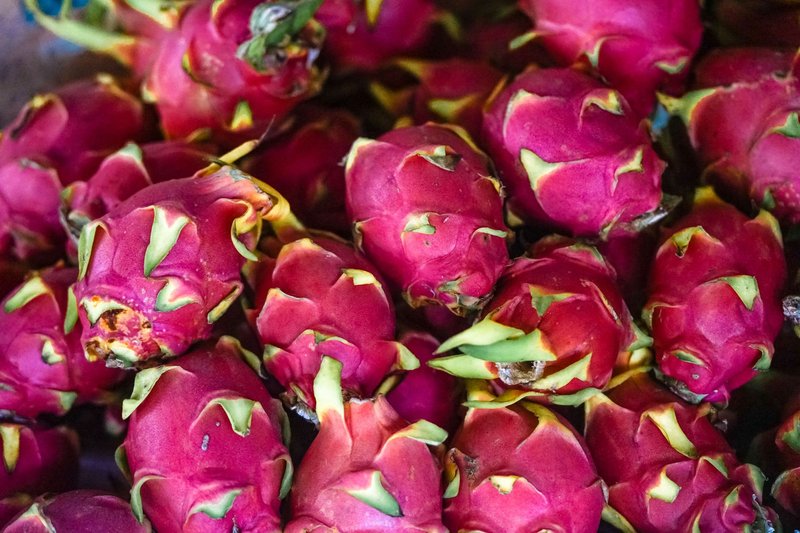
Dragon Fruit (Pitaya) — Hot pink or yellow skin, white or magenta flesh studded with poppy-seed-sized black seeds you eat along with the fruit. The taste is mild, somewhere between a kiwi and a pear that hasn’t fully committed to flavor. Cut it in half and eat it with a spoon straight from the skin, or cube it into a fruit salad where it mostly contributes color rather than punch. A cup of the red-fleshed variety runs a solid dose of vitamin C and the betalains responsible for the color also show up in beets. Skip fruit with wrinkled, deflated “wings” on the skin — that’s an old one.
Guava — Depending on the variety, the flesh runs anywhere from pale yellow to a deep salmon pink, with a grainy texture close to a pear crossed with a fig. The skin is edible; most people eat it whole, seeds and all, though the seeds are hard enough that some people spit them out rather than crunch through. Guava has more vitamin C per gram than an orange, which is the kind of stat that actually holds up. Ripe guava should give slightly under thumb pressure and smell floral through the skin before you even cut it.
Passion Fruit — Wrinkled, dimpled purple or yellow skin hiding a mess of jelly-coated black seeds that taste like tropical concentrate got angry. Cut it in half and eat the pulp with a spoon, seeds and all — they’re edible and add crunch. It’s tart enough that most people either drizzle it over yogurt or use it as a sauce base rather than eating it plain. Counterintuitively, the uglier and more wrinkled the skin, the riper and sweeter the fruit inside; a smooth, taut passion fruit is underripe.
Star Fruit (Carambola) — Slice it crosswise and every piece comes out star-shaped, which is the entire reason it ends up on cocktail rims and fruit platters. The flesh is crisp and watery, closer to an apple than anything tropical, with a flavor that ranges from tart-and-grassy to honeyed depending on ripeness. Eat the whole thing, skin included — no peeling required. One caveat worth knowing: star fruit contains oxalic acid at levels that can be dangerous for anyone with kidney disease, so it’s not a fruit to wave off as harmless for that population.
Lychee — Bumpy, rose-red shell that cracks open like an eggshell to reveal translucent white flesh wrapped around a single glossy brown seed (don’t eat the seed). The texture is closest to a grape, but the flavor is more floral and perfumed — genuinely hard to describe without just handing someone one. Fresh lychee season is short, usually late spring through midsummer, so if you see them fresh rather than canned, that’s the window. Canned lychee in syrup is a fine substitute for cocktails, but it loses the floral top notes fresh fruit has.
Physalis (Cape Gooseberry / Ground Cherry) — A marble-sized golden berry wrapped in its own papery husk, like a miniature tomatillo. Peel back the husk and eat it whole — tart, a little tomato-like, with a sweetness that sneaks up after the initial bite. They show up dried in trail mixes or fresh in little paper-wrapped clamshells near the berries. Fresh ones keep for weeks in their husks in the fridge, longer than almost any other soft fruit on this list, which makes them a low-commitment way to try something new.
Tier 2: Asian or Latin Market
This is where the real range shows up. Most mid-sized cities have at least one Asian grocer or Latin market that stocks these regularly, often cheaper than a specialty store would charge for the same fruit.
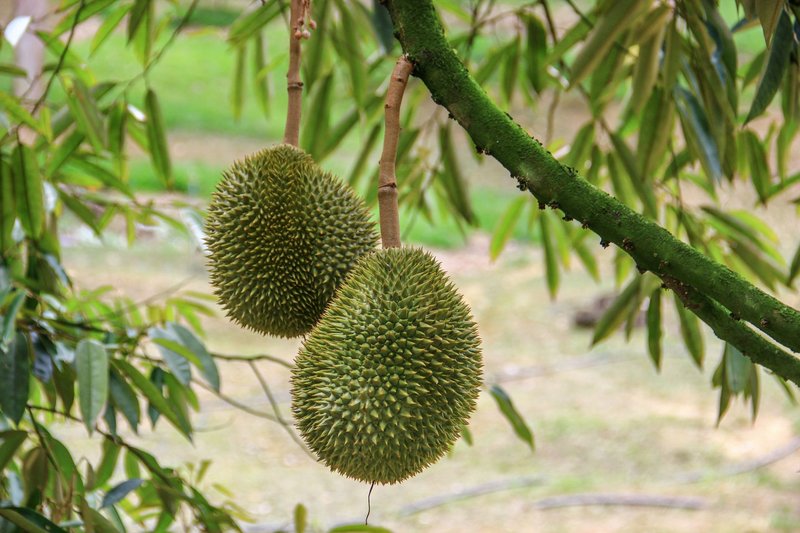
Durian — The fruit people either build a personality around or refuse to be in the same room with. Spiky, football-sized, and packed with custardy segments around large seeds, durian’s smell has gotten it banned from hotels and public transit across Southeast Asia — the compound behind the odor is sulfur-heavy and evolved to attract the animals that disperse its seeds. The taste, once you get past the smell, is genuinely creamy and rich, closer to a savory custard than a fruit. Frozen durian is widely available at Asian markets year-round and tastes nearly identical to fresh once thawed.
Jackfruit — The largest tree-borne fruit in the world, with record specimens topping 90 pounds. Ripe jackfruit has stringy, fibrous yellow bulbs with a flavor that lands somewhere between banana, mango, and bubblegum — sticky enough that cutting it barehanded is a mistake (oil your knife and hands first, or wear gloves). Unripe, green jackfruit is savory and neutral, which is why it’s become a popular meat substitute in tacos and barbecue. Canned versions of both ripe and unripe jackfruit are stocked at most Asian and international grocers.
Rambutan — Lychee’s hairier cousin, covered in soft red-and-green spines that look aggressive but peel back easily by hand. Inside is the same translucent, grape-like flesh as lychee, slightly less floral and a touch more acidic. Twist and pull the shell open, then eat around the seed — biting into the seed itself isn’t dangerous in small amounts but it’s bitter and not worth it. Rambutan shows up fresh at Asian markets seasonally, usually mid-to-late summer, and canned in syrup year-round.
Longan — Smaller and less showy than lychee, with a smooth tan shell instead of a bumpy red one, but crack it open and the resemblance is obvious: same translucent flesh, same glossy seed. The flavor is muskier and less sweet than lychee, sometimes described as having a faint smoky note. Eat it fresh, peeled and pitted, or dried — dried longan is a staple in Chinese soups and teas, sold in bags at most Asian grocers year-round.
Mangosteen — Often called the “queen of fruits,” with a thick, deep-purple rind that takes some effort to crack (press and twist, or use a knife to score around the equator) to reveal segmented white flesh that tastes like a cross between lychee and a very good peach. The rind stains fabric permanently, so handle it over a sink. Fresh mangosteen has a narrow import season and can be pricey; frozen mangosteen pulp is a reliable year-round alternative at Asian markets.
Salak (Snake Fruit) — Named for its scaly, reddish-brown skin that genuinely looks reptilian. Peel it like a garlic clove — the skin comes away in sections — to reveal crisp, segmented flesh with a flavor that’s tart and apple-like with a pineapple finish. The texture is drier and crunchier than most fruits on this list, closer to a jicama than anything soft. Fresh salak is a rare find outside Southeast Asia; look for it vacuum-packed or pickled at well-stocked Asian markets.
Wax Apple — Bell-shaped, glossy, and pink-to-red, with a name that undersells how little it resembles an apple once you bite in. The flesh is closer to a very watery, mildly sweet pear, with a texture that’s crisp but almost spongy near the core. Eat it whole, skin and all, straight out of hand — no prep required, which makes it one of the easiest fruits on this list to just try. Look for it at Asian markets under its Vietnamese name, mận, or Chinese name, lian wu.
Langsat (Longkong) — A small, round, tan-skinned fruit that grows in grape-like clusters. Peel the thin skin with your fingernail to reveal garlic-clove-shaped segments of translucent flesh — sweet with a bitter edge if you bite into the tiny seed inside a few segments, so most people spit those out. It’s less internationally known than lychee or rambutan but common in Southeast Asian markets seasonally, usually late summer.
Cherimoya — Often called a custard apple for good reason: the flesh is genuinely custard-like, creamy and segmented around large black seeds, with a flavor that tastes like someone blended banana, pineapple, and strawberry. Mark Twain reportedly called it “the most delicious fruit known to men,” which is a big claim but not a crazy one. Cut it in half and eat it with a spoon once it yields to gentle pressure like a ripe avocado. Latin markets carry it seasonally, typically fall through spring.
Soursop (Guanabana) — Large, spiky-skinned, and irregular in shape, soursop hides fibrous white flesh with a flavor often compared to a combination of strawberry and pineapple with a sour citrus undertone. It’s rarely eaten out of hand because the texture is stringy; most people blend it into juice or ice cream instead, discarding the black seeds and any fibrous cores. Latin and Caribbean markets stock it fresh in season and frozen pulp year-round, which is honestly the more practical option for juicing anyway.
Mamey Sapote — Football-shaped with rough brown skin and a deep salmon-orange interior, mamey sapote tastes like a cross between a sweet potato and a very ripe pumpkin pie filling, with a texture close to a firm avocado. Cut it in half, scoop the flesh, and discard the single large seed. It’s a staple in Cuban and Mexican milkshakes (batidos), which is genuinely the best way to try it if the straight fruit feels dense on its own. Latin markets carry it fresh seasonally, roughly June through August in most U.S. import windows.
Tamarillo — Egg-shaped and glossy red or golden, tamarillo (also called tree tomato) is exactly what it sounds like: a tomato relative with fruit sweetness. Cut it in half and scoop the tart, slightly tangy flesh with a spoon — the skin is bitter and usually discarded. It’s popular stewed into a sweet-savory sauce in its native South America, which is a better introduction than eating it raw if the tartness catches you off guard. Latin markets and some well-stocked specialty grocers carry it seasonally.
Buddha’s Hand — A citron variety that splits into finger-like segments, giving it a hand shape and essentially no pulp or juice — it’s almost entirely fragrant white pith and rind. Zest it or slice the “fingers” thin for candying, infusing vodka, or flavoring desserts; there’s nothing to eat out of hand here. It shows up at Asian markets and specialty grocers in winter, mostly used the way you’d use a very intense lemon peel.
Noni — Lumpy, pale yellow-green, and famous for a smell that’s been compared to old cheese or rotting fruit even when perfectly ripe — this one is not a snacking fruit. It’s consumed almost exclusively as juice, usually blended with sweeter fruit to mask the smell, and is a fixture in Pacific Islander and some Southeast Asian communities for its traditional use, though modern health claims around it outrun the actual research. Find bottled noni juice at Asian and Pacific specialty grocers rather than looking for the fresh fruit.
Tier 3: The Genuinely Rare Ones
These take real effort: a specialty importer, a mail-order nursery, a farmers market during a two-week window, or a grow-your-own tree. If you find any of these locally, that’s worth noting for next season.
Ackee — Jamaica’s national fruit, but one you almost certainly won’t eat fresh outside the Caribbean. Unripe ackee contains hypoglycin A at concentrations high enough to cause severe, sometimes fatal poisoning — a condition literally named Jamaican vomiting sickness — which is why the fruit must be allowed to split open naturally on the tree before harvest, and why U.S. imports are FDA-regulated. Once properly ripened and cooked, the yellow arils have a mild, slightly nutty flavor and a texture close to scrambled eggs, which is exactly how it’s served in the national dish, ackee and saltfish. In the U.S., you’ll find it canned (already safely prepared) at Caribbean grocers rather than fresh.
Black Sapote — Nicknamed the chocolate pudding fruit because that’s an unnervingly accurate description: ripe flesh is dark brown, custardy, and genuinely tastes like unsweetened chocolate pudding. It has to be fully soft and almost unappealingly mushy-looking before it’s ready — a firm black sapote is inedible and astringent. Blend it with a little sugar and vanilla for an instant dairy-free pudding. Almost never sold commercially in the U.S.; it’s a specialty-grower or backyard-tree fruit in warm climates like South Florida and Southern California.
Breadfruit — A starchy, softball-to-volleyball-sized fruit that’s treated more like a vegetable than a fruit in the kitchen. Unripe, it’s roasted, fried, or boiled and tastes close to a potato or fresh-baked bread, hence the name; fully ripe, the flesh turns custardy and can be eaten sweet. It was famously the cargo the HMS Bounty was hauling from Tahiti to the Caribbean when the crew mutinied in 1789. Caribbean and some African markets carry it fresh or frozen; it’s rare outside those specific import channels.
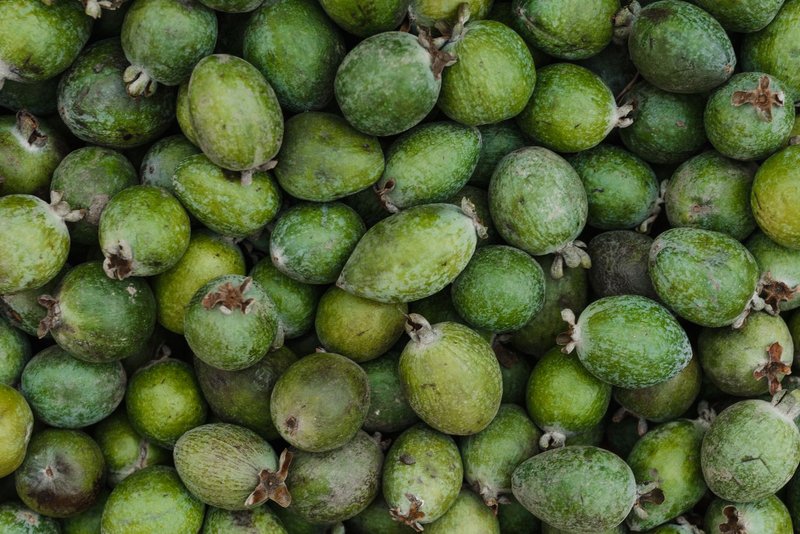
Feijoa — Egg-shaped and green, feijoa (pineapple guava) tastes like a mash-up of pineapple, guava, and mint, with a grainy texture similar to a ripe pear. Cut it in half and scoop the jelly-like center with a spoon, leaving the slightly bitter skin behind. It has a short, intense season — a few weeks in early fall — and doesn’t ship or store well, which is why it’s mostly a farmers market or backyard find in growing regions like New Zealand, California, and parts of the Pacific Northwest.
Horned Melon (Kiwano) — Bright orange, spiked skin that looks more like a prop than produce, hiding neon-green, jelly-like flesh packed with edible seeds. The flavor lands somewhere between cucumber, kiwi, and banana — more novelty than daily snack, but genuinely refreshing. Scoop it with a spoon straight from a halved fruit, seeds included. Occasionally shows up at specialty grocers like Whole Foods for its visual appeal; otherwise it’s a mail-order or grow-your-own fruit, since the vine does reasonably well in home gardens outside the tropics.
Ice Cream Bean — Despite the name, this isn’t creamy at all — it’s a long, ridged pod that splits open to reveal fuzzy white pulp surrounding large black seeds, with a texture and flavor genuinely reminiscent of vanilla ice cream or cotton candy. You eat the pulp and discard the seeds and pod. It grows fast and is sometimes planted as a shade tree in coffee plantations, which is where most people who’ve tried it actually encountered it. Virtually unsellable commercially because the pulp turns within a day of the pod opening — this one is a “know someone with a tree” fruit.
Jabuticaba — A Brazilian fruit that grows directly on the trunk and branches of its tree in dense clusters, rather than on stems like typical fruit — a growth habit called cauliflory. It looks like a fat purple grape and tastes like one too, but muskier, with thick skin around juicy, gelatinous flesh. It has to be eaten within a day or two of picking, which is essentially why it’s never made it to grocery shelves outside Brazil — it doesn’t survive shipping. Specialty fruit nurseries in the U.S. sell young trees for home growing in frost-free climates; that’s genuinely the only reliable way to taste it stateside.
Marang — A jackfruit relative from the Philippines and Borneo, marang has a soft, spiky rind you tear open by hand to reveal segments of white, cotton-candy-textured flesh. The flavor is sweeter and more delicate than jackfruit, with none of the stringiness. It’s rarely exported because the fruit turns within two to three days of ripening and the rind bruises badly in transit — even within Southeast Asia it’s often a local, sold-that-morning fruit rather than something that reaches distant markets.
Miracle Fruit — A small red berry that doesn’t taste like much on its own, but temporarily rewires how sour food tastes. The active compound, miraculin, binds to sweet taste receptors roughly a hundred million times more strongly than sugar does, and that binding only activates in the presence of acid — so a bite of miracle fruit followed by a lemon wedge tastes like candy for up to about an hour. It’s the centerpiece of “flavor-tripping” parties for exactly this reason. Fresh berries are almost never sold commercially since they spoil within a day or two of picking; freeze-dried tablets sold online are the practical way most people actually try it.
Monstera Deliciosa — Yes, the houseplant. The same Monstera deliciosa grown as decor also produces an elongated, cone-shaped fruit that, once the hexagonal scales fall away on their own, tastes like a blend of pineapple and banana. The catch: the fruit is covered in calcium oxalate crystals until fully ripe, and eating it too early causes intense mouth and throat irritation — it has to ripen slowly over several weeks, scale by scale, before it’s safe. Almost never sold, since most cultivated Monstera are grown for foliage rather than fruit; trying it usually means growing your own plant to maturity and being patient.
Seasonality and Ripening, in Brief
A handful of general rules cut across most of this list. Fruits that ripen after harvest — cherimoya, mamey sapote, black sapote, feijoa — should give slightly under thumb pressure the way a ripe avocado does; if it’s rock-hard, give it a few days on the counter. Fruits that don’t ripen further off the tree — mangosteen, rambutan, lychee — need to be picked and eaten at peak, so buy them close to when you plan to eat them. And anything genuinely rare on this list (jabuticaba, ice cream bean, marang) has a shelf life measured in single days once ripe, which is the real reason it never reaches a supermarket shelf: the logistics don’t work, not because it’s not worth growing.
Where to Actually Start
If you’ve never tried anything on this list, don’t start with durian or miracle fruit — start with dragon fruit or physalis, both sitting in a normal produce aisle this week. Once those feel unremarkable, an Asian or Latin market a short drive away probably has eight or nine of the Tier 2 fruits in stock right now, often for less than what a specialty grocer would charge for a single mango. The Tier 3 fruits are worth chasing specifically because they’re rare — track down a specialty importer for miracle fruit tablets, or a nursery for a jabuticaba sapling, and treat getting to taste one as the actual achievement it is.