Table of Contents
- Why Russia Has More Reptiles Than You’d Think
- TLDR
- European Russia
- The Caucasus
- Siberia
- The Russian Far East
- Reptiles of Russia and a Warming Climate
Why Russia Has More Reptiles Than You’d Think
Russia doesn’t read as reptile country. Say “Russian wildlife” and most people picture brown bears, reindeer, and permafrost — not lizards basking on rock outcrops or vipers coiled in leaf litter. But the country spans eleven time zones and a climate range that runs from Arctic tundra to the subtropical foothills of the Caucasus and the monsoon-fed forests of the Far East. That kind of range produces a genuinely diverse reptile fauna, even if most of it is concentrated in the warmer south rather than spread evenly across the map.
The reptiles of Russia break cleanly into four geographic clusters, each shaped by its own climate and history: the mixed forests and steppe of European Russia, the mountain-and-coast biodiversity hotspot of the Caucasus, the short-summer taiga and steppe of Siberia, and the temperate rainforest belt of the Russian Far East along the Amur River and the Sea of Japan. This guide covers 16 species across those four regions — what’s venomous, what isn’t, how big they get, and where each one actually lives.
TLDR
- Russia’s reptile diversity tracks its climate, not its size — most species cluster in the warmer south (Caucasus, southern Siberia, Far East), not the vast cold interior.
- Of Russia’s roughly 80 native reptile species, only a small subset carry venom dangerous to humans — mainly vipers (Vipera and Pelias) and pit vipers (Gloydius).
- The viviparous lizard is the only reptile on Earth found north of the Arctic Circle, thanks to giving birth to live young instead of laying eggs in cold soil.
- The Caucasus is Russia’s reptile hotspot: nearly 90 species regionally, with high endemism in vipers and rock lizards found nowhere else.
- Climate change is already pushing several Russian reptile ranges northward — a trend covered in detail at the end of this piece.
European Russia
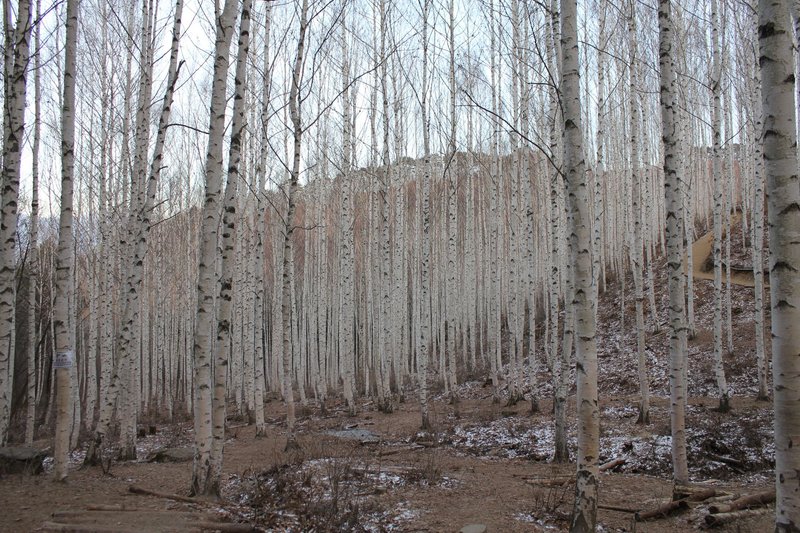
European Russia — the mixed forest and steppe belt west of the Ural Mountains — hosts the reptiles most Russians actually encounter: garden-variety snakes and lizards adapted to cold winters and short summers, several of which push their ranges further into Siberia than anywhere else on the continent.
Common European Adder
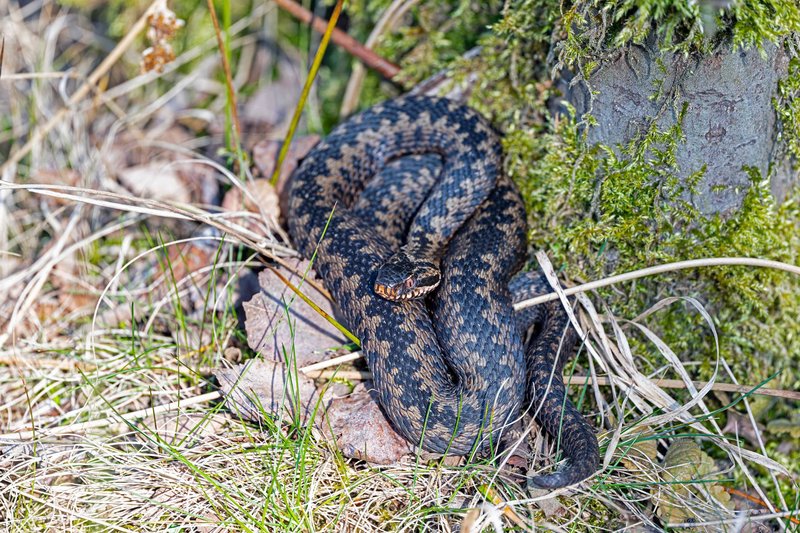
Venom: Yes · Length: 60–90 cm · Lifespan: up to 15 years in the wild · Conservation status: Least Concern
Vipera berus is Russia’s most widely distributed venomous snake, with a range that stretches from the western border clear across to Sakhalin Island — further east than any other European viper manages. It’s identifiable by the dark zigzag stripe running down its back, and it’s genuinely shy: bites happen almost exclusively when someone steps on one or tries to handle it. Its bite is rarely fatal to healthy adults, but it’s still the snake responsible for most snakebite hospitalizations in Russia.
Grass Snake
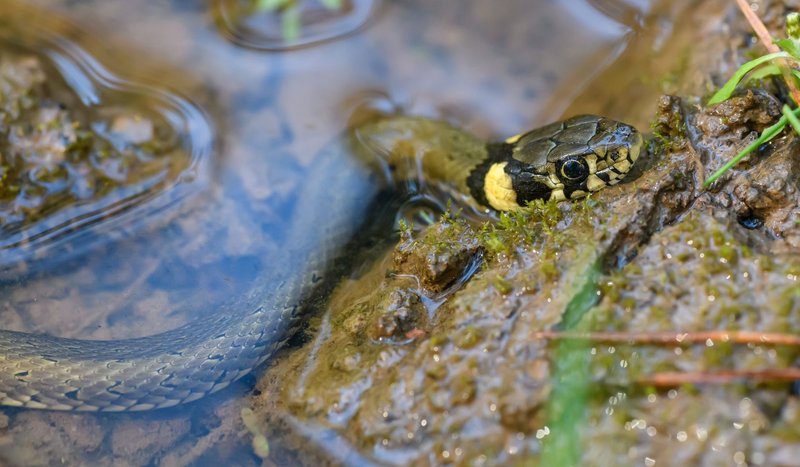
Venom: No · Length: up to 1.2 m · Lifespan: around 15 years · Conservation status: Least Concern
The grass snake is the adder’s harmless look-alike problem — it gets killed by people who mistake it for a viper more often than any actual danger it poses. You can tell them apart by the yellow or orange collar behind the head and the round pupils (adders have vertical, cat-like slits). Grass snakes are strong swimmers and hunt frogs and fish in ponds and slow rivers across nearly all of European Russia.
Sand Lizard
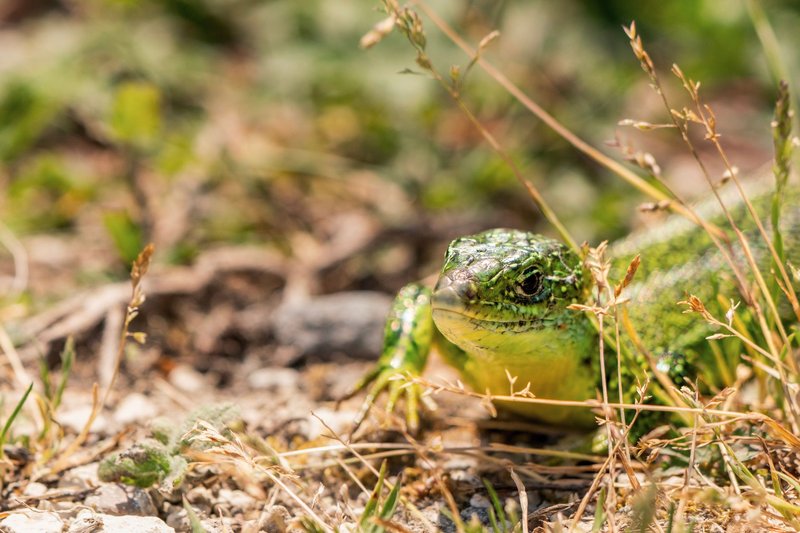
Venom: No · Length: 20–24 cm · Lifespan: 5–10 years · Conservation status: Least Concern
Males turn bright emerald green during the spring breeding season, which is the easiest way to spot one basking on a warm stone or sandy bank. Outside that window they’re mottled brown and easy to miss. Sand lizards are one of the few reptiles that push deep into the forest-steppe zone, tolerating colder winters than most lizards by burrowing well below the frost line.
Slow Worm
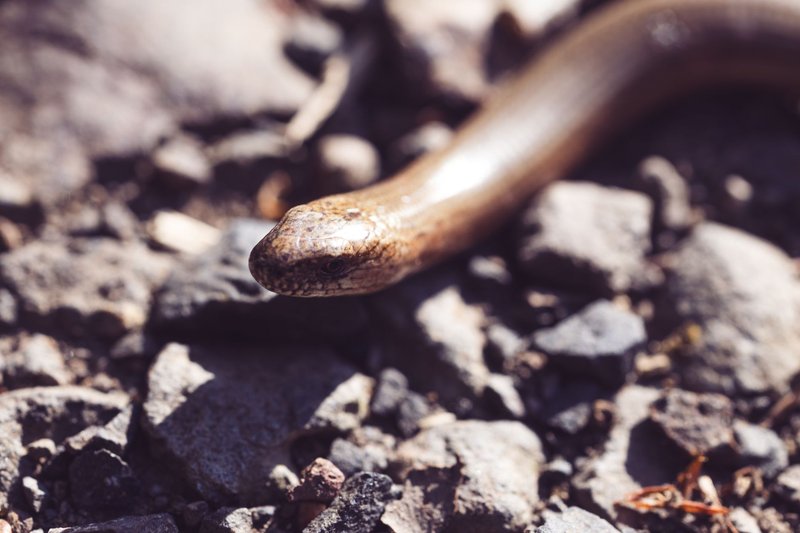
Venom: No · Length: 40–50 cm · Lifespan: often 20+ years, longer in captivity · Conservation status: Least Concern
Despite the name and the shape, the slow worm is a legless lizard, not a snake — it has eyelids it can blink and a tail it can shed, neither of which any snake can do. It spends most of its life underground or under leaf litter, which is why it’s one of the more overlooked reptiles in European Russia even where it’s common. Gardeners often find them by accident while turning compost, since slow worms are among the most reliable pest controllers a garden can host, feeding almost entirely on slugs and earthworms.
The Caucasus
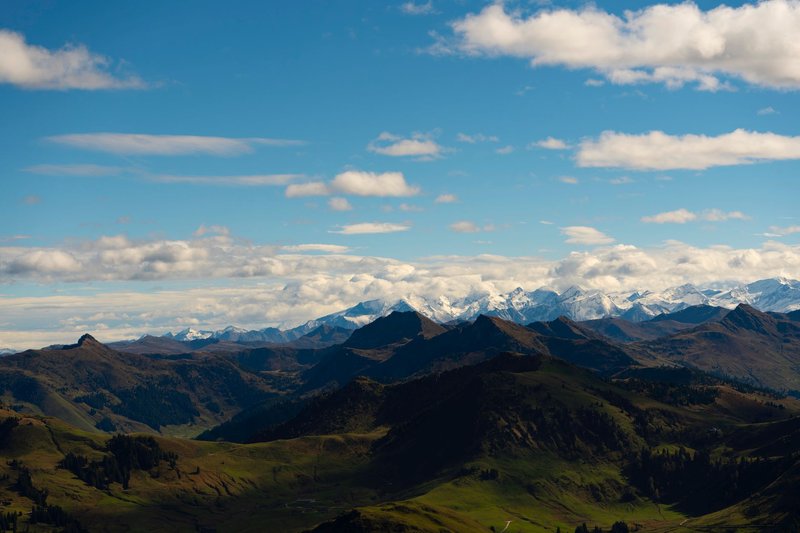
The Caucasus is Russia’s reptile hotspot by a wide margin. The region — spanning the mountains and Black Sea coast of southern Russia along with Georgia, Armenia, and Azerbaijan — is recognized as one of the world’s biodiversity hotspots, and reptiles are a major reason why: nearly 90 species live here, about 20 of them found nowhere else on Earth. Like Turkey’s equally diverse reptile communities to the south, that endemism is concentrated in two groups: mountain vipers and rock lizards, both of which diversified into isolated valley populations as the mountains rose.
Kaznakov’s Viper
Venom: Yes · Length: 50–60 cm · Lifespan: estimated 10–15 years · Conservation status: Endangered
This viper is endemic to a narrow strip of forest along Russia’s Black Sea coast and the western Caucasus foothills — it lives nowhere else on the planet. Adults are strikingly patterned, ranging from copper-brown to near-black, and the species is now protected across its range because habitat loss from coastal development has fragmented its population into small, isolated pockets. It’s a textbook case of the Caucasus’s endemism cutting both ways: unique species, but also unusually vulnerable ones.
Dinnik’s Viper
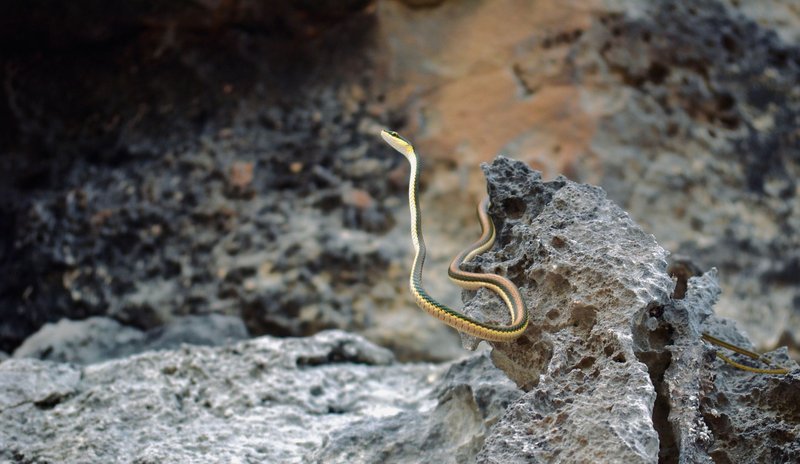
Venom: Yes · Length: 50–70 cm · Lifespan: unknown, likely 10+ years · Conservation status: Near Threatened
Dinnik’s viper lives at elevation — typically above the tree line in the Greater Caucasus range, in alpine meadows and rocky slopes where few other reptiles bother going. That high-altitude habitat has kept it relatively insulated from human disturbance, but it also means the species has nowhere higher to retreat to if warming temperatures push its cold-adapted range further upslope.
Caucasian Rock Lizard
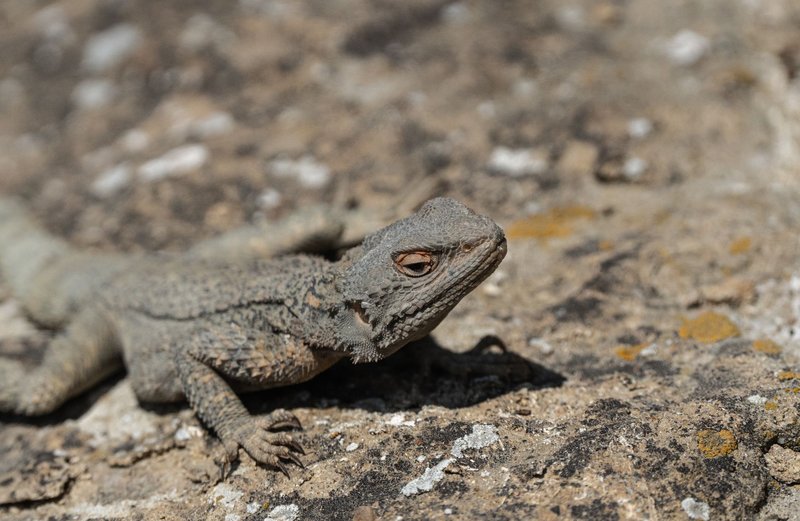
Venom: No · Length: 15–20 cm · Lifespan: 5–8 years · Conservation status: Least Concern
Rock lizards in the Darevskia genus are the Caucasus’s strangest reptile story. Several closely related species reproduce entirely by parthenogenesis — the females lay fertile eggs without ever mating, and males of those species don’t exist at all. The Caucasian rock lizard itself reproduces normally, but it shares cliffs and boulder fields with its all-female relatives across the region, making the Caucasus one of the only places on Earth where you can find both reproductive strategies side by side in the same genus.
Caucasian Agama
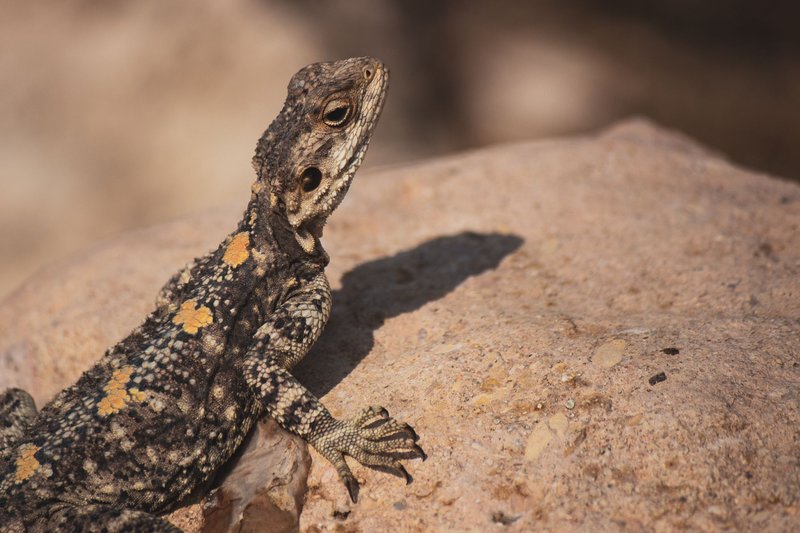
Venom: No · Length: 30–38 cm · Lifespan: around 5–7 years · Conservation status: Least Concern
The Caucasian agama is built for rock, not soil — flattened, robust, and armed with strong claws for gripping vertical stone faces and old buildings. It’s one of the few Russian reptiles that regularly basks on man-made structures, and it’s territorial enough that males will do visible push-up displays to warn rivals off a good sunning spot.
Siberia
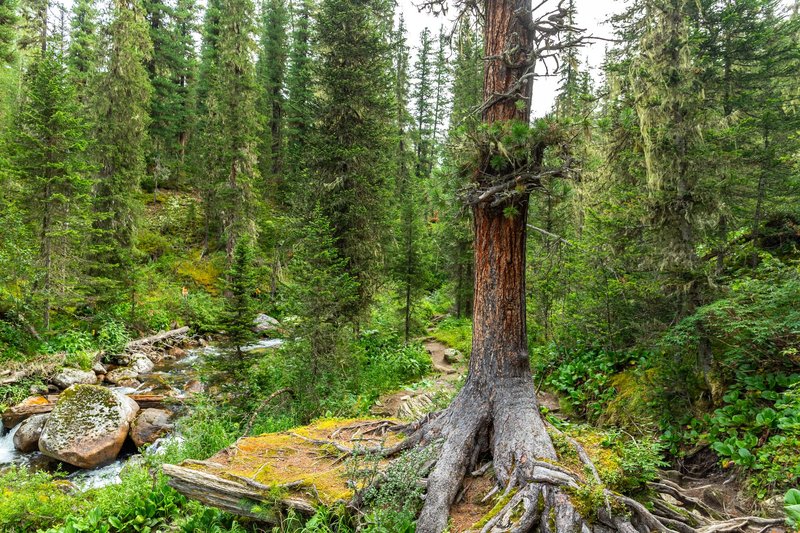
Siberia is Russia’s reptile desert, comparatively speaking — the amphibian and reptile fauna of Western Siberia is the least diverse in the entire Palearctic region, a direct consequence of long winters and short growing seasons. What does live there had to solve the cold problem in creative ways, which makes the handful of species that made it this far north disproportionately interesting.
Viviparous Lizard
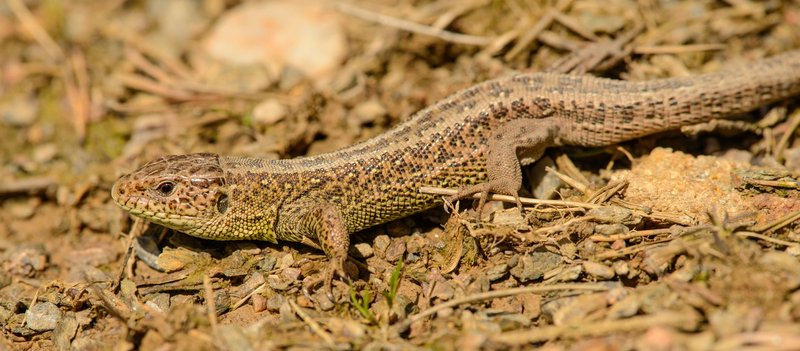
Venom: No · Length: 15–18 cm · Lifespan: 4–11 years · Conservation status: Least Concern
This is the record holder: the viviparous lizard is the only non-marine reptile species found north of the Arctic Circle anywhere on Earth. It manages that by giving birth to live young instead of laying eggs — a critical adaptation, since Siberian soil rarely stays warm long enough to incubate a clutch to hatching. In the coldest parts of its range, females may only reproduce every second year, saving energy reserves for the years the summer runs long enough to support a pregnancy.
Siberian Pit Viper
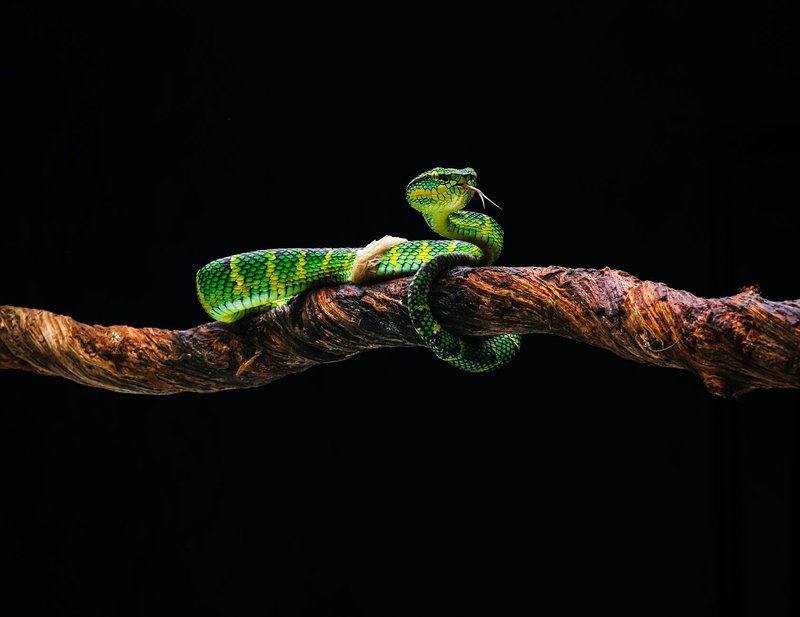
Venom: Yes · Length: 50–70 cm · Lifespan: estimated 10+ years · Conservation status: Least Concern
Also called the Halys pit viper, this is the venomous snake most associated with Siberia specifically, ranging from the Ural foothills east through Mongolia and into China. Unlike true vipers, it has heat-sensing pits between the eyes and nostrils that let it strike accurately in total darkness — useful in a region where a lot of hunting happens at dusk, when rodents are active but daylight temperatures have already dropped.
Steppe Ratsnake
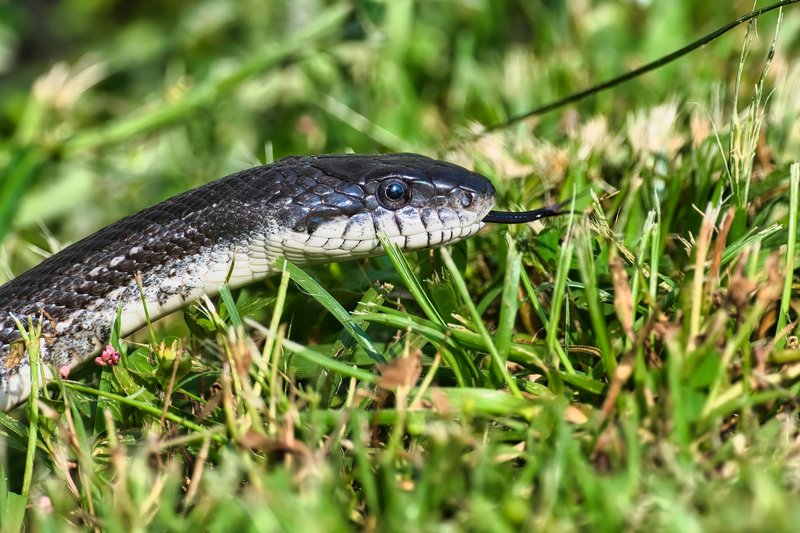
Venom: No · Length: 70 cm–1 m · Lifespan: around 10 years · Conservation status: Least Concern
Also known as Dione’s racer, the steppe ratsnake covers an enormous range across southern Siberia’s grasslands and semi-desert, feeding mainly on rodents and bird eggs. It’s a strong constrictor but entirely harmless to people, and it’s often mistaken for a viper because of blotchy dorsal markings — a case of a non-venomous species benefiting from looking dangerous.
Central Asian Tortoise
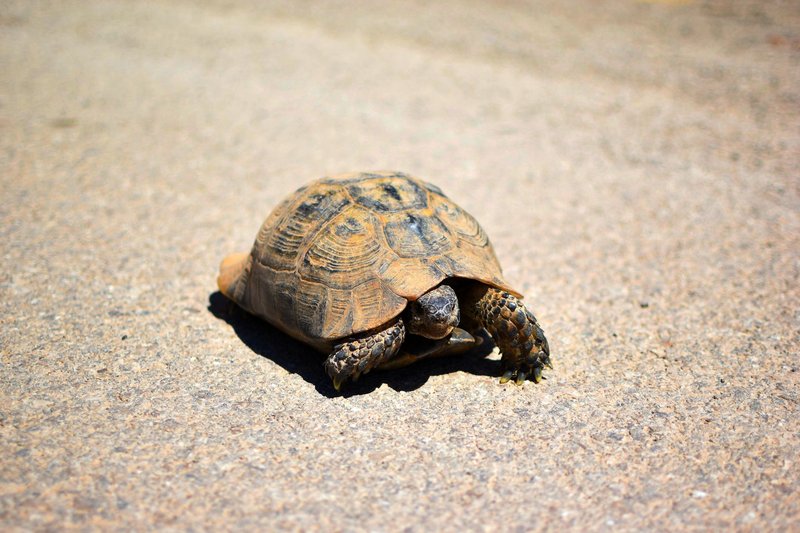
Venom: No · Length: shell up to 20–25 cm · Lifespan: 40–50 years, sometimes longer · Conservation status: Vulnerable (IUCN Red List)
Also called Horsfield’s tortoise, this species barely qualifies as Siberian — its range is centered in Central Asia (including countries like Uzbekistan), but it pushes into Russian territory at the southern edge of Siberia near Tuva and the Altai region, making it the only tortoise native to Russian soil at all. It survives the region’s temperature swings by spending most of the year underground, active for as little as three months out of twelve. The pet trade has hit wild populations hard enough that international trade in the species is now restricted.
The Russian Far East
The Russian Far East — the Amur River basin, Primorsky Krai, and the coast facing the Sea of Japan — is climatically closer to Manchuria and Korea than to the rest of Russia, and its reptile fauna reflects that. Around 27 reptile species have been documented here, roughly a quarter of Russia’s entire reptile fauna packed into one relatively small corner of the country.
Amur Ratsnake
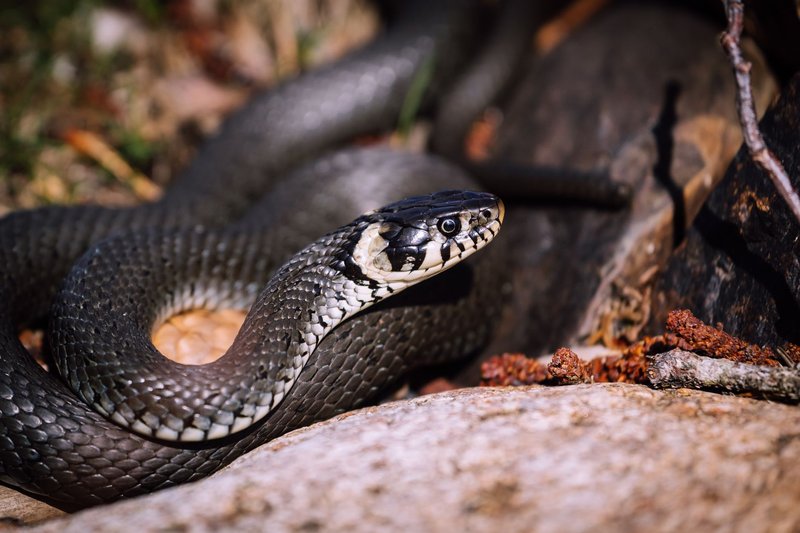
Venom: No · Length: 1.2–1.6 m · Lifespan: 15–20 years · Conservation status: Near Threatened
Also called the Manchurian black water snake, this is one of the largest and most robust ratsnakes anywhere, and it’s a genuine generalist — equally comfortable in wetlands, farmland, forest, and old stone walls. It climbs and swims well enough to hunt birds’ nests as readily as it hunts rodents on the ground. Habitat conversion to farmland across its Far East range, combined with demand from the pet trade, has pushed its status toward Near Threatened.
Chinese Softshell Turtle
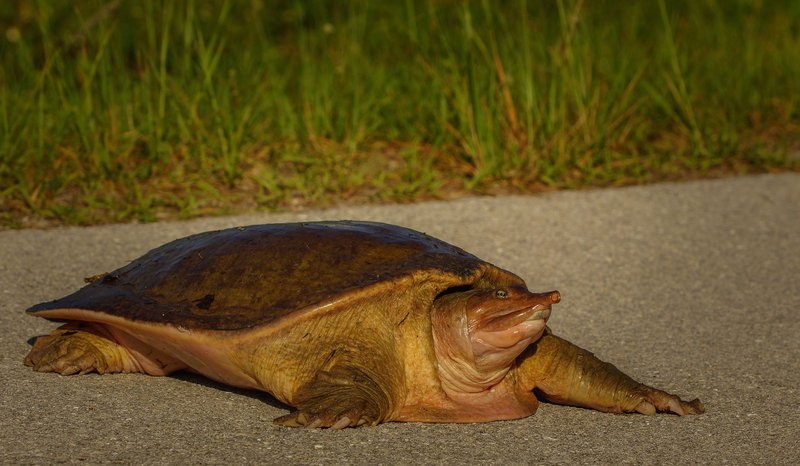
Venom: No · Length: shell up to 25–30 cm · Lifespan: 25+ years · Conservation status: Vulnerable
The Chinese softshell turtle reaches the northern edge of its entire global range in the Amur basin, making Russia’s Far East populations ecologically significant even though the species is common further south in China. It has a rubbery, cartilage-edged shell instead of hard scutes and a long, snorkel-like nose it uses to breathe while staying almost fully buried in river-bottom mud. Wild populations across Asia have been hit hard by the food trade, which is part of why the northern, harder-to-reach Russian population matters for the species’ long-term survival.
Ussuri Pit Viper
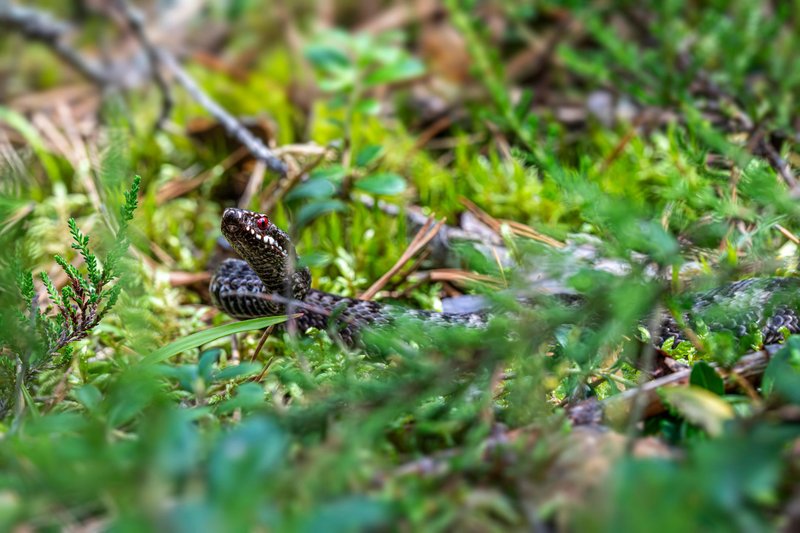
Venom: Yes · Length: 50–60 cm · Lifespan: estimated 10+ years · Conservation status: Least Concern
Named for the Ussuri River region of Primorsky Krai, this pit viper is smaller and more strictly forest-bound than its Siberian cousin, sticking to the mixed and coniferous woodland that covers much of the southern Far East. It relies on camouflage over speed, sitting motionless against leaf litter and striking only when prey — usually a small rodent or frog — comes within range.
Amur Grass Lizard
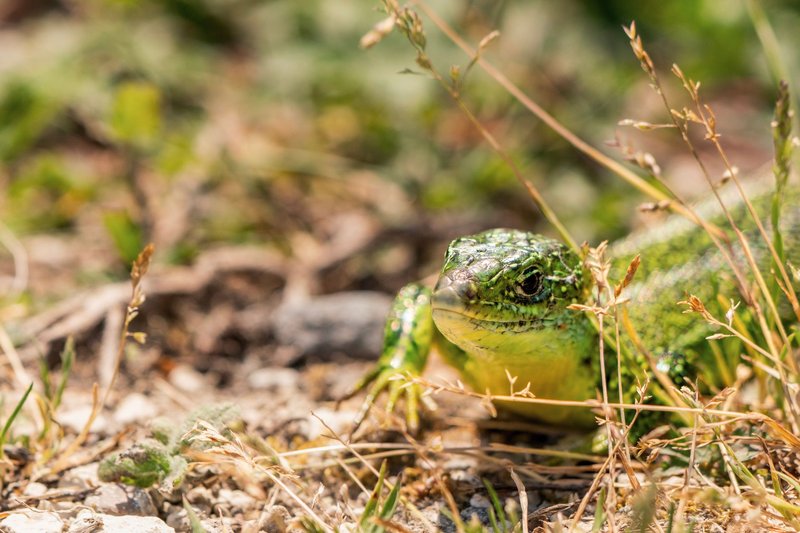
Venom: No · Length: around 20 cm, more than half of it tail · Lifespan: 2–4 years · Conservation status: regionally rare in Russia
This slender, long-tailed lizard is one of the rarest reptiles in the entire country — it barely crosses into Russian territory at the southern tip of Primorsky Krai, near the Chinese and North Korean borders, and local researchers list it among the region’s rare and closely watched species. It moves through dense grass and low vegetation rather than open ground, using its exceptionally long tail for balance as much as defense, and losing a portion of it is a routine escape tactic when a predator gets a grip.
Reptiles of Russia and a Warming Climate
None of the coverage on Russian reptiles — WorldAtlas’s included — spends much time on where this is all heading, which is a gap worth closing. Reptiles are ectotherms: their body temperature, activity level, and reproductive timing are all dictated directly by the environment around them, which makes them unusually responsive to shifting climate patterns compared to warm-blooded animals. Researchers assessing reptile conservation status worldwide have found that more than half of reptile species globally are already losing range as a result of climate change, and cold-adapted northern species — exactly the profile of much of Russia’s reptile fauna — are among the most exposed.
For Russia specifically, that plays out as a slow northward creep. Species like the viviparous lizard and the common European adder, already living at the cold edge of what a reptile can tolerate, have the most room to expand as winters shorten and summers lengthen. Species with narrow, high-altitude ranges — Dinnik’s viper being the clearest case in this list — have the opposite problem: there’s nowhere colder to retreat to once their current elevation warms past what they can handle. The Caucasus’s endemic vipers and rock lizards are worth watching closely for exactly that reason, since isolated mountain populations with nowhere upslope to go are usually the first to show measurable decline.
It’s not a crisis playing out on a headline timescale. But for a country this size, with reptile populations this spread out and this specialized to their individual corners of it, the range shifts already underway are the story that current coverage of Russia’s reptiles is missing.