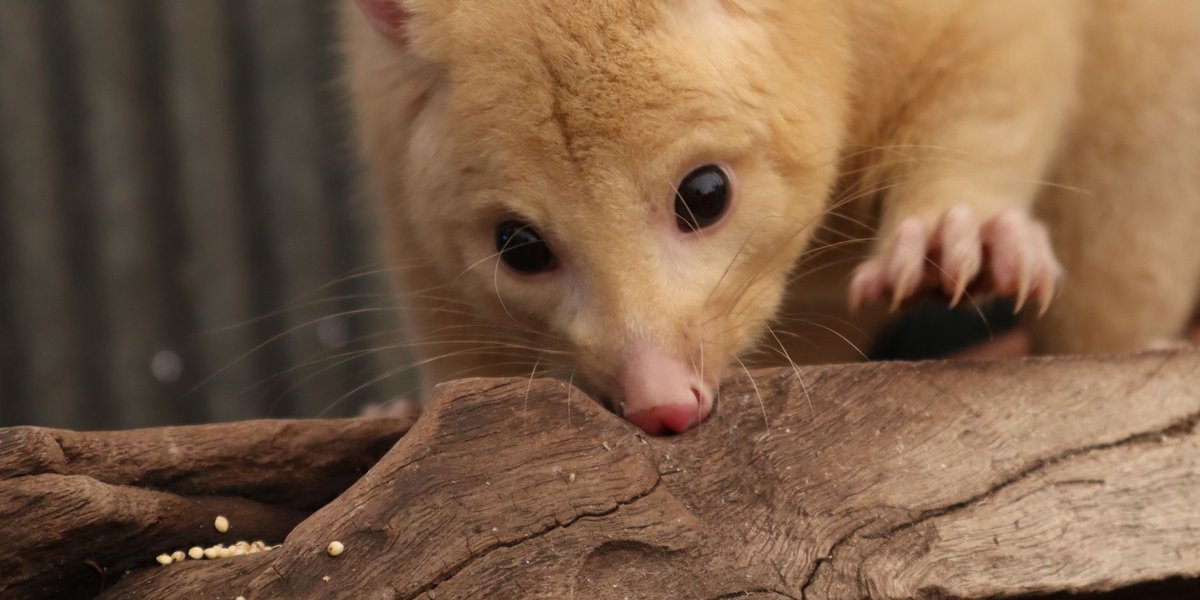
Gilbert’s potoroo eats fungi. Not “mostly plants with some mushrooms mixed in” — actual underground fungi, the kind you’d need a shovel to find, make up more than 90% of its diet. That single fact makes it one of the strangest eaters in the entire mammal kingdom, and it’s a big part of why this rabbit-sized marsupial is also one of the rarest.
Table of Contents
- The short answer: an almost all-fungi diet
- How they find food they can’t see or smell from above
- What’s actually on the menu
- The other 10 percent
- Why a fungus-eating marsupial matters to the whole forest
- How its diet compares to other Australian mammals
- Fast facts
The short answer: an almost all-fungi diet
Gilbert’s potoroo (Potorous gilbertii) is mycophagous, meaning fungi are the bulk of its calories, not a supplement to them. Researchers studying scat samples from the wild population at Two Peoples Bay in Western Australia have found that hypogeous fungi — species that fruit entirely underground, essentially wild truffles — make up the overwhelming majority of what it eats year-round.
That puts it in a small club. Most mammals that eat fungi do it opportunistically, when fruit or insects run short. Gilbert’s potoroo builds its whole life around it.
How they find food they can’t see or smell from above
A truffle doesn’t announce itself. It never breaks the surface, never grows a cap, never gets pollinated by anything walking by. So a potoroo has to locate something invisible, buried a few centimeters down, using nothing but its nose and a set of curved, sharp foreclaws built for excavation.
Foraging happens mostly at night, in the top 10 centimeters of soil, where the animal digs small conical pits — often visible the next morning as evidence something worked the ground overnight. It’s slow, targeted digging, not the indiscriminate rooting you’d see from a feral pig. Each pit generally means the potoroo smelled something specific and went straight for it.
What’s actually on the menu
Older studies based on spore analysis from scat identified roughly 40 to 44 fungal species in the Gilbert’s potoroo diet, with about five species showing up consistently across all seasons — the reliable staples, essentially, that the population can count on regardless of rainfall or time of year.
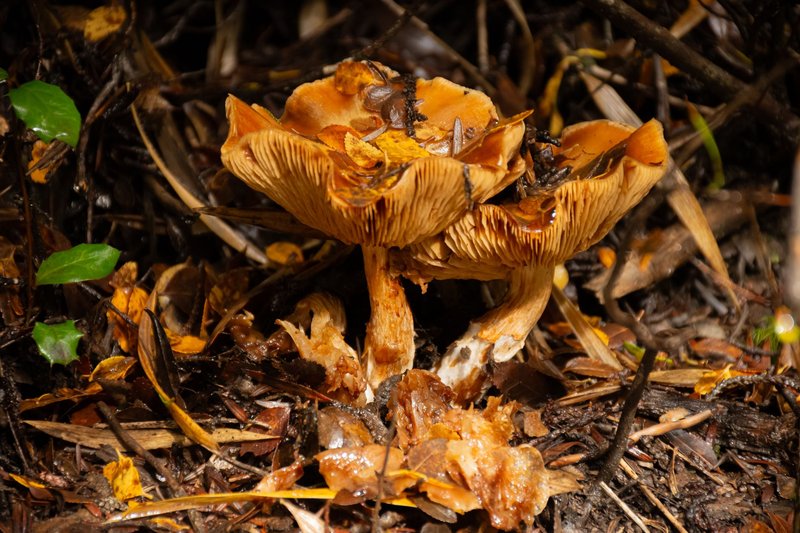
More recent DNA-based research pushes that number much higher. A 2025 study using genetic sequencing of scat samples, published in Biodiversity and Conservation, identified 105 distinct fungal sequences in potoroo droppings — far more diversity than older microscope-based counts could catch. A truffle-like family called Boletaceae turned up in every single sample tested, making it the closest thing the species has to a reliable go-to. Most of what they’re eating are ectomycorrhizal fungi, the kind that wrap around tree and shrub roots and trade nutrients for sugar, rather than fungi that just break down dead wood.
The other 10 percent
Fungi dominate, but they’re not the entire story. Gilbert’s potoroo also eats insects and their larvae, small amounts of fleshy fruit, and seedpods, rounding out a diet that’s still overwhelmingly built around what’s underground. This supplementary intake likely matters most in lean seasons or when fungal fruiting slows, giving the animal a buffer it can’t get from truffles alone.
Why a fungus-eating marsupial matters to the whole forest
This isn’t a niche food preference with no consequences. Ectomycorrhizal fungi need animals to eat their fruiting bodies and spread the spores elsewhere in the soil — the fungi have no other way to move. When a potoroo digs up a truffle, eats it, and defecates somewhere else in its territory, it’s reseeding the soil with a fungal network that the surrounding eucalypts and other native plants depend on to pull water and nutrients from poor, sandy ground.
Fewer potoroos on the landscape means less spore dispersal, which means a slower, patchier recovery of the fungal networks that much of the surrounding bushland relies on. The Australian government’s threatened species assessment lists the species as Critically Endangered, and its entire wild range is confined to a handful of sites in southwestern Western Australia after fox predation and habitat loss pushed it to the edge of extinction for most of the 20th century. It was presumed gone entirely until a chance rediscovery in 1994.
How its diet compares to other Australian mammals
Gilbert’s potoroo isn’t the only mammal digging for fungi in that corner of Western Australia — quokkas, quendas, and bush rats share the same ground and, to varying degrees, the same appetite. That overlap turns out to be more useful for conservation than it might sound: because the potoroo’s own population is so small, scientists have looked at whether any of its neighbors could serve as a stand-in for tracking fungal food availability across the landscape.
The same 2025 genetic study found that quendas had the closest dietary overlap with Gilbert’s potoroo, bush rats came in second, and quokkas — long assumed to be the best comparison species — actually lined up the least, since quokkas eat fungi only part of the year while potoroos rely on it constantly.
| Species | Fungi in diet | How it compares |
|---|---|---|
| Gilbert’s potoroo | ~90%+, year-round | Widest fungal variety of any species tested; near-total dependence |
| Quenda (southern brown bandicoot) | Moderate to high | Closest dietary overlap to Gilbert’s potoroo |
| Bush rat | Moderate | Second-closest overlap |
| Quokka | Seasonal | Eats fungi only part-time; least similar despite past assumptions |
| Long-nosed potoroo | High, similar pattern | Close relative with a comparably fungi-heavy diet in eastern Australia |
No single species mirrors the diet closely enough to fully substitute for direct monitoring — but a site where potoroos, quendas, and bush rats all persist together is a strong sign the local fungal food supply can support a translocated population, which matters directly for where conservationists choose to release captive-bred animals.
Fast facts
- Scientific name: Potorous gilbertii
- Diet type: Mycophagous (fungus-eating), with insects, fruit, and seedpods as supplements
- Primary food: Hypogeous (underground) fungi, roughly 90%+ of intake
- Fungal diversity: 40–44 species identified by older spore studies; 105 distinct fungal sequences found by 2025 DNA analysis
- Foraging depth: Upper 10 cm of soil, using sharp foreclaws
- Conservation status: Critically Endangered, one of the rarest mammals on Earth
- Range: Southwestern Western Australia, including Two Peoples Bay and translocated island populations