Table of Contents
- TLDR
- How Nauru ended up with so few reptiles
- The four geckos
- The two skinks
- The blind snake
- The four marine reptiles
- Summary table
- Is anything dangerous?
- Did phosphate mining wipe out the reptiles?
- Sources
TLDR
The reptiles of Nauru number eleven: seven on land (four geckos, two skinks, one blind snake) and four in the surrounding ocean (three sea turtles and one sea snake). That’s the count in Donald Buden’s 2008 survey, the standard reference. Nothing on land is dangerous. There are no crocodiles on the island, and no snakes you’d ever see except one worm-sized burrower.
How Nauru ended up with so few reptiles
Nauru is a raised coral island of about 21 square kilometers, roughly 3,000 kilometers northeast of Sydney and the third-smallest country on Earth. Nothing walked there. Every land reptile arrived by rafting on debris, drifting in a storm, or hitching a ride in human cargo.
That’s why the list is short and dominated by small, tough species that Pacific islands share. If you’ve seen a gecko in Fiji or Kiribati, you already know half of Nauru’s herpetofauna.
The authoritative source is Buden’s paper, “The Herpetofauna of Nauru,” in Pacific Science, which is also available through Project MUSE. Checklist sites such as RepFocus add a saltwater crocodile to Nauru. Buden doesn’t, and neither does this guide: there’s no established population.
The four geckos
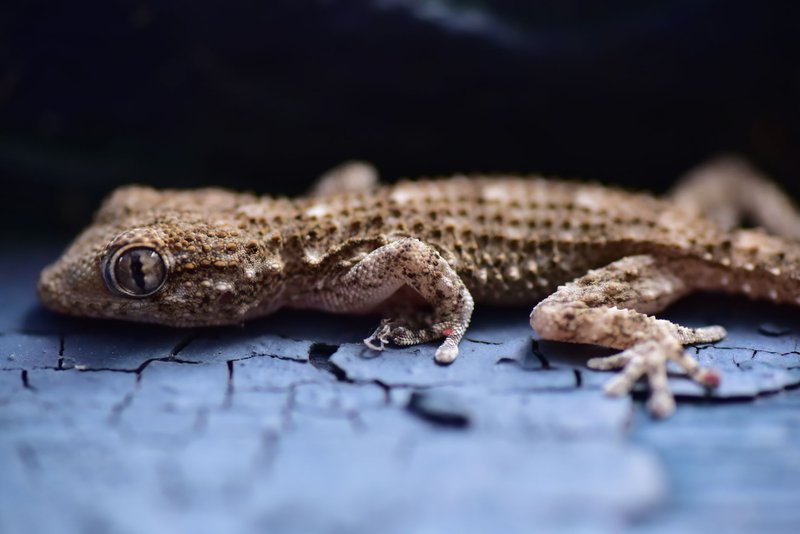
Geckos are the reptiles you’ll actually meet. They come out of walls and ceilings at night, and on Nauru that means houses, verandas, and the edges of streetlights.
1. Asian house gecko (Hemidactylus frenatus)
Recognize it: Pale pinkish-gray, slightly translucent, with bumpy skin and a loud chirping call. Habitat: Buildings, walls, lit porches. Status: Introduced and common. It travels with people and cargo, and it’s the gecko most likely to be on your ceiling.
2. Mourning gecko (Lepidodactylus lugubris)
Recognize it: Small and brown-tan with darker markings and a slightly flattened tail. Habitat: Trees, palms, buildings. Status: Widespread across the Pacific. Every mourning gecko is female, and they reproduce without males, which is why a single stowaway can start a population.
3. Oceanic gecko (Gehyra oceanica)
Recognize it: Larger and sturdier than the others, gray to brownish with pale blotches and broad toe pads. Habitat: Coconut palms, tree trunks, and older buildings. Status: Native to the wider Pacific and common.
4. Pacific slender-toed gecko (Nactus pelagicus)
Recognize it: Stocky, brown, and ground-oriented, without the broad sticky toe pads of the other three. Habitat: Leaf litter, rock crevices, the base of walls. Status: Present but easy to overlook because it stays low and hides by day.
The two skinks
Skinks are the daytime counterpart to geckos. Smooth, shiny scales, fast, and gone before you can raise a camera.
5. Arno Atoll skink (Emoia arnoensis)
Recognize it: Slender and glossy with a brown back and pale stripes along the sides. Habitat: Ground level, leaf litter, coastal vegetation. Status: Native and the most interesting species on the list. Emoia arnoensis is endemic to eastern Micronesia, so Nauru sits at the edge of a very small global range. Almost nobody outside herpetology has heard of it.
6. Copper-striped or tree skink (Lipinia noctua)
Recognize it: Tiny and slim with a coppery-brown body and a light stripe down each side. Habitat: Tree trunks, palms, and shaded undergrowth. Status: Native to Pacific islands, widespread, and often seen foraging on trunks.
The blind snake
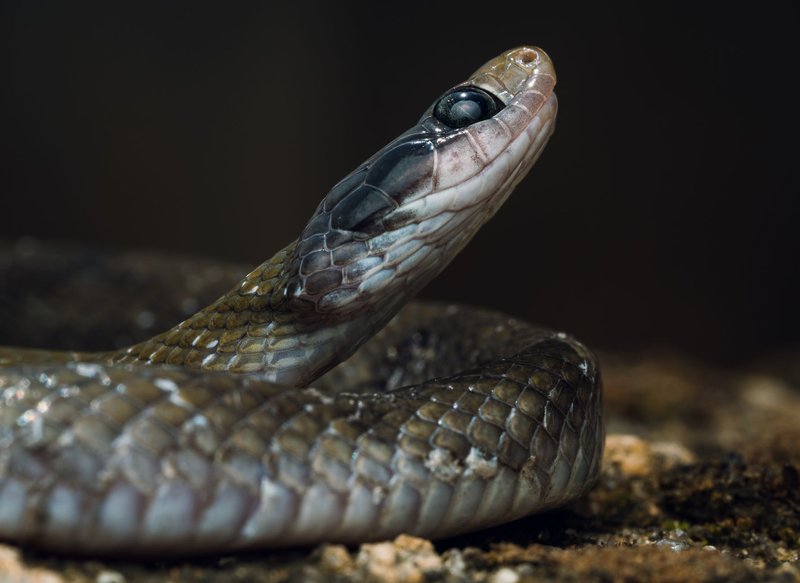
7. Brahminy blind snake (Ramphotyphlops braminus)
Recognize it: It looks like an earthworm with a face. Shiny, dark, about the width of a pencil lead, and usually under 20 centimeters. Habitat: Soil, under rocks and leaf litter, and inside potted plants. Status: Introduced nearly everywhere, and probably the most widely distributed snake on the planet. It has no fangs of any use, and it’s harmless.
This is the only snake you’re likely to find on Nauru land, and you’d only find it by digging in a garden.
The four marine reptiles
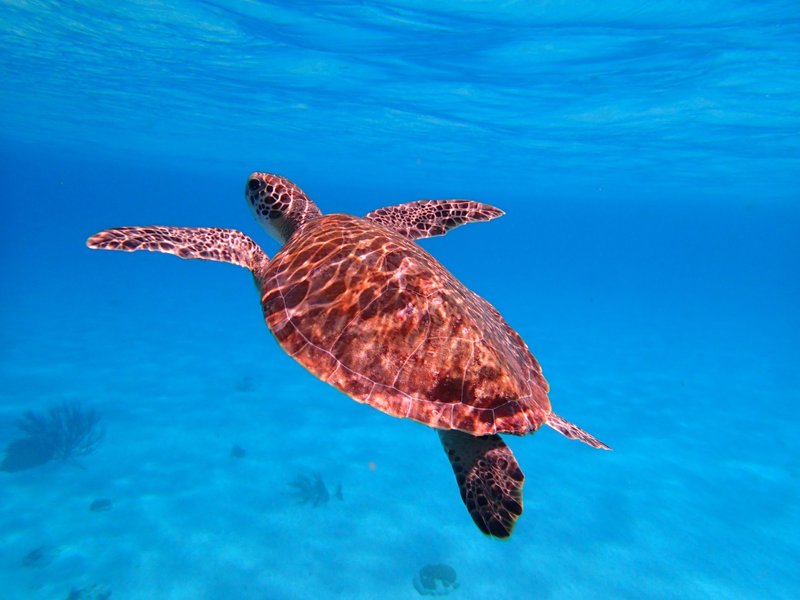
These four don’t live on the island. They live around it, in the reef and open water, and come ashore only to nest, in the turtles’ case. Each has an assessment on the IUCN Red List.
8. Green turtle (Chelonia mydas)
Recognize it: Large, with a smooth, oval, olive-brown shell and a single pair of scales between the eyes. Habitat: Shallow reef and seagrass, feeding on algae. Status: Listed as endangered globally.
9. Hawksbill turtle (Eretmochelys imbricata)
Recognize it: Narrow, pointed beak like a bird’s, and shell scales that overlap like roof tiles. Habitat: Coral reefs, where it feeds on sponges. Status: Listed as critically endangered globally.
10. Leatherback turtle (Dermochelys coriacea)
Recognize it: The largest turtle alive, with a rubbery, ridged, dark shell and no hard plates. Habitat: Open ocean, and it crosses entire oceans feeding on jellyfish. Status: Listed as vulnerable globally. Around Nauru it’s a passing visitor, not a resident.
11. Yellow-bellied sea snake (Hydrophis platurus)
Recognize it: Black on the back, yellow underneath, with a paddle-shaped tail. Habitat: Open surface water, drifting on the current. Status: The only sea snake with an ocean-wide range, and it turns up at Nauru when currents carry it in. It’s venomous, but bites are rare because it doesn’t come looking for people.
Summary table
| # | Common name | Scientific name | Type | Origin |
|---|---|---|---|---|
| 1 | Asian house gecko | Hemidactylus frenatus | Gecko | Introduced |
| 2 | Mourning gecko | Lepidodactylus lugubris | Gecko | Widespread Pacific |
| 3 | Oceanic gecko | Gehyra oceanica | Gecko | Native Pacific |
| 4 | Pacific slender-toed gecko | Nactus pelagicus | Gecko | Native Pacific |
| 5 | Arno Atoll skink | Emoia arnoensis | Skink | Native, eastern Micronesia |
| 6 | Copper-striped skink | Lipinia noctua | Skink | Native Pacific |
| 7 | Brahminy blind snake | Ramphotyphlops braminus | Snake | Introduced |
| 8 | Green turtle | Chelonia mydas | Sea turtle | Marine |
| 9 | Hawksbill turtle | Eretmochelys imbricata | Sea turtle | Marine |
| 10 | Leatherback turtle | Dermochelys coriacea | Sea turtle | Marine |
| 11 | Yellow-bellied sea snake | Hydrophis platurus | Sea snake | Marine |
Is anything dangerous?
No, not on land. The geckos and skinks are harmless, and the blind snake is too small to bite a person. There are no venomous land snakes on Nauru.
Are there crocodiles? Not in any established sense. A saltwater crocodile appears on some checklists, but Buden’s survey doesn’t record one, and Nauru has no mangrove or river habitat to support them.
The one venomous animal on the list is the yellow-bellied sea snake. It’s an open-ocean drifter, and you’re very unlikely to see one from the shore.
Did phosphate mining wipe out the reptiles?
You’d expect it to. Mining stripped the island’s interior, and roughly 80 percent of the land is now a jagged limestone pinnacle field left behind after the phosphate was removed.
Buden’s survey found something different: after about a century of mining, the reptile species count hasn’t obviously dropped. The reason is the type of species involved. These are small, adaptable island travelers that live in buildings, coastal vegetation, and the narrow ring of habitat around the coast, exactly the places the mining left alone.
That doesn’t make the story a happy one. It means the survivors are the generalists, and specialist reptiles that may once have lived on the plateau wouldn’t have left records if they did disappear.
Sources
- Buden, D. W. (2008). “The Herpetofauna of Nauru.” Pacific Science.
- Project MUSE record of the same paper.
- IUCN Red List for sea turtle and sea snake status.