Table of Contents
- Quick answer
- Summary table
- Salamanders
- Newts
- Toads
- Frogs
- Tree frogs
- Where to find amphibians in Portugal
- When to look
- Identifying them by sound
- Endemics and conservation
- FAQ
Quick answer
Portugal has roughly 17 native amphibian species, and the exact tally shifts by one or so depending on how taxonomists split look-alike groups. Seven of them have tails (two kinds of salamander and several newts). The rest are tailless: midwife toads, spadefoots, true toads, frogs and tree frogs.
Most of them are Iberian specialists. The golden-striped salamander lives only in the northwest corner of the peninsula, the Iberian painted frog and Bosca’s newt live nowhere outside Iberia, and Portugal’s temporary ponds are a national stronghold for the rest. The north and the mountains hold the salamanders. The south holds the toads that thrive in dry country.
If you’re planning to see them, go after autumn and winter rains, walk at night, and bring a headlamp.
Summary table
| Common name | Latin name | Group | Size | Where in Portugal |
|---|---|---|---|---|
| Fire salamander | Salamandra salamandra | Salamander | 15-20 cm | North and centre, damp woods |
| Golden-striped salamander | Chioglossa lusitanica | Salamander | up to 16 cm | Northwest streams |
| Iberian ribbed newt | Pleurodeles waltl | Newt | up to 30 cm | Centre and south, ponds |
| Bosca’s newt | Lissotriton boscai | Newt | 8-10 cm | Most of the country |
| Palmate newt | Lissotriton helveticus | Newt | 6-9 cm | Far north |
| Marbled newt | Triturus marmoratus | Newt | 12-16 cm | North and centre |
| Southern marbled newt | Triturus pygmaeus | Newt | 12-15 cm | South, Alentejo and Algarve |
| Common midwife toad | Alytes obstetricans | Toad | 4-5 cm | North and centre |
| Iberian midwife toad | Alytes cisternasii | Toad | 4-5 cm | Centre and south |
| Western spadefoot | Pelobates cultripes | Toad | 6-8 cm | Sandy areas, coast and south |
| Iberian parsley frog | Pelodytes ibericus | Frog | 3-4 cm | South and southwest |
| Spiny toad | Bufo spinosus | Toad | 8-15 cm | Nearly everywhere |
| Natterjack toad | Epidalea calamita | Toad | 6-8 cm | Widespread, sandy soils |
| Iberian painted frog | Discoglossus galganoi | Frog | 6-7 cm | North and centre |
| Iberian frog | Rana iberica | Frog | 5-7 cm | Northern mountain streams |
| Iberian water frog | Pelophylax perezi | Frog | 6-10 cm | Everywhere with water |
| Iberian tree frog | Hyla molleri | Tree frog | 3-5 cm | North and centre |
| Mediterranean tree frog | Hyla meridionalis | Tree frog | 4-5 cm | South and southwest |
Sizes are typical adult body lengths. Some newts and salamanders measure longer once the tail is counted.
Salamanders
Salamanders and newts make up the tailed group, known as caudata. Salamanders spend most of their life on land in cool, wet places. They’re the hardest amphibians to find because they only move about when the ground is soaked.
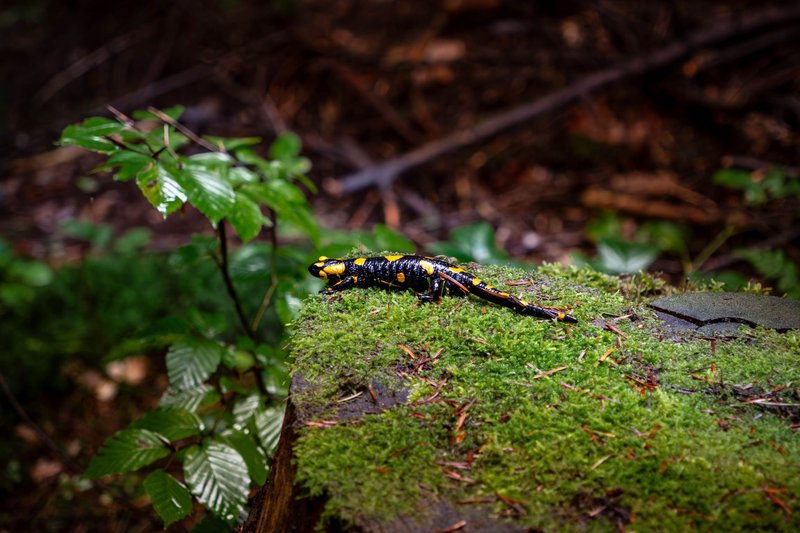
Fire salamander (Salamandra salamandra)
Black with bright yellow blotches, and impossible to mistake for anything else in Portugal. Adults reach 15-20 cm and live in damp deciduous forest, especially in the north. They hide under logs and leaf litter by day and walk out on wet nights.
The colours are a warning. Glands behind the head and along the back release a toxin that tastes awful and can irritate skin, so the salamander gets left alone. Look at it, don’t handle it. Females don’t lay eggs; they deposit live larvae into streams.
Golden-striped salamander (Chioglossa lusitanica)
The prize species for any visitor. It’s slim and dark, with two copper-gold stripes down the back, and its tail is longer than its body. It grows up to about 16 cm and can lose the tail to escape a predator, then regrow it.
It lives only in the northwest of the Iberian Peninsula, in shaded streams and springs among mossy rocks in Portugal’s north. The IUCN Red List classifies it as Vulnerable, because its habitat is patchy and shrinking. Fast and jumpy, it will vanish down a crevice before you finish raising your torch.
Newts
Newts spend more time in water than salamanders do, especially in the breeding season. That’s when you’ll see them, in ponds, tanks and slow streams.
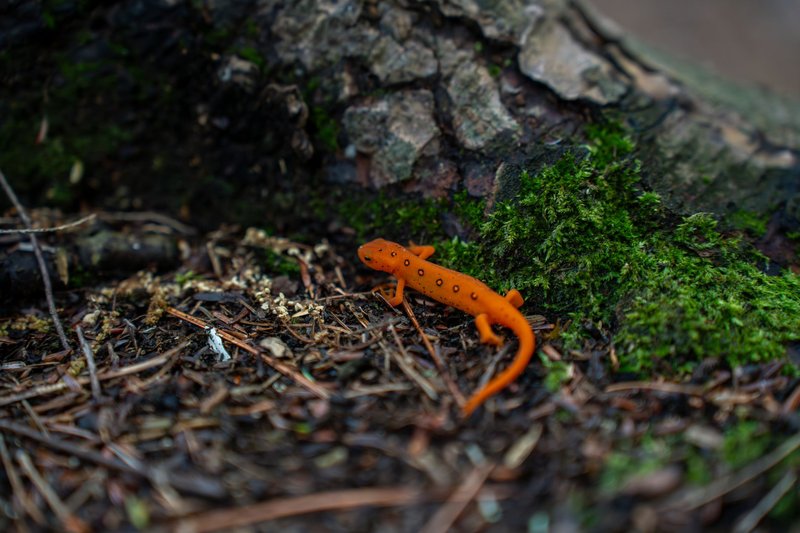
Iberian ribbed newt (Pleurodeles waltl)
Europe’s largest newt, at up to 30 cm. It’s brown-grey with a row of orange warts along each flank. When threatened, it pushes its sharp rib tips through those warts, and that’s where the name comes from. The sharp rib tips that breach through its warts are laced with toxin—you can learn more about this defense strategy in the guide to poisonous newts.
Look for it in ponds, cattle troughs and reservoirs in the centre and south. It breeds in winter, and it can survive in seasonal water that dries out completely by putting itself to sleep underground.
Bosca’s newt (Lissotriton boscai)
The one most people meet. It’s small and olive-brown, with an orange belly speckled with dark dots. It lives across most of Portugal in almost any pond, pool or slow stream, and it exists only in Iberia. In breeding season males grow a low crest and a thread at the tail tip.
Palmate newt (Lissotriton helveticus)
Portugal is the edge of this species’ range. It occurs in the far north and is hard to tell from Bosca’s newt, though palmate newts are usually paler on the throat and males have webbed hind feet and a short filament on the tail.
Marbled newt (Triturus marmoratus)
A chunky, bright green newt patterned like marble, with a thin orange stripe on the back of females. It lives in ponds with plenty of vegetation, mostly in the north and centre.
Southern marbled newt (Triturus pygmaeus)
Treated as its own species from the marbled newt. It replaces its cousin in the south, with a fuzzier, more speckled pattern. It shares the temporary ponds of the Alentejo with the ribbed newt.
Toads
Toads have drier, warty skin and are often at home away from water, spending the day underground. Most only need a pond for breeding.
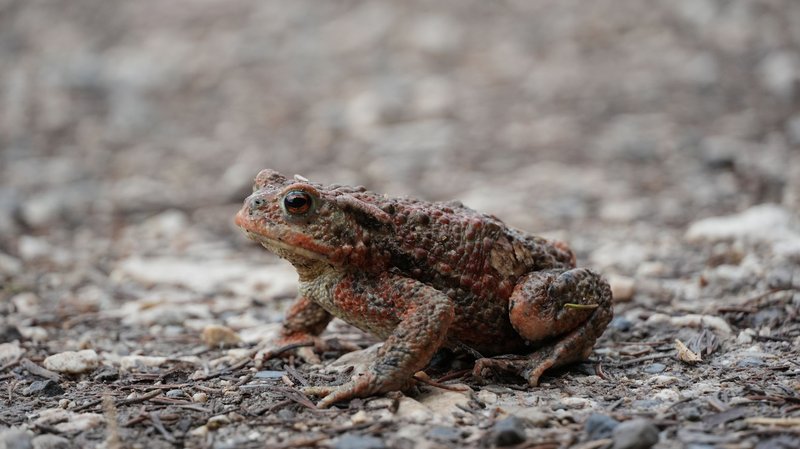
Common midwife toad (Alytes obstetricans)
Small, grey-brown and easy to overlook. Its trick gives it the name: the male wraps strings of eggs around his hind legs and carries them until they’re ready to hatch, then drops into water. The call is a soft, repeated, bell-like “poo”, often heard from gardens and stone walls on summer evenings in the north and centre.
Iberian midwife toad (Alytes cisternasii)
Similar in behaviour, but it lives in dry country, in sandy and stony ground in the centre and south. Males carry the eggs, too. Its call is a short, high, whistle-like note.
Western spadefoot (Pelobates cultripes)
A plump, smooth-skinned toad with vertical pupils and a dark, hard “spade” on each hind foot, which it uses to dig itself into sandy soil. It comes out at night and breeds in temporary ponds. The tadpoles are enormous, often bigger than the adults will end up.
Spiny toad (Bufo spinosus)
Portugal’s large, warty toad. It was formerly lumped together with the common toad and is now split from it. Females reach 15 cm. It’s the toad you find on the road on rainy autumn nights, and in large numbers at breeding ponds in late winter.
Natterjack toad (Epidalea calamita)
Recognisable at once by the thin yellow line down its back, and by how it moves. It runs in short bursts rather than hopping. It favours sandy ground and coastal dunes, and it breeds in shallow rain pools. Its rolling, far-carrying call is one of the loudest of any Portuguese amphibian.
Frogs
Frogs have smoother, moister skin than toads and stay closer to water. Portugal’s true frogs and their relatives range from mountain-stream specialists to a species that lives in every ditch.
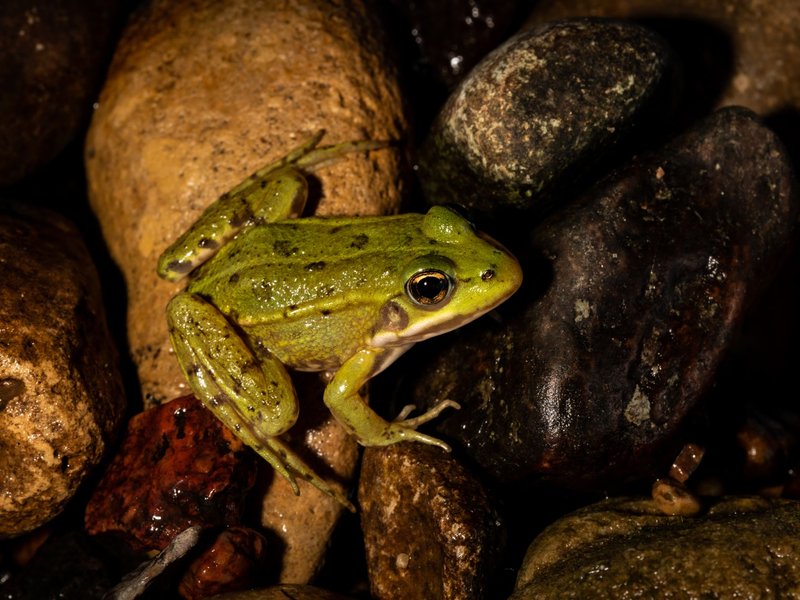
Iberian painted frog (Discoglossus galganoi)
Round-tipped tongue, triangular head and a colourful, variable pattern that can include spots, stripes and a pale line on the back. It grows to 6-7 cm and is found only in Iberia. It’s most common in the north and centre, in shallow pools and streams.
Iberian frog (Rana iberica)
A slim brown frog with long legs and a very quick jump, tied to cold, clear mountain streams and meadows in the northwest. Look for it in Gerês and around the Serra da Estrela in cool weather.
Iberian water frog (Pelophylax perezi)
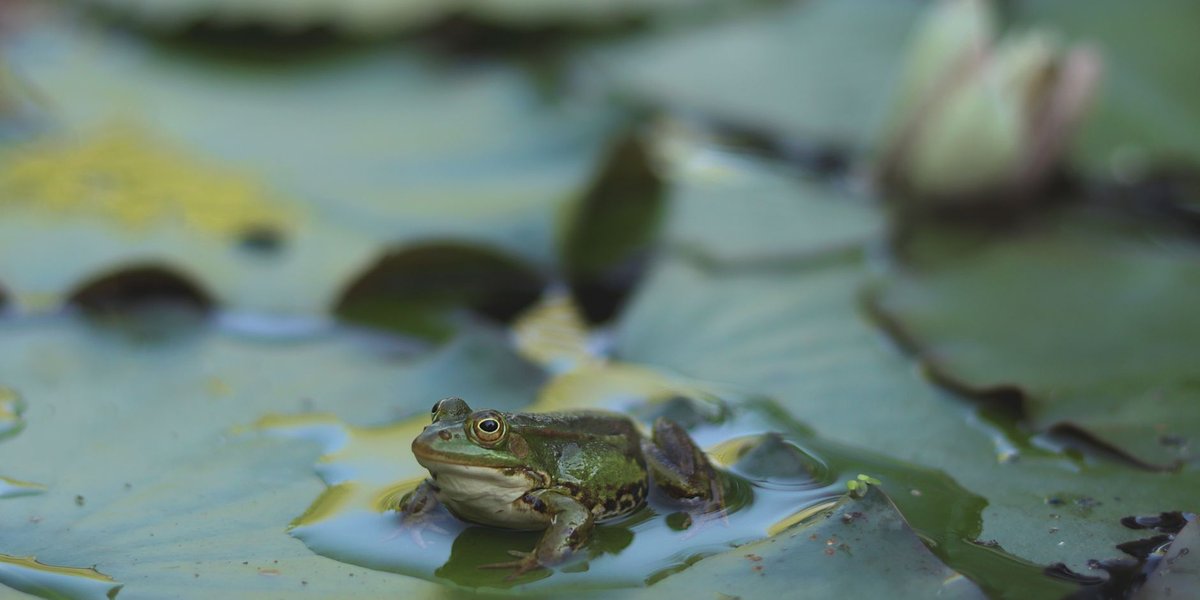
Green or brown with a pale stripe down the back, and the frog that most visitors hear. It occupies practically every pond, river, rice field and ditch in the country, and males form loud choruses in spring and summer.
Iberian parsley frog (Pelodytes ibericus)
Small and easy to miss. Its back is greenish grey with little green warts, like flecks of parsley. It lives in the south and southwest and calls after autumn and winter rain.
Tree frogs
The two Portuguese tree frogs are the ones you might picture on a leaf. They have sticky toe pads, bright green backs and a dark stripe running through the eye.
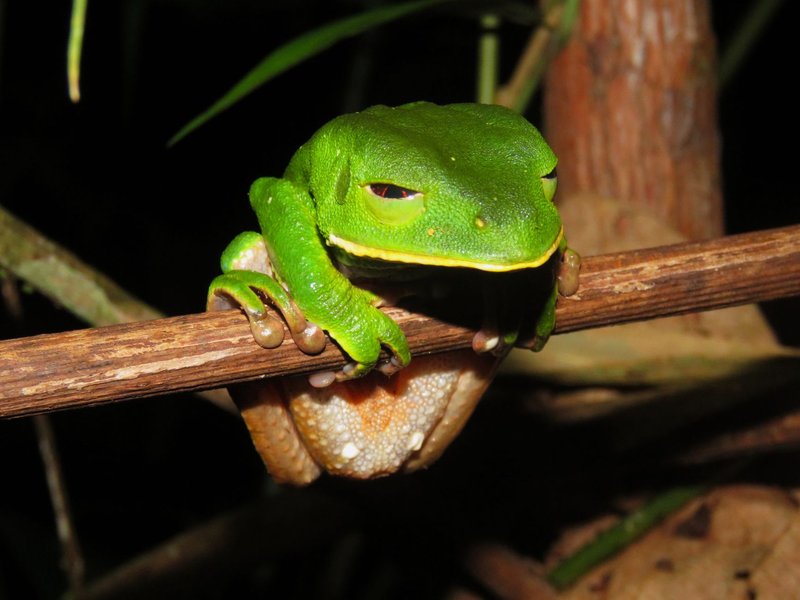
Iberian tree frog (Hyla molleri)
Bright green and small, up to 5 cm. The dark eye stripe stops at the shoulder. It lives in the north and centre, in reedbeds, shrubs and ponds, and it climbs well.
Mediterranean tree frog (Hyla meridionalis)
Very similar but more southern and southwestern. The stripe through the eye continues along the flank, which is how you separate the two when they overlap. It tolerates hot, dry summers by sheltering in cool spots, and it calls loudly in spring.
Where to find amphibians in Portugal
Peneda-Gerês National Park. The best all-round spot in the north. Cool streams, oak woods and boulder-strewn hills hold fire salamanders, golden-striped salamanders, the Iberian frog, palmate newts and midwife toads. Portugal’s nature conservation agency manages the park.
Serra da Estrela. Mountain pools and streams at altitude, good for newts, the Iberian frog and painted frogs in spring.
Alentejo temporary ponds. Winter-filled hollows, some only a few metres wide, hold ribbed newts, southern marbled newts, spadefoots, parsley frogs and midwife toads. Conservation groups such as LPN (Liga para a Protecção da Natureza) work to protect these pools because agriculture and drainage keep erasing them.
Algarve and southwest coast. Sandy soils and lagoons suit natterjack toads, spadefoots and Mediterranean tree frogs.
When to look
Amphibian season in Portugal follows the rain, not the calendar.
- Autumn to early spring: the main window. First heavy rains trigger movement, and ponds fill and fill with calling males.
- Night walks: the best method. Amphibians hide by day and move after dark. Bring a red or dim torch, walk slowly along wet paths and pond edges, and scan the ground.
- Summer: most species go quiet or dig in. Permanent water still gives you water frogs and tree frogs.
- Cold, wet nights in the mountains bring out salamanders best.
Wear waterproof boots, keep to paths, and check that your hands are clean and wet if you have to touch one, since dry or sunscreen-coated skin harms them. Better still, don’t touch.
Identifying them by sound
Calls are often the fastest way to identify a frog or toad, since you’ll hear far more than you see.
- Water frogs: a harsh, laughing chorus from ponds and rice fields.
- Tree frogs: a loud, repeated, rasping call, mostly at dusk in spring.
- Midwife toads: a soft flute-like “poo”, spaced evenly, sounding like tiny bells.
- Natterjack toads: a loud, long, rolling trill.
- Spiny toads: a low, quiet chirr; most calling is soft.
- Parsley frogs: a brief, rasping, dry call.
Endemics and conservation
Several Portuguese species exist only in the Iberian Peninsula. The golden-striped salamander, Bosca’s newt, the Iberian midwife toad, the Iberian painted frog and the Iberian frog are among the rare animals in Portugal that warrant conservation attention. That’s why the peninsula matters for amphibian research and protection.
The main threats are the same across species: pond drainage, agrochemicals, invasive fish and crayfish in breeding water, and drought. Temporary ponds are especially at risk, because they don’t look like habitat. Chytrid fungus has also hit amphibians across parts of Iberia.
Species status is tracked on the IUCN Red List, and the golden-striped salamander is among the Portuguese species of highest concern. Taxonomy is maintained in Amphibian Species of the World, the American Museum of Natural History’s database, which also documents the recent splits of toads, newts and tree frogs mentioned here.
FAQ
How many amphibian species live in Portugal? About 17 native species, depending on taxonomy. Seven are tailed (salamanders and newts) and the rest are tailless.
Are there poisonous frogs in Portugal? No dangerous ones. The fire salamander and the toads produce skin secretions that are irritating if you handle them and then touch your eyes or mouth, but they’re not a risk to people who look without touching. Wash your hands after any contact.
What is the rarest amphibian in Portugal? The golden-striped salamander is the best-known threatened species, limited to a small northwestern range.
Where is the best place to see salamanders? Peneda-Gerês National Park in the north, on wet nights in autumn and spring.
Do Portuguese frogs come out in summer? Water frogs and tree frogs do. Most others retreat until the autumn rains.
Can I keep a Portuguese amphibian as a pet? No. Native amphibians are protected, and taking them from the wild is illegal. Watch and photograph them instead.