Table of Contents
- Quick picks
- The monkeys
- The rodent, the sloth and the otter
- The night shift and the baby
- The frogs, cute but not harmless
- Why many cute Amazon rainforest animals are at risk
- How to see them without harming them
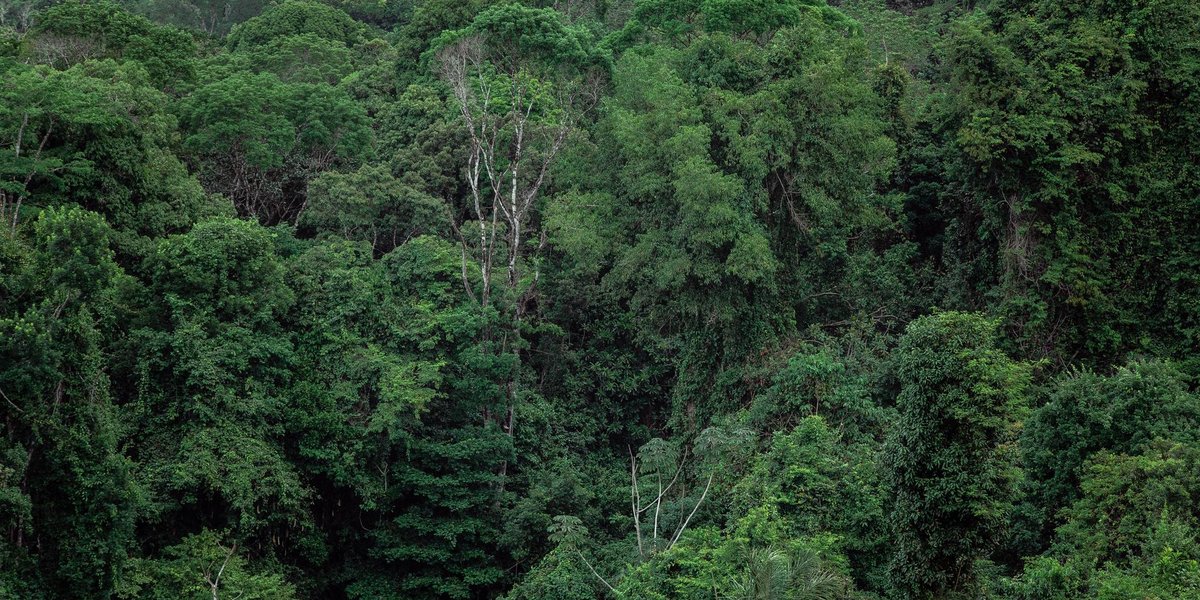
The Amazon holds roughly one in ten of all known species on Earth, and a surprising share of them fit in your hand. This list covers 12 cute Amazon rainforest animals, grouped by type, with the numbers that matter: size, diet, range and IUCN conservation status.
Quick picks
- Smallest: pygmy marmoset, about 100 to 140 grams.
- Best face: emperor tamarin, for the moustache.
- Most relaxed: capybara.
- Cutest baby: the lowland tapir calf, born striped and spotted.
- Most endangered of the group: giant river otter.
- Cute but dangerous: the dyeing poison frog.
The monkeys
1. Pygmy marmoset
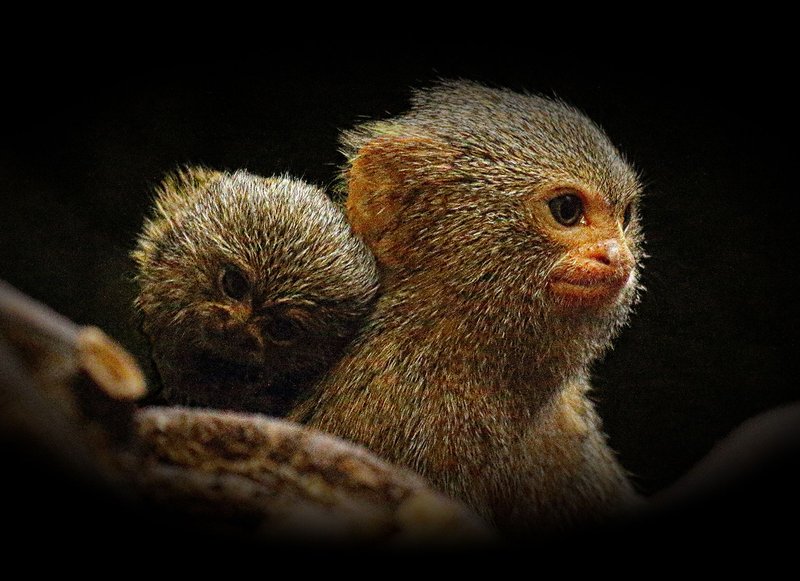
The pygmy marmoset is the smallest monkey in the world. Adults measure around 12 to 15 centimeters from head to body, with a tail longer than the rest of them. It spends its life in the western Amazon, clinging vertically to trunks like a squirrel.
Its diet is unusual: it gnaws small holes in bark and drinks the sap and gum that leak out. Twins are the norm, and the father does most of the carrying. IUCN status: Least Concern.
2. Emperor tamarin
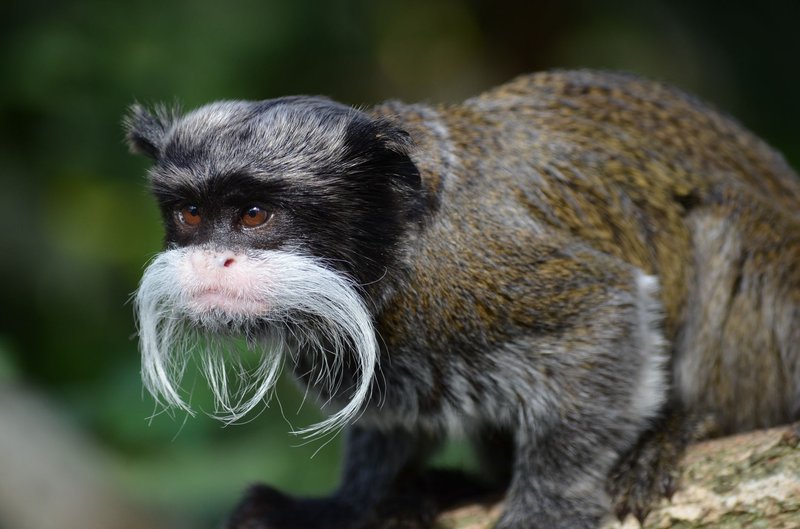
Long white whiskers sweep down from the emperor tamarin’s face on both sides, which is how it got its name; the moustache is said to resemble the one worn by Germany’s Kaiser Wilhelm II. It weighs under a kilogram and lives in groups in southwestern Amazonia, across Peru, Brazil and Bolivia.
It eats fruit, insects and tree sap, and often forages alongside saddleback tamarins. IUCN status: Least Concern.
3. Common squirrel monkey
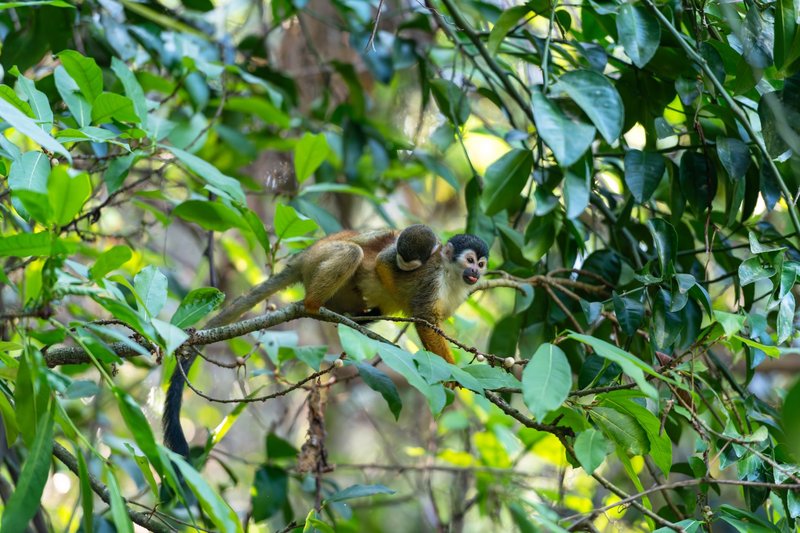
Squirrel monkeys travel in noisy groups that can number in the dozens, bounding through the middle canopy. They weigh roughly 700 grams to a kilogram and have the highest brain-to-body ratio of any primate in the region. Mostly insects and fruit. IUCN status: Least Concern.
4. Red uakari
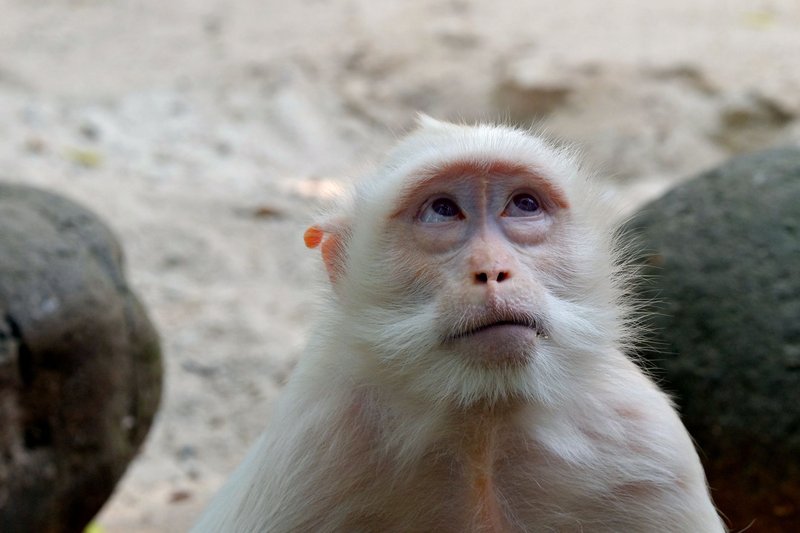
A bright red, hairless face and a shaggy coat make the red uakari look permanently sunburnt. It lives in the flooded forests of the western Amazon, where it eats seeds and fruit that other monkeys can’t crack. The short tail is unusual for an Amazon monkey. IUCN status: Vulnerable.
The rodent, the sloth and the otter
5. Capybara
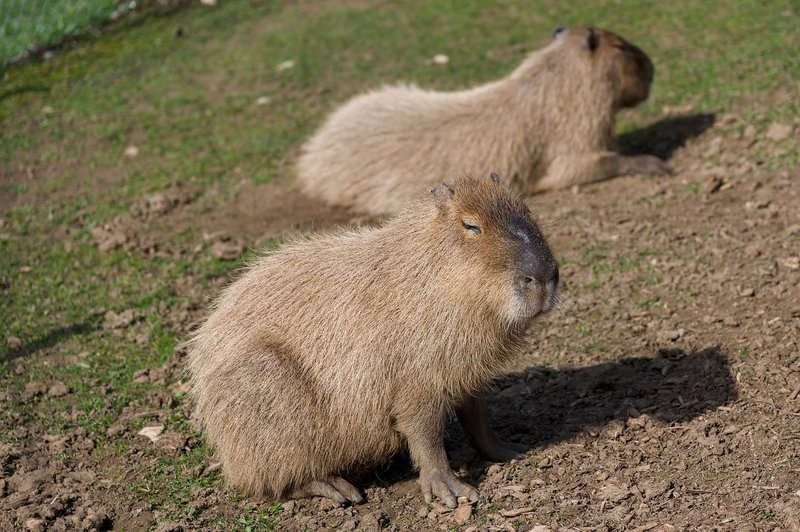
The capybara is the largest rodent on the planet, reaching about 1.3 meters long and up to 65 kilograms. It has webbed feet and spends hours in rivers and marshes, and it will tolerate birds, monkeys and even small caimans sitting on it. Its diet is grass and aquatic plants. IUCN status: Least Concern.
6. Brown-throated three-toed sloth
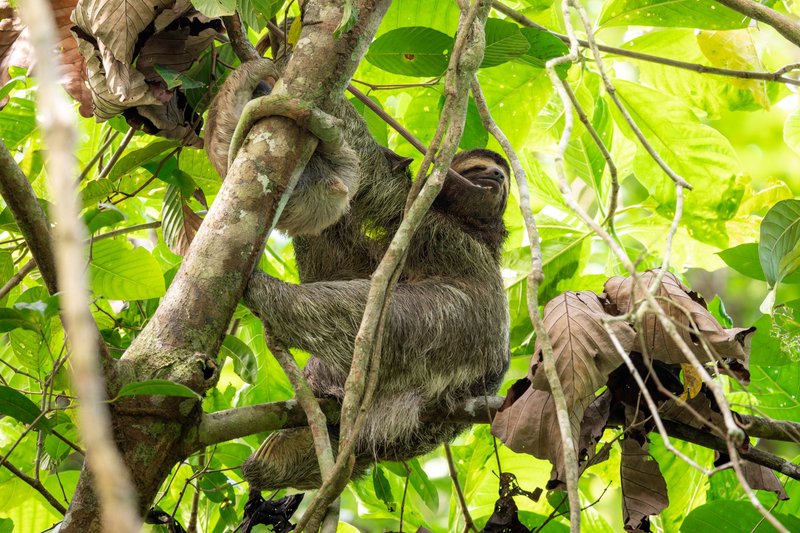
Sloths look like they’re smiling because of how their facial markings curve. The brown-throated three-toed sloth moves so slowly that algae grow in its fur, which gives it a greenish tint and camouflage. It eats leaves and comes down from the canopy about once a week to defecate. IUCN status: Least Concern.
7. Giant river otter
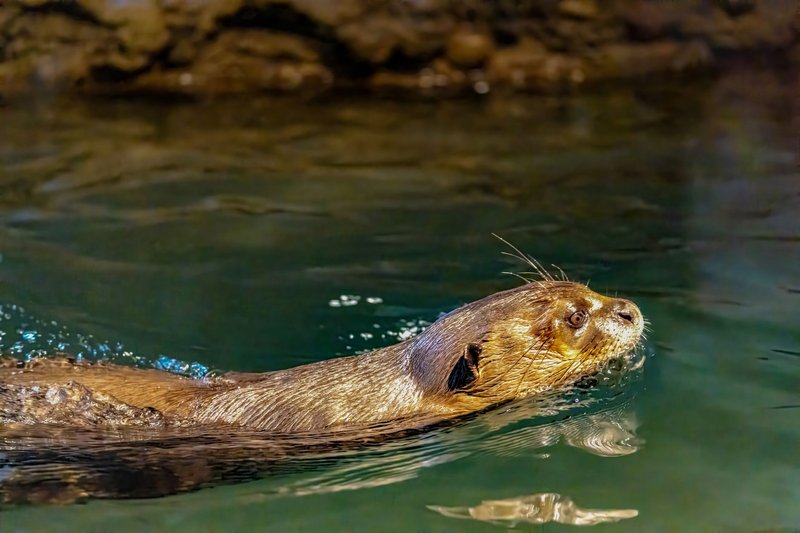
Giant river otters grow up to 1.7 meters, making them the longest otters in the world. Families of up to about eight swim and hunt together, fishing for piranha and catfish, and they squeak and whistle loudly at each other. They are also in trouble: habitat loss, mining and hunting have pushed them to roughly 5,000 animals or fewer, according to National Geographic. IUCN status: Endangered.
The night shift and the baby
8. Kinkajou
The kinkajou is called the honey bear, though it’s neither a bear nor closely related to one; it belongs to the raccoon family. It weighs two to three kilograms, has big dark eyes, a long tongue for reaching nectar and honey, and a prehensile tail it uses as a fifth limb. As a nocturnal rainforest animal, it forages at night. IUCN status: Least Concern.
9. Lowland tapir calf
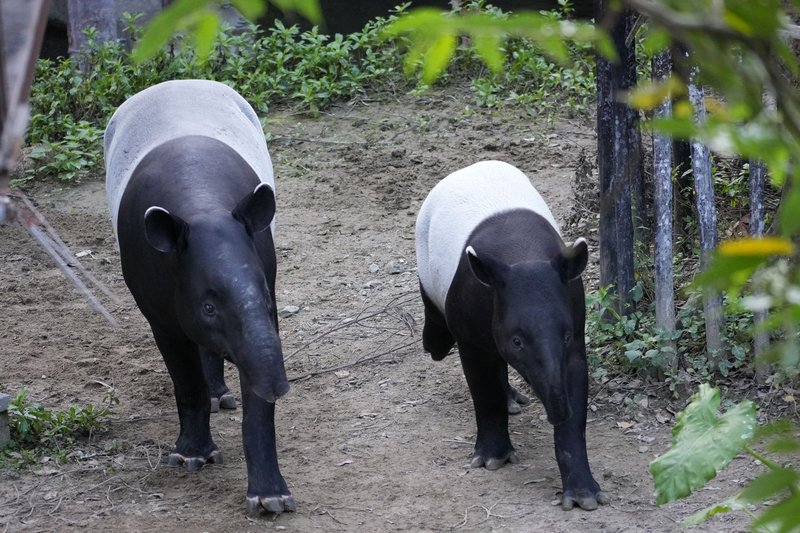
An adult lowland tapir is a heavy, snouted animal of 200 kilograms or more. A newborn looks nothing like it. Calves have a chestnut coat with white stripes and spots, a pattern that breaks up their outline on the forest floor. The markings fade over the first months. The species is listed as Vulnerable.
10. Southern tamandua
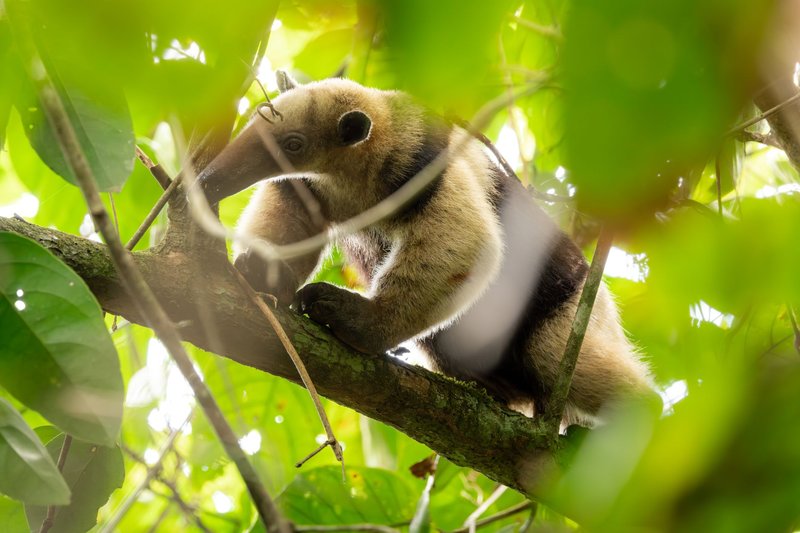
A tamandua is a small anteater that climbs trees, using a prehensile tail to anchor itself while its claws rip into ant and termite nests. It slurps up thousands of insects a day with a long, sticky tongue. When threatened, it releases a skunk-like odor. IUCN status: Least Concern.
The frogs, cute but not harmless
11. Dyeing poison dart frog
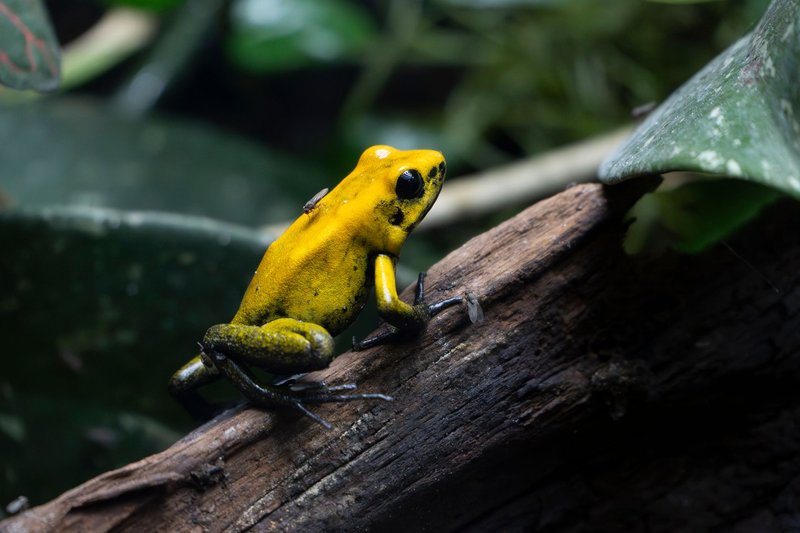
The dyeing poison frog is around 5 centimeters long, with black skin and bold yellow or blue patterns. Like many cute colorful animals in the Amazon, its brilliant colors warn predators of its toxins. In the wild it carries toxins from the ants and mites it eats; frogs raised in captivity are not poisonous. Males carry tadpoles on their backs to small pools of water. Look, don’t touch. IUCN status: Least Concern.
12. Amazon milk frog
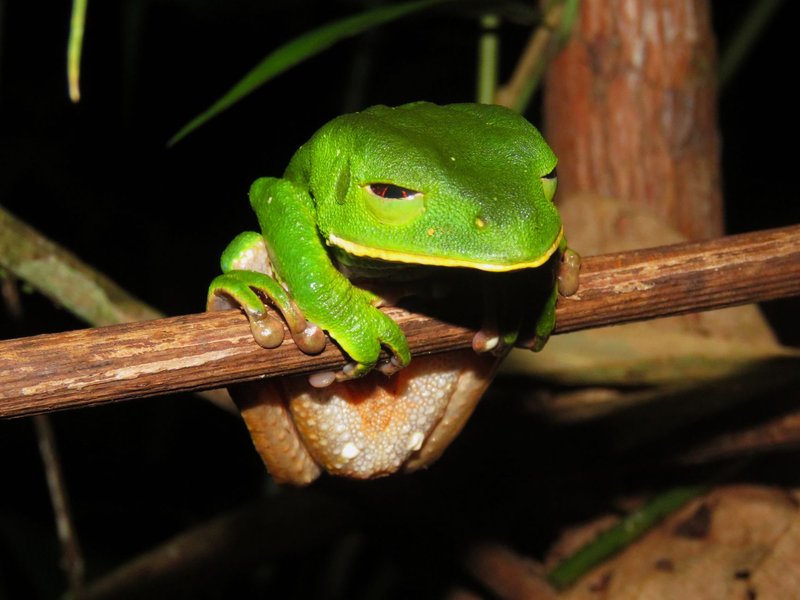
Juvenile Amazon milk frogs are banded in blue and brown, with enormous golden eyes. Adults grow to about 10 centimeters and, when stressed, secrete a sticky white liquid that gives the species its name. They breed in water-filled tree holes high in the canopy. IUCN status: Least Concern.
Why many cute Amazon rainforest animals are at risk
Several animals on this list are common today, but “Least Concern” doesn’t mean their forests are safe. According to the World Wildlife Fund, deforestation for cattle ranching, soy and logging continues to fragment the Amazon. Species that depend on flooded forest or tall canopy, like the red uakari and the giant river otter, feel it first.
The IUCN Red List tracks each species’ status and is the best source if you want to check a status for yourself.
How to see them without harming them
Buy no animal products and avoid any lodge or tour that offers selfies with sloths, monkeys or caimans. Handling stresses wild animals, and many of the “pets” in tourist photos were taken from the wild.
Choose lodges that use local guides, keep a distance of several meters and have no feeding. Sloths and kinkajous are easiest to see on night walks, and giant otters on slow boat trips in quiet oxbow lakes.