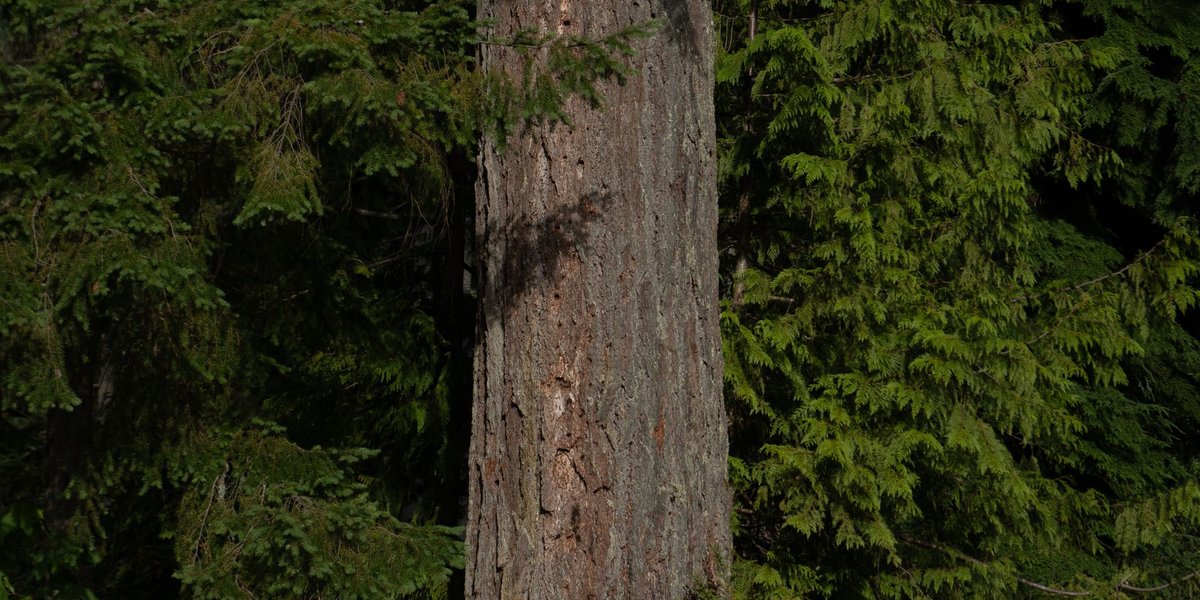
Congaree National Park protects the largest old-growth bottomland hardwood forest left in the United States, roughly 11,000 acres of it. It holds more than 25 champion trees and the tallest known specimens of 15 species. That’s why a swampy floodplain in central South Carolina has one of the highest closed canopies in the eastern US.
This guide covers which trees to look for, how tall they get, and where on the trail you’ll actually see them.
Contents
- Why Congaree’s forest is still standing
- The tallest trees in Congaree
- Bald cypress and water tupelo
- Cypress knees
- Where to see the big trees
- Best time to visit
- Quick ID guide
- Summary
Why Congaree’s forest is still standing
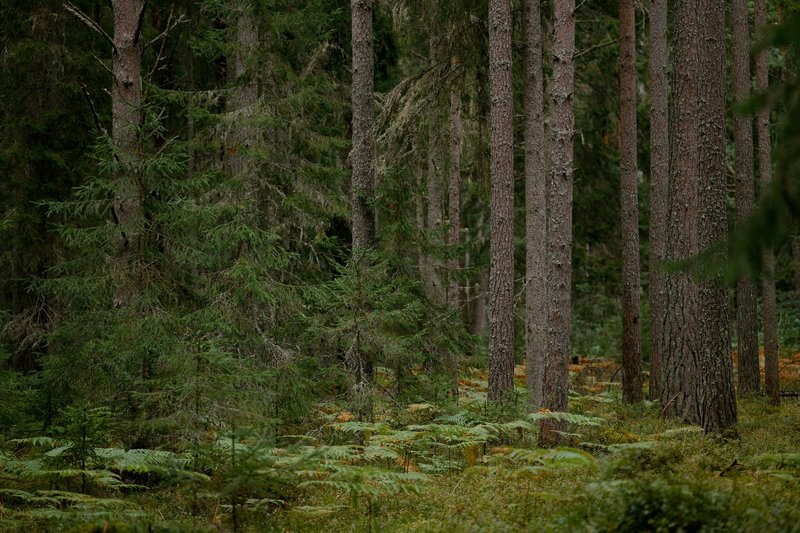
The Congaree River floods the park several times a year. That made the land a poor bet for farming and a logistical headache for loggers, who couldn’t reliably get heavy equipment in or timber out. Other bottomland forests across the Southeast were cut over. Congaree’s flooding, plus a stretch of stubborn conservation work, left a big block of the original forest intact.
Floods also feed the trees. Each one deposits fresh sediment and nutrients on the forest floor, which is a large part of why the trees here grow so tall and so fast. American Forests describes the canopy as among the tallest temperate deciduous forests in the world, and the champion list backs that up.
The tallest trees in Congaree
Several species here hold height records, and a few of the numbers surprise people. A loblolly pine is not a tree most visitors think of as a giant, but the record one tops 160 feet.
| Species | Record height |
|---|---|
| Loblolly pine | 167 ft |
| Sweetgum | 157 ft |
| Cherrybark oak | 154 ft |
| American elm | 135 ft |
| Swamp chestnut oak | 133 ft |
| Overcup oak | 131 ft |
| Persimmon | 127 ft |
| Laurel oak | 125 ft |
The persimmon is the one to remember. Most people know it as a modest fruit tree in a backyard. At 127 feet, Congaree’s version is a different animal. The sweetgum is the other standout: a tree usually seen as a street-side nuisance with spiky seed balls, here pushing 157 feet.
These are record heights for the park, not what you’ll see on every tree. Most of the canopy runs lower, but the tall ones are scattered throughout, which is why you keep craning your neck on the trail.
Bald cypress and water tupelo
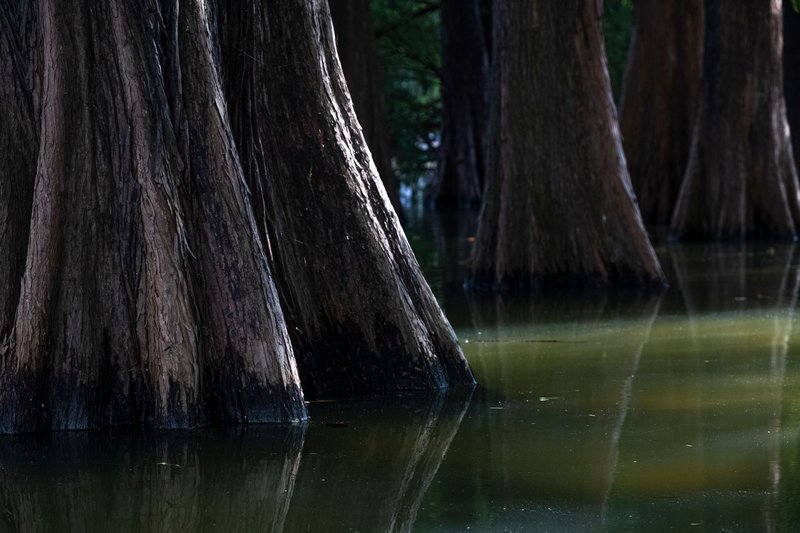
The two trees that define the park’s wettest ground are bald cypress and water tupelo. You’ll find them in the sloughs and low spots where water sits for months.
Bald cypress is a deciduous conifer. It drops its needles each fall, which is why it looks dead in winter and fine in spring. Its trunk flares widely at the base, and the oldest specimens are the thickest trees in the forest. Water tupelo grows alongside it with a swollen, buttressed base that helps it stand in saturated soil.
If you’re picking out which trunk is which from the boardwalk, the cypress has the fibrous, vertically stringy bark. The tupelo is darker and rougher with a more rounded base.
Cypress knees
Around the base of bald cypress you’ll see knobby woody projections poking up out of the mud or shallow water. Those are cypress knees. They can stand a few feet tall, and in the wettest sloughs they cluster in dense stands that look like a crowd.
Their function is still debated. The old explanation was that knees help the roots take in oxygen, but studies haven’t confirmed it. A second idea is that they help anchor the tree in soft soil. Either way, they’re one of the most photographed features in the park.
Where to see the big trees
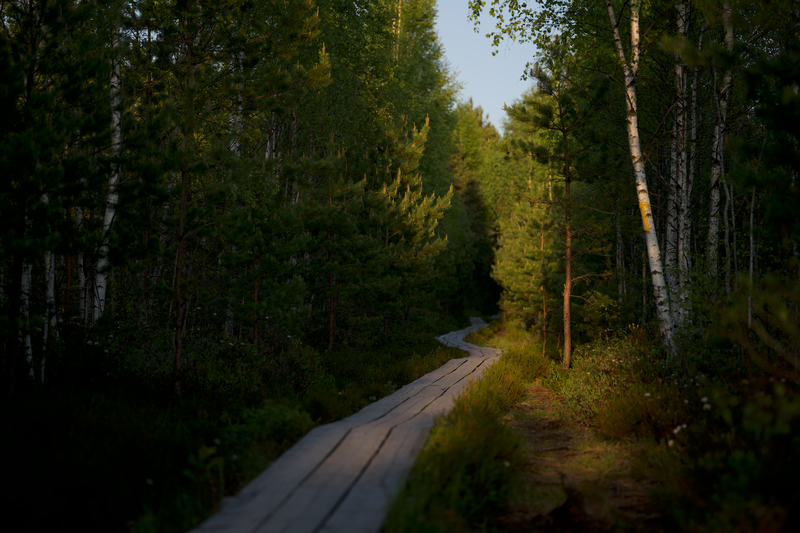
Congaree’s trails are mostly flat, which makes the big trees reachable without much effort.
Boardwalk Loop (2.4 miles). This is the place to start. The raised boardwalk keeps you above the floodwater and takes you straight through old-growth forest. You’ll see bald cypress, water tupelo, and plenty of cypress knees in the low areas, along with tall hardwoods overhead. It’s also the easiest loop if you’re short on time or hiking with kids.
Weston Lake Loop (4.6 miles). Longer and quieter. The trail leads to the shore of Weston Lake, an oxbow lake framed by cypress. Because it’s a dirt trail, flooding can close or muddy sections of it, so check conditions with the park before you go. You get more solitude here and a better chance of a long look at the forest without anyone else in the frame.
Look for the park’s own signs and rangers for exact champion tree locations, since specimens and measurements get updated as foresters re-measure them. The National Park Service maintains current trail and flood information.
Best time to visit
Fall brings color. Sweetgum turns red and purple, and the oaks and elms shift to yellow and brown while the cypress goes rusty orange.
Spring is flood season. Water levels rise, trails can close, and the forest looks its most swamp-like. If you want to see the floodplain actually flooded, this is your window, but confirm access first.
Late May to June is synchronous firefly season. For a couple of weeks, fireflies flash in coordinated patterns through the forest at night. The park uses a viewing lottery for this event, so plan well ahead.
Summer is hot, humid, and buggy. Mosquitoes are a serious presence in the warm months, so bring repellent.
Quick ID guide
- Loblolly pine: tall, straight trunk with thick, plated bark and long needles in bundles of three, usually towering over the hardwoods around it.
- Sweetgum: star-shaped leaves and spiky round seed balls on the ground.
- Cherrybark oak: bark that looks like the scaly bark of a wild cherry, with a tall, straight bole.
- American elm: vase-shaped crown, with ridged bark.
- Bald cypress: flared base, knees around the trunk, feathery needles in season.
- Water tupelo: swollen, buttressed base in standing water.
- Persimmon: blocky, dark bark that breaks into small squares, like alligator hide.
Congaree’s complete plant catalog lists 39 species with scientific names and heights. A hand lens and a field guide help, but the simplest approach is to photograph the bark and leaves, then identify them later.
Summary
Congaree National Park protects about 11,000 acres of old-growth bottomland hardwood forest, with more than 25 champion trees and 15 record-height species. The loblolly pine (167 ft), sweetgum (157 ft), and cherrybark oak (154 ft) lead the list. The Boardwalk Loop is the quickest way to see bald cypress, water tupelo, and cypress knees. The Weston Lake Loop gives you more quiet and a longer walk. Go in fall for color, spring for flooding, or late May to June for the fireflies. Whichever trail you pick, look up. National Geographic’s park profile is a good next read before you plan the trip.