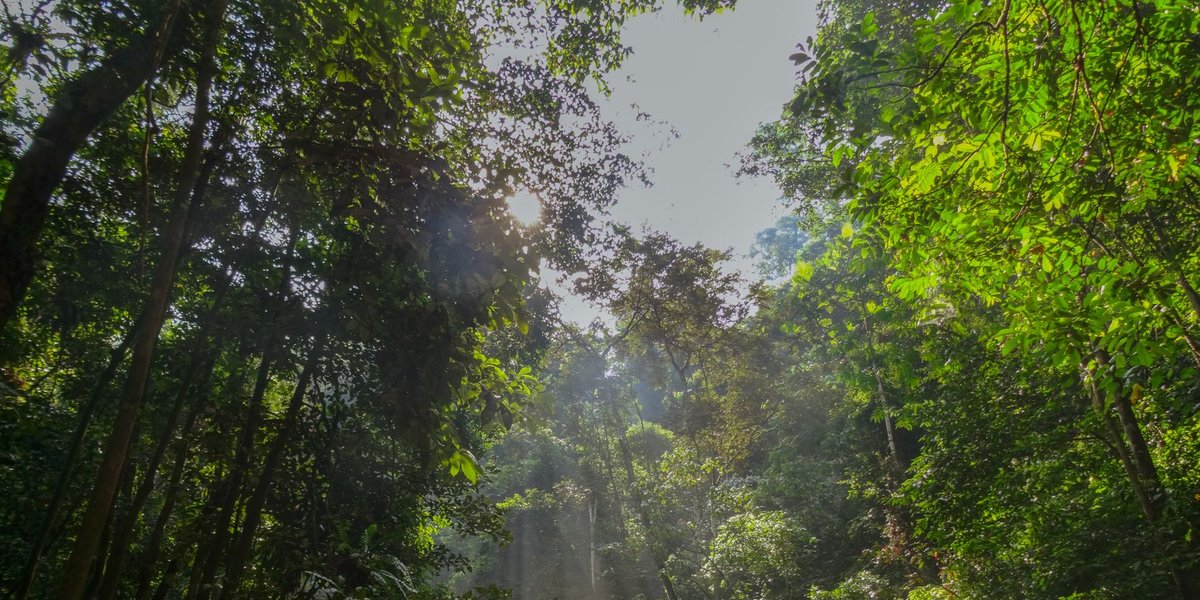
Tropical rainforest trees are defined by four things: height, buttress roots, drip-tip leaves, and a level of diversity that has no match anywhere else. A single hectare of Amazon forest can hold several hundred tree species. A comparable patch of European woodland holds a dozen or so.
This guide sorts 15 of the best-known rainforest trees by the layer they occupy, from the emergent giants down to the understory. Each entry gives the region, the typical height, and one detail worth remembering.
Contents
- How a rainforest tree is built
- Emergent layer trees
- Canopy trees
- Understory and fast-growing trees
- Comparison table
- Why rainforest trees look the way they do
- Threats and conservation
- FAQ
How a rainforest tree is built
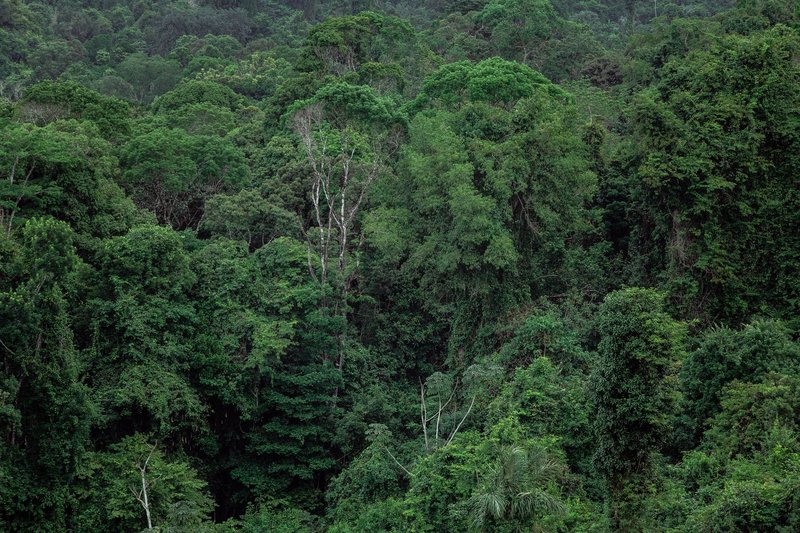
Rainforests stack into layers. The emergent layer is a scattering of trees that punch through the roof, typically 45 to 70 meters tall. Below them, the canopy forms a nearly continuous ceiling at 25 to 45 meters and catches most of the sunlight. The understory sits in the shade beneath, and the forest floor gets only around 2 percent of the light that hits the top.
That light gradient explains almost everything about the trees below. Species either race upward, wait patiently in the dark, or exploit gaps when a neighbor falls.
Emergent layer trees
These are the tallest trees in the tropical rainforest. They take full sun and full wind, and many of them are propped up by enormous buttresses.
1. Kapok (Ceiba pentandra)
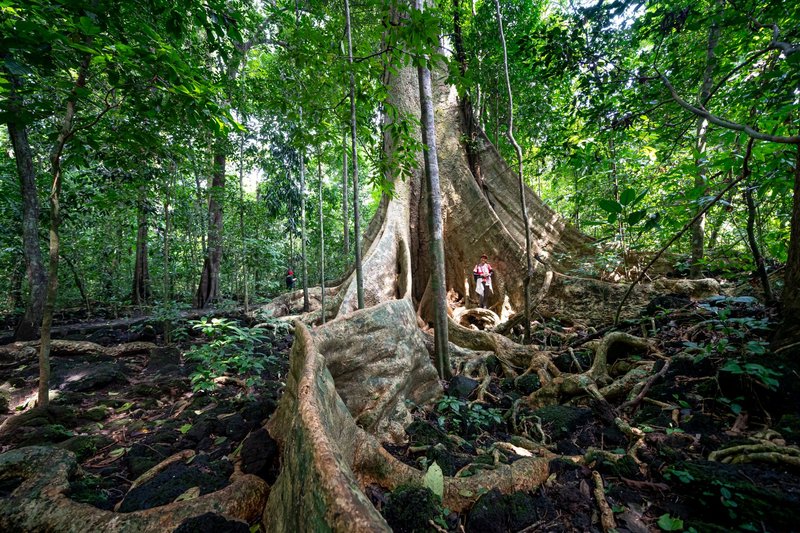
Region: Central and South America, West Africa. Height: up to 60 meters or more.
The kapok is the one with the wall-like buttresses, some taller than a person. Its seed pods split open into a silky fiber that is water-resistant and buoyant, which is why it once stuffed life jackets and mattresses. Many Indigenous Amazonian and Mesoamerican cultures treat it as a sacred tree that connects the underworld, the earth, and the sky.
2. Brazil nut (Bertholletia excelsa)
Region: Amazon basin. Height: 40 to 50 meters.
Brazil nuts are almost entirely wild-harvested, and that is not for lack of trying. The tree needs a specific large-bodied orchid bee to pollinate its flowers, and a rodent called the agouti to chew open the cannonball-sized pods and bury the seeds. Remove either animal and the forest stops producing nuts. Plantations have mostly failed for this reason.
3. Angelim vermelho (Dinizia excelsa)
Region: Amazon, Brazil and the Guianas. Height: up to 88 meters.
In 2019, researchers found an angelim vermelho in northern Brazil measuring about 88.5 meters, the tallest tree known in the Amazon. Its wood is dense enough to be nearly impossible to cut with ordinary tools, which is part of how some of these giants survived logging.
4. Yellow meranti (Shorea faguetiana)
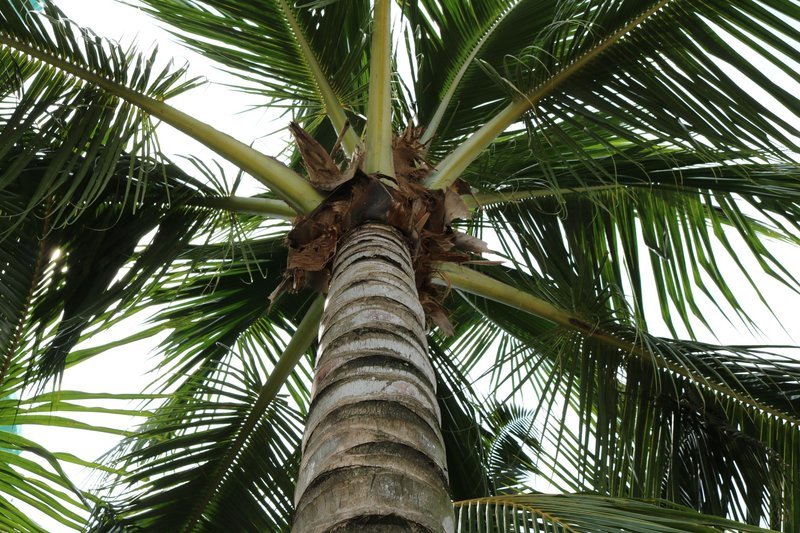
Region: Borneo. Height: over 100 meters.
A yellow meranti in Sabah, Malaysia, called Menara, was measured at 100.8 meters in 2019, the tallest known tropical tree. Meranti belongs to the dipterocarps, the dominant canopy family across Southeast Asia. Dipterocarps are famous for mast fruiting: dozens of species flower and seed together every few years, flooding the forest with more seeds than predators can eat.
5. Iroko (Milicia excelsa)
Region: West and Central Africa. Height: 40 to 50 meters.
Iroko timber is often sold as African teak because it is oily, durable, and resists rot and termites. In West Africa the living tree carries spiritual weight, and offerings are left at the base of large specimens—a reverence shared by other trees throughout the region.
Canopy trees
The canopy is the busiest layer. Most of the forest’s fruit, flowers, and animals live here, and its crowns link together with vines and branches.
6. Big-leaf mahogany (Swietenia macrophylla)
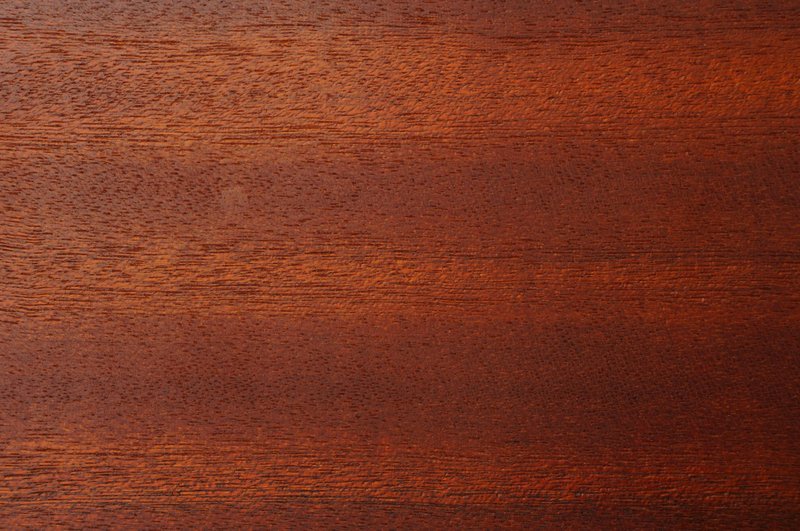
Region: Central and South America. Height: 30 to 45 meters.
Mahogany is the textbook case of a valuable tree being cut faster than it can regrow. It sprouts slowly, in sun-lit gaps, and a log worth thousands of dollars can take a century to produce. International trade is now regulated under CITES Appendix II.
7. Rubber tree (Hevea brasiliensis)
Region: Amazon basin, now grown across Southeast Asia. Height: 30 to 40 meters.
The white latex that oozes from cuts in the bark is a defense against insects. Humans turned it into tires, boots, and gloves. The Amazon gave up its monopoly in the 1870s when seeds were smuggled to British botanical gardens, and today most natural rubber comes from plantations in Thailand, Indonesia, and Vietnam.
8. Strangler fig (Ficus species)
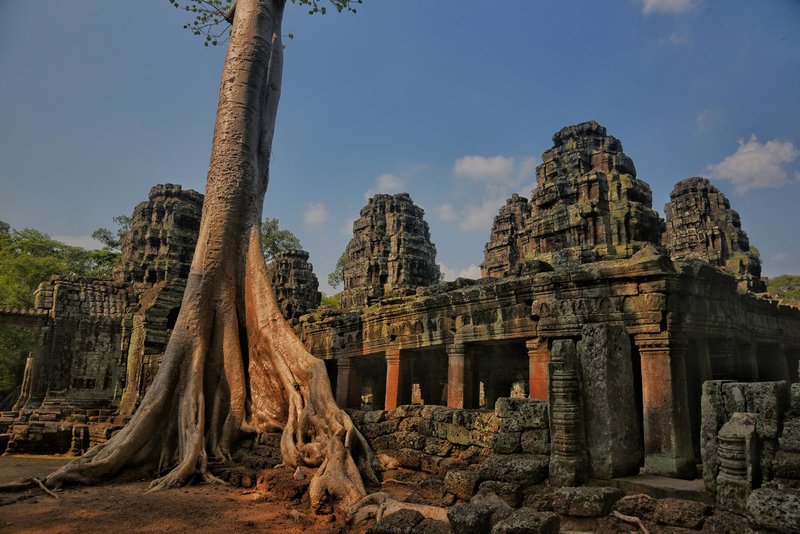
Region: Throughout the tropics. Height: up to 40 meters or more.
A strangler fig starts as a seed dropped by a bird or monkey into the branches of another tree. It sends roots down, wraps the host, and eventually blocks its light and nutrients. The host dies and rots away, leaving a hollow lattice of fig roots. Figs fruit year-round in many places, making them a keystone food for monkeys, bats, and birds when little else is ripe.
9. Durian (Durio zibethinus)
Region: Southeast Asia. Height: 25 to 40 meters.
The fruit smells strongly enough that hotels and public transport in Singapore ban it. The flowers open at night and are pollinated by bats. In Malaysia, wild durian trees growing in old forest are prized for fruit that cultivated varieties are bred from.
10. Okoumé (Aucoumea klaineana)
Region: Gabon and neighboring countries. Height: 40 to 50 meters.
Okoumé is a pink-hued wood that peels easily into thin veneers, so it became the standard material for marine plywood. Gabon’s forests are among the most intact in Africa, and the country’s timber industry has leaned heavily on this single species.
11. Australian red cedar (Toona ciliata)
Region: Northeastern Australia, Southeast Asia. Height: 30 to 60 meters.
Not a true cedar, but a relative of mahogany. It was so prized by 19th-century colonists that the “red gold” trade stripped most of the accessible trees from Queensland and New South Wales rainforests. It is one of the few rainforest trees that loses its leaves, dropping them in the cooler months.
Understory and fast-growing trees
Understory trees live on a trickle of light. Pioneer species, on the other hand, grow like weeds the moment a gap opens.
12. Cacao (Theobroma cacao)
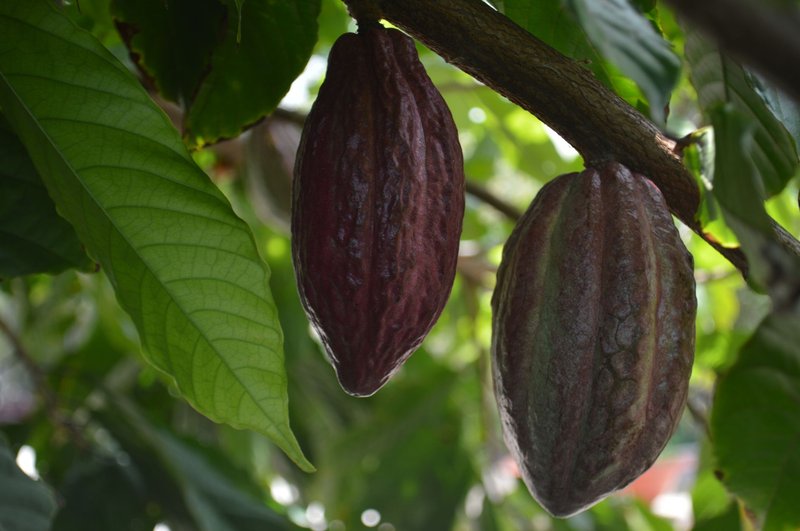
Region: Upper Amazon, now grown in West Africa and Southeast Asia. Height: 4 to 8 meters.
Chocolate comes from a small tree that grows in dim shade and bears its pods directly on the trunk, a trait called cauliflory. Tiny midges, not bees, pollinate the flowers. Ivory Coast and Ghana now produce more than half of the world’s cacao.
13. Açaí palm (Euterpe oleracea)
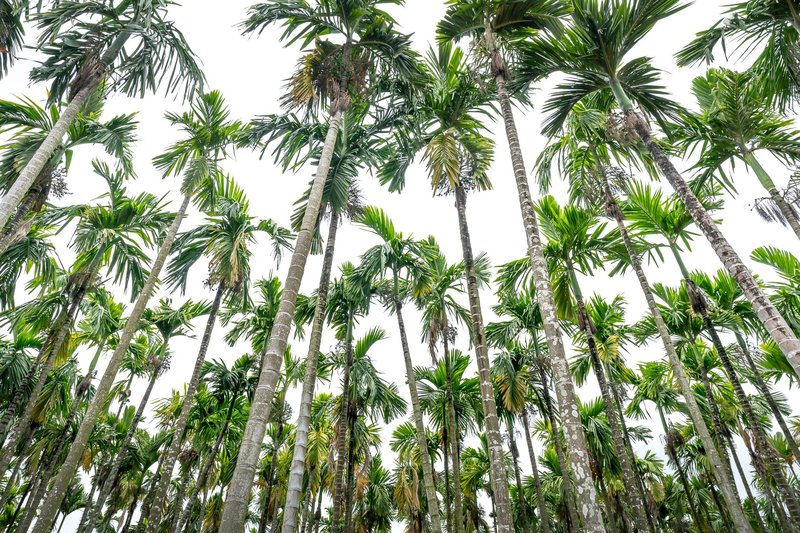
Region: Amazon estuary. Height: 15 to 25 meters.
A slender, multi-stemmed palm that grows in clumps along flooded riverbanks. The purple fruit is a staple food for riverside communities in Pará, Brazil, long before it became a smoothie-bowl ingredient. The palm heart is also harvested, though cutting it kills the stem.
14. Balsa (Ochroma pyramidale)
Region: Central and South America. Height: 20 to 30 meters.
Balsa can grow 3 to 5 meters a year, one of the fastest rates of any tree, and it is also among the lightest woods in the world, with a density around 100 to 200 kg per cubic meter. It colonizes clearings, lives about 30 years, and dies. Most commercial balsa comes from plantations in Ecuador and goes into model aircraft and wind turbine blades.
15. Cecropia (Cecropia species)
Region: Central and South America. Height: 15 to 25 meters.
Recognizable by large hand-shaped leaves with silvery undersides. The hollow trunks house Azteca ants, which patrol the tree and attack climbing vines and leaf-eating insects in exchange for shelter and food. Three-toed sloths feed on the leaves almost exclusively.
Comparison table
| Tree | Continent | Layer | Typical height | Best known for |
|---|---|---|---|---|
| Kapok | Americas, Africa | Emergent | 50-60 m | Buttresses, silky fiber |
| Brazil nut | South America | Emergent | 40-50 m | Nuts, agouti dependence |
| Angelim vermelho | South America | Emergent | 60-88 m | Tallest Amazon tree |
| Yellow meranti | Asia (Borneo) | Emergent | 80-100 m | Tallest tropical tree |
| Iroko | Africa | Emergent | 40-50 m | Durable timber |
| Big-leaf mahogany | Americas | Canopy | 30-45 m | Furniture wood |
| Rubber tree | South America, Asia | Canopy | 30-40 m | Natural latex |
| Strangler fig | Pantropical | Canopy | 30-40 m | Strangles its host |
| Durian | Asia | Canopy | 25-40 m | Smelly fruit |
| Okoumé | Africa | Canopy | 40-50 m | Plywood |
| Australian red cedar | Australia, Asia | Canopy | 30-60 m | Colonial timber |
| Cacao | South America | Understory | 4-8 m | Chocolate |
| Açaí palm | South America | Understory/canopy | 15-25 m | Purple fruit |
| Balsa | Americas | Pioneer | 20-30 m | Lightest wood |
| Cecropia | Americas | Pioneer | 15-25 m | Ant partners |
Why rainforest trees look the way they do
Most of the odd features of these trees are solutions to the same problems: thin soil, constant rain, and a struggle for light.
Buttress roots. Tropical soils are often shallow and nutrient-poor, since the nutrients sit in the leaf litter rather than deep underground. Tall trees can’t sink a deep taproot, so they spread wide flat flanges instead. Kapok, iroko, and many dipterocarps use them to stay upright.
Drip tips. Many leaves taper to a long point. Water runs off quickly, which discourages algae and fungus growing on a leaf that never dries out.
Smooth, thin bark. In a constantly humid climate, trees don’t need thick insulating bark against frost or fire. Many species have smooth surfaces that make it hard for vines and epiphytes to grip.
Stilt roots and shallow root mats. Many trees grow roots that spread just under the surface to grab nutrients from fallen leaves before the rain washes them away.
Cauliflory and animal partners. Fruits borne on the trunk, like cacao, are easier for ground animals to reach. Brazil nuts, figs, and durians all rely on specific animals to carry pollen or seeds, since there is little wind beneath a closed canopy.
Threats and conservation
The world lost about 3.7 million hectares of primary tropical forest in 2023, according to Global Forest Watch data, most of it to clearing for cattle, soy, palm oil, and logging. Tall emergent trees are often the first targeted since they carry the most valuable timber.
Species like big-leaf mahogany and many dipterocarps are now listed as threatened on the IUCN Red List. Because these trees reproduce slowly and rely on specific animals, removing a few large individuals can damage a forest’s ability to regenerate. The FAO’s Global Forest Resources Assessment tracks forest area loss by country if you want to see how your region of interest is doing.
Protecting intact forest is far more effective than replanting. A plantation of one species does not replace a forest with hundreds.
FAQ
How tall do rainforest trees get?
Emergent trees usually reach 45 to 70 meters. The tallest tropical tree on record is a yellow meranti in Borneo at about 100.8 meters. The tallest in the Amazon is an angelim vermelho of roughly 88 meters.
How many tree species are in the rainforest?
Estimates for the Amazon alone are around 16,000 tree species, while a single hectare can hold 300 or more. Southeast Asian forests are comparable in diversity.
What is the tallest tree in a tropical rainforest?
Yellow meranti (Shorea faguetiana) in Sabah, Malaysia, at about 100.8 meters, holds the record for tropical trees.
Why do rainforest trees have buttress roots?
The soil is shallow, and tall trees need a wide base to stay upright. Buttresses spread out the load and collect nutrients from the surface layer.
Which rainforest trees are most useful to people?
Rubber, cacao, Brazil nut, açaí, and durian supply food and materials worldwide, while mahogany, okoumé, iroko, and meranti are major timber species.