Quick answer: what is the national flower of Sri Lanka?
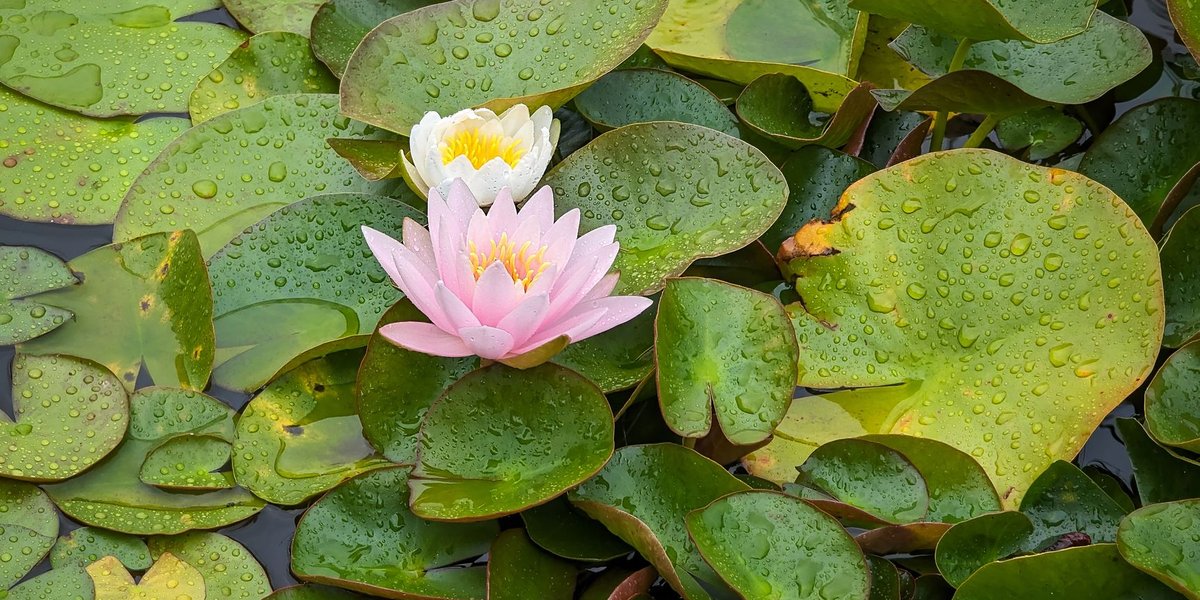
The national flower of Sri Lanka is the blue water lily, called nil manel in Sinhala, declared in 1986. Botanists usually give it as Nymphaea nouchali. The catch is that the official naming got tangled: the declaration and the plant people point to in ponds don’t line up neatly, and a second water lily, the dam manel, gets mixed in. Mongabay and ArtReview both cover the mix-up in detail. If you just want to recognize it: blue-to-lilac petals, a yellow center, floating pads on still, shallow water.
Contents
- How to use this guide
- 16 flowers of Sri Lanka
- Native or introduced?
- Where to see them
- Seasonal calendar
How to use this guide
Each entry gives the common name, the Sinhala name, the Latin name, what it looks like, and where to find it. Tamil names are included where they’re in everyday use. Sri Lankan common names shift between regions, so treat the Latin name as the anchor if you’re checking a field guide.
16 flowers of Sri Lanka
1. Blue water lily (nil manel)
Nymphaea nouchali. Sinhala: nil manel.
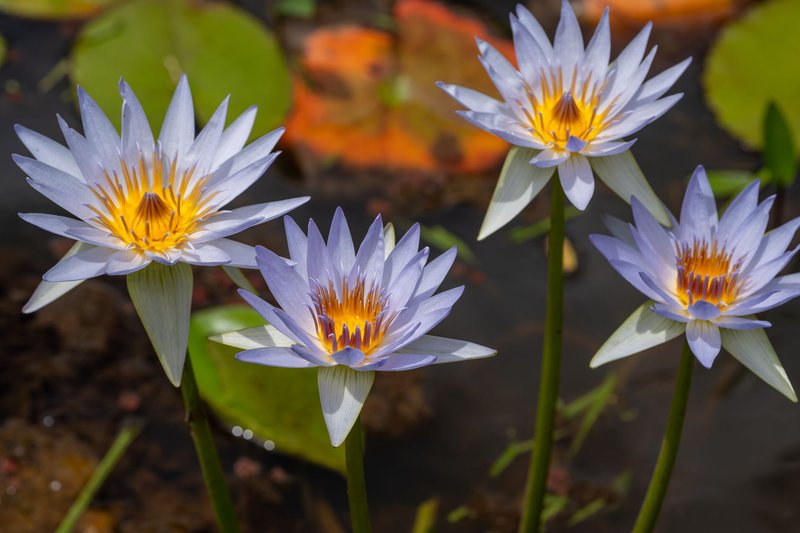
Star-shaped petals in blue fading to lilac, held just above the water on a stalk. It opens in the morning and closes by afternoon. Look in village tanks, paddy-field margins and temple ponds in the lowlands. It’s the national flower, and it turns up in temple art and Sinhala poetry more than almost any other plant.
2. Dam manel
Sinhala: dam manel.
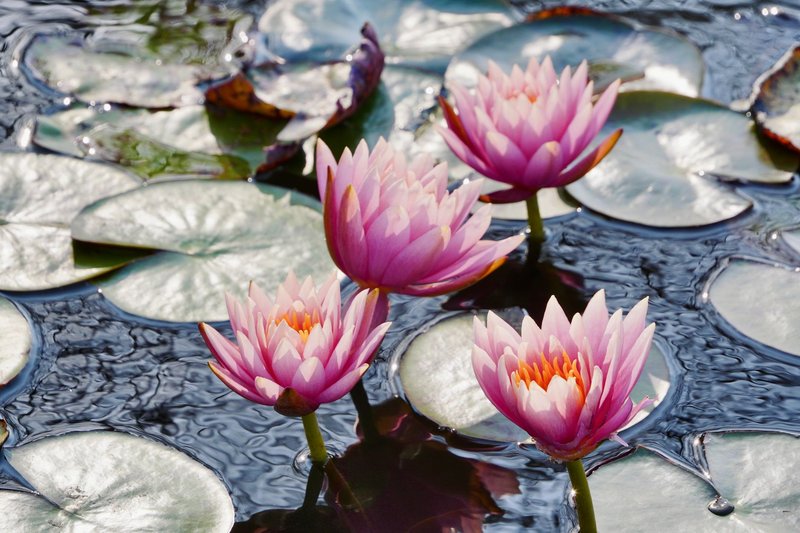
A second water lily, easy to confuse with the first, and the source of much of the national flower muddle. Check the petal color and where it’s growing rather than relying on the name, because locals and labels don’t always agree. Same habitat: still, shallow water.
3. Sacred lotus (nelum)
Nelumbo nucifera. Sinhala: nelum. Tamil: thamarai.
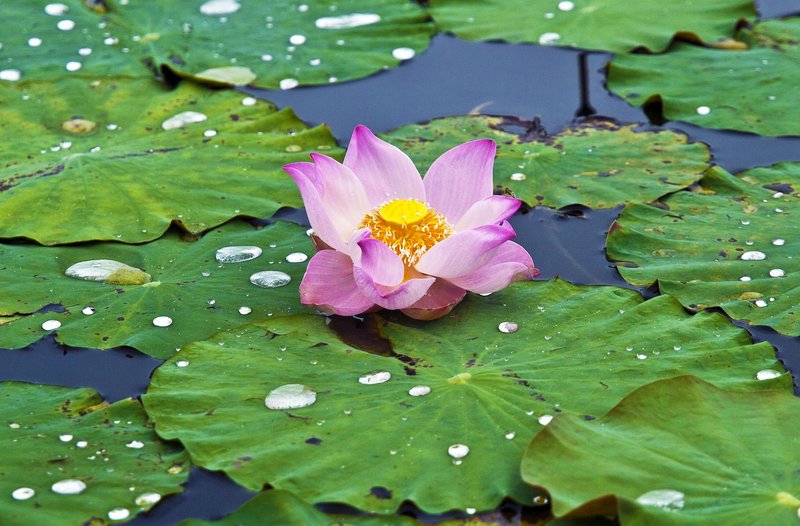
Unlike a water lily, the lotus lifts its leaves and blooms well above the surface on stiff stalks. The flowers are pink or white. Lotus buds are the standard offering at Buddhist temples, laid at the feet of Buddha statues. Lakes in Colombo and Kandy are good places to see them.
4. Frangipani (araliya)
Plumeria. Sinhala: araliya.
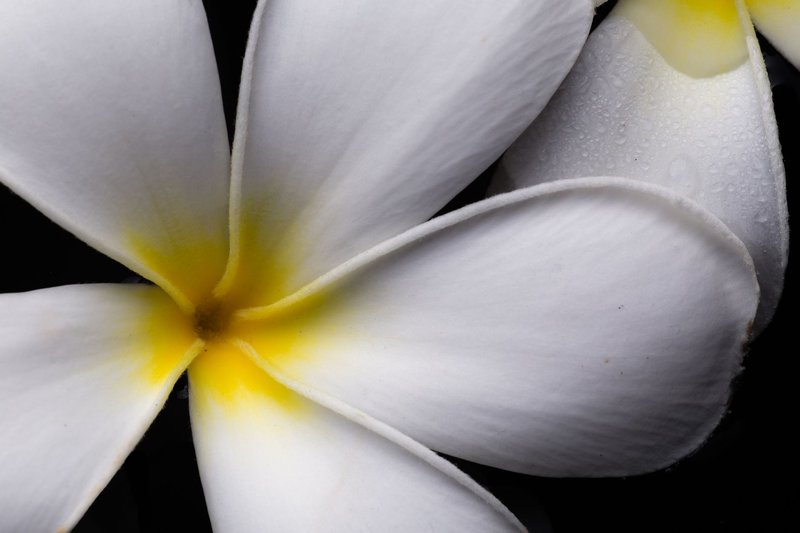
White petals with a yellow throat and a heavy, sweet smell, especially at dusk. It’s introduced from tropical America but planted so widely around temples that many Sri Lankans consider it local. Fallen flowers are swept up and used as offerings. You’ll find it in nearly every temple compound.
5. Ixora (rathmal)
Ixora coccinea. Sinhala: rathmal.
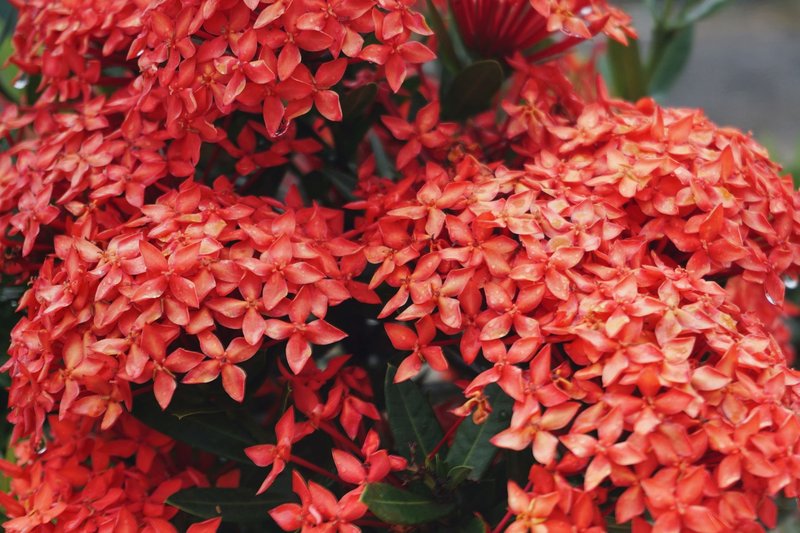
Dense clusters of small, tubular, red-orange flowers. It’s a hedge plant in gardens, along roads and in temple grounds, and it blooms most of the year. Cheap, tough, and everywhere. Cultivars come in yellow and pink as well.
6. Hibiscus (wada mal)
Hibiscus rosa-sinensis. Sinhala: wada mal. Tamil: sembaruthi.
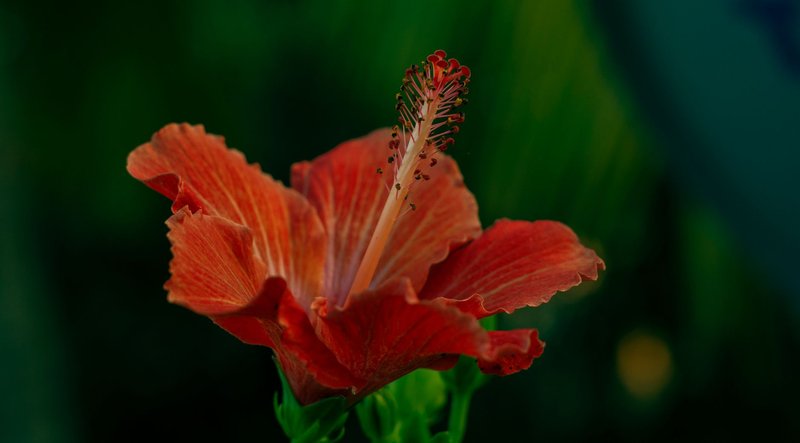
The big red trumpet flower, with a long stamen column sticking out the front. Each bloom lasts about a day. It grows as a garden shrub and hedge throughout the island. In Sinhala and Tamil households it’s used in religious offerings, and it appears in traditional remedies.
7. Arabian jasmine (pichcha)
Jasminum sambac. Sinhala: pichcha. Tamil: malligai.
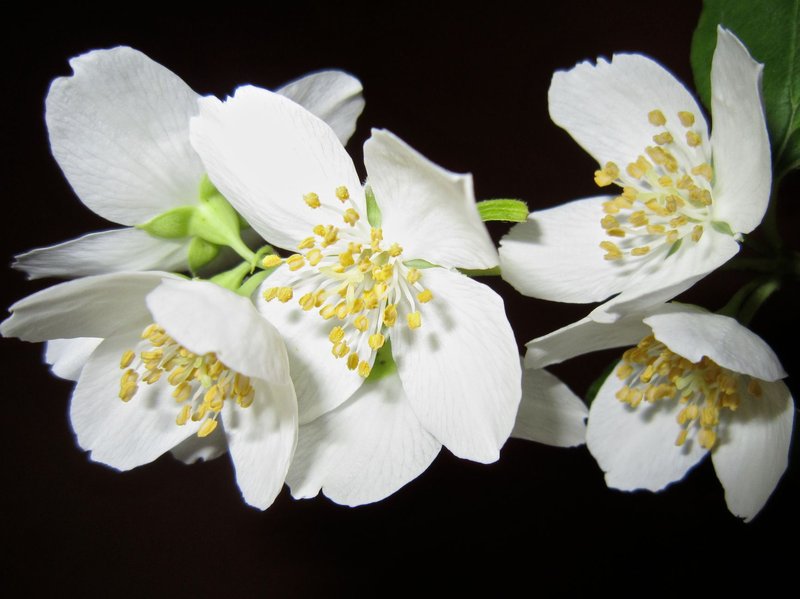
Small white flowers with a strong scent that opens at night. They’re strung into garlands and worn in the hair, and they turn up in offerings. Buy a strand from a street vendor and you’ll smell it before you see it.
8. Champak (sapu)
Magnolia champaca. Sinhala: sapu.
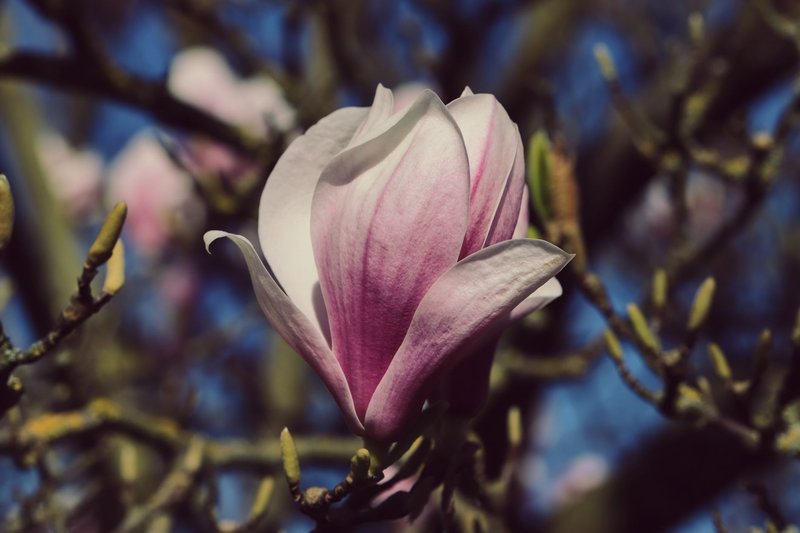
Creamy yellow to orange petals on a tall evergreen tree. The scent carries across a garden. It’s grown in temple grounds and on estates in the wet zone, and the flowers are used as offerings.
9. Ironwood flower (na mal)
Mesua ferrea. Sinhala: na.
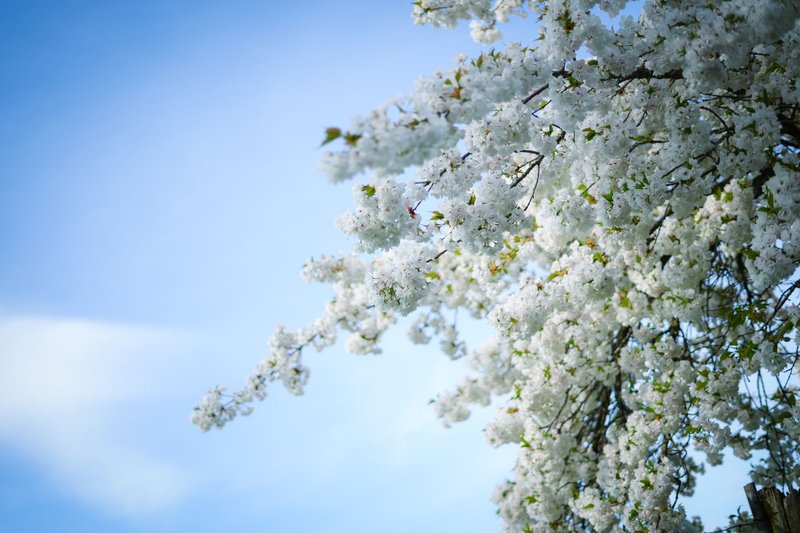
Four white petals around a fistful of yellow stamens. Na is Sri Lanka’s national tree, and the flowers are fragrant. The new leaves flush a salmon-pink. You can see it in the wet zone forests and in botanical gardens.
10. Night-blooming cereus (kadupul)
Epiphyllum oxypetalum. Sinhala: kadupul.
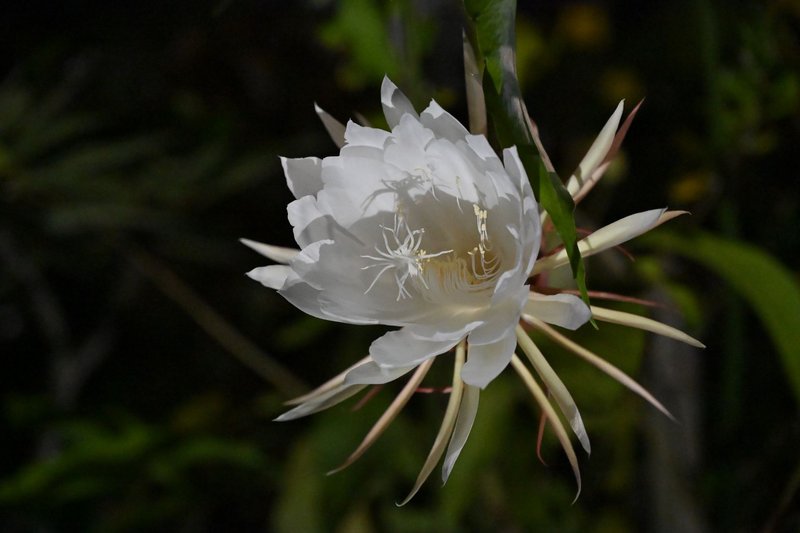
A cactus-like plant whose large white flower opens at night and is gone by morning. In Sri Lankan tradition it’s treated as very rare and precious, and people talk about it as a flower you can’t buy or pluck. It’s grown in home gardens, so ask around if you want to catch one in bloom.
11. Flame lily (niyangala)
Gloriosa superba. Sinhala: niyangala.
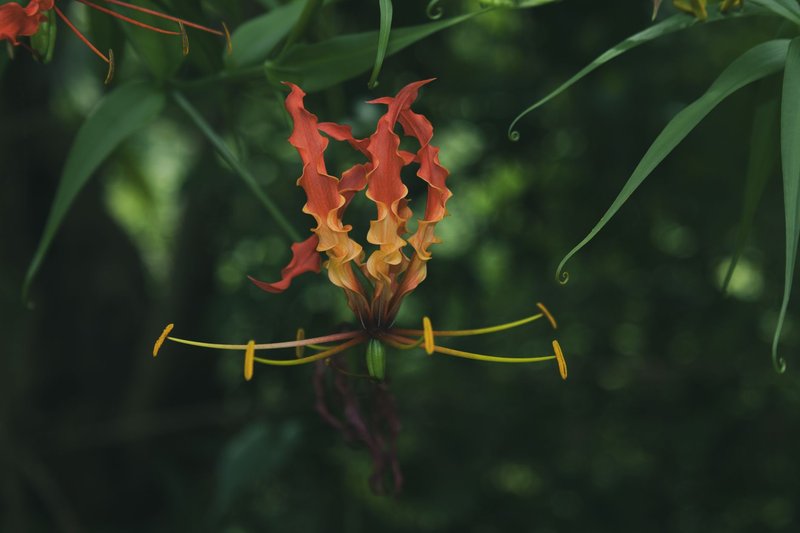
A climbing lily with wavy red and yellow petals that bend backward, like a flame. It scrambles through scrub and forest edges in the dry zone. All parts of the plant are toxic, so look but don’t touch.
12. Wild orchids
Several species, including Vanda tessellata and Dendrobium species.
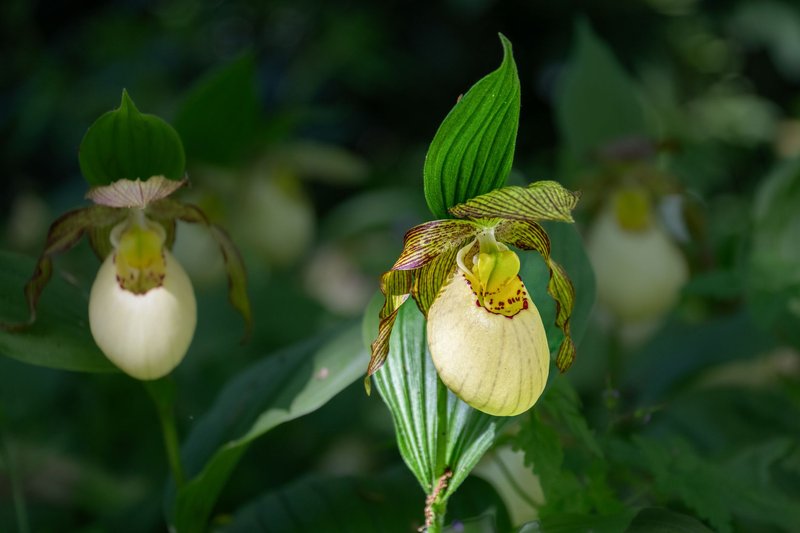
Sri Lanka has dozens of orchid species, many of them epiphytes growing on tree trunks and branches. Wet zone forests and the hill country are the best places. Wild orchids are protected, so photograph them instead of collecting. The orchid house at Peradeniya is the easy option for seeing a range in one visit.
13. Rhododendron
Rhododendron arboreum subsp. zeylanicum.
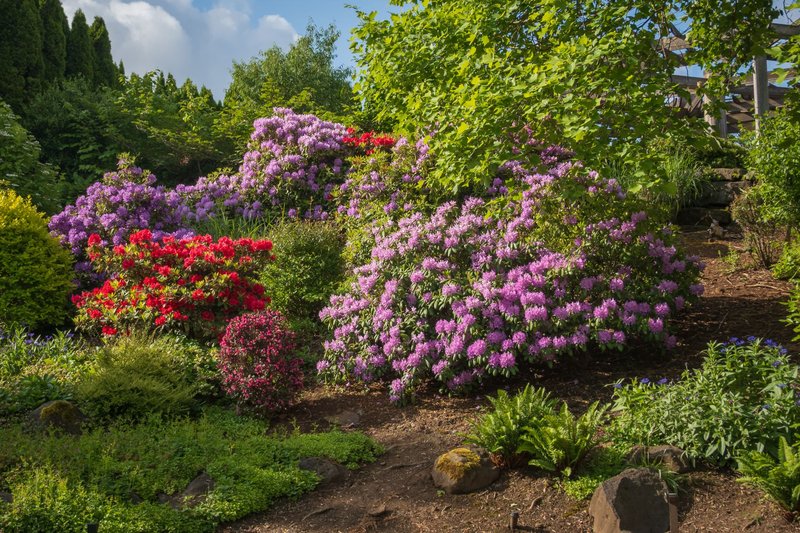
A highland tree with deep red flowers in tight round clusters. It grows in the cloud forests and is found around Nuwara Eliya and Horton Plains. It’s a reminder that Sri Lanka’s hills have a different flora from its beaches.
14. Kurinji and nelu (Strobilanthes)
Strobilanthes species. Sinhala: nelu. Tamil: kurinji.
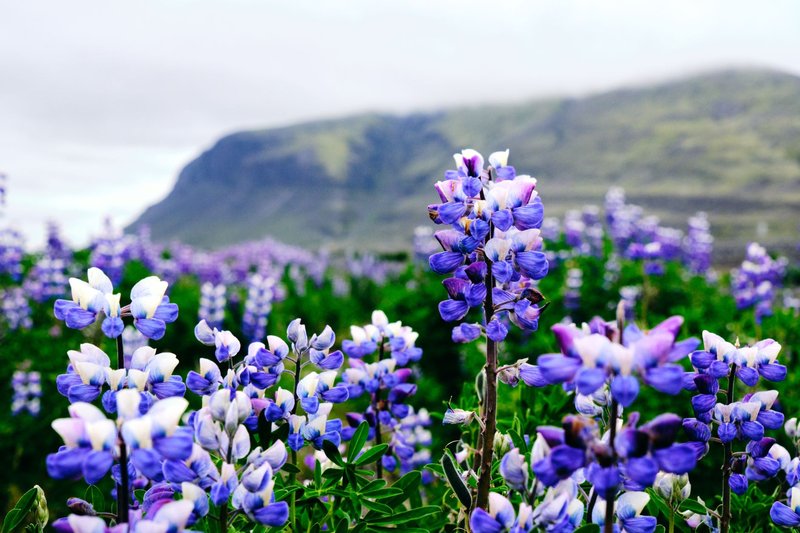
Shrubs of the hill country that bloom in purple-blue masses, with many species flowering together at long, irregular intervals. When it happens, whole slopes change color. Because the timing is unpredictable, you can’t plan a trip around it, but check local news if you’re in the hills.
15. Lantana
Lantana camara.
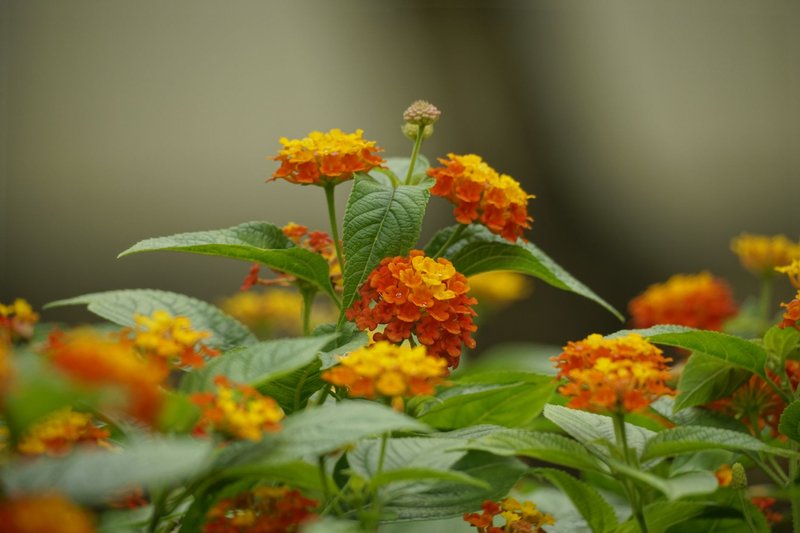
Tiny flowers in tight clusters that change from yellow to orange to red as they age. It’s an invasive plant that spreads in disturbed ground and along roadsides. You’ll see it constantly, so it’s worth knowing for what it is.
16. Bougainvillea
Bougainvillea.
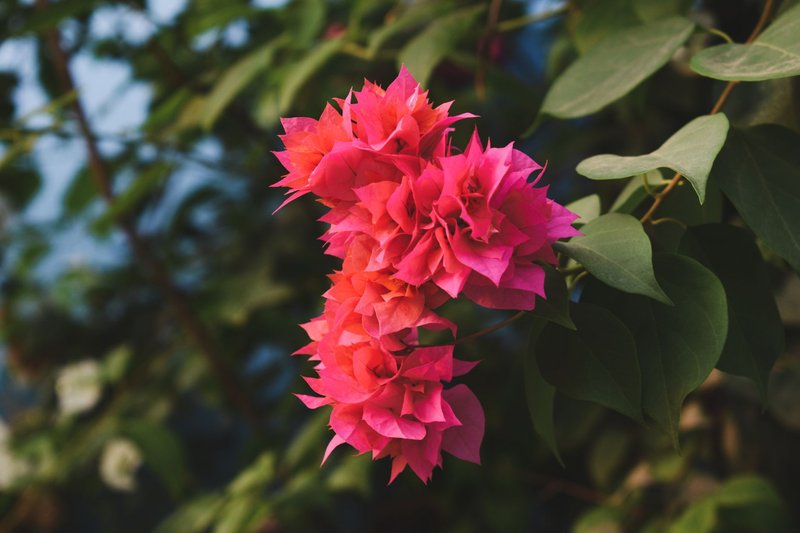
Papery magenta, pink, orange or white bracts, which are actually modified leaves, not petals. It climbs over walls, gates and temple fences, and thrives in the dry coastal belt. Colorful and nearly impossible to miss.
Native or introduced?
A lot of what looks like quintessential Sri Lankan color is imported. Frangipani, hibiscus, bougainvillea, lantana and the night-blooming cereus came from elsewhere, often through colonial-era gardens and trade. The water lilies, lotus, ironwood, flame lily, rhododendron and Strobilanthes belong in the island’s native flora, and the wild orchids include many species found only here or in the region. If you’re after a native plant, the tell is usually habitat: native species cluster in ponds, forests and the highlands, while introduced ones fill gardens and roadsides.
Where to see them
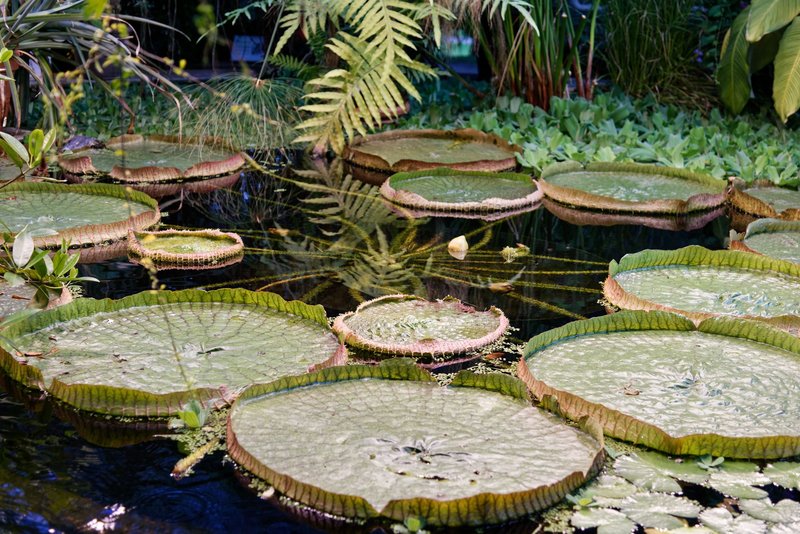
Royal Botanic Gardens, Peradeniya (near Kandy). The most complete one-stop collection: orchids, tropical trees, lotus, and flowering shrubs. Allow half a day.
Hakgala Botanical Garden (near Nuwara Eliya). A cooler, high-altitude garden known for roses, ferns and temperate plants that don’t grow in the lowlands.
Horton Plains. Montane forest and grassland, the best bet for rhododendron and highland flora. Start early, because the trails are better in the morning.
Nuwara Eliya. The hill town is the center of the cool-climate gardens, with flower displays during the April season.
Temples and village tanks. For lotus, water lilies, frangipani and jasmine, you don’t need a garden. Any temple pond or village tank will do.
Seasonal calendar
Sri Lanka has two monsoons, so timing varies by region. Rough guide:
- Year-round: ixora, hibiscus, frangipani, jasmine, bougainvillea, lantana
- Dry season, roughly December to March: bougainvillea at its best, many hill flowers
- April: Nuwara Eliya flower displays and season
- Wet season: water lilies and lotus in full show in tanks and paddies; orchids active in wet zone forests
- Irregular: Strobilanthes mass blooms, which can’t be scheduled
Check the weather and local conditions before you commit to a route, because the hill country and the coast can be having completely different weeks.