TLDR
- Ethiopia has roughly 64 known amphibian species, and about 26 of them live nowhere else on Earth.
- Two genera, Ptychadena grass frogs and Leptopelis tree frogs, make up around 30% of the fauna.
- The highlands hold most of the endemics, with the Bale Mountains as the hotspot.
- Habitat loss, climate change and chytrid fungus are the main threats.
Table of contents
- How many amphibians live in Ethiopia?
- Why the highlands produce so many endemics
- The big two: grass frogs and tree frogs
- Highland specialists worth knowing
- Caecilians: the amphibians you won’t see
- Where to look
- Threats and what helps
How many amphibians live in Ethiopia?
The answer depends on who you ask. Popular sources such as WorldAtlas list 54 species. The most recent academic review, published in the Ethiopian Journal of Biological Sciences, counts 64 known species, 26 of them endemic. Use the larger figure. New species keep turning up, and the older lists are simply out of date.
That’s a high endemism rate for a country with no rainforest belt. Roughly four in ten Ethiopian amphibians exist only inside its borders, and a few belong to genera found nowhere else. The Amphibian Species of the World database, maintained by the American Museum of Natural History, tracks the current taxonomy if you want to check a name.
Why the highlands produce so many endemics
Ethiopia’s central plateau is split by the Great Rift Valley into northwestern and southeastern halves. Frogs don’t cross a hot, dry valley floor easily. Each side became an island of cool, wet habitat, and populations that were cut off drifted into separate species.
Altitude does the rest. Many highland species live at 2,000 to 3,500 meters, in montane forest, Afroalpine moorland and the wet edges of streams. Move a few hundred meters up or down and the species list changes. That is why a small area like the Bale Mountains can hold animals found nowhere else, making these places vital repositories of unique highland fauna.
The big two: grass frogs and tree frogs
Two genera dominate the species list.
Ptychadena (grass frogs). Ethiopia has 13 species, which makes this the largest group in the country. They’re long-legged, ridge-backed frogs of wet grassland, rice fields, roadside ditches and stream edges. Several species look alike enough that identification often depends on call, not appearance. Some are lowland generalists. Others, like Ptychadena erlangeri and Ptychadena neumanni, are highland forms with narrow ranges.
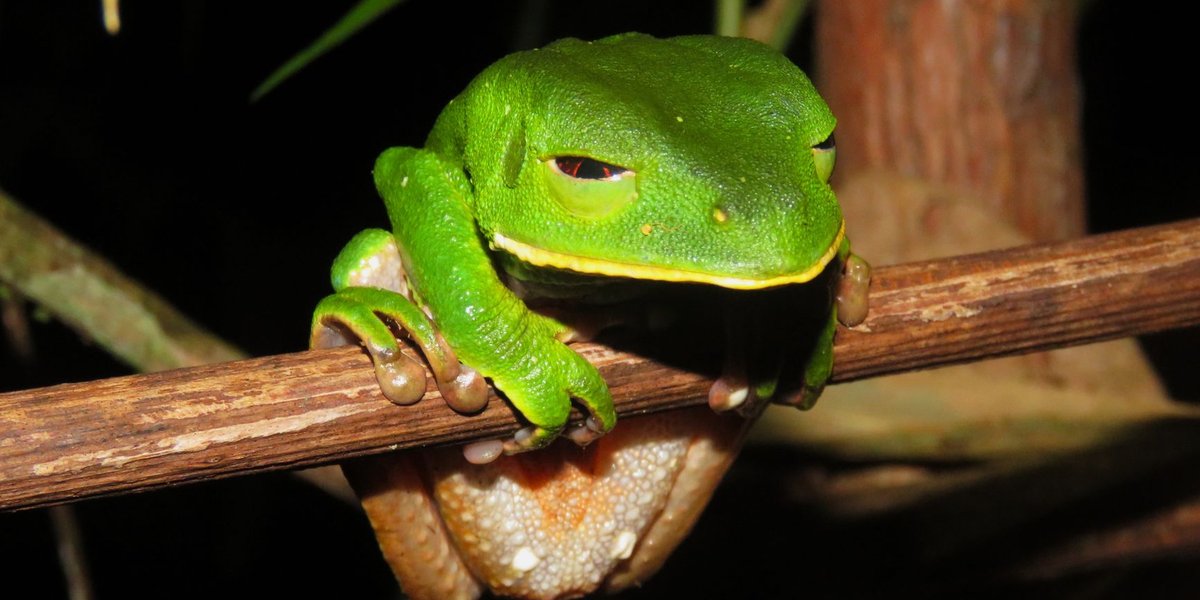
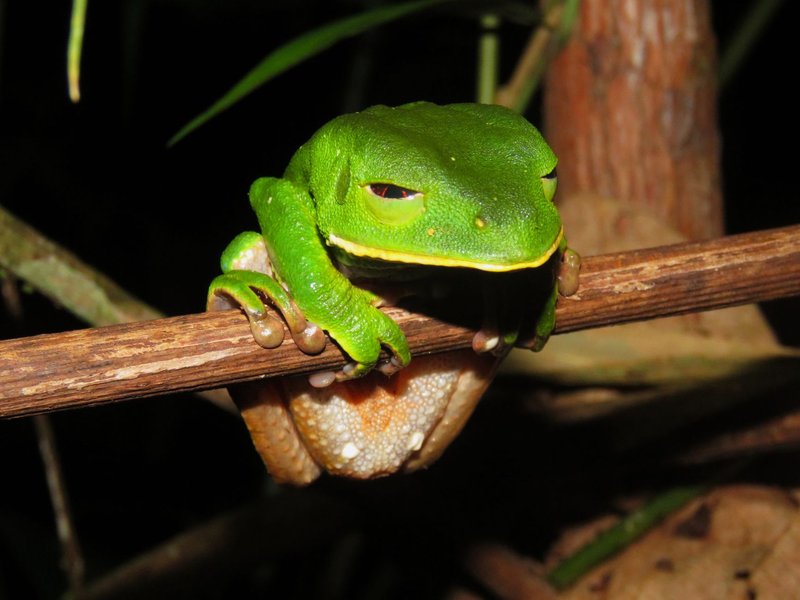
Leptopelis (tree frogs). Six species live here. They climb, but many spend their days under logs and leaf litter and call from low vegetation at night. The Badditu Forest Tree Frog, a species of the southwestern forests, is one of the best-known Ethiopian members of the group.
Together these two genera account for around 30% of Ethiopia’s amphibian fauna. If you see a frog in the country and can’t place it, the odds are decent it’s one of them.
Highland specialists worth knowing
A few species show how odd Ethiopian amphibians can be.
Bale Mountains Frog (Balebreviceps hillmani). A stocky, short-snouted burrowing frog from the Bale Mountains. It belongs to a genus that exists only in Ethiopia, and it spends most of its life underground, surfacing in wet weather.
Clarke’s Banana Frog (Afrixalus clarkei). A small, pale reed frog restricted to a few highland localities in south-central Ethiopia. The IUCN lists it as endangered, and its range is small and shrinking. It’s the species that comes up most often in Ethiopian conservation discussions.
Ethiopian Snout-Burrower. Snout-burrowers are round-bodied frogs with pointed heads built for pushing through soft soil in search of termites. They’re easy to miss because they live below the surface and emerge mostly after heavy rain.
Bale endemics generally. The Bale Mountains and the forests around them hold several frogs and toads with tiny ranges. Many of them have been described only in recent decades, and field surveys there still turn up undescribed forms.
You can check the status of any of these on the IUCN Red List. Several endemic species are listed as vulnerable, endangered or critically endangered (many appearing in Ethiopia’s endangered species), and a few are marked data deficient because nobody has surveyed them enough to say.
Caecilians: the amphibians you won’t see
Caecilians are legless, burrowing amphibians that look like large earthworms. Ethiopia’s best-known one is the Aleku Caecilian, from the forests of the southwest. It lives in leaf litter and soil, feeds on invertebrates and is almost never seen on the surface. Ethiopia also has an endemic caecilian genus, Sylvacaecilia, which makes the country significant for a group most people never think about.
They’re poorly studied for the obvious reason: finding one means digging.
Where to look
Ethiopia’s amphibians cluster in four regions.
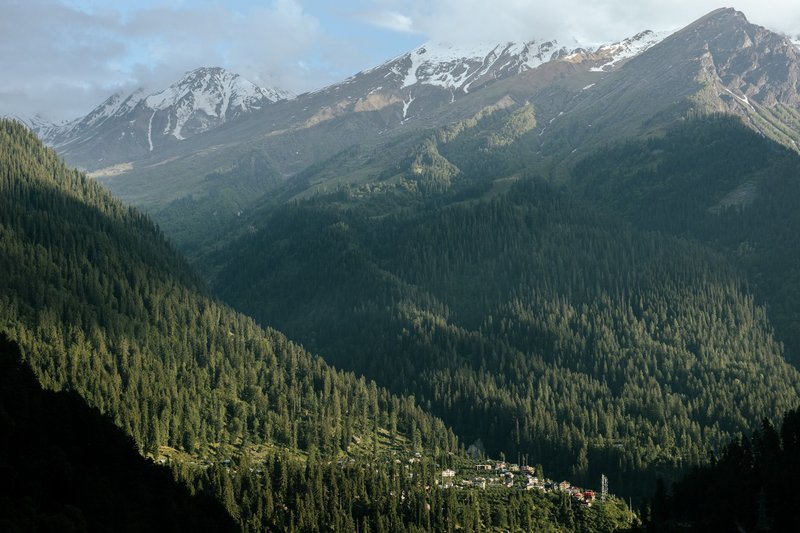
- Bale Mountains: Afroalpine moorland and the Harenna Forest on the southern slope. The richest area for endemics.
- Southwestern forests: Wet montane forest in places like Bonga and Jimma holds tree frogs and caecilians.
- Kaffa region: Cloud forest with high rainfall and many range-restricted species.
- Rift Valley: Lakes, wetlands and rivers support widespread species of Ptychadena and other lowland frogs.
For visitors, go in the wet season, roughly June to September in most of the country, and go after dark. Frogs call at night, and a headlamp plus patience finds far more than a daytime walk.
Threats and what helps
Three problems stack on top of each other.
Habitat loss. Ethiopia’s forests have been cleared for farmland and fuelwood for decades. A frog that lives in a single patch of highland forest can’t relocate when the patch is cut.
Climate change. Highland specialists have nowhere higher to go. As temperatures rise, suitable habitat on mountain slopes shrinks toward the summit and then disappears.
Chytrid fungus. Batrachochytrium dendrobatidis has been detected in Ethiopian amphibians, including in the Bale Mountains. The disease has driven amphibian declines on several continents, and IUCN assessments rank it among the leading causes of amphibian extinction worldwide.
What helps is unglamorous. Protecting remaining montane forest matters most. Supporting conservation groups that work in the Bale and Kaffa regions helps. So does following hygiene rules if you hike, which means cleaning boots between sites so you don’t carry fungal spores from one stream to another.
Ethiopia’s amphibians are among the least-documented in Africa and among the most distinctive. The numbers will keep changing as surveys continue, and every revision so far has pushed them up.