Most lists of rare white animals throw polar bears, albino snakes and snow-dusted foxes into one pile. They aren’t the same thing. A polar bear is white because of how its hair scatters light. A spirit bear is white because of a single gene variant. An albino alligator is white because its body can’t make pigment at all.
This list sticks to animals where whiteness is the exception, not the rule, and labels each one correctly: albino, leucistic, or something else. Every entry gets a concrete fact, such as where it lives, how rare it is, or what happens to it in the wild.
Contents
- Albino vs. leucistic: how animals turn white
- White mammals on land
- White animals of the sea
- White reptiles and amphibians
- White birds
- Why rare white animals struggle to survive
- FAQ
Albino vs. leucistic: how animals turn white
Two conditions cause most white animals, and the quickest way to tell them apart is the eyes.
Albinism is a genetic condition in which the body can’t produce melanin, the pigment behind skin, fur, feather and eye colour. Albino animals are white or pale pink, with pink or red eyes, because blood vessels show through the unpigmented iris. Poor eyesight and sun sensitivity usually come with it.
Leucism is a partial loss of pigment. Pigment cells never fully reach the skin, fur or feathers, so the animal looks white, pale or patchy. The eyes keep their normal colour, which is the giveaway. Leucistic animals can also show patches of normal colour.
A third group is white by design or by a different gene. Polar bears and arctic foxes in winter are white as a species trait. White tigers and spirit bears carry colour-gene variants that dilute pigment without being albino.
| Type | Pigment | Eye colour | Example |
|---|---|---|---|
| Albino | None | Pink or red | Pinky the albino dolphin |
| Leucistic | Reduced, often patchy | Normal (dark or blue) | White giraffe |
| Colour-gene variant | Diluted by a specific gene | Normal, often blue | White tiger, spirit bear |
| Naturally white | Normal pigment, white coat by species | Dark | Polar bear |
The often-cited odds of albinism in wild animals are around 1 in 10,000, though the figure varies by species and nobody has counted precisely. For a closer look at the pigment science, National Geographic’s report on white giraffes is a good starting point.
White mammals on land
1. Spirit bear (Kermode bear)
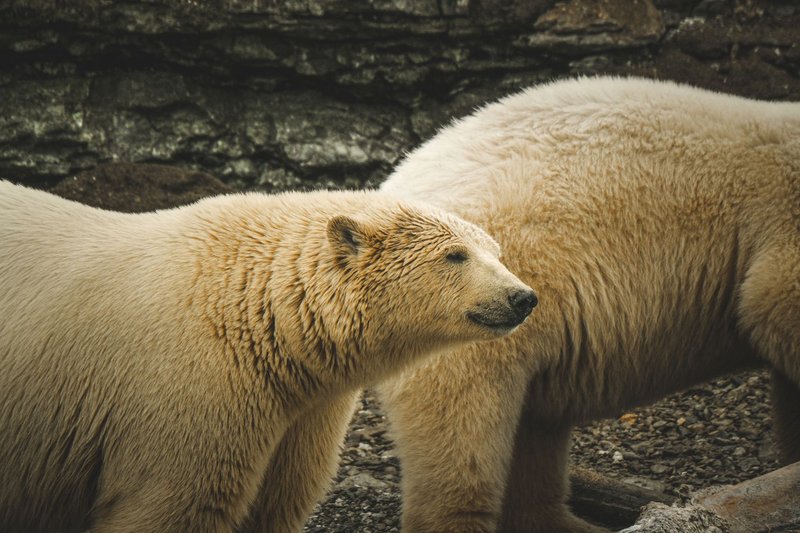
The spirit bear is a black bear with a cream-white coat, found in the Great Bear Rainforest of British Columbia. It isn’t albino. A recessive variant of the MC1R gene turns the fur white while the eyes and skin stay dark. Two black bear parents who both carry the variant can produce a white cub, and on Gribbell Island roughly a third of the bears are white, the highest concentration anywhere. The Gitga’at and Kitasoo/Xai’xais First Nations have long held the bears as sacred.
2. White lion
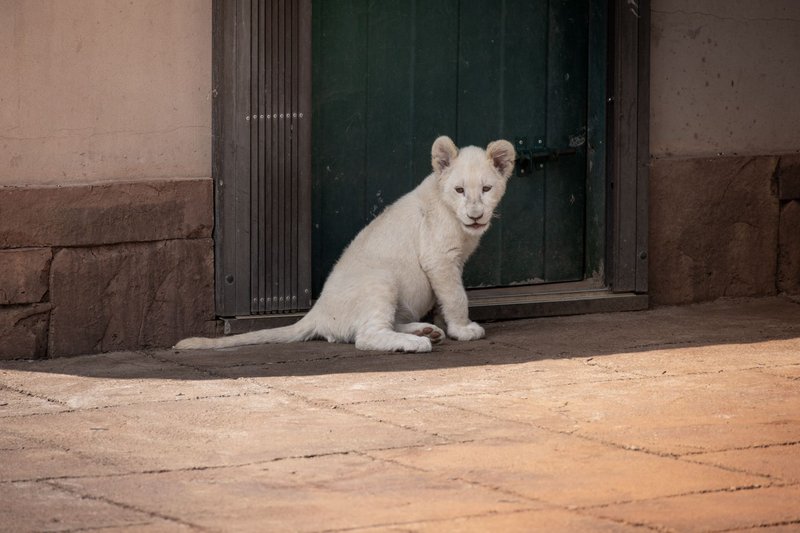
White lions come from the Timbavati region of South Africa, where they are born to tawny parents that carry a rare recessive gene. They are leucistic, with pale coats and normal gold or amber eyes. Local Tsonga and Sepedi traditions treat them as sacred, and the Timbavati name means “the place where something sacred came to us.” Their pale coats make hunting harder in tawny grassland, so wild survival rates are low, and today most white lions live in reserves and breeding programmes.
3. White tiger
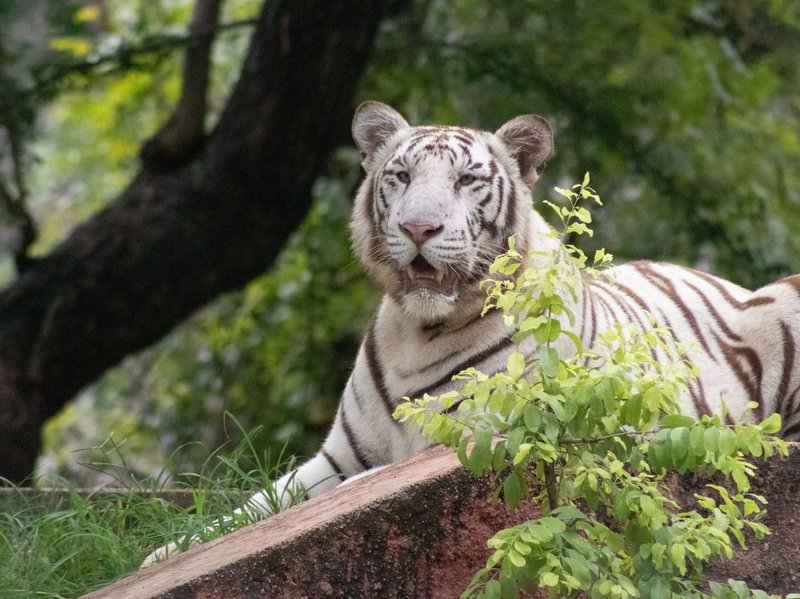
White tigers are not albino. They have blue eyes and dark stripes, and the white coat comes from a recessive mutation in the SLC45A2 gene. Wild white tigers were last recorded in India in the 1950s. Nearly every white tiger alive today is in captivity, and many descend from a single male, Mohan, captured in 1951. Inbreeding to keep the white coat has caused health problems, and conservation groups don’t treat white tigers as helpful to wild tiger populations.
4. White bison
White bison are born at roughly 1 in 10 million, an often-quoted figure that makes them one of the rarest mammals on this list. Many are leucistic or carry cattle genes from past hybridisation, and true albino calves are even rarer. For the Lakota and several other Plains nations, a white buffalo calf is a sign linked to White Buffalo Calf Woman. A calf named Miracle, born on a Wisconsin farm in 1994, drew thousands of visitors and became a focal point for the story.
5. White giraffe
Leucistic giraffes have been documented in Tanzania’s Tarangire National Park and in Kenya. A mother and calf were photographed in Garissa, Kenya, in 2017, and poachers killed the mother and calf in 2020, leaving a lone male. Their eyes and skin stay dark, which is what separates them from albino animals. Their pale coats have no spots to break up their outline, and young calves stand out to predators.
6. White squirrels of Olney, Illinois
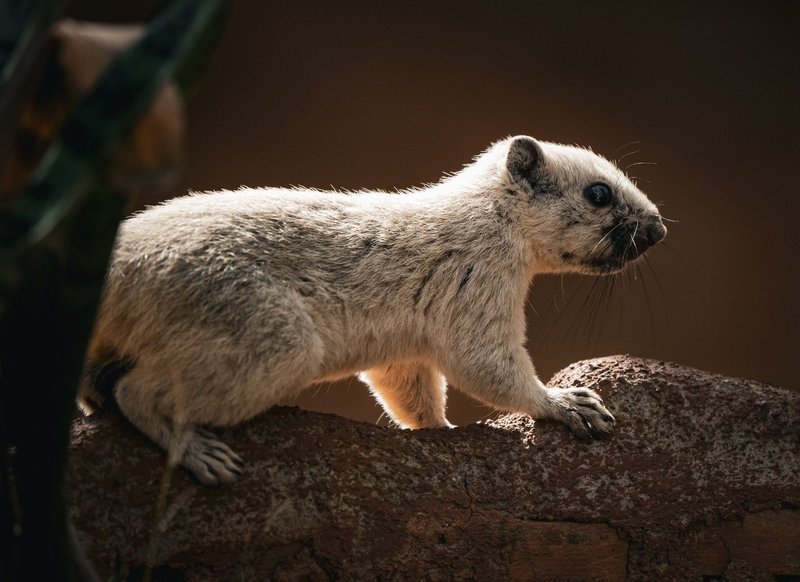
Olney, Illinois, has a colony of albino eastern grey squirrels that locals have protected since the late 1800s. Town ordinances give them the right of way on roads, and the squirrels appear on city police badges. Roughly one in a few thousand squirrels in Olney is white, which is far higher than the wild norm. The town’s protection of the animals keeps the white gene in the population.
7. Seneca white deer
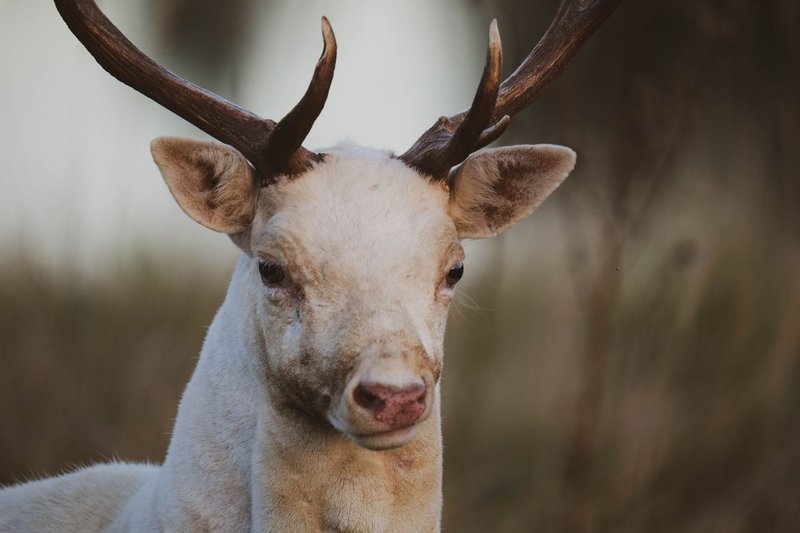
The Seneca White Deer herd in upstate New York lives inside a former army depot, a 24-mile fenced site that kept the animals isolated and let the white-coat gene spread. White-tailed deer here carry a recessive gene that produces white coats with dark eyes. The herd sits at hundreds of animals, a rare case of a white-coat population growing large enough to be a local landmark.
8. White Bennett’s wallabies
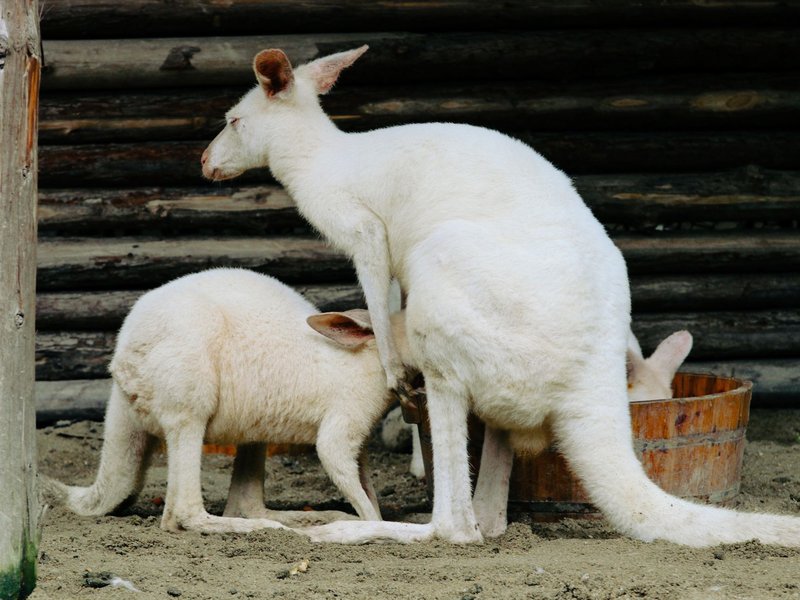
Bruny Island, off Tasmania, is home to a population of white Bennett’s wallabies. Isolation on the island concentrated the pale-coat gene, so white animals are common there while they are almost unknown on the mainland. It’s a clear example of how a small, closed population can turn a rarity into a local feature.
White animals of the sea
9. Iceberg the white orca
A white orca nicknamed Iceberg was first filmed in the waters off Russia’s Far East in the early 2010s. He is leucistic, with pale skin and normal-coloured eyes. Researchers have spotted him travelling with a regular orca pod, so his colouring hasn’t separated him from his family. Orcas rely on sound and social bonds for hunting, which may soften the usual disadvantages of being white.
10. Pinky the albino dolphin
Pinky is an albino bottlenose dolphin first reported in Lake Calcasieu, Louisiana, in 2007. She is pink because of the blood vessels beneath her unpigmented skin, and her red eyes are classic albinism. Albino dolphins are very rare, and Pinky survived for years, drawing researchers and boat tours.
11. Migaloo the white humpback
Migaloo is a humpback whale first seen off Australia’s east coast in 1991. His name comes from an Aboriginal word that means “white fella.” He is white from head to tail and is widely described as albino, although some researchers have suggested a milder pigment condition. Humpbacks migrate yearly along the same coastline, and sightings of him became a news event each season.
White reptiles and amphibians
12. Albino alligator
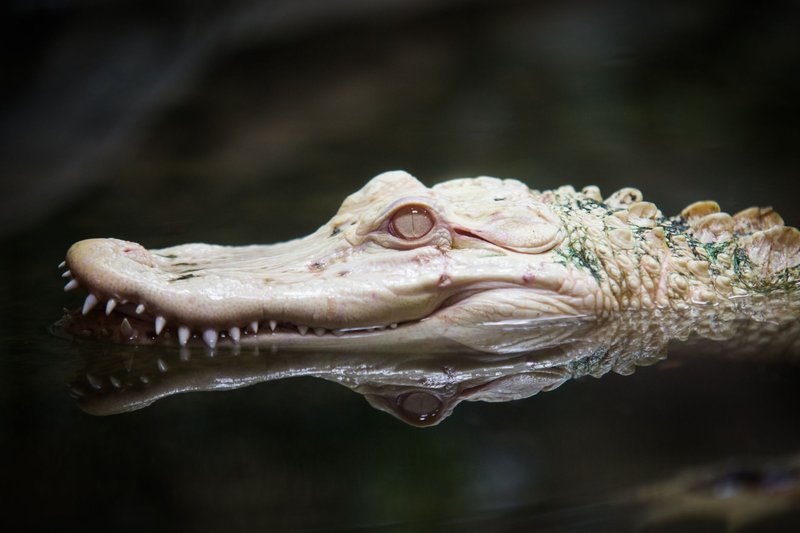
Albino alligators are white with pink eyes. A pale gator’s skin is also sun-sensitive, and juveniles stand out to predators, so survival in the wild is slim. Nearly all living albino alligators are in zoos and aquariums. The related leucistic form, which shows blue eyes, is also bred in captivity and is easier to keep alive.
13. Albino Burmese python
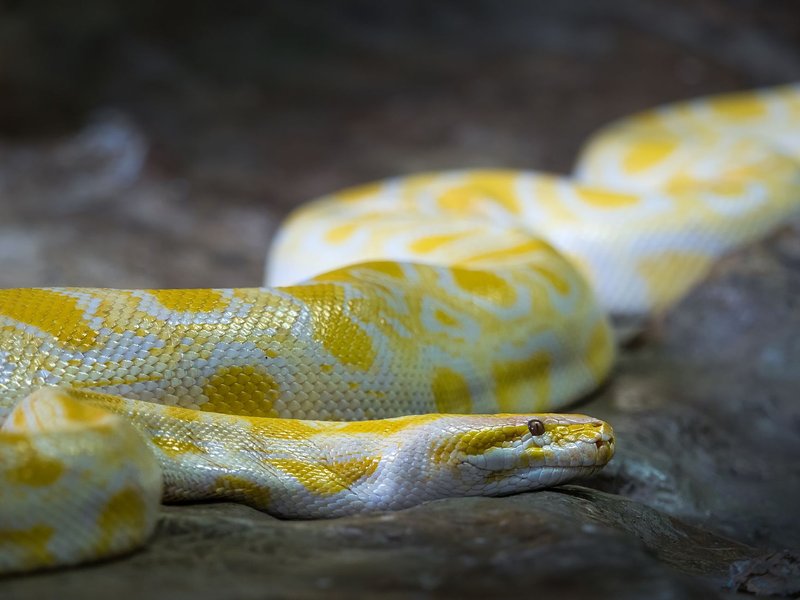
The yellow-and-white albino Burmese python is one of the most recognisable snakes in the exotic pet trade. It’s a captive-bred colour morph, and albino Burmese pythons rarely survive in the wild. Their poor eyesight and bright colouring make hunting and hiding difficult. Pythons have become an invasive problem in the Florida Everglades, but the pet-trade albino form isn’t what persists there.
14. Albino axolotl
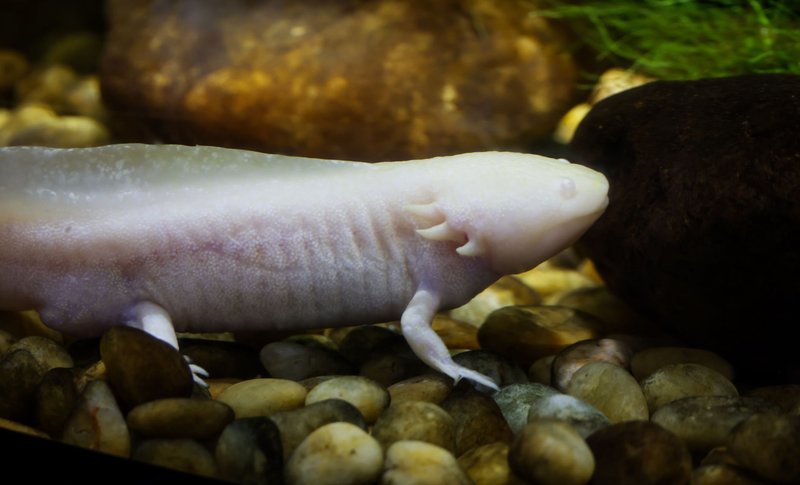
Albino axolotls are common in aquariums, and almost absent in the wild. Wild axolotls survive only in the canals of Xochimilco near Mexico City, where the IUCN Red List classes the species as critically endangered. Albino axolotls have pale gold or white skin with pink gills and eyes, while the leucistic version has dark eyes and pink skin. Most white axolotls you see in photos come from captive breeding.
White birds
15. White peafowl
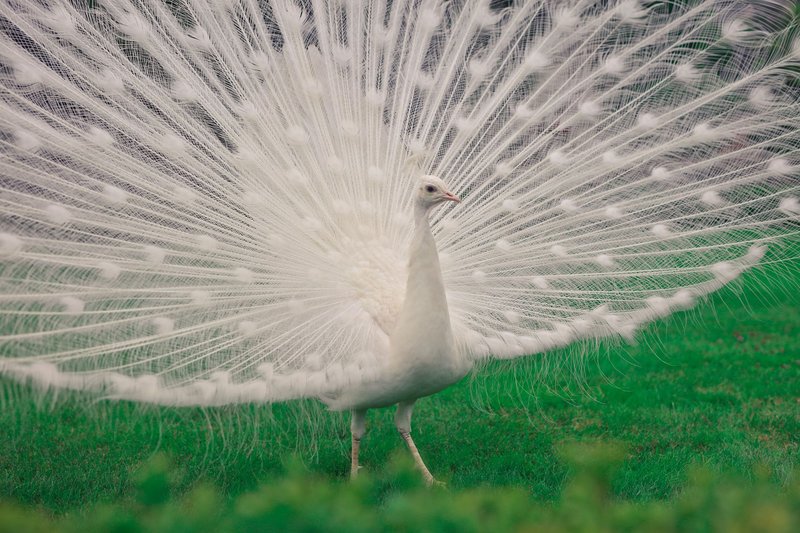
The white peacock is not albino. It’s a leucistic Indian peafowl, and its eyes stay normal, which proves the point. Breeders have selected the trait for centuries, so most white peafowl are captive-bred and kept in parks and estates. Males still fan the same tail, but without the iridescent blue and green, the display is a plain white train.
Why rare white animals struggle to survive
Whiteness is a hard way to live in most habitats. Camouflage breaks down, so predators spot white prey from far away, and prey spot white predators early. Albino animals face extra risks: poor vision, sunburn, and trouble finding mates that recognise them.
Captivity changes the maths. A white alligator in a zoo and a white tiger in a breeding programme live long lives, but the rarity is protected by humans, not by nature. The pattern also repeats in isolated populations like Olney’s squirrels, Bruny Island’s wallabies and the Seneca deer, where predators are few and the white gene spreads.
Culture adds another layer. Spirit bears, white lions and white bison hold sacred status in Indigenous traditions, which has helped protect some of them and made others targets for poachers.
FAQ
What is the rarest white animal?
The white bison, at about 1 in 10 million births, is among the rarest. True albino mammals in the wild appear in about 1 in 10,000 births, depending on the species.
Are albino animals and white animals the same thing?
No. Albino animals lack melanin entirely and have pink or red eyes. White animals can also be leucistic, carry a colour-dilution gene, or be white by species.
Are white tigers albino?
No. White tigers have blue eyes and dark stripes, which albino tigers would not. Their coat comes from a recessive mutation in the SLC45A2 gene.
Is a polar bear albino?
No. Polar bears have black skin, dark eyes and transparent hollow hairs that scatter light and look white.
Do white animals live shorter lives?
In the wild, usually yes, because they are easier for predators to spot and often have weaker eyesight. In captivity, many live as long as their coloured relatives.