Syria is not the all-desert country most people picture. The trees of Syria grow in four fairly distinct belts: pine, fir and cedar forest on the western mountains, oak woodland below it, a thin scatter of pistachio and tamarisk across the dry steppe, and a lot of planted olive, fig, almond and pomegranate everywhere else. Forest covers only a small slice of the land, but what’s there is old, varied, and under pressure.
This guide goes belt by belt, gives each tree its Latin name, and says where it grows and what people use it for. Then it covers what the last decade did to these trees, with the conflicting numbers explained rather than ignored.
Contents
- TLDR
- Coastal mountains: pine, fir and cedar
- Oak woodlands
- Steppe and desert edges
- Cultivated trees
- Trees of Syria at a glance
- What happened to the forests
- Replanting and protected areas
- Trees that carry cultural weight
TLDR
- The densest natural forest is in the coastal mountains of Latakia, Tartus and northern Idlib: Aleppo pine, Turkish pine, Cilician fir and a few cedar of Lebanon stands.
- Oaks (Palestine oak, kermes oak and relatives) fill the middle elevations and the south.
- Wild Atlantic pistachio and tamarisk hold on in the steppe and along rivers.
- Olive is the national tree in practice, with roughly 100 million planted by commonly cited counts.
- Forest cover is usually quoted at somewhere between 1% and 2.4% of the country. Both figures can be right, because they count different things.
- Logging for fuel, large wildfires and drought have all hit these forests since 2011.
Coastal mountains: pine, fir and cedar
The Coastal Mountain Range runs parallel to the Mediterranean and catches most of the country’s rainfall. This is where Syria’s real forest is.
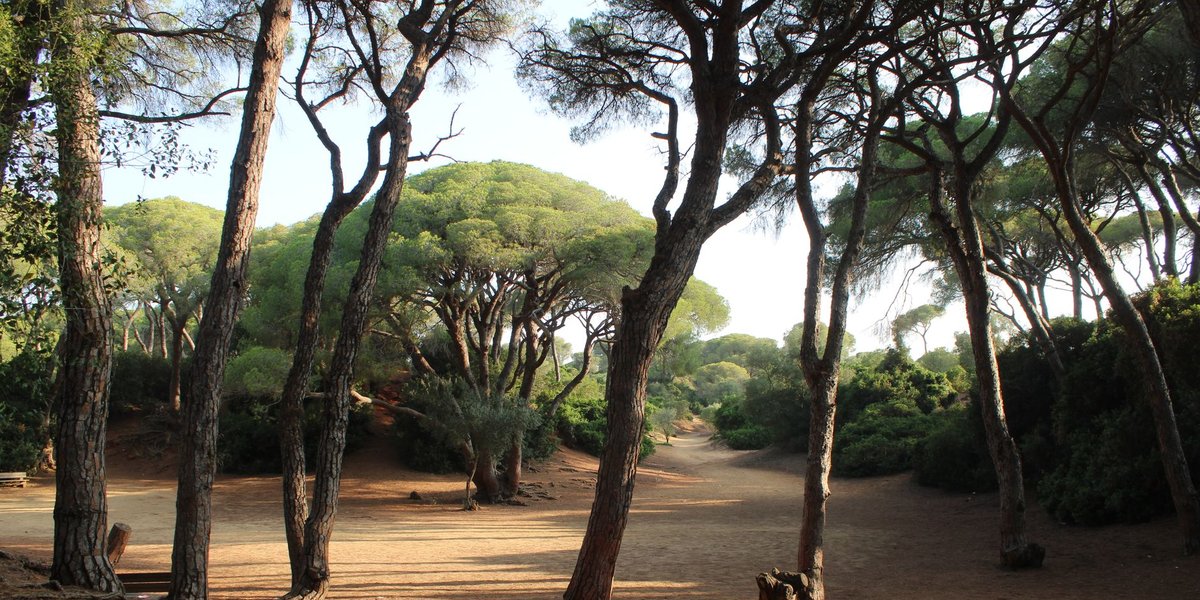
Aleppo pine (Pinus halepensis). The species is named after the city of Aleppo, though it grows around the whole Mediterranean basin. It handles poor, rocky, dry soil better than almost any other conifer in the region, which is why it shows up on degraded slopes and gets used for replanting. Timber, resin and charcoal are its traditional uses.
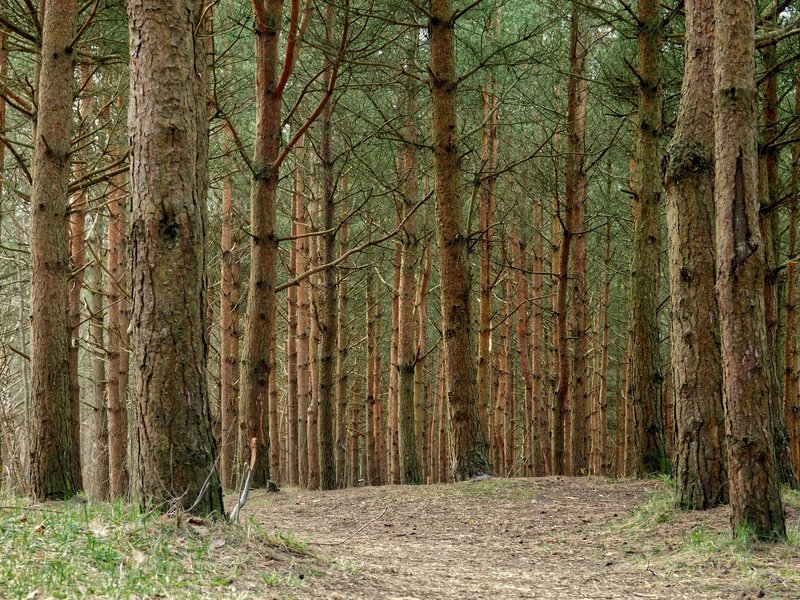
Turkish pine (Pinus brutia). The dominant pine of the coastal mountains in the north. It looks like Aleppo pine at a glance; the needles are longer and darker, and the cones sit stiffly on the branch instead of bending back toward the trunk. It’s the main timber conifer in Syria.
Cilician fir (Abies cilicica). A cool-slope tree found at higher elevations in the north, around the Kessab and Jabal al-Akrad area. Fir wants more moisture than pine, so it clings to north-facing, misty ground and runs out where the climate dries.
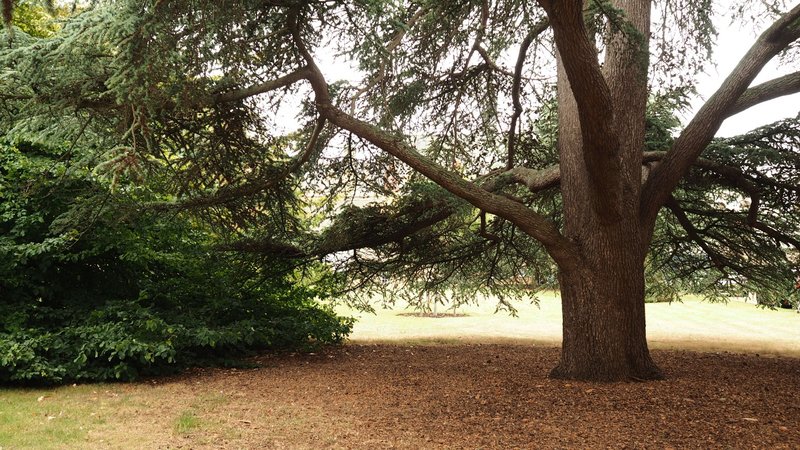
Cedar of Lebanon (Cedrus libani). Syria has far fewer cedars than Lebanon, and they sit in small stands in the northern coastal mountains, at high elevation near the Turkish border. The species is listed as Endangered on the IUCN Red List, and the Syrian stands are remnants. Ancient builders prized the wood for its rot resistance. Centuries of cutting for temples, ships and roof beams did the rest.
Other trees mix into these forests: cypress (Cupressus sempervirens), laurel (Laurus nobilis), carob (Ceratonia siliqua) and strawberry tree (Arbutus andrachne), the one with the smooth, peeling, orange-red bark.
Oak woodlands
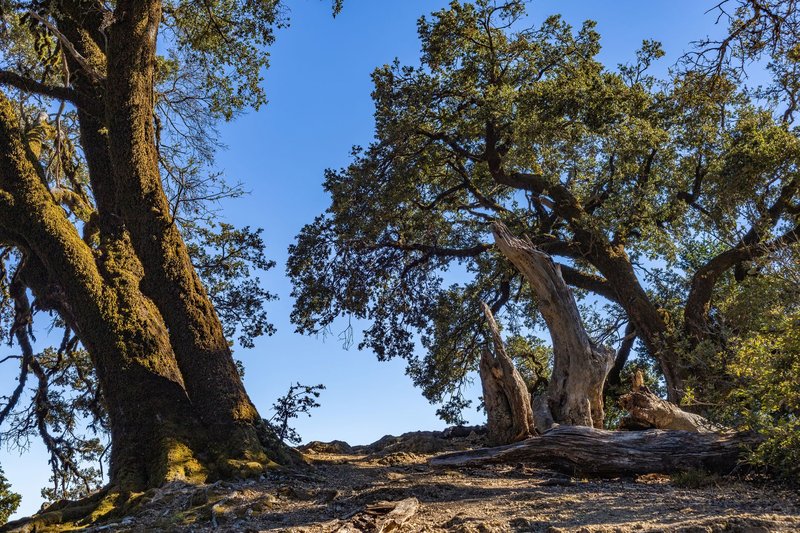
Below the conifers, and on drier slopes inland, oaks take over. Most are evergreen, short, and multi-stemmed, the shape that comes from centuries of being cut back and regrowing.
Kermes oak (Quercus coccifera). A shrubby evergreen oak with small, spiny, holly-like leaves. Its name comes from the kermes insect that lives on it, once harvested for red dye. In practice it forms dense scrub rather than tall forest.
Palestine oak (Quercus calliprinos). A close relative, often treated as the southern counterpart of the kermes oak. It grows larger, up to a proper tree, and anchors the oak woodland in the south and west. The acorns feed wildlife and, historically, livestock; the wood is a prized charcoal.
Other oaks. Deciduous oaks such as the gall oak (Quercus infectoria), whose galls were used for ink and tanning, and Lebanon oak (Quercus libani) appear in the northern and higher zones.
Oak woodland regrows from stumps, which is both good and bad. It recovers faster than pine after cutting or fire, but the stands that result are low coppice, not the tall mature forest that once stood there.
Steppe and desert edges
East of the mountains the rainfall drops sharply, and so does the tree count. What survives is tough and widely spaced.
Atlantic pistachio (Pistacia atlantica). The wild pistachio of the steppe. It’s a broad-crowned, deep-rooted tree that can live for centuries on a few hundred millimetres of rain, and in a treeless landscape it works as a landmark. It’s a relative of the cultivated pistachio, though the nuts are small and mostly harvested for local use, along with its resin.
Tamarisk (Tamarix spp.). Feathery, salt-tolerant, and found around springs, wadis, and saline flats. It tolerates water that would kill most other trees.
Euphrates poplar (Populus euphratica). Lines the Euphrates and its tributaries. It’s one of the few trees that can take salty river soil, and it makes a green ribbon through otherwise dry country.
Cultivated trees
Much of the tree cover people actually see in Syria was planted, not wild.
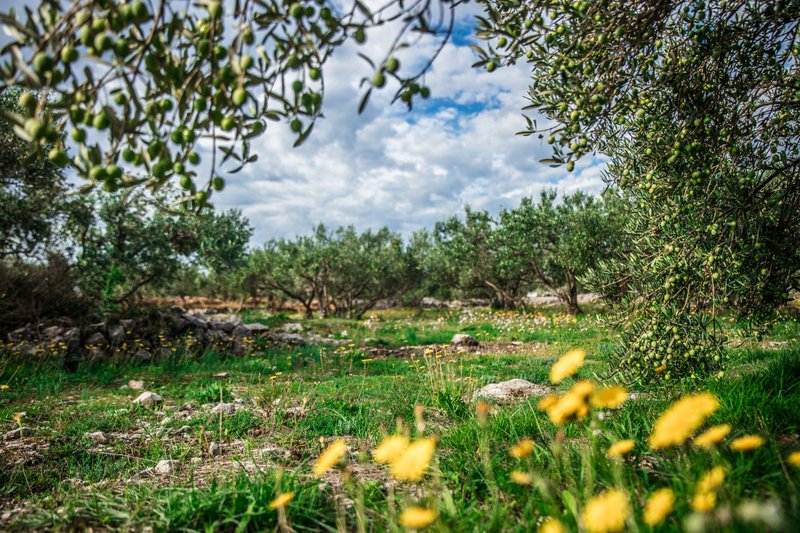
Olive (Olea europaea). The big one. Orchards run across Idlib, Aleppo, Tartus, Latakia, Homs and the south. By commonly cited counts, Syria has around 100 million olive trees, among the largest national totals in the Mediterranean. Olive oil is the obvious product. Aleppo soap, made from olive oil and laurel berry oil, is the other.
Pistachio (Pistacia vera). Cultivated around Aleppo, Hama and Idlib. “Aleppo pistachio” has been a trade name for centuries.
Fig (Ficus carica). A tree that survives drought and neglect, planted in village gardens and on terraces.
Almond (Prunus dulcis). Blooms in late winter, often before any leaf appears. Grown on dry hillsides where little else pays.
Pomegranate (Punica granatum). Grown for fresh fruit, juice, and the sour molasses used in Levantine cooking, such as muhammara.
Damask rose (Rosa × damascena). A shrub, not a tree, but too important to leave out. Named for Damascus, it’s still grown for rose water and attar.
Trees of Syria at a glance
The table lists the species covered above. For the wider set of Mediterranean forest species, see Mediterranean Forest Trees: The Complete List.
| Tree | Latin name | Where it grows | Main uses |
|---|---|---|---|
| Aleppo pine | Pinus halepensis | Dry slopes, coast and interior hills | Timber, resin, reforestation |
| Turkish pine | Pinus brutia | Northern coastal mountains | Timber, resin |
| Cilician fir | Abies cilicica | High, cool slopes in the north | Timber |
| Cedar of Lebanon | Cedrus libani | Small high-elevation stands in the north | Timber, conservation |
| Kermes oak | Quercus coccifera | Coastal and inland scrub | Charcoal, grazing |
| Palestine oak | Quercus calliprinos | West and south woodlands | Charcoal, acorns, fodder |
| Atlantic pistachio | Pistacia atlantica | Steppe and semi-arid interior | Resin, nuts, shade |
| Tamarisk | Tamarix spp. | Springs, wadis, saline flats | Windbreaks, fuel |
| Euphrates poplar | Populus euphratica | Euphrates valley | Timber, shade |
| Olive | Olea europaea | Coast, north, south, and inland | Oil, soap, fruit |
| Pistachio | Pistacia vera | Aleppo, Hama, Idlib | Nuts |
| Fig | Ficus carica | Villages and terraces | Fruit |
| Almond | Prunus dulcis | Dry hillsides | Nuts |
| Pomegranate | Punica granatum | Gardens and orchards | Fruit, juice, molasses |
What happened to the forests
Start with the number problem, because it confuses nearly every article on the topic. Wooded area in Syria is reported as anywhere from about 1% to about 2.4% of the country. Tree-cover loss is reported as anywhere from 19% to 36%. These figures don’t disagree because someone is lying. They disagree because sources use different definitions (natural forest versus all tree cover including plantations), different baseline years, and different satellite methods. Global Forest Watch publishes its own satellite-based figures for Syria, and those will not match a national forestry census.
Forest was already thin before 2011. A 1940s FAO survey described Syria’s forests as long since reduced by grazing, cutting and clearing, which is a reminder that this didn’t start with the war.
What changed after 2011 was speed. Three pressures stacked up:
- Fuel logging. When heating oil and gas became scarce and expensive, households and traders turned to firewood and charcoal. Oak, pine and even fruit trees were cut. Reports from the coastal hills describe once-wooded slopes turned to stumps.
- Fire. Dry summers and little firefighting capacity make wildfires worse. Large fires swept the coastal mountains in 2020, and again in the summer of 2025, when blazes in Latakia province burned many thousands of hectares of pine and oak forest.
- Drought. Syria had one of its driest seasons in decades in 2025, which weakens trees, dries out fuel, and slows natural regrowth.
Add to this the breakdown of forest guards, nurseries and monitoring, and the result is less cover and less data about it. That’s the real reason the numbers disagree.
Replanting and protected areas
Reforestation is happening, but it’s patchy. Forestry directorates and local groups run nurseries and planting drives, usually with fast, hardy species such as Aleppo pine and native oaks, and after each major fire there are calls to replant the burned hillsides.
The protected areas matter here. Jubata al-Khashab, in the south-west, is one of the few designated woodland reserves, with oak and wild pistachio. Information on its current condition is thin, which tells you something about how little monitoring there has been.
The slow part is the true native forest. Planting pine on a burned slope is quick. Restoring mixed oak, fir and cedar stands takes decades, and cedar and fir only regrow well when seed sources, grazing control and fire protection are in place.
Trees that carry cultural weight
Some trees matter more than their numbers.
Olives. Many Syrian olive groves are centuries old, and some individual trees are said to be older still. Pressing and soap making are family trades handed down in Aleppo and Idlib, and a lost grove is a lost income and a lost link to the past.
The remaining cedars. The Syrian cedar stands are small, but they sit in a lineage that stretches back to the ancient cedar trade. Their survival is tied to the same coastal mountains that burned.
Damask rose. The rose from which Damascus took its name is still planted for rose water.
If you want to look at Syria’s trees yourself, the coastal mountains in spring are the place to start: pine on the ridges, oak on the slopes, and olive terraces in every valley. The trees of Syria are fewer than they were, but they are still there, and the species list above is a good way to tell what you’re looking at.