Polar animals are species adapted to life in the Arctic or Antarctic, where winter temperatures fall below -40°C and the ground is frozen or buried in ice. The list below covers 18 of them, split by pole, because the two regions share almost no land animals. Polar bears live only in the north. Penguins live only in the south.
TLDR
- The Arctic is an ocean ringed by land, so it has land predators: polar bears, Arctic foxes, musk oxen, caribou, snowy owls.
- Antarctica is a continent ringed by ocean, so its wildlife is marine or seabird: penguins, seals, krill, albatrosses.
- Almost every polar animal relies on some mix of thick insulation, compact bodies and heat-saving circulation.
- Several species here are listed as Vulnerable or Near Threatened by the IUCN Red List, mostly because of shrinking sea ice.
Table of contents
- Why the Arctic and Antarctic have different animals
- Arctic animals
- Antarctic animals
- Arctic vs Antarctic at a glance
- How polar animals survive the cold
- Polar animals and climate change
- FAQ
Why the Arctic and Antarctic have different animals
The poles look like twins on a map and behave like opposites. The Arctic is a frozen ocean surrounded by North America, Europe and Asia. Land animals walked in, and have been walking in for thousands of years. Antarctica is the reverse: a continent roughly 14 million square kilometers in size, sealed off by the Southern Ocean. Nothing walked there.
That isolation is why Antarctica has no native land mammals, no bears, no wolves, no foxes. Its largest permanent land animal is a wingless midge about 1.3 cm long. Everything bigger gets its food from the sea.
Temperature plays a part too. The lowest air temperature ever recorded on Earth, -89.2°C, was measured at Vostok Station in Antarctica in 1983. Arctic extremes bottom out closer to -68°C.
Arctic animals
1. Polar bear
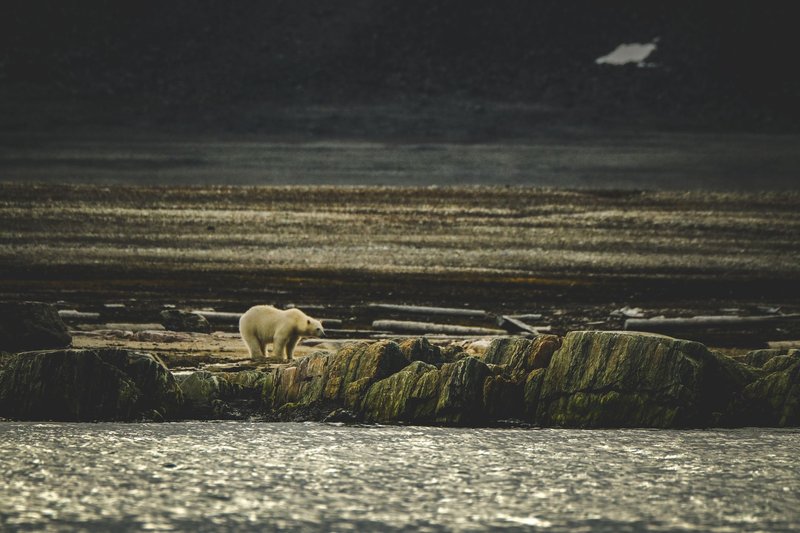
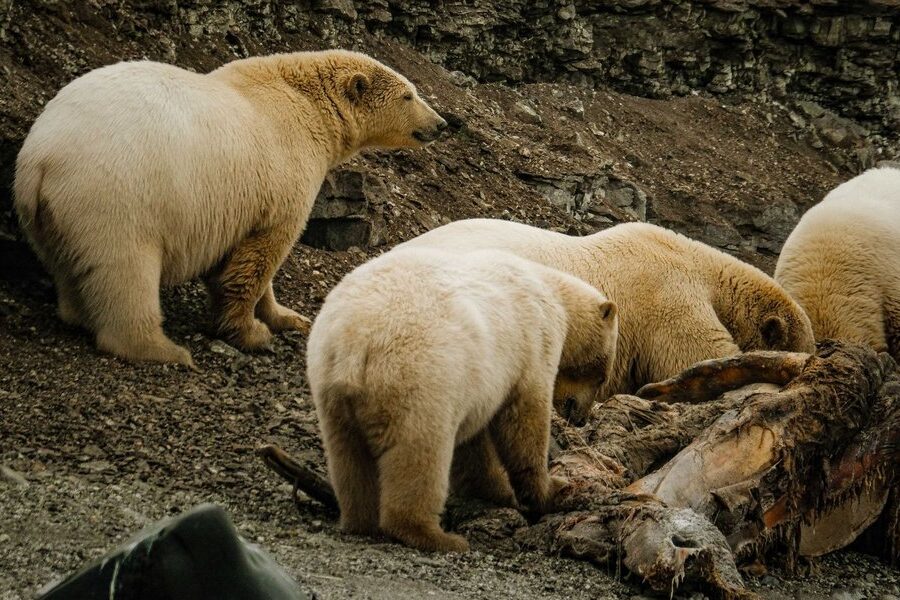
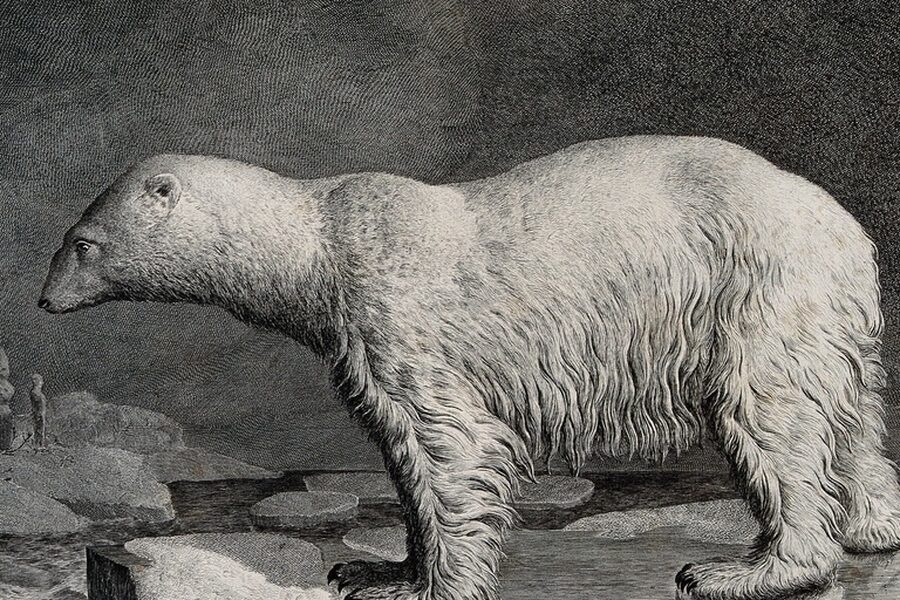
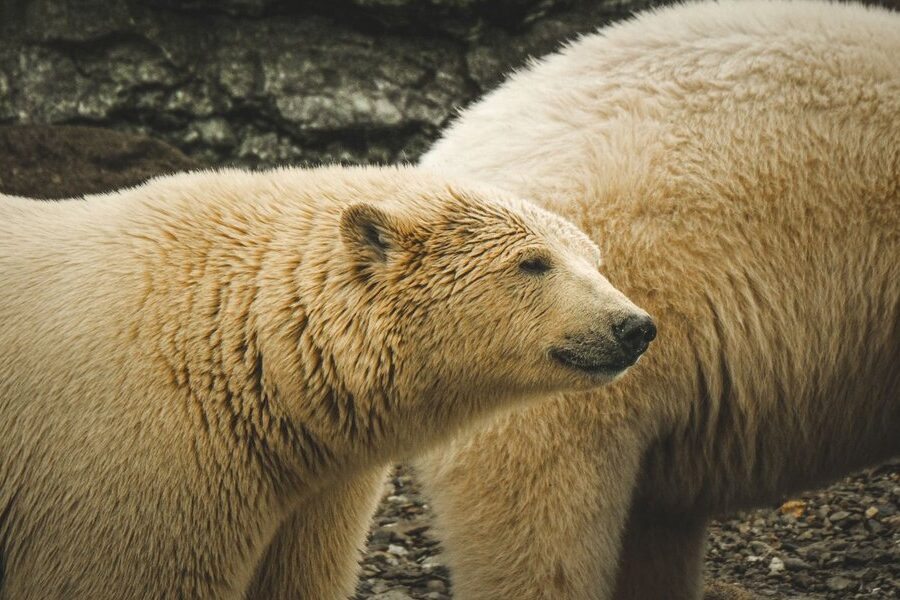
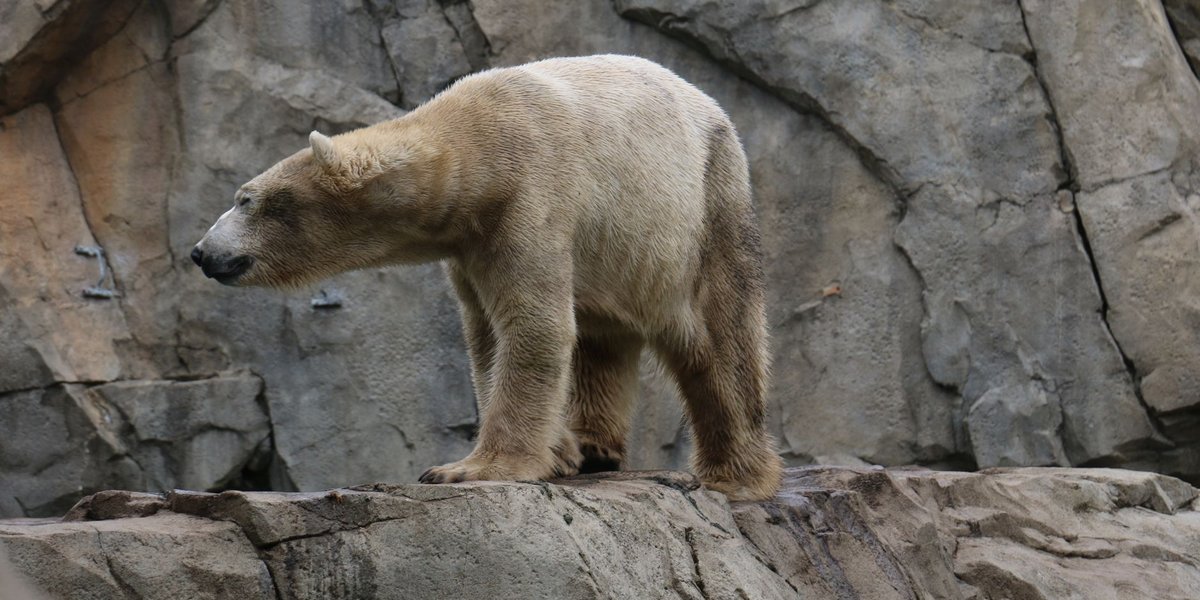
The largest land carnivore on Earth. Adult males weigh 350 to 700 kg. Polar bears hunt ringed and bearded seals from sea ice, waiting at breathing holes and smelling prey from more than a kilometer away. Their skin is black, which helps absorb heat, and their fur is oily enough to shed water. Their fur looks white but is actually translucent, and rare white animals and the science behind them explains why it is a different kind of white from albinism. Range: Arctic sea ice across Canada, Greenland, Norway’s Svalbard, Russia and Alaska. Listed as Vulnerable by the IUCN, with roughly 26,000 animals left.
2. Arctic fox
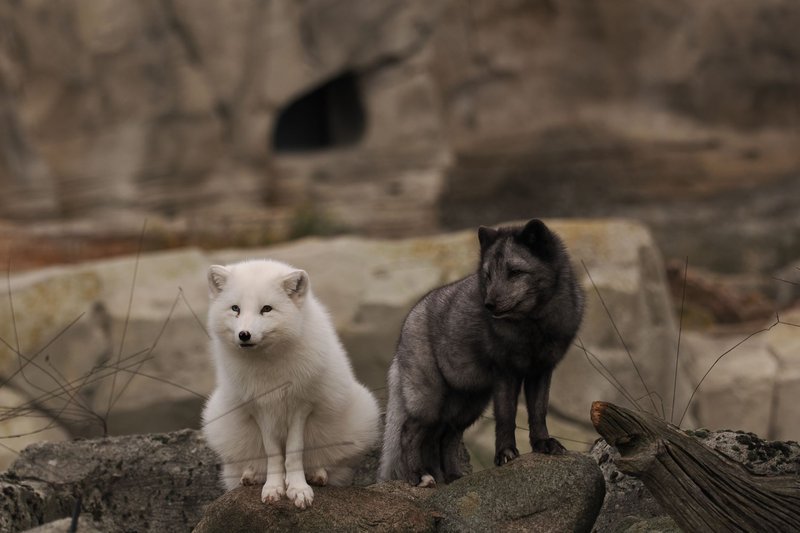
A 3 kg fox that keeps its core warm at air temperatures around -50°C without shivering. Its coat turns white in winter and brown or gray in summer. Small ears and a short muzzle cut heat loss. Diet: lemmings above all, plus seabird eggs and scraps left by polar bears. Range: tundra across the entire Arctic.
3. Walrus
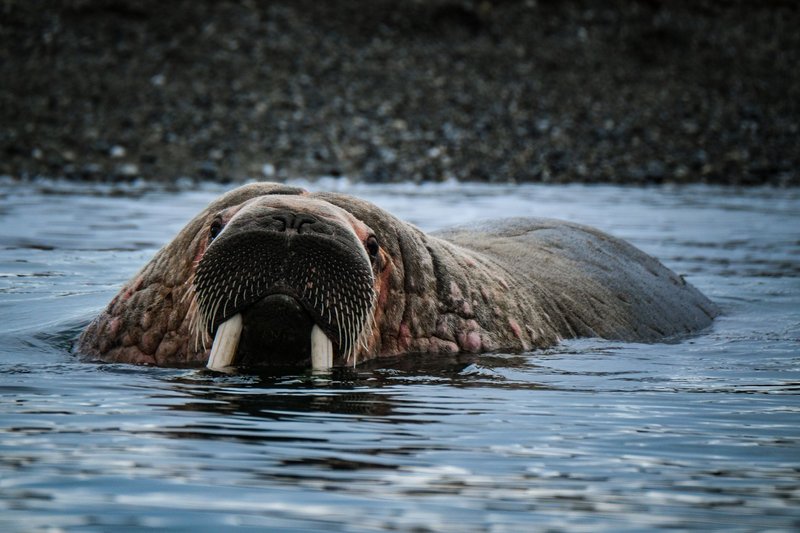
Both sexes carry tusks, which can reach about 1 m in length and work as ice picks for hauling out of the water. A big male weighs more than 1,000 kg. Walruses feed on clams and other seafloor invertebrates, sucking them out of the shell. Range: shallow Arctic seas, mostly over continental shelves. The Atlantic and Pacific populations are separate subspecies.
4. Narwhal
The “unicorn” tusk is actually an upper left canine that spirals through the lip, growing up to 3 m long. Narwhals dive below 1,500 m for halibut, cod and squid. They spend winter under dense pack ice, surfacing through small cracks to breathe. Range: Canadian Arctic, Greenland and parts of Russia’s Arctic coast.
5. Beluga whale
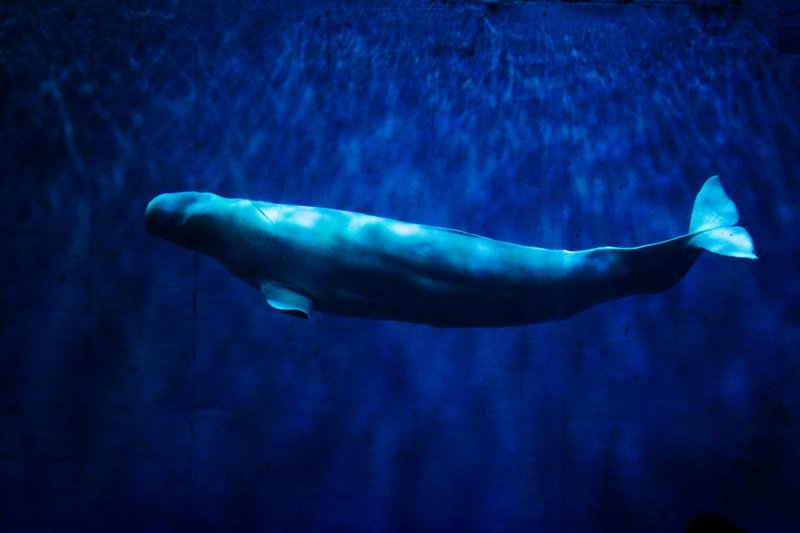
Adults are pure white and 3.5 to 5.5 m long. Unlike most whales, belugas have a flexible neck and can turn their heads. They are among the noisiest of marine mammals, chirping and whistling loudly enough that sailors once called them sea canaries. Diet: fish, shrimp and squid. Range: Arctic and sub-Arctic coasts and river mouths.
6. Musk ox
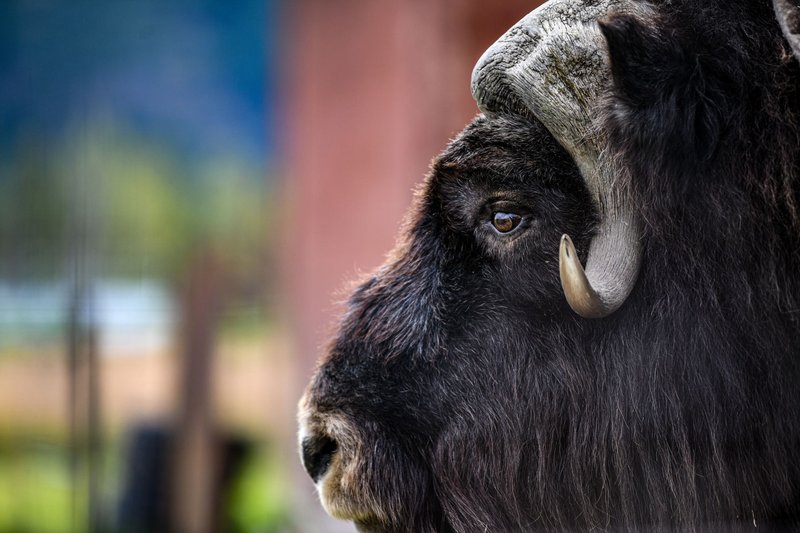
A shaggy ice-age holdover weighing up to roughly 400 kg. The underwool, called qiviut, is claimed to be about eight times warmer than sheep wool. When wolves approach, adults form a ring with calves in the middle. Diet: grasses, sedges and willow. Range: Greenland, northern Canada and Alaska, with introduced herds in Norway and Russia.
7. Snowy owl
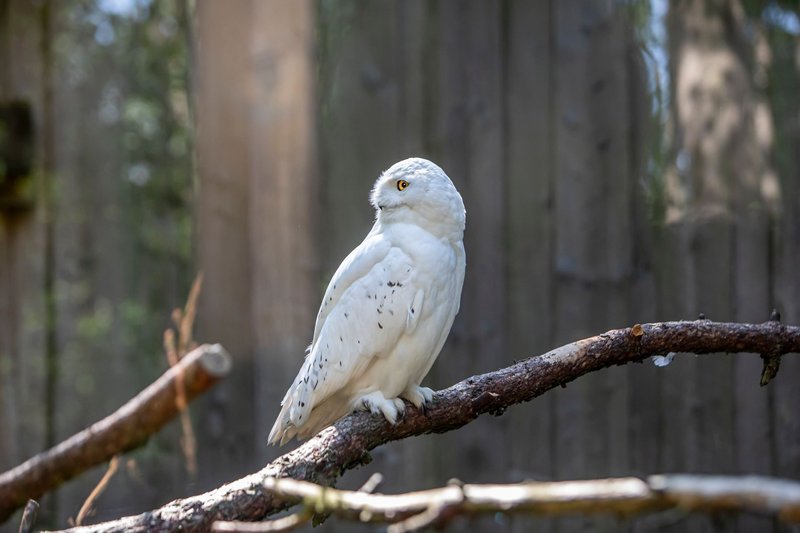
Wingspan up to 1.5 m, feathered feet and a body that looks like a ball of fluff. Unlike most owls, it hunts in daylight, which suits the endless summer sun. A single owl can eat several lemmings a day. It nests on the ground on open tundra. The IUCN lists it as Vulnerable.
8. Arctic hare
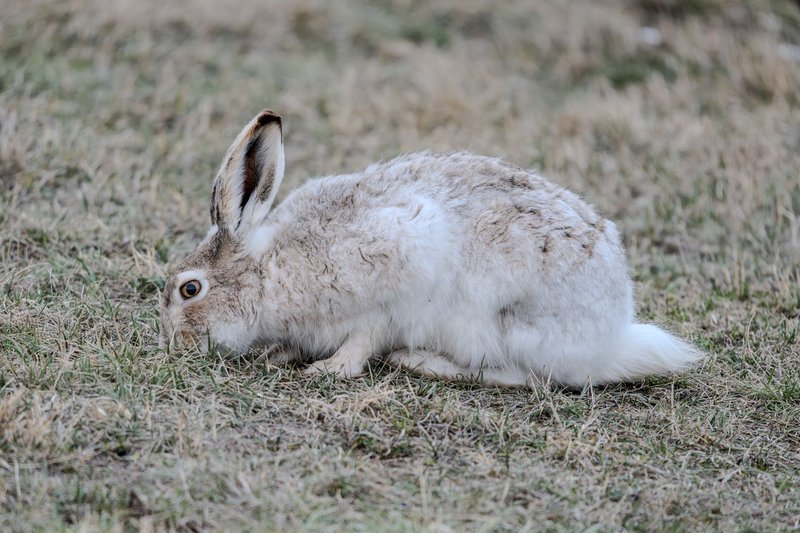
Up to 5 kg, with short ears that conserve heat and long claws for digging through snow. Arctic hares can sprint at about 60 km/h and sometimes stand on their hind legs while running. In the far north, they gather in groups of hundreds. Diet: willow shoots, roots and lichen.
9. Caribou (reindeer)
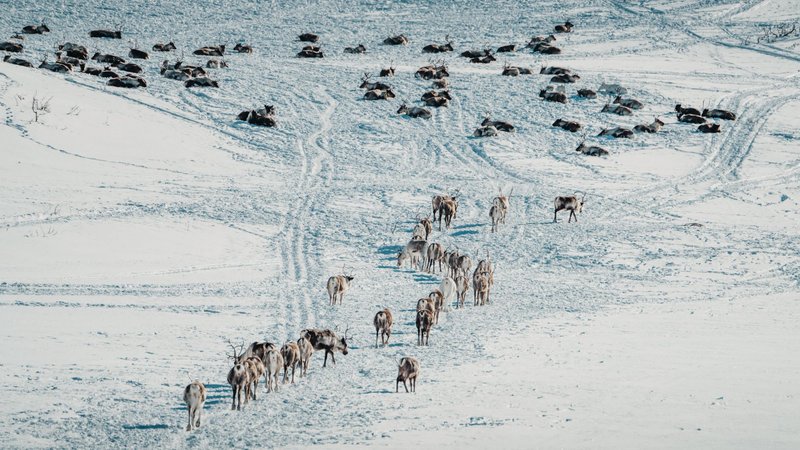
The only deer species where both sexes grow antlers. Caribou herds make the longest land migrations of any mammal, covering more than 1,000 km a year in some populations. Hooves widen in summer for soft tundra and shrink in winter, exposing a hard rim that bites into ice. Diet: lichen, sedges and shrubs. Globally listed as Vulnerable.
Antarctic animals
10. Emperor penguin
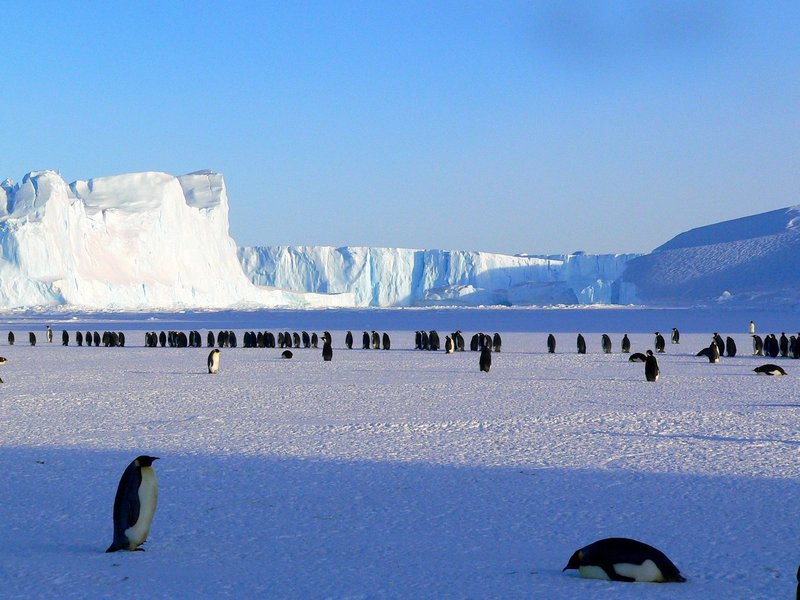
The largest penguin: up to 1.2 m tall and 22 to 45 kg. Males incubate a single egg on their feet through the Antarctic winter for about two months, fasting the entire time, in winds that can exceed 140 km/h. Emperors dive past 500 m for fish, squid and krill. The IUCN classifies them as Near Threatened because their breeding sea ice is melting.
11. Adélie penguin
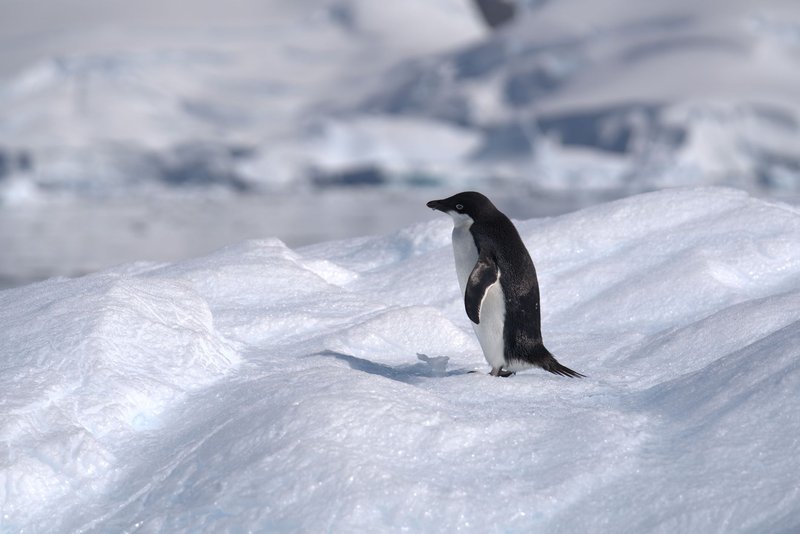
About 70 cm tall and 4 to 5 kg, with a white ring around each eye. Adélies breed on bare rocky coasts and steal pebbles from neighbors to build nests. Diet: mainly krill. Range: the full coastline of Antarctica. Their population is shifting south as the Antarctic Peninsula warms.
12. Chinstrap penguin
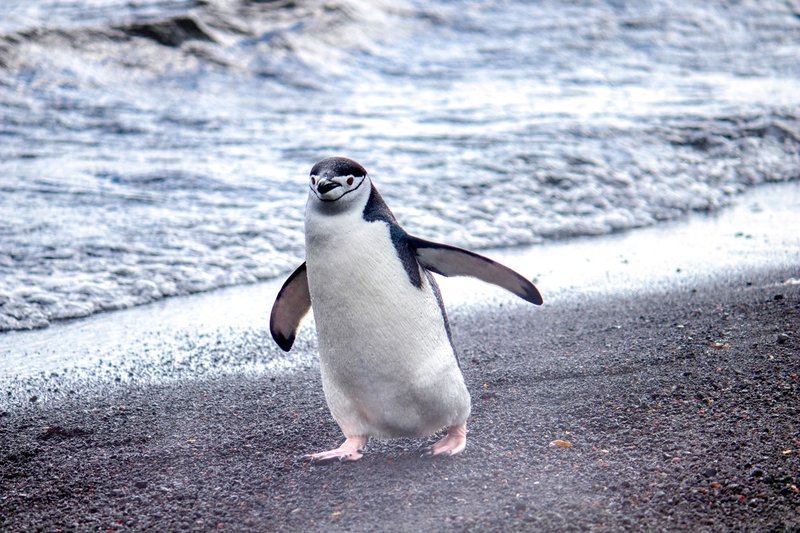
The thin black band under the chin looks like a helmet strap. Chinstraps weigh 3 to 4 kg and nest in enormous, noisy colonies on the Antarctic Peninsula and nearby islands. They often ride icebergs between feeding trips. Diet: krill.
13. Leopard seal
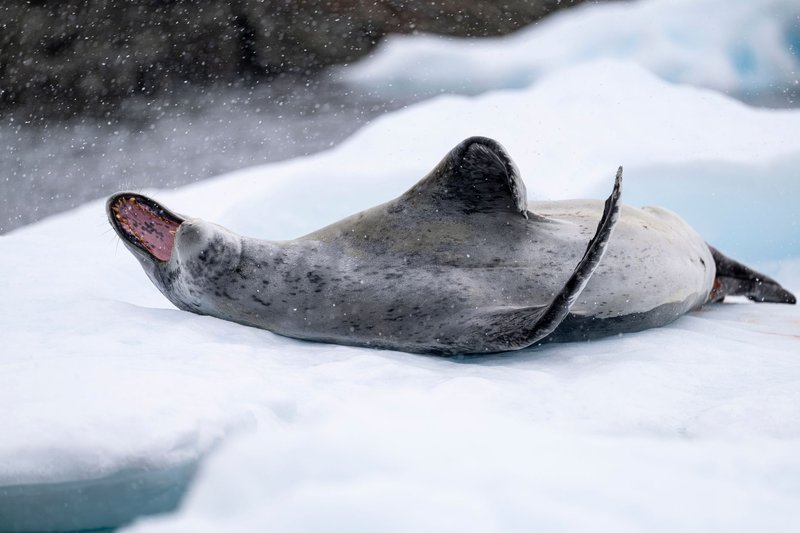
The top predator of the Antarctic ice edge. Females grow up to about 3.5 m and 600 kg, larger than males. Leopard seals ambush penguins at the water line, and also eat krill, fish and young seals, filtering krill through interlocking teeth. Range: Antarctic pack ice, with wanderers reaching sub-Antarctic islands.
14. Weddell seal
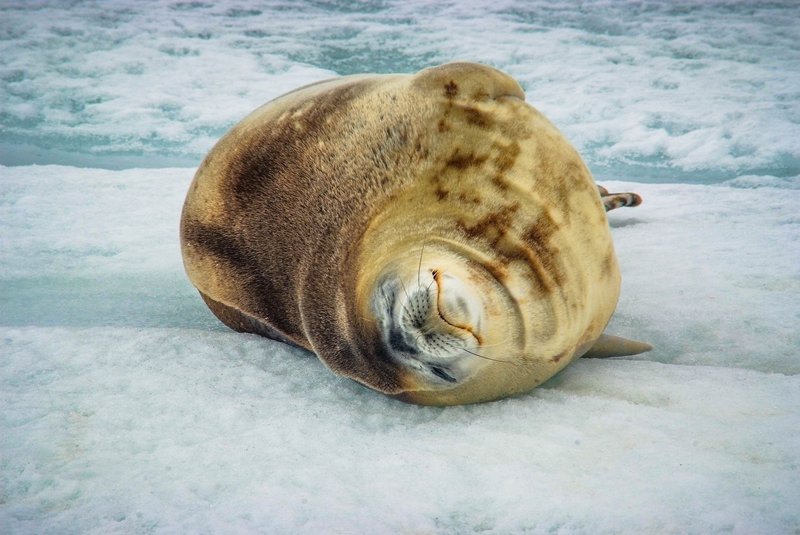
The southernmost breeding mammal on Earth. Weddell seals dive to around 600 m and can stay under for over 80 minutes. Because the ice refreezes over breathing holes, they keep the holes open by scraping with their front teeth. Diet: Antarctic toothfish, silverfish and squid.
15. Southern elephant seal
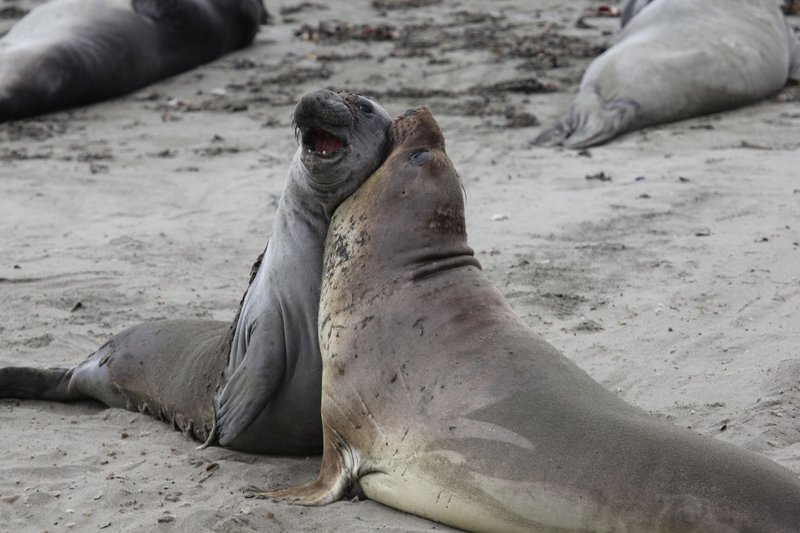
The largest seal alive. Males reach about 5 m and 4,000 kg, with an inflatable trunk-like nose used in rival displays. They dive more than 2,000 m, among the deepest dives of any air-breathing animal. Range: Southern Ocean and sub-Antarctic islands.
16. Antarctic krill
A shrimp-like crustacean about 6 cm long, and the base of the Southern Ocean food web. Total krill biomass is estimated in the hundreds of millions of tonnes, more than that of any other single multicellular wild animal species. Penguins, seals, baleen whales such as the fin whale and fish all depend on it. It lives up to about six years and feeds on algae under the sea ice.
17. Wandering albatross
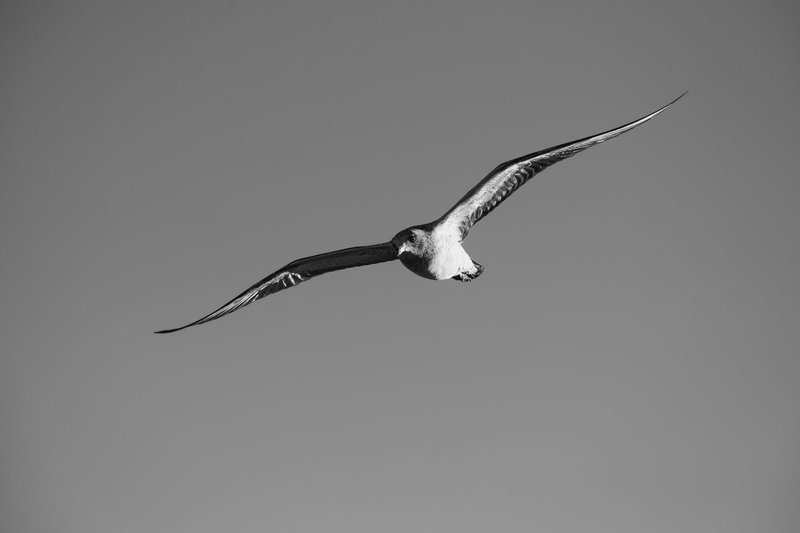
The longest wingspan of any living bird, up to about 3.5 m. It glides for hours on Southern Ocean winds with barely a wingbeat and can circle the globe in under two months. Albatrosses eat squid, fish and carrion. The IUCN lists the species as Vulnerable, with longline fishing bycatch a major threat.
18. Snow petrel
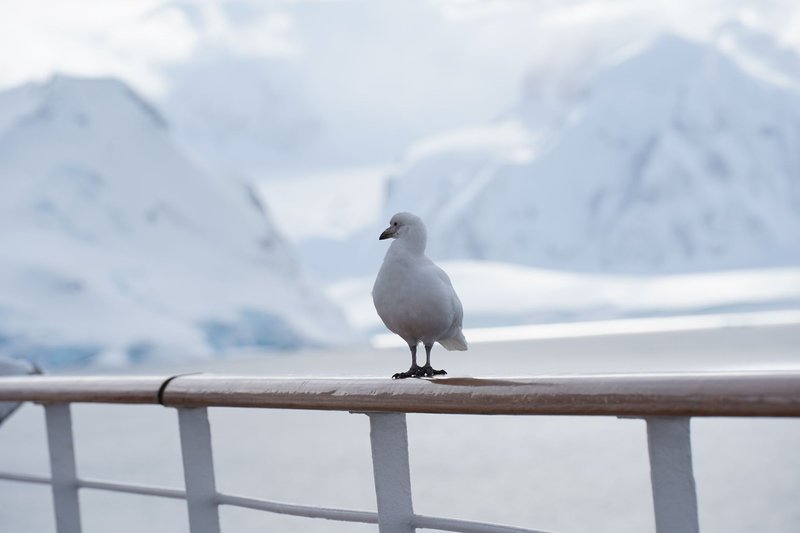
All white, with black eyes and bill, and one of only three bird species that breed exclusively in Antarctica. Snow petrels nest in rock crevices as far as 400 km inland on cliffs and nunataks. When threatened, they spit foul-smelling stomach oil at intruders. Diet: krill, fish and squid.
Arctic vs Antarctic at a glance
| Arctic | Antarctic | |
|---|---|---|
| Geography | Ocean surrounded by land | Continent surrounded by ocean |
| Land mammals | Bears, foxes, musk oxen, caribou, hares | None native |
| Penguins | None | Emperor, Adélie, chinstrap and more |
| Top predator | Polar bear | Leopard seal and orca |
| Typical coldest air | About -68°C recorded | -89.2°C recorded |
| Core food source | Seals, lemmings, tundra plants | Krill and fish |
How polar animals survive the cold
Polar species solve the same problem with a short list of tools, and 23 Arctic animals and how they survive the cold shows how those tools play out across the region.
Fat. Seals, walruses and whales carry layers of blubber, often around 10 cm thick in the largest species. Blubber insulates and acts as stored fuel.
Fur and feathers. Polar bear guard hairs repel water over a dense underfur. Emperor penguins have roughly 100 feathers per square centimeter, more than any other bird, forming overlapping waterproof layers. Musk oxen add qiviut under long guard hairs.
Body shape. Animals in colder regions tend to be bulkier with shorter limbs and ears, which reduces surface area. The Arctic hare and Arctic fox both have smaller ears than their warm-climate relatives.
Countercurrent heat exchange. In flippers, feet and legs, arteries carrying warm blood run alongside veins carrying cold blood back. The heat transfers sideways, so the extremities stay near freezing while the core stays near 37°C. This is why a gull or penguin can stand on ice without losing much body heat.
Huddling. Emperor penguins pack into groups of thousands and rotate positions between the warm interior and the windy edge. Temperatures inside the huddle can reach 37°C, even when the air outside is below -30°C.
Timing. Some animals skip winter entirely. Arctic terns migrate roughly 70,000 km a year between poles, and see more daylight than any other animal. Others, like caribou, move to where food is.
Polar animals and climate change
Both poles are warming faster than the global average. The Arctic is heating up several times faster, according to NOAA’s Arctic Report Card, and summer sea ice has declined by about 13 percent per decade since satellite records began in 1979, per NASA and NSIDC data. That affects the animals above directly. Polar bears need sea ice to hunt seals, emperor penguins need stable ice to breed, and krill need winter ice algae.
The pattern is consistent: species with specialized diets and ice-dependent habitats are at the highest risk, while generalists like the Arctic fox and Adélie penguin’s rocky-coast relatives have more room to adjust.
FAQ
What are the 5 main polar animals? Polar bears, Arctic foxes, walruses, emperor penguins and seals are the best-known polar species. Only the seals and walruses-style marine mammals live near both poles, and even then different species.
Do polar bears and penguins ever meet? No. Polar bears live in the Arctic and penguins live in the Southern Hemisphere. They are about 12,000 km apart.
Which pole has more animal species? The Arctic has more land species, including mammals, insects and plants. The Antarctic has more concentrated marine life, especially around krill-rich waters.
What is the coldest-living animal? Emperor penguins, which breed through the Antarctic winter, endure some of the harshest conditions of any bird.
Are polar animals endangered? Several are. The polar bear, walrus, snowy owl, caribou and wandering albatross have Vulnerable or higher-risk ratings on the IUCN Red List, while the emperor penguin is Near Threatened.