Green fruits fall into two camps, and most lists blur them together. Some are green because they’re ripe: kiwi, green grapes, feijoa, Granny Smith apples. Others are green because they’re unripe, and that’s the point, like green mango, green papaya and jackfruit. Mix those up and you get a rock-hard “ripe” mango or a pear you wait on forever.
This list covers 27 green fruits, from supermarket staples to things you’ll only find at a tropical market. Each entry gives you the same five facts: what it looks like, how it tastes, whether green means ripe, how to eat it, and when it’s in season.
Contents
- Why are some fruits green?
- Quick reference table
- 1. Green Apple
- 2. Green Pear
- 3. Green Grapes
- 4. Kiwi
- 5. Lime
- 6. Avocado
- 7. Honeydew Melon
- 8. Gooseberry
- 9. Greengage Plum
- 10. Green Fig
- 11. Green Olive
- 12. Pomelo
- 13. Ugli Fruit
- 14. Calamansi
- 15. Guava
- 16. Feijoa
- 17. Soursop
- 18. Cherimoya
- 19. Sugar Apple
- 20. Breadfruit
- 21. Jackfruit
- 22. Green Papaya
- 23. Green Mango
- 24. Green Banana
- 25. Pawpaw
- 26. Tomatillo
- 27. Kiwiberry
- Storing green fruits
- FAQ
Why are some fruits green?
Chlorophyll. It’s the pigment plants use to turn sunlight into sugar, and young fruit is packed with it. As many fruits ripen, the plant breaks the chlorophyll down and the yellow, orange or red pigments underneath show through. That’s why a banana goes from green to yellow and a tomato from green to red.
Green-when-ripe fruits skip that step. Kiwi, feijoa and green grapes keep their chlorophyll (or never make much of the competing pigments), so color tells you almost nothing about ripeness. You judge them by touch and smell instead.
Quick reference table
| Fruit | Taste | Ripe while green? |
|---|---|---|
| Green apple | Tart, crisp | Yes |
| Green pear | Mild, juicy | Yes (check the neck) |
| Green grapes | Sweet | Yes |
| Kiwi | Sweet-tart | Yes (flesh is green; skin is brown) |
| Lime | Sharp, sour | Yes, though it yellows if left |
| Avocado | Rich, nutty | Depends on variety |
| Honeydew | Mild, sweet | Yes (flesh is green) |
| Gooseberry | Sour to sweet | Yes |
| Greengage plum | Honey-sweet | Yes |
| Green fig | Jammy, sweet | Yes |
| Green olive | Salty, bitter | No (picked unripe) |
| Pomelo | Mild grapefruit | Yes |
| Ugli fruit | Sweet citrus | Yes |
| Calamansi | Sour, floral | Yes |
| Guava | Sweet, musky | Yes |
| Feijoa | Pineapple-mint | Yes |
| Soursop | Sour-sweet, creamy | Yes |
| Cherimoya | Custardy, sweet | Yes |
| Sugar apple | Very sweet | Yes |
| Breadfruit | Starchy, mild | Cooked green, sweet when ripe |
| Jackfruit | Neutral (unripe) | No, used unripe |
| Green papaya | Neutral, crunchy | No |
| Green mango | Sour | No |
| Green banana | Starchy, bitter | No |
| Pawpaw | Banana-mango custard | Yes |
| Tomatillo | Tangy | Yes |
| Kiwiberry | Sweet-tart | Yes |
1. Green Apple
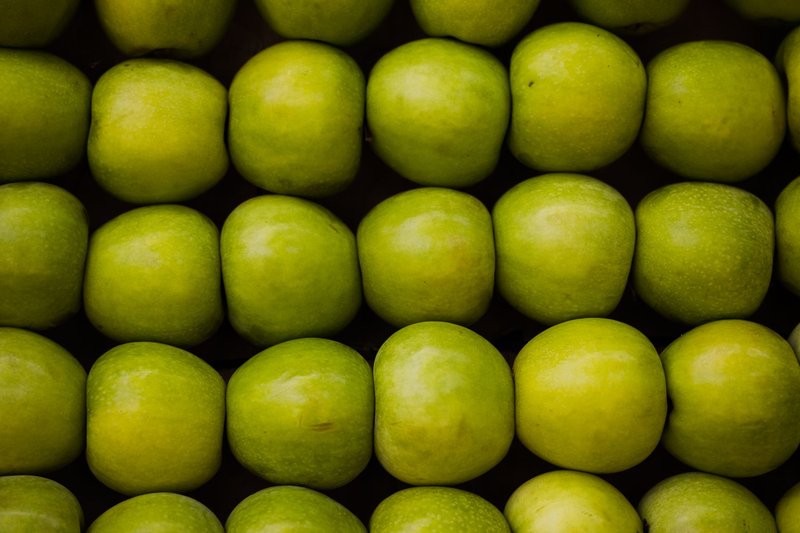
Granny Smith is the one most people picture. It came from a seedling raised by Maria Ann Smith in Australia in the 1860s, and it stays green when fully ripe. Other green apples include Pippin and Ginger Gold’s green-yellow cousins.
- Looks: Smooth, waxy skin, bright green, sometimes with a faint pink blush.
- Taste: Tart and crisp, with low sugar and high acid.
- Ripe while green? Yes. Pick by firmness and a clean snap, not color.
- How to eat it: Raw, or baked. It holds its shape in pie better than soft apples.
- Season: Fall in the Northern Hemisphere; cold storage makes it available year-round.
2. Green Pear
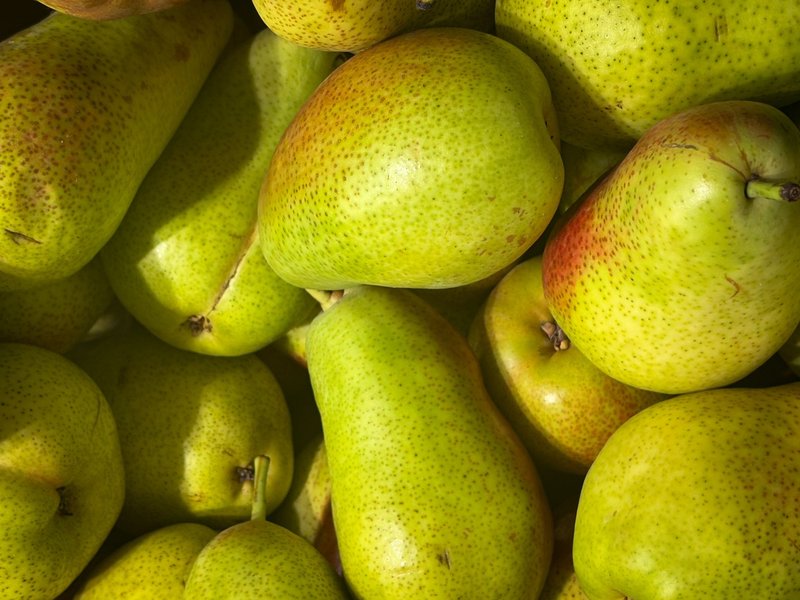
Anjou pears stay green even when ripe, which is why shoppers keep buying them rock-hard.
- Looks: Egg-shaped, matte green skin that may yellow slightly.
- Taste: Mild, juicy and lightly sweet.
- Ripe while green? Yes. Press near the stem. If the neck gives under your thumb, it’s ready.
- How to eat it: Raw, poached in wine, or sliced onto cheese boards.
- Season: Late summer through winter.
3. Green Grapes
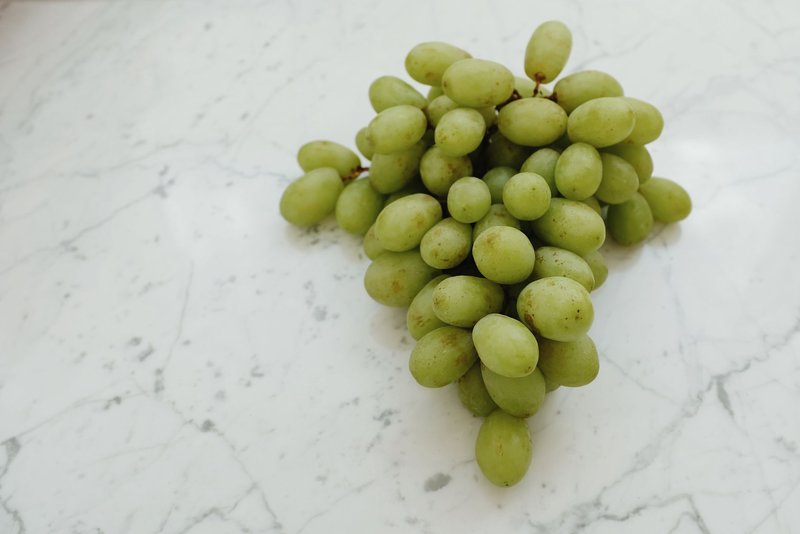
Thompson Seedless is the grape most often sold as “green.” Look for a faint golden tint and a green, flexible stem. Brown, brittle stems mean the bunch is old.
- Looks: Small, oval, pale green and translucent.
- Taste: Sweet with a light acidic finish.
- Ripe while green? Yes. A yellowish-green grape is sweeter than a deep green one.
- How to eat it: Raw, frozen as a snack, or roasted with chicken.
- Season: Summer into fall.
4. Kiwi
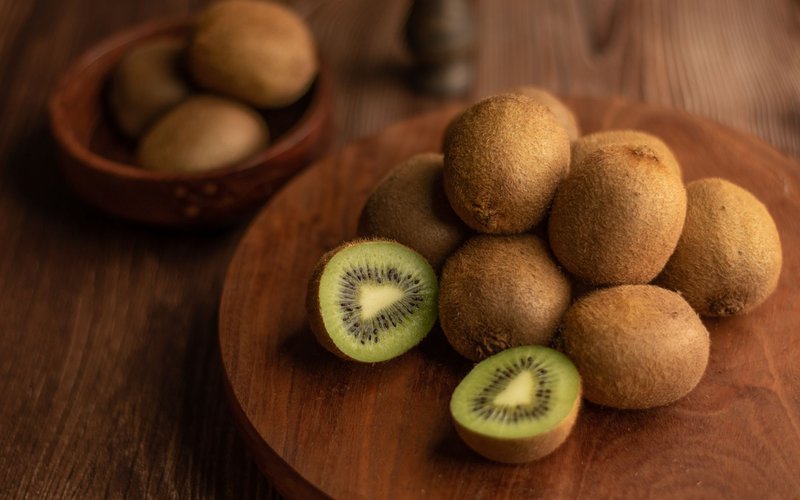
Kiwi has a fuzzy brown skin, so the green is inside. It earns its place on this list for the flesh: bright green with a ring of tiny black seeds. A medium kiwi has roughly 60 mg of vitamin C, according to USDA FoodData Central, and the NIH recommends 75 mg a day for adult women and 90 mg for adult men.
- Looks: Brown, hairy skin; emerald flesh with a pale core.
- Taste: Sweet-tart, somewhere between strawberry and citrus.
- Ripe while green? Yes. Ripe means it yields to gentle thumb pressure.
- How to eat it: Halve it and scoop with a spoon. The skin is edible if you don’t mind the fuzz.
- Season: Harvested in fall; stored fruit is sold year-round. Raw kiwi contains an enzyme that breaks down protein, so it will curdle dairy if mixed in and left to sit.
5. Lime
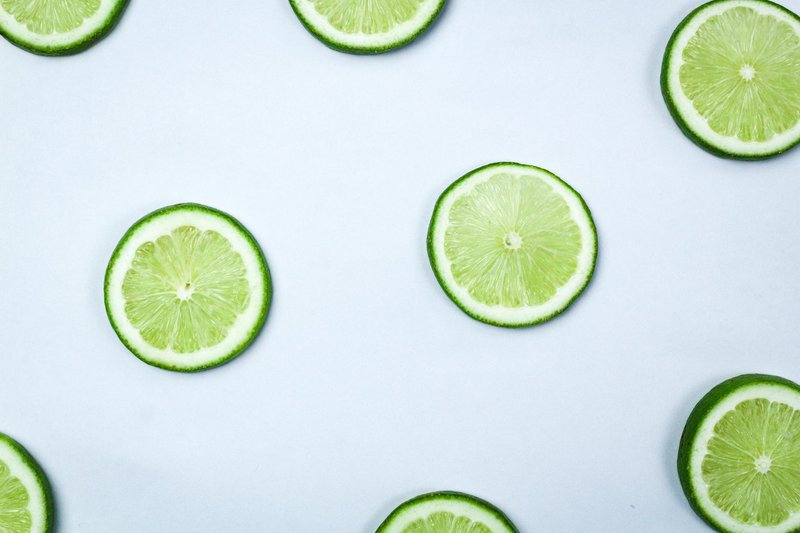
Persian limes are the standard supermarket lime. Key limes are smaller, more seedy and more aromatic.
- Looks: Glossy dark green skin, thin rind.
- Taste: Sharp and sour, with a floral note in Key limes.
- Ripe while green? Yes. Limes are sold green, though they turn yellow if left on the tree. Choose heavy, firm fruit with smooth skin.
- How to eat it: Juiced into drinks, ceviche, guacamole and curry. Zest the rind before juicing.
- Season: Year-round, with peak supply in summer.
6. Avocado
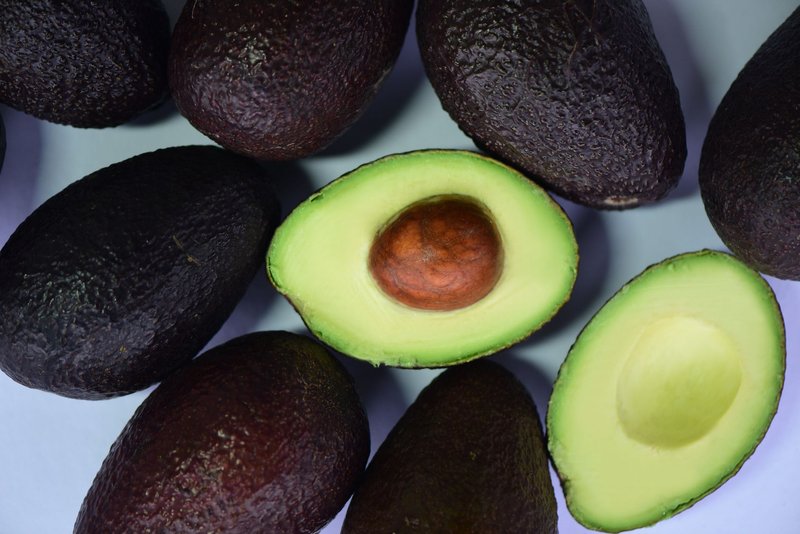
Avocado is a single-seed berry, which surprises most people. Hass avocados darken as they ripen, but Fuerte, Bacon and Reed stay green, so color is no help with those.
- Looks: Pear-shaped, with skin from smooth and thin to bumpy and thick.
- Taste: Rich, buttery and nutty, with almost no sweetness.
- Ripe while green? Depends on variety. Squeeze gently; it should give slightly. Flick off the stem cap: green underneath means ripe, brown means overripe.
- How to eat it: On toast, in salads, blended into smoothies or mashed for guacamole.
- Season: Year-round from California, Mexico and Peru combined.
7. Honeydew Melon
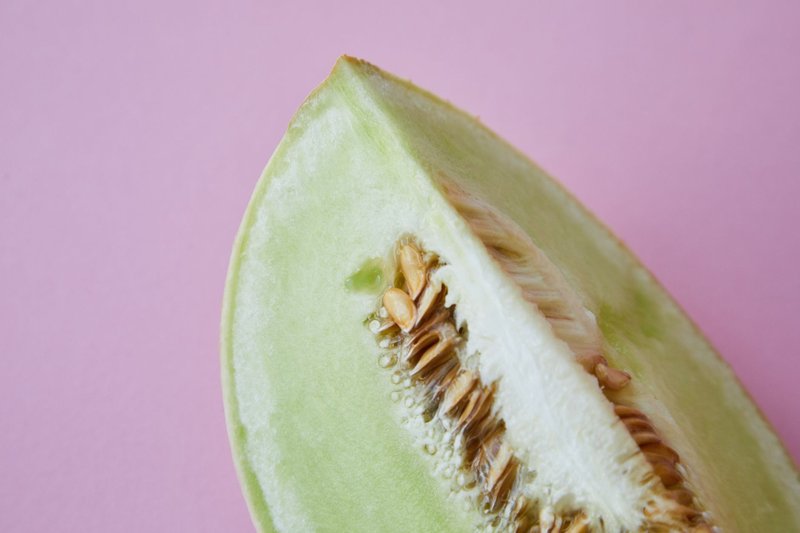
The skin is pale cream, but the flesh is the green. Honeydew has a waxy feel when ripe and a faint sweet smell at the blossom end.
- Looks: Smooth, round to oval, with pale green flesh.
- Taste: Mild and honeyed.
- Ripe while green? Yes. Skip any with a green, fuzzy skin, which means it was picked too early.
- How to eat it: Chilled and cubed, wrapped in prosciutto, or blended into agua fresca.
- Season: Summer.
8. Gooseberry
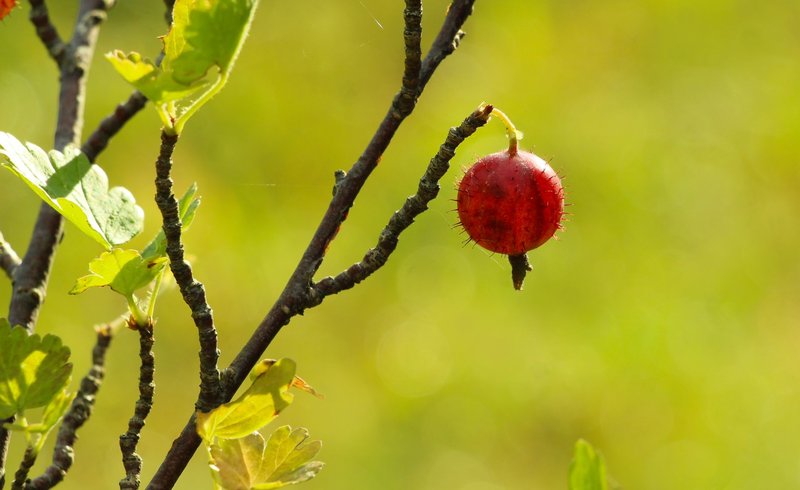
European gooseberries are translucent green with visible veins. Many cooks use them unripe and sour, while fully ripe ones turn sweeter and sometimes red.
- Looks: Marble-sized, striped and slightly hairy on some types.
- Taste: Sour when firm; sweet-tart when soft.
- Ripe while green? Yes, in green varieties. Soft, slightly translucent berries are sweetest.
- How to eat it: Cooked into fools, crumbles and chutney, or eaten raw if sweet.
- Season: Early to mid-summer.
9. Greengage Plum
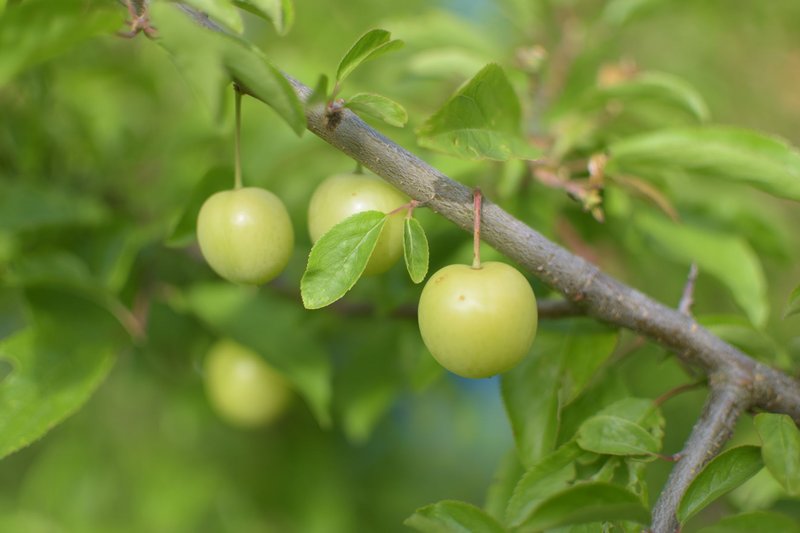
Greengages are small European plums named for Sir William Gage, who introduced them to England from France in the 18th century. They taste far sweeter than they look.
- Looks: Small, round, yellow-green skin with a pale bloom.
- Taste: Honey-sweet with a hint of acid.
- Ripe while green? Yes. Ripe fruit is slightly soft and a little golden.
- How to eat it: Raw, in tarts, or turned into jam.
- Season: Late summer.
10. Green Fig
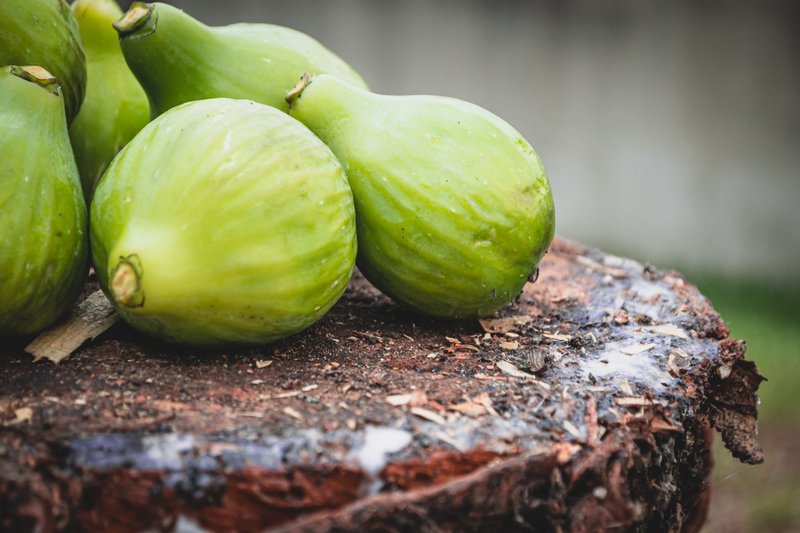
Kadota figs stay green-yellow when ripe and have few seeds. Calimyrna figs, another green type, are grown for drying.
- Looks: Thin green or yellow-green skin, amber to pink flesh.
- Taste: Jammy and honey-like.
- Ripe while green? Yes. Ripe figs are soft, slightly drooping at the neck.
- How to eat it: Fresh, split open and topped with goat cheese, or roasted.
- Season: Summer and early fall.
11. Green Olive
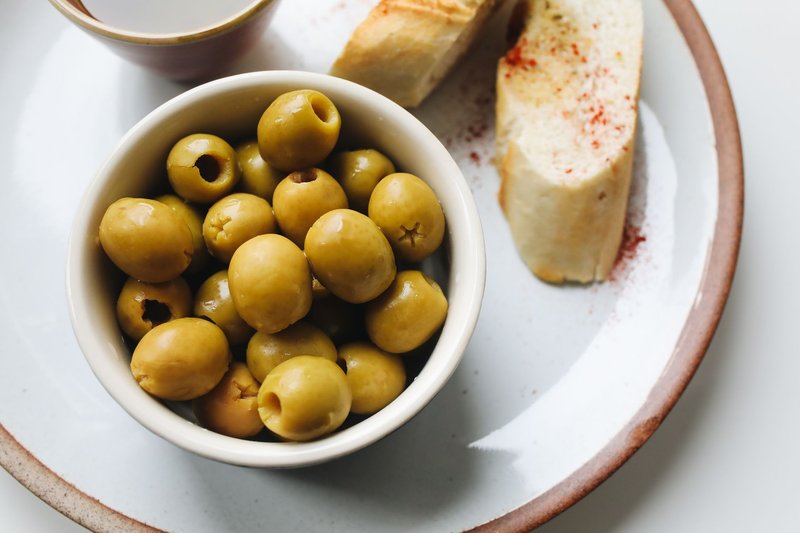
Olives are botanically fruit, and green ones are picked before they ripen. Left on the tree they turn purple, then black. Raw olives are unbearably bitter, so they’re cured in brine, lye or salt first.
- Looks: Oval, firm, olive-green.
- Taste: Salty, briny and a little bitter.
- Ripe while green? No. Picked unripe by design.
- How to eat it: Straight from the jar, stuffed, or chopped into tapenade.
- Season: Harvested in fall; sold year-round cured.
12. Pomelo
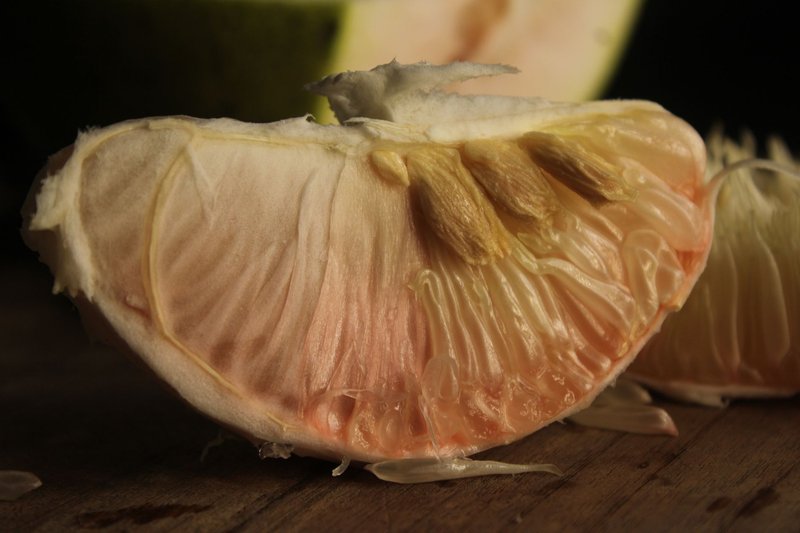
Pomelo is the largest citrus fruit and one of the ancestors of the grapefruit. The pith is very thick, so most of what you buy is peel.
- Looks: Football-sized, with pale green to yellow skin.
- Taste: Mild, sweet grapefruit without the harsh bitterness.
- Ripe while green? Yes. It should feel heavy for its size with a slight give at the base.
- How to eat it: Peel off the membranes and eat the segments, or toss into Thai salads.
- Season: Winter.
13. Ugli Fruit
Ugli is a Jamaican citrus hybrid of grapefruit, orange and tangerine. The name fits: the skin is puckered, loose and blotchy green-yellow.
- Looks: Wrinkled, baggy skin with green and orange patches.
- Taste: Sweet and juicy, less bitter than grapefruit.
- Ripe while green? Yes. Ignore the skin and choose a heavy fruit.
- How to eat it: Peel and eat like an orange, or juice it.
- Season: Winter to early spring.
14. Calamansi
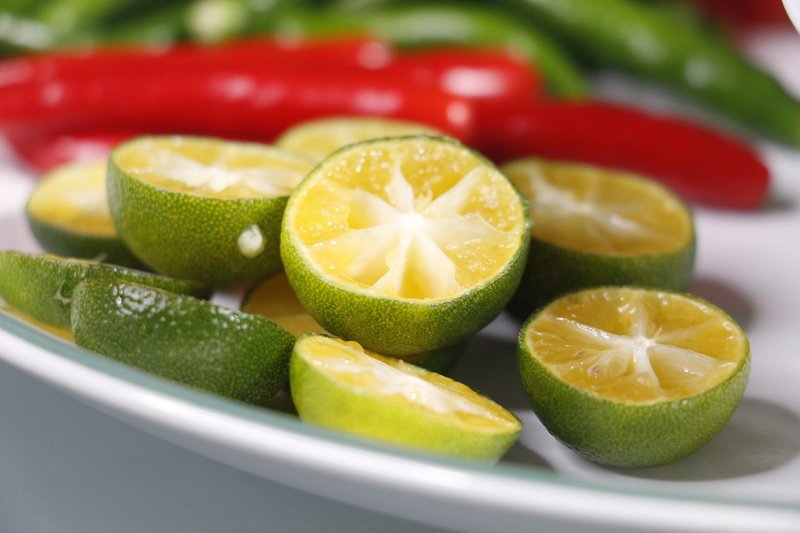
Calamansi is a small citrus common in the Philippines. It can be picked green or left to turn orange.
- Looks: Golf-ball size, thin green or orange skin.
- Taste: Very sour, with a floral note.
- Ripe while green? Yes, though it sweetens as it turns orange.
- How to eat it: Squeezed over noodles and grilled fish, or made into a lime-style drink.
- Season: Year-round in the tropics.
15. Guava
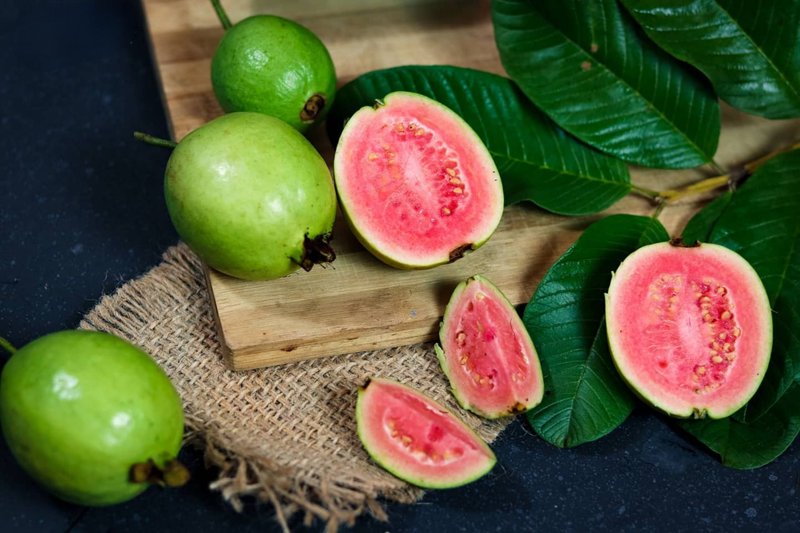
Guava can be among the most vitamin C-rich fruits you can eat. USDA data lists more than 200 mg per 100 grams for raw common guava, more than double what the same weight of orange gives you.
- Looks: Round or pear-shaped, green skin that yellows slightly when ripe.
- Taste: Sweet and musky, with gritty seeds.
- Ripe while green? Yes. It smells strong and fruity and gives to a light squeeze.
- How to eat it: Raw with salt and chili, or blended into juice, jam or paste.
- Season: Year-round in the tropics.
16. Feijoa
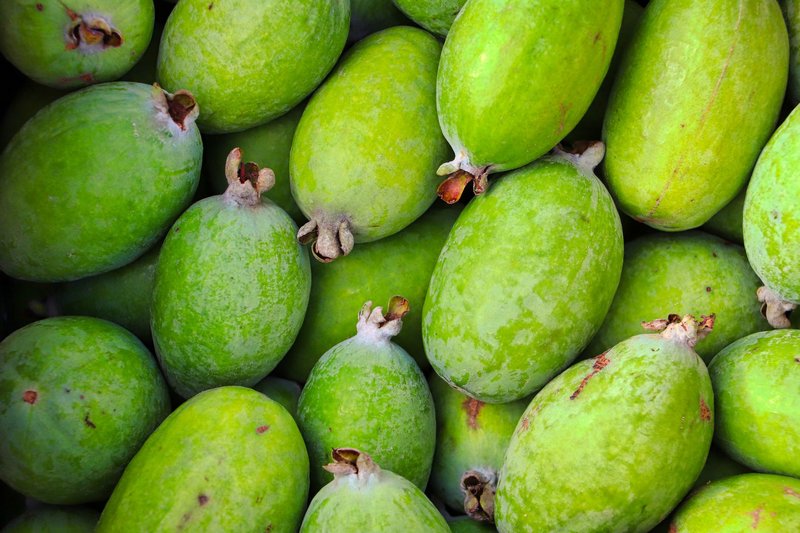
Feijoa, or pineapple guava, is a South American native that New Zealanders treat as a national fruit. In ripe fruit the flesh is gel-like and slightly gritty near the skin.
- Looks: Egg-sized, smooth dark green skin.
- Taste: Pineapple, mint and a hint of strawberry.
- Ripe while green? Yes. Ripe feijoas often drop from the tree. They should give slightly and smell sweet.
- How to eat it: Cut in half and spoon out the flesh, or bake into muffins.
- Season: Fall; autumn in New Zealand runs March to June.
17. Soursop
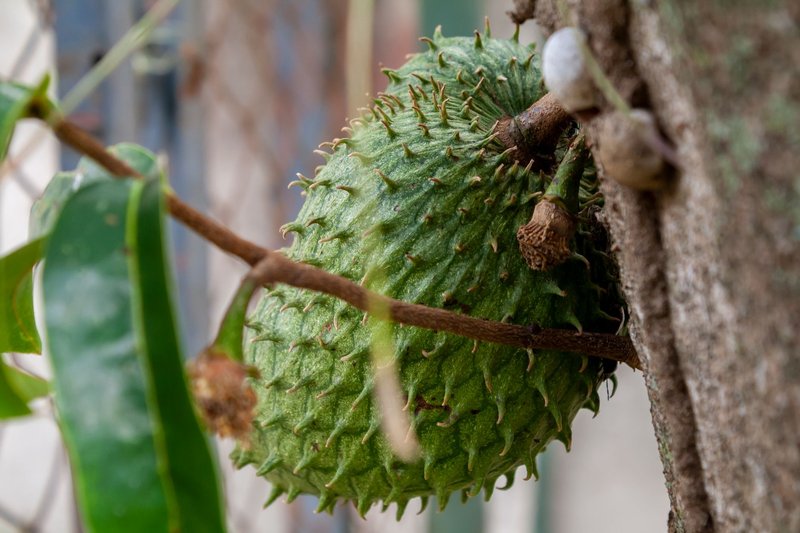
Soursop, also called graviola, is a large spiny fruit with creamy white flesh. The black seeds are toxic and shouldn’t be eaten or crushed into drinks.
- Looks: Heart-shaped, dark green with soft curved spines.
- Taste: Sour and sweet at once, like pineapple and strawberry with a custard texture.
- Ripe while green? Yes. It should yield to pressure and the skin darkens slightly.
- How to eat it: Scoop the pulp, discard seeds, and blend into juice, ice cream or sorbet.
- Season: Year-round in the tropics, with a peak in summer.
18. Cherimoya
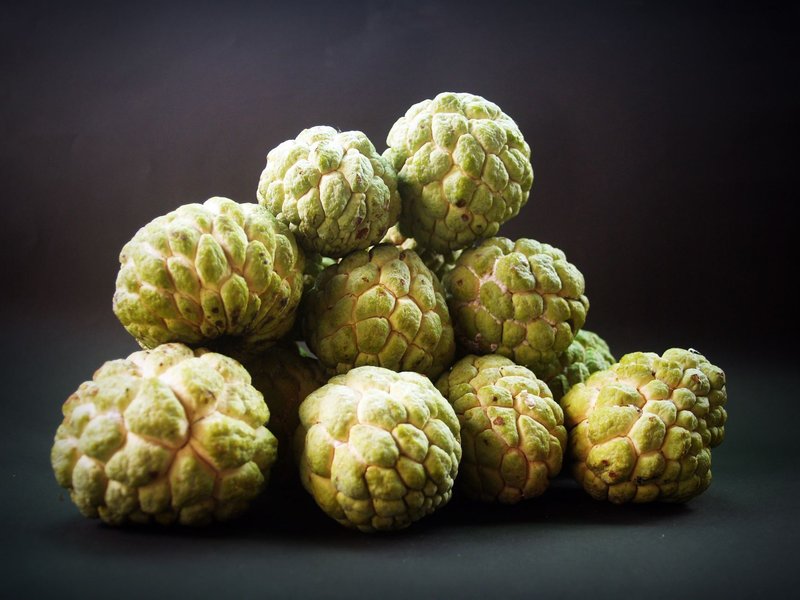
Cherimoya is native to the Andes, and its flesh is soft enough that people eat it with a spoon. Mark Twain called it the most delicious fruit known to man, a claim that is at least partly deserved.
- Looks: Heart-shaped, with scaly green skin that browns as it ripens.
- Taste: Sweet and custardy, with notes of banana and pineapple.
- Ripe while green? Yes. Ripe fruit yields like an avocado and has brown marks.
- How to eat it: Chill, halve and scoop. Don’t eat the seeds.
- Season: Winter to spring.
19. Sugar Apple
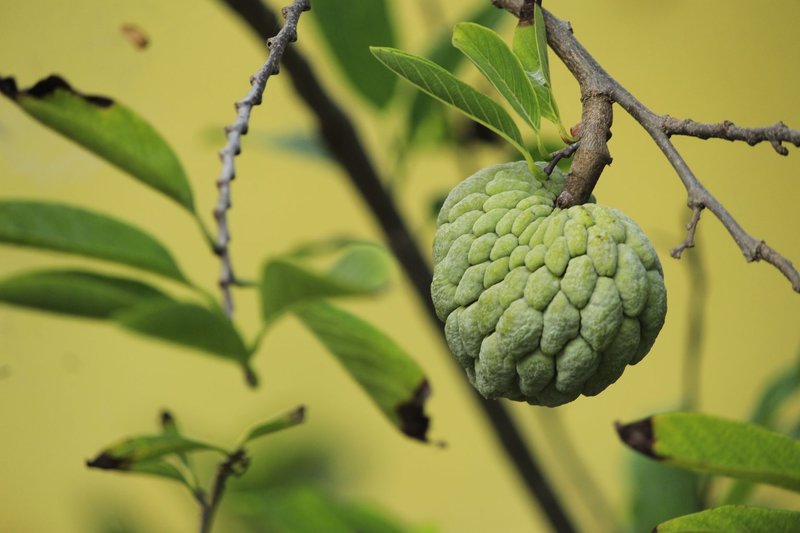
Sugar apple, or sweetsop, is a close relative of cherimoya. When ripe, the knobby segments pull apart, revealing creamy white flesh around black seeds.
- Looks: Round, bumpy green skin with segment ridges.
- Taste: Very sweet and creamy.
- Ripe while green? Yes. Ripe fruit is soft with widened gaps between the segments.
- How to eat it: Pull apart and suck the pulp off the seeds, or blend into ice cream. Discard the seeds.
- Season: Late summer to fall.
20. Breadfruit
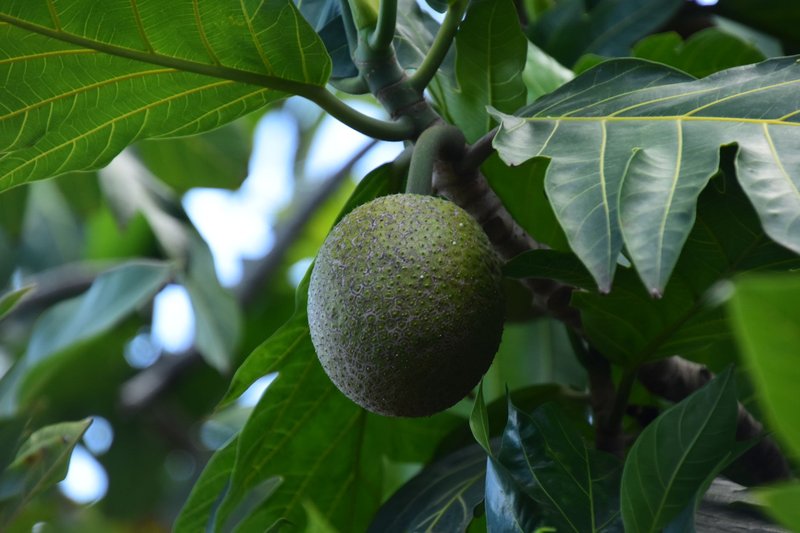
Breadfruit is a starchy staple in the Pacific and Caribbean. A single tree can produce hundreds of fruits per year.
- Looks: Round, 5 to 10 inches wide, with patterned green skin.
- Taste: Starchy and mild like potato when mature but unripe; sweet and soft when fully ripe.
- Ripe while green? Mature green fruit is cooked like a vegetable. Fully ripe fruit turns yellow-brown and soft.
- How to eat it: Roasted, boiled, fried as chips or mashed.
- Season: Varies by region, often one or two main harvests a year.
21. Jackfruit
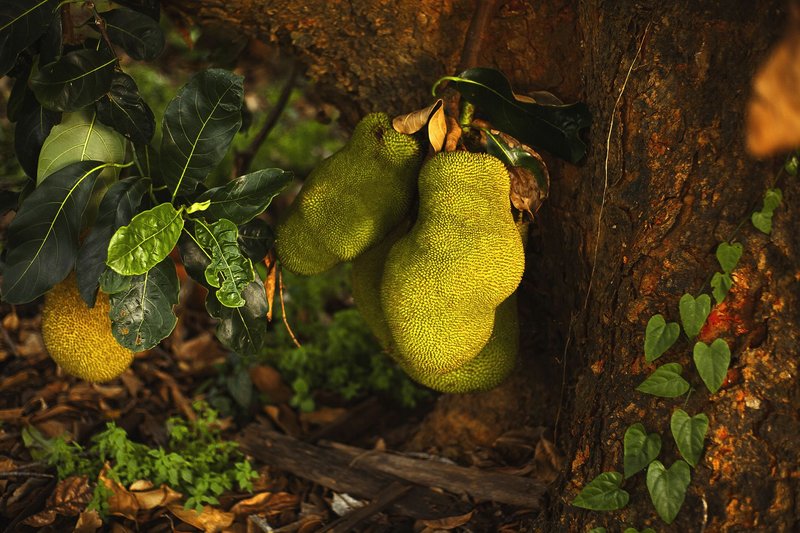
Unripe green jackfruit is the reason plant-based pulled “pork” exists. It’s tough, fibrous and neutral, so it soaks up whatever sauce you give it. Ripe jackfruit is a different thing: yellow, strong-smelling and sweet.
- Looks: Huge, spiky green rind, often 10 pounds or more.
- Taste: Neutral and meaty when unripe; sweet like banana-mango when ripe.
- Ripe while green? No. Green means unripe and best for cooking.
- How to eat it: Simmered in curries or shredded into tacos. Canned young jackfruit in brine is easiest.
- Season: Summer in much of South and Southeast Asia.
22. Green Papaya
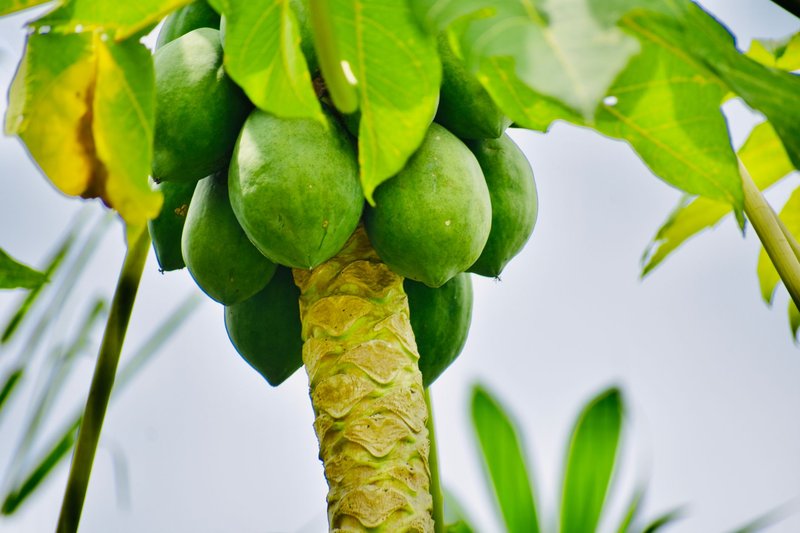
An unripe papaya is a vegetable. It’s firm, white inside, and the base of som tam, the Thai salad. Handle unripe fruit with care since the latex in the skin irritates some people.
- Looks: Hard, smooth green skin, white flesh with tiny seeds.
- Taste: Neutral and crunchy.
- Ripe while green? No. It turns orange and soft when ripe.
- How to eat it: Shredded raw for salads, or simmered in soups and stews.
- Season: Year-round in the tropics.
23. Green Mango
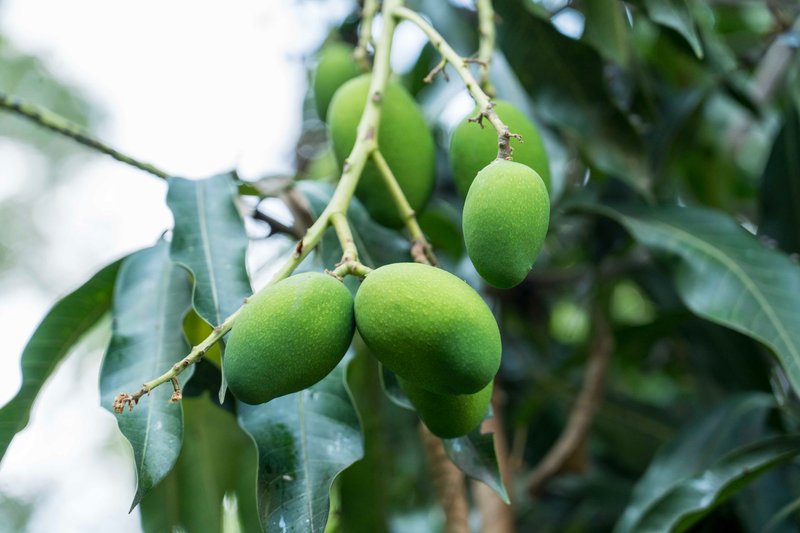
Green mangoes are eaten on purpose. In India and Southeast Asia they’re sold from carts with salt, chili and lime.
- Looks: Firm, smooth green skin with pale yellow flesh.
- Taste: Sharp and sour, almost tart like unripe apple.
- Ripe while green? No. It softens and sweetens as it ripens, though some varieties stay green-skinned when ripe. Smell the stem end: ripe ones are fruity.
- How to eat it: Sliced with chili salt, in chutney or pickled.
- Season: Spring to summer.
24. Green Banana
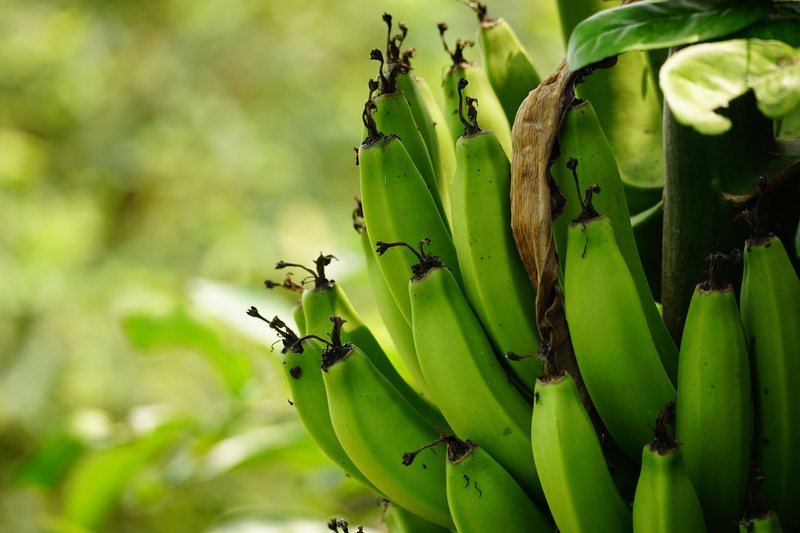
Green bananas are full of starch, and that starch converts to sugar as they ripen. Plantains, bigger cousins, are cooked at both stages.
- Looks: Hard, green skin that is difficult to peel.
- Taste: Starchy, bitter and not sweet.
- Ripe while green? No. Cook them like potatoes.
- How to eat it: Boil, fry as chips, or mash. Peel with a knife, not by hand.
- Season: Year-round.
25. Pawpaw
The pawpaw is North America’s largest native tree fruit, found across eastern woodlands. It bruises easily, so it rarely reaches stores.
- Looks: Kidney-shaped, green-yellow skin that darkens with age.
- Taste: Custard with banana, mango and a little melon.
- Ripe while green? Yes. Ripe fruit is soft, fragrant and falls free from the tree.
- How to eat it: Chill and spoon out the flesh. Skip the seeds and skin.
- Season: September to October.
26. Tomatillo
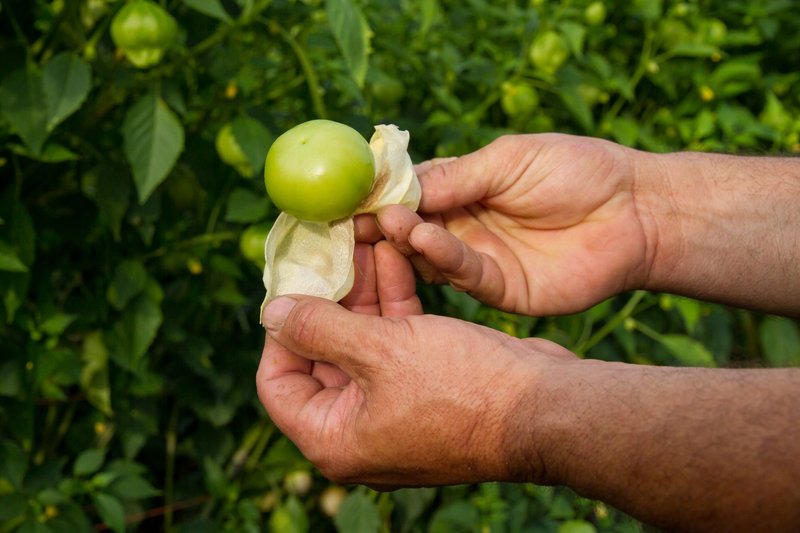
Tomatillos are a papery-husked cousin of the tomato. They’re the base of salsa verde.
- Looks: Small, round, green and sticky under the husk.
- Taste: Tangy and lemony, with a bright sourness.
- Ripe while green? Yes. Ripe fruit fills and splits its husk. Rinse off the sticky film before use.
- How to eat it: Roasted or boiled and blended into salsa, or sliced raw.
- Season: Summer to fall.
27. Kiwiberry
Kiwiberries are grape-sized kiwis with smooth, edible skin. You can eat one in a single bite, with no peeling.
- Looks: Small, smooth green skin, green flesh.
- Taste: Sweet-tart, like kiwi.
- Ripe while green? Yes. Ripe berries are soft.
- How to eat it: Pop them whole, or add to salads and yogurt.
- Season: Late summer to fall.
Storing green fruits
Fruit that’s ripe while green, such as kiwi or feijoa, ripens on the counter and then keeps in the fridge for a few days. Fruit that’s green because it’s unripe, such as mango or banana, needs room temperature and a few days. Put hard fruit in a paper bag with an apple or banana to speed things up, since they release ethylene, the gas that signals ripening. Cut fruit goes in a sealed container in the fridge.
FAQ
What are some green fruits that are ripe?
Green apples, green grapes, kiwi, honeydew, feijoa, pomelo, guava, greengage plums and some avocados are all ripe while green. Judge them by firmness, smell and give rather than color.
Which green fruits are unripe on purpose?
Green mango, green papaya, green banana, unripe jackfruit and olives are picked or sold before ripening. They’re cooked or pickled rather than eaten sweet.
What are the sourest green fruits?
Green mango, gooseberries, calamansi, lime and tart apples like Granny Smith lead the sour list.
Are green fruits healthier than other colors?
Not necessarily. Color tells you which pigments are present, not overall nutrition. Kiwi and guava stand out for vitamin C, and avocado for fiber and unsaturated fat. Eating a variety of colors covers more nutrients.
Are any green fruits unsafe to eat?
Soursop, cherimoya and sugar apple have toxic seeds, so spit them out. Pawpaw skin and seeds are also not eaten. Unripe fruits like green papaya latex can irritate skin. If you’re unsure about a wild fruit, don’t eat it.