Drive south from Saint-Louis and the vegetation tells you where you are before the road signs do. Thorny acacia and scrub give way to baobab country, then to oil palms and tidal channels lined with mangroves, and finally to the tall, humid forest of the Casamance and the southeast. Rainfall does the sorting: under 300 mm a year in the far north, more than 1,200 mm in lower Casamance.
Botanists have recorded around 5,200 vascular plant taxa in Senegal, roughly 500 of them woody. This guide covers 20 you will actually run into, grouped by habitat, with the Wolof name where there is a reliable one, what the plant looks like, and what people do with it. Wolof spellings vary between sources, so expect to see guy written gui and soump written soomp elsewhere.
Contents
- Quick reference table
- Farmland, Sahel and dry savanna
- The Niayes and the Atlantic coast
- Mangroves of the Saloum and Casamance
- Niokolo-Koba and the humid south
- Desertification and the push to replant
- Where to see the plants of Senegal
Quick reference table
| # | Plant | Latin name | Main habitat | Best known for |
|---|---|---|---|---|
| 1 | Baobab | Adansonia digitata | Dry savanna, Sine-Saloum | National tree; bouye juice, lalo leaves |
| 2 | Gum arabic acacia | Senegalia senegal | Sahel | Gum for food and industry |
| 3 | Desert date | Balanites aegyptiaca | Sahel, dry savanna | Fruit, oil, thorny fodder tree |
| 4 | Kad | Faidherbia albida | Farmland parkland | Fertilizes the soil under it |
| 5 | Nger | Guiera senegalensis | Sahel, savanna | Leaf remedies for cough and fever |
| 6 | Tamarind | Tamarindus indica | Dry savanna | Daxaar juice |
| 7 | Kinkéliba | Combretum micranthum | Savanna scrub | Everyday herbal tea |
| 8 | Bissap | Hibiscus sabdariffa | Rain-fed farmland | Red hibiscus drink |
| 9 | Filao | Casuarina equisetifolia | Atlantic coast, Niayes | Windbreak planted to stop dunes |
| 10 | Oil palm | Elaeis guineensis | Niayes, Casamance | Palm oil and palm wine |
| 11 | Neem | Azadirachta indica | Towns and villages | Street shade, traditional remedies |
| 12 | Red mangrove | Rhizophora racemosa | Saloum, Casamance | Stilt roots, oysters, fish nurseries |
| 13 | Black mangrove | Avicennia germinans | Saloum, Casamance | Salt-flat survivor with breathing roots |
| 14 | African mahogany | Khaya senegalensis | Southern savanna | Timber and bark medicine |
| 15 | African rosewood | Pterocarpus erinaceus | Niokolo-Koba, Casamance | Hardwood under heavy pressure |
| 16 | Kapok | Ceiba pentandra | Casamance, gallery forest | Giant buttressed trunk |
| 17 | Néré | Parkia biglobosa | Southern savanna | Fermented seed condiment |
| 18 | Ditakh | Detarium senegalense | Southern Senegal | Tart fruit and juice |
| 19 | Cashew | Anacardium occidentale | Casamance | Main cash crop of the south |
| 20 | Mango | Mangifera indica | Casamance, Niayes | Orchards and roadside shade |
Farmland, Sahel and dry savanna
This is the Senegal most visitors see first: flat, dusty for half the year, green and loud for the other half. The trees here have to survive months with no rain, so they are thorny, deep-rooted, or both. The drought and fire traits of savanna plants explain much of the vegetation you will see on the drive.
1. Baobab (Adansonia digitata)
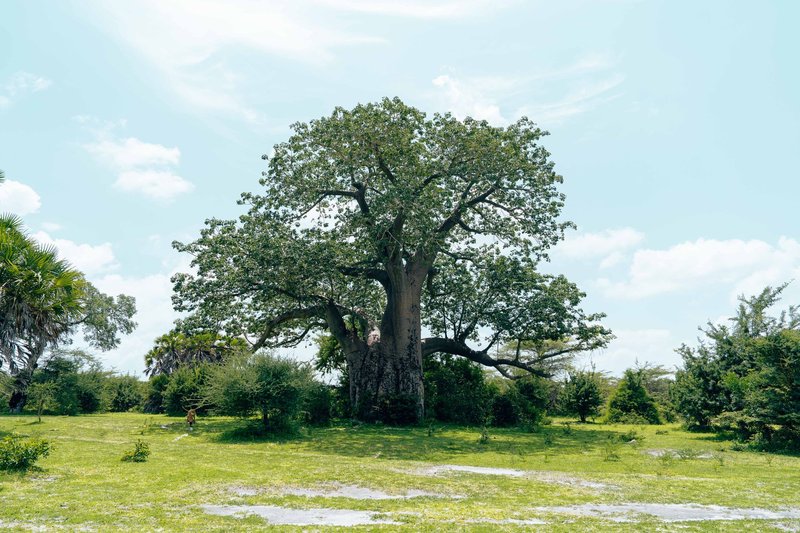
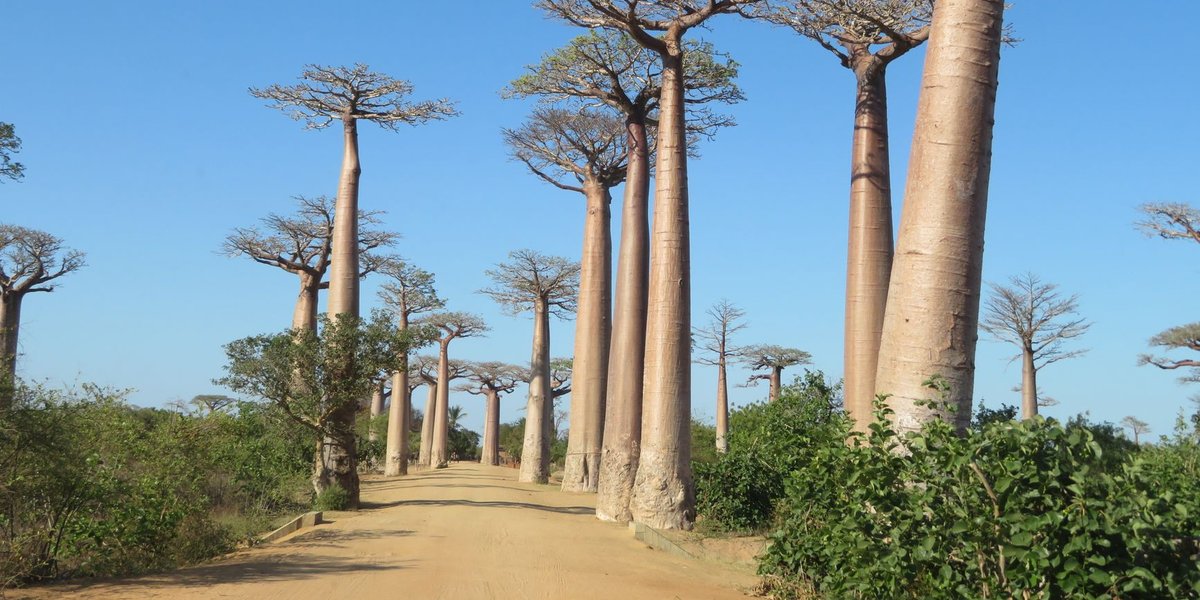
Senegal’s national tree, and it sits on the national coat of arms. The Wolof call it guy. The trunk is a swollen barrel that stores water, and the crown looks like roots sticking up into the sky, which is why the old story says the tree was planted upside down. Many of the big ones are several centuries old.
Almost every part gets used. The dry, chalky pulp inside the fruit, called bouye, is stirred into water and milk for a tart, creamy juice sold in plastic bags on every street corner. The young leaves are dried and ground into lalo, which thickens sauces. Hollow trunks were traditionally used to bury griots, the hereditary poets and musicians of the Wolof and Sereer. You’ll see the best specimens in the dry savanna south and east of Dakar and across the Sine-Saloum.
2. Gum arabic acacia (Senegalia senegal)
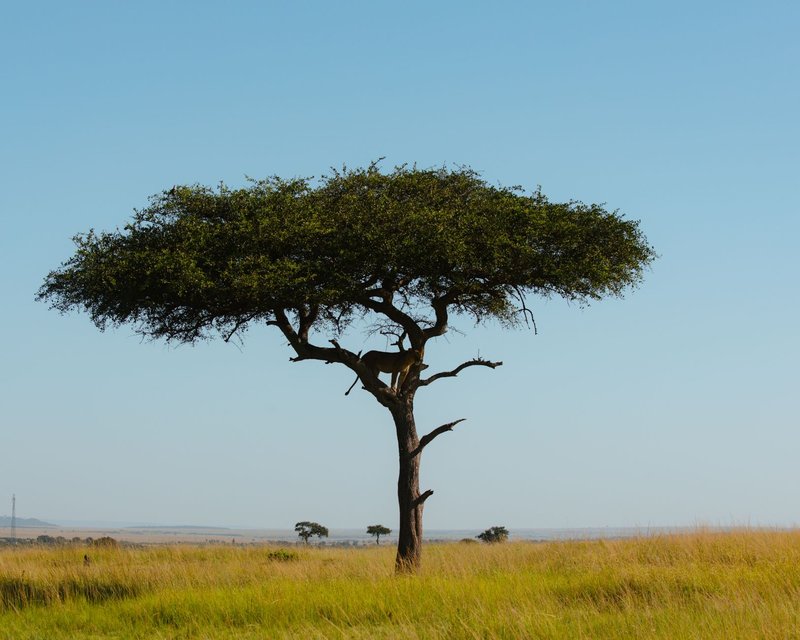
A short, flat-topped, thorny tree of the northern Sahel, known in Wolof as werek. It looks like every acacia in a safari photograph, which makes it easy to walk past.
Cut the bark and it weeps a clear amber resin that hardens on the branch. That resin is gum arabic, an ingredient in soft drinks, confectionery, and printing ink. Gum from the Senegal River region fed a European trade that centered on Saint-Louis from the 1600s onward, long before peanuts took over the economy. Senegal is a minor producer today next to Sudan, but the tree is still planted for it, and it is one of the species used in reforestation across the north.
3. Desert date (Balanites aegyptiaca)
The Wolof name is soump. It is a bushy tree armed with straight green thorns, and it keeps its leaves when most of its neighbors have dropped theirs, so it is the one livestock herders look for in the dry season.
The date-like fruit has a sticky, sweet-bitter pulp around a hard stone, and the seed inside yields an oil used in cooking and skin care. The tree tolerates drought, grazing, and poor soil, which is why it features in Great Green Wall planting lists. If a tree in northern Senegal has green leaves in April and you can’t explain why, it’s probably this one.
4. Kad (Faidherbia albida)
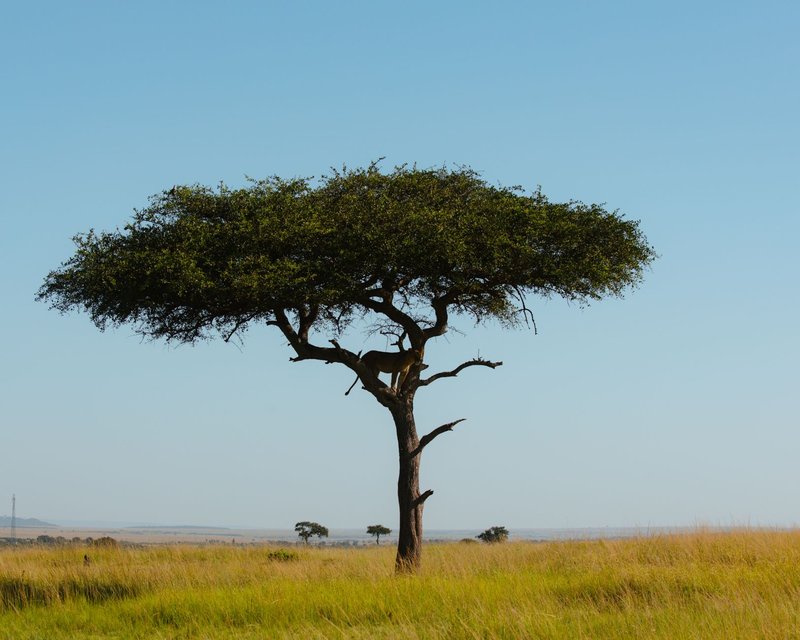
Most trees leaf out when the rains come. This one does the opposite: it drops its leaves at the start of the rainy season and grows them back in the dry season. Crops planted underneath get sun while they grow and shade, plus nitrogen-rich leaf litter, when the heat peaks.
Sereer farmers in the Sine region have kept kad in their millet fields for generations, and the open “parkland” they produce is a textbook example of agroforestry. Pods and leaves feed goats and cattle at the point in the year when nothing else is green. The tree is also a reason the Sereer fields in the central groundnut basin look so unlike the scrubland around them.
5. Nger (Guiera senegalensis)
A rounded, blue-green shrub, a few meters tall, that grows almost everywhere in the Sahel and savanna. It is easy to miss and impossible to avoid. Nger is among the most used medicinal plants in Senegal, and the Wolof name appears in nearly every list of local remedies.
Leaves are boiled and drunk for coughs, fevers, and stomach complaints, or used in steam baths. Farmers also leave it in fields because it resprouts after cutting and shades the soil. Plenty of lab work has been done on its extracts, but the plant itself is simple: if a Senegalese grandmother recommends a shrub for a cold, this is a likely candidate.
6. Tamarind (Tamarindus indica)
Wolof: daxaar. A large, spreading tree with feathery leaves and brown, bean-like pods holding sticky pulp. It is native to tropical Africa, and the name comes to English via Arabic, not India, where it was introduced long ago.
The pulp is soaked and sweetened into a dark, sour juice that turns up at weddings, Ramadan evening meals, and roadside stalls. One popular theory says the city name Dakar comes from daxaar, though the etymology is disputed. Whatever the truth, the tree casts a wide, cool shade, and villagers in the dry savanna plant it for exactly that reason.
7. Kinkéliba (Combretum micranthum)
If you have breakfast in a Senegalese home, there is a good chance the kettle holds kinkéliba. The leaves of this scrambling shrub are brewed into a mild, slightly woody tea, drunk daily and sold in tea bags in supermarkets across West Africa.
The shrub grows in savanna scrub and dry woodland. Traditional use covers digestion, fevers, and liver complaints, and herbalists treat it as a gentle all-purpose tonic. It is the plant to know if you are researching medicinal plants of Senegal, because it is one of the few that has made the jump from village remedy to everyday drink.
8. Bissap (Hibiscus sabdariffa)
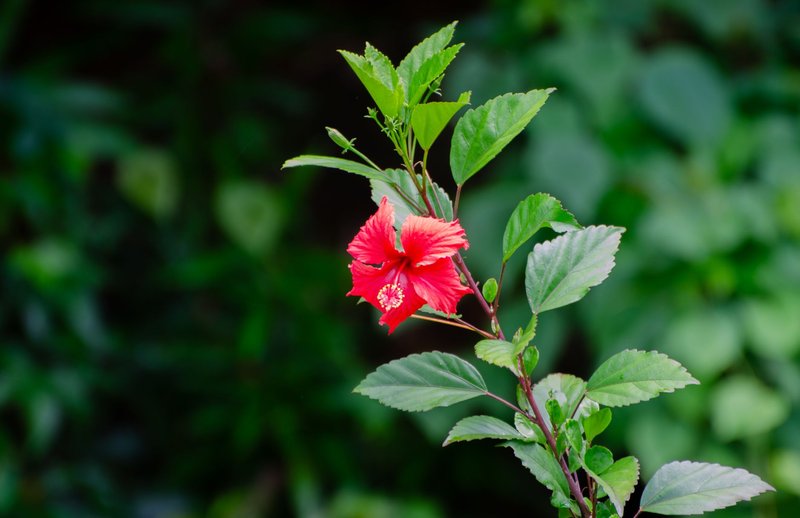
Not a tree, not wild, and still the plant most associated with Senegalese drinks. Bissap is a hibiscus grown as an annual in rain-fed fields. The crop is the fleshy red calyx around the seed pod, picked around the end of the rainy season.
Steep the calyces in water, add sugar, mint, and sometimes orange blossom water or vanilla, then chill. The result is a deep red, tart drink served at every celebration and sold in bottles and bags everywhere else. In Senegal the plant and the drink share the name, and the dried calyces are also exported as hibiscus tea.
The Niayes and the Atlantic coast
A narrow strip of coastal dunes and low, damp depressions runs north from Dakar toward Saint-Louis. The Niayes get sea breezes and a shallow water table, which makes them the country’s main market-gardening zone. Onions, tomatoes, and cabbages grow in sheltered hollows between the dunes.
9. Filao (Casuarina equisetifolia)
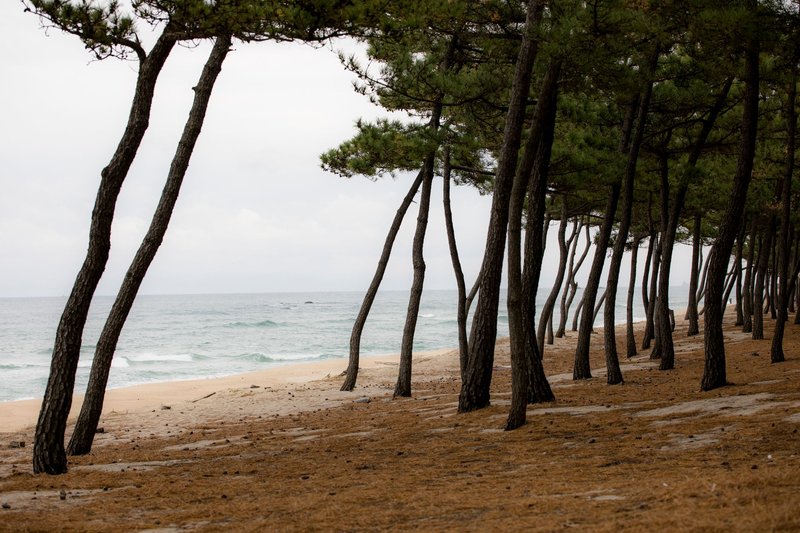
Filao looks like a pine, with long drooping needles, but it is a flowering tree and not a conifer. It is also not native. It came from Australia and Southeast Asia and was planted along the Grande Côte, starting in the 1950s, to hold back moving dunes that were burying vegetable gardens.
It worked well enough that the dark green belt is now part of the coastline. Walk under filao and you’ll hear the wind in the needles and step on a thick brown carpet. Local farmers value it as a windbreak and for firewood, and it fixes nitrogen in poor sand. Ecologists note that it supports fewer wild species than the native vegetation it replaced, which is the tradeoff for a stable coast.
10. Oil palm (Elaeis guineensis)
A pocket of oil palm in the damp Niayes lowlands, far from the humid forest where the species is at home, surprises first-time visitors. These stands sit at the northern edge of the palm’s range, held there by the shallow groundwater. Further south in the Casamance, oil palms are everywhere.
The fruit clusters are boiled and pressed for red palm oil, a staple of southern cooking. Palm wine comes from tapping the sap at the crown, usually by a climber with a rope loop around the trunk and his own back. It is sold fresh and mildly sweet in the morning and gets stronger by afternoon.
11. Neem (Azadirachta indica)
Wolof: nim. Neem is the street tree of Senegalese towns. It came from South Asia, and it was planted so widely for shade that a walk through many Dakar or Thiès neighborhoods means walking under it, in school yards, markets, and compound walls.
The dense, evergreen crown stays cool through the worst of the dry season. Leaves, bark, and seed oil have long traditional uses, from natural insect repellent to remedies for skin complaints. It grows fast, takes heat, and survives poor soil, which is why planting programs in the Sahel use it. Its sharp, bitter smell when you crush a leaf is the quickest way to confirm the ID.
Mangroves of the Saloum and Casamance
The southern estuaries are some of the most distinctive landscapes in West Africa. The Saloum Delta became a UNESCO World Heritage Site in 2011, recognized for its maze of mangrove-lined channels, islands, and shell middens. The Casamance River estuary further south has even denser mangroves.
Two species do most of the work.
12. Red mangrove (Rhizophora racemosa)
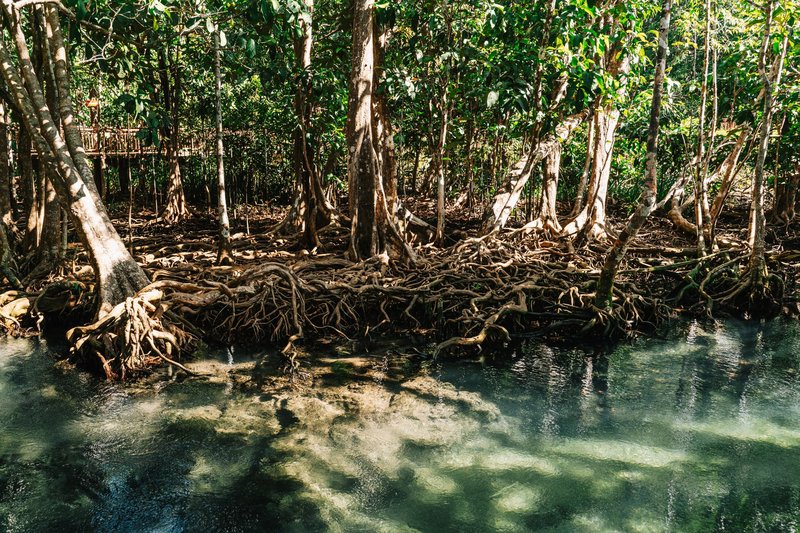
The picture most people have of a mangrove is this one: tall, arching stilt roots standing in the tide, with glossy leaves above. The roots trap sediment, break wave energy, and create a nursery for young fish, shrimp, and crabs.
Women in the Saloum and Casamance harvest oysters from the submerged roots, collecting them at low tide, then smoking or drying them for sale. Red mangrove also gives wood used for fuel and building poles. The seeds sprout while still on the tree, dropping as long, pencil-shaped propagules that root where they land. That feature makes it the standard species for replanting.
13. Black mangrove (Avicennia germinans)
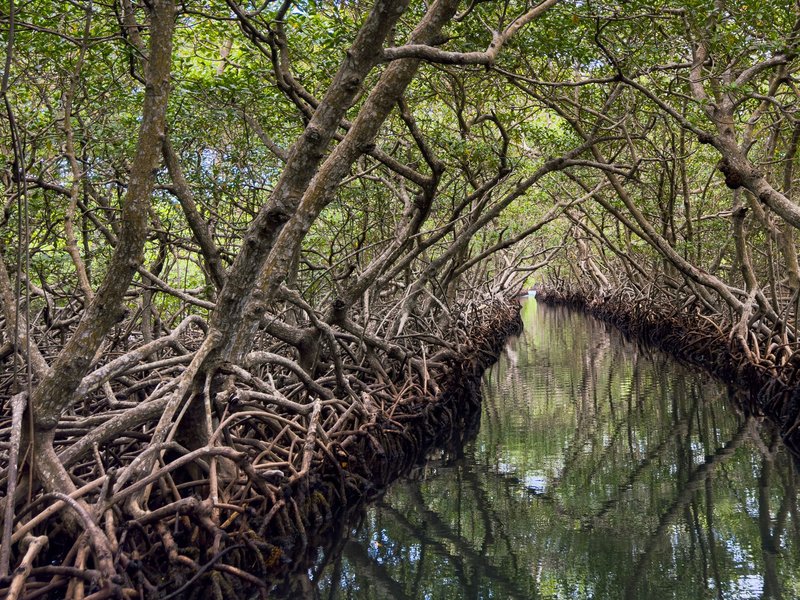
Black mangrove grows further back from the water on higher, saltier ground, including the bare salt flats the locals call tannes. Instead of stilt roots, it sends up pencil-like breathing roots, called pneumatophores, that stick out of the mud like a field of tiny stakes.
It handles salinity that would kill most other plants, and it excretes salt through its leaves, so the undersides often look dusty white. In the 1970s and 1980s, severe droughts pushed salt up the estuaries and killed large stretches of mangrove. Replanting by community groups since then has mostly used red mangrove propagules in the wetter channels, with black mangrove recolonizing on its own on higher ground.
Niokolo-Koba and the humid south
Cross into Casamance or the southeast and the landscape changes sharply: taller trees, longer rainy seasons, and forests that stay green for months. Niokolo-Koba National Park, the largest protected area in Senegal, has classic savanna with scattered trees, seasonal pools, and strips of dense gallery forest along its rivers, with well over a thousand plant species recorded.
14. African mahogany (Khaya senegalensis)
Wolof: xay. The genus name Khaya comes from this word. French speakers call the tree caïlcédrat, “Senegal cedar.” It grows to 30 meters, with a dense, dark crown that holds its leaves nearly all year and a bark that flakes in rounded plates.
The reddish timber is prized for furniture and boats, and the bitter bark is boiled in traditional medicine, mostly as a fever and stomach remedy. Overharvesting has made wild trees scarce enough that the IUCN lists the species as Vulnerable. It is also a popular avenue and shade tree, so you can see it in towns without traveling to the forest.
15. African rosewood (Pterocarpus erinaceus)
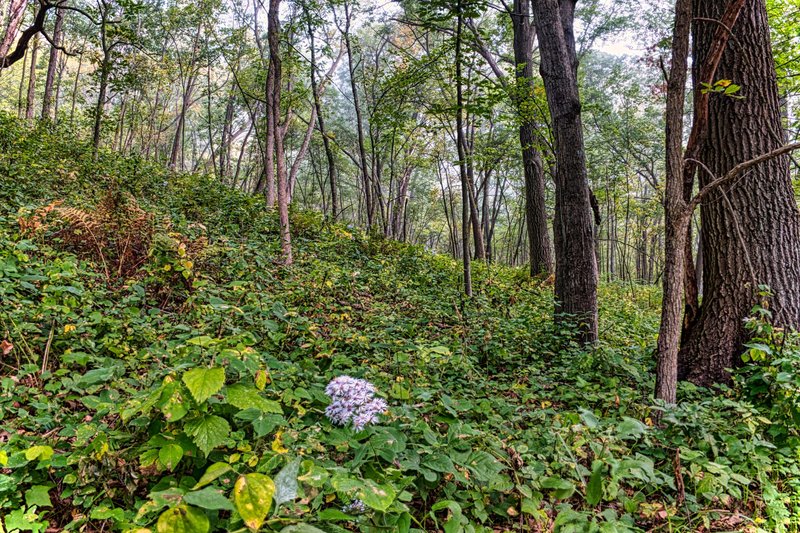
The Wolof name is ven. It is a medium-sized tree with a spreading crown and pods like flat, spiny discs. In dry season the leaves drop, and it flowers in a burst of yellow before the rains.
Its dense red timber is the reason it is in trouble. Illegal logging of rosewood in southern Senegal, with much of the wood crossing into The Gambia and heading to Asia, became a major conservation issue in the 2010s. The species was added to Appendix II of CITES, the international convention that regulates trade in endangered plants and animals, in 2016. Niokolo-Koba remains one of the few places where mature trees stand.
16. Kapok (Ceiba pentandra)
The kapok, or fromager in French, is the tallest tree most visitors will see in Senegal, a smooth gray giant that can pass 50 meters, with buttress roots splaying out like fins. Young trunks carry conical spines. Villages in Casamance often keep one beside the central meeting place, treating it as a shelter and landmark.
The seed pods split open to release a silky fiber that was once the standard stuffing for life jackets and pillows. Bats pollinate the night-opening flowers. In many West African cultures the tree is considered a spirit dwelling, and cutting one down requires permission. That may be one reason the best specimens are still standing.
17. Néré (Parkia biglobosa)
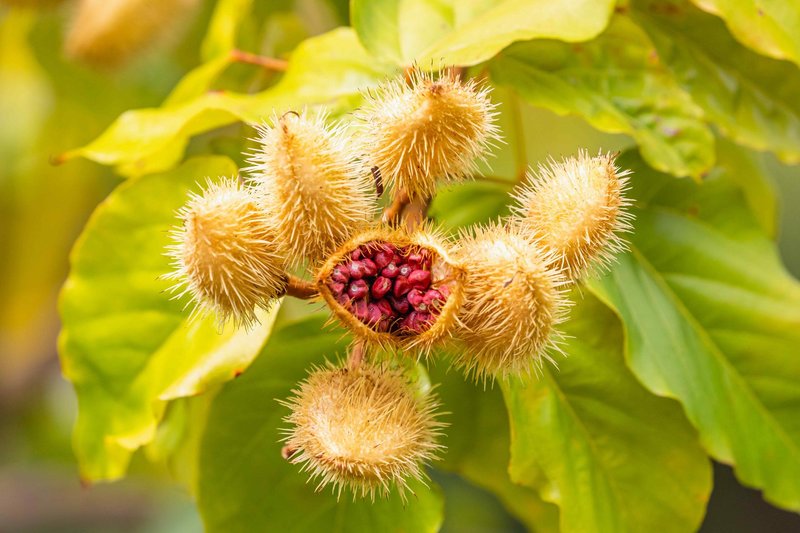
A tree that looks plain until it flowers: red, pompom-shaped flower heads hang in clusters from long stalks, and long brown pods follow. It grows in the southern savanna and the Casamance.
Inside each pod, a mealy yellow pulp surrounds black seeds. The pulp is eaten as a sweet snack or stirred into drinks. The seeds are boiled, fermented, and pressed into a pungent paste known in Wolof as netetou, which is added to sauces for the same reason cooks elsewhere use stock or miso: deep savory flavor. It’s an acquired smell and a permanent fixture in rural kitchens.
18. Ditakh (Detarium senegalense)
If you’ve had a thick, tart, slightly resinous fruit juice in Dakar and couldn’t place the flavor, it was probably ditakh. The tree grows in southern Senegal, and the green, round fruit has a dry, fibrous pulp wrapped around a large seed.
The pulp is soaked and sieved into one of the country’s most popular street drinks, sold chilled. It’s an acquired taste that people from outside Senegal either love or push away after one sip. Wild trees supply most of the fruit, which means harvesting pressure matters, and the fruit season is short.
19. Cashew (Anacardium occidentale)
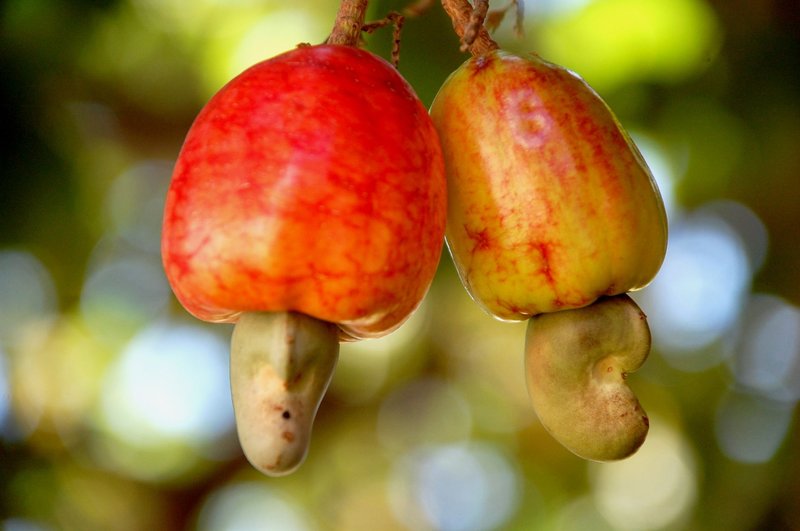
Cashew is not native. Portuguese traders brought it from Brazil, and it spread across West Africa as a hedge and soil binder before becoming a major crop. In the Casamance it is now the main cash crop of many villages, with harvests running roughly from March to June.
The nut hangs below a fleshy, yellow or red cashew apple. The apple is juicy, astringent, and rarely exported because it bruises within a day, so locals eat it, press it for juice, or ferment it. Most nuts leave Senegal raw and are processed in Asia, a gap that producers and the government have been trying to close with local shelling plants.
20. Mango (Mangifera indica)
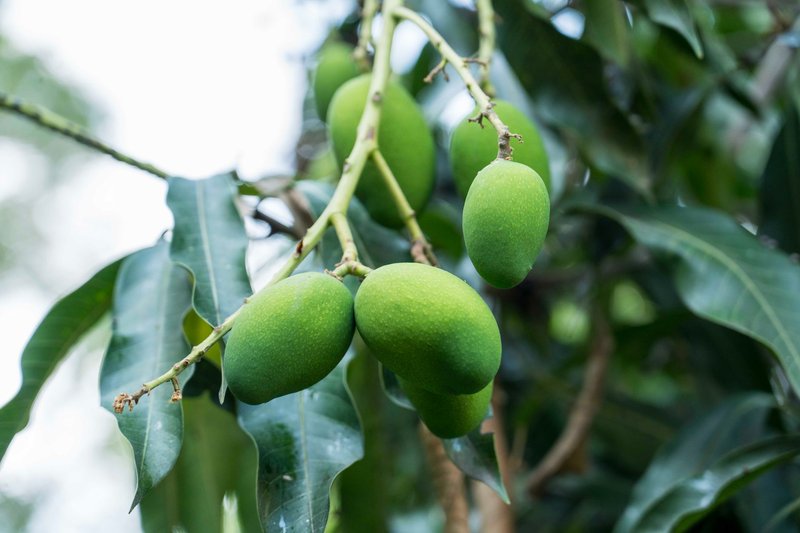
Another import, from South Asia, and it fits in so well that visitors assume it’s native. A mature mango is a huge, round, dark-green dome, and in Casamance villages the ground beneath is a living room. Fruiting runs roughly from May through August, depending on the variety and the region.
Roadside piles of ripe mangoes sell for almost nothing in season. Commercial orchards in the Niayes and the Casamance grow export varieties such as Kent and Keitt, mostly for Europe. Turn off the main road in July in the south and you can still find trees dropping fruit that nobody picks.
Desertification and the push to replant
The northern half of Senegal sits at the edge of the Sahara, and the long droughts of the 1970s and 1980s pushed the desert line south. Trees were cut for fuel, pastures thinned, soils blew away, and salt moved up the southern rivers. The loss was not only ecological: farmers moved, herders moved, and many landscapes in this guide looked different 50 years ago.
Senegal’s response includes a stretch of the African Union-led Great Green Wall, a belt of replanting across the Sahel. In Senegal, planting lists lean on tough native species: gum arabic acacia, desert date, and jujube, alongside community-managed forest reserves. In the south, villagers and NGOs replant mangroves by hand, wading into the mud with armfuls of red mangrove propagules.
Results are uneven. Seedlings die in dry years and goats eat the survivors, so projects that give local people a stake in the trees do better than those that hand over seedlings and leave.
Where to see the plants of Senegal
You can cover most of the plants of Senegal in three trips, each in a different part of the country.
Near Dakar. Bandia Reserve, about an hour south-east of the capital, has large baobabs, acacia, and desert date in a fenced savanna with giraffes and rhinos wandering among the trees. The coastal road north toward Saint-Louis runs along the filao belt and the Niayes market gardens. Neem and mango are in every town.
Saloum Delta. Boats leave from Toubacouta, Palmarin, and Djiffer and take half a day to a full day through the channels. You’ll see red mangrove from the water, black mangrove on the flats behind, and baobabs standing on shell islands such as Fadiouth near Joal. Go at high tide for the narrow channels.
Casamance and the southeast. Around Ziguinchor, Oussouye, and Cap Skirring, you get oil palms, kapok, mango, and cashew orchards, with mangrove creeks nearby. Further east, Niokolo-Koba holds rosewood, mahogany, and gallery forest, and visits are easiest in the dry season, roughly December to May, when animals gather near water. Roads can be rough and some tracks close after rain, so book through a guide or a lodge.
Timing changes what you see. The rainy season, July to October, is greenest, with baobab flowers opening at night and bissap fields ripening toward the end. The dry season is leafless and dusty but better for wildlife, and baobab fruit is ready to pick. Cashews fall in spring, mangoes in summer, and bissap in late autumn. Whichever month you choose, the plants of Senegal give you something to look at.