The birds of the Comoros come down to a short list of island specialists. A few hundred miles of ocean between Africa and Madagascar produced three scops owls that each live on a single island, a flycatcher found on one volcano and a parrot that exists nowhere else. Most of these species are small, shy and hard to photograph, which is why the existing guides stop at a bare checklist.
This one goes species by species: where each bird lives, how to tell it apart, and how worried conservationists are about it.
Table of Contents
- Why the Comoros Has So Many Endemic Birds
- How Many Birds Live in the Comoros?
- 11 Birds of the Comoros to Know
- Where and When to Go Birdwatching in the Comoros
- The Short Version
Why the Comoros Has So Many Endemic Birds
The Comoros is a chain of volcanic islands: Grande Comore (Ngazidja), Anjouan (Nzwani) and Mohéli (Mwali), plus French-administered Mayotte. None of them was ever attached to a continent. Every bird here arrived by wing, and most arrived from Madagascar, which is why the avifauna reads as strongly Malagasy. The full list of Madagascar’s native animals gives the wider picture of that shared fauna. Brush warblers, vangas, bulbuls and vasa-type parrots all trace back across that water.
Then isolation did the rest. A small founding population lands on a mountain island, stops mixing with its relatives and drifts into a new species. Repeat that on the next island and you get the Comoros pattern: close cousins, one per island. There are separate white-eyes on Grande Comore, Anjouan and Mohéli, and a separate scops owl on each of the three main islands. Brush warblers and bulbuls follow the same logic.
The mountains matter as much as the water. Mount Karthala on Grande Comore rises to 2,361 meters and is one of the world’s most active volcanoes. Its forested upper slopes hold species that live nowhere else, and its eruptions are a recurring threat to them.
How Many Birds Live in the Comoros?
Depends on who’s counting. Wikipedia’s checklist gives 166 species and says 17 are endemic, while its own species tags mark 20. The African Bird Club lists about 160 species including vagrants and 21 endemic entries.
The gaps usually come from three things: whether Mayotte counts (several “Comoros” endemics also occur there), how taxonomists split or lump island forms, and whether accidental visitors are included. For this guide, treat the endemic total as roughly 20 and the species total as roughly 160 to 166.
Statuses below follow IUCN-based listings. They shift with each reassessment, and some sources disagree, so check the IUCN Red List before quoting a category. For the wider set of endangered species across the islands, see Endangered Species in the Comoros.
11 Birds of the Comoros to Know
The first entry is the most widespread of the group. The rest are tied to particular islands or mountains.
1. Comoro Blue Pigeon (Alectroenas sganzini)
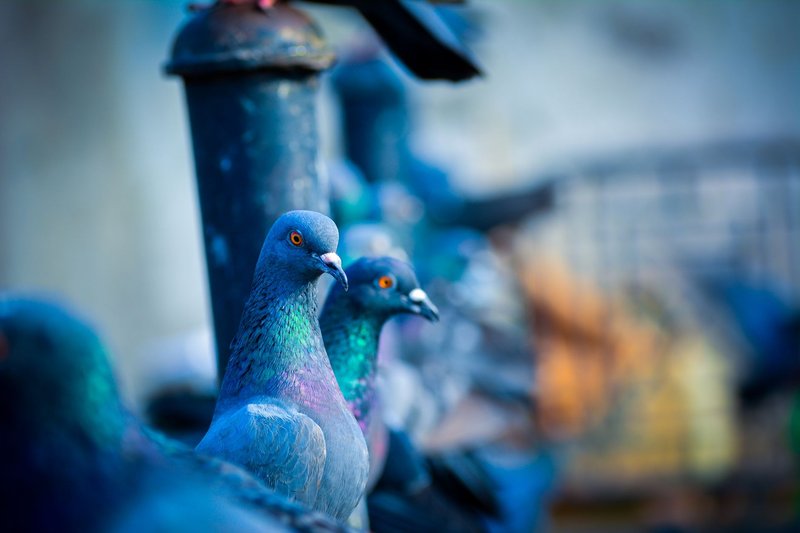
Where: Forest on the main islands, from lowland woods to montane slopes.
The Comoro blue pigeon is the bird most often named as the national bird of the Comoros, and it earns the attention. Look for a silvery gray head and neck, a violet-blue breast and a greenish-blue belly. In good light it looks like a pigeon dipped in jewelry.
It’s a fruit eater that moves between forest patches, so you often see it crossing a clearing at speed rather than perched. Listen for a deep, low call from the canopy before you spot it.
IUCN status: Near Threatened in recent listings. Forest loss on the islands is the main pressure.
2. Karthala Scops Owl (Otus pauliani)
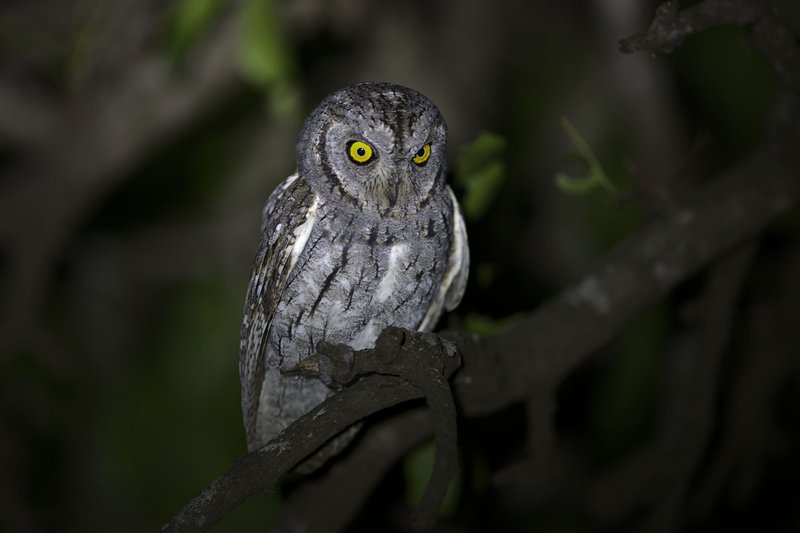
Where: Forested slopes of Mount Karthala, Grande Comore.
A small owl with the compact, ear-tufted outline that gives scops owls their look. It was described only in 1960, and it has stayed rare. You will almost certainly hear it before you see it, and you’ll need a night walk with a local guide.
IUCN status: Threatened, listed as Endangered or Critically Endangered depending on the source and assessment year.
3. Anjouan Scops Owl (Otus capnodes)
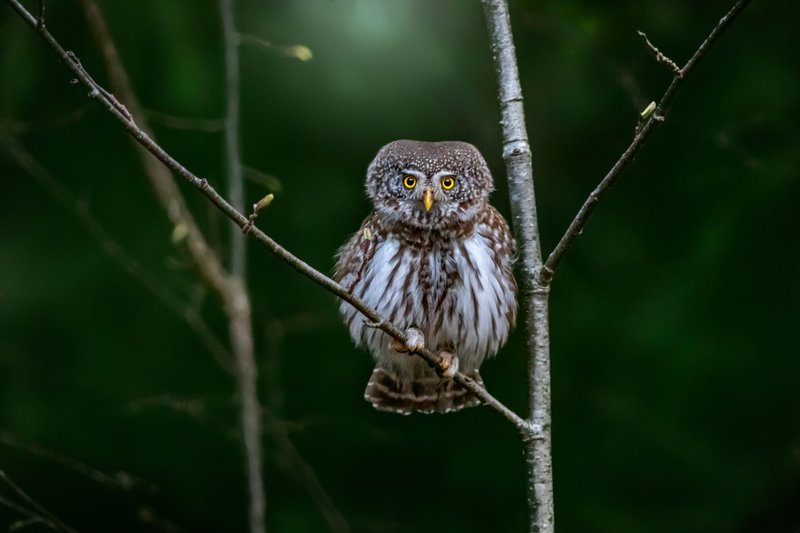
Where: Remaining highland forest on Anjouan.
This owl went unrecorded for more than a century after its first collection in 1886 and was rediscovered in 1992. Its entire range is a patch of forest on one steep, densely farmed island, so there is very little room for error. Anjouan is among the most deforested islands in the western Indian Ocean.
IUCN status: Critically Endangered in most listings.
4. Mohéli Scops Owl (Otus moheliensis)
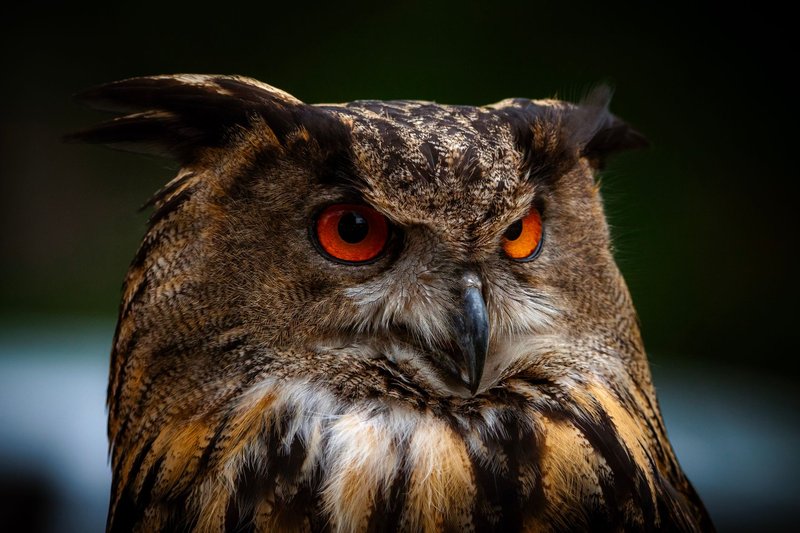
Where: Forest on Mohéli, mainly the highlands.
Science didn’t have a name for this one until 1998. Mohéli is the least populated and best-forested of the three main islands, which gives this owl the most breathing room of the trio, though not a lot. The three owls differ in call and in details of plumage, and that is how researchers separate them in the field.
IUCN status: Threatened, listed between Endangered and Critically Endangered depending on the source.
5. Humblot’s Flycatcher (Humblotia flavirostris)
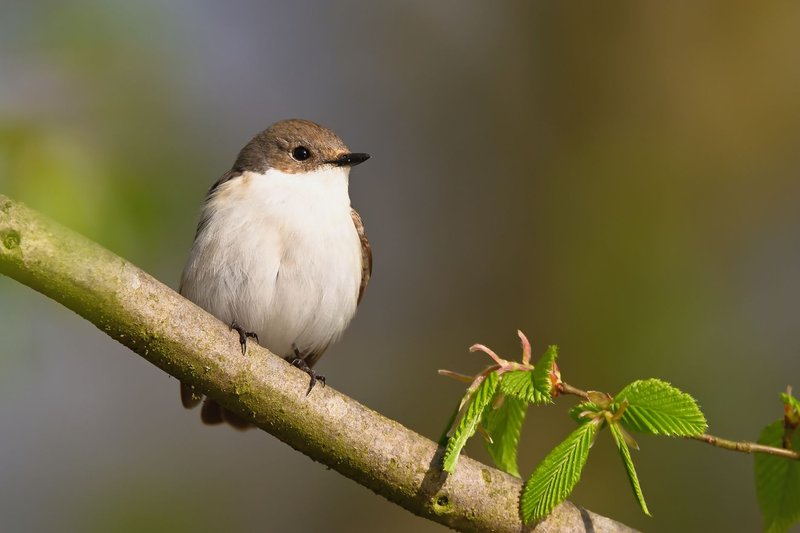
Where: Forested slopes of Mount Karthala, Grande Comore.
The species name means “yellow-billed,” and the bill is the first thing to look for. Humblot’s flycatcher is the only member of its genus, so there is no close lookalike to confuse it with. It hunts insects in the mid-levels of the forest, usually in groups of two or three.
Nest-raiding introduced rats and the spread of settlements up the mountain are the main threats.
IUCN status: Endangered in most listings (a few sources still say Vulnerable).
6. Comoro Black Parrot (Coracopsis sibilans)
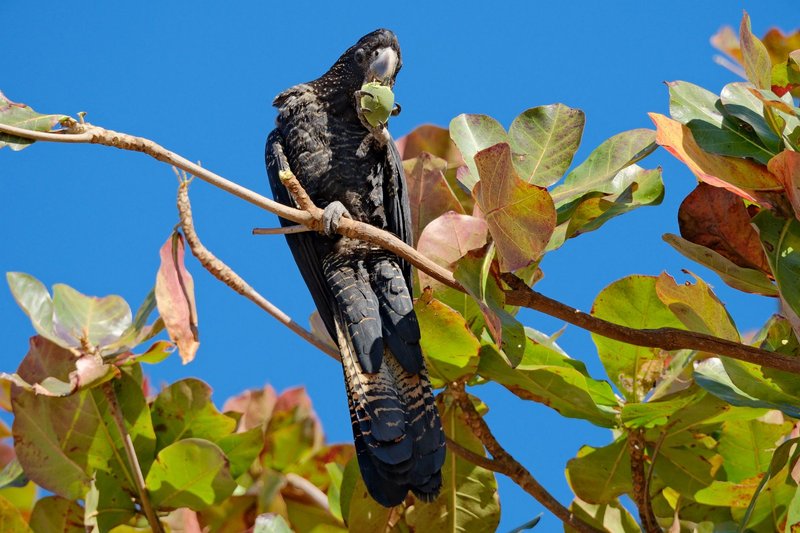
Where: Forests of Grande Comore and Anjouan.
A close relative of the vasa parrots of Madagascar, and just as sober: dull blackish-brown, no flashy colors, nothing like a typical parrot. You’ll usually notice it flying over the canopy in pairs or small groups, giving whistled calls. Look for a heavy-bodied bird with a short, broad tail.
IUCN status: Near Threatened.
7. Comoro Thrush (Turdus bewsheri)
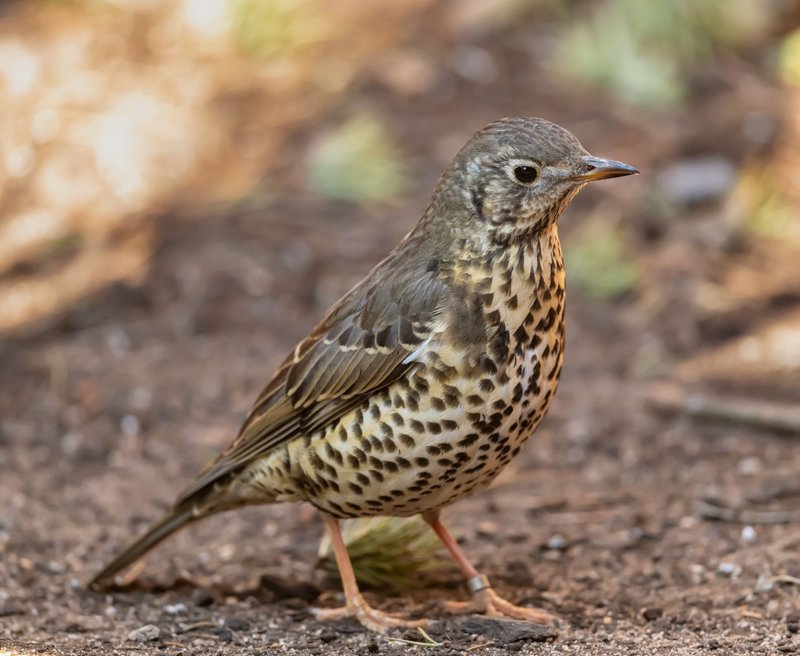
Where: Evergreen forest and forest edge on Grande Comore, Mohéli and Anjouan.
This is the bird you are most likely to see. A thrush with three island subspecies, one per island, and the closest thing the archipelago has to a robin: it forages on the forest floor and flicks aside leaf litter for insects and spiders, then eats fruit and seeds when they’re available. Behavior is your best clue, because it hops and pauses like any thrush.
IUCN status: Least Concern, with a population described as relatively stable.
8. Karthala White-eye (Zosterops mouroniensis)
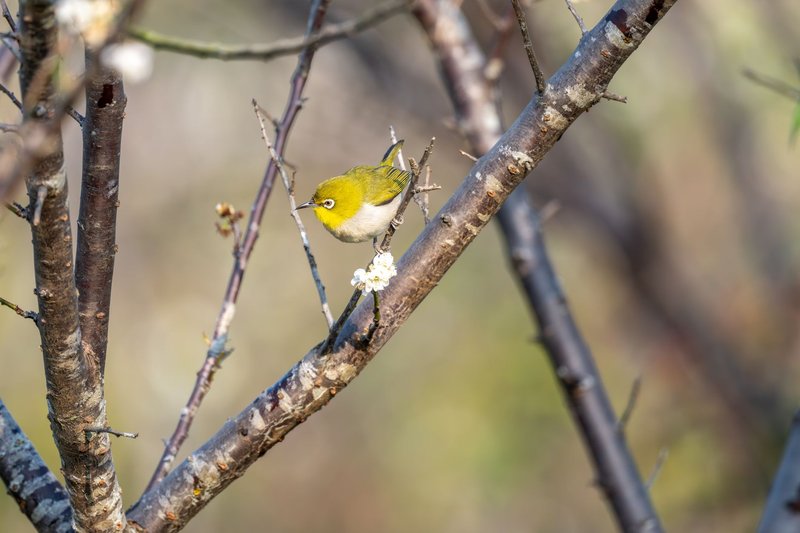
Where: Heath woodland (Philippia) on Mount Karthala, Grande Comore.
At about 13 centimeters long, with olive upperparts, yellow-green underparts and a white ring around each eye, it looks like a white-eye anywhere. What’s unusual is the address. It lives on one volcano, in one type of high-altitude scrub, and the volcano has erupted repeatedly in recent decades.
IUCN status: Vulnerable. A single bad eruption is the biggest single risk to the whole population.
9. Grand Comoro Drongo (Dicrurus fuscipennis)
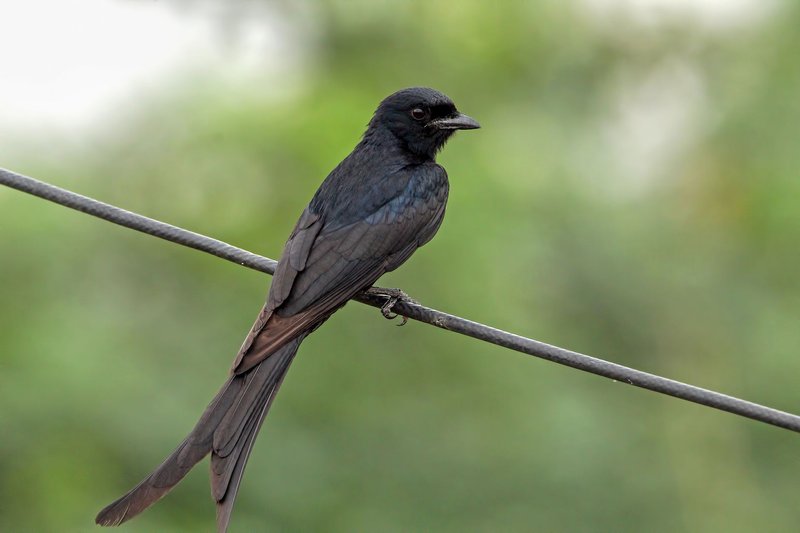
Where: Forest and adjoining plantations on Grande Comore.
A glossy black insect-hunter about 24 centimeters long with a dark bill and legs. Drongos sit upright on exposed perches and sally out after flying insects, so a lone black bird on a bare branch in forest is a good first guess. It uses plantation edges as well as forest, but the loss of old forest is what put it on the threatened list.
IUCN status: Vulnerable in recent listings (some sources, including the African Bird Club, still show Endangered).
10. Humblot’s Sunbird (Cinnyris humbloti)
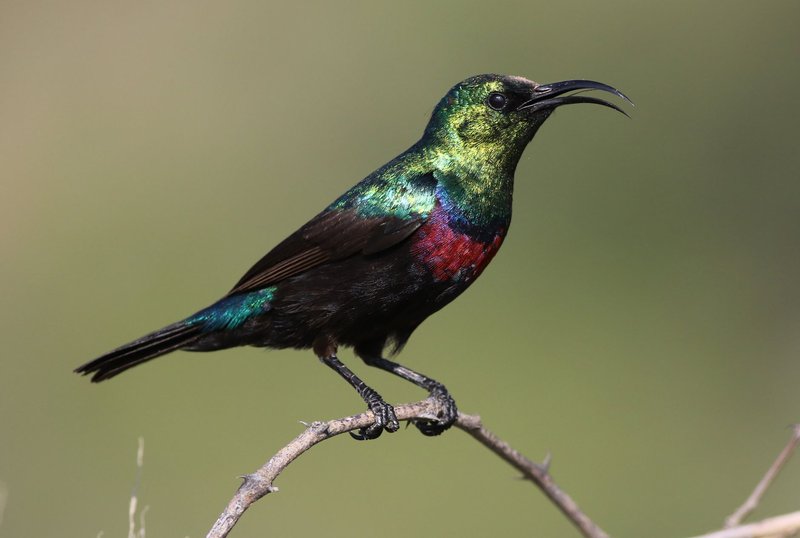
Where: Gardens, scrub and forest on Grande Comore and Mohéli.
Males are green and iridescent, with a gold or dark gloss that changes in the light and a belly pattern that varies by subspecies. Females are olive-green above and grayish below, so a plain-looking sunbird at a flowering shrub is probably a female. About 11 centimeters long.
This is among the easiest of the endemics because it is not shy of people and will feed in village gardens.
IUCN status: Least Concern.
11. Anjouan Sunbird (Cinnyris comorensis)
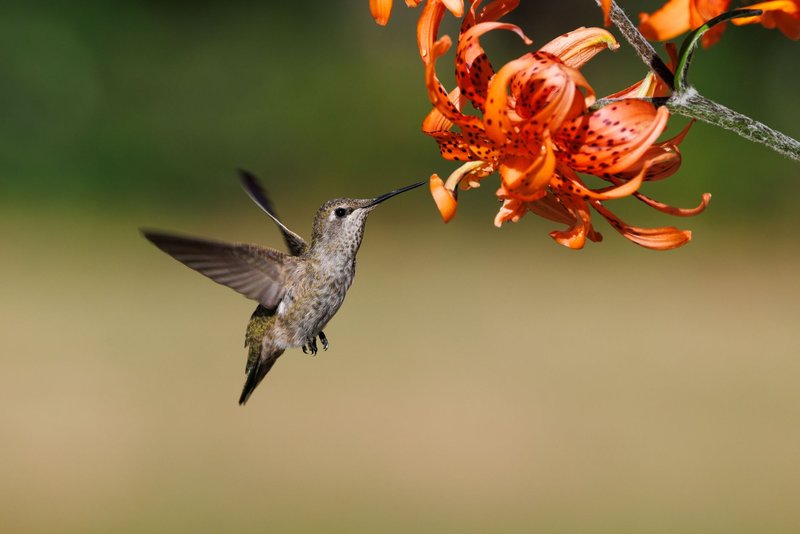
Where: Lowland and montane forest on Anjouan only.
The island-swap rule is simple: if you see a sunbird on Anjouan, it is this one, and if you see one on Grande Comore or Mohéli, it is Humblot’s. Geography does most of the identification work. It works the flowers of forest trees and gardens alike.
IUCN status: Least Concern.
Where and When to Go Birdwatching in the Comoros
Each island has a main site, so a trip that covers all three islands covers most of the endemics.
- Grande Comore: Mount Karthala and Lake Niamawi. Karthala is the base for the owl, the flycatcher, the white-eye and the drongo.
- Anjouan: Moya Forest and Lake Dzialandzé, for the Anjouan scops owl and Anjouan sunbird.
- Mohéli: Djando Forest, for the Mohéli scops owl and the Comoro thrush.
The best window is September to November, at the start of the rains, when most species breed (roughly August to December) and birds are vocal. Avoid December to April, the cyclone season. Hire a local guide for the owls, since finding them is a night job and the paths on Karthala are steep.
Conservation groups, including Dahari and the Durrell Wildlife Conservation Trust, work on the islands, and BirdLife International’s Comoros page tracks the country’s Important Bird Areas.
The Short Version
The birds of the Comoros are best understood island by island: one owl on each, a flycatcher and a white-eye that need Karthala, two sunbirds that split the archipelago between them, and a pigeon, a parrot and a thrush for the easier sightings. If you can only see a few, start with the thrush and the sunbirds, then work up the mountain for the rest.