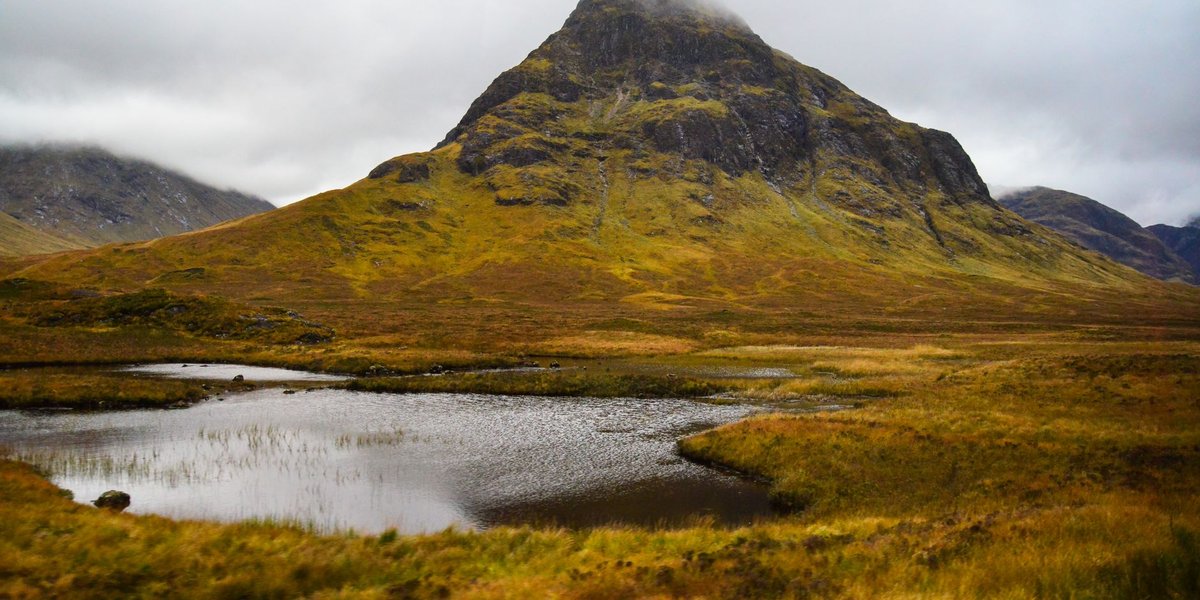
Scotland’s famous animals fall into three groups that most lists blur together: national symbols (one of them imaginary), wildlife icons you can actually go and see, and individual animals who became celebrities. Each gets its own section below, with a verified fact and a note on where and when to find it. A quick-reference table sits at the end.
Contents
- National Symbols and Legends
- Wildlife Icons
- Famous Individual Animals
- Famous Animals of Scotland: Quick Reference
National Symbols and Legends
The Unicorn
The national animal of Scotland doesn’t exist. It’s a unicorn, and it has been on the royal arms of Scotland for centuries, with William I (1165 to 1214) usually credited as the first king to use it. The reasoning was practical symbolism: medieval lore held that a unicorn was the fiercest of beasts, so the Scottish version is shown in a gold chain, because only a king could keep one under control.
After the Union of the Crowns in 1603, the unicorn went on to share the British royal arms with England’s lion. To see one in person, go to Stirling Castle, where the recreated Hunt of the Unicorn tapestries were woven on site, or look up at the carved unicorns on castles and mercat crosses across the country. You’ll start spotting them everywhere.
The Loch Ness Monster
Nessie is the other mythical resident, and she’s older than the 1930s photographs suggest. The earliest mention is in Adomnán’s biography of St Columba, written in the 7th century, which describes a monster in the River Ness. The famous “Surgeon’s Photograph” of 1934 turned out to be a hoax, and a 2018 environmental DNA survey of the loch by researchers at the University of Otago found plenty of eel DNA and no sign of a reptile.
Visit Loch Ness for the scenery, not the sighting. Drumnadrochit has the exhibitions, and Urquhart Castle gives the best view down the water.
Highland Cow
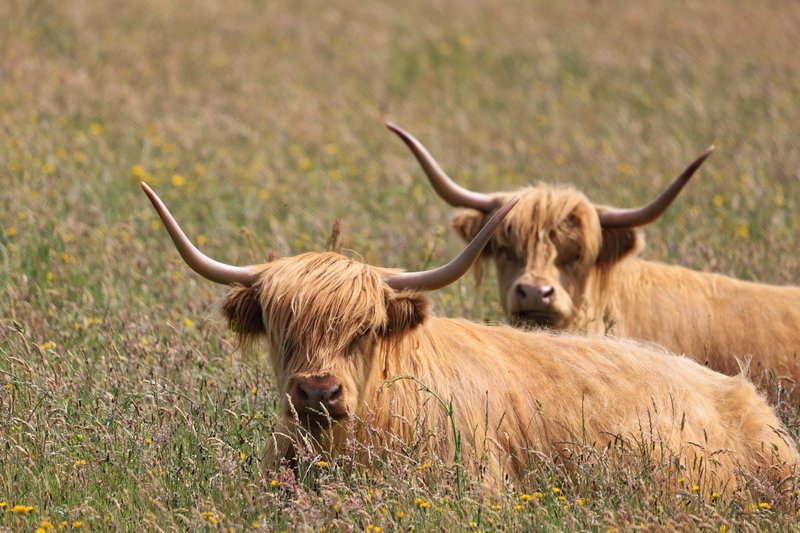
The Highland cow is the closest thing Scotland has to a living mascot: long curved horns, a fringe that hangs over the eyes, and a shaggy double coat (an oily outer layer over a soft undercoat) that lets the breed stay outdoors through winter on hills where most cattle wouldn’t last. The fringe also keeps flies out of their eyes in summer.
You’ll find them on the Isle of Skye, around Glen Coe, in the Trossachs and on the roadsides of Perthshire. They’re beef cattle, not pets, and a calf’s mother is a lot bigger than she looks. Keep your distance, and never feed them from the car window.
Red Deer
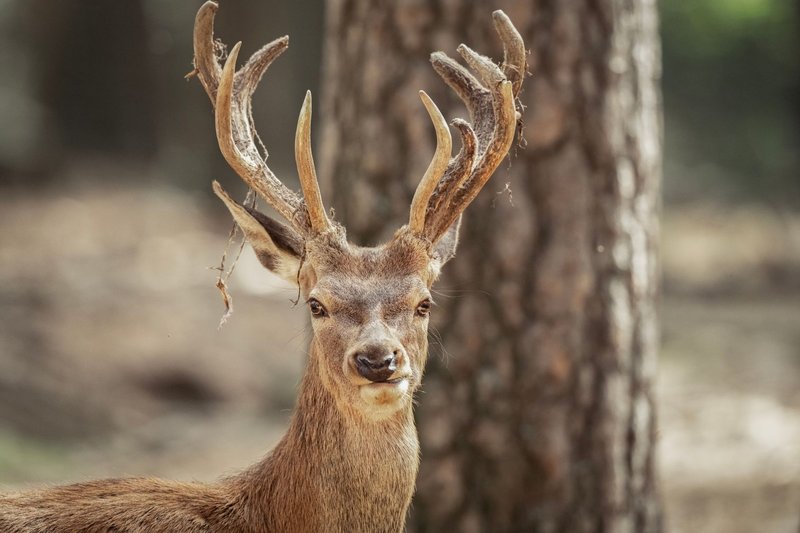
Red deer are Britain’s largest land mammal and the animal behind Landseer’s The Monarch of the Glen (1851), the painting that made the Highland stag a national image. Scotland holds close to 400,000 of them, according to NatureScot, which also notes the species’ impact on woodland regeneration, a long-running debate in the Highlands.
The best time is the rut, from late September to October, when stags roar across the glens. Glen Etive and Glen Coe are reliable, and the Isle of Rum hosts one of the longest-running studies of any wild mammal, begun in 1953. In winter, herds come down to the roadside as the hills run out of food.
Wildlife Icons
Golden Eagle
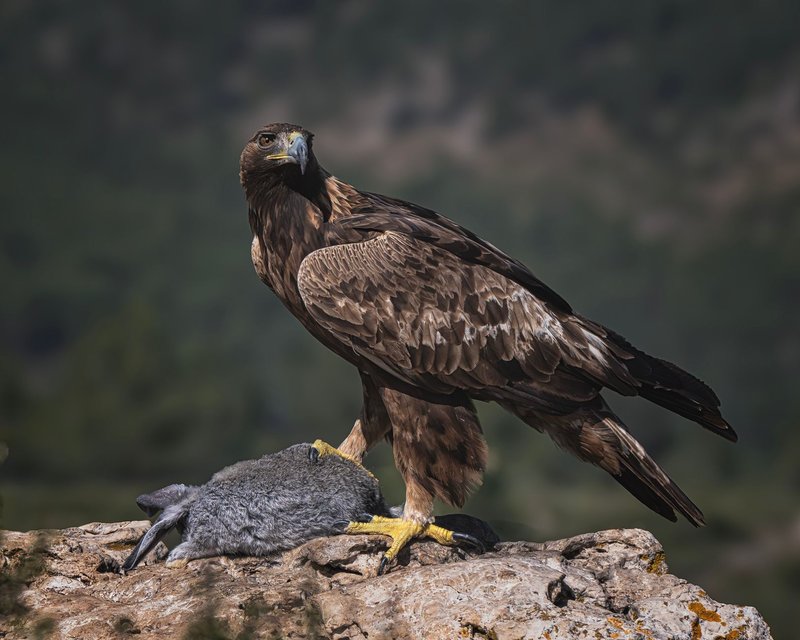
With a wingspan of up to 2.2 metres, the golden eagle is the bird most people mean when they say “Highland wildlife.” Scotland has roughly 500 pairs, nearly the entire UK population. Numbers in the southern uplands were so low that the South of Scotland Golden Eagle Project began moving young birds from the Highlands in 2018 to rebuild them.
For the best chance, try the Isle of Mull, where organised eagle watches run, or the Cairngorms and Glen Coe. Eagles are easiest to see in clear, still weather in spring, when pairs display over their territory. Bring binoculars and patience.
Puffin
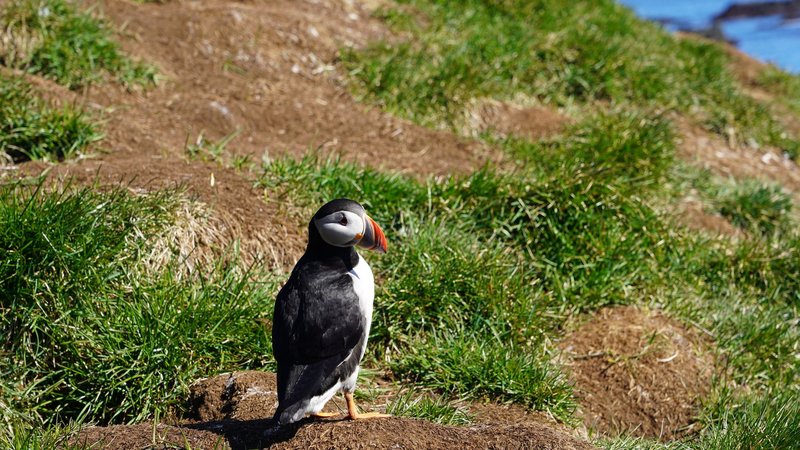
The puffin’s beak turns bright orange in the breeding season, and it can carry a dozen or more sand eels at once, held crosswise. The adults come ashore from April to July, then head back out to sea for the rest of the year.
The Isle of May in the Firth of Forth is the easiest place to see them, with boats from Anstruther and North Berwick. Other good spots are the Treshnish Isles off Mull, Fair Isle, and Sumburgh Head in Shetland. Go in June and early July when chicks are being fed. By early August, most are gone.
Red Squirrel
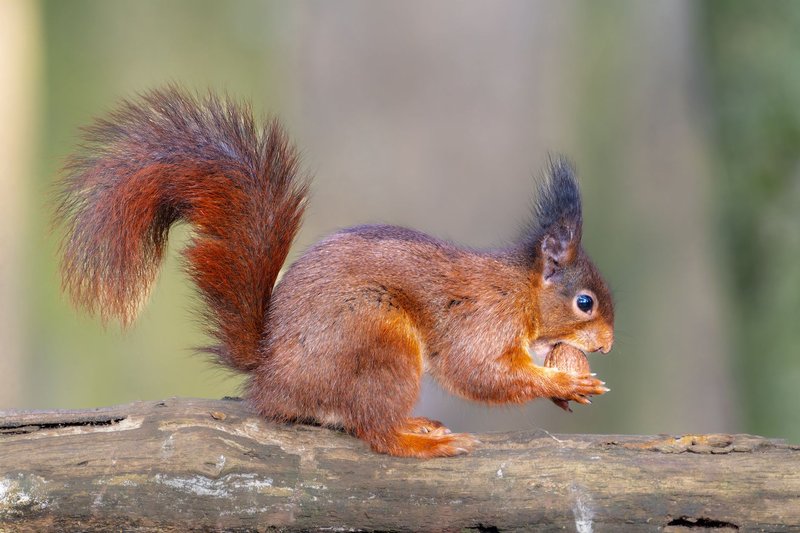
Roughly three quarters of the UK’s red squirrels live in Scotland. Elsewhere in Britain, they’ve been pushed out by the introduced grey squirrel, which outcompetes them for food and carries squirrelpox, a virus that is harmless to greys and fatal to reds.
Look in conifer woods in Perthshire, the Cairngorms and Dumfries and Galloway. Early morning is best, and woodland feeding stations raise your odds. Autumn, when they’re collecting nuts and cones, is the most active season.
Otter
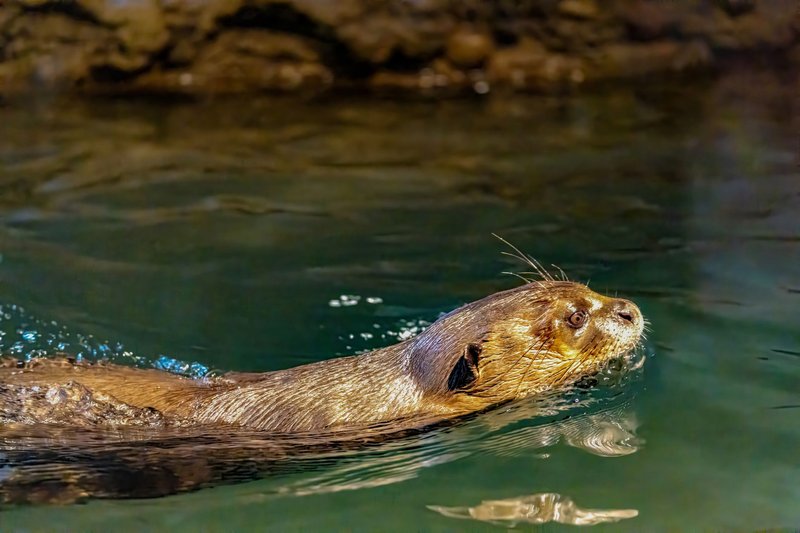
Scottish otters are mostly coastal, hunting fish and crabs in sea lochs and among the seaweed rather than in rivers. Gavin Maxwell’s 1960 book Ring of Bright Water, set on the west coast near Skye, made the species part of Highland literature, and the otters he wrote about are still there.
Skye, Mull and Shetland are the places to try. The Kylerhea Otter Hide on Skye gives a decent chance, and dawn or dusk on a falling tide is the usual time. Look for a V-shaped wake on flat water and a head with whiskers.
Scottish Wildcat
The wildcat is Britain’s rarest mammal, and it’s in serious trouble. It looks like a heavy tabby with a blunt, ringed tail, but surveys suggest only a few dozen genetically pure animals survive in the wild, because of hybridisation with domestic cats. Many experts treat it as functionally extinct in the wild.
Saving Wildcats is a breeding and release project that put the first captive-bred cats back into the Cairngorms in 2023. You won’t see a wild one by accident. The Highland Wildlife Park near Kincraig keeps wildcats on view.
Grey Seal and Common Seal
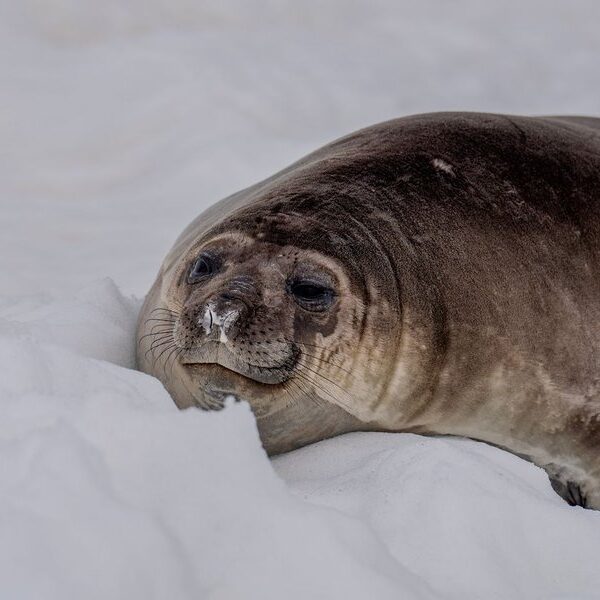
Scotland has two seal species. Grey seals (long snouts, males up to about 2.3 metres) breed on remote rocks and islands, with pups born in autumn, and the UK holds a large share of the world’s population. Common seals, also called harbour seals, are smaller and rounder-faced, pup in June and July, and have been declining in several Scottish regions.
Boat trips from Oban, Skye and Orkney are reliable. The Isle of May, Orkney and the Treshnish Isles have large colonies, and seals will often watch you from the water as you watch them.
Basking Shark
The basking shark is the second-largest fish in the world, reaching 10 metres or more. It feeds by filtering plankton and is harmless to people. In summer they cruise the surface off the Hebrides, with a triangular dorsal fin and a tail that sometimes follows.
The waters around Coll, Tiree and the Gunna Sound are the best known. Go between May and October, with July being the peak, on a calm day with little wind, and book a licensed wildlife boat.
Bottlenose Dolphin
The Moray Firth dolphins are among the largest bottlenose dolphins in the world, with adults reaching about 4 metres. The population is a few hundred animals, and they’re seen year-round from shore.
Chanonry Point, near Fortrose, is the classic spot. Go on a rising tide, when salmon come through the narrow channel and the dolphins follow, and stand on the beach with the crowd.
Famous Individual Animals
Wojtek the Bear
Wojtek was a Syrian brown bear cub bought from a boy in Iran by Polish soldiers, who fed him condensed milk from a bottle. He was officially enlisted as a private in the Polish II Corps so he could travel with the unit, and he is said to have helped carry ammunition at the Battle of Monte Cassino in 1944. After the war, the unit was moved to Scotland, and Wojtek lived at Edinburgh Zoo from 1947 until his death in 1963, aged 21.
A statue of him with a soldier stands in Princes Street Gardens in Edinburgh, unveiled in 2015.
Nils Olav the Penguin
Nils Olav is a king penguin at Edinburgh Zoo, and the mascot of the Norwegian King’s Guard, which first adopted a penguin from the zoo in 1972. Each successive penguin takes the name and the rank. Nils Olav III was knighted in a formal ceremony in 2008, becoming Sir Nils Olav.
The guard visits the zoo for his promotions, and the soldiers and the penguin inspect each other. It’s a real military ceremony.
Dolly the Sheep
Dolly, born at the Roslin Institute near Edinburgh on 5 July 1996, was the first mammal cloned from an adult cell. The announcement came in February 1997. She was a Finn-Dorset sheep and died in 2003 from lung disease, aged six. The Roslin Institute at the University of Edinburgh tells the scientific side of her story.
Her preserved body is on display at the National Museum of Scotland in Edinburgh.
Greyfriars Bobby
Bobby, a Skye terrier, is said to have guarded the grave of his owner John Gray in Greyfriars Kirkyard in Edinburgh for 14 years after Gray’s death in 1858, and the loyalty of dogs like him is a big part of why the story stuck. A statue of Bobby was put up at the kirkyard entrance on Candlemaker Row in 1873. Visitors rub his nose for luck, which is why it’s shiny.
Some historians argue the story was promoted for tourism and that more than one dog may have been involved. The story has lasted regardless.
Famous Animals of Scotland: Quick Reference
| Animal | Why it’s famous | Best place to see it | Best time |
|---|---|---|---|
| Unicorn | National animal, on the royal arms | Stirling Castle | Year-round |
| Loch Ness Monster | Legend since the 7th century | Loch Ness | Year-round |
| Highland cow | Shaggy icon of the hills | Skye, Glen Coe, Trossachs | Year-round |
| Red deer | Britain’s largest land mammal | Glen Etive, Glen Coe, Rum | Oct (rut) |
| Golden eagle | Highland bird of prey | Mull, Cairngorms | Spring |
| Puffin | Orange-beaked seabird | Isle of May, Treshnish Isles | Apr to Jul |
| Red squirrel | UK stronghold, threatened by greys | Perthshire, Cairngorms | Autumn |
| Otter | Coastal hunter | Skye, Mull, Shetland | Dawn and dusk |
| Wildcat | Britain’s rarest mammal | Highland Wildlife Park (captive) | Year-round |
| Seals | Grey and common | Isle of May, Orkney, Oban boats | Jun to Jul (common pups), autumn (grey pups) |
| Basking shark | Second-largest fish | Coll, Tiree | May to Oct |
| Bottlenose dolphin | Among the largest dolphins | Chanonry Point | Rising tide |
| Wojtek | Soldier bear | Princes Street Gardens | Year-round |
| Nils Olav | Knighted penguin | Edinburgh Zoo | Year-round |
| Dolly | First cloned mammal | National Museum of Scotland | Year-round |
| Greyfriars Bobby | Loyal terrier | Greyfriars Kirkyard | Year-round |
For a first trip, pair a Highland leg (red deer, golden eagle, red squirrel) with a coastal one (puffins, seals, dolphins). Add Edinburgh for the individual celebrities, who are all within a short walk or bus ride of the Royal Mile. Between them, these famous animals of Scotland cover the whole country, from the Borders to Shetland.