Table of Contents
- TLDR
- Quick Comparison Table
- The Breeds
- Why Black Cats Get Yellow Eyes
- Do All Black Cats Have Yellow Eyes?
- Kitten Eyes Change Color
- When an Eye Color Change Means a Vet Visit
TLDR
The Bombay is the only breed whose standard calls for a solid black coat with gold to copper eyes. If you want that look on purpose, that’s your breed. Black British Shorthairs and Burmese come close in practice. Maine Coons, Norwegian Forest Cats, Scottish Folds and Cornish Rex come in black, but yellow eyes aren’t guaranteed. Oriental Shorthairs are supposed to have green eyes. Chartreux are blue-gray and never black, whatever some listicles claim.
Quick Comparison Table
| Breed | Black recognized? | Usual eye color | Coat length | Temperament |
|---|---|---|---|---|
| Bombay | Yes, the only color | Gold to copper | Short | Affectionate, people-focused |
| Black British Shorthair | Yes | Copper to deep orange | Short, dense | Calm, independent |
| Burmese | No (sable brown looks black) | Gold to yellow | Short | Social, clingy |
| Chartreux | No (blue-gray only) | Copper to orange | Short, woolly | Quiet, gentle |
| Maine Coon | Yes | Green, gold, copper | Long | Friendly, easygoing |
| Scottish Fold | Yes | Gold | Short or long | Sweet, mellow |
| Norwegian Forest Cat | Yes | Green, gold, copper | Long | Independent, sturdy |
| Oriental Shorthair | Yes (ebony) | Green | Short | Vocal, demanding |
| Cornish Rex | Yes | Gold to yellow is common | Very short, wavy | Playful, energetic |
| Bengal | Not as a standard show color | Gold to green | Short | High-energy, athletic |
The Breeds
1. Bombay
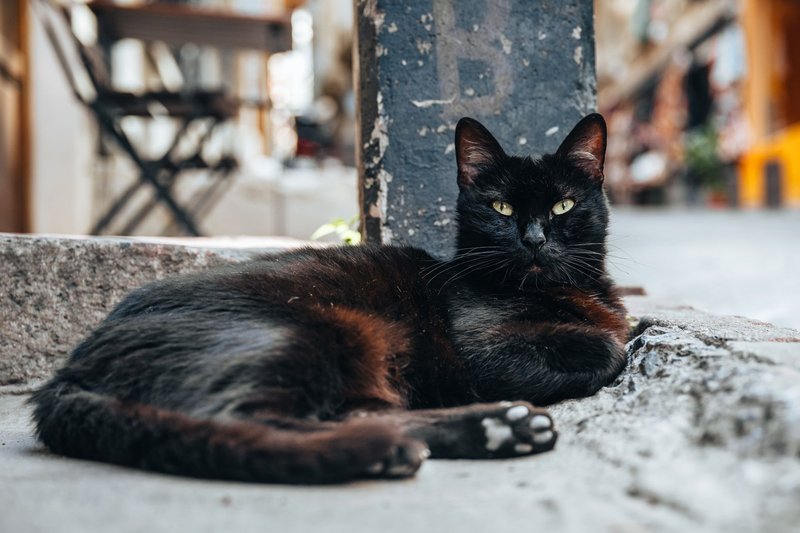
The Bombay was built to look like a miniature panther. Breeder Nikki Horner started the line in Louisville, Kentucky, in the 1950s by crossing sable Burmese with black American Shorthairs. The Cat Fanciers’ Association standard describes a black coat with eyes from gold to copper. No other color is allowed.
That makes it the most reliable answer to the question. A Bombay with green eyes would be a fault in the show ring. Expect a short, satin coat that looks polished and a cat that follows you from room to room.
2. Black British Shorthair
Black is one of the oldest recognized British Shorthair colors, and the standard asks for deep copper or orange eyes. In a good specimen the eyes read as gold against the coat. They’re round, wide-set and sit in a round face, which makes the contrast stronger than on most breeds.
Reliability is high. Pale or greenish eyes are penalized, so breeders select against them. The coat is dense and plush, and it can shade rusty in strong sun.
3. Burmese
Strictly, there’s no black Burmese. The classic color is sable, a very dark brown that reads as black indoors and shows its warmth in sunlight. The standard calls for gold to yellow eyes, which is the closest thing to “yellow” of any breed here.
If you’ve seen a “black” Burmese listed, it’s almost always a sable. The Bombay exists because someone wanted the Burmese shape in true black.
4. Chartreux
Skip this one. The Chartreux comes in one color: blue-gray, with eyes in the copper to orange range, according to the CFA breed profile. Lists that include it as a black breed have mixed up a dark slate coat with black. In dim light the confusion is understandable. In daylight there’s no contest.
The eyes are excellent, orange and round. The coat just isn’t black.
5. Maine Coon
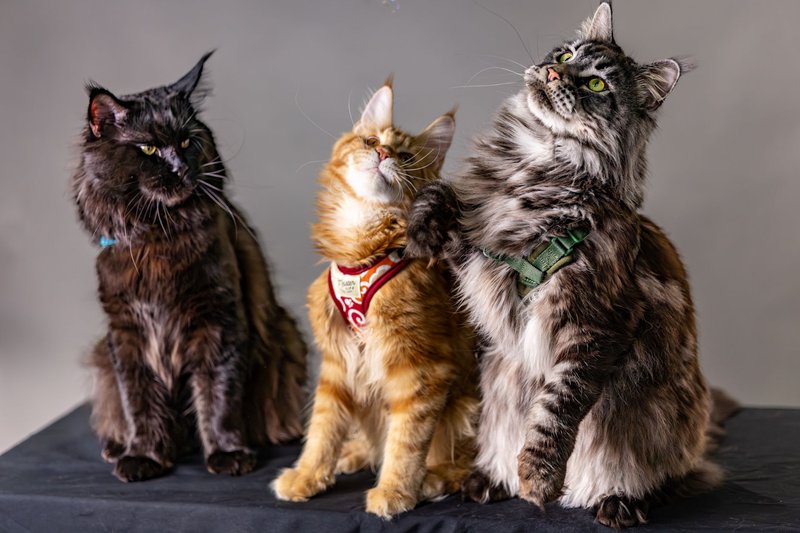
Black Maine Coons are common and striking, a shaggy long-haired cat the size of a small dog. Eye color in the breed runs green, green-gold, gold and copper, and it isn’t tied to coat color. A black Maine Coon is about as likely to have gold eyes as green.
If yellow eyes matter to you, ask the breeder about the parents. Don’t count on the breed to deliver it.
6. Scottish Fold
The black Scottish Fold typically has round, gold eyes, which pair well with the folded ears and round head. Folds come in short and long coats. The standard prefers gold on black, so the odds are good.
One honest caveat: the fold gene is linked to cartilage problems, and many welfare groups and vets criticize breeding the trait. A black Scottish Straight (same breed, upright ears) has the same eyes without the health risk.
7. Norwegian Forest Cat
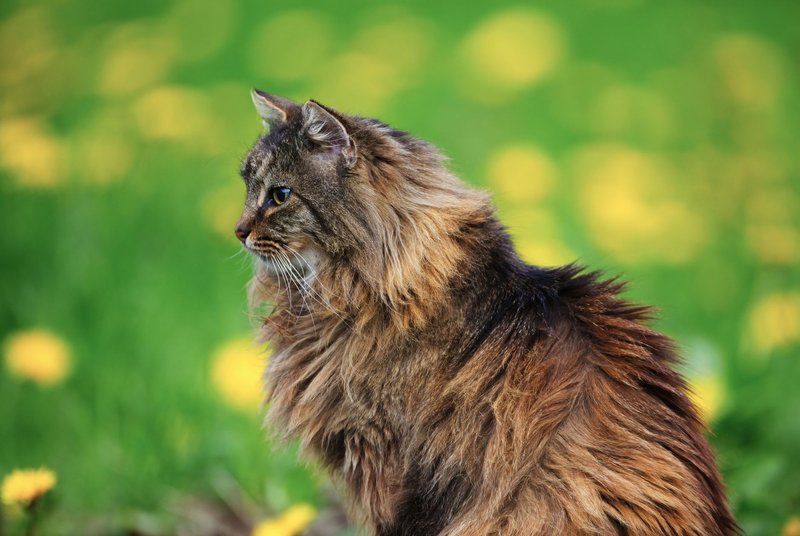
Black is recognized, and the standard allows green, gold, green-gold and copper eyes. Like the Maine Coon, it’s a long-haired, large cat built for cold weather, with a water-shedding double coat. Gold eyes in a black Norwegian look great, but green is just as correct, so yellow isn’t a safe bet.
8. Oriental Shorthair
The ebony Oriental is sleek, long-legged and black from nose to tail. It’s also the breed on this list where yellow eyes work against you. Solid Orientals are supposed to have green eyes, and yellow or gold eyes are a flaw in the show ring. A pet-quality cat can still end up with yellow eyes, but nobody is breeding for it.
9. Cornish Rex
Black Cornish Rex cats have a short, wavy coat that sits close to the body, which gives the black a slightly different texture. That close coat also sheds less than most, which is why the breed often turns up in guides to low-shedding cat breeds. The standard asks for eye color in harmony with the coat, and yellow to gold is common on black cats. It’s a looser guideline than the Bombay’s, so expect variation.
10. Bengal (black or melanistic)
Bengals are known for spots, but some litters produce very dark cats whose rosettes only show in bright light. These melanistic Bengals aren’t a standard show color, so there’s no breed rule on eye color. Gold and green-gold both turn up. Treat a black Bengal as a bonus of genetics, not a breed promise.
Why Black Cats Get Yellow Eyes
Coat color and eye color are controlled separately. A black coat comes from eumelanin in the hair. Iris color comes from pigment cells in the front layer of the eye, and the shade depends on how much pigment is there. Little pigment gives green. A moderate amount gives yellow and gold. Dense pigment gives amber and copper.
Those words aren’t interchangeable. Yellow is a pale, clear shade, gold is richer, amber leans brown-orange, and copper is the darkest. Most listicles use them loosely, which is why two sites can describe the same cat differently.
Eye color is also not a standard in most breeds. The Bombay is the exception. Everywhere else it’s a preference at best, which is why a breed listed as “usually yellow-eyed” can still produce a green-eyed black cat.
Do All Black Cats Have Yellow Eyes?
No. Yellow, gold and amber are the most common eye colors on black cats, but green is frequent too, especially in non-pedigreed domestic shorthairs. Most black cats you’ll meet in a shelter aren’t a breed at all. They’re domestic shorthairs, and their eye color reflects whatever their parents carried.
Kitten Eyes Change Color
Every kitten is born with blue eyes, and they open around 7 to 10 days. The blue is structural, because the pigment hasn’t developed yet. A black kitten’s eyes start shifting around 6 to 8 weeks and usually settle by about 12 weeks, though some take a bit longer.
Don’t pick a kitten for eye color at 8 weeks. A greenish tint can still deepen into gold, and a gold-green mix can go either way.
When an Eye Color Change Means a Vet Visit
A kitten’s color change is normal. An adult cat’s isn’t. If an adult’s iris develops dark spots, cloudiness, or a patch that spreads over weeks, get it checked. These can signal inflammation, or a pigmented growth that vets watch closely. The Cornell Feline Health Center is a reliable starting point for eye conditions in cats.
Sudden redness, squinting or a pupil that looks uneven is also worth a same-week appointment. Stable yellow eyes that have looked the same for years are just a feature of your cat.