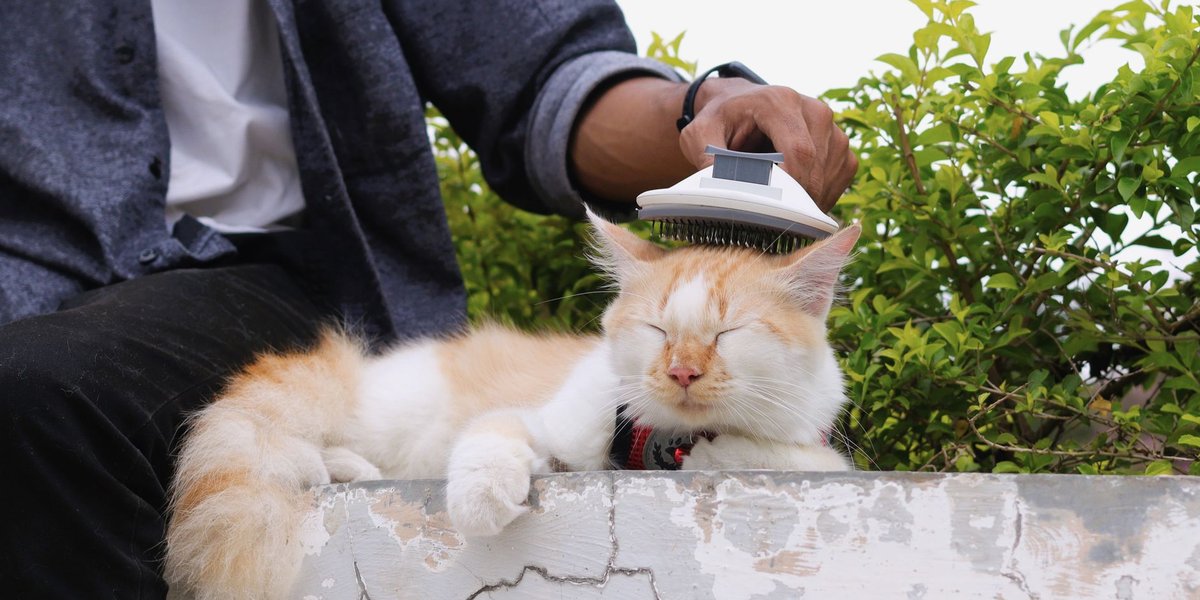
No cat is non-shedding. Every cat with hair loses hair, and even a Sphynx leaves oily smears on your couch. What changes from breed to breed is how much hair ends up on your clothes and how much work it takes to keep it off.
The second thing to get straight: low-shedding is not the same as hypoallergenic. The main cat allergen, Fel d 1, comes from saliva and skin glands, and cats spread it around when they groom. Hair is just the delivery vehicle. A small Vienna study measured Fel d 1 on the fur and in the saliva of 14 cats, some from so-called hypoallergenic breeds, and found lower levels in some of them. But the sample was tiny, and a 2024 review summarized by the University of Southern Queensland concluded there is no scientific evidence for a hypoallergenic cat breed. The individual cat matters more than the breed.
So this list of low-shedding cat breeds is about floors, lint rollers and grooming time. If allergies are part of your decision, the buying tips near the end matter more than the breed name.
TLDR
- Least hair on the furniture: Cornish Rex, Sphynx and the other hairless breeds. You trade shedding for baths and skin care.
- Easiest overall: Oriental Shorthair. A fine single coat, a quick weekly brush and nothing else to manage.
- Best long-haired option: Balinese. Silky, no undercoat, far less matting than a Persian.
- Cheapest route: a shelter cat with a short, single coat. Breeder prices for the cats below run from about $600 to $3,000.
- Most overrated on this list: the Siberian. Its coat is dense and it blows it twice a year.
Table of Contents
- How we picked these breeds
- Hairless breeds
- Rex coats
- Short coats that shed lightly
- Low-shedding longhairs
- Side-by-side comparison
- Shelter and mixed-breed cats
- Tips for living with a low-shedding cat
- FAQ
How we picked these breeds
We looked at what breed standards and breed-club coat descriptions say about undercoat, guard hairs and coat length, then checked those against the grooming advice owners and veterinary sources repeat. A breed made the list if its coat structure explains why it sheds less: no coat at all, a coat missing the outer guard hairs, a single layer with no undercoat, or hair too short to notice.
Shedding scores in the comparison table are our own 1 to 5 estimates (1 is the least). Prices are typical US breeder ranges and shift by region, pedigree and waiting list. They are a guide, not a quote.
Hairless breeds
Hairless cats lose the least hair because they have almost none to lose. They also need the most skin care, which surprises most first-time owners.
1. Sphynx
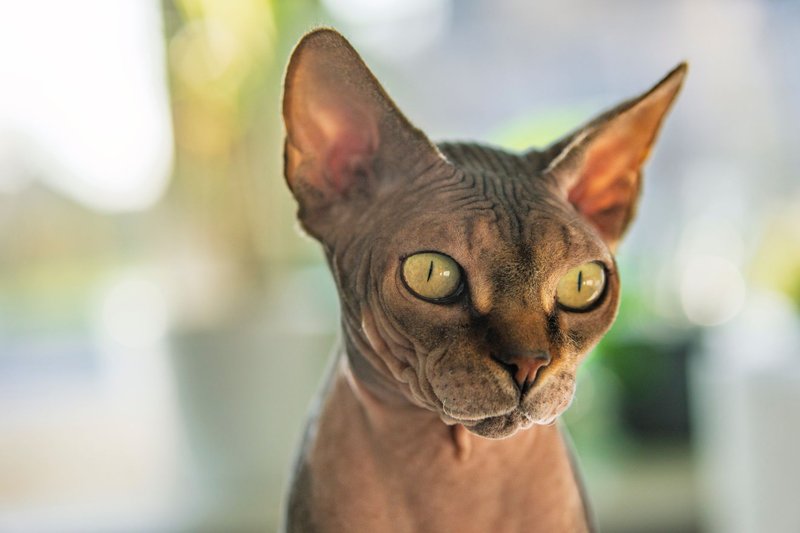
The Sphynx isn’t bald. It wears a fine peach-fuzz down that you feel more than see. The breed traces back to a hairless kitten born in Toronto in 1966.
- Shedding: Almost none. Oil from the skin transfers to blankets, sofas and your pillow instead of hair.
- Grooming: A bath every one to two weeks to remove skin oil, plus ear cleaning, since there’s no hair to catch wax.
- Temperament: Clingy, social and warm to the touch. They seek out laps and heated blankets.
- Price: Roughly $1,500 to $3,000 from a breeder.
- Drawback: Sun and cold. A Sphynx sunburns near a window and needs a sweater in a cool house. Hypertrophic cardiomyopathy also occurs in the breed, so ask breeders about heart screening.
2. Peterbald
The Peterbald came out of Russia in the 1990s, from a cross between a Donskoy and an Oriental Shorthair. That mix gives it the Oriental’s long, lean body and wedge-shaped head.
- Shedding: Very low, but it depends on the coat. Peterbalds range from fully bare to a short brushy coat, and the hairier types shed more.
- Grooming: Occasional baths for the bald types, a quick brush for the coated ones.
- Temperament: Talkative and people-focused. Expect a running commentary.
- Price: About $1,500 to $3,000.
- Drawback: Coats can change as a kitten matures, so the cat you pick at eight weeks may not be the cat you have at a year.
3. Donskoy
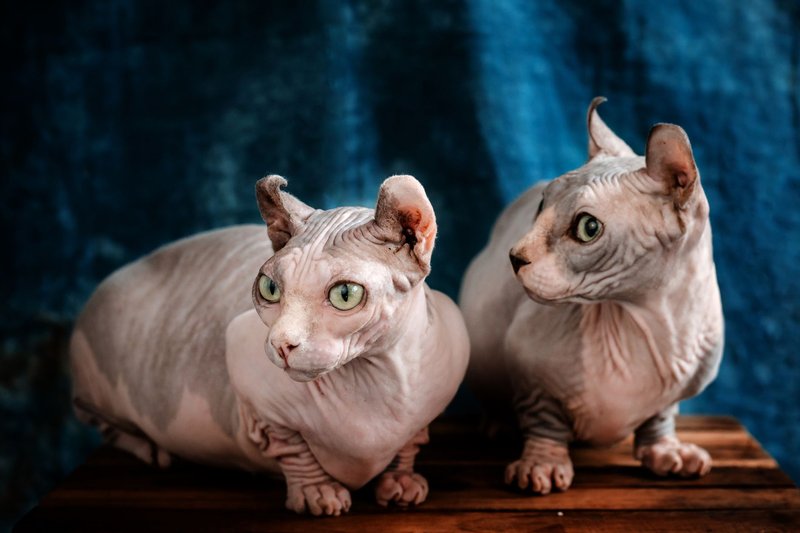
The Donskoy (also called the Don Sphynx) comes from Rostov-on-Don in Russia. Despite the name, it isn’t a Sphynx. Its hairlessness comes from a dominant gene, where the Sphynx’s is recessive, and its skin is deeply wrinkled, especially on the head.
- Shedding: Very low. Some Donskoys grow a sparse coat in winter and lose it again in summer.
- Grooming: Regular baths and wrinkle cleaning, similar to a Sphynx.
- Temperament: Affectionate, curious and attached to one household.
- Price: Often $1,500 or more, and hard to find outside Russia and parts of Europe.
- Drawback: Scarcity. Long waiting lists are normal, and any breeder who has kittens on tap deserves a few extra questions.
Rex coats
Rex cats carry a gene that changes hair structure. The result is a short, curled or wavy coat that sheds less than a typical domestic shorthair’s.
4. Cornish Rex
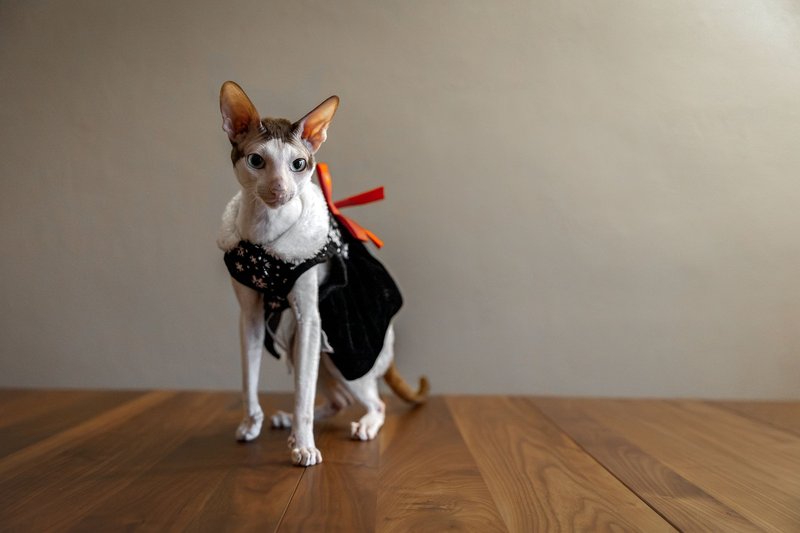
The Cornish Rex first appeared in Cornwall, England, in 1950. It’s the leanest cat on the list, built like a whippet, with big ears and a coat of soft marcel waves.
- Shedding: Very low. The coat is almost all down hair, with the outer guard hairs and most of the awn hairs missing, so there’s less hair to drop.
- Grooming: A gentle wipe-down with a damp cloth every week or two. Brushing hard damages the coat. Skin oil collects on the body, so some owners bathe occasionally.
- Temperament: Hyperactive. Cornish Rex cats race, climb and fetch well into adulthood.
- Price: About $1,000 to $2,000.
- Drawback: Little body fat and a thin coat means they get cold. Think heated bed and a window with winter sun.
5. Devon Rex
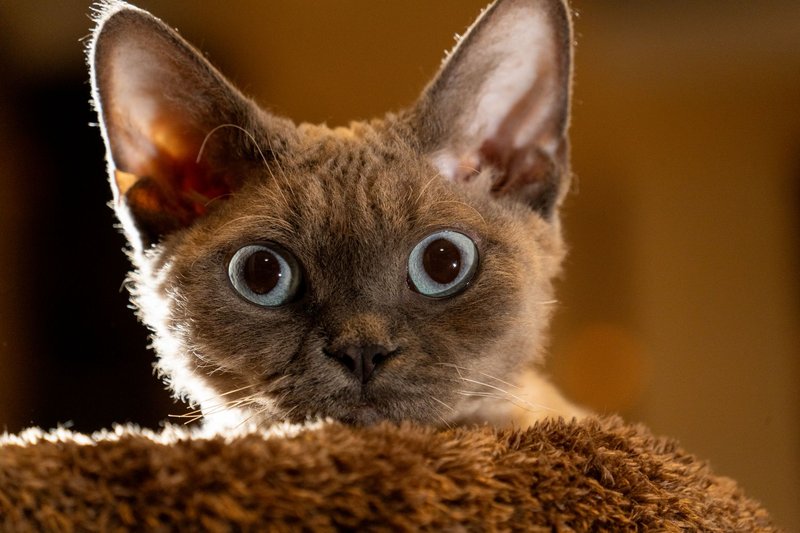
The Devon Rex came from Devon in the 1960s and looks like a pixie: oversized ears, big eyes and a short, wavy coat. It is a separate breed from the Cornish Rex, with a different gene.
- Shedding: Low, a touch more than the Cornish Rex. The coat includes some sparse guard hairs and can thin out in patches.
- Grooming: Barely any brushing. Clean the ears weekly, since the large ears build up wax.
- Temperament: Mischievous and a perch-seeker. They end up on shoulders and the top of the fridge.
- Price: About $1,000 to $2,000.
- Drawback: Skin and ear care, and a high-energy personality that doesn’t suit someone out ten hours a day.
Short coats that shed lightly
These breeds aren’t hairless or curly. They have short, fine coats with little or no undercoat, which means less loose hair and a simpler routine.
6. Oriental Shorthair
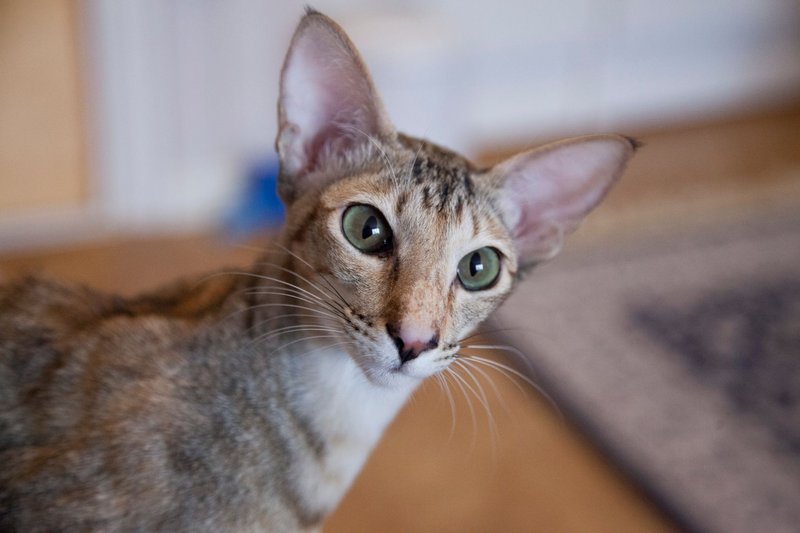
The Oriental Shorthair is a Siamese relative in nearly every color and pattern except the pointed one. The coat is fine, glossy and lies flat against the body.
- Shedding: Low. A single coat with minimal undercoat means a light, steady trickle.
- Grooming: A weekly stroke with a rubber brush or a chamois. That’s it.
- Temperament: Loud, needy and devoted. Oriental Shorthairs follow you from room to room and tell you what they think.
- Price: About $800 to $1,800.
- Drawback: Loneliness. A bored, ignored Oriental will complain at volume.
7. Bengal
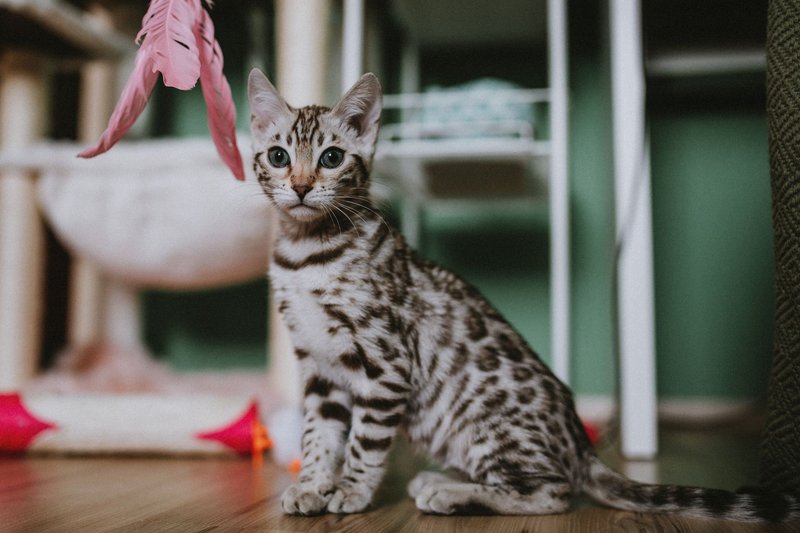
The Bengal came from crossing domestic cats with the Asian leopard cat, and the coat shows it: short, dense and pelt-like, with spots or marbling. The hairs lie flat and many owners describe a glittery sheen.
- Shedding: Low to moderate. It’s a short coat that doesn’t mat or tangle, so loose hair is easy to deal with.
- Grooming: A weekly brush, mostly to keep the shine.
- Temperament: Athletic, curious and happy to open drawers. Bengals want tall cat trees and daily play.
- Price: About $1,500 to $3,000 for a pet-quality kitten.
- Drawback: Energy. A Bengal without enough to do will redecorate your living room. Heart disease (hypertrophic cardiomyopathy) and a hereditary eye condition, progressive retinal atrophy, also occur in the breed.
8. Russian Blue
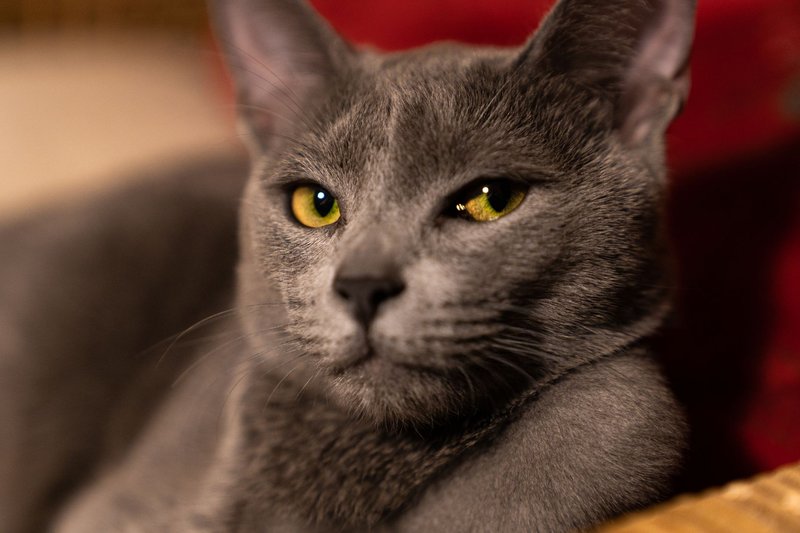
The Russian Blue is the one double-coated cat here, and it’s the weakest pick for pure shedding. It earns a spot because the coat is short, plush and dense, so the hair it does lose is less noticeable than a fluffy cat’s.
- Shedding: Moderate, with a bump during seasonal coat changes.
- Grooming: A weekly brush, a little more in spring and fall.
- Temperament: Reserved with strangers, loyal to its people and fond of routine.
- Price: About $600 to $1,500.
- Drawback: Shyness. A Russian Blue may hide when guests arrive, and doesn’t love chaos.
Low-shedding longhairs
Most long-haired cats leave drifts. These two do less damage than you’d expect, for different reasons.
9. Balinese
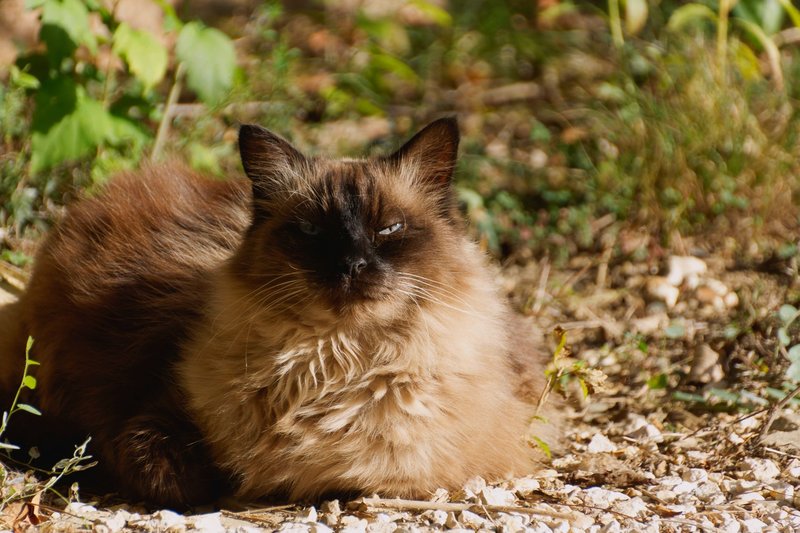
The Balinese is a longhaired Siamese, with the same pointed pattern and blue eyes. Its coat is silky and has no woolly undercoat, which is why it tangles less than other longhairs.
- Shedding: Low to moderate. Hair falls as long strands rather than clouds of fluff.
- Grooming: A comb-through once or twice a week, about 15 to 30 minutes in total.
- Temperament: Chatty, clever and demanding of attention, like its Siamese relatives.
- Price: About $800 to $1,500.
- Drawback: The voice. Balinese cats talk, and they expect a reply.
10. Siberian
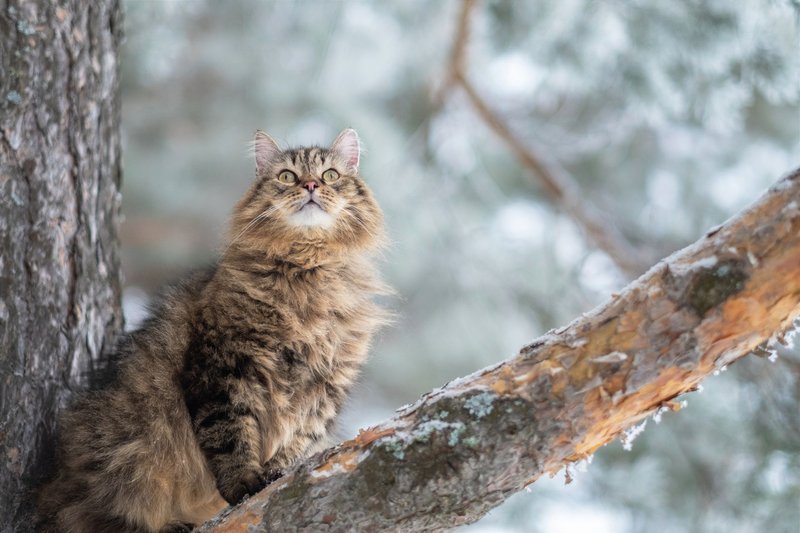
The Siberian is a large, triple-coated forest cat from Russia, and breeders often market it as the allergy-friendly longhair. Some individual Siberians do appear to carry less Fel d 1, but it varies, and no one can promise it for a given kitten.
- Shedding: Moderate, with two heavy seasonal blow-outs a year, usually spring and fall. We list it here for the long-haired owner who accepts a few intense weeks, not for a hair-free house.
- Grooming: Two or three brushings a week, daily during the molt, to prevent mats in the britches and belly.
- Temperament: Confident, playful and dog-like. Many Siberians greet visitors at the door.
- Price: About $1,200 to $2,500.
- Drawback: The molt, and the size. Males can reach 15 pounds or more.
Side-by-side comparison
The grooming figures are estimates for an average adult cat in a normal week. Shedding is scored from 1 (least) to 5 (most).
| Breed | Coat type | Shedding (1-5) | Grooming per week | Typical breeder price |
|---|---|---|---|---|
| Sphynx | Hairless | 1 | 30 to 45 min (bath) | $1,500 to $3,000 |
| Peterbald | Hairless to brush | 1 to 2 | 15 to 30 min | $1,500 to $3,000 |
| Donskoy | Hairless to flocked | 1 to 2 | 30 min | $1,500+ |
| Cornish Rex | Rex, down only | 1 | 10 to 15 min | $1,000 to $2,000 |
| Devon Rex | Rex, sparse guard hairs | 2 | 10 to 15 min | $1,000 to $2,000 |
| Oriental Shorthair | Short, single | 2 | 10 min | $800 to $1,800 |
| Bengal | Short, pelt-like | 2 to 3 | 10 to 15 min | $1,500 to $3,000 |
| Russian Blue | Short, double | 3 | 15 min | $600 to $1,500 |
| Balinese | Long, single | 3 | 15 to 30 min | $800 to $1,500 |
| Siberian | Long, triple | 4 (seasonal) | 30 to 45 min | $1,200 to $2,500 |
One pattern in the table: the less hair a breed sheds, the more it costs, both in money and in effort. The hairless breeds are the most expensive to buy and need the most bathing.
Shelter and mixed-breed cats
A pedigree isn’t required. The same coat logic applies to a rescue cat, and shelter adoption fees are often well under $300.
Look at the coat, not the label. A short, fine, single-layer coat sheds less than a plush double coat, and a lightly built cat with a sleek coat will usually be easier than a fluffy one. Ask the shelter how long the cat has been there and what coat they’ve seen over the seasons. You can meet an adult and see how it grooms and how you react to it, which is something a kitten from a breeder can’t offer.
Tips for living with a low-shedding cat
Meet the cat before you commit. If you have allergies, spend an hour with the actual adult cat, ideally more than once. Individual cats differ more than breeds do, and a kitten’s adult allergen output isn’t predictable.
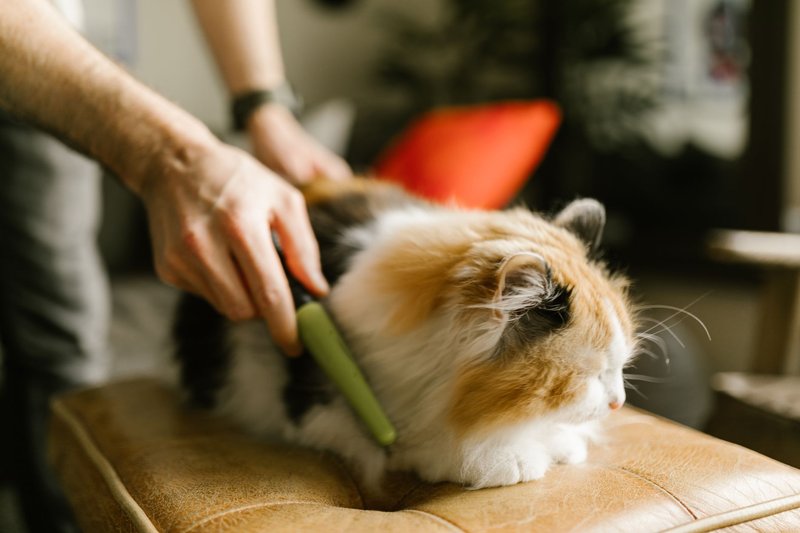
Brush on a schedule. Hair you brush off on a towel is hair that doesn’t land on the couch. Short coats need 10 minutes a week. Longhairs need a comb, not just a slicker brush, and a daily session in molt season.
Mind the diet. A complete cat food with enough protein and omega-3 fatty acids supports skin and coat health, and a dull, flaky coat is worth a vet visit. Sudden heavy shedding can point to stress, parasites or a medical problem.
Clean smart. A vacuum with a HEPA filter, washable throws on the favorite sofa spot and a damp microfiber cloth for hard surfaces catch more than sweeping does. Wash cat bedding weekly.
Plan for the skin. Hairless and rex cats need a warm house, sun protection and regular wiping or bathing. Budget the time before you budget the purchase price.
FAQ
Is there a cat that doesn’t shed at all?
No. Even hairless cats lose a little fuzz and shed skin oil and dander. Breeders and websites that claim otherwise are overselling.
Are low-shedding cats hypoallergenic?
Not reliably. Fel d 1 comes from saliva and skin, so a cat that sheds little can still cause a strong reaction. Some allergic people tolerate certain individual cats better than others, which is why meeting the cat first matters.
Which low-shedding cat is the easiest to care for?
For most households, the Oriental Shorthair or a short-coated shelter cat. Both need minimal brushing and no baths. The hairless breeds and the Siberian take the most work.
Do male or female cats shed less?
There’s no reliable difference in hair shedding by sex. Coat type, season, diet and health matter far more.
Do indoor cats shed more?
They can shed year-round instead of in a single seasonal pulse, because artificial light and steady temperatures blunt the seasonal cue. The total amount depends mostly on coat type.