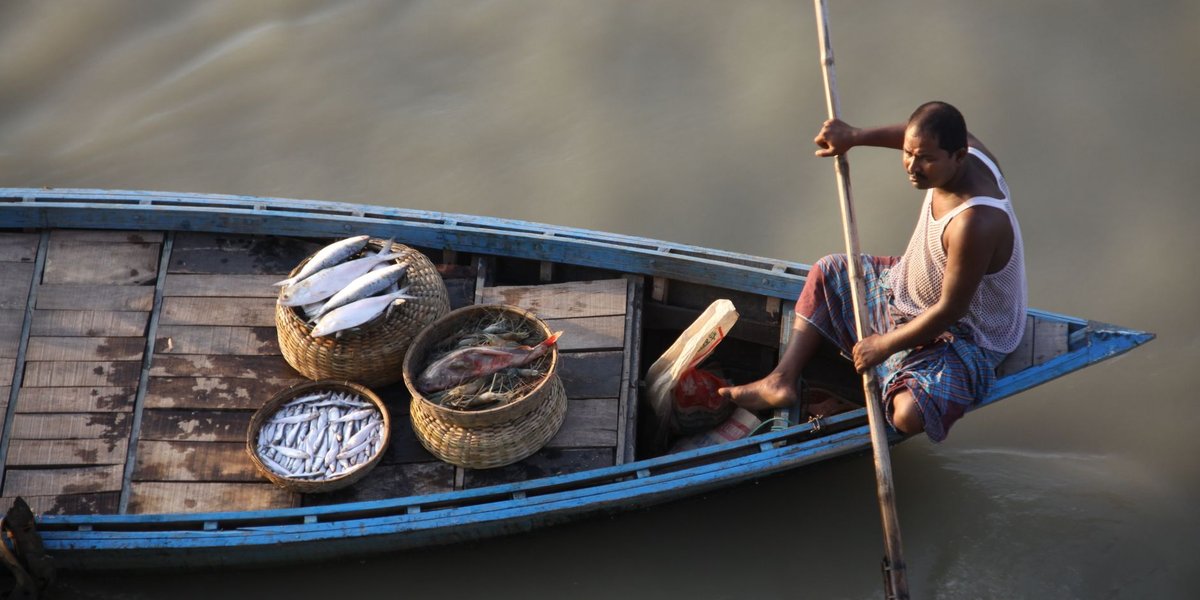
Ask a Ghanaian what fish they ate this week and the answer will probably be tilapia, sardinella, or something smoked. Ask a biologist and you get a longer list: 157 freshwater species across 28 families, with 121 of them recorded in the Volta system alone, plus a marine catch that runs from small silvery schooling fish to tuna weighing more than a grown man.
This guide covers the fish of Ghana that matter most, sorted by where they live: the Gulf of Guinea, the coastal lagoons, and Lake Volta with its rivers. Each entry gives the scientific name, rough size, how it’s caught, and how it ends up on a plate. A quick-reference table sits right below the contents if you just need the comparison.
- Quick-reference table
- Marine and coastal fish
- Lagoon fish
- Lake Volta and river fish
- Farmed fish in Ghana
- Overfishing and threatened species
- The short version
Quick-reference table
| Fish | Scientific name | Habitat | Typical maximum size | Common use |
|---|---|---|---|---|
| Skipjack tuna | Katsuwonus pelamis | Open ocean | ~80 cm | Canned, fresh |
| Yellowfin tuna | Thunnus albacares | Open ocean | ~2 m | Canned, fresh |
| Sardinella | Sardinella aurita | Coastal sea | ~30 cm | Fried, smoked |
| Atlantic chub mackerel | Scomber colias | Coastal sea | ~50 cm | Fried, stewed |
| Cunene horse mackerel | Trachurus trecae | Coastal sea | ~60 cm | Fried, smoked |
| European anchovy | Engraulis encrasicolus | Coastal sea | ~20 cm | Dried, fermented |
| Cassava croaker | Pseudotolithus senegalensis | Coastal sea, estuaries | ~1 m | Light soup, fried |
| Giant African threadfin | Polydactylus quadrifilis | Estuaries, shallow sea | ~2 m | Grilled, fresh |
| Red pandora | Pagellus bellottii | Rocky and sandy seabed | ~50 cm | Fried, grilled |
| Bonga shad | Ethmalosa fimbriata | Lagoons, estuaries | ~45 cm | Smoked |
| Black-chinned tilapia | Sarotherodon melanotheron | Lagoons | ~28 cm | Fried, smoked |
| Nile tilapia | Oreochromis niloticus | Lake Volta, rivers, farms | ~60 cm | Grilled, salted |
| African sharptooth catfish | Clarias gariepinus | Rivers, ponds, farms | ~1.7 m | Stewed, smoked |
| Silver catfish | Chrysichthys nigrodigitatus | Lake Volta, lagoons | ~80 cm | Smoked, soup |
| Elephantfish | Mormyrus rume | Lake Volta, rivers | ~90 cm | Smoked, stewed |
| Tigerfish | Hydrocynus forskahlii | Lake Volta, rivers | ~1 m | Local catch |
Marine and coastal fish
Ghana’s coastline runs roughly 540 km along the Gulf of Guinea. Nearly all of the sea catch comes from three fleets: wooden canoes launched through the surf, trawlers, and tuna vessels working out of Tema. The canoes land the small pelagic fish that feed most of the country. The industrial boats go after bigger or deeper targets.
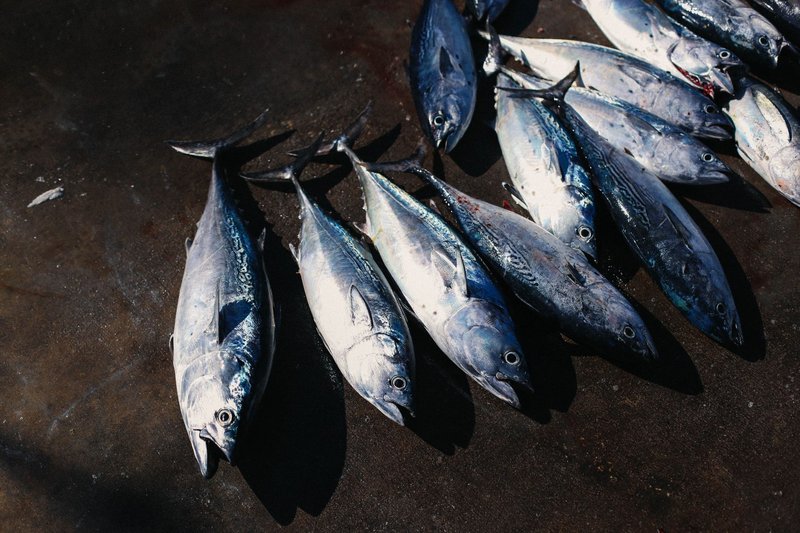
1. Skipjack tuna
Katsuwonus pelamis is the workhorse of Ghana’s tuna fleet. It rarely passes about 80 cm, has dark stripes along the belly, and travels in huge schools that purse-seiners locate by watching for birds. Tema is one of the busiest tuna ports in Africa, and a lot of the skipjack landed there goes into cans.
On the plate, expect it canned in oil or tomato sauce, or sold fresh as steaks. The IUCN Red List rates skipjack Least Concern, the healthiest of the three commercial tunas in these waters.
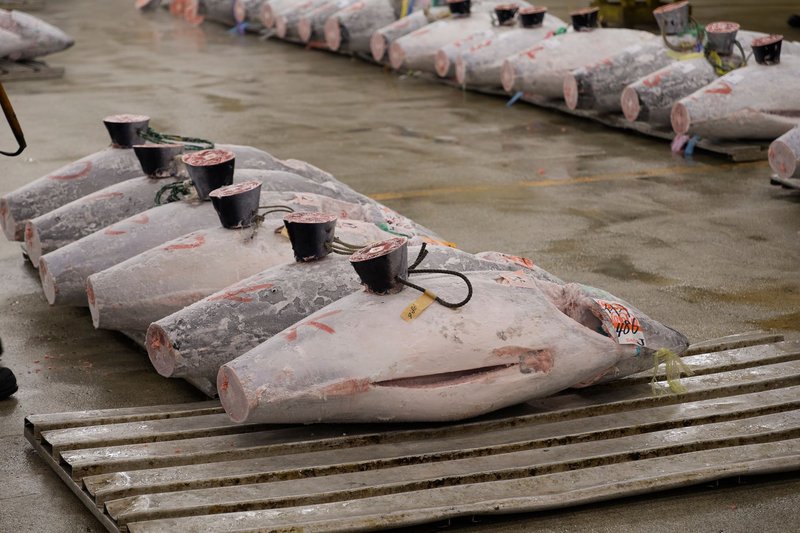
2. Yellowfin tuna
Thunnus albacares grows far larger, up to about 2 m, with the long yellow second dorsal and anal fins that give it its name. Large adults live deep and far offshore, while juveniles school with skipjack near the surface, which is why the two end up in the same nets.
Yellowfin is the one you’ll see sliced and grilled at coastal restaurants. Its IUCN status is Near Threatened, and bigeye tuna, the third tuna in the Gulf of Guinea catch, is listed as Vulnerable.
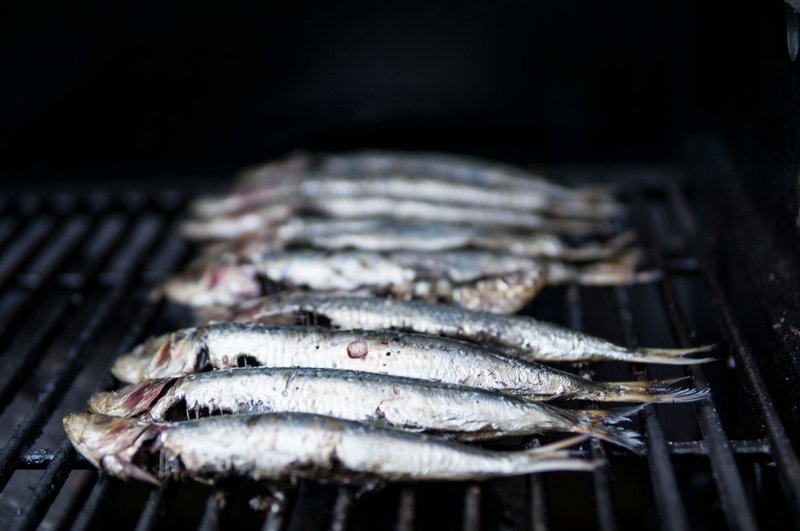
3. Sardinella
Sardinella aurita (round sardinella) and its flat-bodied relative Sardinella maderensis are the fish Ghana runs on. Ghanaians call them herring, and the Ga name is amane. They’re silver, about 20 to 30 cm, and move in dense schools that canoe crews encircle with large beach seines and ring nets.
Fresh, they’re fried whole or dropped into pepper soup. Most of the catch, though, is smoked in the Chorkor oven, a design developed in Accra’s Chorkor fishing community in the late 1960s and now used across West Africa. Smoked sardinella keeps for weeks and shows up in stews all over the country, including far from the sea. The flat sardinella is listed as Vulnerable by the IUCN, and landings of both species have dropped sharply since the 1990s.
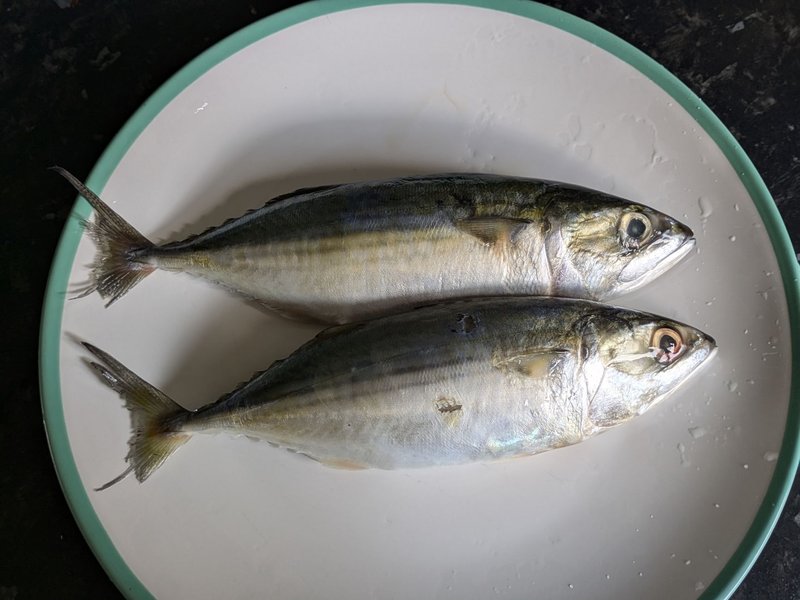
4. Atlantic chub mackerel
Scomber colias is a slim, blue-green fish with wavy dark lines on its back, usually 25 to 35 cm. It’s caught by both canoes and trawlers, and it’s one of the cheaper protein options in markets from Accra to Takoradi.
Frozen imported mackerel is also a big part of Ghana’s fish supply, because local catches of small pelagics no longer cover demand. Cooks fry it, stew it in tomato and pepper, or use it as the base for momoni, the fermented fish seasoning popular among the Fante.
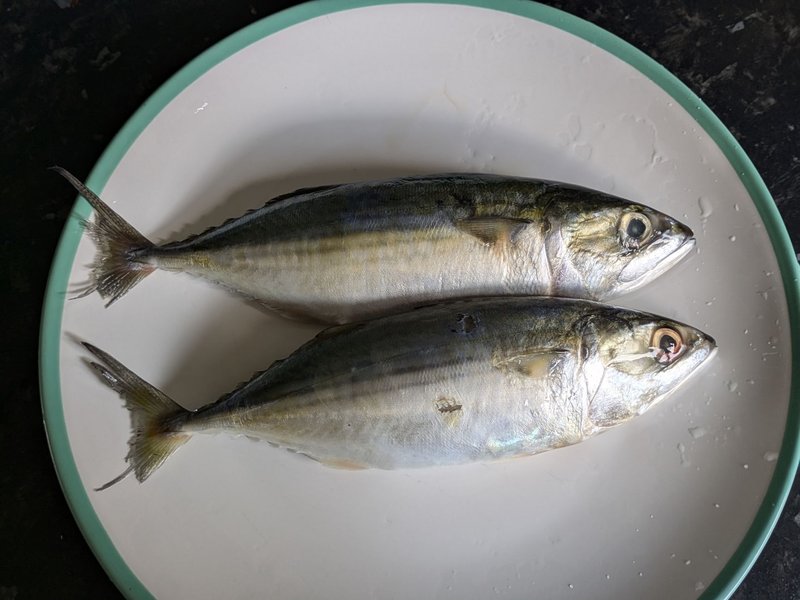
5. Cunene horse mackerel
Trachurus trecae looks like a mackerel that’s been flattened and given a row of hard scutes along the lateral line, a bony ridge that can scratch your hand if you grab it carelessly. It grows to about 60 cm but most landed fish are 20 to 30 cm.
Horse mackerel is the everyday fry-up fish. Vendors salt it, fry it crisp, and sell it with kenkey, the fermented corn dough that is the classic Ga pairing for fried fish and a hot pepper sauce called shito.
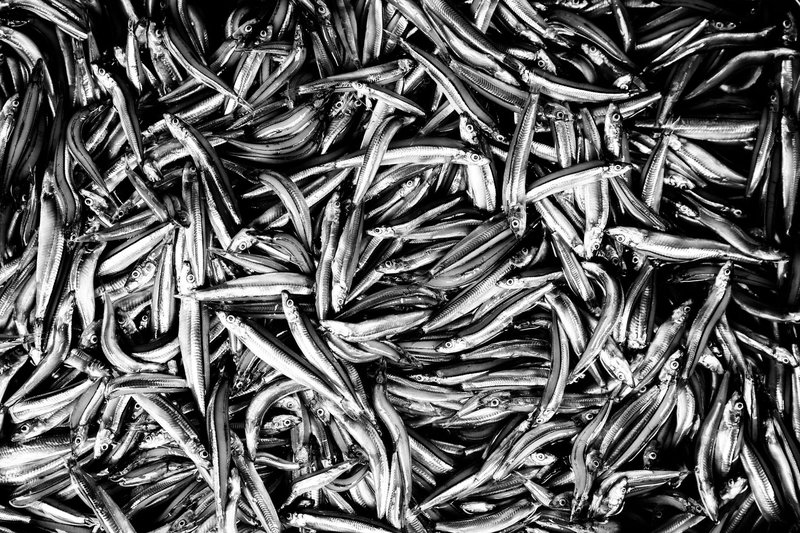
6. European anchovy
Engraulis encrasicolus is a small fish, rarely longer than 20 cm, with a long snout overhanging a large mouth. Canoe fishers catch it close to shore, especially during the upwelling season in the middle of the year when cool, nutrient-rich water rises along the coast.
Most anchovies are salted, sun-dried, or fermented. A handful dropped into soup or stew gives it a deep savory base, in the same way dried shrimp does elsewhere in West African cooking.
7. Cassava croaker
Pseudotolithus senegalensis is a bottom-dweller of the croaker family, silvery-grey with a pale belly. It reaches a meter in length but is usually landed at 40 to 60 cm. Croakers make a grunting sound with their swim bladders, which is how they got the name.
It’s a prized table fish, firm and white. Ghanaians add it to light soup, a thin tomato-and-pepper broth, or fry thick steaks of it. Trawlers and canoes both target it, and larger specimens are increasingly hard to find.
8. Giant African threadfin
Polydactylus quadrifilis is the biggest fish most coastal fishers will land from the shallows. It can pass 2 m, with a golden-silver body, a blunt snout, and long thread-like filaments below the pectoral fins that it uses to feel for prey on muddy bottoms. Estuaries and river mouths are its favored ground.
A fresh threadfin fetches a premium price. Restaurants grill it whole or cut it into thick steaks, and its meat is closer to the texture of a snapper than a sardine.
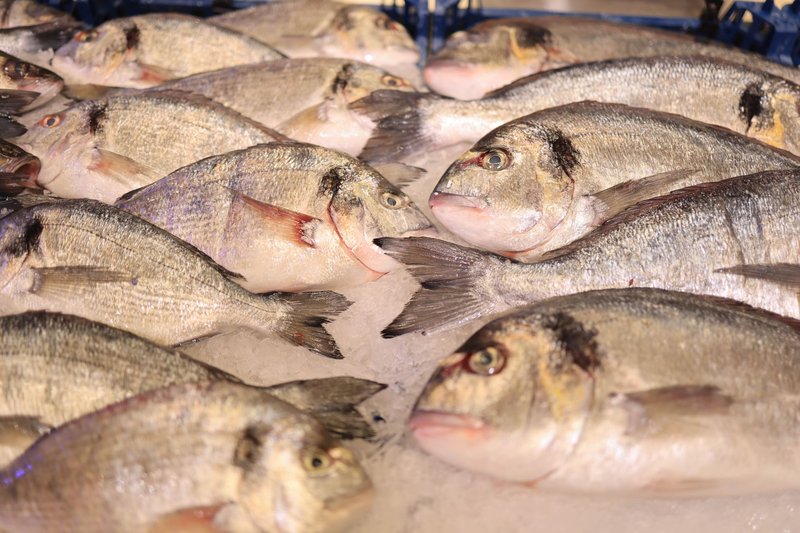
9. Red pandora
Pagellus bellottii is a pink-red sea bream with a silvery sheen, about 25 cm when landed. It lives over sandy and rocky seabed between 20 and 100 m, which puts it within reach of both trawlers and larger canoes.
Locals often call it simply “red fish.” It’s grilled or fried whole, scales and all, and served with banku or fried yam. The flesh is sweet and mild, noticeably less oily than sardinella.
Lagoon fish
Ghana has more than 90 coastal lagoons, mostly shallow, brackish, and cut off from the sea by sandbars for part of the year. Salinity swings from nearly fresh after the rains to saltier than the ocean in the dry season. Only fish that tolerate those swings survive here, which is why the lagoon catch is dominated by a handful of tough species.
10. Bonga shad
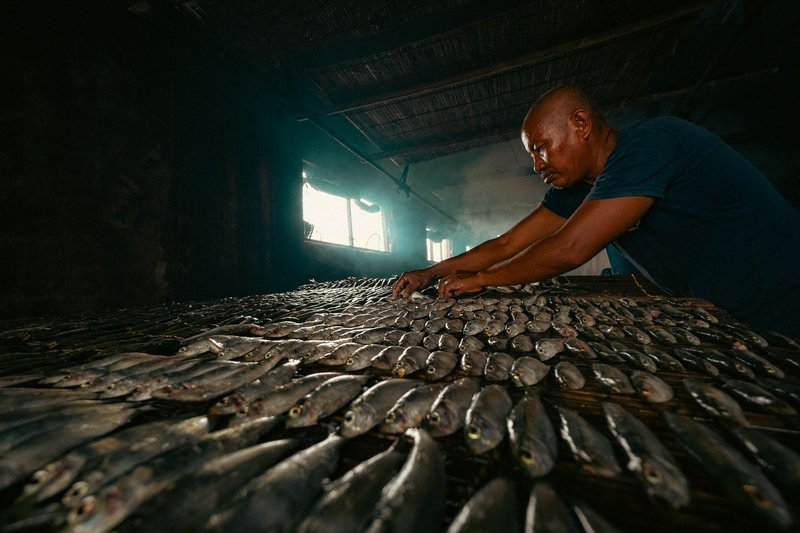
Ethmalosa fimbriata is a silvery, deep-bodied relative of herring, around 25 cm, with a single dark spot behind the gill cover. It feeds on plankton by straining water through fine gill rakers, and it moves between lagoons, estuaries, and the open sea.
Bonga is the quintessential smoked fish of West Africa. Its oily flesh takes smoke well, and the smoked result is sold in bundles at markets countrywide. A little flaked into groundnut soup or kontomire stew carries the whole pot.
11. Black-chinned tilapia
Sarotherodon melanotheron is the tilapia of the lagoons. Males and females incubate the eggs in their mouths, a trait that shows up in other tilapias, and it tolerates salinity from fresh water to almost double sea strength. Adults reach about 28 cm, with a dark patch under the chin that gives the fish its name.
Lagoon fishers net it year-round, and it supplies urban markets with a cheaper alternative to Lake Volta tilapia. It’s fried or smoked, and it has become a quiet candidate for brackish-water aquaculture because it handles poor water quality so well.
Lake Volta and river fish
Lake Volta formed when the Akosombo Dam closed the Volta River in 1965. It covers around 8,500 km², one of the largest reservoirs in the world by surface area, and its shoreline is dotted with fishing villages. A freshwater fishery grew up in a generation, and it now provides a large share of the inland fish eaten in Ghana. If you’re trying to understand freshwater fish in Ghana, this is where most of them live.
12. Nile tilapia
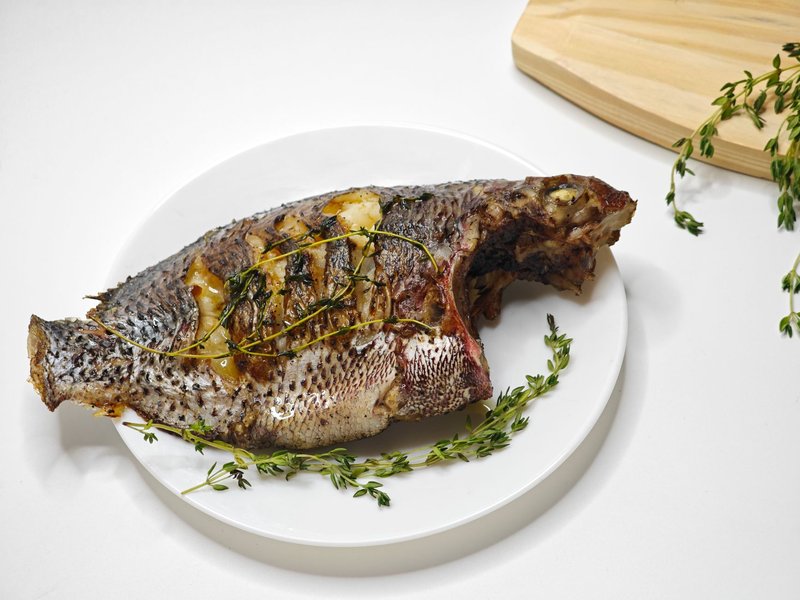
Oreochromis niloticus is Ghana’s signature fish. Wild fish in Lake Volta typically run 20 to 35 cm and feed on algae and plant matter, which keeps the flesh clean-tasting. Females carry fertilized eggs in their mouths until the fry can swim on their own.
The classic way to eat it is grilled whole over charcoal, scored, rubbed with ginger, onion, and ground pepper, and served with banku, a sour fermented corn-and-cassava dough. Tilapia is also salted and fermented into koobi, a pungent preserved fish that flavors soups. FAO’s species profile covers the biology and global farming of this fish in detail.
13. African sharptooth catfish
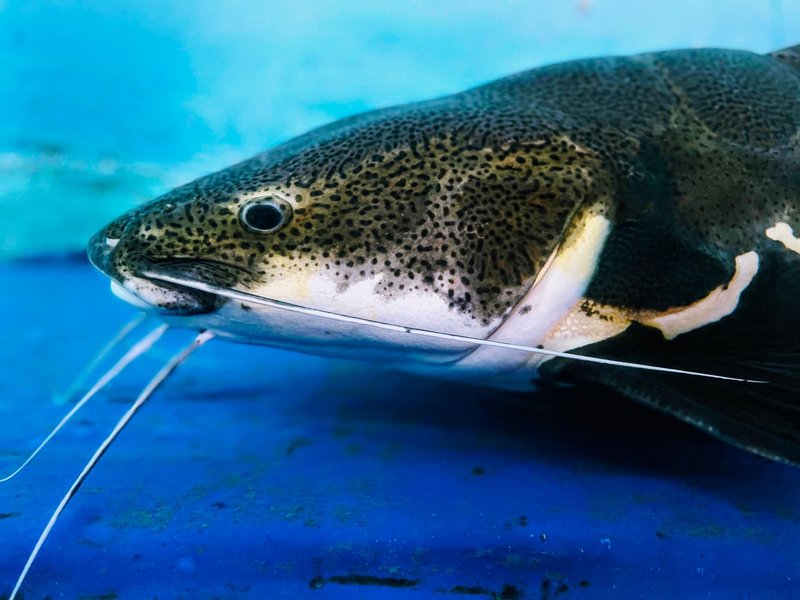
Clarias gariepinus is the big whiskered fish of rivers, floodplains, and ponds. It can reach 1.7 m, though 50 to 100 cm is typical, and it breathes air using a special organ above its gills, which lets it survive in muddy or oxygen-poor water where other fish die.
Fishers trap it in swampy backwaters and river margins. It has become a farm favorite too (more on that below). Cooks stew it, smoke it, or fry thick pieces; the flesh is firm and holds together in a pot, unlike tilapia.
14. Silver catfish
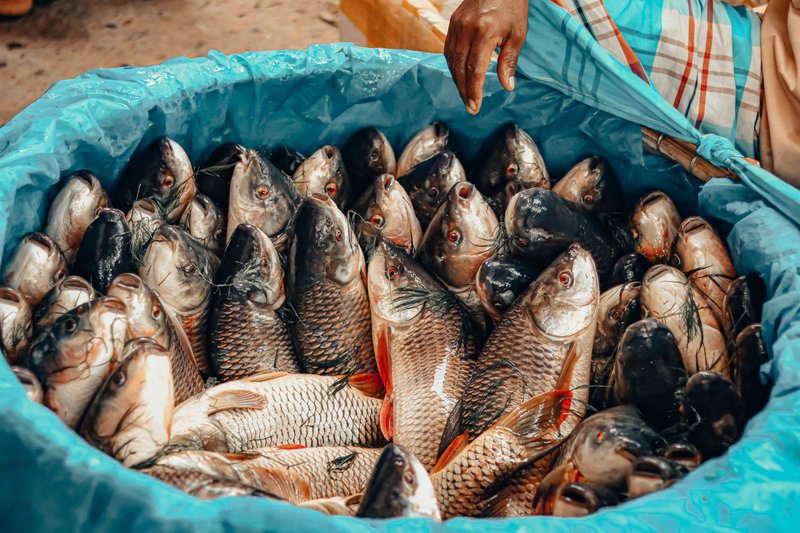
Chrysichthys nigrodigitatus is a silvery-grey catfish with three pairs of barbels and a spine on the dorsal fin that stings if you handle it carelessly. It grows to about 80 cm and lives in Lake Volta, the river’s lower reaches, and lagoons. Males guard their eggs in a nest, which is rarer than you’d think among catfish.
It’s a main target of gillnet fishers on the lake. Smoked silver catfish is a common ingredient in palm nut soup and abenkwan, and a heavy fish can feed a family.
15. Elephantfish
Mormyrus rume is one of the weirder fish you can catch in Ghana. It has a long, downturned snout, a small mouth, and a pair of weak electric organs near the tail that it uses to sense its surroundings in murky water. Its brain is unusually large for a fish of its size, relative to its body.
It grows to about 90 cm and is caught on Lake Volta and in the rivers feeding it. The meat is bony but flavorful, and it’s usually smoked or stewed.
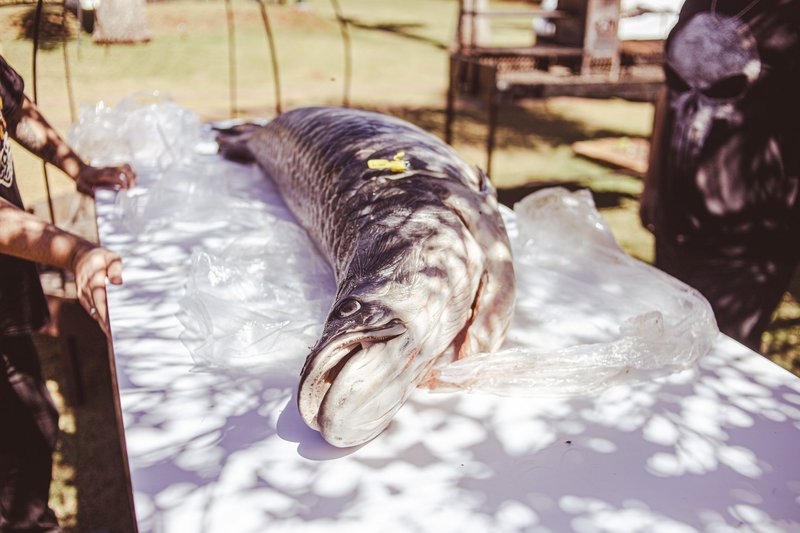
16. Tigerfish
Hydrocynus forskahlii is a predator, up to roughly a meter long, with silver flanks, reddish fins, and a mouth full of interlocking conical teeth. It hunts smaller fish in open water, and it fights hard enough that it has a following among sport anglers across Africa.
On Lake Volta it’s a local catch rather than a market staple. Fishers sell it fresh or smoked, and its presence says something about the lake’s health, since top predators only persist where there is plenty of prey below them.
Farmed fish in Ghana
Aquaculture is the part of the picture that has changed the most. Ghana’s farmed fish output has grown fast over the past fifteen years, and the main driver is cage farming of tilapia on Lake Volta around Akosombo, Asuogyaman, and Kpong. Farmers raise fish in floating net cages anchored in deep water, which is why Ghana tilapia and catfish farming looks different from the pond systems common in much of Asia.
Two species dominate. Nile tilapia is the main cage fish, and the improved Akosombo strain, bred from Volta stock, grows quicker than wild fish. African sharptooth catfish is the second, usually raised in ponds and tanks because it tolerates crowded, low-oxygen water. FAO’s profile of Ghana’s fisheries and aquaculture sector tracks production and policy, and its farming profile for the sharptooth catfish explains why the species suits intensive systems.
Farming won’t replace the sea catch overnight, but it already supplies a growing share of the tilapia sold in cities.
Overfishing and threatened species
The sea catch is where the pressure shows. Sardinella, the fish most Ghanaians eat most often, has declined sharply since the 1990s. The reasons stack up: too many canoes chasing too few fish, trawlers working near shore, light fishing that attracts and kills juveniles, and saiko, the practice of buying trawler by-catch at sea and landing it illegally.
Ghana now enforces a closed season for canoe fishers in July, the fishing months when young fish concentrate near the coast. Whether it helps depends on enforcement and on whether the industrial fleet takes the same breaks.
Quick status check on the species in this guide, from the IUCN Red List:
- Bigeye tuna is Vulnerable; yellowfin is Near Threatened; skipjack is Least Concern.
- Flat sardinella is Vulnerable.
- Many of the freshwater species lack recent assessments, which is itself a warning sign. A published checklist counts nine freshwater species found only in Ghana’s waters, and none has a fully documented population trend.
The short version
The fish of Ghana split into three groups that behave differently. Sea fish like sardinella, mackerel, and tuna are plentiful on the plate but under heavy strain. Lagoon fish such as bonga and black-chinned tilapia are hardy and feed urban markets. Lake Volta fish, led by Nile tilapia and catfish, support both a wild fishery and a fast-growing farming industry.
If you want to taste the range, start with grilled tilapia and banku for the lake, fried horse mackerel and kenkey for the coast, and smoked bonga in a stew for everything in between.