TLDR
Brunei is one of the safest countries in Southeast Asia for wildlife encounters. The dangerous animals in Brunei are real, but the risk is low and sits almost entirely in jungle trails, mangrove waterways and a few stretches of coast. In the city, the animal most likely to cause you harm is a mosquito.
- Most likely to affect you: mosquitoes (dengue), then leeches and stinging insects. Nuisance to moderate risk.
- Most serious if it happens: saltwater crocodile, king cobra and the Bornean keeled green pit viper.
- Overrated: bearded pigs, sun bears, pythons and water monitors. Avoid them and they avoid you.
- Emergency number: 991 for an ambulance.
Table of Contents
- How dangerous is Brunei wildlife, really?
- The 10 dangerous animals in Brunei, ranked
- Quick-reference table
- Where you will actually meet these animals
- Snakebite first aid in Brunei
- Emergency numbers and getting help
- Animals that sound dangerous but aren’t
- Summary
How dangerous is Brunei wildlife, really?
Not very. The UK Foreign Office travel advice for Brunei is built around crime, road and weather issues, not wildlife, and that tells you where visitors actually get into trouble. Most of the sultanate is a well-developed country with roads, clinics and a small population. About three quarters of the land is still forested, and that forest holds the animals below.
The pattern is simple. Risk goes up the further you get from tarmac: a longboat into Ulu Temburong, a mangrove kayak in Brunei Bay, a night walk off the trail. Stay on marked paths, wear closed shoes and use a guide in the rainforest, and you cut most of it.
The list below is ranked by how likely an animal is to actually hurt a visitor, weighted by how bad it gets if it does.
The 10 dangerous animals in Brunei, ranked
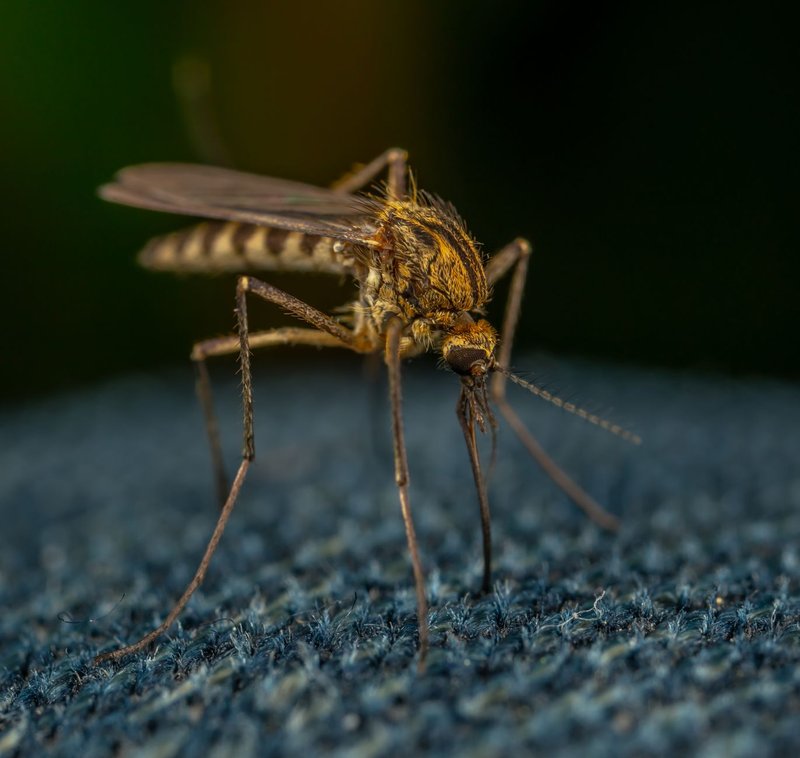
1. Mosquitoes (and leeches)
Risk level: Real, but manageable
This is the honest number one. Mosquitoes carry dengue, and the WHO dengue fact sheet puts the disease across tropical Asia, with the Aedes mosquito biting mostly in daylight. Brunei has no malaria, but dengue shows up in the country every year, in towns as much as in forest. Repellent with DEET or picaridin, long sleeves at dawn and dusk, and a room with a working screen or AC do the job. There is no dengue treatment beyond supportive care, so prevention is the plan.
Leeches live in the wet understory of Ulu Temburong and every forest trail in the country. They’re not dangerous and don’t carry disease the way mosquitoes do, but the bite bleeds for a long time because their saliva keeps blood from clotting. Tuck trousers into socks. Flick the leech off with a fingernail rather than pulling it, then press a clean cloth on the spot.
2. Saltwater crocodile
Risk level: Real, in specific places
Crocodylus porosus is the largest living reptile, and adult males pass five metres. It lives in the tidal rivers, estuaries and mangroves around Brunei Bay and along the coast. Attacks on people are rare in Brunei, but this is the only animal on the list that can kill an adult in seconds.
Where you’ll meet one: murky brackish water, river mouths, mangrove channels, and muddy banks at dusk. Don’t swim or wade in tidal rivers, don’t dangle hands or feet from a boat, and keep well back from the bank when walking. If you see a sign or hear a local warning, treat it as current. If one grabs you, fight at the eyes and snout, and call 991 as soon as you’re out of the water.
3. King cobra
Risk level: Low chance, high stakes
Ophiophagus hannah is the longest venomous snake on earth, reaching about four to five metres, and its venom is neurotoxic. The National Geographic profile describes a shy snake that eats other snakes and would rather leave. That matches how bites happen: almost always when someone corners one, steps on one, or tries to catch it.
In Brunei, king cobras turn up in forest edges, plantations and sometimes the back gardens of rural houses. If you see one, stop, back away slowly and give it a couple of metres of room. A raised hood and a low growl-like hiss mean you’re too close. Any bite is a hospital emergency, because the venom can cause breathing muscle paralysis.
4. Bornean keeled green pit viper
Risk level: Low, but this is the snake you’re most likely to meet
Tropidolaemus subannulatus is a stocky green snake with a triangular head, banded with turquoise and black as it ages. It sits coiled on branches and bushes, often at hand or head height beside a trail. It’s slow, well camouflaged and not aggressive, but that camouflage is exactly the problem. People grab a branch to steady themselves on a slope and put a hand next to it.
A bite from this species causes painful swelling and local tissue damage, and it rarely kills. It still needs a hospital. Look before you reach for a handhold, and use a torch after dark. This is the best reason to hike with a guide who has trained eyes.
5. Hornets, wasps and bees
Risk level: Low for most people, serious for the allergic
Stinging insects send more people to a clinic than any animal larger than them. Giant honey bees (Apis dorsata) hang large single-comb nests under tall rainforest branches, and hornets nest in banks, hollow trees and roof spaces. They defend a nest hard if you brush it or make heavy vibrations nearby.
For most people it hurts and swells. For anyone with a known allergy to stings, a sting can trigger anaphylaxis, so carry your own epinephrine auto-injector if you have one. If a swarm comes after you, walk away fast, cover your face and don’t swat.
6. Stingrays and box jellyfish
Risk level: Low, because few people swim where they live
Stingrays rest half-buried in sand in shallow water, and the injury comes from stepping on one and getting hit by the barbed tail. Shuffle your feet when you wade. Box jellyfish and other stinging jellyfish are found in tropical coastal waters across the region, mainly in calm, shallow water near river mouths, and their stings range from a bad rash to a medical emergency.
Brunei’s coast gets few swimmers, which helps. If you do swim, ask locally about the day’s conditions. For a jellyfish sting, rinse with vinegar and lift off any tentacles with a stick or card. For a stingray wound, soak the foot in water as hot as you can stand it, check that no barb is left in, and see a doctor, because these wounds get infected.
7. Reticulated python
Risk level: Very unlikely
Malayopython reticulatus is the world’s longest snake, at six metres and more. It’s also a common animal in Southeast Asia, found from forest to river edges to drains in towns. Deaths of people are almost unheard of, and they have mostly involved people who kept or handled one. Pythons are far more likely to take a chicken or a stray cat.
Leave it alone and it leaves. If one is in your garden or bathroom, call local authorities and don’t try to move it. It’s non-venomous, but a bite from a large one can be deep and dirty.
8. Bearded pig
Risk level: Very unlikely
Sus barbatus is the wild pig of Borneo, and males carry a beard of whiskers and short tusks. Packs roam the forest floor, and in fruiting season they move in big migrations. They’re a staple prey animal, shy of people, and the main danger is a cornered or wounded animal, or a sow with piglets.
If you see one, stay quiet, back off and keep a tree between you and it. Don’t approach for a photo.
9. Sun bear
Risk level: Very unlikely
The sun bear (Helarctos malayanus) is the smallest bear in the world, and Borneo’s population is a hunted, shrinking one. It’s a shy forest animal that eats fruit, termites and honey, and encounters with tourists are close to nonexistent. The FCDO and local tour operators give the same message: you’re very unlikely to see a bear at all.
If you do, back away and make noise. A sun bear defending cubs, or one surprised at close range, can claw and bite, but it’s a risk you share with every forest in the region.
10. Water monitor
Risk level: Very unlikely, and mostly a nuisance
Varanus salvator is a big, common lizard, up to two metres and more, that you’ll see in canals, rivers and even around Bandar Seri Begawan and the stilt-house waterways of Kampong Ayer. It’s a scavenger, not a hunter of people.
It bites when it’s caught or cornered, and the bite is deep with a high risk of infection. Don’t feed it, don’t pick it up, and wash any bite thoroughly with soap and clean water, then see a doctor.
Quick-reference table
| Animal | Risk level | Where in Brunei | What to do |
|---|---|---|---|
| Mosquitoes / leeches | Real, manageable | Everywhere; leeches in rainforest | Repellent, long sleeves, tuck trousers in |
| Saltwater crocodile | Real, in specific places | Tidal rivers, Brunei Bay mangroves | Stay out of the water, keep back from banks |
| King cobra | Low chance, high stakes | Forest edges, plantations | Back away, never corner it |
| Bornean keeled green pit viper | Low | Trailside shrubs, Ulu Temburong | Check handholds, use a torch |
| Hornets, wasps, bees | Low (serious if allergic) | Trees, banks, roofs | Avoid nests, carry epinephrine if allergic |
| Stingrays / box jellyfish | Low | Sandy shallows, river mouths | Shuffle your feet, ask locally |
| Reticulated python | Very unlikely | Forest, rivers, drains | Leave it alone |
| Bearded pig | Very unlikely | Primary forest | Back off, keep a tree between you |
| Sun bear | Very unlikely | Deep forest | Back away, make noise |
| Water monitor | Very unlikely | Canals, Kampong Ayer, rivers | Don’t feed or handle |
Where you will actually meet these animals
In the city and Kampong Ayer. Mosquitoes, mostly. Water monitors sun themselves on riverbanks, and you can watch them from a water taxi. A python in a drain makes the news and then goes home. Crocodiles are not a normal part of a day in the capital.
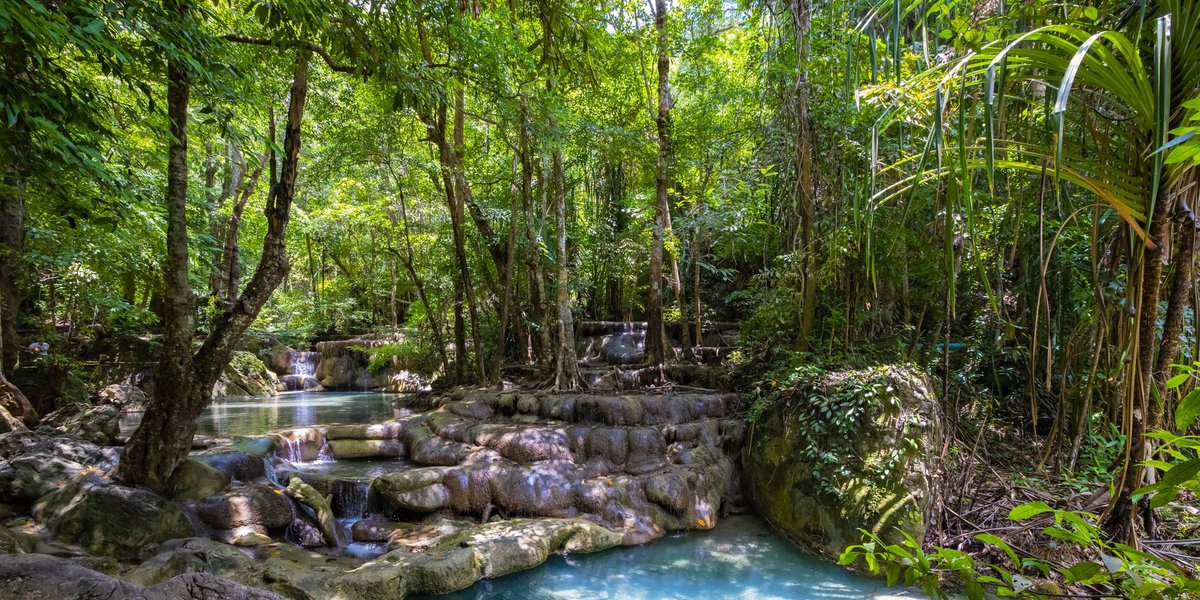
In Ulu Temburong. This is the rainforest district, reached by longboat from Bangar. Expect leeches, mosquitoes, hornets and the odd snake on the trail. Visits to Temburong National Park run with guides, and guides spot pit vipers long before you do. Don’t hike alone, and don’t leave the trail for a better photo.
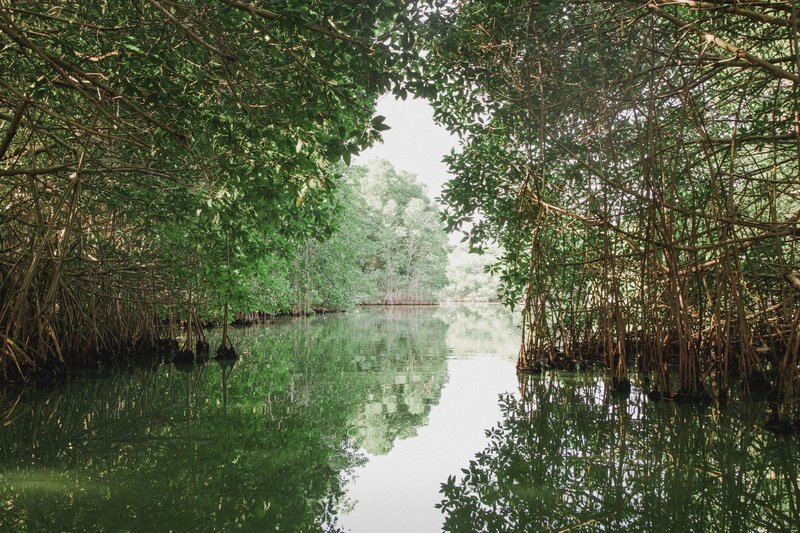
On the mangroves and coast. The mangroves of Brunei Bay and the Brunei River are where crocodiles and stingrays live, and also where you’ll see proboscis monkeys. Go with a licensed boat operator and keep hands inside the boat.
In the rest of Brunei. Rural gardens and plantations are the place a king cobra or a python is most likely to show up. Look where you step, particularly at night.
Snakebite first aid in Brunei
About 30 snake species live in Brunei and roughly half of them are venomous, so a bite from an unidentified snake should be treated as venomous until a doctor says otherwise. The WHO snakebite fact sheet is the reference for what follows.
- Move away from the snake. Don’t try to catch or kill it.
- Keep the person calm and still. Movement spreads venom faster.
- Call 991. Say where you are and that it’s a snakebite.
- Immobilise the limb with a splint or sling, kept at about heart level.
- Remove rings, watches and tight clothing before swelling starts.
- Note what the snake looked like, or take a photo only if it’s completely safe. Don’t bring the snake.
- Get to a hospital, even if the person feels fine. Symptoms can be delayed for hours.
What not to do: don’t cut the wound, don’t suck out venom, don’t apply ice, and don’t use a tight tourniquet. For bites from neurotoxic snakes like cobras, a firm pressure bandage over the whole limb is often advised. Pit viper bites are different, and it’s not recommended. If you’re unsure, immobilise and go.
Emergency numbers and getting help
- Ambulance: 991
- Police: 993
- Fire and rescue: 995
The main hospital in the capital is RIPAS Hospital in Bandar Seri Begawan, and the district hospitals handle first response outside the capital. If you’re heading into Temburong, tell your lodge or guide what time you expect to be back, and keep a charged phone. Travel insurance that covers medical evacuation is worth having for any jungle trip.
Animals that sound dangerous but aren’t
Many Brunei “dangerous animals” lists pad themselves with animals that pose no risk to people. Three come up again and again:
- Proboscis monkey. Large, loud and harmless. They’re endangered, and the real threat is to them.
- Slow loris. The loris produces a toxin from a gland on its arm, but it’s a slow, nocturnal, shy animal that people almost never meet. Bites are linked to people handling them.
- Pangolin. A scaly anteater that curls into a ball. It’s the most trafficked mammal in the world and has no way to harm you.
Summary
The dangerous animals in Brunei are fewer and rarer than the headlines on “deadliest animals” lists suggest. Mosquitoes cause the most real harm, crocodiles and venomous snakes cause the most serious harm, and everything else on the list is a case of respecting space. Wear repellent, stay on the trail, keep out of tidal water, learn the snakebite steps above and save 991 in your phone. After that, spend your time looking at hornbills and proboscis monkeys instead.