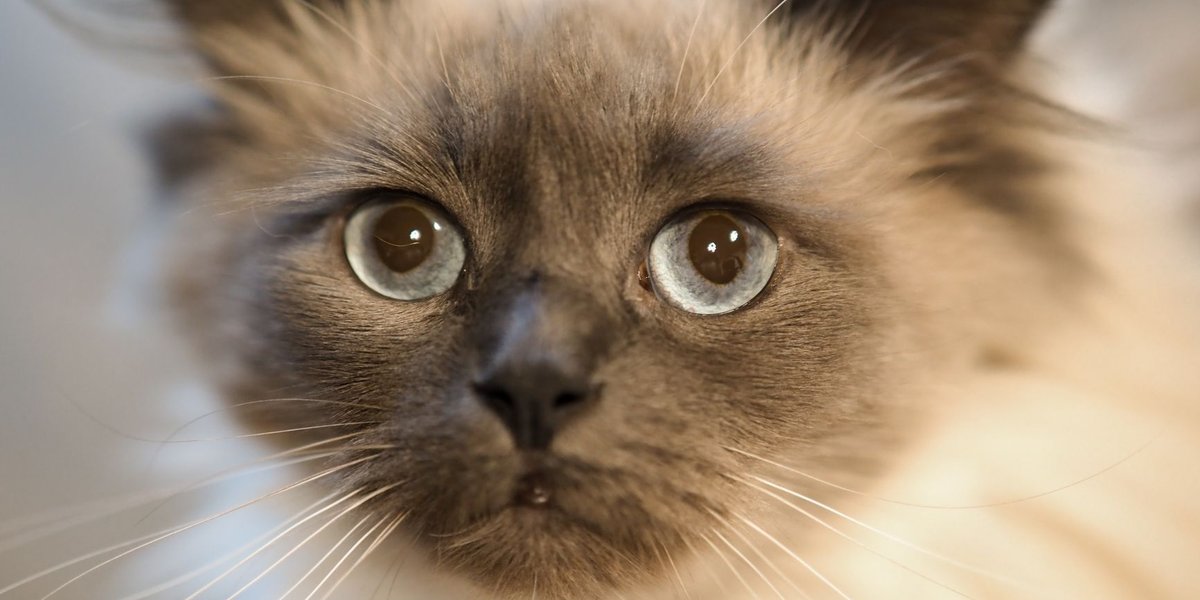
Most quiet cat breeds lists treat “quiet” and “calm” as the same thing. They aren’t. A Bengal doesn’t yowl much, but it will rearrange your bookshelf at 3 a.m. What you want for an apartment or a light sleeper is a cat that is both low-vocal and low-energy, and nine breeds fit that description reliably.
The list below is sorted by how the cats actually sound, with the grooming bills and health caveats most lists skip.
Table of Contents
- TLDR: the quietest cat breeds
- Quiet is not the same as calm
- 9 quiet cat breeds, one by one
- Breeds to skip if silence is the goal
- How to choose a quiet cat
- Why a quiet cat starts meowing
- FAQ
TLDR: the quietest cat breeds
If you only read one section, read this one. Every breed here has a soft voice. The columns that differ are energy and grooming.
| Breed | Voice | Energy | Grooming | Best for |
|---|---|---|---|---|
| Birman | Soft chirp | Low-moderate | Weekly brushing | Families, first-time owners |
| Ragdoll | Soft, rare meow | Low | 2-3 brushings a week | Seniors, lap seekers |
| Persian | Near-silent | Very low | Daily brushing | Quiet homes, owners who like routine |
| British Shorthair | Quiet purr, rare meow | Low | Weekly brushing | Working owners, apartments |
| Russian Blue | Soft, small voice | Moderate | Weekly brushing | Calm single-person homes |
| Scottish Fold | Tiny chirp | Low-moderate | Weekly (longhairs more) | Only with a health-tested breeder |
| Chartreux | Chirps, almost never meows | Moderate | Weekly brushing | Apartments, patient families |
| American Shorthair | Quiet, occasional meow | Moderate | Weekly brushing | First cats, mixed households |
| Exotic Shorthair | Near-silent | Low | Several times a week | Persian personality, less fur |
For a pure “least vocal” pick, go Persian, Exotic Shorthair or Chartreux. For the most relaxed lap cat, go Ragdoll or Birman. For the lowest-maintenance coat, go British Shorthair or American Shorthair.
Quiet is not the same as calm
Volume and energy are separate traits, and most lists blur them. A cat can have a whisper of a voice and still sprint laps around your flat.
Bengals, Abyssinians and Siberians turn up on quiet-breed roundups because they don’t meow constantly. They’re also high-energy, athletic and curious, and a bored one finds noisy ways to entertain itself: knocking glasses off counters, shredding blinds, hunting your ankles at dawn. If a thumping 2 a.m. sprint bothers you as much as a yowl, skip them.
Every breed on this list is on it for temperament as much as voice. Low volume, low drama.
9 quiet cat breeds, one by one
1. Birman
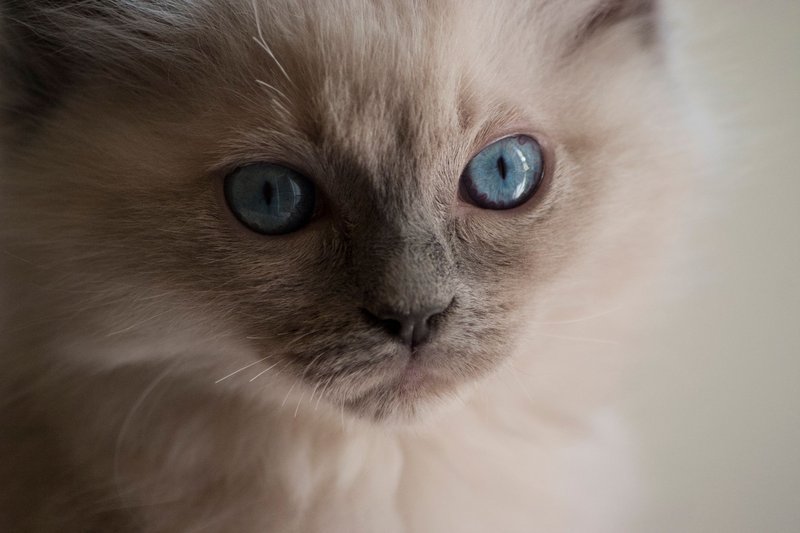
The Birman talks in a soft, sweet chirp and uses it sparingly, mostly to say hello when you come home. It’s a sociable breed that follows you from room to room without demanding anything.
The semi-long, silky coat has no woolly undercoat, so it tangles far less than a Persian’s. Weekly brushing handles it. Birmans are a safe first pick for families because they tolerate handling and the occasional toddler.
2. Ragdoll
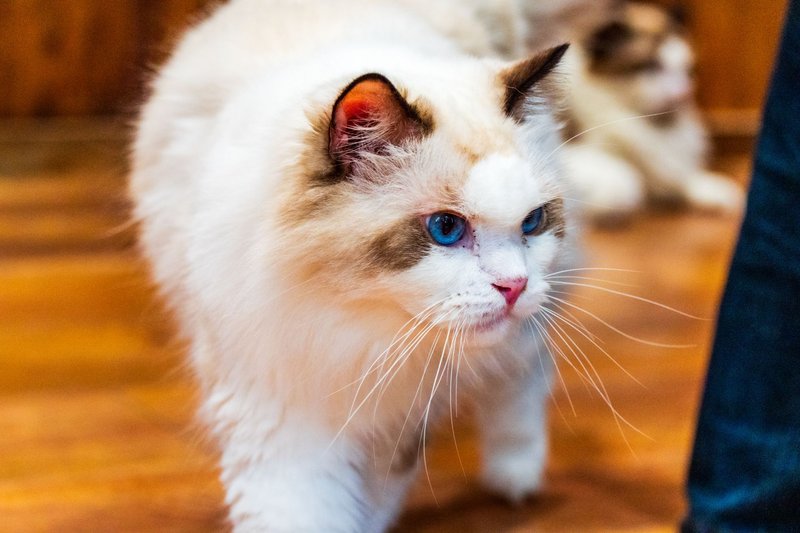
Ragdolls earned their name from the way many go limp when picked up. The voice matches the body: a small, soft meow, used rarely. They’re large, slow-moving and happiest on a lap, which makes them a strong choice for seniors who want company without a cat that climbs the curtains.
Health caveat: Ragdolls carry a known gene variant linked to hypertrophic cardiomyopathy (HCM), a heart condition. Cornell’s Feline Health Center explains how HCM works and which breeds are most at risk. Ask any breeder for DNA and heart-scan results on the parents.
3. Persian
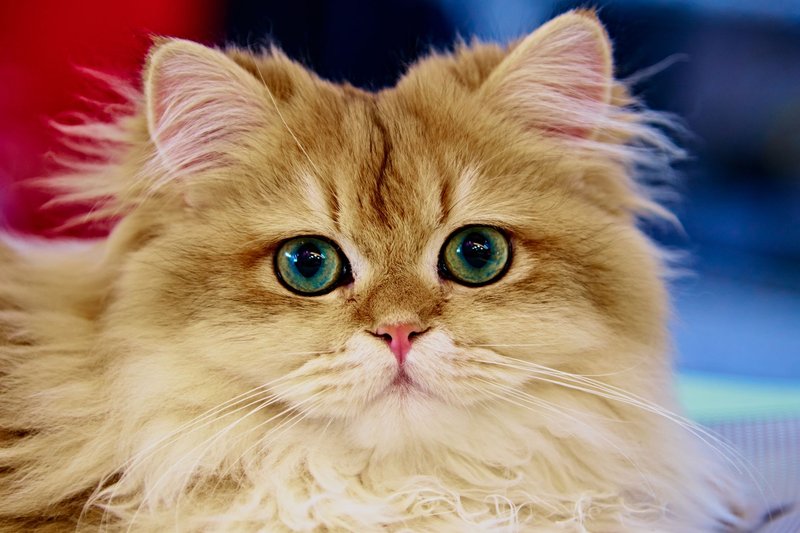
The Persian is the closest thing to a silent cat. Its voice is faint and melodic, and it seldom uses it. Energy is very low: a Persian will choose a sunny spot and defend it by staying put.
The price of that calm is the coat. Long fur mats quickly, so it needs daily brushing, and the flat face means tear staining you’ll wipe daily. Persians are also prone to polycystic kidney disease (PKD), which Cornell’s Feline Health Center covers in detail. A reputable breeder screens for it by ultrasound or DNA test.
4. British Shorthair
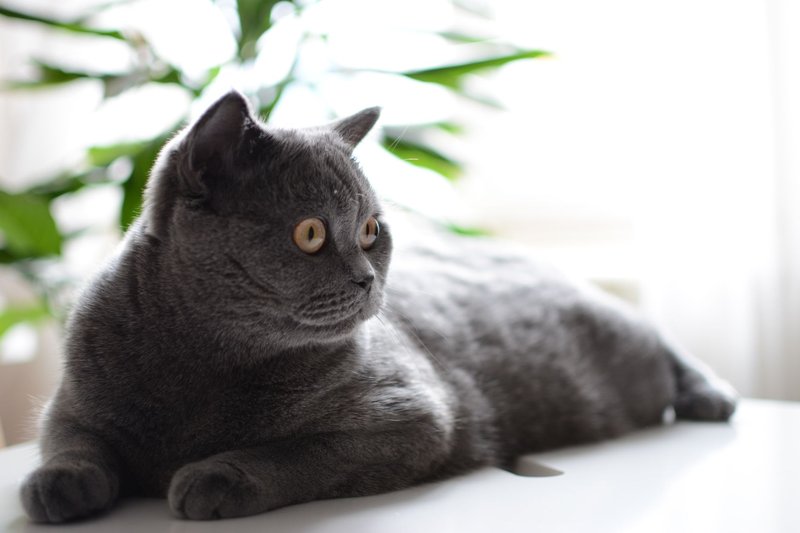
The British Shorthair is dense, round-faced and unbothered. It purrs quietly, meows rarely and mostly watches the household from a chair. It’s dignified rather than clingy, so it copes with an owner who works all day better than most breeds do.
The plush double coat sheds, but weekly brushing keeps it manageable. Watch the weight: this breed gains easily, and a heavy cat is a cat with sore joints. HCM also occurs in the breed.
5. Russian Blue
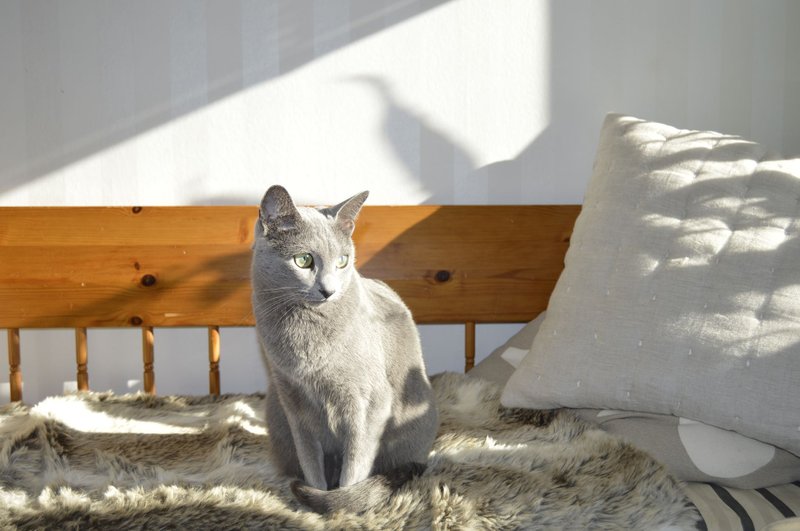
Russian Blues have a notably small, soft voice and the green eyes and silver-blue coat that make them hard to confuse with anything else. They’re quiet, but they’re a step up in energy from the Persian types, and they like a play session.
They also bond hard to one person or a small circle and can be reserved with strangers. They like routine: feeding at the same time, the same chair, no surprise guests. Predictable homes suit them best.
6. Scottish Fold
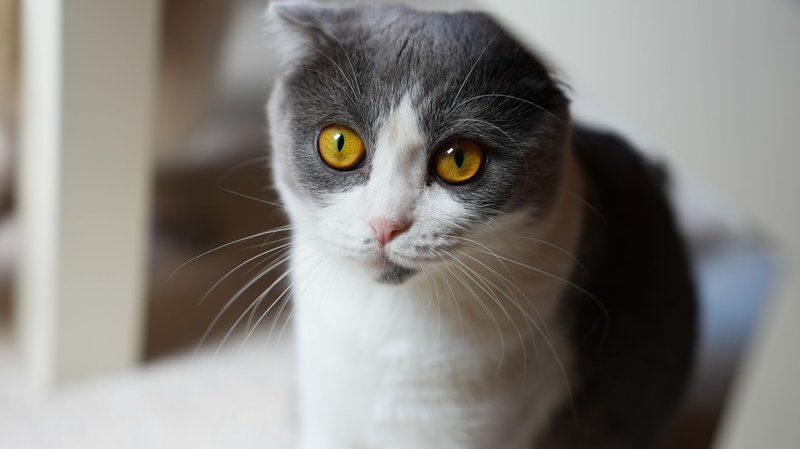
The folded ears get the photos. The voice is a tiny chirp, rarely heard. Folds are mellow and affectionate and will sit with you through a whole TV series.
This is the one breed on the list with a serious welfare problem. The gene that folds the ears also affects cartilage throughout the body and causes osteochondrodysplasia, a painful joint condition. Responsible breeders avoid fold-to-fold pairings, but every fold cat carries the gene, and several countries and cat registries restrict or ban the breeding. If you love the look, consider the straight-eared variety or another breed on this list.
7. Chartreux
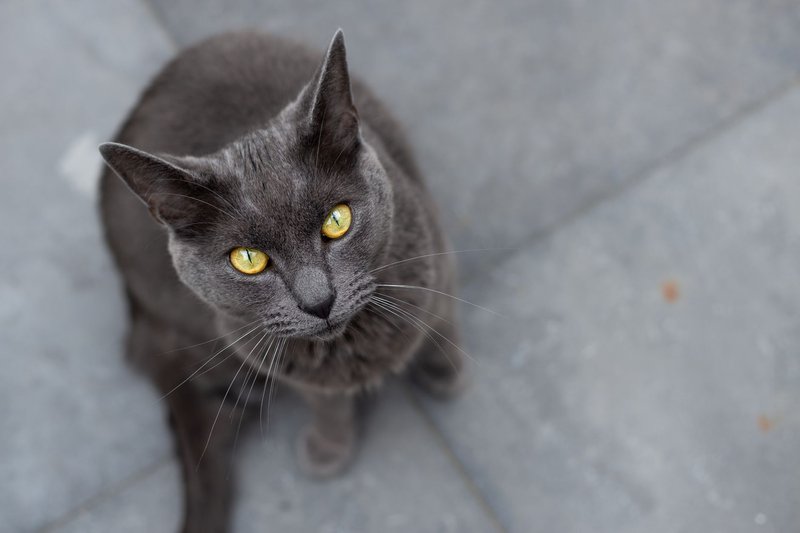
A French breed with a woolly blue-gray coat and an upturned mouth that looks like a smile. Chartreux are known for barely meowing; they communicate with chirps and the occasional trill. They’re patient, observant and tend to follow you around like a quiet shadow.
They’re moderately active and enjoy puzzle feeders, which keeps them from inventing their own entertainment. The coat is water-resistant and dense, but a weekly brush is enough. The breed is rare outside France, so expect a waiting list.
8. American Shorthair
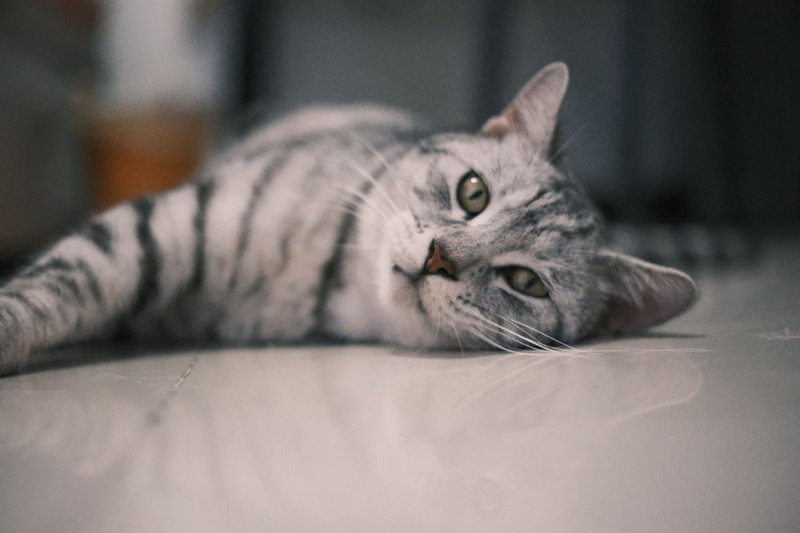
The American Shorthair is the sensible, sturdy option. It has a quiet, unremarkable voice, and it meows mainly when the food bowl is empty. It was bred from working barn cats, so it’s athletic enough to enjoy a toy mouse but not frantic about it.
Care is easy: short coat, weekly brush, and generally robust health compared with the flat-faced and folded breeds. It adapts well to apartments, children and other pets, which is why it suits a first-time owner.
9. Exotic Shorthair
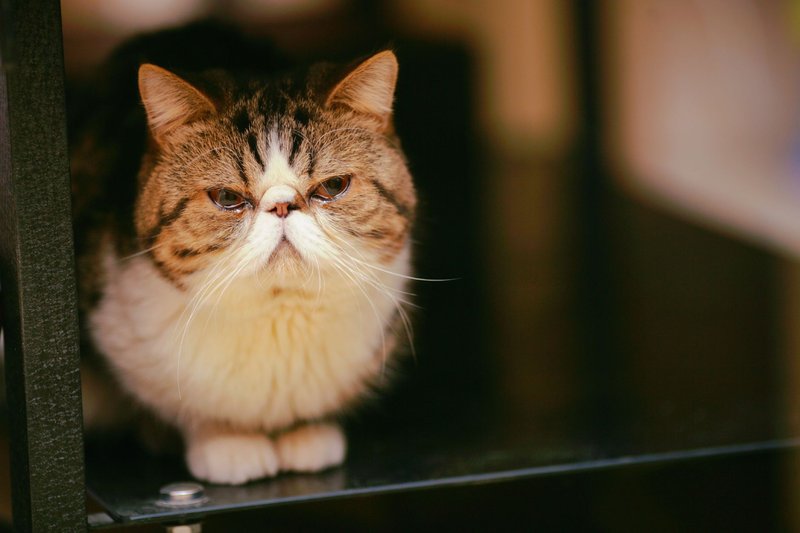
Think of it as a Persian in a plush short coat. It has the same sweet, quiet nature and soft voice, with far less grooming: a few brushings a week instead of daily.
The face is the same flat shape, so it shares the Persian’s breathing, tear-duct and PKD risks. Ask the breeder about screening, and choose a cat with a slightly longer muzzle if you can.
Breeds to skip if silence is the goal
The reverse list matters just as much. The Siamese, Oriental Shorthair and Burmese are famously talkative. Siamese in particular have a loud, raspy, almost baby-like cry, and they use it to hold conversations. If a vocal cat sounds charming in a video, remember the video ends and the cat doesn’t.
Bengals, Abyssinians and Siberians aren’t especially loud, but as covered above, they’re too energetic to count as quiet.
How to choose a quiet cat
Breed predicts temperament loosely. Individual personality predicts it better. Two littermates can have very different voices, and a talkative Ragdoll is not a myth.
- Adult over kitten. A cat of two or more years has a finished personality. A shelter will tell you whether it’s a talker, and you can meet it before committing. A kitten’s adult voice is a guess.
- Check shelters first. Domestic shorthairs of every coat are common in rescue and often quiet. Ask the staff which cats don’t meow at the door. They know.
- Meet the parents. If you buy from a breeder, spend time with the mother or father. Voice runs in lines.
- Match energy to your home. A moderate-energy cat such as a Chartreux or American Shorthair needs play. Without it, even a quiet breed gets loud.
- Ask about health testing. HCM, PKD and joint problems are why a “cheap” purebred can end up costly.
For a senior owner, the Ragdoll, Birman and British Shorthair are the best combination of low volume, low energy and manageable size.
Why a quiet cat starts meowing
A cat that suddenly gets loud is usually telling you something.
- Medical problems. Hyperthyroidism, kidney disease, high blood pressure and cognitive decline all cause increased vocalising in older cats. Cornell’s Feline Health Center describes hyperthyroidism and its symptoms, which include excessive crying. A vet visit comes first.
- Boredom or loneliness. A cat alone for ten hours will talk when you walk in. Add play sessions and a window perch.
- Hunger on a schedule. If you feed at 6 a.m. once, you’ve set a 6 a.m. alarm. Use an automatic feeder set for just before you wake.
- Night energy. Play hard for 15 minutes before bed, then feed. Cats often sleep after a hunt-and-eat cycle.
- Heat or stress. An unspayed female calls loudly in season. Spaying fixes it.
FAQ
What is the quietest cat breed?
The Persian and the Exotic Shorthair, its short-haired relative, are usually considered the quietest. Chartreux are a close third and barely meow.
What are the best quiet cat breeds for apartments?
The British Shorthair, Chartreux and American Shorthair adapt well to small spaces, tolerate time alone and have low voices. Persians and Exotics suit apartments too, if you can commit to the grooming.
Are quiet cat breeds also calm?
Not always. Quiet describes the voice, and calm describes the energy. The Ragdoll, Persian and British Shorthair are both. The Russian Blue and Chartreux are quiet but need play.
Do female cats meow less than males?
Not reliably. Neutering or spaying matters more than sex, because unneutered cats of both sexes vocalise far more.
How do I stop my cat meowing at night?
Rule out medical causes first, particularly in cats over ten. Then play hard before bed, feed a meal afterwards, and use an automatic feeder for early-morning hunger. Don’t respond to the yowling, or you’ll teach the cat it works.
Can a mixed-breed shelter cat be quiet?
Yes. Many domestic shorthairs are quiet, and meeting an adult cat tells you more about its voice than any breed label.