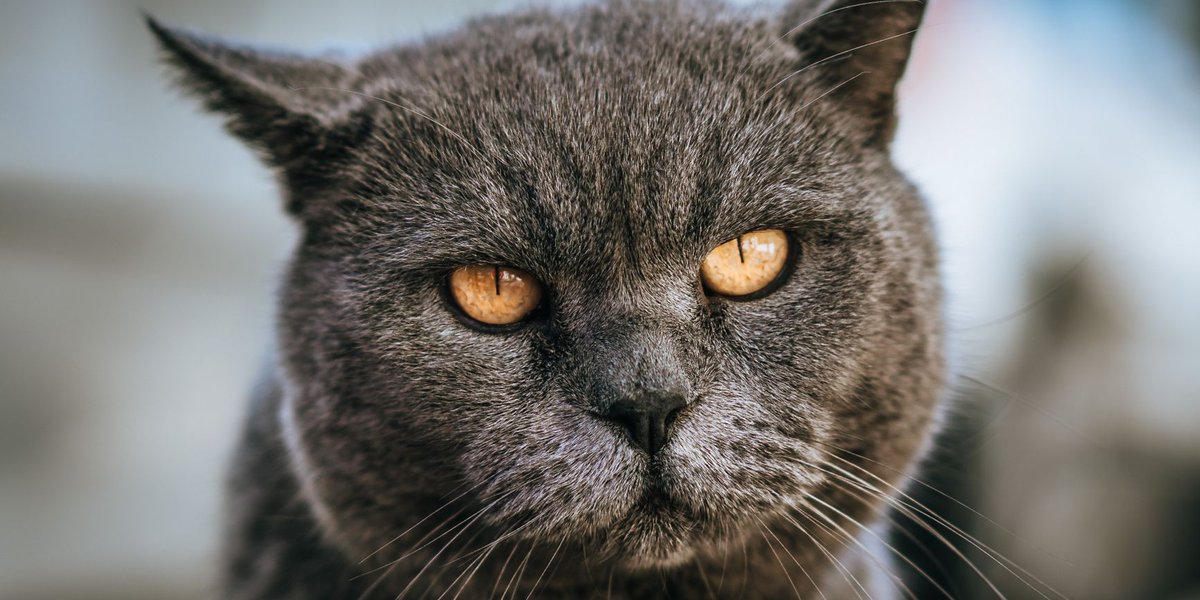
A “blue” cat is a gray cat. Four blue cat breeds come only in that color (Russian Blue, Chartreux, Korat and Nebelung), and six more offer it as one option among many.
Table of Contents
- Why “blue” means gray
- The four breeds that are always blue
- Six breeds that come in blue
- Blue cat breeds compared
- Russian Blue vs Chartreux vs Korat
- Blue cats with green eyes
- FAQ
- Which blue cat suits you
Why “Blue” Means Gray: The Dilution Gene
Cat registries use “blue” for any gray coat with a cool, bluish cast. The color is black fur that has been diluted. A recessive gene, the dilution gene, makes the pigment granules in each hair clump into smaller, more widely spaced groups. Less pigment reaches the eye per hair, and black reads as slate gray.
Because the gene is recessive, a kitten needs two copies, one from each parent, to come out blue. The same gene turns chocolate into lilac and red into cream. That’s why a litter from two black-coated parents can include a blue kitten if both carry the gene quietly.
For the breeds below, that’s all “blue” means. It isn’t a separate pigment, and shade varies from pale silver-gray to deep charcoal.
The Four Breeds That Are Always Blue
These four have blue as their standard color. Every purebred Korat, Nebelung and Chartreux is blue, and the Russian Blue is blue in the major registries. If you’ve seen a gray cat with a pedigree, odds are it was one of these.
1. Russian Blue
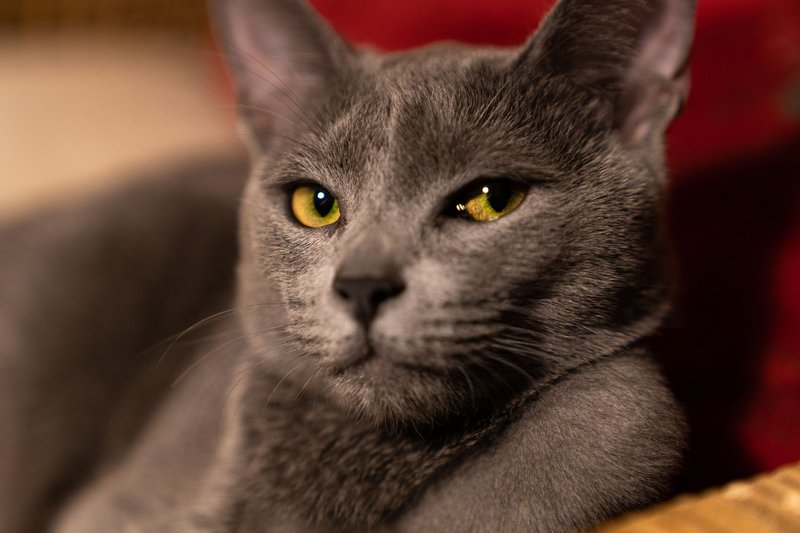
- Coat: Short, dense double coat; even medium-blue with silver-tipped guard hairs
- Eyes: Vivid green
- Weight: 7-12 lb
- Lifespan: 15-20 years
- Temperament: Gentle, reserved with strangers, strongly bonded to one or two people
- Grooming: Weekly brushing
- Shedding: Light to moderate
The Russian Blue’s coat is the giveaway. It’s plush enough that your finger leaves a track in it, and the silver tips give it a shimmer under light. The breed is often traced to the port of Arkhangelsk in northern Russia, though that origin story is more tradition than documentation. Expect a cat that hides when guests arrive and waits at the door when you get home.
2. Chartreux
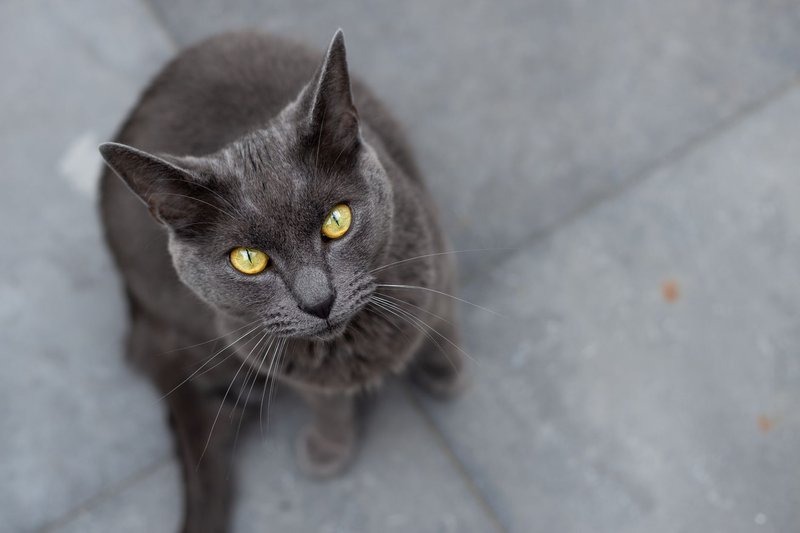
- Coat: Short, woolly, water-resistant double coat in ash to slate blue
- Eyes: Copper to gold-orange
- Weight: 7-16 lb (males run much larger)
- Lifespan: 12-15 years
- Temperament: Quiet, patient, dog-like loyalty
- Grooming: Weekly brushing, more in spring
- Shedding: Moderate, with a seasonal blowout
France’s blue cat is built like a small linebacker, with a broad chest on fine-boned legs. The coat has a woolly break rather than lying sleek, and the face carries a slight upturn at the mouth that owners call the Chartreux smile. They’re famously quiet. Many go years with little more than a chirp. Males take three to five years to fully fill out.
3. Korat
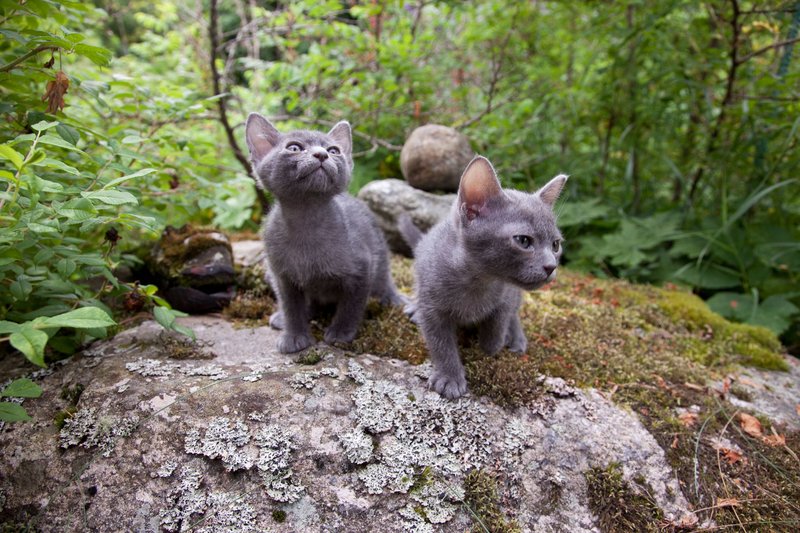
- Coat: Short, glossy single coat, silver-tipped blue
- Eyes: Large, round, luminous green (amber in kittens and adolescents)
- Weight: 6-10 lb
- Lifespan: 15-20 years
- Temperament: Affectionate, alert, wants to be involved in everything
- Grooming: Minimal
- Shedding: Light
The Korat comes from Thailand, where it’s regarded as a good-luck cat and traditionally given as a wedding gift. The head is heart-shaped from every angle, front-on, and the green eye color doesn’t arrive until a cat is around two to four years old. Without an undercoat, the coat lies flat and splits along the spine when the cat moves. They’re less tolerant of being left alone than the other two lookalikes.
4. Nebelung
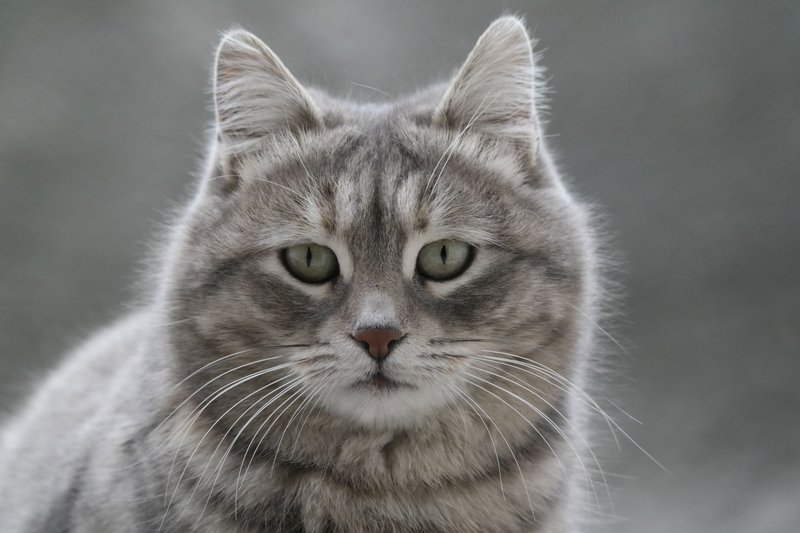
- Coat: Medium-long, silky double coat; silver-tipped blue with a plumed tail
- Eyes: Green to yellow-green
- Weight: 7-11 lb
- Lifespan: 15-18 years
- Temperament: Shy, devoted, sensitive to noise and change
- Grooming: Brush two to three times a week
- Shedding: Moderate
Think of the Nebelung as a longhaired Russian Blue. The name is German for “creature of the mist,” a nod to the fog-colored coat that catches light at the tips. The breed was developed in the United States in the 1980s and is still uncommon, so expect a waitlist. It’s a good fit for quiet homes with a routine. It’s a poor one for chaotic households.
Six Breeds That Come in Blue (Among Other Colors)
For these breeds, blue is one choice on a long menu. Ask a breeder specifically for blue, and check the eye color you’ll get, because it changes from breed to breed.
5. British Shorthair
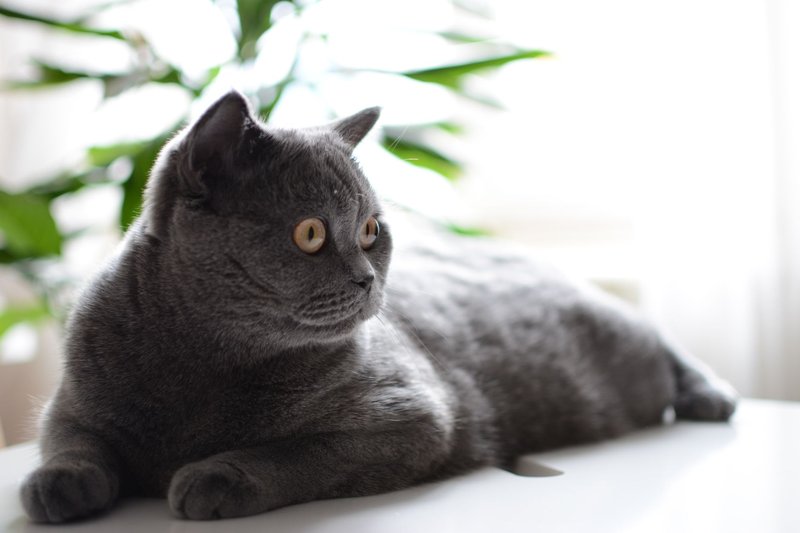
- Coat: Dense, plush, short double coat
- Eyes: Copper to gold in blue cats
- Weight: 9-18 lb
- Lifespan: 12-17 years
- Temperament: Calm, easygoing, independent
- Grooming: Weekly brushing, more during seasonal shedding
- Shedding: Moderate to heavy
The solid-blue British Shorthair is so well known that the color is often just called “British Blue.” Round face, round eyes, round cheeks. It’s a cat that tolerates being held more than it asks for it. Most prefer a lap beside them to one underneath them.
6. Persian
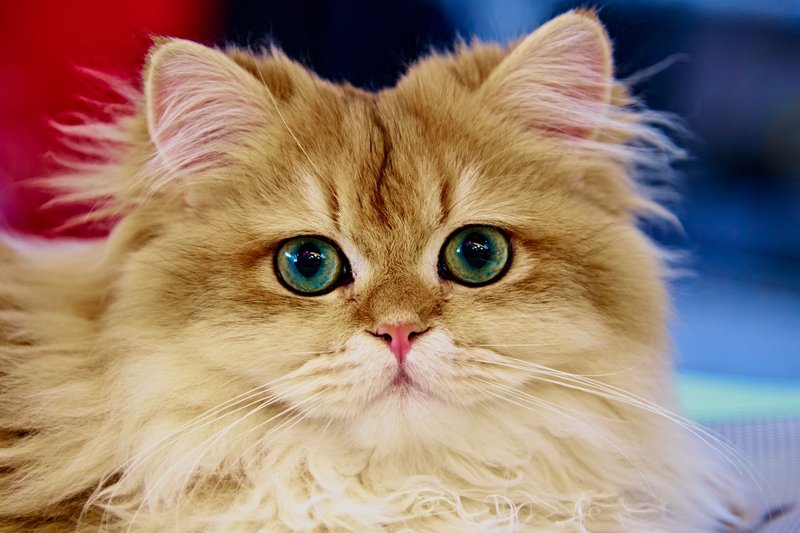
- Coat: Very long, thick double coat
- Eyes: Copper in blue Persians
- Weight: 7-12 lb
- Lifespan: 10-17 years
- Temperament: Placid, quiet, indoor lap cat
- Grooming: Daily combing, regular eye and face cleaning
- Shedding: Heavy
Blue Persians are among the most striking cats at any show, and the most demanding. That coat mats within days if it’s neglected. The flat face of many Persians can cause tear-duct and breathing problems. The breed also carries polycystic kidney disease, so ask whether the breeder tests for it. The Cornell Feline Health Center is a reliable place to read up on inherited feline conditions before you buy.
7. Burmese
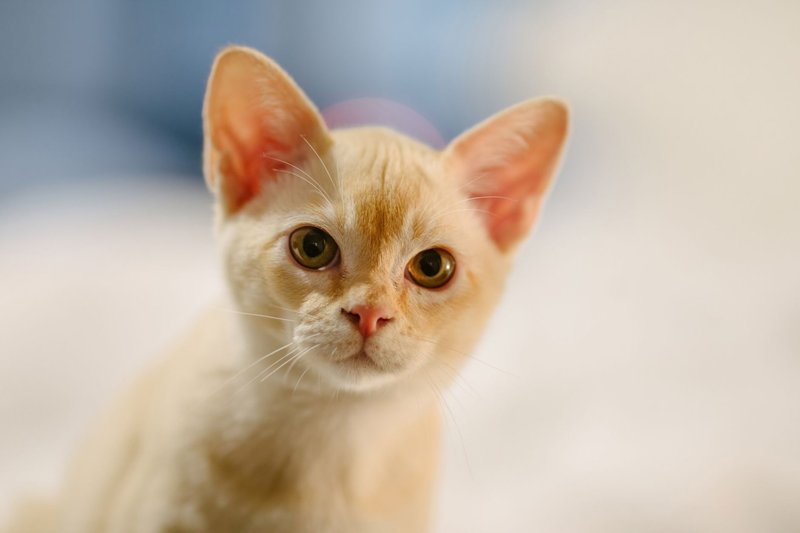
- Coat: Short, fine, satin-like single-layer feel
- Eyes: Golden-yellow
- Weight: 8-12 lb
- Lifespan: 12-16 years
- Temperament: Social, playful, people-obsessed
- Grooming: Minimal
- Shedding: Light
The blue Burmese is a softer, warmer gray than the Russian Blue, with a slight fawn undertone and a lighter belly. The Burmese carries more weight than it looks like it should (people call them “bricks wrapped in silk”). They follow you from room to room and want an opinion on whatever you’re doing.
8. Oriental Shorthair
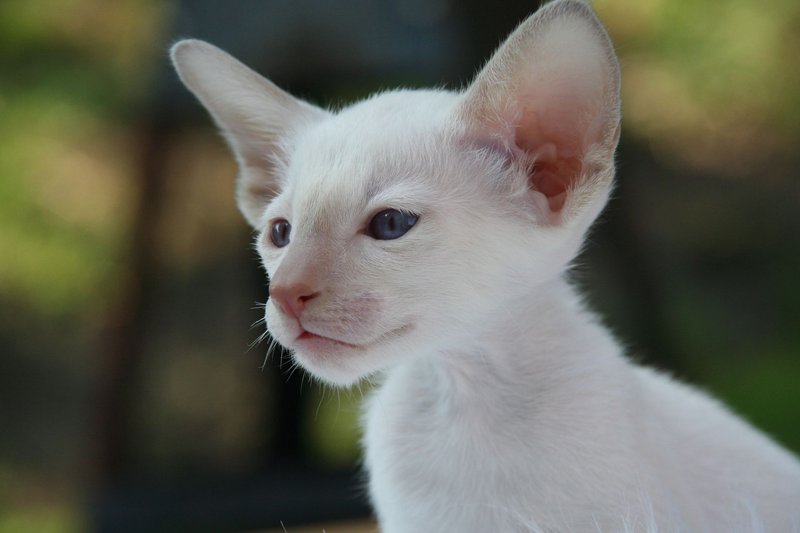
- Coat: Very short, fine, close-lying
- Eyes: Green in solid blue Orientals
- Weight: 5-10 lb
- Lifespan: 12-18 years
- Temperament: Vocal, demanding, athletic
- Grooming: Minimal
- Shedding: Light
A solid blue Oriental has a wedge-shaped head, huge ears and a body like a greyhound. Don’t confuse it with a Russian Blue. The proportions are totally different, and the Oriental will talk to you about it. Loudly. This is the least apartment-friendly cat on the list.
9. Scottish Fold
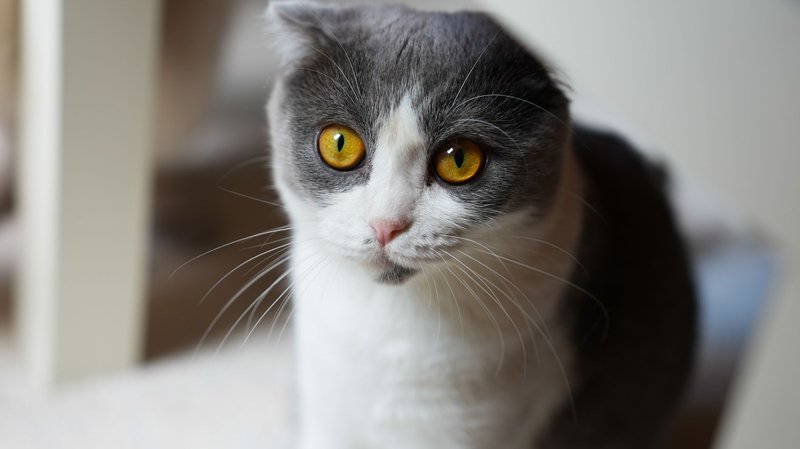
- Coat: Short or semi-long, dense
- Eyes: Gold to copper in blue cats
- Weight: 6-13 lb
- Lifespan: 11-15 years
- Temperament: Sweet, adaptable, quietly clingy
- Grooming: Weekly brushing
- Shedding: Moderate
The folded ears come from a mutation that affects cartilage throughout the body, not just the ear. Folded cats are prone to painful joint disease, and breeding fold to fold makes it worse. Breeding is restricted in parts of Europe for this reason. If you love the look, a Scottish Straight (same breed, normal ears) carries the same personality without the same risk. Fold kittens are born with straight ears, so you won’t know what you have for around three weeks.
10. American Shorthair
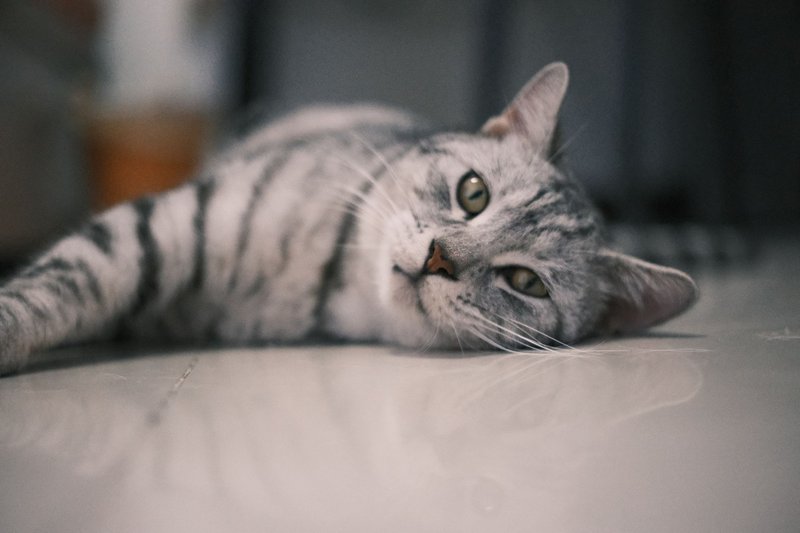
- Coat: Short, thick, hard-textured double coat
- Eyes: Gold to copper in blue cats
- Weight: 8-15 lb
- Lifespan: 15-20 years
- Temperament: Even-tempered, adaptable, good with children
- Grooming: Weekly brushing
- Shedding: Moderate
The American Shorthair was a working cat before it was a show cat, bred to catch mice on ships and farms. That ancestry shows in a sturdy frame and a coat that handles weather. A solid blue is less common than the famous silver tabby, but it’s the most low-maintenance purebred on this list. It tends to settle into almost any household.
Blue Cat Breeds Compared
| Breed | Always blue? | Eyes | Weight | Lifespan | Coat |
|---|---|---|---|---|---|
| Russian Blue | Yes | Green | 7-12 lb | 15-20 yrs | Short, plush double |
| Chartreux | Yes | Copper to orange | 7-16 lb | 12-15 yrs | Short, woolly double |
| Korat | Yes | Green | 6-10 lb | 15-20 yrs | Short, single |
| Nebelung | Yes | Green to yellow-green | 7-11 lb | 15-18 yrs | Medium-long, silky |
| British Shorthair | No | Copper to gold | 9-18 lb | 12-17 yrs | Short, dense |
| Persian | No | Copper | 7-12 lb | 10-17 yrs | Very long |
| Burmese | No | Golden-yellow | 8-12 lb | 12-16 yrs | Short, satin |
| Oriental Shorthair | No | Green | 5-10 lb | 12-18 yrs | Very short, fine |
| Scottish Fold | No | Gold to copper | 6-13 lb | 11-15 yrs | Short or semi-long |
| American Shorthair | No | Gold to copper | 8-15 lb | 15-20 yrs | Short, thick |
Russian Blue vs Chartreux vs Korat
These three get mistaken for one another constantly, and the Cat Fanciers’ Association compares them in its own writeup of the blue breeds. Three checks sort them out quickly.
Look at the eyes. Green eyes with a long, narrow face point to a Russian Blue. Large round green eyes in a heart-shaped face point to a Korat. Copper or orange eyes mean Chartreux, because neither of the other two has them.
Look at the head. The Russian Blue’s head is a flat-topped wedge with a straight profile. The Chartreux has a broad, rounded head with full cheeks and a narrow muzzle. The Korat’s face makes a heart, wide between the eyes and narrowing to a rounded chin.
Touch the coat. The Russian Blue’s double coat stands off the body, plush and even. The Chartreux’s wool breaks over the body like a sheep’s fleece. The Korat has no undercoat, so the coat lies flat, glossy and silver-tipped, and parts along the spine.
Blue Cats With Green Eyes (and Other Eye Colors)
If you want green eyes with a blue coat, there are three options: Russian Blue, Korat and Nebelung (the Oriental Shorthair is a fourth, though it comes with a very different personality). The Chartreux, British Shorthair, Persian, Scottish Fold and American Shorthair are all copper or gold. Black cats with gold eyes follow similar breed rules, and Black Cat Breeds With Yellow Eyes covers which breeds call for them.
Blue eyes are a separate matter. A blue coat and blue eyes don’t go together in any of the breeds above. Cats with blue eyes and gray coloring are colorpointed cats such as the Siamese or Ragdoll, whose “blue point” refers to gray points on the ears, face, legs and tail. Those are different genes, and a different list.
FAQ
Are blue cats rare?
The color isn’t. The dilution gene is common across many breeds and in domestic shorthairs, and solid gray cats turn up in shelters regularly. The breeds are another matter. Korats and Nebelungs are uncommon, and finding one means joining a breeder’s waitlist.
Are blue cats hypoallergenic?
No. The main cat allergen, Fel d 1, comes from skin glands and saliva, and cats spread it by grooming. Some owners report fewer symptoms with Russian Blues, but no cat breed is allergen-free. Spend time with the specific cat before you commit.
How much does a blue cat cost?
Kittens from registered breeders commonly run from $800 to $2,500 or more, with Korats and Nebelungs at the high end because breeders are few. A solid gray domestic shorthair from a shelter costs an adoption fee, and looks about the same from across the room. Feeding costs add up over the years, and a cat food cost calculator can estimate them by weight and food type.
Do all blue cats have the same personality?
No. Color says nothing about temperament. Breed does. A Russian Blue and an Oriental Shorthair can share a coat color and have almost opposite personalities.
Which Blue Cat Suits You
Picking among blue cat breeds comes down to a few practical filters.
Allergies: Choose the lightest shedders, such as the Korat, Burmese or Oriental Shorthair, and expect to spend time with the cat first. Avoid the Persian. No breed fixes allergies.
Kids: The American Shorthair and British Shorthair put up with the most. The Burmese suits active children. Skip the Nebelung and Russian Blue if the house is loud.
First-time owners: American Shorthair, British Shorthair or Chartreux. They’re sturdy and forgiving, and none needs daily grooming.
Apartments: The Chartreux and Russian Blue are quiet and content indoors. Skip the Oriental Shorthair unless your neighbors like conversation.
Maximum fluff, minimum effort: There’s no such cat. The Nebelung gives you length without a Persian’s maintenance, but it still needs brushing a few times a week.