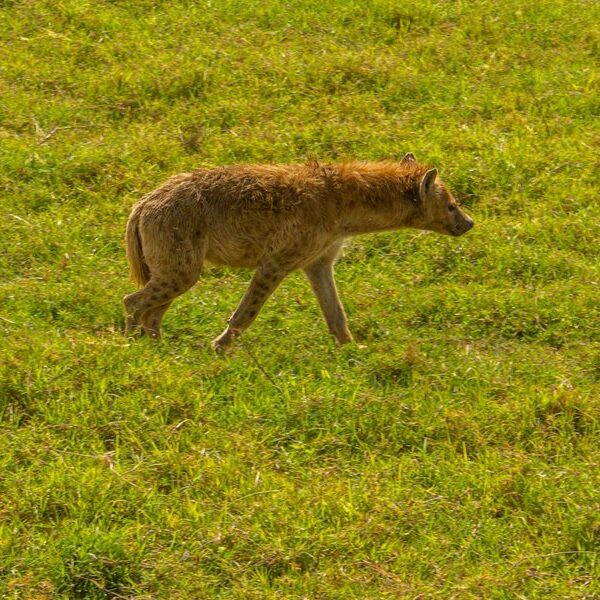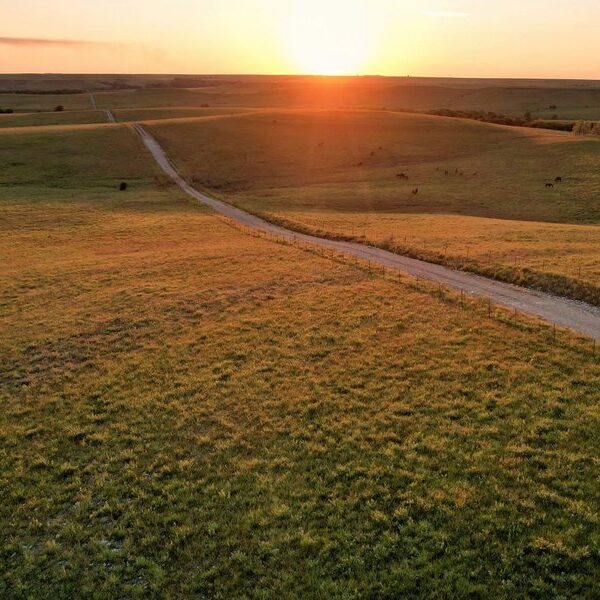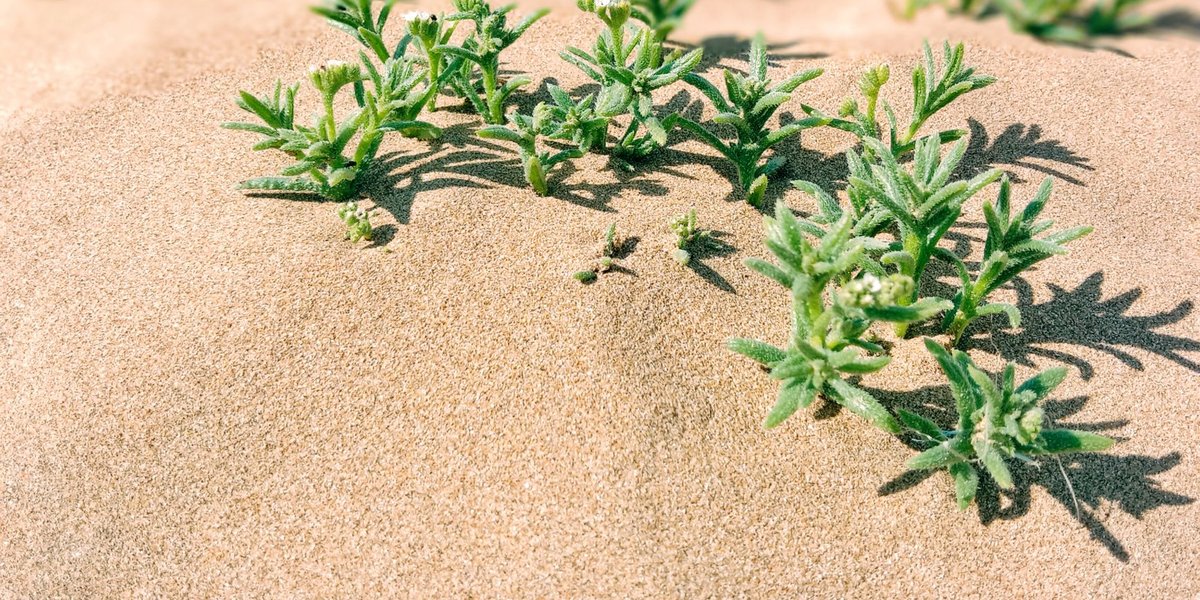
Bahrain’s native plants number roughly 195 to 200 species, and most of them are small, tough and easy to walk past. The island gets around 70 to 80 millimeters of rain a year, summer air passes 45°C, and the soil is often salty. What survives here has had to solve the same three problems: salt, heat and thirst.
Sources disagree on the exact count (Wikipedia’s own flora page gives both 195 and 196), and any figure shifts with how you treat naturalized species. What matters for finding and identifying them is the habitat. This guide sorts the main wild species by where they grow, then covers conservation and where to see them.
Contents
- Native or introduced?
- Mangroves and tidal flats
- Coastal salt flats
- Desert and gravel plains
- The Tree of Life
- Inland depressions
- Quick-reference table
- Threats and conservation status
- Where to see Bahrain’s native plants
- Native plants in a Bahraini garden
- Summary
Native or introduced?
Most of the green you see in Bahrain isn’t wild. Date palms, citrus, alfalfa, neem, bougainvillea and the mesquite lining many roadsides were planted by people. Date palms have been farmed on the island since the Dilmun era, but they’re a crop, not a wild species.
Mesquite (Prosopis juliflora) deserves a flag because it looks like a cousin of the Tree of Life and isn’t one. It’s a South American import that spreads aggressively across the Gulf and crowds out local shrubs. It is one of several introduced species that have established on the island, and a list of invasive species in Bahrain sets out the others with their impacts.
The test used here: the plant grows and reproduces without irrigation or planting, and it was in the region before modern landscaping. Everything below passes.
Mangroves and tidal flats
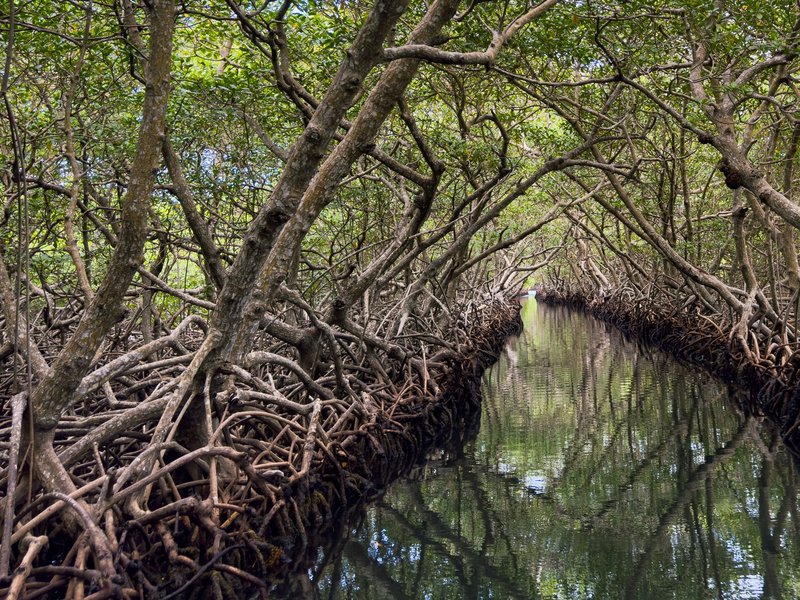
Bahrain has one mangrove species, the grey mangrove (Avicennia marina, Arabic qurm). It grows in the shallow bays along the north and east coast, with Tubli Bay and Arad Bay the best-known stands.
Adaptation: it excretes salt through glands on its leaves. Run a finger over a leaf in the afternoon and you can feel the crystals. Its roots send up pencil-like breathing shoots (pneumatophores) that poke out of the mud at low tide, bringing in oxygen the waterlogged soil can’t supply.
Use: the stands shelter juvenile fish and shrimp, and they hold shoreline mud in place. Livestock have traditionally browsed the leaves.
ID cue: oval leaves, dark green on top and pale silvery-grey underneath, on a shrub or small tree rarely taller than a few meters here.
Coastal salt flats
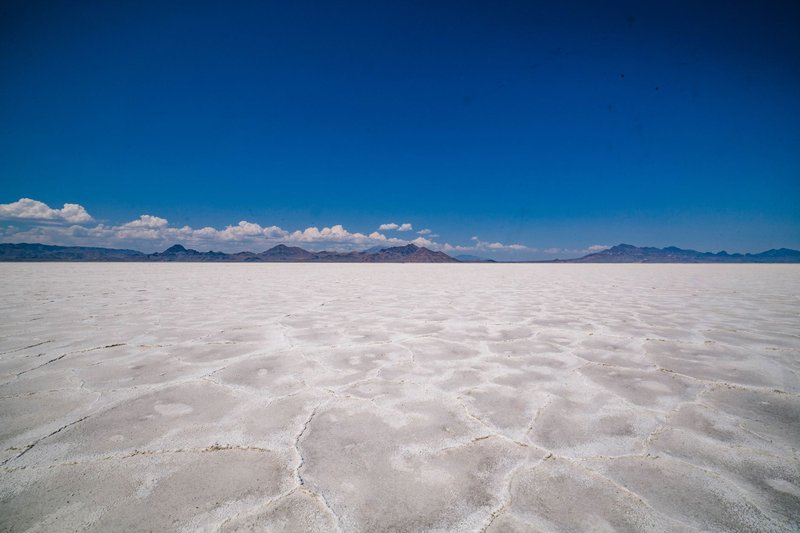
Behind the beach, the ground turns into sabkha: flat, crusted, and salty enough to kill most plants. A handful of halophytes (“salt lovers”) live here anyway.
Suaeda aegyptiaca is a low, fleshy shrub with narrow, succulent, blue-green leaves. The thick leaves store water and dilute the salt the plant takes in. Suaeda species are browsed by camels and goats and are among the first plants to colonize bare salty ground.
ID cue: leaves that look like tiny green sausages, and a habit of growing in rings or clumps right where nothing else will.
Look for it alongside other succulent salt-tolerant shrubs, which are easy to confuse at first glance. The ones with jointed, leafless-looking stems are glassworts and relatives. The ones with plump, separate leaves are Suaeda.
Desert and gravel plains
Most of Bahrain’s land is flat desert, and the dominant shrub is Zygophyllum qatarense (Arabic harm). Kew’s Plants of the World Online now files it under the name Tetraena qatarensis, so you’ll see both in field guides.
Adaptation: fleshy, paired leaves hold water, and the plant traps wind-blown sand around its base. Over years each shrub ends up on its own small mound, which gives the desert its hummocky look.
Use: livestock browse it, and the mounds give shelter to lizards, beetles and small mammals.
ID cue: a grey-green, rounded shrub on a sand mound, with thick two-lobed leaves.
Haloxylon salicornicum (rimth) is the other desert staple: a gray, jointed-stemmed shrub that burns hot even when green. Bedouin used it for cooking fires, and camels graze it.
Calotropis procera (ushar) turns up on disturbed ground and roadsides. Big, waxy, blue-gray leaves cut water loss, and the stems bleed a milky latex that’s toxic. Traditional medicine uses it despite that, which is exactly the kind of plant you read about before you touch.
Rose of Jericho
Anastatica hierochuntica (Arabic kaf maryam, “Mary’s hand”) is the plant that looks dead and isn’t. In drought it curls into a tight, woody ball and holds its seeds inside. When rain arrives, the ball opens within hours and releases them where the water is.
It’s an annual that gambles on rain, and the gamble pays off only in wet winters. A folk tradition in Arabia has women placing the dried plant in water during labor, hence the name.
Don’t confuse it with the “rose of Jericho” sold in novelty shops, which is usually a different plant (Selaginella lepidophylla) from North America.
The Tree of Life
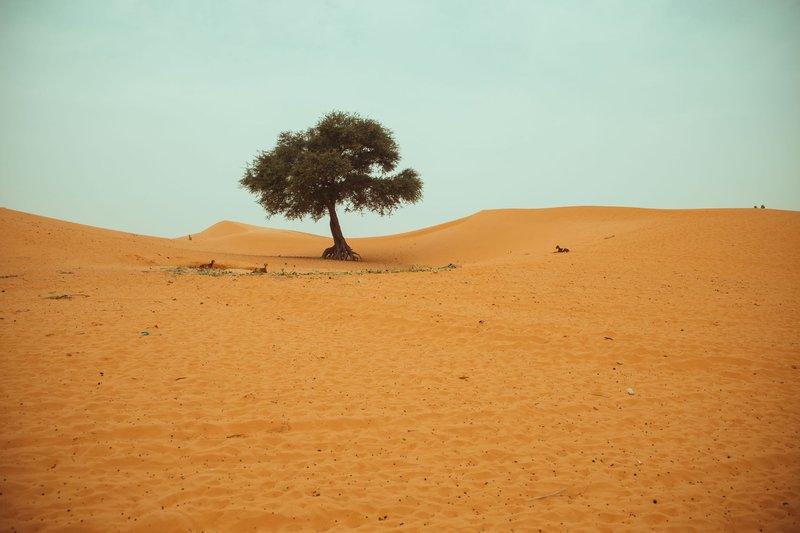
Bahrain’s most famous plant is a single tree. The Tree of Life (Shajarat al-Hayat) is a Prosopis cineraria, called ghaf across the Gulf. It stands alone in open desert a few kilometers from Jebel Dukhan, the island’s low “Mountain of Smoke,” and is estimated at about 400 years old.
The mystery is water. There’s no obvious source for kilometers around. The usual explanation is a taproot that runs tens of meters down to groundwater, which fits what ghaf trees do elsewhere in Arabia and the Thar Desert, where the species also grows.
It’s a legume, so it also fixes nitrogen and improves the soil beneath it. Ghaf pods and leaves are fodder for goats and camels across its range.
Vandalism is a recurring problem. Visitors have carved into the trunk and broken branches, so treat it as a living monument and not a climbing frame.
Inland depressions
Where rainwater collects, the ground holds moisture longer, and vegetation thickens. These shallow basins (rawdhas in Gulf Arabic) are where annual wildflowers and grasses flush green after winter rain.
The tree to know here is sidr, Ziziphus spina-christi (also nabq). It grows wild in the region and is planted widely in Bahrain, so a roadside sidr may or may not be a true wild one.
Adaptation: deep roots, small waxy leaves, and thorns grown in pairs, one straight and one hooked back. The hooked one snags passing animals; the straight one deters them.
Use: this is among the most useful plants in Arabia. The berries (nabq) are eaten fresh or dried. Bees feeding on sidr blossom produce one of the most prized honeys in the Gulf. Ground sidr leaves are a traditional hair wash, and the leaves are used in Islamic ritual washing.
ID cue: glossy, three-veined leaves with a pale underside, and small round, apple-like fruits that turn from green to red-brown.
Quick-reference table
| Common name | Arabic name | Scientific name | Habitat | Key adaptation | Human use |
|---|---|---|---|---|---|
| Grey mangrove | qurm | Avicennia marina | Tidal bays | Salt-excreting leaf glands, breathing roots | Fish nursery, shoreline protection, browse |
| Suaeda | n/a | Suaeda aegyptiaca | Salt flats | Succulent leaves dilute salt | Camel and goat browse |
| Harm | harm | Zygophyllum qatarense | Desert, gravel plain | Fleshy leaves, sand-trapping mounds | Livestock browse, animal shelter |
| Rimth | rimth | Haloxylon salicornicum | Desert | Jointed stems, low water loss | Fuel, camel grazing |
| Apple of Sodom | ushar | Calotropis procera | Disturbed ground | Waxy leaves, latex | Traditional medicine (toxic) |
| Rose of Jericho | kaf maryam | Anastatica hierochuntica | Open desert | Seeds held until rain | Folk remedy |
| Ghaf (Tree of Life) | ghaf | Prosopis cineraria | Open desert | Taproot to groundwater | Fodder, shade |
| Sidr | sidr, nabq | Ziziphus spina-christi | Depressions, farmland | Deep roots, paired thorns | Fruit, honey, leaf wash |
Threats and conservation status
The biggest pressure is the coast. Bahrain has added land through reclamation, much of it from shallow seabed, and the mangrove and salt-flat habitats sit exactly there. Tubli Bay, the largest mangrove stand, is surrounded by development and receives treated wastewater.
Inland, the threats are scattered: grazing by camels and goats, off-road driving that crushes shrubs and the mounds they build, camping, and construction on open desert. Introduced mesquite competes for water with native shrubs.
On formal status: the IUCN Red List has assessed some of these species globally, and those it covers (the grey mangrove is Least Concern) read as low risk. That’s a global label and says little about a single bay. A mangrove can be common worldwide and still vanish from the island where you live.
Where to see Bahrain’s native plants
- Tree of Life: in the Southern Governorate, signposted from the road near Jebel Dukhan. Go in the late afternoon for cooler air and better light.
- Tubli Bay: the main mangrove stand, reached from Tubli and Sanabis. Kayak tours run through the channels.
- Al Areen Wildlife Park and Reserve: protected land in the south with native desert vegetation.
- Hawar Islands: a Ramsar-listed wetland site best known for birds, with salt-tolerant coastal plants. Access is organized, so plan ahead.
Go between December and April. Rain triggers the annuals, and that’s when rose of Jericho opens and the depressions turn green. In July, you’ll see mostly brown shrubs.
Native plants in a Bahraini garden
Native species are the practical choice for a low-water garden. Sidr and ghaf are the shade trees, harm and rimth work as ground-level desert shrubs, and ushar handles bad soil. Plant in autumn, water regularly through the first year until roots establish, then cut back sharply.
Buy from nurseries and avoid digging plants from the wild.
Summary
Bahrain’s native plants are a small cast with specific jobs: the grey mangrove holds the tidal edge, Suaeda takes the salt flats, Zygophyllum builds the desert mounds, the rose of Jericho waits for rain, and sidr and ghaf anchor the tree layer, with one ghaf famous enough to have its own road sign. Each has a way of handling salt, heat or drought that you can see if you look closely. Coastal development is the main threat, so the places to see them are worth visiting while they’re still there.