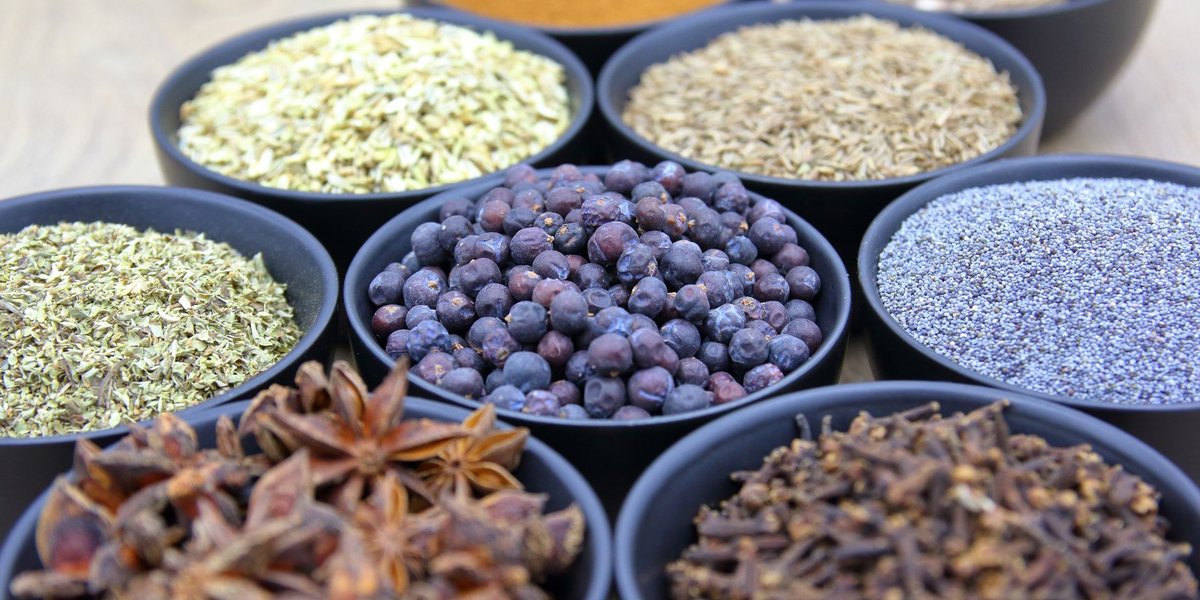
“White spices” isn’t an official category. No spice rack labels it, and no cookbook defines it. It’s a practical one, though: the pale seeds, pods and ground berries you reach for when a dish needs flavor without gray flecks, brown specks or a dark tint.
Five spices cover almost everything people mean by the term: white pepper, white cardamom, white mustard seed, white sesame and white poppy seed. Two more, ground ginger and garlic powder, sit on the border. This guide gives each one a short profile, compares them side by side, and tells you which to pick for white sauces, baking, curries and pickling.
Contents
- What counts as a white spice
- White pepper
- White cardamom
- White mustard seed
- White sesame seed
- White poppy seed
- Borderline cases: ginger and garlic powder
- White spices compared
- Which white spice to pick by dish
- Buying and storing white spices
- Summary
What counts as a white spice
The test is simple: the spice looks cream, ivory or pale tan, and it doesn’t stain the dish. That’s a color rule, not a botanical one. These spices come from five unrelated plants, so they share almost nothing in flavor.
White pepper is a fruit. White cardamom is a seed pod. Mustard, sesame and poppy are seeds. What links them is the cook’s problem they solve: a béchamel, a cream soup or a pale korma looks wrong with black pepper or dark spice mixed in.
White pepper
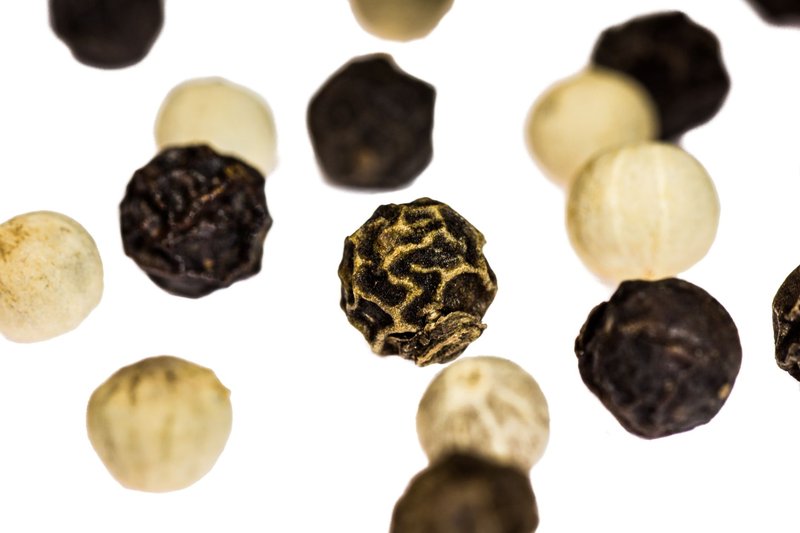
White pepper comes from the same vine as black pepper, Piper nigrum. The difference is processing. Black pepper is dried whole. For white pepper, the berries are picked ripe, soaked until the outer skin loosens, and rubbed off, leaving the pale inner seed.
Removing the skin removes much of the fruity, floral aroma. What’s left is sharper and earthier, with a musty, slightly fermented edge from the soaking. Many cooks find the heat hits the front of the mouth harder than black pepper does.
- Flavor: earthy, pungent, a little funky
- Heat: medium to high
- Best in: béchamel, cream soups, mashed potatoes, light stocks, Chinese hot and sour soup
- Swap: black pepper (the flavor is brighter, and you’ll see the specks)
Conversion: there’s no official ratio, but start with about three-quarters of the black pepper a recipe calls for, taste, and add more. Ground white pepper also fades faster than whole berries, so grind it fresh if you can.
White cardamom
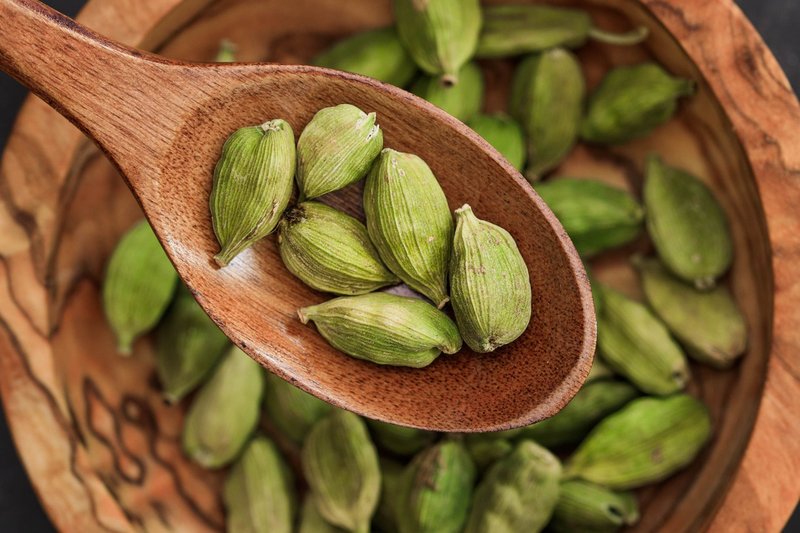
True white cardamom is Amomum kravanh, also called Siam, Thai or round cardamom. It’s a different plant from green cardamom (Elettaria cardamomum), one of the most familiar tropical spices. The pods are small, round and creamy, and they’re common in Thai, Cambodian and Vietnamese cooking and in Chinese herbal shops.
The flavor is cooler and more camphor-like than green cardamom, with a eucalyptus note and less sweetness. It suits broths, braises and curry pastes better than desserts.
- Flavor: camphor, citrus, mild pine
- Heat: none
- Best in: Southeast Asian curries, soups, meat braises, spice pastes
- Swap: green cardamom, at roughly half the amount, plus a small pinch of black pepper
The bleached cardamom problem. Most “white cardamom” sold in Western supermarkets is green cardamom that’s been bleached with sulfur dioxide or hydrogen peroxide. It looks pale, but it’s a weaker product. The oils that make cardamom taste like cardamom are partly stripped out. If the pods are bright white and uniform, they’re probably bleached. Real kravanh is a cream or light tan, and the label should name Amomum or say Siam or Thai cardamom. When you want the real flavor, look for it at an Asian grocer.
White mustard seed
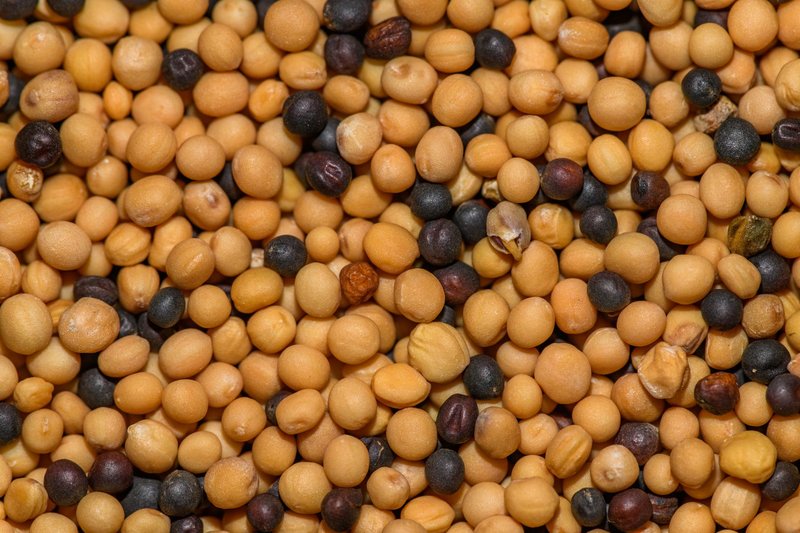
White mustard, Sinapis alba, is the plant behind American yellow mustard. The seeds are pale yellow-beige, bigger than brown or black mustard seeds, and noticeably milder.
Whole and dry, the seeds smell like very little. Crush them and add water, and an enzyme reaction starts that creates the sharp mustard bite. White mustard’s heat is a quick, stinging burn that fades fast, unlike the sinus-clearing pungency of brown mustard. Add acid, like vinegar, and the bite stays locked in at a lower level.
- Flavor: tangy, sharp when crushed, slightly bitter
- Heat: mild to medium
- Best in: pickling brines, mustard, sausages, coleslaw, salad dressings
- Swap: yellow mustard powder, or brown mustard seed at about half the amount
Pickling is where they earn their place. Whole seeds go into the brine, soften over a few weeks, and add pops of tang without darkening the liquid.
White sesame seed
White sesame is the one on this list you’ve almost certainly already got. It’s mild and nutty, and it gets much better when toasted. Dry-toast the seeds in a pan until they turn golden and smell like roasted nuts, usually 2 to 3 minutes over medium heat. Stir constantly, because they go from perfect to bitter quickly.
Compared with black sesame, white is sweeter and less bitter, and it won’t turn a dish gray. That’s why it’s the standard for burger buns, tahini, halva and Japanese goma-ae.
- Flavor: nutty, sweet when toasted
- Heat: none
- Best in: baking, tahini, stir-fries, dressings, rice dishes, crusts for fish
- Swap: hulled hemp seeds or sunflower seeds in a pinch for texture, though the flavor isn’t a match
Sesame is also a major food allergen in the US. The FDA lists it among the recognized major allergens, so say so when you cook for guests.
White poppy seed

White poppy seed, from Papaver somniferum, is the pale cousin of the blue-black seed that tops European bagels and lemon cakes. It’s the main poppy seed in Indian cooking, where it goes by khus khus, and it behaves differently from the dark version.
You don’t sprinkle it. You grind it, usually after a quick toast or a soak in warm water, and it works as a thickener. Ground white poppy seed gives kormas and other creamy curries body without flour or starch, plus a gentle nutty flavor that doesn’t compete with the other spices.
- Flavor: mild, nutty, creamy when ground
- Heat: none
- Best in: korma, other mild curries, sauces, some sweets
- Swap: blanched ground almonds or cashews for thickening; blue poppy seed for a darker, crunchier result
Check local rules before traveling with them. Poppy seeds are restricted in a few countries.
Borderline cases: ginger and garlic powder
Ground ginger is pale tan and garlic powder is off-white. Both fit the practical definition: they add flavor to light dishes without changing the color much. They’re also cheap, shelf-stable and already in most kitchens.
- Ground ginger: warm, peppery, and sweet. It’s good in baking, cream sauces and marinades. Dried ginger is more concentrated than fresh, so use about one-quarter of the amount of fresh ginger a recipe calls for.
- Garlic powder: savory and a bit sulfurous. It’s useful in white sauces, dips and dry rubs, because fresh garlic can brown and go bitter in a pale sauce.
White spices compared
| Spice | Flavor | Heat | Best use | Swap |
|---|---|---|---|---|
| White pepper | Earthy, pungent, slightly funky | Medium to high | White sauces, soups, potatoes | Black pepper |
| White cardamom | Camphor, citrus, pine | None | Southeast Asian curries, broths | Green cardamom (half the amount) plus black pepper |
| White mustard seed | Tangy, sharp when crushed | Mild to medium | Pickling, dressings, sausages | Yellow mustard powder |
| White sesame | Nutty, sweet when toasted | None | Baking, tahini, stir-fries | Hemp or sunflower seeds |
| White poppy seed | Mild, nutty, creamy | None | Korma, sauces, thickening | Ground almonds or cashews |
| Ground ginger | Warm, peppery, sweet | Mild | Baking, marinades | Allspice or cinnamon (less) |
| Garlic powder | Savory, slightly sulfurous | None | White sauces, rubs, dips | Onion powder |
Which white spice to pick by dish
White sauces and cream soups. White pepper, every time. It seasons the dish and disappears into it. A pinch of ground ginger or garlic powder works as a quiet second layer.
Baking. White sesame on top of breads and crackers, ground ginger inside cookies and cakes. Use white cardamom only if you want a resinous, unusual flavor, and expect it to taste different from the green cardamom in Scandinavian buns.
Curries. Ground white poppy seed thickens a korma. White cardamom goes into Thai and Cambodian pastes and soups. White pepper adds heat without the dark flecks when you’re cooking a pale curry.
Pickling. White mustard seed, whole, in the brine. It’s the one white spice built for it.
Buying and storing white spices
Buy whole when you can. Whole spices keep their oils sealed in. Ground ones lose them to air and light.
- Whole pods and seeds (cardamom, peppercorns, mustard, sesame) keep about 3 years in an airtight jar in a dark cupboard.
- Ground spices keep their punch for about 1 year. Smell them: if the aroma is faint, the flavor is too.
- Sesame and poppy seeds are higher in oil and can go rancid sooner. If you don’t use them often, store them in the freezer.
- Cardamom: check the label for Amomum kravanh, Siam or Thai cardamom. If it just says “white cardamom” and the pods are chalk-white, assume bleached.
Botanical names get tangled across spice labels. If you’re unsure which species a seed or pod comes from, Kew’s Plants of the World Online lists the accepted scientific names.
Summary
White spices don’t make up a single flavor family, but they do the same job: they season a dish without changing how it looks. White pepper handles cream sauces and soups. White cardamom brings a camphor note to Southeast Asian cooking, as long as you buy the real thing and not bleached green pods. White mustard seed belongs in the pickle jar. White sesame and white poppy seed add nutty body to baking and curries.
If you only buy one, make it white pepper. If you already cook with the rest of them, the next upgrade is a jar of true white cardamom from an Asian grocery.