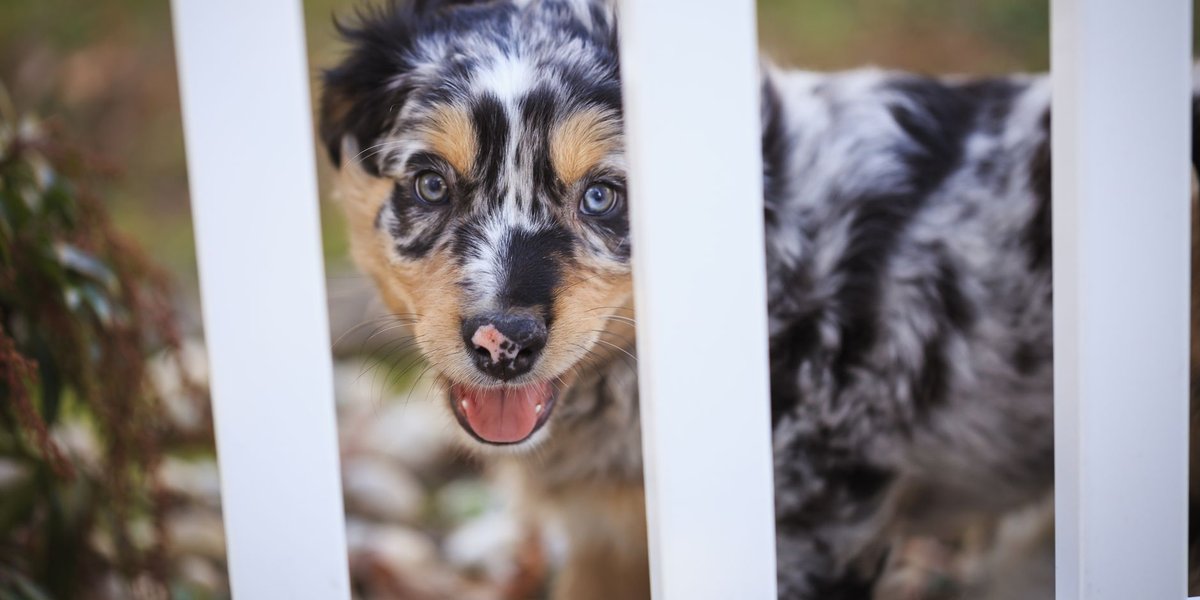
Blue merle is a black coat diluted into grey-blue patches, with solid black splotches left behind like ink on wet paper. Red merle is the same pattern on a liver (brown) base. The gene behind both only lightens black or brown pigment, so it can’t touch a red coat.
One health rule before the breed list: a merle dog is generally fine, but a puppy from two merle parents can be born a “double merle,” often mostly white and at high risk of deafness and vision loss. Every breed below carries that risk if it’s bred carelessly.
Contents
- The 10 blue merle dog breeds
- Blue isn’t always merle
- Merle in breeds where it isn’t standard
- Quick comparison table
- Merle genetics in two minutes
- How to choose a healthy merle puppy
- Caring for a double merle
- FAQ
- The short version
The 10 blue merle dog breeds
These ten are the breeds where blue merle turns up most often, and for most of them the pattern is written into the official breed standard. Where it isn’t, the entry says so.
1. Australian Shepherd
- Size: 18 to 23 inches, 40 to 65 pounds
- Lifespan: 12 to 15 years
- Grooming: Weekly brushing, heavy shedding twice a year
- Merle in the standard: Yes, blue merle and red merle are both accepted colors
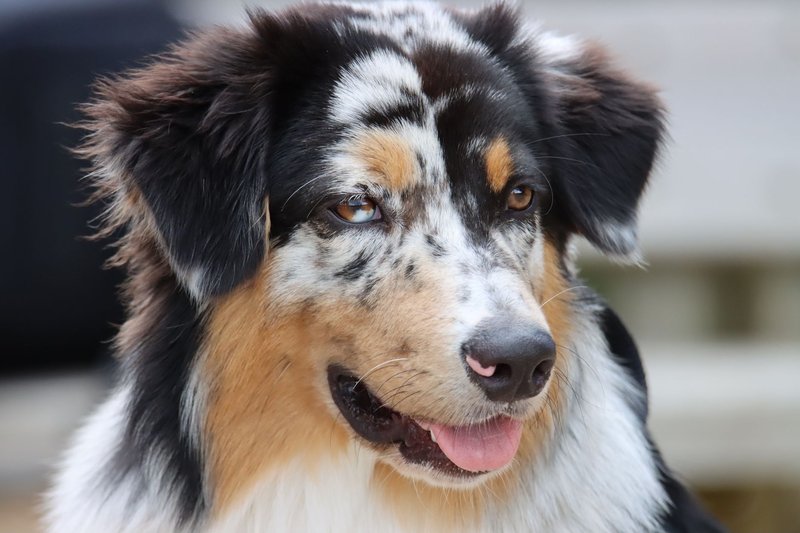
The blue merle Australian Shepherd is the dog most people picture when they type this keyword. Aussies come with brown, blue, amber, or split-colored eyes, and a single dog can have two different colors. They also have a ranch-dog work ethic: an under-exercised Aussie will herd your kids, your cat, and eventually your furniture. This is a dog for people who hike, run, or train for fun.
2. Shetland Sheepdog
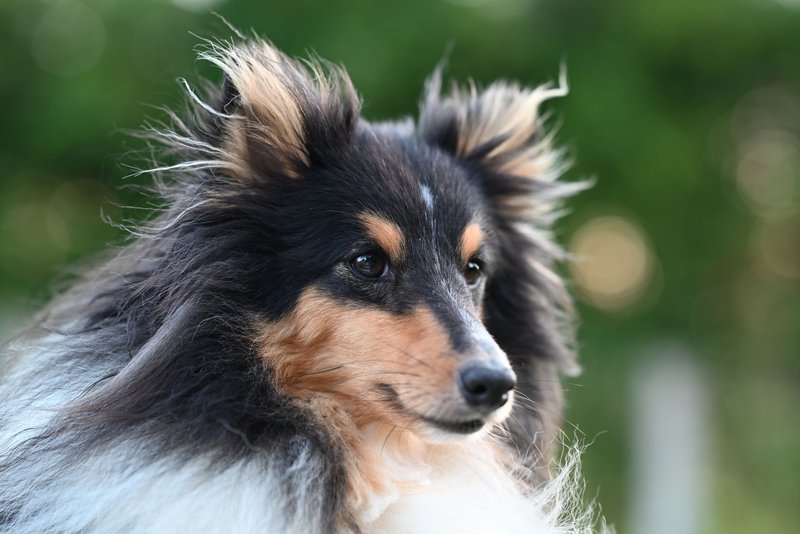
- Size: 13 to 16 inches, 14 to 27 pounds
- Lifespan: 12 to 14 years
- Grooming: Brushing two to three times a week, more in shedding season
- Merle in the standard: Yes, blue merle is one of the recognized colors
A blue merle Sheltie looks like a miniature Rough Collie in silver. Shelties are sensitive, quick to learn, and quick to bark, so apartment living works only if you train a “quiet” cue early. The double coat sheds in clumps and hides mats behind the ears, which is where you should check first.
3. Rough and Smooth Collie
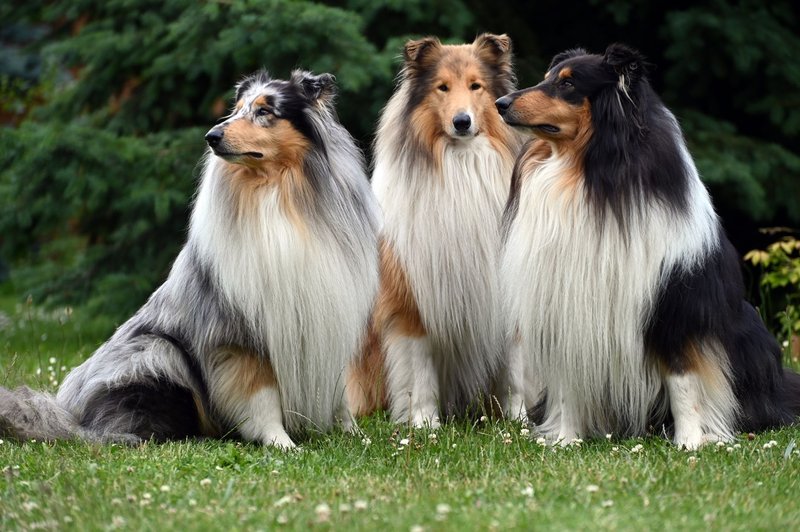
- Size: 20 to 26 inches, 50 to 75 pounds
- Lifespan: 12 to 14 years
- Grooming: Rough coat needs brushing two to three times a week; Smooth needs far less
- Merle in the standard: Yes, blue merle is one of four recognized colors (with sable, tricolor, and white)
Collies are gentle, soft-mouthed, and about as pushy as a houseplant. Blue merle Collies often have a white blaze and collar, and their tan points show up on the cheeks and legs. They also have a drug-sensitivity gene you should test for, covered in the FAQ below.
4. Border Collie
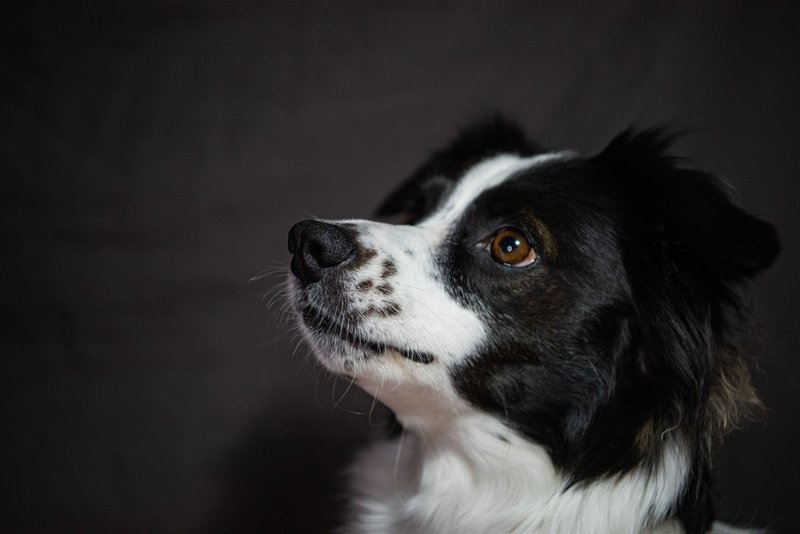
- Size: 18 to 22 inches, 30 to 55 pounds
- Lifespan: 12 to 15 years
- Grooming: Weekly brushing, more during seasonal shedding
- Merle in the standard: Accepted, though black-and-white remains far more common
Merle Border Collies exist in smaller numbers than most people expect, and many working-line breeders have never bred one. Temperament doesn’t change with coat color. You still get a dog that needs a job, a puzzle, or a ball, and gets creative when it has none. Blue eyes are common in merle Border Collies.
5. Cardigan Welsh Corgi
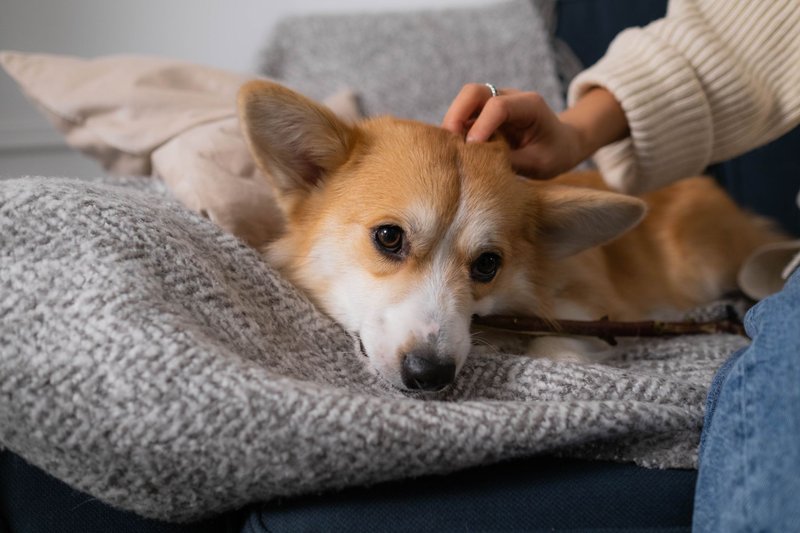
- Size: 10.5 to 12.5 inches, 25 to 38 pounds
- Lifespan: 12 to 15 years
- Grooming: Weekly brushing, heavy shedding
- Merle in the standard: Yes, blue merle is a recognized Cardigan color
This one catches people out. The Cardigan can be blue merle, with a fox-style tail. The Pembroke Welsh Corgi, the one with the docked or tiny tail, can’t be merle in the breed standard. If a breeder advertises a blue merle Pembroke, ask where the merle gene came from. Cardigans are long-backed, so keep them lean and off high jumps.
6. Great Dane
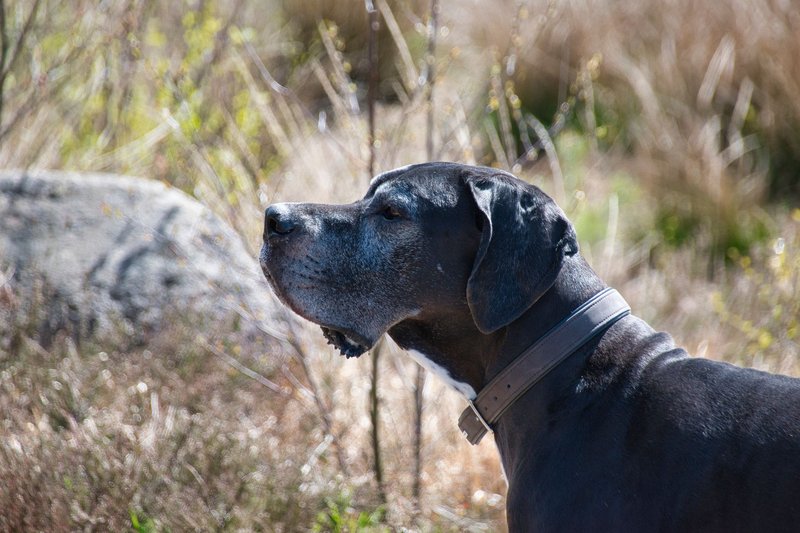
- Size: 28 to 32 inches or more, 110 to 175 pounds
- Lifespan: 7 to 10 years
- Grooming: Weekly brushing, short coat
- Merle in the standard: No. Harlequin and mantle are standard patterns; plain merle is not
Merle Great Danes are real and common, a blue-grey coat with black patches. The breed standard doesn’t accept merle, though; it accepts harlequin, a white coat with black patches that depends on the merle gene plus a second gene. Show rings won’t take a merle Dane. A pet owner mostly cares about two things: the same double merle risks apply, and you need to budget for a dog that eats a lot and lives under a decade.
7. Dachshund (Dapple)
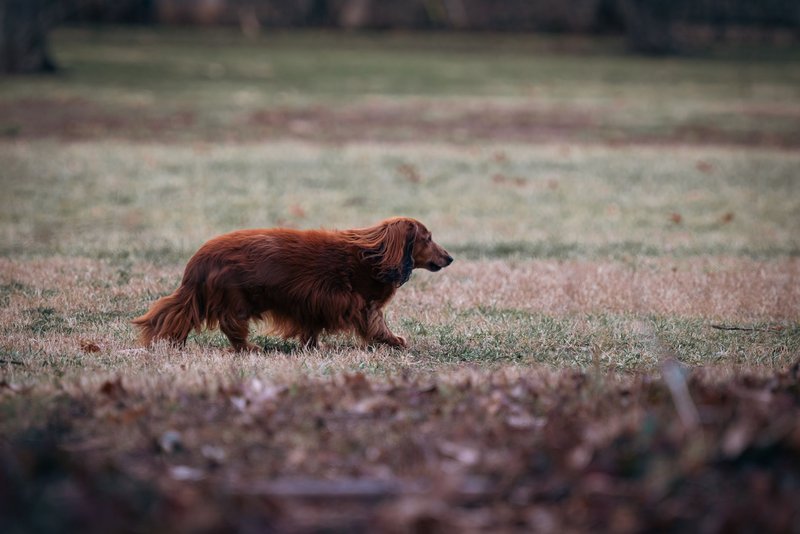
- Size: Standard 16 to 32 pounds; miniature 11 pounds or under
- Lifespan: 12 to 16 years
- Grooming: Weekly for smooth coats; more for long and wirehaired
- Merle in the standard: Yes, but it’s called dapple
Dachshund breeders call merle “dapple,” and it comes in blue-grey on a black base (often called silver dapple). Dapples can have blue eyes and pale patches around the face. Two dapples bred together produce “double dapples,” and the same hearing and vision problems apply. The long spine is the other health concern here, which has nothing to do with color.
8. Catahoula Leopard Dog
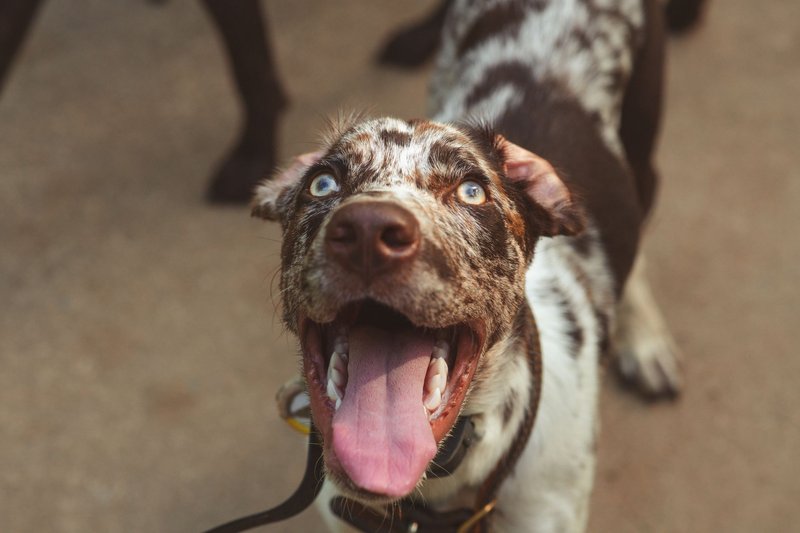
- Size: 20 to 26 inches, 50 to 90 pounds
- Lifespan: 10 to 14 years
- Grooming: Minimal; short coat needs a weekly rub-down
- Merle in the standard: Yes, blue merle and red merle are the core colors
The Catahoula is Louisiana’s state dog and was bred to hold wild hogs and cattle. Its coat is merle in blues, greys, and reds, usually with tan trim, and many have “glass” eyes (pale blue-white). It’s the easiest coat on this list to maintain and the hardest personality. Expect a strong-willed dog that needs a lot of structure and a lot of space.
9. Miniature American Shepherd
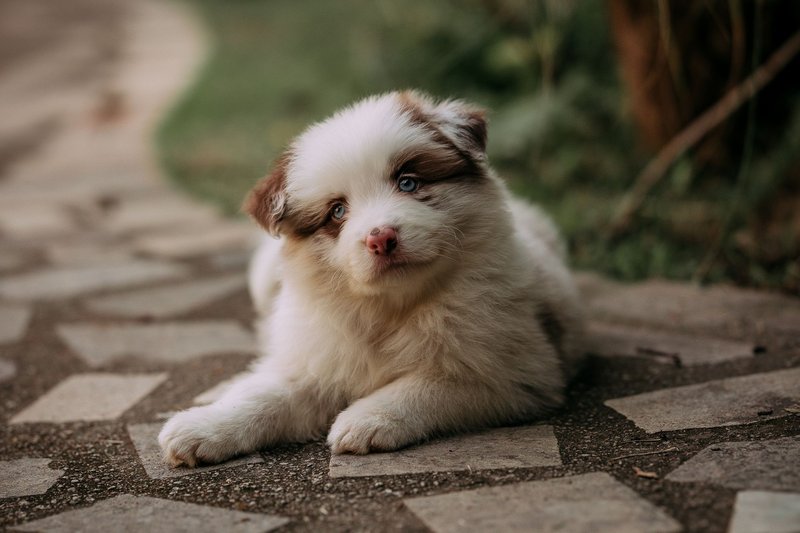
- Size: 13 to 18 inches, 20 to 40 pounds
- Lifespan: 13 to 15 years
- Grooming: Weekly brushing, seasonal shedding
- Merle in the standard: Yes, blue merle is accepted
If an Aussie sounds right but 60 pounds doesn’t, this is the downsized version. Same herding drive, same eyes, smaller footprint. It’s a good pick for a family with a yard and a plan for daily training sessions.
10. Chihuahua
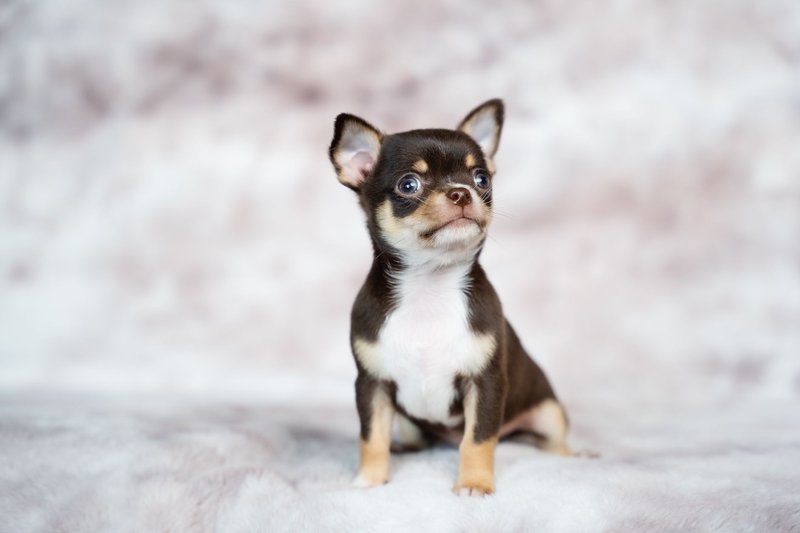
- Size: Up to 6 pounds
- Lifespan: 14 to 16 years
- Grooming: Weekly brushing for smooth coats; slightly more for long coats
- Merle in the standard: Allowed in the AKC standard, which accepts any color
Merle Chihuahuas get marketed as rare and priced like it. They are a minority within the breed, and the double merle risks are identical to those in much bigger dogs. A merle Chihuahua is worth considering only from a breeder who health tests and doesn’t charge extra for the coat.
Blue isn’t always merle
Several breeds are called “blue” without carrying the merle gene at all.
- Australian Cattle Dog (Blue Heeler): The blue is a black coat mixed with white hairs, and no merle gene is involved.
- Old English Sheepdog: Puppies are born black and fade to grey as they age.
- Great Dane “blue”: A solid steel-blue dilute, not a patterned merle.
- Weimaraner: Silvery-grey, from a dilute gene. Not merle.
Merle makes a marbled coat with irregular dark patches. If the dog is a flat, even blue, it’s a different gene.
Merle in breeds where it isn’t standard
Merle also appears in Pomeranians, French Bulldogs, and bully-type dogs. In many of these the gene entered through crossbreeding in recent decades, and breed clubs differ on whether they accept it. These are the groups where the most “rare color” marketing happens, and where careful DNA testing matters most.
Doodle mixes are a related case. An Aussiedoodle (Australian Shepherd crossed with a Poodle) gets its merle from the Aussie side. Merle Aussiedoodles are common, and double merle puppies can happen when both parents carry the gene, including when one of them looks like a solid color. Poodles aren’t merle themselves, so a merle Poodle-cross has an Aussie, Sheltie, or similar ancestor somewhere.
Quick comparison table
| Breed | Weight | Lifespan | Merle in standard | Energy |
|---|---|---|---|---|
| Australian Shepherd | 40 to 65 lb | 12 to 15 yrs | Yes | High |
| Shetland Sheepdog | 14 to 27 lb | 12 to 14 yrs | Yes | Moderate to high |
| Collie | 50 to 75 lb | 12 to 14 yrs | Yes | Moderate |
| Border Collie | 30 to 55 lb | 12 to 15 yrs | Accepted | Very high |
| Cardigan Welsh Corgi | 25 to 38 lb | 12 to 15 yrs | Yes | Moderate |
| Great Dane | 110 to 175 lb | 7 to 10 yrs | No (harlequin is) | Low to moderate |
| Dachshund | 11 to 32 lb | 12 to 16 yrs | Yes (dapple) | Moderate |
| Catahoula Leopard Dog | 50 to 90 lb | 10 to 14 yrs | Yes | High |
| Miniature American Shepherd | 20 to 40 lb | 13 to 15 yrs | Yes | High |
| Chihuahua | Up to 6 lb | 14 to 16 yrs | Accepted | Moderate |
Merle genetics in two minutes
Merle is controlled by one gene, called PMEL. A dog can have zero, one, or two copies of the merle version.
| Genotype | Written as | What you see | Health picture |
|---|---|---|---|
| No merle | mm | Solid or standard coat | Baseline |
| Single merle | Mm | Marbled merle coat | Generally healthy; small added risk of hearing and eye problems |
| Double merle | MM | Mostly white coat, often blue or odd eyes | High risk of deafness, vision loss, or both |
A merle bred to a non-merle (Mm x mm) gives roughly half merle and half non-merle puppies. Two merles (Mm x Mm) gives, on average, 25 percent MM, 50 percent Mm, and 25 percent mm in each litter. That 25 percent is the reason responsible breeders never pair two merles.
Cryptic merle is where it gets tricky. Some dogs carry a short version of the gene that produces very faint merle patches or none at all, so the dog looks solid. Red and liver coats can hide merle completely, since the gene only dilutes black and brown pigment. A cryptic merle bred to a visible merle can produce double merle puppies, and nobody sees it coming without a test.
The UC Davis Veterinary Genetics Laboratory offers a merle DNA test that reports the gene’s insert length, which tells you whether a dog is cryptic. Reputable breeders test any dog whose coat doesn’t clearly tell the story.
How to choose a healthy merle puppy
Use this as a checklist before you put down a deposit.
- Ask for DNA results. Both parents should have documented merle status, not just a description of their coats.
- Confirm only one parent is merle. Merle x merle is the single biggest red flag.
- Check the breed standard. If the breeder sells merle in a breed that doesn’t accept it, ask why and how the gene got there.
- Ask about hearing tests. In merle breeds, a BAER test is the only way to be certain a puppy hears in both ears.
- Look for health testing beyond color. Eye exams, hips, and breed-specific tests like MDR1 for herding breeds.
- Be wary of “rare” pricing. A reputable breeder doesn’t charge extra for a coat color, and “rare” marketing for a common pattern is a sales tactic.
- Meet the parents and see the puppies together. Avoid breeders who only meet in parking lots or sell through third-party listings.
- Watch the puppy. A mostly white puppy with very pale pink skin around the eyes and nose should prompt questions about the parents’ genotypes.
Adoption is also an option. Rescues regularly take in merles and double merles from breeders who couldn’t sell them.
Caring for a double merle
Double merles can live full, happy lives. They need a few adjustments.
Deaf dogs respond well to hand signals, a flashlight flick for attention, and vibration collars used as a “look at me” cue. Never use the vibration for correction. Teach every cue visually and always keep them on a leash or in a fenced yard. Stomp on the floor before you touch a sleeping deaf dog so you don’t startle them.
Blind dogs map their world by memory and smell. Keep furniture in the same place, use scent markers at stairs and doors, and add a spoken cue like “step.” Most blind dogs navigate their home as confidently as sighted dogs once the layout stays consistent.
Sun protection matters too. White skin and fur burn easily, so use dog-safe sunscreen on exposed noses and ears.
FAQ
Are blue merle dogs unhealthy?
A single merle (Mm) dog generally is not. Hearing loss and eye abnormalities occur at higher rates than in non-merle dogs, but the risk is small. Double merles (MM) face a much higher risk of deafness and vision problems, which is why breeding two merles together is considered unethical.
Why do some blue merle dogs have blue eyes?
The gene dilutes pigment in the iris along with the coat, so blue eyes, one blue eye, or a marbled mix of blue and brown can all appear. Blue eyes alone don’t signal a health problem in a single merle.
Are blue merle dogs rare?
Not in the herding breeds. Blue merle is a standard, long-recognized color in Aussies, Shelties, Collies, and Cardigan Corgis. It’s rarer in breeds like the Border Collie, and not accepted in some breeds at all.
What is the difference between blue merle and red merle?
The base color. Blue merle starts with a black coat; red merle starts with liver (brown). The merle gene lightens both in a mottled pattern.
What is the MDR1 gene and why does it matter for merle herding dogs?
MDR1 is a mutation that makes some dogs sensitive to certain drugs, including ivermectin at higher doses and some anti-diarrheal and chemotherapy medications. It has nothing to do with merle, but it’s common in the same herding breeds. According to Washington State University’s veterinary lab, roughly 70 percent of Collies and about half of Australian Shepherds carry at least one copy. A simple DNA test tells you.
Can you tell if a dog is merle from its coat alone?
No. Cryptic merles can look solid, and red coats can hide the pattern. DNA testing is the only reliable answer.
The short version
Blue merle dog breeds are mostly herding dogs: Australian Shepherds, Shelties, Collies, Cardigan Corgis, and Miniature American Shepherds, plus a few outliers like the Catahoula, Dachshund, and Great Dane. The coat is not the risk. Merle-to-merle breeding is. Pick a breed that fits your energy level, buy from someone who can show you DNA results for both parents, and avoid anyone selling the color as a luxury.