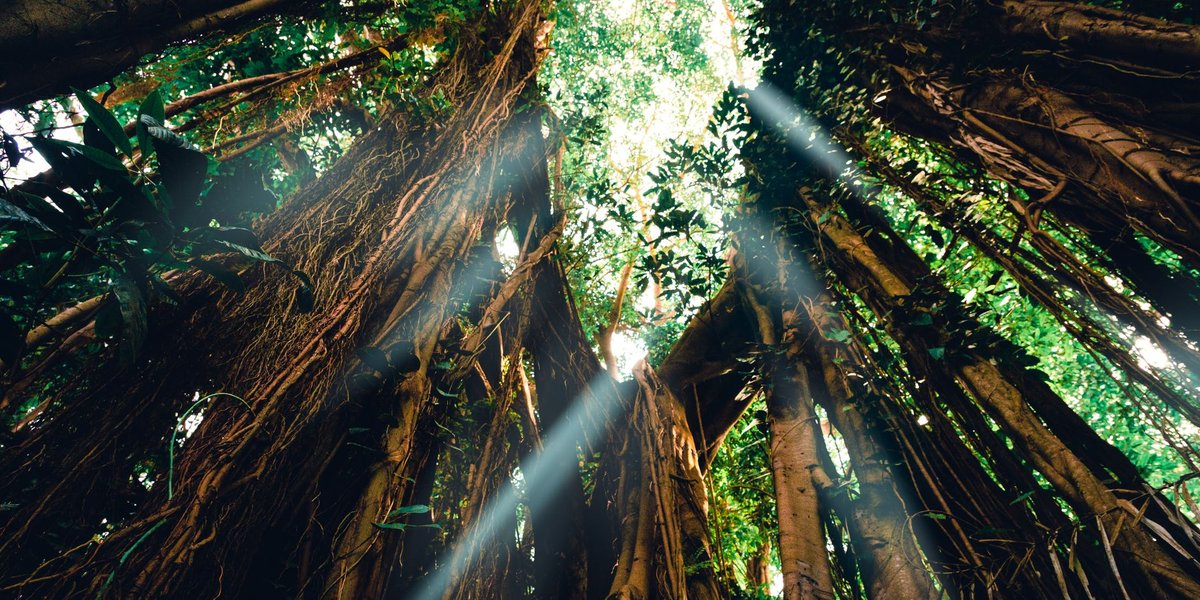
Bolivia has no single forest. It has at least five, stacked from steamy lowland rivers to frozen volcanic slopes, and each one grows a different cast of trees. A Brazil nut tree that drops 2 kg pods from 40 meters up and a knee-high-looking queñua gripping a ridge at 4,800 meters are both Bolivian natives. They have almost nothing else in common.
This guide to the trees of Bolivia is organized by ecoregion, because that’s how the country actually works. Every entry gives the common name (Spanish where it matters), the Latin name, where the tree grows, one fact worth remembering, and what people use it for or how it’s holding up.
Contents
- Bolivia’s tree regions at a glance
- Amazon lowlands
- Chiquitano dry forest
- The Chaco
- Yungas and cloud forest
- High Andes: the queñua forests
- The most remarkable Bolivian trees
- Medicinal trees
- Is there a national tree?
- Where to see these trees
- Threats and conservation
- Summary
Bolivia’s tree regions at a glance
| Region | Roughly where | Elevation | Signature trees |
|---|---|---|---|
| Amazon lowlands | Pando, Beni, northern La Paz and Santa Cruz | Under 500 m | Brazil nut, mahogany, rubber, palma real |
| Chiquitano dry forest | Eastern Santa Cruz | 200–1,000 m | Toborochi, soto, cuchi, tajibo, copaibo |
| Chaco | Southeast: Santa Cruz, Chuquisaca, Tarija | Under 500 m | Quebracho colorado, palo santo, algarrobo |
| Yungas and cloud forest | Eastern Andean slopes | 1,000–3,500 m | Cinchona, pino del cerro, Magnolia boliviana, ambaibo |
| High Andes | Altiplano margins and western ranges | 3,500–5,000 m | Queñua (Polylepis), kishuara |
Elevation ranges are approximate. Ecoregions blur into each other, and the Yungas alone climb through several distinct forest belts. The herbs, shrubs and vines that share these same ecoregions are covered in Plants of Bolivia: A Field Guide From Puna to Amazon.
Amazon lowlands
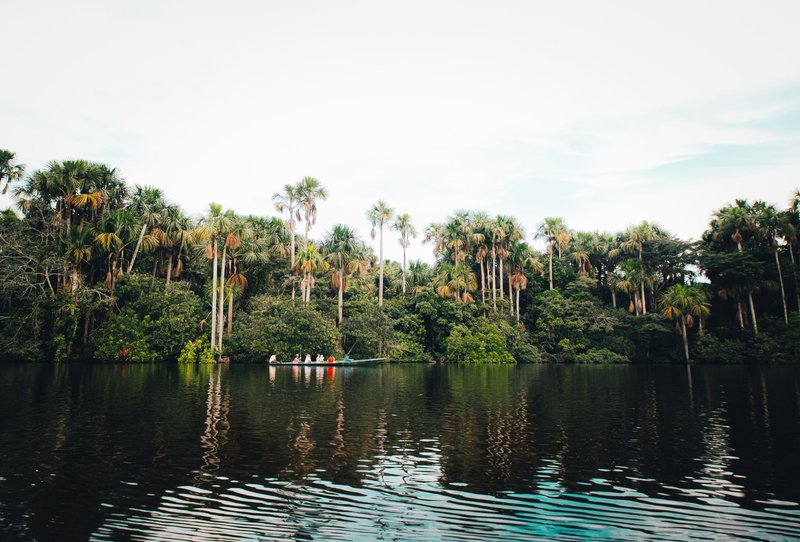
The northern lowlands hold Bolivia’s tallest forest. Botanists at the Missouri Botanical Garden have mapped tree plots in Pilón Lajas, a reserve where the Andean foothills meet the Amazon basin, and those plots show how many species can share a single hectare.
Brazil nut (castaña), Bertholletia excelsa
Bolivia is the world’s leading exporter of Brazil nuts, and almost all of them come from wild trees in Pando, northern La Paz and Beni. Bolivian sellers often call them almendras. The trees can pass 40 meters, have trunks around 2 meters across, and are commonly estimated to live 500 years or more.
The distinctive fact is that nobody has made a plantation work. The flowers need large orchid bees to pollinate them, and those bees need intact forest. The seeds are opened by agoutis, rodents with teeth strong enough to crack the pod. Take away the forest and the nuts stop. Pods fall between December and March, so harvesters (castañeros) work in the rainy season, and cutting a Brazil nut tree is illegal in Bolivia. The IUCN Red List classes the species as Vulnerable.
Mahogany (mara), Swietenia macrophylla
Bolivian mahogany is called mara. It grows scattered through the lowland forest at low density, which is the problem: loggers have to travel far to find a few trees, and they took the best ones first. International trade in the species is controlled under CITES Appendix II, meaning exports need permits proving the wood was legally harvested.
Rubber tree (siringa), Hevea brasiliensis
The tree that built and wrecked fortunes in the early 1900s still stands in the forests of Pando and Beni. Rubber tappers (siringueros) cut diagonal grooves in the bark and collect the white latex. Rubber was also the reason for the Acre War of 1899–1903, after which Bolivia ceded the Acre territory to Brazil. Today the same families who tap rubber often harvest Brazil nuts, working different trees in different seasons.
Moriche palm (palma real), Mauritia flexuosa
This palm grows in flooded ground, in swamps and along rivers, where it forms dense stands called palmares. Its fruit has reddish, scaly skin and oily orange pulp that’s eaten fresh or made into drinks. It’s one of the few trees in this guide you can find standing in water most of the year.
Sandbox tree (ochoó), Hura crepitans
You’ll know an ochoó by its trunk, which is studded with sharp conical spines. Its ripe seed pods dry out and burst with a crack that can be heard from a distance, throwing seeds well away from the parent tree. The sap is irritating and the seeds are poisonous. This is a tree to admire from a few steps back.
Chiquitano dry forest
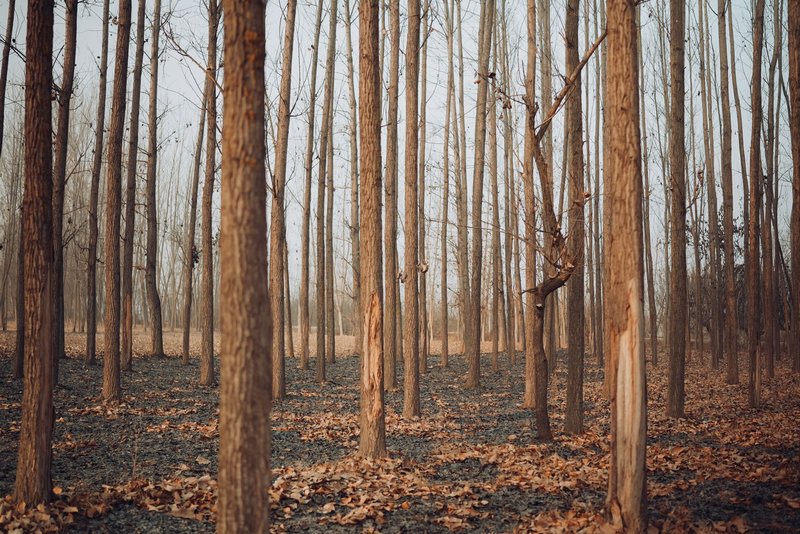
East of the Andes, rainfall drops and the forest changes character. The Chiquitano is one of the largest tropical dry forests left on Earth, and it’s the part of Bolivia where trees drop their leaves in the dry season and bloom while bare.
Toborochi, Ceiba speciosa
The toborochi is the tree Santa Cruz de la Sierra puts on its signs. The trunk swells in the middle like a bottle and is covered in thick spines, which store water. In autumn it flowers in pink and cream before its leaves return, and the seed pods split open to release silky white fibers that look like cotton. Cities across the region plant it in plazas, so it’s the easiest tree on this list for a visitor to see.
Soto, Schinopsis brasiliensis, and cuchi, Astronium urundeuva
These two members of the cashew family are the backbone of Chiquitano hardwood. Both have dense, rot-resistant heartwood that has long been used for fence posts, beams and heavy construction. Schinopsis is the same genus as the famous quebracho of the Chaco. If you want to understand why Bolivian dry forest timber is valuable, look at how slowly these trees grow and how long a cuchi post lasts in the ground.
Tajibo, Handroanthus species
In the dry months, the bare crowns of tajibo trees turn bright yellow or pink with trumpet-shaped flowers. For a few weeks, you can spot them from a moving car. The bark of pink-flowering lapacho trees has a long traditional use as a tea in South America.
Copaibo (copaiba), Copaifera species
Copaibo trees hold liquid. Drill into the trunk and a clear oil-resin runs out, sometimes a significant amount from a single tree without killing it. That resin has been used for centuries as a wound dressing and anti-inflammatory, and it’s now sold worldwide. It’s among the clearest examples of a forest tree worth more standing than felled.
The Chaco
The Bolivian Chaco is the northwestern edge of the Gran Chaco, a hot, thorny lowland shared with Paraguay and Argentina. Protected areas here, such as Kaa-Iya del Gran Chaco National Park, cover about 3.4 million hectares of it.
Quebracho colorado, Schinopsis lorentzii
The name quebracho comes from quiebra hacha, “axe-breaker.” The heartwood is so dense it sinks in water, and it’s rich in tannins, which made it the world’s leading source of tanning extract for leather in the 20th century. It grows slowly, and old stands are rare.
Palo santo, Bulnesia sarmientoi
Don’t confuse this with the Peruvian palo santo (Bursera graveolens) sold as incense sticks. The Chaco tree is a different species with very hard, oily, dark-centered wood, used for carving and to produce an aromatic essential oil. It’s listed in CITES Appendix II, so trade is regulated.
Algarrobo, Prosopis species
The algarrobo is a thorny, shade-casting legume whose sweet pods have been ground into flour and fermented drinks by Chaco peoples for generations. In a landscape this dry, a tree that produces a food crop every year is a safety net.
Yungas and cloud forest
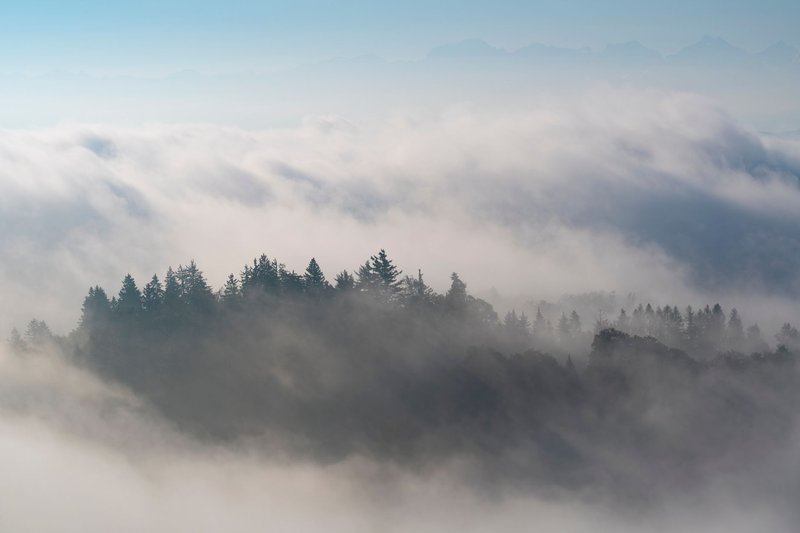
The Yungas are the wet eastern slopes of the Andes, where moisture from the Amazon rises, condenses and blankets the trees in cloud. Mosses, ferns, orchids and bromeliads cover every branch.
Cinchona (quina), Cinchona calisaya
This is the tree behind quinine, the first effective malaria treatment. Cinchona calisaya was long associated with Bolivia, which is why the species is still sometimes called “yellow bark” or “Calisaya bark.” The story that made it famous: in 1865, an Englishman named Charles Ledger had seeds collected in Bolivia by his Bolivian assistant Manuel Incra Mamani. Those seeds were sold to the Dutch, who built quinine plantations in Java from them. Bolivian wild stands were stripped as demand grew. The Royal Botanic Gardens, Kew, keeps taxonomic records for Cinchona calisaya and its relatives.
Pino del cerro, Podocarpus parlatorei
Bolivia has very few native conifers, and the pino del cerro is the one most visitors to the southern valleys will meet. It grows in montane forest from roughly 1,500 to 3,000 meters, with dark, narrow leaves rather than needles. Its timber has been used locally for furniture and construction, and over-harvesting has pushed it back to scattered stands.
Magnolia boliviana
Magnolias are not only a North American and Asian story. Magnolia boliviana grows in Bolivian montane forest, a reminder that this mountain range holds relatives of trees you’d expect to find in a Georgia garden. It’s rarely seen and poorly known, which makes it a good target for botanists working in the Yungas.
Ambaibo, Cecropia species
The ambaibo is a pioneer: it moves into gaps where a landslide or road cut has opened the forest and grows fast. It has hollow stems, often home to Azteca ants that defend the tree against vines and leaf-eating insects. Large, hand-shaped leaves with white undersides make it easy to identify.
High Andes: the queñua forests
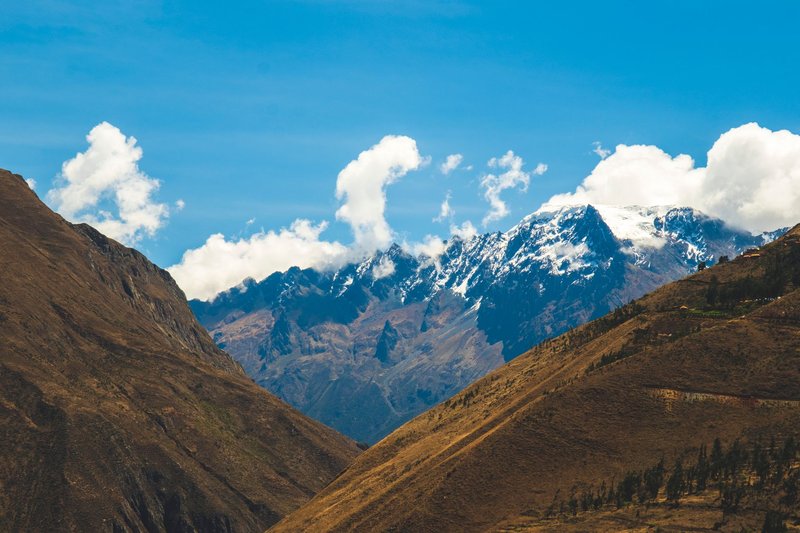
Above 3,500 meters, most trees give up. The queñua doesn’t.
Queñua (kewiña), Polylepis species
Polylepis means “many scales,” a reference to the reddish bark that peels off in thin, papery layers. The layers insulate the trunk from cold and intense ultraviolet light. In Bolivia, queñua woodlands grow from the valleys around Cochabamba up to the slopes of Nevado Sajama, the 6,542-meter volcano in Sajama National Park, Bolivia’s oldest national park (1939). Sajama’s forests include Polylepis tomentella and Polylepis tarapacana, and the latter is generally cited as the highest-growing tree species in the world, reaching roughly 5,000 meters.
These aren’t tall trees. Twisted, wind-pruned and often only a few meters high, they hold the soil, shelter birds, and for centuries have supplied firewood in places with almost no other fuel. That’s the threat: most of the original Polylepis woodland in the Andes has been lost to burning, grazing and wood cutting.
Kishuara, Buddleja coriacea
Kishuara often grows alongside queñua at high elevation. It has gray-green, felt-like leaves and orange flower clusters. Like queñua, it has been used as firewood and for tool handles.
The most remarkable Bolivian trees
- Oldest: Brazil nut trees, with age estimates of 500 years or more, are the elders of the Amazon lowlands. They’re alive because forest, bees and rodents are all still present.
- Highest: Polylepis tarapacana on the Altiplano, where nights are freezing and the air holds roughly half the oxygen found at sea level.
- Densest wood: Quebracho colorado, so heavy it sinks.
- Most surprising: The toborochi, a spiny, bottle-shaped tree that blooms after it drops its leaves.
- Most consequential: Cinchona, whose bark changed the outcome of tropical medicine and colonial history.
Medicinal trees
Several trees in this guide have documented traditional medicinal uses:
- Cinchona: the source of quinine, used for malaria.
- Copaibo: oil-resin applied to wounds and inflammation.
- Lapacho (tajibo): inner bark brewed as a tea.
- Sangre de grado (Croton lechleri): a tree of Amazon foothills whose blood-red latex is smeared on cuts and sores.
These are traditional and commercial uses, not medical advice. Check with a doctor before taking any plant product, since some interact with prescription drugs.
Is there a national tree?
Bolivia’s official national flowers are the kantuta and the patujú. For trees, no equivalent decree turns up in official sources. Websites that name a Bolivian “national tree” rarely cite a law, so treat those claims with caution. Bolivia’s coat of arms does feature a breadfruit tree among its symbols, but that’s heraldry, not a national tree designation.
Where to see these trees
- Madidi National Park and Pilón Lajas: Amazon-to-Andes forest, including Yungas and lowland species.
- Noel Kempff Mercado National Park: Amazon, cerrado and Chiquitano habitats in the far northeast.
- Santa Cruz de la Sierra and the Chiquitania: toborochi and tajibo, along streets and in plazas.
- Amboró National Park: cloud forest, tree ferns and ambaibo near Santa Cruz.
- Kaa-Iya del Gran Chaco National Park: quebracho and palo santo in Chaco habitat, which is remote and hard to reach.
- Sajama National Park: queñua at high altitude, with the volcano as backdrop.
One caution for travelers in the highlands: the tall, narrow trees you see lining roads and fields around Cochabamba and La Paz are mostly introduced eucalyptus, planted widely since the 19th century. The native queñua is the short, twisted one on the hillside.
Threats and conservation
The pressure on Bolivian forests comes from a few directions:
- Clearing for cattle and crops in the Chiquitania, Chaco and Amazon, especially for ranching and soy.
- Fire. Seasons like 2019 and 2024 burned millions of hectares, with the Chiquitano dry forest hit hard.
- Selective logging of high-value species such as mahogany, cedar and quebracho.
- Firewood and grazing in the Andes, which have shrunk queñua woodlands.
What works so far is mostly practical. Protected areas such as Madidi, Noel Kempff, Amboró, Kaa-Iya and Sajama hold large intact blocks of forest. Brazil nut and copaibo harvests give people in the forest income that depends on standing trees. And queñua restoration projects in the highlands are replanting slopes that were stripped for fuel.
Summary
The trees of Bolivia sort cleanly by place. The Amazon lowlands have the Brazil nut, mahogany and rubber; the Chiquitano dry forest has the toborochi, soto and copaibo; the Chaco has quebracho and palo santo; the Yungas have cinchona and pino del cerro; and the high Andes have queñua forests growing near 5,000 meters. Many of the most valuable species, including mahogany, quebracho and cinchona, were hit hard by earlier harvesting, while the Brazil nut shows how income from a standing tree can protect a forest. If you plan to see any of them, pick a region first, since the trees follow the elevation and the rain.