Table of Contents
- TLDR
- Why Kiribati’s wildlife is mostly birds and sea life
- Quick facts table
- Seabirds and shorebirds
- The bokikokiko: Kiribati’s endemic songbird
- Sea turtles
- Whales and dolphins
- Reef fish and sharks
- Land animals: coconut crabs, lizards and introduced species
- Rats and cats: the invasive problem
- Where to see wildlife in Kiribati
TLDR
- Kiribati has no native land mammals. Its animals are overwhelmingly seabirds, sea turtles, whales, dolphins, sharks, reef fish and a few land invertebrates.
- The only bird found nowhere else is the Kiritimati reed-warbler, called bokikokiko, which is listed as Endangered.
- The Phoenix Islands Protected Area holds most of the country’s best marine life, including about 500 fish species and roughly 200 coral species.
- Kiritimati (Christmas Island) is the easiest place to see seabirds, bonefish and the bokikokiko.
Why Kiribati’s wildlife is mostly birds and sea life
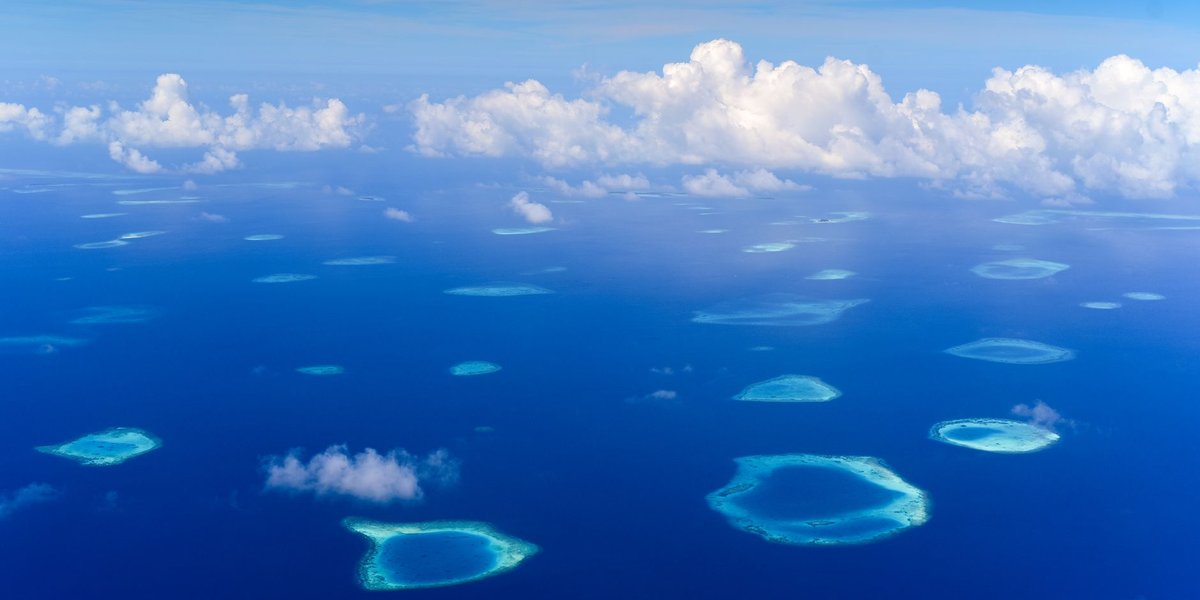
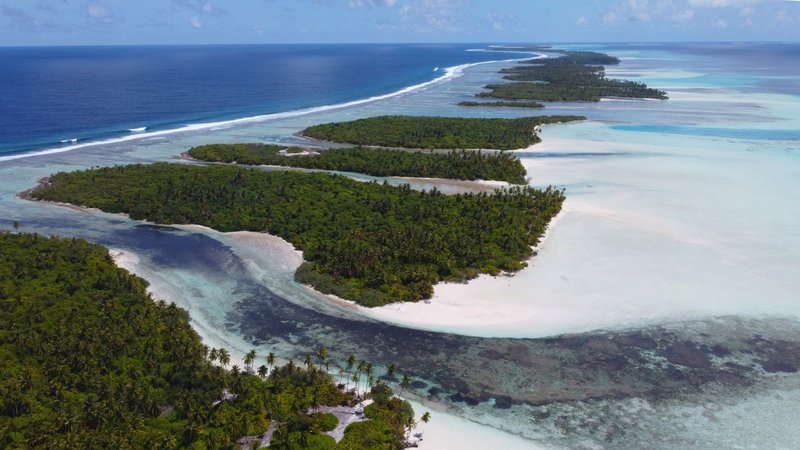
Kiribati is 33 coral atolls and reef islands scattered across about 3.5 million square kilometers of Pacific Ocean, with only around 811 square kilometers of actual land. The three island groups are the Gilbert Islands, the Phoenix Islands and the Line Islands, and the highest point on most of them is a few meters above the tide.
That geography explains the animal list. Mammals can’t swim to a sand-and-coral island 2,000 kilometers from the nearest continent, and nothing that arrived by air or drifting log found much to eat on a strip of coral rubble. What did make it: birds, which fly in, and marine animals, which already live there. The animals of Kiribati are the ones that came by wing or by water.
Everything on land that isn’t a bird, lizard or crab was brought by people. That includes pigs, chickens, dogs, the Pacific rat and, later, cats.
Quick facts table
| Animal | Where to look | One-line fact |
|---|---|---|
| Kiritimati reed-warbler (bokikokiko) | Kiritimati | Endemic and Endangered; roughly 2,500 birds |
| Great frigatebird | Line and Phoenix Islands | Appears on the national flag |
| Sooty tern | Kiritimati | Breeds in huge ground colonies |
| Green sea turtle | Phoenix Islands | Nests on remote sandy beaches |
| Hawksbill turtle | Reef edges across the country | Critically Endangered worldwide |
| Spinner dolphin | Lagoons and outer reefs | Spins in the air in daytime pods |
| Sperm whale | Open ocean, Phoenix Islands waters | Dives deep for squid |
| Blacktip reef shark | Reef flats and lagoons | Often seen in water barely knee-deep |
| Bonefish | Kiritimati flats | The draw for fly anglers |
| Coconut crab | Phoenix Islands, outer atolls | Largest land-living arthropod |
Seabirds and shorebirds
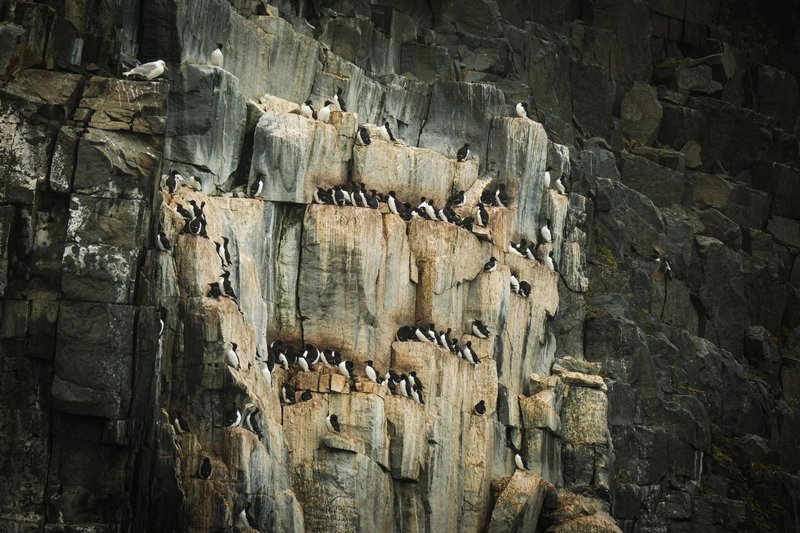
Birds are the most visible wildlife in Kiribati. Kiritimati alone supports breeding colonies of sooty terns, red-footed boobies, great frigatebirds, brown and black noddies and red-tailed tropicbirds. The sooty tern colonies are the sort of thing you hear before you see: a constant, shrill wall of noise from thousands of nesting birds on open ground.
The great frigatebird is the one every I-Kiribati person knows. It’s on the national flag, flying over a rising sun. Frigatebirds can’t land on water because their feathers aren’t waterproof, so they snatch fish from the surface and steal food from other seabirds in flight. A male inflates a red throat pouch the size of a balloon to attract a mate.
Masked boobies and other seabirds nest on the uninhabited Phoenix Islands, and UNESCO counts 44 bird species in the protected area there. Migrants add to the list each year. Bristle-thighed curlews and bar-tailed godwits winter on Pacific atolls after long flights from Alaska, and you’ll find them picking along the reef flats at low tide.
The bokikokiko: Kiribati’s endemic songbird
The Kiritimati reed-warbler, known locally as the bokikokiko, is the main answer to “what animals live only in Kiribati.” It’s a small, brownish-gray warbler that lives in the dense scrub of Kiritimati and shows up as a flick of movement low in the bushes before you hear its song.
Its numbers are small. A BirdLife International factsheet puts the global population at an estimated 2,500 to 9,999 mature individuals, with a decreasing trend, and the species is listed as Endangered by the IUCN. A field study using surveys from 2007 to 2012 estimated about 2,550 birds. The main threats are rats and cats that prey on nests, habitat loss and sea-level rise.
Its name is also its calling card. Bokikokiko is a Gilbertese word, and it’s the one to use if you ask a local guide where to find it.
Sea turtles
Two species matter here: the green turtle and the hawksbill. Green turtles nest on the quiet, rarely visited beaches of the Phoenix Islands, where almost nobody is around to disturb them. Hawksbills, with their narrow beaks and overlapping shell plates, feed on sponges at reef edges and are listed as Critically Endangered worldwide, largely because of the historic trade in their shells.
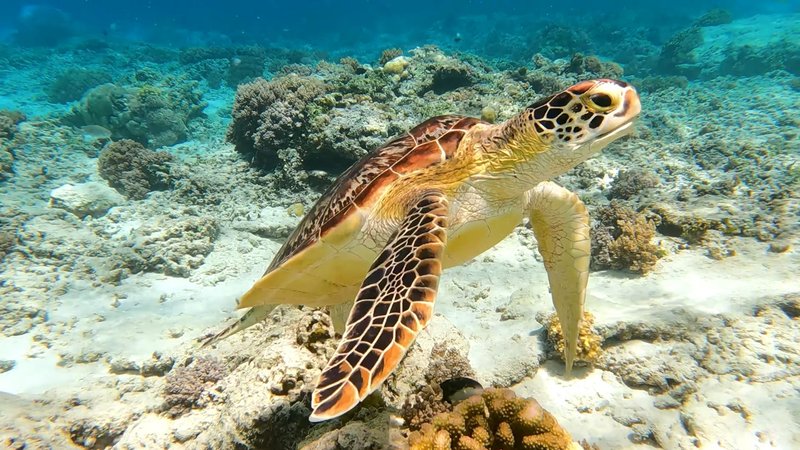
Turtles also have a place in Kiribati life, and harvesting has been a concern. The practical takeaway for visitors: if you see a turtle, keep your distance and don’t touch it.
Whales and dolphins
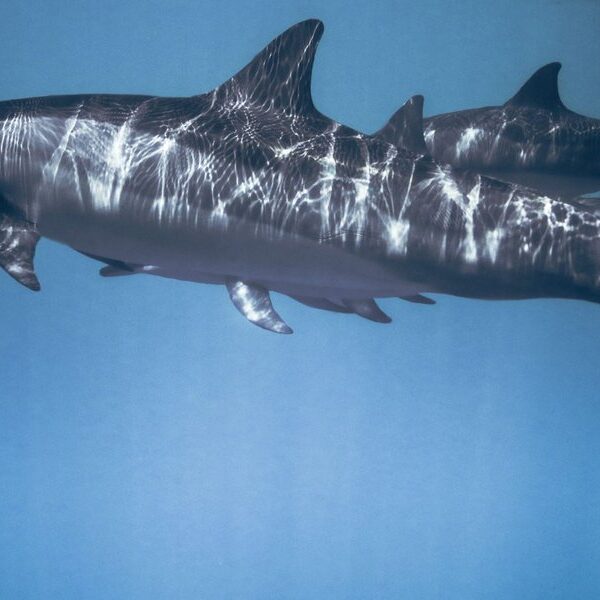
Kiribati has no land mammals to speak of, but its waters hold marine mammals. Sources vary on the exact count, but the Phoenix Islands Protected Area alone lists about 18 marine mammal species. Spinner dolphins are the ones you’re most likely to meet, since they come into lagoons and along reef edges in pods and leap and rotate in the air. Sperm whales, the deep divers that hunt squid in the open ocean, pass through the surrounding deep water.
The list of cetaceans on record for the country totals about a dozen species. Most records are sightings and strandings rather than systematic surveys, so the real picture is probably fuller than the published one.
Reef fish and sharks
The Phoenix Islands Protected Area, covering about 408,250 square kilometers, was inscribed as a UNESCO World Heritage Site in 2010. UNESCO lists roughly 800 known fauna species in it, about 200 corals and 500 fish among them. Commercial fishing in the area has been closed since 2021, and the reefs reflect it: large predators, fat groupers and sharks in numbers that are rare on fished reefs elsewhere.
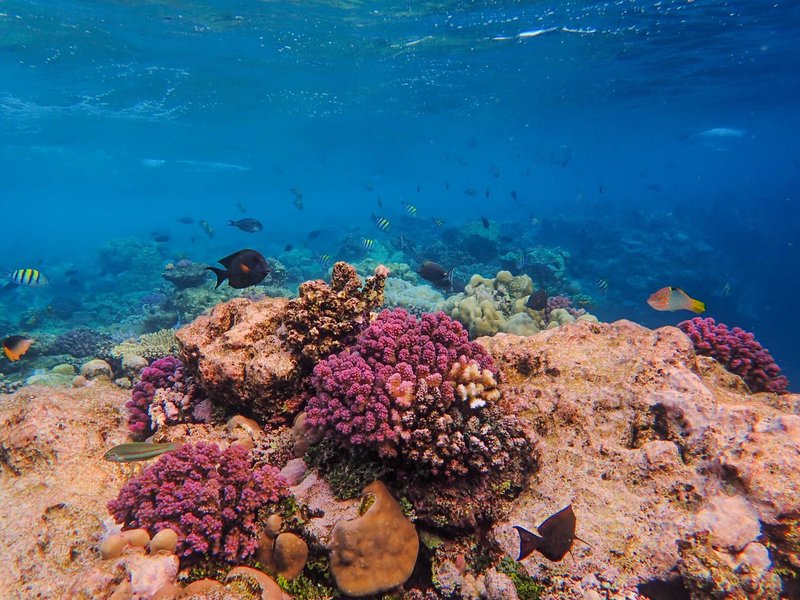
Blacktip reef sharks, grey reef sharks and whitetip reef sharks patrol the reef edges, and blacktips cruise the shallow flats close to shore, dorsal fin out of the water. Giant clams sit embedded in the reef with wavy, brightly patterned mantles. Parrotfish scrape algae off the coral and excrete much of the white sand you walk on.
Kiritimati has a different draw: its enormous lagoon flats are one of the world’s best-known bonefish fisheries, and giant trevally hunt the same shallows. Fly anglers fly in for them. The fish are catch-and-release.
Land animals: coconut crabs, lizards and introduced species
The coconut crab is the star of Kiribati’s land fauna. It’s the largest land-living arthropod on Earth, with a leg span that can reach about a meter, and it climbs palm trees and tears open coconuts with its claws. Adult crabs live in burrows or rock crevices and come out at night. Because people eat them across the Pacific, the crabs have been wiped out on many inhabited islands, and the uninhabited Phoenix atolls are where large ones still survive.
Other land animals are small. Geckos and skinks live in leaf litter and on buildings, hermit crabs of various sizes cover the beach at night, and land crabs dig burrows in the sand and soil behind the shore.
Rats and cats: the invasive problem
Pacific rats arrived with the first settlers by canoe, and cats came later with Europeans. Both eat eggs, chicks and small birds, and on islands where native birds evolved without ground predators they do real damage. Cats and rats are the main reason the bokikokiko is endangered. Seabirds that nest on the ground are the other victims, which is why the islands with the biggest, healthiest colonies are the ones without these predators. Other threatened species in the wider region are listed in the Micronesia endangered species list.
Eradication works on small, uninhabited islands, and conservation groups have removed invasive animals from parts of the Phoenix Islands. It’s far harder on populated atolls like Kiritimati, where cats and rats live around people.
Where to see wildlife in Kiribati
- Kiritimati (Christmas Island): The best single destination. Seabird colonies, bonefish flats, migratory shorebirds and the bokikokiko are all here. International flights are infrequent, so book around the schedule.
- Tarawa: The capital atoll is crowded and developed, but the lagoon shores are good for waders and reef flats at low tide, and snorkeling gives you reef fish.
- Phoenix Islands: The richest wildlife, and the hardest to reach. The islands are uninhabited and protected, and access is generally limited to research and expedition vessels.
- Reef flats at low tide, anywhere: Walk out carefully for crabs, small sharks, clams and shorebirds.
Ask a local guide before going out. Many of the best spots are on land with access rules, and guides know where the birds are on a given week.