As an Amazon Associate we earn from qualifying purchases. Disclosure
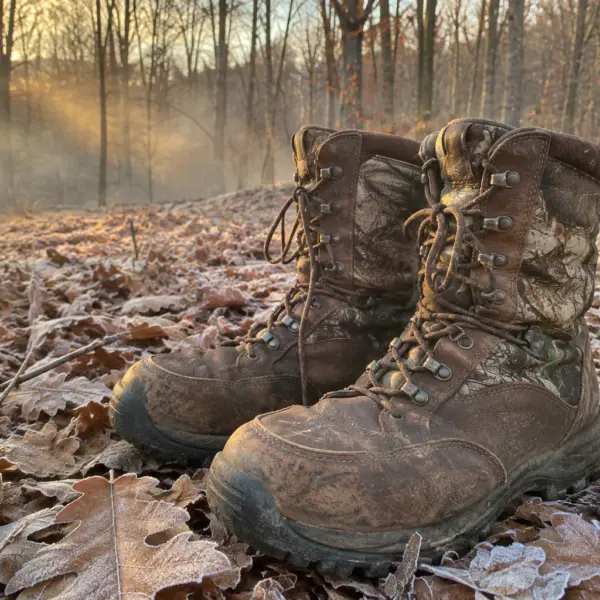
The best 1000 gram insulated hunting boots for most hunters are the Rocky Sport Pro 1000G for tree stand and box blind hunting, the LaCrosse Alphaburly Pro 18″ 1000G if you want rubber, and the Kenetrek Mountain Extreme 1000 if you walk miles in snow before you sit. 1,000 grams of insulation is made for hunters who sit still at or below freezing. LaCrosse and Danner both draw the line in the same place: if you will be stationary for long stretches at 32°F or colder, buy 1,000 grams or more.
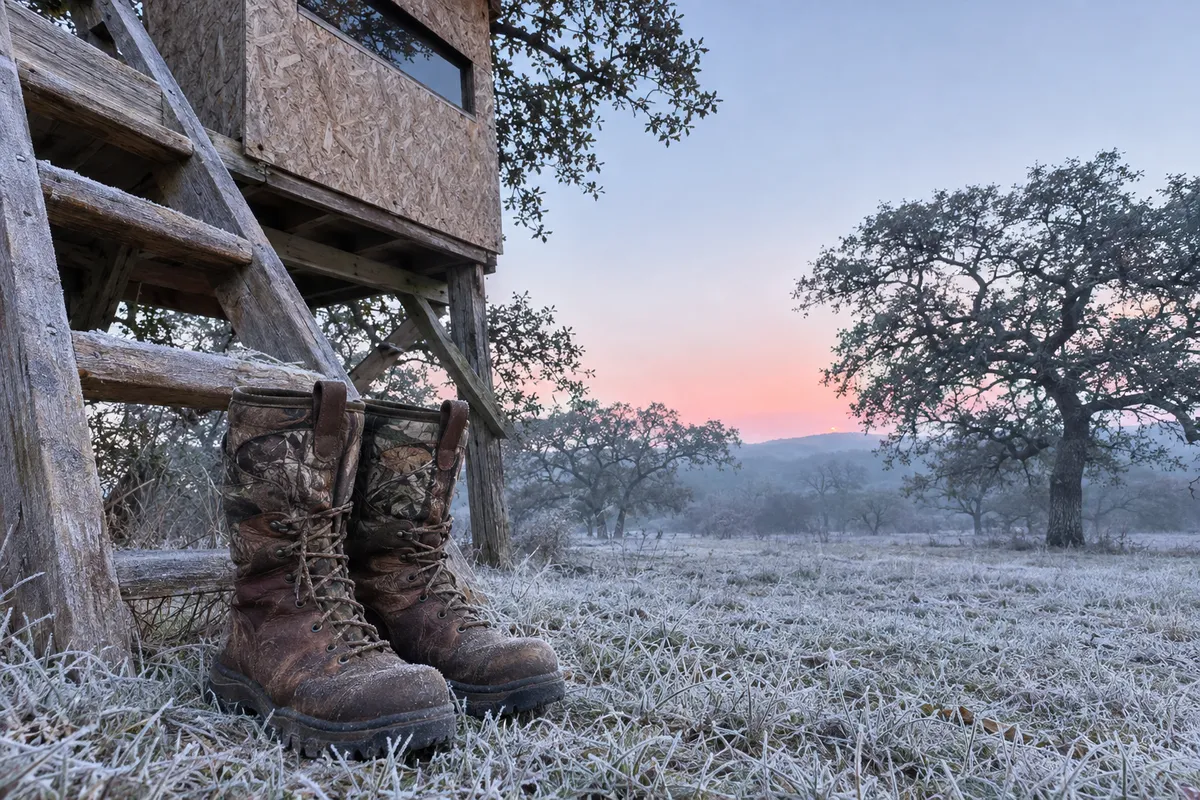
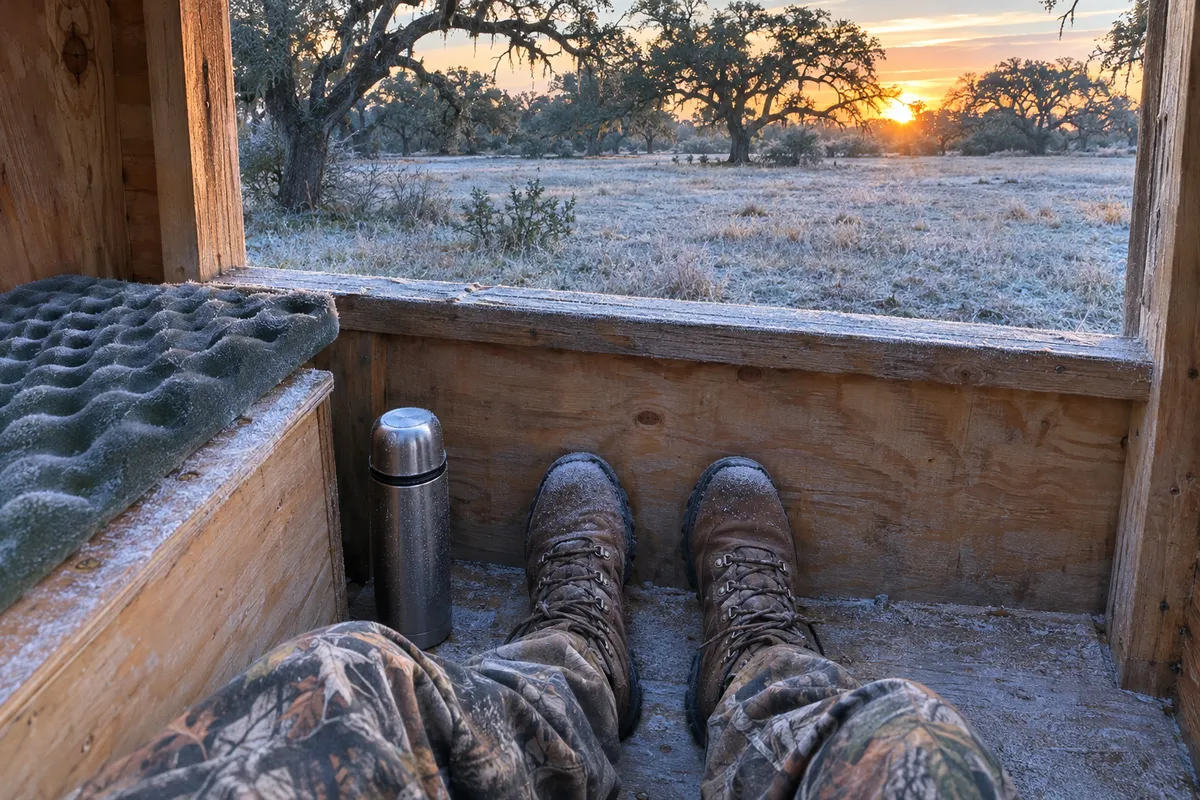
My father hunts white-tailed deer from a plywood box blind on a family lease in the Texas Hill Country. For years he wore one pair of 400 gram boots from opening weekend to the last day of the season. Then a December cold front pushed the morning down to 19°F, and by nine o’clock he could not feel his toes. He climbed down an hour before the deer usually move, sat in the truck with the heater on his feet and drove home. The quarter-mile walk to the blind had felt fine. The three hours of sitting were the problem. He bought a 1,000 gram pair that winter and kept the 400s for November. That split, light boots for walking and 1,000 grams for cold sits, is how this guide is organized.
Quick picks
| Boot | Type | Height | Best for |
|---|---|---|---|
| Rocky Sport Pro 1000G | Leather and nylon, lace-up | 8″ | Tree stands and box blinds |
| Rocky Sport Utility Max 1000G | Leather and nylon, lace-up | 10″ | Value pick for cold sits |
| Irish Setter Elk Tracker 12″ 1000g | Full-grain leather, lace-up | 12″ | Deep snow and long seasons |
| Rocky BearClaw GORE-TEX 1000G | Leather and nylon, lace-up | 9″ | Late-season deer in snow |
| Kenetrek Mountain Extreme 1000 | Leather mountain boot | 10″ | Elk, mule deer and steep ground in snow |
| LaCrosse Alphaburly Pro 18″ 1000G | Rubber over neoprene | 18″ | Wet ground and scent control |
| Muddy DV8 17″ 1000G | Rubber and neoprene | 17″ | Budget rubber boot for cold mud |
| Kenetrek Women’s Mountain Extreme 1000 | Leather mountain boot | 8″ | Women who hunt in the mountains |
Is 1,000 grams the right insulation for you?
A 1,000 gram boot is the right choice when the longest part of your hunt is sitting still in cold weather. Your feet make heat while you walk. Once you sit down, they make almost none, and a metal tree stand platform or a frozen blind floor pulls that heat out through the sole. Insulation slows the loss. It does not create warmth, so the less you move, the more of it you need.
The gram number is the weight of one square meter of the insulation sheet, usually 3M Thinsulate. It tells you how thick the layer is, not how cold the boot can go. Rocky says an exact temperature for each gram level is not possible, and LaCrosse calls its own lab ratings subjective. The table below is the working range most boot makers and retailers agree on. Our hunting boot insulation guide has the full chart from uninsulated to 2,000 grams.
| Insulation | Who it suits | Rough temperature range |
|---|---|---|
| 400 g | Walking in and sitting for an hour or two in fall | About 10 to 30°F with some movement |
| 800 g | Fall stand hunting; the upper limit for all-day walking | About -10 to 10°F with some movement |
| 1,000 g | Sitting still for hours at or below freezing, snow, cold water | 32°F and below when stationary |
| 1,200 to 1,600 g | Long late-season sits, single digits, icy water | Below 0°F |
Those ranges assume you move at least part of the time. Sit motionless in a tree stand and the same boot feels cold well above the low end. Wet socks make it worse: NIOSH notes that wet feet lose heat about 25 times faster than dry ones. A 1,000 gram boot that you sweat into on a long walk will feel colder by mid-morning than a dry 800 gram boot.
The simple rule: if you walk more than you sit, 1,000 grams is too much. If you sit more than you walk and it is freezing, 1,000 grams is the starting point.
Best 1000 gram leather hunting boots
Leather and nylon lace-up boots are what most deer hunters wear. They fit the foot closer than rubber, give more ankle support on the walk in and breathe better, so your socks stay drier. All of these use 1,000 grams of Thinsulate and a waterproof liner.
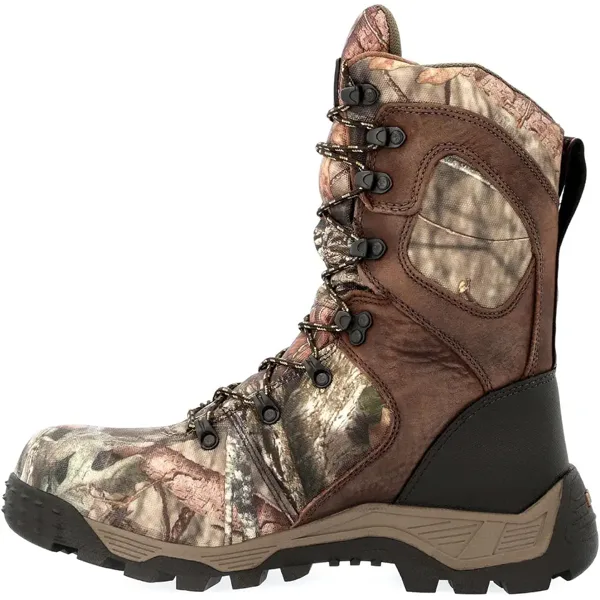
Best overall for stand hunting
1. Rocky Sport Pro 1000G
The Sport Pro is the boot this guide measures the others against. It is an 8-inch camo lace-up with 1,000 grams of Thinsulate Ultra, a waterproof liner and a lug sole that grips a ladder stand rung. It is light enough for a walk to the stand and warm enough for a morning sit at freezing. The Amazon listing also sells a 400 gram version, so pick the 1000G option when you choose your size.
- 1,000 g Thinsulate Ultra insulation
- Waterproof leather and nylon upper in Mossy Oak camo
- 8-inch height clears most fields and light snow
Good: a proven stand boot with over a thousand Amazon ratings. Not great: 8 inches is short for deep snow or creek crossings.
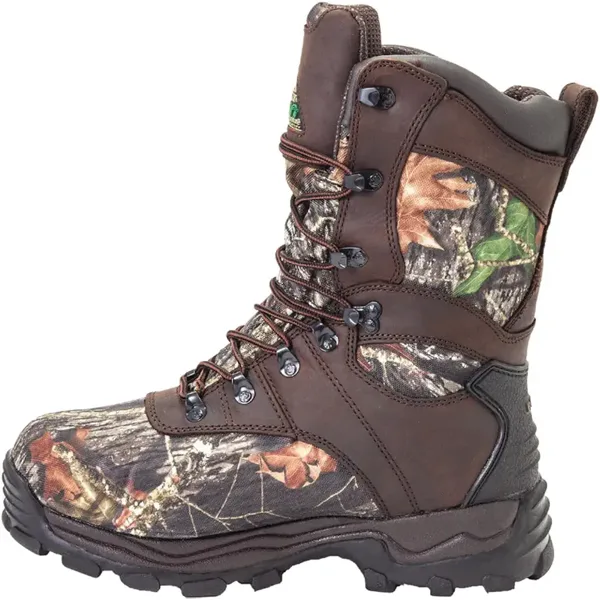
Best value
2. Rocky Sport Utility Max 1000G
A 10-inch boot built for cold sits rather than long hikes. It pairs full-grain leather and nylon with 1,000 grams of Thinsulate Ultra and Rocky’s waterproof construction. It is the heavier of the two Rocky picks, at about 6 pounds a pair in size 10, so it suits hunters who park close and sit long. For a box blind or a ground blind it costs less than most boots on this list and keeps up with them on warmth.
- 1,000 g Thinsulate Ultra
- 10-inch full-grain leather and nylon upper
- Guaranteed waterproof construction
Good: 10 inches of height and 1,000 grams for less than the big names. Not great: heavy on a long walk in.
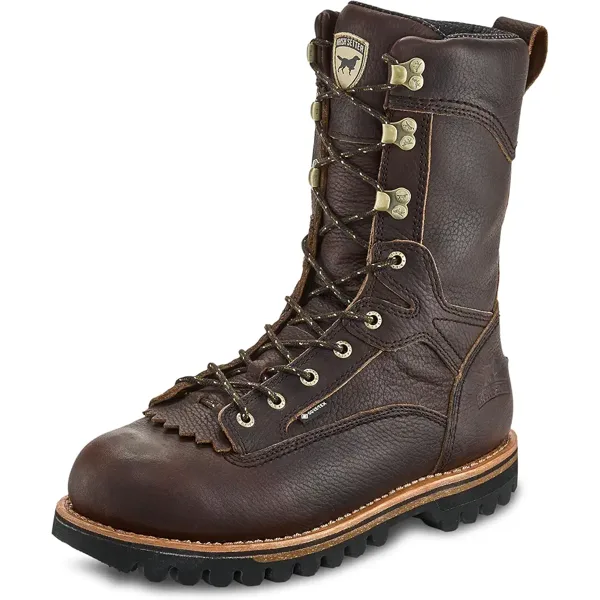
Best for deep snow
3. Irish Setter Elk Tracker 12″ 1000g
A tall, traditional leather boot with a Goodyear welt, so a cobbler can replace the sole when it wears out. The 12-inch shaft keeps snow out on the walk in and the 1,000 gram insulation covers a cold sit. Irish Setter builds it for elk hunters, but it works just as well for northern whitetail hunters who face snow on the ground all of December. Expect a break-in period: full-grain leather this thick takes a few walks to soften.
- 1,000 g insulation with a waterproof liner
- 12-inch full-grain leather upper
- Goodyear welt construction that can be resoled
Good: the tallest leather boot here, and it can last many seasons with a resole. Not great: heavy, at roughly 40 ounces per boot, and stiff until broken in.
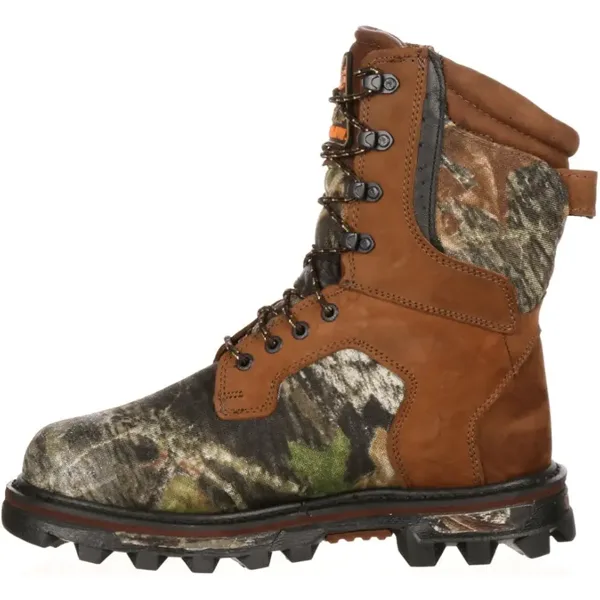
Best for late-season deer
4. Rocky BearClaw GORE-TEX 1000G
The BearClaw has been Rocky’s cold-weather hunting boot for decades. This version adds a GORE-TEX liner to the 1,000 grams of Thinsulate Ultra, and the deep multi-directional lugs shed mud and snow as you walk. It is a 9-inch boot with a wide, stable base that suits a hunter who stands on a frozen platform for hours. It is heavy, close to 5 pounds a pair, so it belongs on short walks to cold sits.
- 1,000 g Thinsulate Ultra and a GORE-TEX waterproof liner
- Self-cleaning lug outsole for mud and snow
- 9-inch leather and nylon upper in camo
Good: GORE-TEX plus deep lugs for wet snow and slick ground. Not great: one of the heavier lace-ups here.
Lightest 1000 gram boot
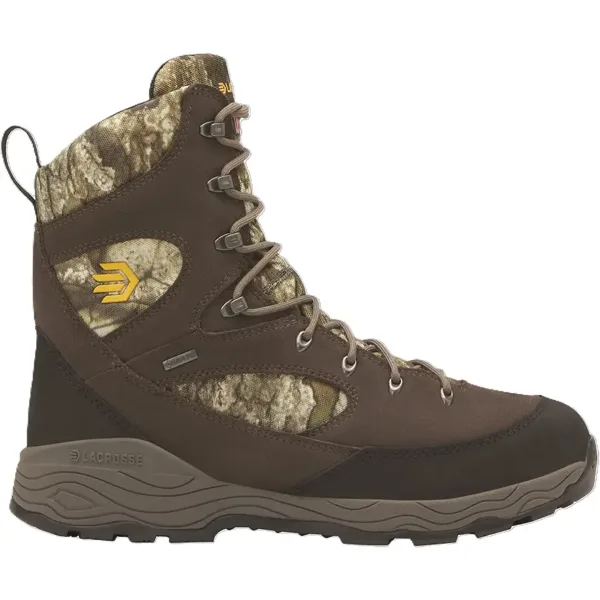
5. LaCrosse Trailbreaker GTX 8″ 1000G
The Trailbreaker is built like a hiking boot: suede upper, GORE-TEX liner and a softer, athletic fit. Retailers list the line at about 3.1 pounds a pair, roughly half the weight of the Sport Utility. That makes it the pick for hunters who walk a mile or more to a stand and do not want to haul a heavy boot there. It is a newer model, so it has few Amazon ratings yet.
- 1,000 g Thinsulate Ultra with a GORE-TEX liner
- Suede upper with a hiking-boot fit
- 8-inch height
Good: the most comfortable 1,000 gram boot to walk in. Not great: suede needs more care than full-grain leather, and the model has little track record.
Best for mountain hunts in snow
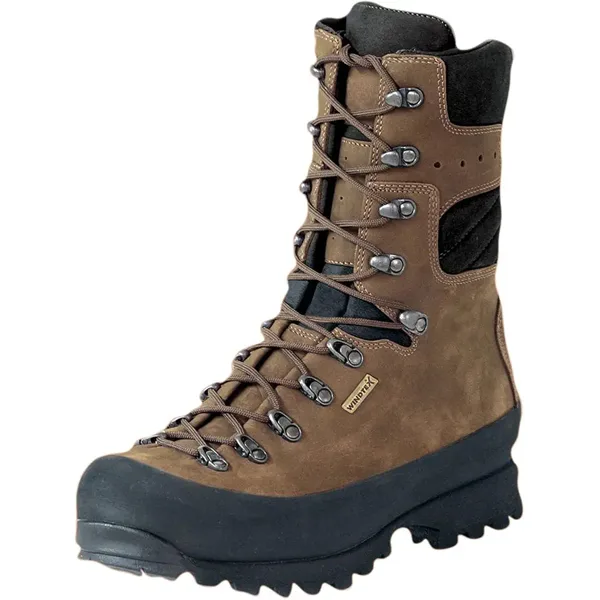
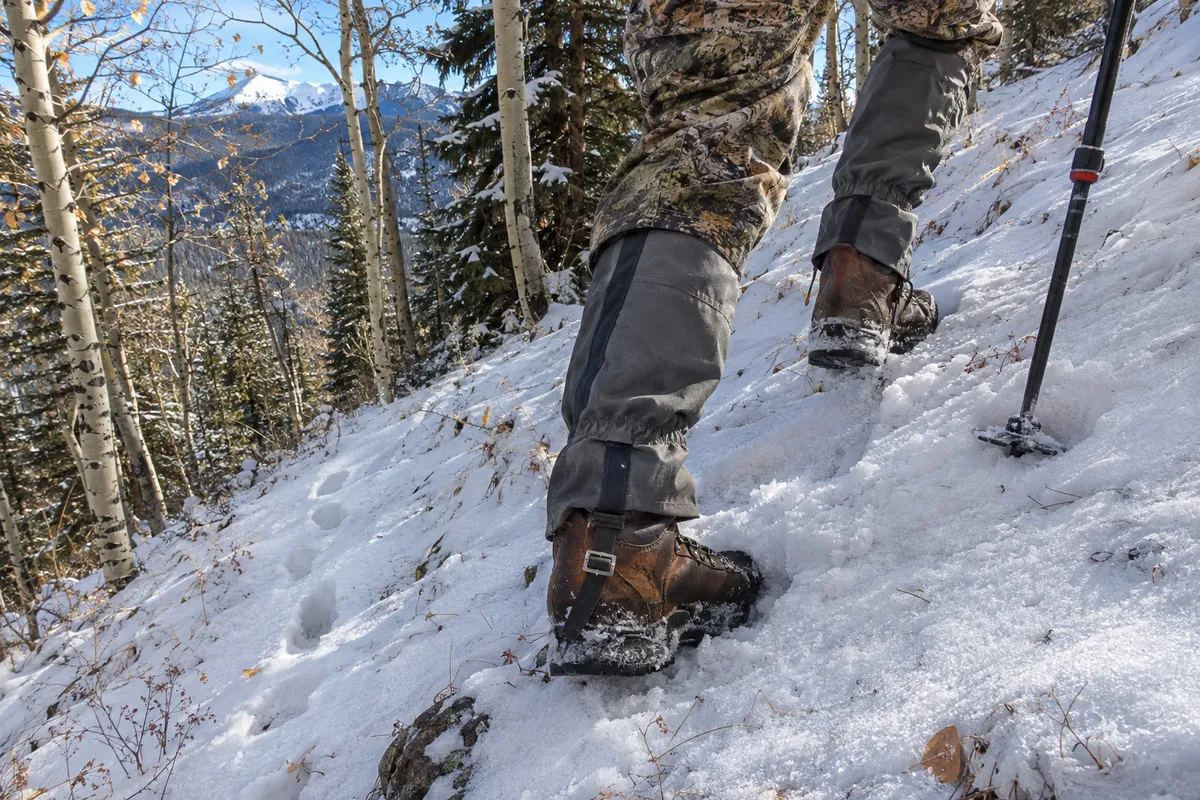
6. Kenetrek Mountain Extreme 1000
The Mountain Extreme is a standard pick among western elk and mule deer hunters. The 1000 version uses the same stiff leather upper, Windtex waterproof membrane and nylon midsole as the uninsulated and 400 gram models, with 1,000 grams for late-season hunts where you climb, then glass from a snowy ridge for hours. The stiff midsole supports a heavy pack on side-hills, which no stand boot here can do. It costs the most of any boot on this list.
- 1,000 g Thinsulate with a Windtex waterproof membrane
- Stiff nylon midsole for pack weight and kicking steps in snow
- Tall leather upper with a rand that protects against rocks
Good: the only boot here built to climb steep, snowy ground under a pack. Not great: the stiff sole is overkill for a stand hunter, and break-in takes time.
Mountain boot for colder sits
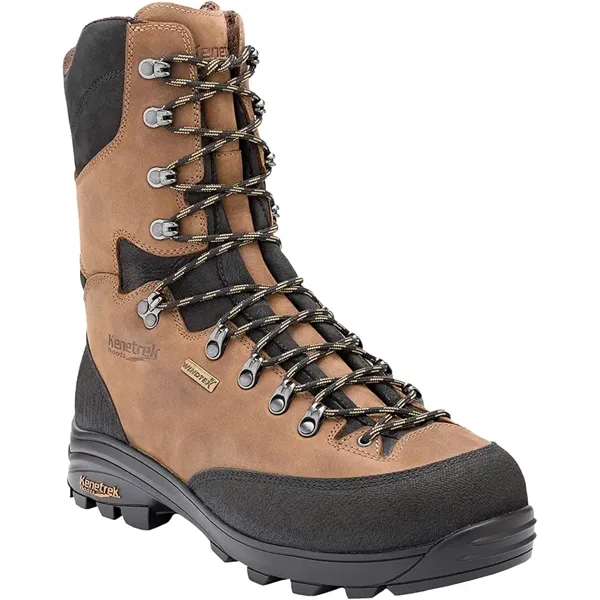
7. Kenetrek Elevated Extreme
Kenetrek’s newer insulated boot pairs 1,000 grams of Thinsulate with a 10-inch leather upper and a 7mm nylon midsole. It sits between the Mountain Extreme and a pac boot: still built to climb, but meant for hunters who spend more of the day glassing than hiking. It is new on Amazon with almost no ratings, so treat it as the alternative if the Mountain Extreme does not fit your foot.
- 1,000 g Thinsulate
- 10-inch leather upper
- 7mm nylon midsole
Good: Kenetrek build quality with a cold-sit focus. Not great: very few owner reviews so far.
Budget pick
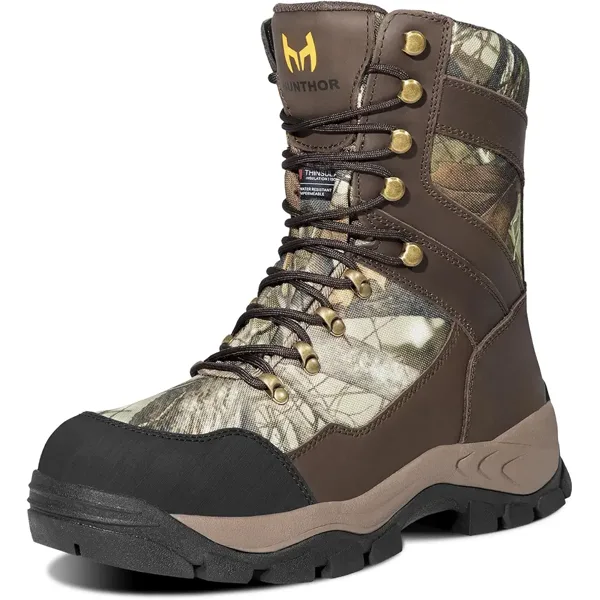
8. Hunthor 1000g Insulated Hunting Boot
Hunthor is an online brand that sells 1,000 gram boots for far less than Rocky or Irish Setter. This one has a 900D Oxford fabric and leather upper, a waterproof liner and an EVA midsole that keeps it light. It is a good choice for a new hunter, a teenager whose feet will grow next year or a spare pair for deer camp. It will not match the name brands for lifespan.
- 1,000 g insulation with a waterproof liner
- 900D Oxford fabric and leather upper
- Light EVA midsole
Good: the cheapest way into a 1,000 gram boot. Not great: no long track record, and the fabric upper wears faster than leather.
Best 1000 gram rubber hunting boots
Rubber boots are fully waterproof, easy to hose off and hold less human scent than leather, which is why many bowhunters wear them. Their weakness is fit: the loose shaft lets your heel lift on a long walk, and rubber does not breathe, so sweaty feet get cold faster. Wear them for short walks, wet ground and creek crossings. Our waterproof hunting boots guide covers uninsulated and neoprene-only rubber boots too.
Best rubber boot
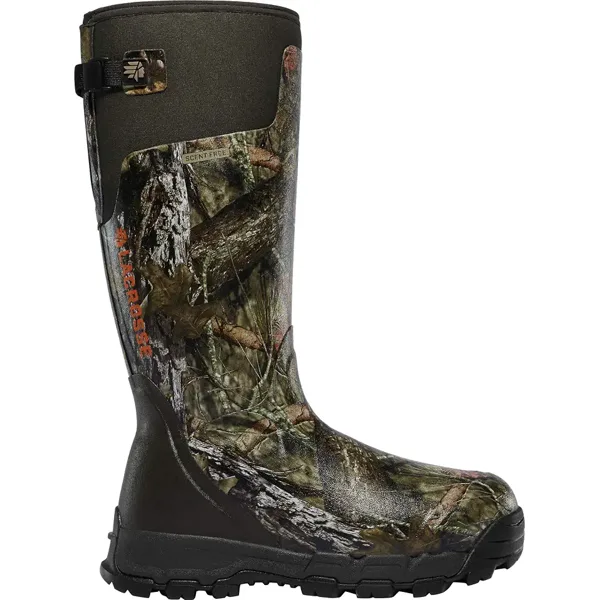
9. LaCrosse Alphaburly Pro 18″ 1000G
The Alphaburly Pro is one of the most common rubber boots on whitetail stands. LaCrosse layers natural rubber over a neoprene core, adds 1,000 grams of Thinsulate and shapes the ankle so the boot does not slop around on the walk in. The 18-inch shaft clears most creeks and wet CRP fields. It is the warm choice for early-winter bowhunts, when scent control matters as much as warmth.
- 1,000 g Thinsulate over a neoprene core
- 18-inch rubber shaft with an adjustable gusset
- Kick-off lug on the heel for pulling the boot off without hands
Good: fully waterproof, easy to clean and holds little scent. Not great: rubber does not breathe, so wear moisture-wicking socks.
Budget rubber boot
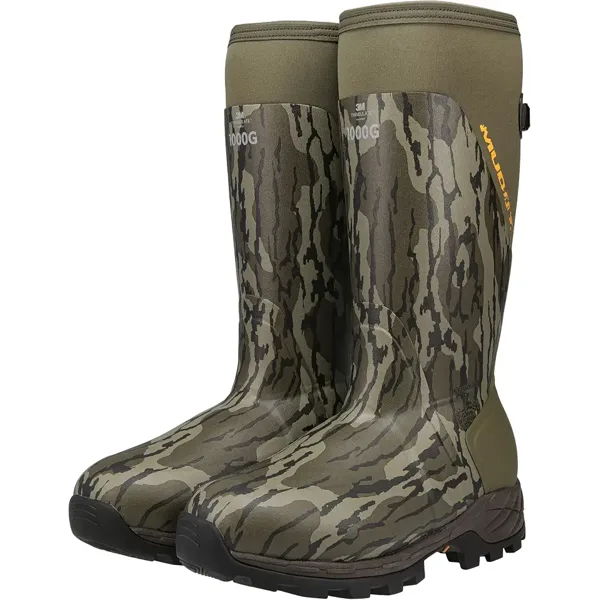
10. Muddy DV8 17″ 1000G
Muddy builds the DV8 from hand-laid vulcanized rubber and 5mm neoprene, with 1,000 grams of Thinsulate. Read the fine print: the 1,000 grams sit in the toe box, where feet get cold first, and the neoprene insulates the rest of the boot. The 17-inch top rolls down to vent heat on the walk in, and a strap at the back snugs the calf. Muddy rates it from -50 to 50°F, a range that assumes you are moving.
- 1,000 g Thinsulate in the toe box plus 5mm neoprene
- 17-inch shaft that rolls down for venting
- Adjustable back strap
Good: rubber protection with extra insulation where toes need it. Not great: the 1,000 g figure does not cover the whole boot.
Women’s 1000 gram hunting boots
A men’s boot in a smaller size is not the same as a women’s boot. Women’s lasts are narrower in the heel and lower in volume, and a heel that lifts on every step causes blisters on the walk and cold spots once you sit. These two are built on women’s lasts with full 1,000 gram insulation.
Best women’s mountain boot
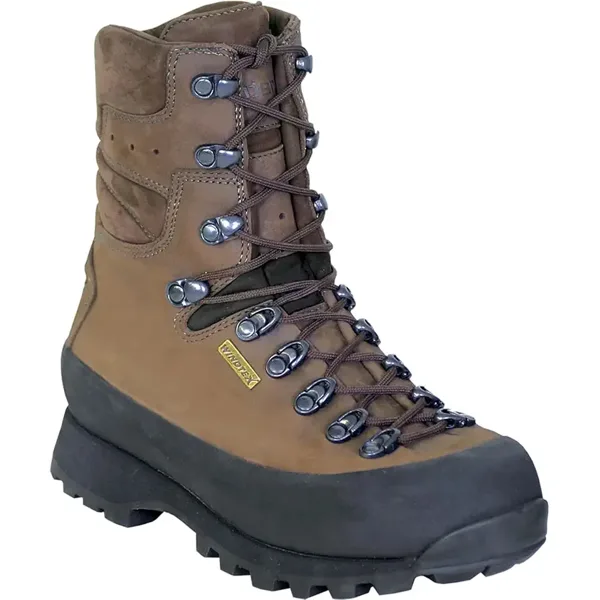
11. Kenetrek Women’s Mountain Extreme 1000
The women’s Mountain Extreme 1000 keeps the men’s leather upper, Windtex membrane and nylon midsole on a narrower last, in an 8-inch height. It weighs about 3.4 pounds a pair, light for a boot this stiff. It is the choice for women who hunt elk or mule deer late in the season and need to climb before they sit.
- 1,000 g Thinsulate and a Windtex waterproof membrane
- Women’s last with a narrower heel
- 8-inch leather upper
Good: real mountain support on a women’s fit. Not great: expensive, and stiff for a stand hunter.
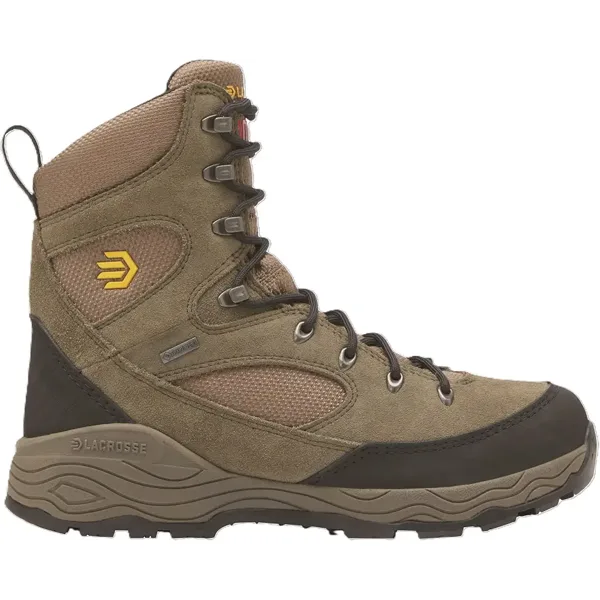
Best women’s stand boot
12. LaCrosse Women’s Trailbreaker GTX 7″ 1000G
The women’s Trailbreaker has the same suede upper, GORE-TEX liner and 1,000 grams as the men’s version, cut on a women’s last and in a 7-inch height. It walks like a hiking boot, so it suits whitetail hunters who walk in, sit and walk out. It is new, with few ratings so far.
- 1,000 g Thinsulate Ultra with a GORE-TEX liner
- Women’s fit with a hiking-boot feel
- 7-inch height
Good: light and comfortable for a 1,000 gram boot. Not great: short for deep snow.
800 gram and 1200+ gram alternatives
If 1,000 grams sounds like too much or not enough, these four boots cover the steps on either side. Go down to 800 grams if your feet sweat or you walk more than a mile. Go up if you sit all day in single digits or stand in icy water.
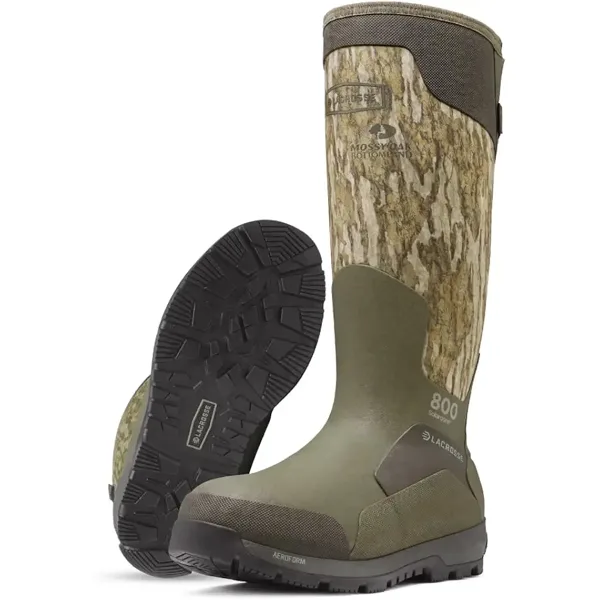
One step down: 800 g rubber
13. LaCrosse AlphaBurly Aero 17″ 800G
LaCrosse’s newer AlphaBurly Aero is lighter and more flexible than the Alphaburly Pro, with a 5mm neoprene core and 800 grams of Thinsulate. It is the better rubber boot for bowhunters who still-hunt or walk to several stands in a day, where 1,000 grams would leave sweaty socks.
- 800 g Thinsulate
- Flexible rubber over a neoprene core
- 17-inch shaft
Good: easier to walk in than heavier rubber boots. Not great: less warm on a long, still sit below freezing.
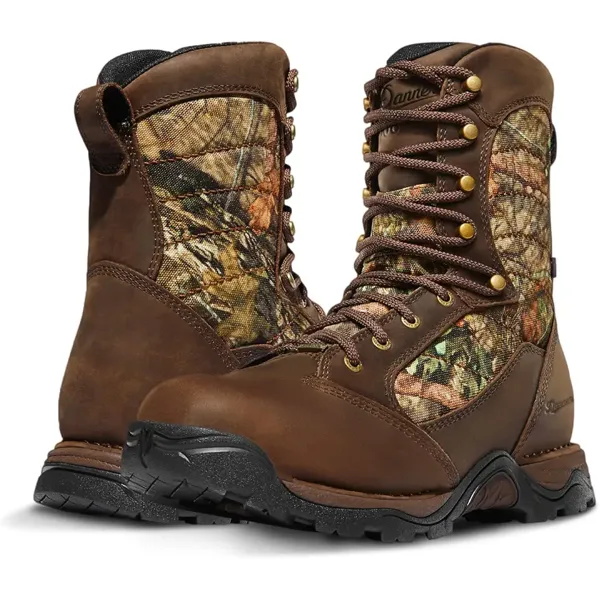
One step down: 800 g leather
14. Danner Pronghorn 8″ 800G
The Pronghorn is a full-grain leather boot with a GORE-TEX liner, a cushioned midsole and 800 grams of Thinsulate. Danner does not sell a 1,000 gram Pronghorn on Amazon, and for many fall hunts it does not need to. It is the pick for hunters who split the day between walking and sitting and run warm.
- 800 g Thinsulate Ultra and a GORE-TEX liner
- Full-grain leather upper
- 8-inch height
Good: comfortable on the walk and warm enough for most fall sits. Not great: not the boot for long sits in single digits.
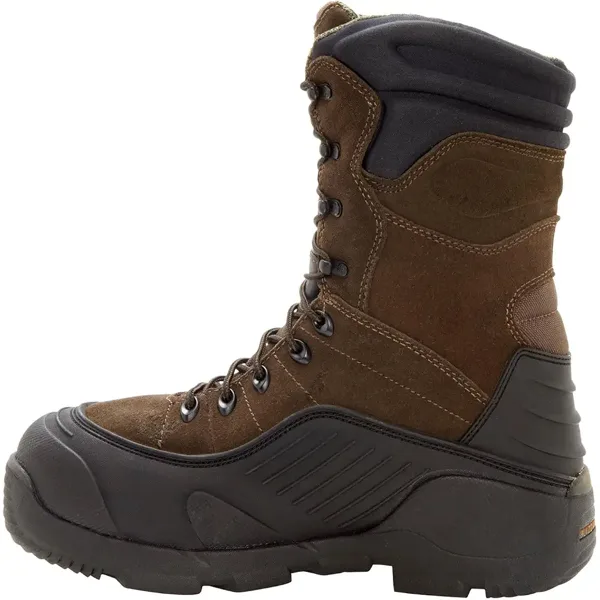
One step up: 1,200 g leather
15. Rocky Blizzard Stalker 1200G
A brown leather boot with 1,200 grams of Thinsulate Ultra and a rubber toe cap. It is plain enough to wear for chores and warm enough for the coldest stand of the year. Hunters in the northern states who sit in December and January often pick it over a 1,000 gram boot.
- 1,200 g Thinsulate Ultra
- Waterproof full-grain leather
- Rubber toe guard
Good: more warmth for the same kind of boot. Not great: too warm for anything but cold, still hunts.
Two steps up: 1,600 g rubber
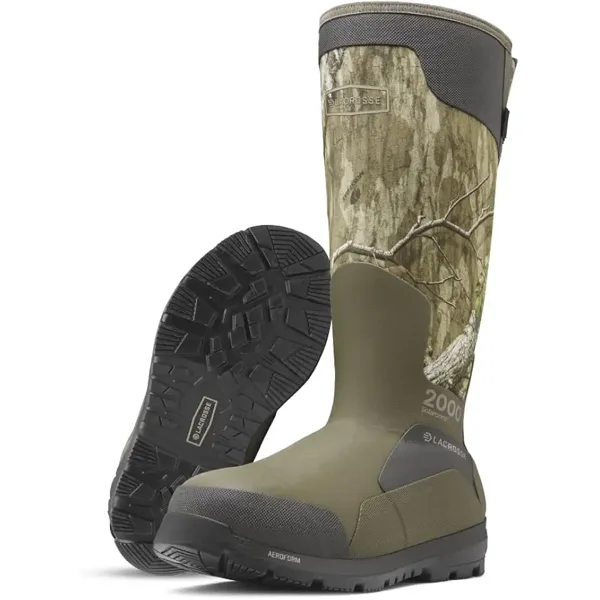
16. LaCrosse AlphaBurly Aero 17″ 1600G
The same AlphaBurly Aero with 1,600 grams of Thinsulate. It is for hunters who sit in a stand all day in single digits or stand in icy water in a duck blind. For anyone who walks more than a few hundred yards, it is too much.
- 1,600 g Thinsulate
- Rubber over a neoprene core
- 17-inch shaft
Good: the warmest boot on this page. Not great: sweaty on any real walk.
How to choose 1000 gram hunting boots
Leather or rubber
Choose leather if you walk more than a few hundred yards, climb a ladder or hang-on stand, or need ankle support. Choose rubber if the walk is short and wet, you cross creeks or you bowhunt and care about scent. Rubber traps sweat, so a rubber boot with 1,000 grams can feel colder than a leather boot with the same insulation once your socks are damp.
Height
8 inches is enough for dry fields and light snow. 10 to 12 inches keeps out deep snow and wet grass. 16 to 18 inches, which only rubber boots reach, is for creeks, swamps and flooded timber. Taller boots are warmer too, since they cover more of the lower leg.
Fit
Try boots on with the socks you will hunt in. You should be able to wiggle your toes freely. A tight boot squeezes the insulation flat and cuts blood flow to the toes, and both make feet cold faster than a thinner boot that fits. Many hunters buy cold-weather boots a half size larger than their everyday shoes to make room for thick socks, but check each brand’s sizing notes first.
Waterproof liner
Every boot on this list is waterproof, but the liner changes how dry your feet stay from the inside. GORE-TEX and Windtex membranes let some sweat vapor out. In-house liners from Rocky and Irish Setter keep water out but tend to breathe less. Breathability matters more the more you walk.
Weight
1,000 gram boots range from about 3 pounds a pair (LaCrosse Trailbreaker) to over 6 pounds (Rocky Sport Utility Max). A heavy boot on a long walk makes you sweat, and sweat is what turns a warm boot cold on a stand. If your walk is longer than half a mile, favor the lighter boots.
How to keep your feet warm in 1000 gram boots
Most hunters who say their 1,000 gram boots are not warm have a sweat or fit problem, not an insulation problem. These habits make a bigger difference than adding another 200 grams.
- Wear merino or synthetic socks, never cotton. Cotton holds sweat against the skin. A midweight merino hunting sock is enough in most 1,000 gram boots.
- Walk in slow and loose. Unbutton your jacket, loosen the boot laces a little and take your time. Arriving sweaty is the most common cause of cold feet on a stand.
- Change socks at the stand. On long walks, carry a dry pair in your pack and swap them before you sit.
- Add toe warmers for the last hour. Adhesive toe warmers stick to the top of the sock, where a 1,000 gram boot runs out first. They are also one of the best stocking stuffers for hunters.
- Insulate the floor. Put a foam pad or a piece of carpet under your feet on a metal stand platform or a blind floor.
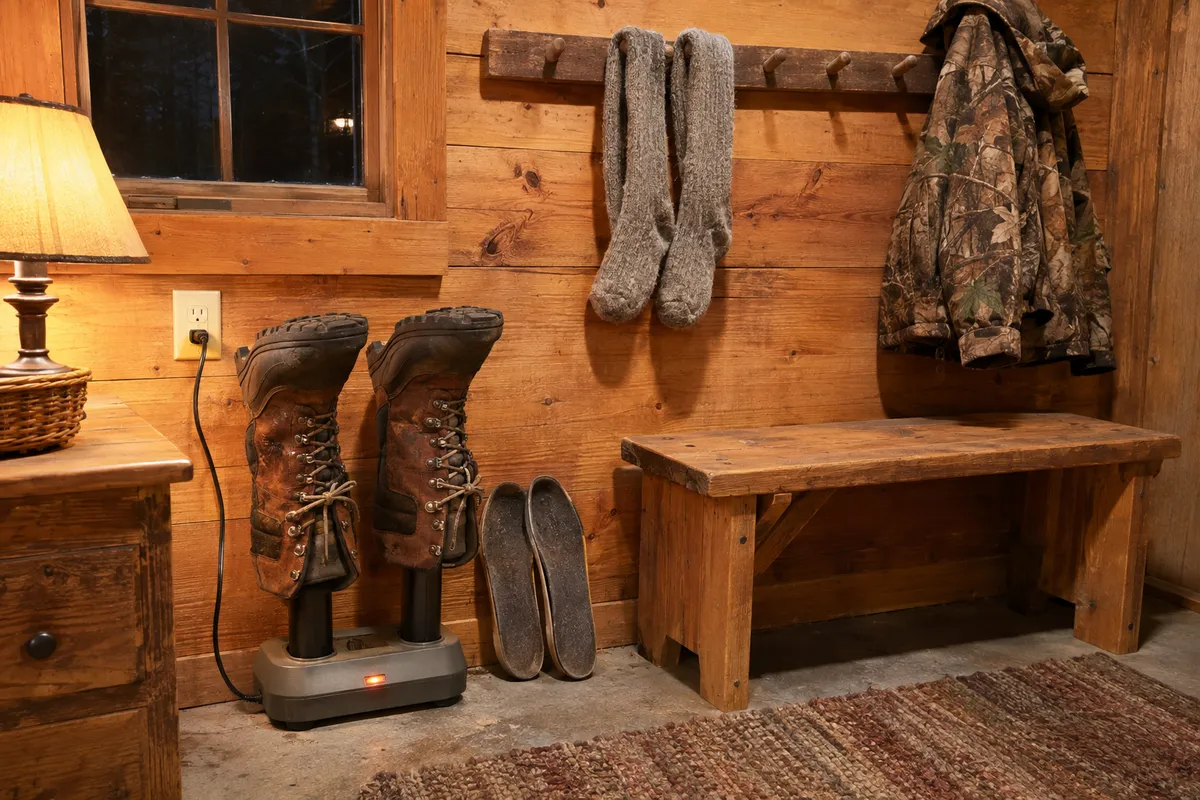
- Dry your boots every night. Pull the insoles, open the boots and use a boot dryer. Do not set leather boots next to a wood stove or heater: high heat cracks the leather.
FAQ
What are the best 1000 gram insulated hunting boots?
The Rocky Sport Pro 1000G is the best 1,000 gram boot for most stand hunters. The LaCrosse Alphaburly Pro 18″ 1000G is the best rubber option, and the Kenetrek Mountain Extreme 1000 is the best for climbing steep ground in snow.
How warm are 1000 gram boots?
1,000 gram boots are made for sitting still at or below freezing. There is no standard temperature rating for a gram level, and boot makers like Rocky say an exact rating is not possible. Most hunters find 1,000 grams comfortable on a stand into the teens, and add toe warmers or move up to 1,200 grams in single digits.
Are 1000 gram boots too warm for deer hunting?
Not for stand or blind hunting below freezing, which is what they are made for. They are too warm for early-season hunts, still-hunting or walks longer than about a mile, where your feet will sweat and then get cold once you stop. Many deer hunters own a 400 gram pair for fall and a 1,000 gram pair for late season.
Should I get 800 or 1000 gram hunting boots?
Get 800 grams if you split the day between walking and sitting, or if your feet tend to sweat. Get 1,000 grams if you sit still for hours at 32°F or colder. LaCrosse and Danner both recommend 1,000 grams or more for long stationary hunts at freezing.
Is 1000 or 1200 gram insulation better?
1,200 grams is warmer but heavier and sweatier on a walk. Choose 1,000 grams for most late-season stand hunting and 1,200 grams or more for all-day sits in single digits or below zero.
Can you walk in 1000 gram boots?
Yes, for a short to moderate walk to a stand. On long walks or hikes your feet will sweat, and damp socks lose heat fast once you stop. Walk slowly, loosen your layers and carry a dry pair of socks to change into before you sit.
Why are my feet still cold in 1000 gram boots?
The usual causes are sweaty socks from the walk in, boots laced too tight, cotton socks or standing on a cold metal platform. Fix those first: merino socks, looser laces, a sock change at the stand and a foam pad under your feet.
Are 1000 gram rubber boots warmer than leather boots?
Not by much. A rubber boot with the same grams blocks wind and water completely but traps sweat. Leather breathes better, so feet stay drier on the walk in. For short, wet walks rubber wins. For longer walks, leather usually feels warmer by the end of the sit.
Sources
- LaCrosse Footwear, How much insulation do I need?
- Danner, Insulation guidance
- Rocky Boots, Insulation guide
- 3M, Thinsulate insulation for footwear data sheet
- CDC / NIOSH, Cold stress related illnesses
- Bass Pro Shops, Hunting boots buyer’s guide
More guides: hunting boot insulation guide, best waterproof hunting boots, Christmas gifts for hunters and all florafaunafun buying guides.