TLDR
Croatia’s national flower is the Croatian iris (Iris croatica), called perunika after the Slavic thunder god Perun. Beyond that one famous bloom, Croatia holds close to 350 endemic or range-restricted plant species, most concentrated on Velebit and along the Dalmatian coast. Peak wildflower season runs from late April through July, with Velebit and Biokovo hitting full bloom in June.
Table of Contents
- The national flower: Iris croatica
- The species worth learning to recognize
- Where and when to see them
- Getting there without trampling anything
The national flower: Iris croatica
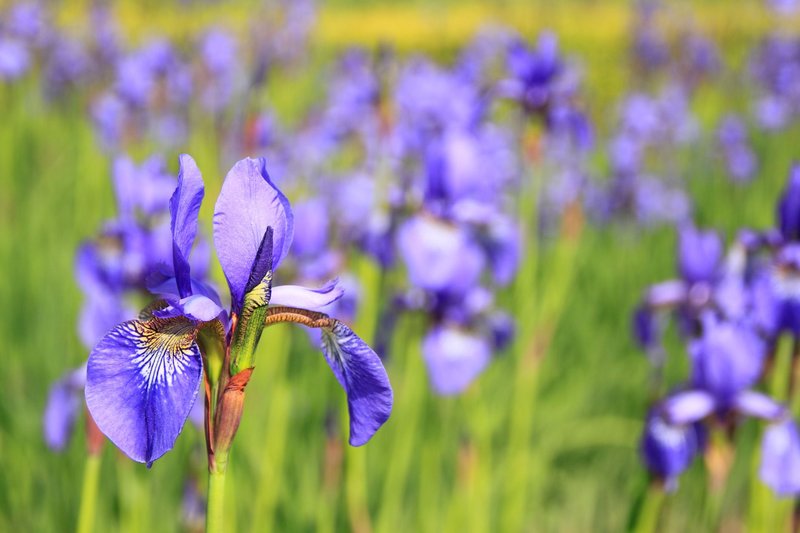
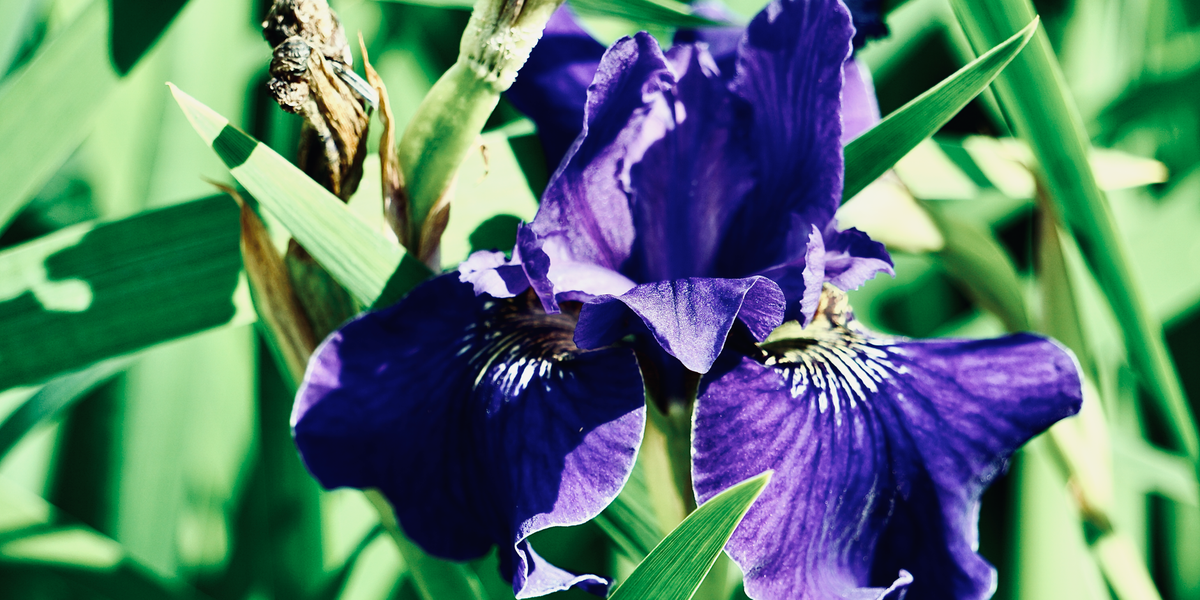
The Croatian iris grows in dry, rocky grassland from the Istrian hills down through the Dinaric karst, throwing up violet-blue flowers on stems barely taller than a boot. It’s not a garden iris gone wild — it’s a distinct species, first described from the Velebit range, and it flowers for a matter of weeks in April and May before the grass around it dries out for summer.
The Croatian Academy of Sciences and Arts formally named it the national flower in 2000, but the cultural claim on it goes back much further. In Croatian the flower is perunika, tied to Perun, the Slavic god of thunder and lightning. Croatia’s official tourism board recounts the folk belief behind the name: wherever Perun’s lightning struck the ground, an iris grew, and planting one near your house was thought to ward off storms. Around Dubrovnik it’s sometimes called bogiša — from bog, meaning god — for the same reason.
That’s a lot of mythology riding on a flower most visitors walk straight past. It doesn’t grow in manicured beds or roadside planters. You find it on exposed, sun-baked slopes where almost nothing else survives, which is fitting for a plant that’s supposed to symbolize resilience.
The species worth learning to recognize
Croatia’s wildflower reputation isn’t really about the iris — it’s about what grows alongside it. The country has close to 350 endemic or range-restricted plant taxa, a striking number for its size, and most of that diversity is packed into two places: the Velebit massif and the limestone hills of the southeast Adriatic coast, according to a peer-reviewed survey in Phytotaxa. For a broader look at the full spectrum of Croatian plant diversity, these aren’t flowers you’ll find in a garden center. Most exist nowhere else on Earth.
Croatian iris (Iris croatica) — covered above, but worth repeating here: this is the one to learn first, since every other species on this list grows in the same rocky, sun-exposed terrain.
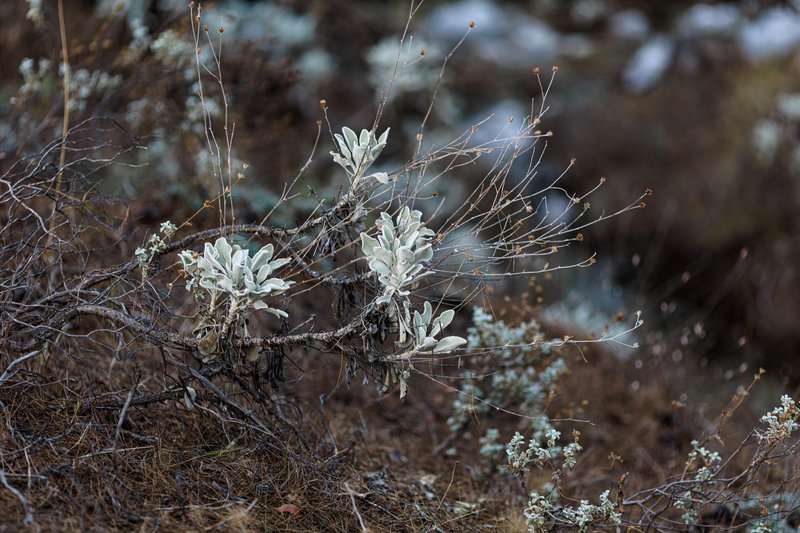
Velebit degenia (Degenia velebitica) — a low, silvery-leaved member of the mustard family found on Velebit’s bare limestone screes and nowhere else on the planet. It’s a steno-endemic, meaning its entire wild population sits within a few square kilometers of scree slope. Small yellow flowers, easy to miss, genuinely rare to find.
Croatian sibiraea (Sibiraea altaica subsp. croatica) — a low, spreading shrub with small white flower clusters, more common than the degenia but still restricted almost entirely to Velebit’s northern and central slopes. Locals sometimes call it hrvatska sibireja. It’s one of the plants that made Velebit’s botanists start paying attention to how much was hiding on that mountain.
Dalmatian sage (Salvia officinalis) — not endemic, but genuinely native to this coastline rather than the garden escapee it’s often mistaken for. It grows wild across the rocky hills of Dalmatia and the Kvarner islands, and genetic research published in PLOS ONE found the highest genetic diversity of wild sage anywhere in its range sits along the central Dalmatian coast — this is close to the plant’s ancestral home, not a naturalized population.
Dalmatian grassy bells (Edraianthus dalmaticus) — a cushion-forming bellflower relative with deep purple, upward-facing blooms that cling to cracks in bare rock. Found along the Dinaric belt and the Adriatic hinterland, it’s one of the better photographed endemics because it grows in dense, obvious clumps rather than scattered singles.
Cliff bellflower (Campanula cremnophila) — true to its name, this one grows out of vertical rock faces and crevices in the Velebit gorges, which makes it both a striking endemic and a genuinely difficult one to photograph up close.
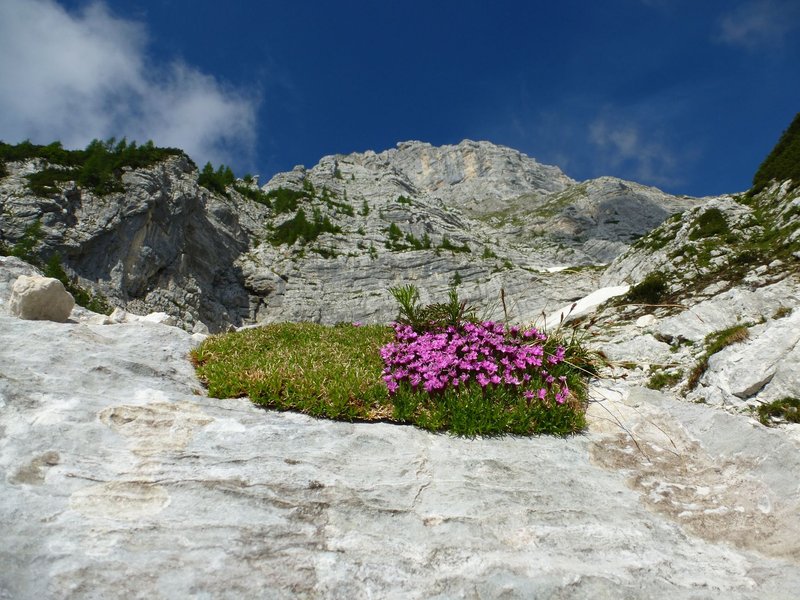
Velebit pink (Dianthus velebiticus) — a carnation relative endemic to Velebit’s higher slopes, with fringed pink petals typical of wild dianthus but a growth habit tight enough to survive wind exposure most other flowering plants can’t handle.
Maly’s crocus (Crocus malyi) — one of the earliest bloomers on this list, pushing white-to-lilac flowers through late snow patches on Velebit and neighboring ranges as early as March, well before most of the other species listed here have even leafed out.
Where and when to see them
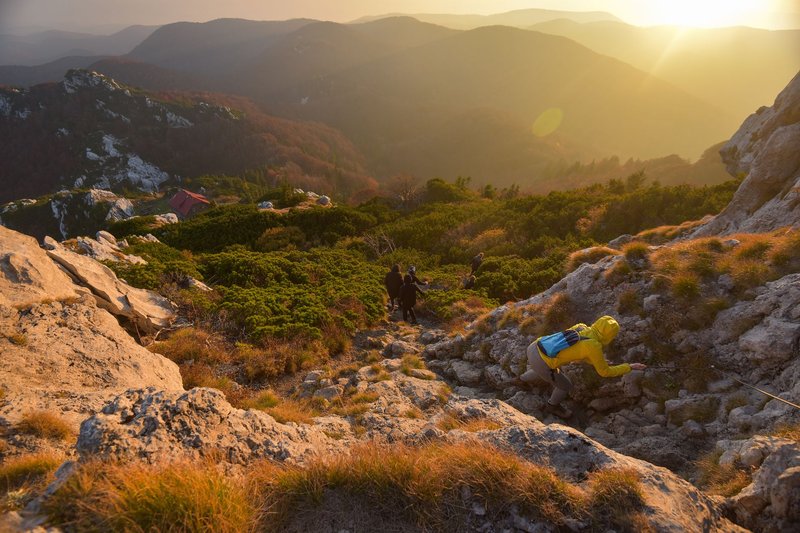
Velebit, Croatia’s longest mountain range, is the center of gravity for almost everything on this list. The Northern Velebit National Park reports roughly 4.4% of its plant species are endemic — an unusually high figure that reflects how isolated the range’s limestone ridges have been over geological time. The park’s own botanical garden hits peak bloom in June and July, which is the safest window if you want maximum flowers in one visit and don’t want to gamble on a specific species’ timing.
Biokovo, above Makarska, runs on a similar clock but skews slightly earlier. Spring is when the mountain’s namesake Adriatic iris and other early bloomers show up, and the Kotišina Botanical Garden on its lower slopes — maintained by the Biokovo Nature Park authority — concentrates dozens of native and endemic species into a walkable space rather than requiring a full mountain hike to find them scattered.
Dalmatia’s coastal hills and islands, away from the high mountains, are where you’ll find Dalmatian sage growing wild in genuinely large stands, plus scattered orchids and grassy-bells populations tucked into the same rocky pasture. This terrain blooms earlier than the mountains — expect the coastal show to be mostly over by the time Velebit is just getting started in June.
Plitvice and Krka, Croatia’s two big waterfall national parks, aren’t endemic hotspots the way Velebit is, but they’re where most visitors already have a trip planned, and their lower-elevation meadows put on a reliable general wildflower display from April through June — a reasonable add-on if a dedicated Velebit trip isn’t in the itinerary.
If there’s one rule across all four regions: go earlier than you think. Adriatic summer arrives fast, the ground dries out, and a slope that was purple with iris and grassy-bells in May can look completely bare by late July.
Getting there without trampling anything
Most of what’s listed here grows on exposed rock and thin soil that takes years to recover from foot traffic, and several of these species exist in populations small enough that a careless shortcut across a scree slope is a real threat, not an abstract one. Stick to marked trails, especially around Velebit’s steno-endemics — the degenia’s entire known range could fit inside a few football fields.
None of this requires technical mountaineering. The botanical gardens at Velebit and Kotišina are built exactly so a regular hiker can see a dense sample of endemic species without needing route-finding skills or a full-day summit attempt. For everything else — the sage-covered hills, the coastal orchids, the roadside iris — a rental car and a slow pace beat a packed itinerary. This is a landscape that rewards stopping the car for a flower most other visitors will drive straight past.