Morocco grows citrus on the Mediterranean coast, dates in desert oases, figs and cherries in the hills, and prickly pears along every dusty roadside. Almost all of it is sold within a few hours of picking, from a cart, a souk stall, or a juice stand. Which fruit you’ll find depends entirely on the month.
This guide covers the fruits of Morocco that matter most: when each one is in season, which region it comes from, what the Moroccan name is, how people actually eat it, and where to buy it. There’s a month-by-month chart near the end, plus a short section on exports for anyone who wants the commercial side.
Table of Contents
- Fruits of Morocco by season: the quick chart
- Citrus: mandarins, oranges and orange blossom
- Dates: Draa Valley, Tafilalet and Ramadan
- Figs: fresh in summer, dried in tagines
- Prickly pear: the roadside fruit that got expensive
- Pomegranate
- Apricots, cherries and almonds
- Watermelon
- How Moroccans cook with fruit
- Where to buy fruit in Morocco
- Morocco’s fruit exports
- Summary
Fruits of Morocco by season
Morocco has an unusually wide climate range for one country: Atlantic coast, Mediterranean coast, snowy Atlas peaks, Saharan oases. That’s why the harvest never really stops. Use this as a planning chart.
| Month | What’s at its peak |
|---|---|
| January | Mandarins (Berkane, Nadorcott), oranges, strawberries |
| February | Mandarins, late oranges, strawberries |
| March | Oranges, strawberries |
| April | Strawberries, last oranges, first apricots |
| May | Apricots, cherries, spring watermelon |
| June | Cherries (Sefrou), apricots, watermelon |
| July | Watermelon, first figs, first prickly pears |
| August | Figs, prickly pears, watermelon, grapes, almonds |
| September | Prickly pears, figs, grapes, almonds, first pomegranates |
| October | Pomegranates, dates (harvest begins), first clementines |
| November | Dates, pomegranates, clementines |
| December | Clementines, oranges, fresh and dried dates |
Dates, almonds and dried figs keep for months, so you can buy them year-round. Everything else is worth chasing in its own window.
Citrus: mandarins, oranges and orange blossom
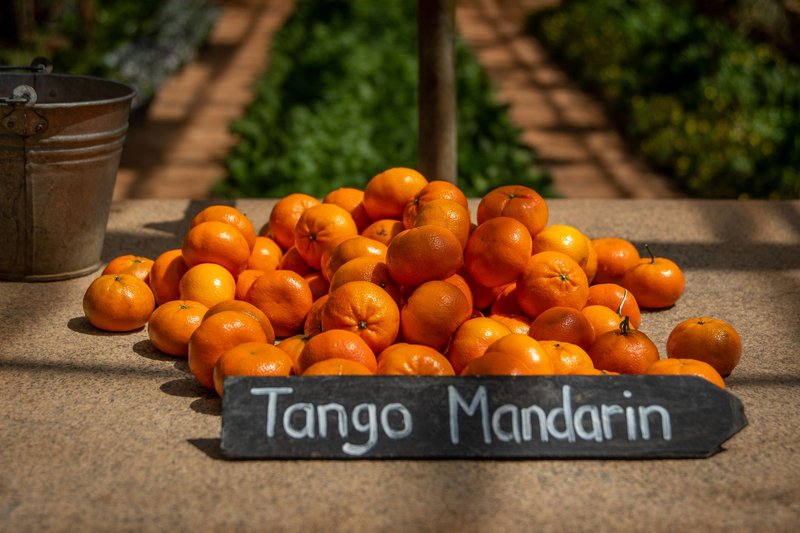
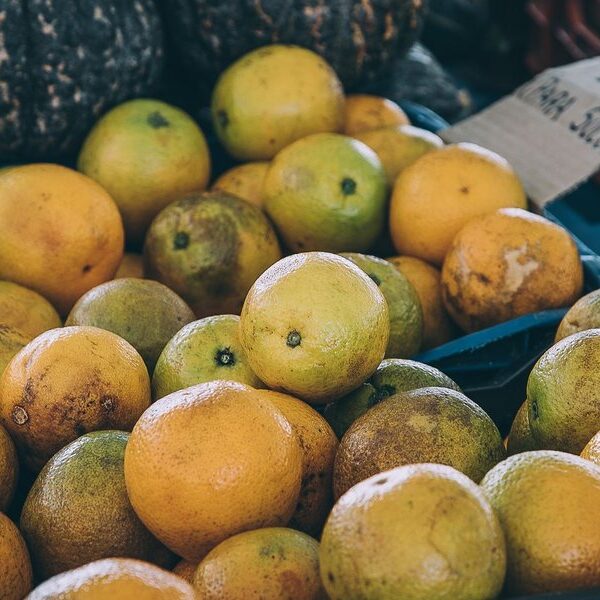
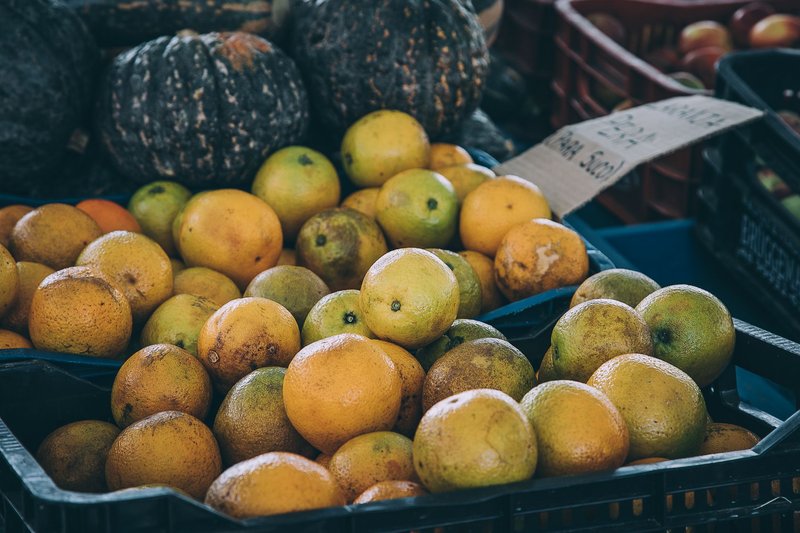
Local names: mandarine or clémentine (French is the everyday language of produce stalls), limoun for lemon, ma zhar for orange blossom water. Season: clementines October to December, mandarins January to April, oranges November to May. Region: Berkane in the northeast, the Souss plain around Agadir and Taroudant, and the Gharb near Kenitra.
Morocco is a citrus country first. The mandarins from Berkane, near the Algerian border, are the famous ones. They’re easy to peel, loose-skinned, sweet with a sharp edge, and they hit stalls in the dead of winter when little else is growing. The Nadorcott variety, often sold as “Afourer” after the town where it was developed, runs from January into spring and is the one that dominates Morocco’s export shipments.
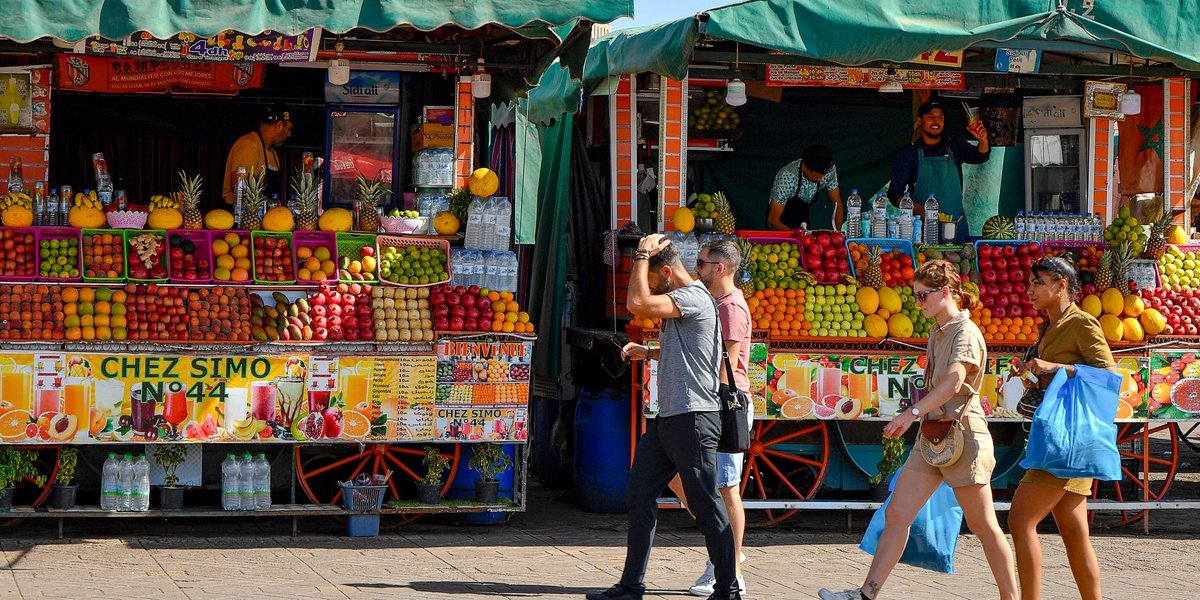
Oranges are the everyday fruit. In Marrakech’s Jemaa el-Fna square, a fleet of identical orange carts will squeeze a glass for a few dirhams while you watch. The juice is cold and tastes like it was squeezed five seconds ago, because it was. Sliced oranges dusted with cinnamon and sometimes a drop of orange blossom water are the standard way to finish a tagine dinner at home.
That orange blossom water, ma zhar, is the fruit’s other life. It scents pastries, coffee, milk dishes and the handwashing water poured over a guest’s fingers before a big meal. Bitter orange trees line streets in Fez, Marrakech and Rabat, and the flowers are distilled each spring.
Where to buy: any souk, any roadside stand. In Berkane itself, buy from the packing-house outlets on the edge of town for the best price per kilo.
Dates: Draa Valley, Tafilalet and Ramadan
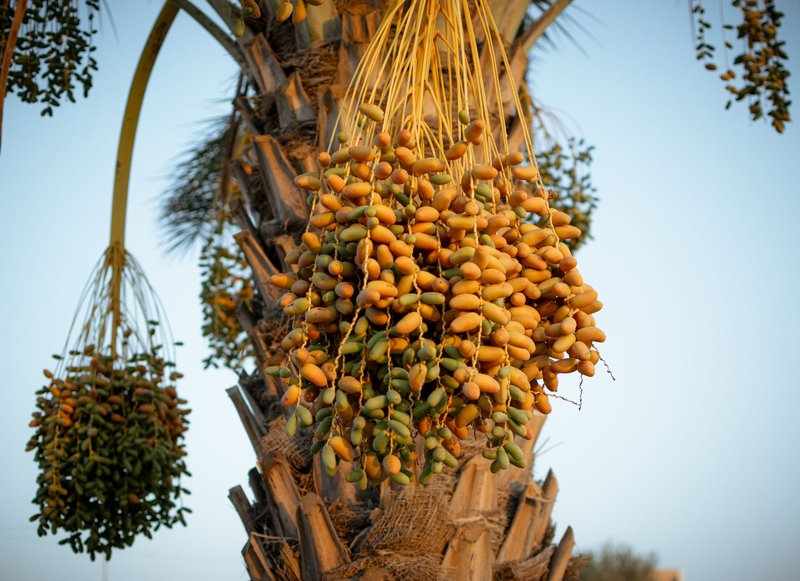
Local names: tmar (dates), nakhla (palm), Mejhoul or Medjool. Season: harvest October to December; sold year-round. Region: the Draa Valley (Zagora, Agdz, Mhamid) and the Tafilalet oasis (Erfoud, Rissani).
Dates are the fruit tied to the calendar more than any other. Almost every Moroccan household breaks the Ramadan fast with dates and milk, and the weeks before Ramadan are when date stalls do their best business.
Moroccan date varieties are more varied than most visitors realize. The main ones to look for:
- Medjool (Mejhoul): large, soft, caramel-like, and the most expensive. Medjool has a Moroccan history worth knowing: in the 1920s a fungal disease called bayoud was destroying palms around Boudnib, and a handful of offshoots were shipped to California in 1927. Much of the world’s Medjool descends from that rescue.
- Boufeggous: the everyday date of the south, semi-soft, good for eating and for stuffing.
- Jihel (Jihl): drier and firmer, sold in bulk and stored for months.
- Bouskri: soft, dark and sweet. A good value pick.
Erfoud hosts a date festival each October after harvest, and Zagora’s palm groves are worth a morning on foot. If you’re buying to take home, shop in the oases where the date sellers will let you taste three or four varieties before you commit. Medjools sold in tourist souks in Marrakech or Fez often cost noticeably more for the same fruit.
How Moroccans eat them: plain, with a glass of milk or almond milk, stuffed with almond paste, or cooked into tagines with lamb and a spoonful of honey.
Figs: fresh in summer, dried in tagines
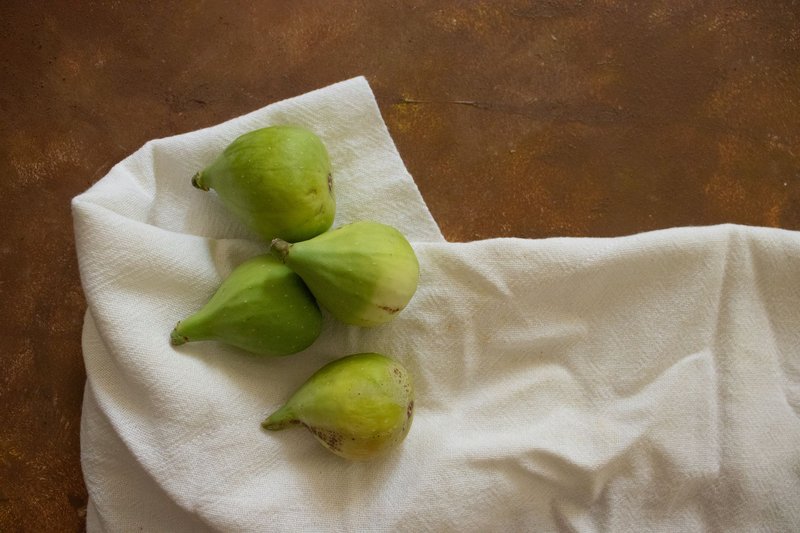
Local names: karmouss or kermous (the same word is used for prickly pear in some regions, which confuses visitors), chriha for dried figs. Season: fresh from late July to September; dried all year. Region: the Rif and pre-Rif hills, especially around Chefchaouen, Taounate and Ouezzane, plus Taza and Fez.
A fresh fig that was picked ripe is a different food from the supermarket kind. Skins split, the flesh is jammy, and they bruise if you look at them wrong, so they rarely travel far. In late summer the roadsides in the northern hills fill with kids selling small baskets of them.
Dried figs are the winter version, and they do more cooking work. Moroccans thread them on strings, pack them into tagines with lamb or chicken and onions, and stew them with cinnamon and honey into something close to a savory jam. They’re also eaten with walnuts or almonds as a standard snack for travelers.
Where to buy: the weekly souks in the northern hills. In Chefchaouen the stalls near the medina gates sell both fresh and dried, usually at the same price you’d pay anywhere else in the region.
Prickly pear: the roadside fruit that got expensive
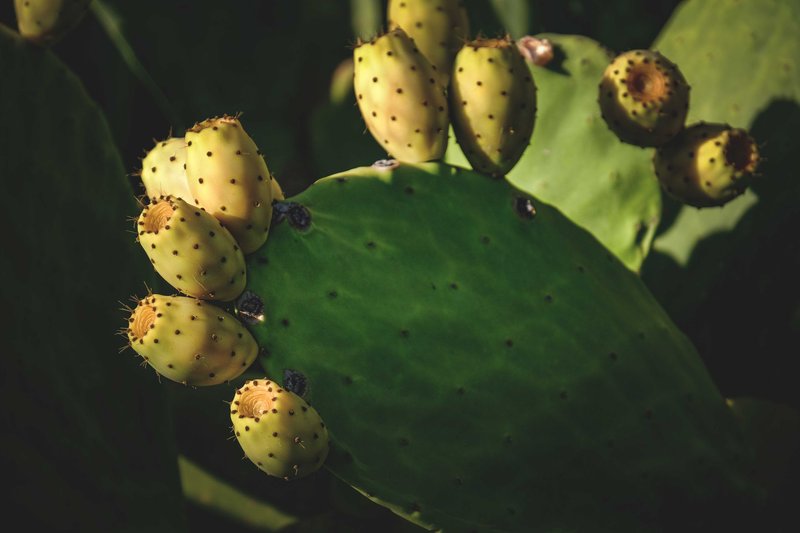
Local names: karmouss l’hendi (Indian fig), hendiya, sometimes karmous nsara. French: figue de Barbarie. Season: July to October, peaking in August and September. Region: Sidi Ifni and the Aït Baamrane region on the southern Atlantic coast, Safi, the Doukkala plains, the Haouz around Marrakech.
Walk through a Moroccan town in August and you’ll see small carts piled with orange, green and red prickly pears, stacked on ice. The vendor peels each one with a knife in three seconds, leaving you holding a cold, seedy, watermelon-sweet fruit. Eat it right there. They’re best chilled, and the thorns (including the fine ones you can’t see) mean you shouldn’t touch an unpeeled fruit with bare hands.
For decades this was the poor man’s fruit: cheap enough that a handful was a snack for pennies. That changed. A scale insect called the prickly pear cochineal (Dactylopius opuntiae) was first recorded in Morocco in 2014 in the Doukkala region and has since spread across cactus-growing regions. Researchers describe thousands of hectares of cactus destroyed or weakened, and the government launched an emergency plan in 2016. Fewer cacti means a smaller harvest, and the price per fruit has risen to the point where vendors in big cities now charge several times what they did a decade ago. Some local reporting calls it a luxury.
The industry is fighting back with predatory ladybirds and by testing cochineal-resistant cactus varieties. In the meantime, if you see a stall selling whole fruit cheaply, check that it’s local and in season. The best ones come from the Sidi Ifni area.
Bonus: prickly pear seed oil is one of the most expensive cosmetic oils in the world. It’s pressed from the tiny seeds inside the fruit, and it takes tons of fruit to make a liter.
Pomegranate
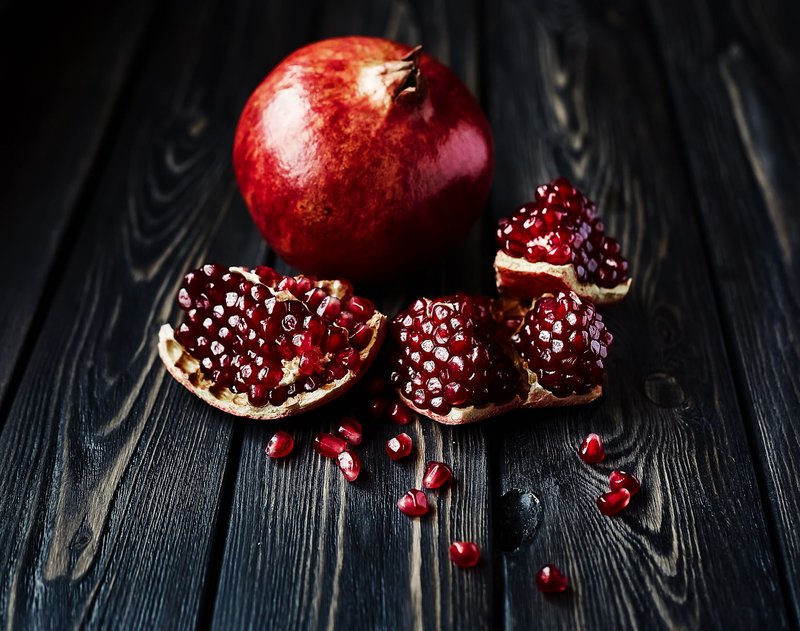
Local names: rumman (Arabic), grenade (French). Season: September to December. Region: Tadla (around Beni Mellal), the Haouz, the Souss, and oases in the south.
Moroccan pomegranates are tart-sweet, thin-skinned and deeply red. The Sefri variety, named for the Ouled Sefri area, is the one locals recommend. Pomegranate arils turn up scattered over orange salads, stirred into couscous with raisins and cinnamon, and pressed into juice at the stalls in the larger cities. Look for fruit that feels heavy for its size and has a slightly angular, boxy shape. Round and shiny usually means underripe.
Where to buy: any produce souk from late September. Juice stalls in Marrakech and Fez press them to order.
Apricots, cherries and almonds
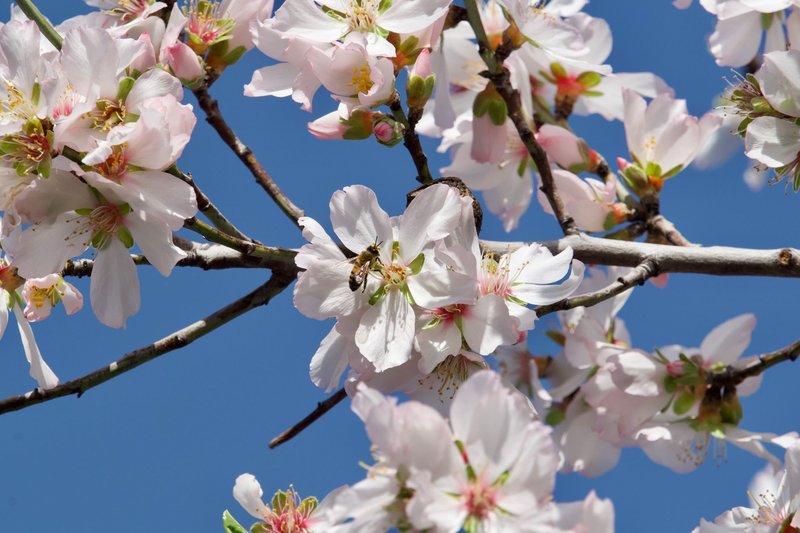
Apricots (mechmach) arrive in May and June from the Haouz and oasis valleys in the Atlas. They’re small, honey-sweet and often sold sun-dried too. Dried apricots and prunes go into the sweet-savory lamb tagine called barkouk, and fresh ones go into jam.
Cherries (hab el-moulouk) belong to Sefrou, a town in the hills south of Fez. It holds a cherry festival each June, the Moussem of Cherries, with a cherry queen, parades and baskets in every doorway. The cherries are small, dark and tart. If you’re in Fez in June, a day trip to Sefrou is the easiest way to taste Morocco’s most underrated fruit.
Almonds (louz) are harvested in late summer and are central to Moroccan sweets: chebakia, briouats, gazelle horns (kaab el-ghazal) and amlou, a paste of almonds, argan oil and honey. The Tafraoute valley in the Anti-Atlas covers itself in pale pink blossom in February, a good reason to visit the region before the fruit even exists.
Watermelon
Local names: dellah, dellaha, pastèque. Season: May to September. Region: the Draa Valley around Zagora, plus the Souss and the Gharb.
Watermelon is the summer afternoon fruit: sliced, salted lightly if you’re local, and eaten in the shade. Zagora is the best-known source, and the Draa’s desert heat suits it. The crop has also become a point of debate, because watermelon needs a lot of irrigation in a region short on water. Local authorities have restricted watermelon planting in parts of the Draa, so supply from the valley has become less predictable.
Where to buy: from trucks and roadside piles in every town. A whole melon costs a few dirhams a kilo, and vendors will cut one open for you so you can check the flesh.
How Moroccans cook with fruit
Fruit isn’t just dessert. A lot of Moroccan cooking pairs it with meat, and that’s what separates the cuisine from most others in the region.
- Lamb with prunes or apricots (barkouk): slow-cooked lamb, onions, cinnamon and honey, finished with almonds.
- Chicken with preserved lemon and olives: the lemons are fermented in salt for weeks, and only the rind goes in. This is probably Morocco’s most recognizable dish.
- Orange salad: peeled slices, cinnamon, a splash of orange blossom water. Often served after a heavy meal.
- Dates and milk: the standard Ramadan opener, and a good everyday breakfast.
- Figs, raisins and walnuts: the traditional hospitality plate in northern homes.
Where to buy fruit in Morocco
You have three practical options. Roadside stands are the cheapest and freshest, particularly for prickly pears, watermelon and figs. Weekly souks, held on a set day in each rural town, give the widest range and the best prices, and you can taste before you buy. Medina stalls in Marrakech, Fez and Rabat are fine for dried fruit and dates but charge tourists more.
Two tips. First, ask the price before the vendor starts weighing; fixed per-kilo prices are normal, and it prevents surprises. Second, buy dates and dried fruit in the south, and citrus where it’s grown. Prices can vary by a factor of two between producer regions and tourist medinas.
Morocco’s fruit exports
Morocco isn’t just feeding itself. According to a USDA Foreign Agricultural Service report, the country’s fruit exports grew from about $729 million in 2016 to over $1.5 billion in 2021, and the European Union took roughly 70 percent of them by value.
The surprise in those numbers is that the growth isn’t coming from the traditional fruits. Berries led it: blueberries, raspberries and strawberries accounted for roughly 60 percent of the increase since 2016, with blueberries now Morocco’s second most valuable fruit export. Mandarins, oranges, watermelons and avocados round out the major shipments. Citrus is still the backbone, and mandarins remain the leading citrus export, headed mostly to the EU and Russia.
None of this shows up much in the souk. The blueberries are grown in large greenhouse operations aimed at European supermarkets in winter. The mandarins you eat in Berkane are the same ones sold in Europe, though you’ll pay less for them at the source.
Summary
The fruits of Morocco follow the calendar: mandarins and oranges in winter, strawberries in spring, apricots and cherries in early summer, then figs, prickly pears and watermelon through the heat, and finally pomegranates and dates in the fall. Dates, dried figs and almonds fill the gaps all year.
If you’re planning a trip, pick your month first and your region second. Berkane in January, Sefrou in June, the Draa palm groves in October, and any roadside cart in August will each give you a fruit you can’t get anywhere else at the same quality. And buy prickly pears while you can, because the cochineal outbreak is changing what they cost.