Kuwait has very few native trees, and one of them, the talha, may be the only one that qualifies without an argument. The rest of the green you see along the Gulf Road, in the parks and in the older farm districts was planted, usually by people who needed shade and had a hose.
That makes “trees of Kuwait” a more interesting topic than it sounds. Some of these species have lived in the Arabian desert for thousands of years. Others arrived last decade on a truck from a nursery. This guide sorts them out and tells you which ones suit a Kuwaiti garden.
Table of contents
- Why Kuwait has so few trees
- Native or introduced? A quick sort
- Talha (Acacia gerardii)
- Sidr (Ziziphus spina-christi)
- Ghaf (Prosopis cineraria)
- Date palm (Phoenix dactylifera)
- Tamarisk, acacia and olive
- Trees of Kuwait compared
- The Conocarpus problem
- Best trees for a Kuwait garden
- Greening efforts
- The short version
Why Kuwait has so few trees
Summer temperatures regularly pass 50°C. Rain is rare and falls in a few winter downpours. The soil is sandy or gravelly, often salty, and the wind carries dust most of the year. A tree here has to find water or do without it.
The native flora reflects that. A widely cited survey by Boulos and Al-Dousari counted 374 vascular plant species in Kuwait, and nearly all of them are low shrubs, grasses and short-lived annuals that bloom after rain. Plants that stay close to the ground lose less water and take less wind. Trees are the exception.
Native or introduced? A quick sort
Here’s the honest version, because sources disagree.
- Native, no real dispute: talha (Acacia gerardii).
- Native to the Arabian region, but mostly planted in Kuwait today: sidr, ghaf, tamarisk, Acacia tortilis.
- Origin debated or ancient cultivation: date palm.
- Introduced: olive, Conocarpus, and most of the ornamental trees in parks and road medians.
Botanists and journalists draw the “native” line in different places. A tree that grows wild across the Arabian Peninsula is regional, but if Kuwait’s own wild stands are tiny or gone, it’s fair to call it a planted species here. We flag each tree below so you know which kind of claim you’re reading.
Talha (Acacia gerardii)
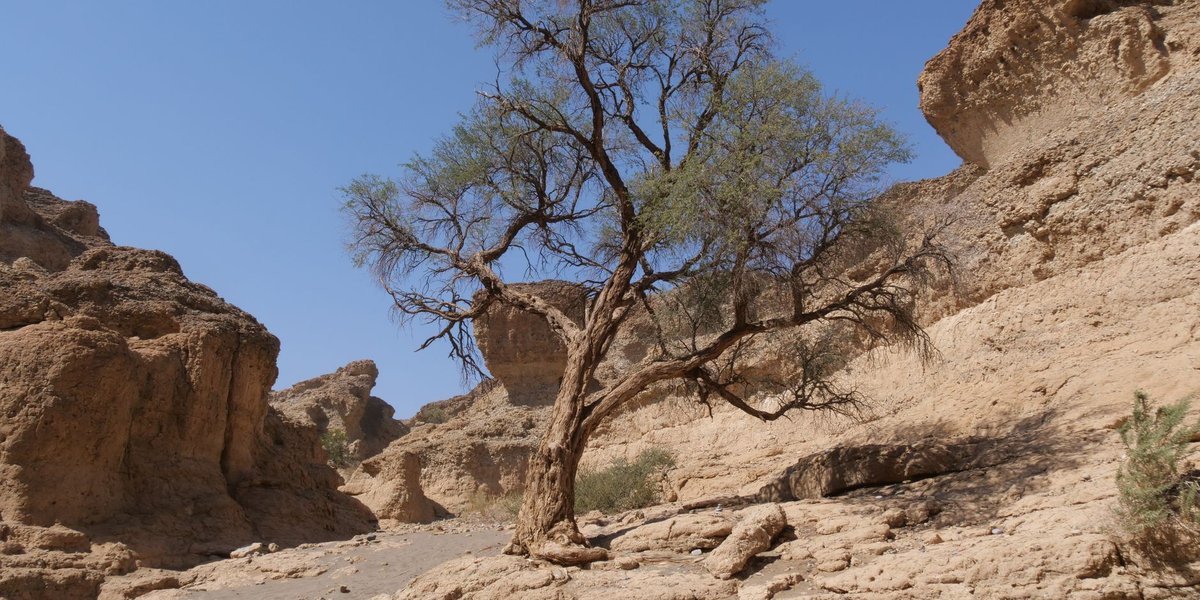
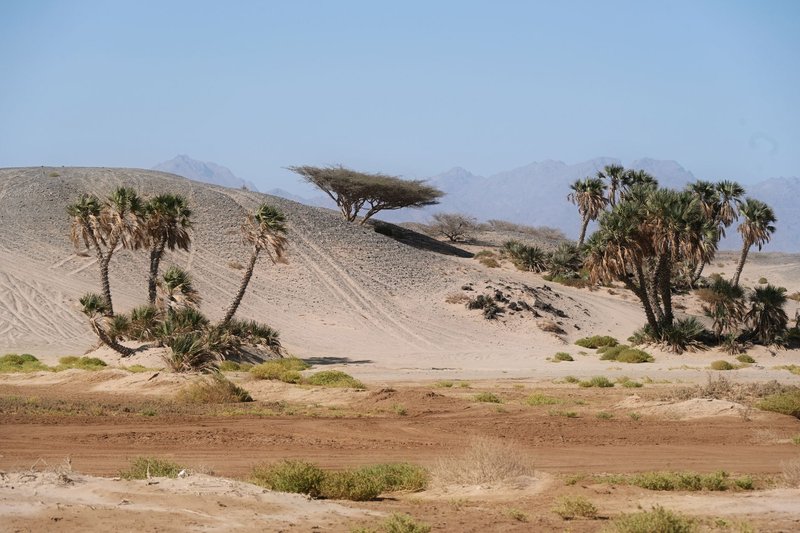
Arabic name: talh. Talha is the one tree Kuwait Times describes as the lone native species able to withstand the summer heat. It’s a flat-topped, thorny acacia that grows in depressions and wadis, where the little rain that falls collects and soaks in.
You won’t find it lining a boulevard. Look for it in open desert, where a single talha can be the only shade for kilometers. Bedouin herders and their camels have used these trees for generations, and a lone one is often a landmark. If a tree in the Kuwaiti desert looks like it was drawn by a child, wide and flat with feathery leaves, it’s probably this one.
Sidr (Ziziphus spina-christi)
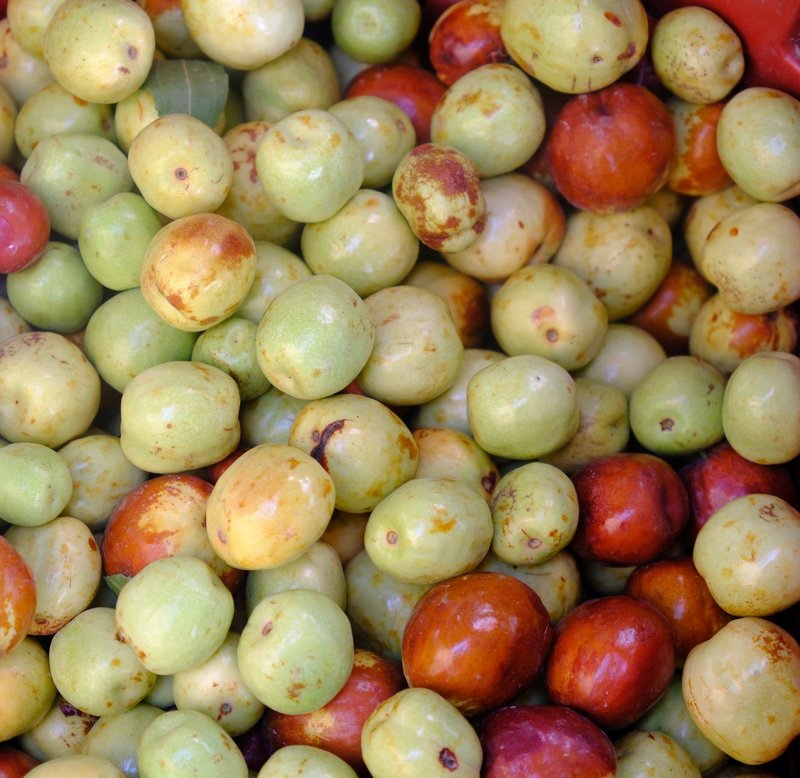
Arabic name: sidr or sidra. It’s Christ’s thorn jujube in English, and it’s the tree most people picture when you say “Kuwaiti tree.”
Sidr is a hardy, thorny, evergreen tree with a deep taproot that reaches groundwater. It produces small, sweet, apple-flavored fruit called nabq, and its flowers feed the bees behind sidr honey, which sells at a premium across the Gulf. Its leaves have a long history in traditional washing and medicine.
It’s hardy enough that Kuwaiti landscape guidance lists it among the native species recommended for urban planting. Wild stands in Kuwait are scarce, so most sidr you see today was planted in gardens, farms and along roads.
Ghaf (Prosopis cineraria)
Arabic name: ghaf. It’s the national tree of the UAE, and it’s easy to see why: ghaf tolerates heat, drought and salty ground that kill most other species. It fixes nitrogen, so it improves the soil around it, and its roots are reported to go dozens of meters down.
Flora databases list its native range as the Arabian Peninsula east to Iran and South Asia, including Kuwait. In practice, ghaf in Kuwait today is mostly planted, and it features in restoration projects for that reason. It’s a feathery, slow-growing tree with a sparse crown, so don’t expect fast shade. What you get in exchange is a tree that survives neglect.
If you search “ghaf tree Kuwait”, you’ll mostly find planting projects. That tells you where the species stands: it’s a recovery candidate, not a common sight.
Date palm (Phoenix dactylifera)
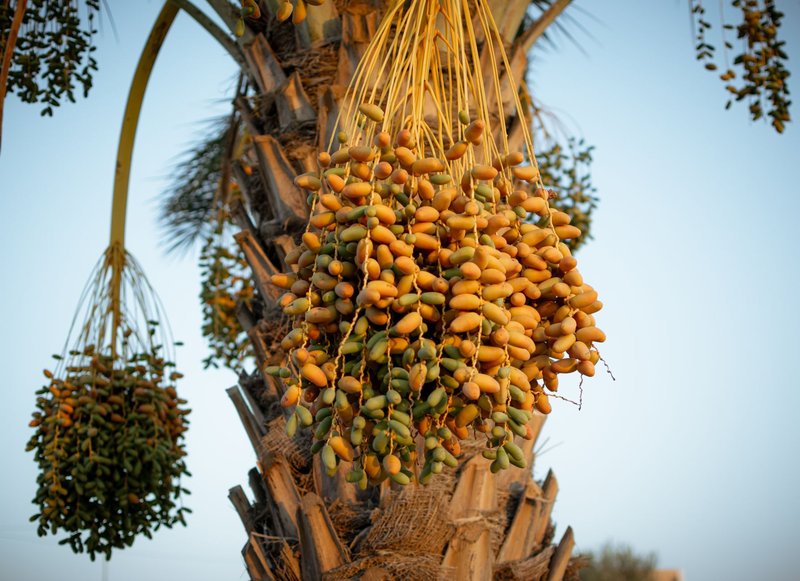
Arabic name: nakhla. Nothing says Gulf like a date palm, and nothing about its origin is simple. It has been cultivated across Arabia and Mesopotamia for thousands of years, long enough that nobody can say where truly wild populations ended and farming began. Treat any source that states “native” or “introduced” without hedging with suspicion.
What’s certain is how it earns its place. The date palm lives with its roots in moist soil and its crown in blazing heat, and it needs irrigation to produce fruit. In Kuwait that means farms, courtyards and municipal plantings rather than open desert. It’s less a survivor of the wild than the oldest partner humans have had in this climate.
Tamarisk, acacia and olive
Tamarisk (Tamarix spp.). Arabic name: athl. Tamarisk handles salty soil and salty water better than almost any tree, and it pushes the excess salt out through its leaves, which end up crusted with white. That makes it useful near the coast and on reclaimed land. It’s feathery, quick to establish and very windproof. Several tamarisk species occur across the Arabian region, and in Kuwait they’re mostly seen as planted windbreaks and shade trees.
Acacia (Acacia tortilis, also Vachellia tortilis). Arabic name: samar. This is the umbrella thorn, a spreading, flat-crowned tree that fills the same role as talha in sandy plains. Kuwait Times lists it, with ghaf, tamarisk and tamarind, among trees well adapted to Kuwait’s harsh climate. Don’t mix it up with talha: both are acacias, but only one is regularly called Kuwait’s native tree.
Olive (Olea europaea). Arabic name: zaytoon. Olive is Mediterranean in origin and an introduction here. It tolerates drought once established, but it needs irrigation to do well in Kuwait’s summers, and it’s grown in farms and gardens rather than the wild. Treat it as a garden tree with a good reputation, not as a desert native.
Trees of Kuwait compared
| Tree | Arabic name | Status in Kuwait | What it tolerates | Where you’ll see it |
|---|---|---|---|---|
| Talha (Acacia gerardii) | talh | Native | Extreme heat, drought | Open desert, wadis and depressions |
| Sidr (Ziziphus spina-christi) | sidr | Regional, mostly planted | Heat, drought, poor soil | Gardens, farms, roadsides |
| Ghaf (Prosopis cineraria) | ghaf | Regional, mostly planted | Heat, drought, salinity | Restoration sites, parks |
| Date palm (Phoenix dactylifera) | nakhla | Origin debated, long cultivated | Heat (needs irrigation) | Farms, courtyards, streets |
| Tamarisk (Tamarix spp.) | athl | Regional, mostly planted | Salt, wind, heat | Coast, windbreaks |
| Acacia (A. tortilis) | samar | Regional, mostly planted | Heat, drought, sandy soil | Parks, roadsides, gardens |
| Olive (Olea europaea) | zaytoon | Introduced | Drought once established | Farms, gardens |
| Conocarpus (Conocarpus spp.) | damas | Introduced | Heat, salt, irrigation | Medians, roadsides |
The Conocarpus problem
Spend ten minutes driving in Kuwait City and you’ll pass rows of dark green, dense, glossy-leaved trees. Many are Conocarpus, called damas in Gulf Arabic. It was planted by the thousands because it grows fast, stays green all year and tolerates salty irrigation water.
The trouble is underground. A KISR botanist quoted in Kuwait Times says its soft roots slip into gaps in damaged pipes, so plantings should keep well away from pipes and channels. In 2014 Kuwait’s Municipal Council recommended stopping urban plantings near service lines. Qatar went further and banned the species outright.
Defenders make a fair counterpoint: roots only invade pipes that are already cracked, and the real fault was planting it in a strip beside a sewer line. Both sides agree on the practical rule. Don’t put a Conocarpus within reach of your plumbing, and don’t treat it as a native. It isn’t one, and it doesn’t feed or shelter local wildlife the way an acacia or sidr does.
Best trees for a Kuwait garden
If you want shade in a Kuwaiti garden without a water bill that climbs every summer, plant native or regional species and give them a proper start.
- Sidr for a long-lived, thorny shade tree that fruits.
- Ghaf for a tree that improves soil and barely needs watering after the first couple of years.
- Acacia tortilis for a wide, flat canopy.
- Tamarisk for a coastal garden or a windbreak, especially with salty water.
- Date palm if you have the water and want the look of the Gulf.
Peer-reviewed work on native and xeric plants for Kuwaiti urban landscapes makes the same case: native species use water efficiently, and they tolerate drought and other stresses that exotic ornamentals can’t.
Any young tree needs regular water in its first two summers. After that, the native species can taper off, while exotics keep demanding it.
Greening efforts
Kuwait has spent years trying to add trees at scale. The best-known project is the Kuwait Great Green Wall, a plan to plant a tree belt along the country’s borders. Reports describe a 10-year goal of 315,000 trees across 420 km, in layers meant to slow dust and sand. Planting drives of 100,000 trees have also been announced.
Treat those numbers as targets, not results. The harder question is survival, and it turns on species choice. Ghaf, sidr and acacia are used because they live where Conocarpus lawns and ornamental lines of trees wouldn’t. A planting drive that uses them has better odds than one that doesn’t.
KISR, the Kuwait Institute for Scientific Research, has worked on native seed collection and mass propagation so that restoration can use local plants instead of imports. A tree that came from a local seed has already survived the local summers.
The short version
Kuwait’s tree story is a story of scarcity. Talha is the clear native, and sidr, ghaf, tamarisk and Acacia tortilis are regional species that now grow mostly by human hand. The date palm sits somewhere in between, with an origin nobody can pin down, and olive and Conocarpus are introductions.
If you’re choosing a tree for your own yard, start with sidr or ghaf, keep Conocarpus away from your pipes, and expect to water anything young. Trees of Kuwait don’t thrive without help, but the native ones need far less of it.