Malaysia’s most visible invasive species is a South American catfish that most people first met in a pet shop aquarium. Today it burrows into riverbanks, crowds out native fish, and has become the target of volunteer “fish hunters” who pull it out by the tonne. It’s the face of a much bigger problem: invasive species in Malaysia now include fish, snails, birds, reptiles, ants, and dozens of plants, and most of them got here with human help.
This guide goes group by group, with how each species arrived, where it spreads, and what it damages.
Table of contents
- What counts as an invasive species
- Why Malaysia is so exposed
- Invasive fish in Malaysia
- Apple snails and other invertebrates
- Invasive plants in Malaysia
- Birds and reptiles
- Species at a glance
- What Malaysia is doing about it
- What you can do
- Summary
What counts as an invasive species
An alien species is any plant or animal living outside its natural range because people moved it there, on purpose or by accident. Most aliens do nothing dramatic. A smaller share becomes invasive: they establish, spread without help, and cause measurable harm to native wildlife, farming, water systems, or health.
That distinction matters. Malaysia has plenty of introduced species that sit quietly in gardens and plantations. The ones below are the troublemakers. Several appear on the IUCN’s list of 100 of the world’s worst invasive alien species, and the Convention on Biological Diversity treats invasive aliens as one of the main drivers of biodiversity loss, which is why countries that signed it, Malaysia included, are expected to have a plan for them.
Why Malaysia is so exposed
Four pathways do most of the work.
- The aquarium and pet trade. Fish, turtles, and reptiles get bought small and dumped large. A gar that fit in a tank at 20 centimetres does not stay that size.
- Aquaculture. Farmed fish escape through floods and broken ponds. Some were released deliberately to stock waters for food or sport.
- Agriculture and horticulture. Ornamental plants and crop-related species jump the fence. Cleared and disturbed land gives them space, as does the fragmented forest that clearing leaves behind.
- Trade and tourism. Seeds ride on soil, vehicles, and boots. Port cities such as Penang and Klang have had alien birds for decades, and highland parks get a steady stream of visitors carrying seeds from elsewhere.
Add a warm, wet climate with no cold season to knock populations back, and a species that arrives here has very little standing in its way.
Invasive fish in Malaysia
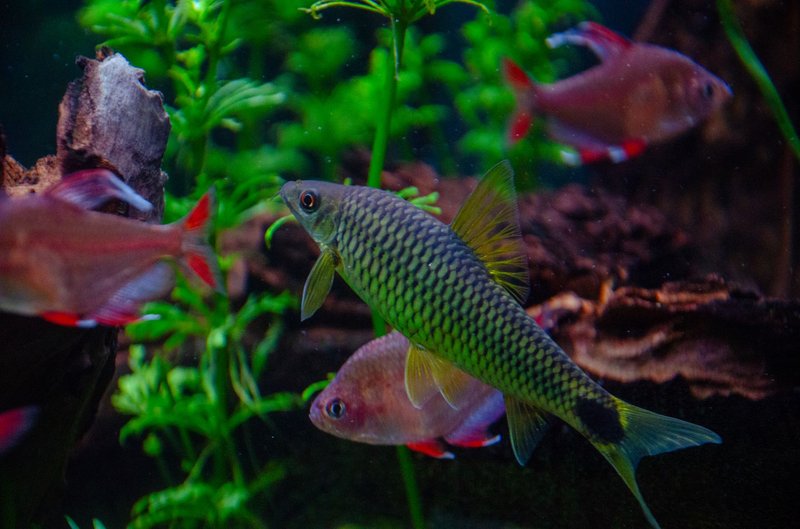
Freshwater fish are where the invasion is easiest to see and best documented. Rivers and ex-mining lakes near cities take the brunt, since that’s where pet owners and fish farmers are.
Suckermouth catfish (sailfin catfish)
Suckermouth catfish, Pterygoplichthys species, are the headline act. They’re native to South America and entered Malaysia through the aquarium trade, where they’re sold as algae-eaters. Released or escaped, they thrived in polluted, slow rivers that few native fish tolerate.
Three things make them hard to live with. They breed in burrows dug into riverbanks, and those tunnels weaken the banks and contribute to erosion. Their armoured bodies mean few predators will touch them. And they graze the bottom hard, competing with native fish for food and space. Reports from the field describe stretches of river where they make up most of the catch.
The Al Jazeera feature on Malaysia’s fish hunters follows the volunteers who spear and net them out of rivers. One reason the problem persists is a regulatory gap: sailfin catfish are reportedly still traded without import limits, so the supply of potential releases never dries up.
African catfish
The African catfish, Clarias gariepinus, came in for aquaculture. It grows fast, eats almost anything, and tolerates low-oxygen water, which is exactly what makes it a good farm fish and a bad escapee. In the wild it preys on smaller native fish and competes with native catfish species. It also interbreeds with local Clarias catfish in some regions, which blurs the genetic identity of the native stock.
Alligator gar
The alligator gar, Atractosteus spatula, is a North American predator that can grow over two metres. Its presence in Malaysian waters traces back to pet owners who bought a cute juvenile and then had nowhere to put an adult. A top predator with no natural enemy here can quietly empty a small lake of native fish, and there are no known populations large enough to need a fix yet, which is exactly why catching them early matters.
Peacock bass
Peacock bass (Cichla species) are South American sport fish. They were introduced to stock reservoirs and lakes for anglers, and they’re ambush predators that hit smaller fish hard. Native species in closed waters, where fish can’t retreat upstream, are the most vulnerable.
Apple snails and other invertebrates
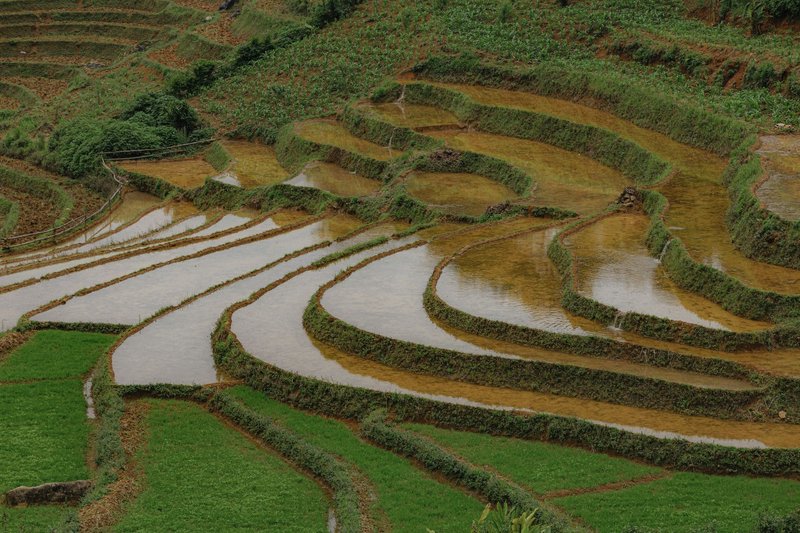
The golden apple snail, Pomacea canaliculata, is another South American import, brought into Asia in the 1980s as a farmed food source. The market never took off, the snails were dumped or escaped, and they became one of the region’s worst rice pests. Another entry on the IUCN’s worst-100 list, it eats young rice seedlings so fast that farmers in infested paddies often have to replant. It lays bright pink egg clusters above the waterline, which is the easiest way to spot an infestation.
Other invertebrates worth knowing:
- African giant snail (Achatina fulica). A garden and crop pest that has spread across Southeast Asia.
- Yellow crazy ant (Anoplolepis gracilipes). Not a native of the region’s forests, it forms dense supercolonies that can displace native insects and disturb ground-dwelling wildlife.
Invasive plants in Malaysia

Plants are the biggest invasive group by species count, and the least covered by news. They spread quietly, and by the time anyone notices, the land is already changed.
Kinabalu Park
Kinabalu Park in Sabah is a UNESCO World Heritage site, famed for its plant diversity. A survey cited in Malaysian press found 65 invasive alien plant species there. Most arrived along roads and trails, and in soil, and they concentrate where people do: park headquarters, roadsides, and the lower slopes. Among them is the false dandelion, a low-growing weed that carpets disturbed ground and spreads by wind-borne seed. Highland ecosystems matter here because many of their species exist nowhere else, so even a slow takeover is a permanent loss.
The usual suspects
- Lantana (Lantana camara). A thorny, colourful shrub, originally planted as an ornamental. It forms dense thickets in forest edges and plantations, and it’s toxic to livestock.
- Giant sensitive plant (Mimosa pigra). A prickly shrub that chokes wetlands and drainage channels and is listed among the IUCN’s worst invasives.
- Cogon grass (Imperata cylindrica). Strictly, it’s native across much of Southeast Asia, but it behaves as an invader wherever land is cleared, forming fire-prone mats that block tree regeneration. Plantation managers fight it constantly.
- Water hyacinth (Eichhornia crassipes). Floating mats that block light, strip oxygen from the water, and clog waterways and irrigation channels.
- Mile-a-minute (Mikania micrantha). A fast vine that smothers young trees and crops, particularly in plantations.
Agricultural weeds
Weeds are the plant side of the invasion nobody photographs. Siam weed (Chromolaena odorata), Mimosa, and similar species cost farmers in herbicide, labour, and lost yield every year, and they move between plantations on machinery and in soil.
Birds and reptiles
The top fish stories tend to leave out land animals, but some of them are very familiar.
- House crow (Corvus splendens). Originally from the Indian subcontinent, it established itself in coastal Peninsular Malaysia, especially around ports and towns. It raids the nests of smaller birds, steals food, and is a nuisance around markets and rubbish.
- Common myna (Acridotheres tristis). An aggressive, adaptable bird that competes with native species for nest holes.
- Red-eared slider (Trachemys scripta elegans). A pet turtle from the United States. Sold as tiny hatchlings, it ends up in ponds, canals, and rivers, where it competes with native freshwater turtles that are already under pressure.
Species at a glance
| Species | Type | Where it spreads | Main impact |
|---|---|---|---|
| Suckermouth catfish (Pterygoplichthys spp.) | Fish | Rivers, mainly Peninsular Malaysia | Bank erosion, competition with native fish |
| African catfish (Clarias gariepinus) | Fish | Rivers, ponds, farm areas | Predation, hybridization with native catfish |
| Alligator gar (Atractosteus spatula) | Fish | Rivers and lakes near cities | Predation on native fish |
| Peacock bass (Cichla spp.) | Fish | Reservoirs and lakes | Predation on native fish |
| Golden apple snail (Pomacea canaliculata) | Snail | Rice paddies, wetlands | Destroys rice seedlings |
| African giant snail (Achatina fulica) | Snail | Gardens, crops | Crop damage |
| Yellow crazy ant (Anoplolepis gracilipes) | Insect | Forests, plantations | Displaces native insects |
| Lantana (Lantana camara) | Plant | Forest edges, plantations | Thickets, livestock poisoning |
| Giant sensitive plant (Mimosa pigra) | Plant | Wetlands, drains | Chokes waterways |
| Water hyacinth (Eichhornia crassipes) | Plant | Lakes, canals | Blocks light and flow |
| Kinabalu Park alien plants (65 species) | Plants | Sabah highlands | Pressure on endemic flora |
| House crow (Corvus splendens) | Bird | Coastal towns | Nest raiding, urban nuisance |
| Red-eared slider (Trachemys scripta elegans) | Reptile | Ponds, canals | Competes with native turtles |
What Malaysia is doing about it
The National Action Plan. Malaysia’s national plan on invasive alien species, covering 2021 to 2025, sets out how agencies are meant to coordinate on prevention, early detection, and control. Its central idea is that stopping a species before it establishes costs a small fraction of removing it later.
Bounties. Selangor has run a per-kilogram payment scheme for removing suckermouth catfish, which turns fishers and community groups into a removal force. It doesn’t solve the underlying supply of fish, but it does cut local numbers.
Volunteer removal. Groups of fish hunters and river-cleaning volunteers pull catfish out by hand, spear, and net. It’s slow work, and it keeps the stretches where it happens in better shape.
Restocking native fish. Where invaders have been cleared, some programmes release native species to rebuild the populations that were displaced.
Park-level control. Kinabalu Park staff survey and remove alien plants along trails and roads, with the aim of stopping them before they reach intact highland forest.
The gap is regulation. Controls on what can be imported and sold are weaker than the control programmes downstream, so the same species keep arriving.
What you can do
- Never release a pet. Not fish, not turtles, not snails. Rehome it, return it to the shop, or ask a vet or wildlife department what to do.
- Choose native plants. Skip lantana and other ornamentals with a record of escaping gardens.
- Clean your gear. Boots, bags, and vehicles carry seeds into parks and highlands.
- Report sightings. Large unusual fish or new plant outbreaks can be flagged to local wildlife or fisheries authorities.
- Join a removal event. Volunteer river clean-ups and catfish hunts are open to the public in several states.
Summary
Invasive species in Malaysia are mostly a story of well-meaning imports and careless disposal: aquarium fish, farm fish, ornamentals, and pets that outgrew their owners. Suckermouth catfish get the headlines, but apple snails cost farmers crops, dozens of alien plants press on Kinabalu’s endemic flora, and crows, turtles, and ants are quietly rewriting the local wildlife mix. Bounties, volunteers, and the national action plan are slowing the damage. Tighter controls on what gets sold, and owners who stop dumping their pets, are what would actually end it.