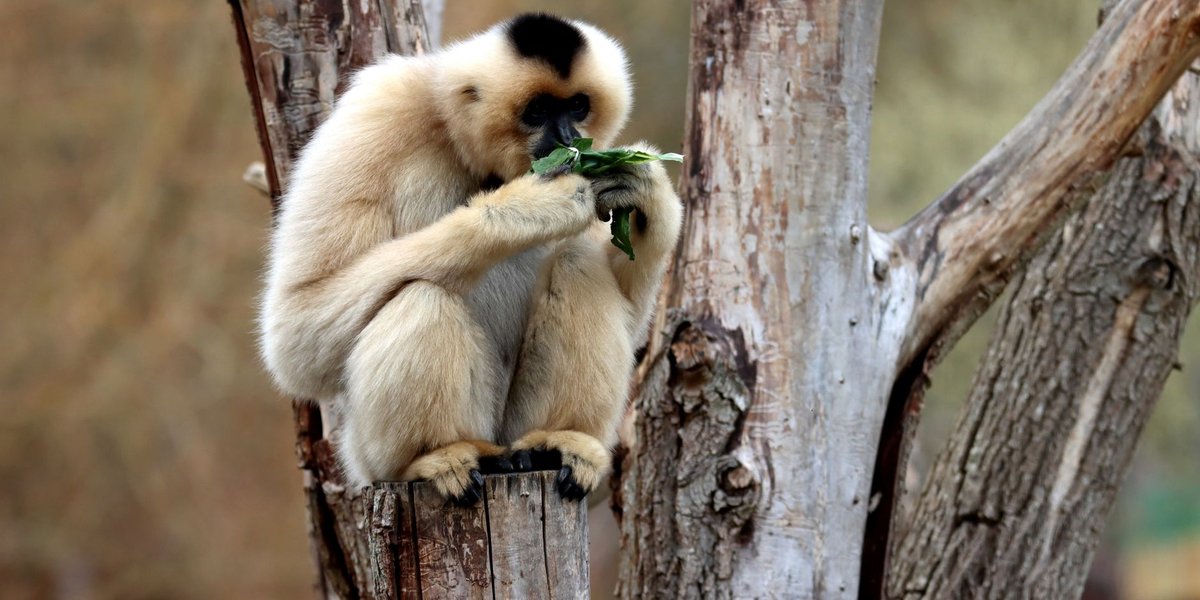
Figs make up roughly 60% of what an Eastern hoolock gibbon eats when fruit is available, and fruit overall accounts for around 65% of feeding time across the year. That’s the number every field guide leads with, and it’s accurate — but it’s also only half the animal.
The other half shows up in December, when fig trees in the northern part of their range go nearly barren and a gibbon that spent October gorging on ripe figs switches almost entirely to leaves for ten weeks straight. Diet isn’t a fixed pie chart for this species. It’s a survival strategy that bends hard with the calendar.
Table of Contents
- What Eastern Hoolock Gibbons Eat, By the Numbers
- The Seasonal Switch: Why Diet Flips in Winter
- Diet Changes With Elevation and Location
- Why Their Diet Matters to the Whole Forest
- Wild Diet vs. What Captive Gibbons Get Fed
- Habitat and Conservation Status
What Eastern Hoolock Gibbons Eat, By the Numbers {#diet-composition}
Eastern hoolock gibbons (Hoolock leuconedys) are frugivores first, but they’re opportunistic enough to round out a fig-heavy menu with whatever else is in reach of the canopy. A typical breakdown looks like this:
- Figs — the dominant food item and the one species gibbons will travel farthest for
- Other fruit — non-fig fruit, eaten in smaller quantities and more seasonally dependent
- Young leaves and shoots — the fallback food, low in sugar but reliably available
- Flower buds and petioles — eaten in smaller amounts, mostly in spring
- Insects and invertebrates — an occasional protein source, not a dietary staple
- Bird eggs — rare, opportunistic, and more anecdotal than regular
One detail that surprises people: hoolock gibbons are pickier than most of their gibbon relatives. Researchers tracking a montane population found they fed on fruit from only 36 plant species over the study period — fewer species than almost any other gibbon population studied, anywhere. That narrow menu is exactly what makes the seasonal shift below so consequential. When your fruit options are already limited, losing figs for two months isn’t a minor inconvenience.
The Seasonal Switch: Why Diet Flips in Winter {#seasonal-diet}
This is the part most species profiles skip past, and it’s the most interesting thing about how this animal actually survives.
In the northern, higher-elevation parts of their range, fig availability collapses almost to zero between December and February. A study published in Primates tracking a family group in montane forest documented exactly what happens next: the gibbons don’t go hungry, and they don’t expand their range to chase scarce fruit. Instead, they shift to a leaf-heavy diet and cut back on travel and social activity, conserving energy while temperatures drop.
It’s a deliberate trade-off. Leaves are lower in sugar and harder to digest than ripe figs, but they’re dependably present near the group’s core range — which matters more than nutritional quality when fruit simply isn’t out there to find. The same researchers noted the group increased resting time and decreased both travel and social behavior as monthly temperatures fell, essentially going into a low-energy mode until fig season returns.
Western hoolock gibbons show a related pattern. A more recent study on that sister species found monthly fruit consumption swinging between 34% and 71% of feeding time depending on the season, with the gap filled by leaves and other plant matter whenever fruit supply tightened.
Diet Changes With Elevation and Location {#elevation-diet}
Not every Eastern hoolock gibbon experiences winter the same way, and that changes what “typical diet” even means for this species.
Populations in lower-elevation, more tropical parts of the range — closer to the India-Myanmar-China border zone where fruiting trees stay more productive year-round — likely see a gentler seasonal dip than the montane group in the Primates study. Higher-elevation forest means a shorter fruiting season, colder winters, and a harder pivot to leaves. It’s the same species making the same trade-off, just at different intensities depending on how harsh the local fig drought gets.
This is worth knowing if you’re comparing diet claims across sources: a study describing a montane population’s near-total leaf switch and a source describing a lowland population’s fruit-dominant diet aren’t contradicting each other. They’re describing the same flexible strategy playing out under different local conditions.
Why Their Diet Matters to the Whole Forest {#seed-dispersal}
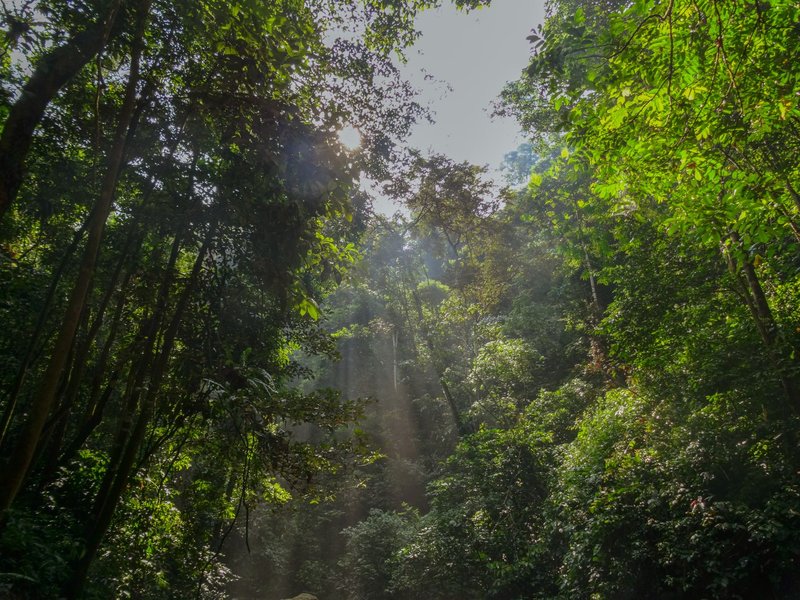
Fig-heavy eating isn’t just a dietary quirk — it makes hoolock gibbons one of the more effective seed dispersers moving through their forest canopy. They swallow seeds whole along with the fruit pulp, travel long distances through their home range over the course of a day, and deposit those seeds intact, far from the parent tree, in their droppings.
Gibbons across Southeast Asia have been documented dispersing seeds from dozens of plant species this way, and research on frugivory and seed dispersal in tropical Asia points to gibbons as some of the more effective mammalian seed dispersers in the region precisely because they swallow rather than destroy seeds, and scatter them widely rather than dropping them in a pile under the fruiting tree. Fewer gibbons in a forest generally means weaker natural regeneration for the fig and fruit trees they used to feed on — a slow, easy-to-miss consequence of population decline that has nothing to do with hunting pressure directly and everything to do with a missing link in the forest’s reproductive cycle.
Wild Diet vs. What Captive Gibbons Get Fed {#captive-diet}
Zoos don’t try to replicate a wild fig-and-leaf diet exactly, and there’s a good reason: commercially available fruit is bred for sweetness in a way wild fig species aren’t, so a diet that looks proportionally similar to the wild version can end up delivering far more sugar than a gibbon’s system is built for.
Modern primate care leans on purpose-formulated leaf-eater biscuits — dense in fiber, protein, and micronutrients — supplemented with fresh produce kept to a controlled share of the diet rather than left as the main event. It’s a response to a documented problem: decades of fruit-heavy captive diets left frugivorous primates prone to metabolic issues that their wild counterparts, eating fibrous, lower-sugar wild fruit, rarely developed. The wild diet is opportunistic and seasonally forced into leaves; the captive diet is deliberately formulated to avoid the sugar spike of an easy, all-you-can-eat fruit supply.
Habitat and Conservation Status {#habitat-conservation}
Eastern hoolock gibbons live in the forest canopy of northeast India, Myanmar, and southwest Yunnan in China. They share these rainforests with other iconic species of Myanmar, and their diet and habitat are tied together tightly enough that you can’t really discuss one without the other — lose the fig trees, lose the gibbons. The species is currently listed as Vulnerable, with habitat loss from logging and land conversion as the primary threat, compounding the natural food scarcity they already navigate every winter.
That’s the throughline worth remembering: an Eastern hoolock gibbon’s diet isn’t a fixed answer, it’s a running negotiation with what the forest can offer that month — and increasingly, with how much forest is even left to offer it.